



Kostel svatého Bonifáce Church
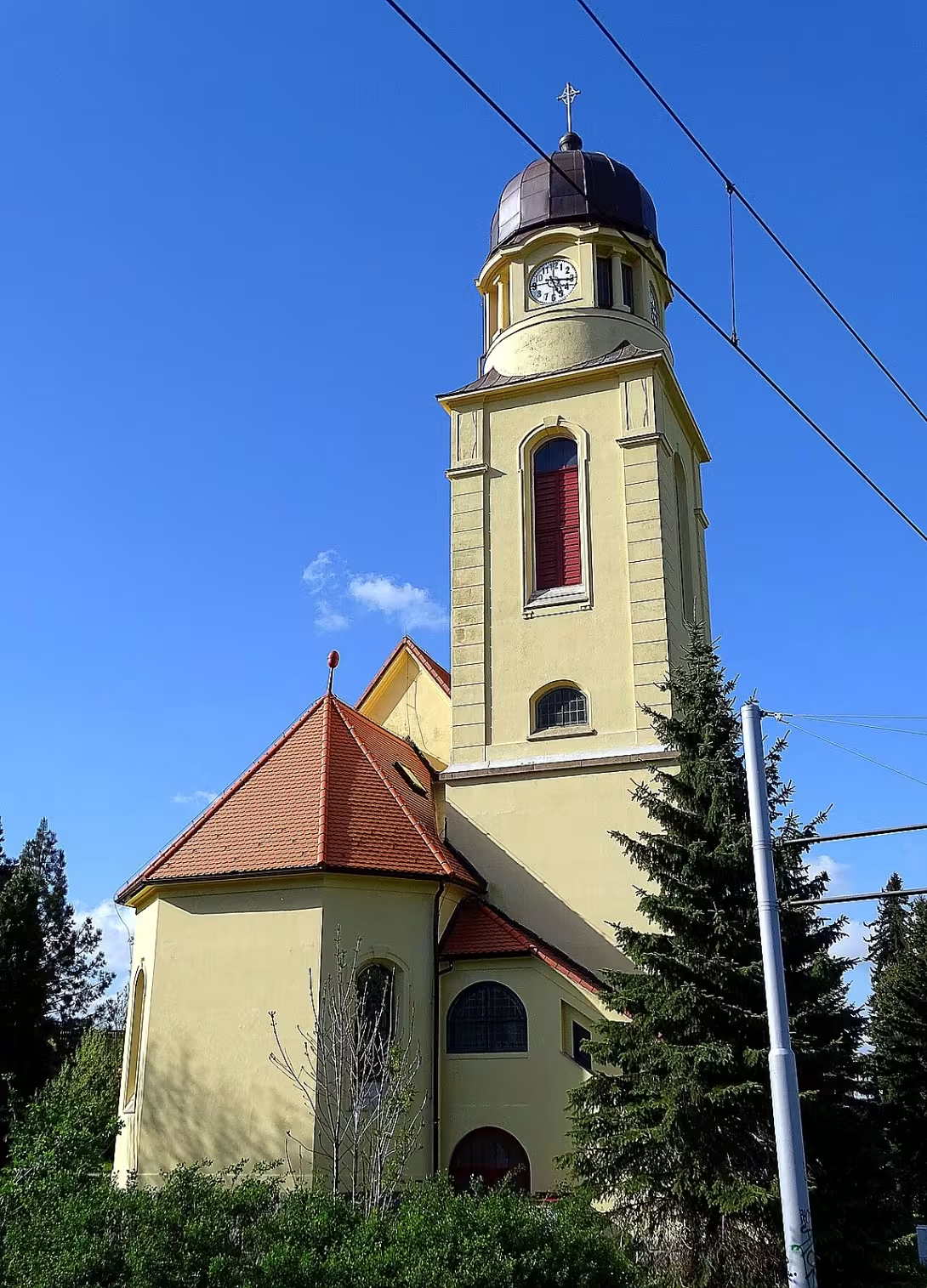
The Church of Saint Boniface in Dolní Hanychov, Liberec, exemplifies early 20th-century architectural innovation and cultural history. Built between 1915 and 1919 by architect Anton Möller, this sacred building features a transitional style that bridges Art Nouveau (secese) and individual modernism. Located in the community of Dolní Hanychov within Liberec District, it was constructed to serve the German-speaking population who revered Saint Boniface similarly to how Czechs venerated Saint Wenceslas. Recognized as a cultural monument since April 5, 1994, this church has undergone significant restoration at the turn of the 20th and 21st centuries.
Conceived during a period marked by substantial political and social changes in Europe leading up to World War I, the Church of Saint Boniface reflects the era's complexities. This time saw the Austro-Hungarian Empire encompassing diverse ethnic groups, including German-speaking communities for whom this church was originally intended. Anton Möller’s architectural vision resulted in a structure that served religious purposes and mirrored its cultural context.
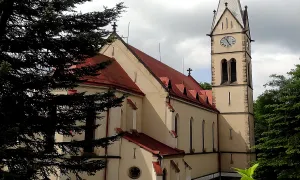
Architecturally, the Church is an oblong single-nave building with a polygonal closure, showcasing Möller’s innovative design approach. The ceiling features tiles, and the pews date back to the church's original construction period. A distinctive feature is its side tower, which reaches 33 meters in height. In 2013, significant restoration work was completed to preserve its historical integrity.
Throughout its history, the Church of Saint Boniface has faced challenges that threatened its existence. After World War II, in 1945, the forced departure of most German-speaking residents led to neglect and deterioration. It even faced potential demolition multiple times. However, concerted efforts by local parishioners and contributions from displaced natives ensured its preservation and restoration at the turn of the century.
Today, the Church functions as a filial church under the Římskokatolická farnost – děkanství Liberec-Rochlice. Regular religious services are held every Sunday at 8:00 AM and on Tuesdays from 5:00 PM. The church remains accessible to visitors interested in its architectural beauty and historical significance.
Visiting the Church of Saint Boniface offers a unique glimpse into early 20th-century European cultural and architectural heritage. Its preservation as a cultural monument underscores its importance, making it a worthwhile destination for those keen on understanding the region's diverse history.
Then and now
Drag the slider to compare how the landmark may have looked when it was built with the view today.
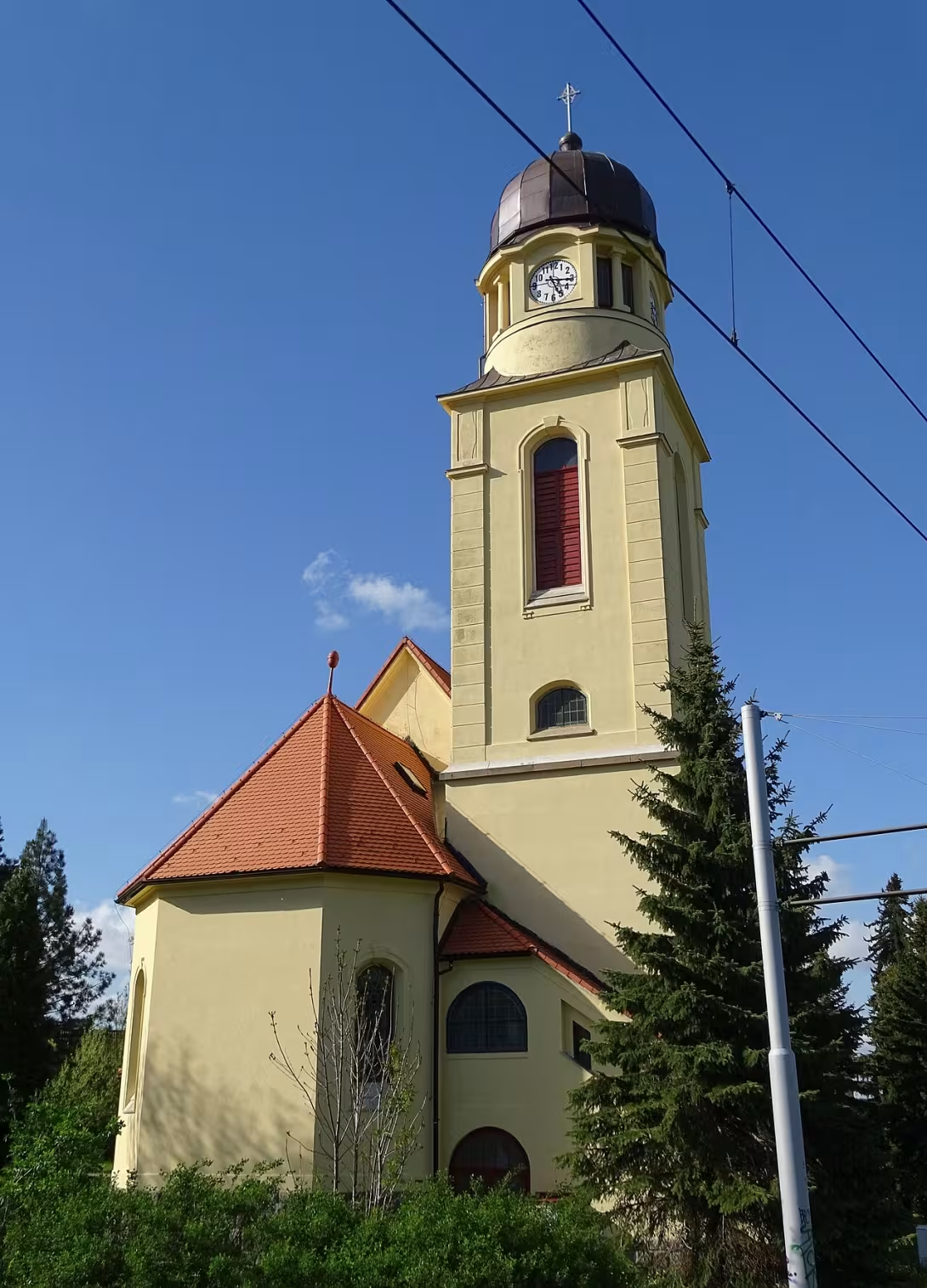

The historical appearance on the left is an AI-generated visualisation and serves as inspiration only.
Historical milestones
- 1915
- Construction began.
- 1919
- Construction completed.
- 1994
- Designated as a cultural monument.
Architectural development
Designed by Anton Möller, the Church of Saint Boniface features an oblong single-nave structure with polygonal closure. The ceiling is made of tiles, and the pews date back to its construction period. A side tower reaches a height of 33 meters. Significant restoration work was completed in 2013.
Historical events
Construction began in 1915 and completed in 1919.
The church was designated a cultural monument on April 5, 1994.
Points of interest
- The Church of Saint Boniface was built during a turbulent period in Europe leading up to World War I, reflecting the complex cultural dynamics within the Austro-Hungarian Empire.
- Architect Anton Möller's design uniquely blends Art Nouveau and individual modernism, showcasing innovative architectural elements like the 33-meter-high side tower.
- Initially constructed for German-speaking residents who revered Saint Boniface similarly to how Czechs venerated Saint Wenceslas, the church highlights cultural parallels between these communities.
- After World War II, the forced departure of most German-speaking inhabitants led to significant neglect and deterioration, with multiple threats of demolition before eventual restoration efforts saved it.
- The church's interior features original pews from its construction period and a ceiling adorned with tiles, preserving its historical authenticity and architectural charm.
Guide
This guide is narrated by a synthetic voice generated by artificial intelligence.
Show guide text
This text was created by artificial intelligence and has not been editorially reviewed. It may contain inaccuracies.
Welcome to the Church of Saint Boniface in Dolní Hanychov, a remarkable testament to architectural evolution and cultural history nestled within Liberec VIII-Dolní Hanychov. As you stand here, enveloped by an aura of historical significance, take a moment to absorb your surroundings. The church's presence is both serene and commanding, its design reflecting the unique blend of styles that emerged during a transformative era in Europe.
The construction of this sacred building began in 1915 and was completed in 1919, conceived by the talented architect Anton Möller. It was built for the German-speaking community of Dolní and Horní Hanychov, who held Saint Boniface in high esteem, akin to how Czechs venerate Saint Wenceslas. This period was marked by significant cultural shifts within the Austro-Hungarian Empire, leading up to World War I. The church stands as a monument to these complex dynamics, bridging different artistic movements and communities.
As you gaze upon the structure, notice its architectural elegance that seamlessly transitions between Art Nouveau (secese) and individual modernism. Anton Möller's design is evident in the innovative use of forms and details that invite contemplation and admiration. The façade, with its intricate detailing, captures your attention, encouraging a closer look at how these styles intermingle to create something truly unique.
While specific historical figures associated directly with this church may not be widely documented, the community it served and those who contributed to its creation are integral to its story. The dedication of the German-speaking inhabitants in Dolní Hanychov to Saint Boniface is a testament to their cultural identity and spiritual devotion during a time of great change.
One intriguing aspect that adds depth to this church's narrative is its construction during such a turbulent period in European history. It stands as a symbol of resilience and unity amidst the shifting political landscapes leading up to World War I, reflecting the complex interplay of cultures within the Austro-Hungarian Empire.
As you conclude your visit, we invite you to reflect on the layers of history and artistry that envelop this sacred space. The Church of Saint Boniface is not just a building but a narrative woven through time, echoing the stories of those who came before us. We encourage you to explore further, perhaps venturing into the surrounding areas or delving deeper into the rich tapestry of Liberec's history.
Thank you for joining us on this journey through time and architecture. May your exploration continue to inspire curiosity and appreciation for the diverse cultural heritage that surrounds us. Farewell, until our paths cross again in another chapter of discovery.
Frequently asked questions
Can the monument be visited?
Religious buildings are usually open mainly during services; at other times a visit is normally arranged with the parish or the operator. We have not verified specific times.
Where is the monument?
Location: Ještědská, Liberec VIII-Dolní Hanychov, Liberec, Liberecký kraj. The map on this page shows the exact spot.
Why is the monument protected?
It is listed in the Central List of Cultural Monuments of the Czech Republic as a cultural monument (register no. 10309/5-5542).
Businesses nearby
Do you run a restaurant, accommodation, shop, museum, rental, wellness or other visitor service near this monument? Show yourself directly to the people heading to it — this is how they will see you in the app and on the web:
Events nearby


Zdroj akcí: otevřená data měst a obcí ČR (Národní katalog otevřených dat) a kalendář akcí Národního památkového ústavu.
Accommodation nearby
Trips and activities nearby
Guided tours, tickets and activities nearby from GetYourGuide
Affiliate link: if you buy from the partner, we may receive a commission. The price for you does not change.
Search tours and activities →Themed route
Tematická výletní trasa: Kostel svatého Bonifáce a jeho okolí
1. Kostel svatého Bonifáce - Typ: Náboženská památka - Proč stojí za návštěvu: Tento kostel je architektonickým dílem s bohatou historií, který nabízí pohled na barokní a gotické prvky. Je ideálním místem pro ty, kteří mají zájem o náboženskou architekturu a historii Liberce.
2. Nádvoří kostela svatého Bonifáce - Typ: Historický areál - Proč stojí za návštěvu: Nádvoří poskytuje klidnou atmosféru pro relaxaci a reflektování. Je to také místo, kde můžete si užít venkovního prostoru v přímém okolí kostela, což je ideální pro krátký pohled na historické stavby.
3. Parky a zelené prostory v Dolním Hanychově - Typ: Místní park - Proč stojí za návštěvu: Tyto zelené prostory nabízejí příležitost k odpočinku a pohybu na přírodě. Jsou ideální pro rodiny s dětmi nebo pro ty, kteří hledají místo k relaxaci po návštěvě kostela.
4. Místní čerpací stanice - Typ: Kulturní památka - Proč stojí za návštěvu: I když není to typický turistický cíl, místní čerpací stanice má historickou hodnotu a odráží průmyslové dědictví oblasti. Je zajímavým místem pro ty, kteří mají zájem o místní historii a technologii.
Tato trasa nabízí kombinaci náboženských, kulturních a přírodních atrakcí v okolí kostela svatého Bonifáce.
Seasonal recommendations
Spring: The arrival of spring brings a refreshing atmosphere to the Church of Saint Boniface, with blooming flowers and lush greenery surrounding Dolní Hanychov. This time of year is characterized by gentle sunlight that enhances the church's architectural details, creating a serene environment for visitors. As nature awakens, the area becomes more vibrant, offering a picturesque backdrop for photography or leisurely walks. Practical advice for spring includes wearing layers to accommodate fluctuating temperatures and visiting earlier in the day to avoid larger crowds as weather conditions improve.
Summer: Summer at the Church of Saint Boniface is marked by long daylight hours and warm temperatures, making it an ideal time for exploring both the church's interior and its natural surroundings. The lush landscape around Dolní Hanychov is particularly inviting during this season, with well-tended gardens providing a tranquil setting. Visitors should be prepared for larger crowds, especially in the peak of summer, so arriving early can ensure a more peaceful experience. Comfortable walking shoes and light clothing are recommended to enjoy the outdoor areas comfortably.
Autumn: Autumn transforms the Church of Saint Boniface into a haven of warm colors as the leaves around Dolní Hanychov turn shades of gold and red. The cool, crisp air adds an enchanting quality to the atmosphere, making it perfect for leisurely strolls or contemplative visits. This season often sees fewer visitors, allowing for a more intimate experience with the church's history and architecture. Layered clothing is advisable due to cooler temperatures, and carrying an umbrella can be wise in case of unexpected rain showers.
Winter: Winter cloaks the Church of Saint Boniface in a quiet beauty, with snow-dusted surroundings creating a magical setting around Dolní Hanychov. The shorter days mean that lighting inside the church may offer a cozy ambiance, ideal for reflection or capturing stunning photographs against the stark landscape. A visit in winter offers a peaceful retreat from the hustle and bustle of busier times, providing a unique perspective on the church's serene presence amidst the snow-covered scenery.
Visualizations and artistic views


The visualisations are generated by artificial intelligence and serve as inspiration.
Photos from the area
Real photos taken near the monument


Zdroj a licence jsou uvedeny u každého snímku.
Tips from visitors
No tips yet. Be the first!
Log in and add your tip.
Sources and literature
Photos: ŠJů / CC BY 4.0 — Wikimedia Commons. The author and licence also appear when you hover over the image.
Faktickým podkladem tohoto textu byl článek na Wikipedii, jehož autory jsou přispěvatelé Wikipedie. Článek je dostupný pod licencí CC BY-SA 4.0.
Location on the map
More monuments – Liberec VIII-Dolní Hanychov
Show all in the municipality
Příběhy a pověsti
Legendy, pověsti a příběhy spjaté s touto památkou
Fotografie návštěvníků
Zatím žádné fotografie. Buďte první, kdo přidá fotografii z návštěvy!
Log in a přidejte svou fotografii nebo hodnoťte.
Za ověřenou návštěvu v aplikaci získáte víc bodů — poznáme podle GPS, že jste na místě.
Reviews and comments