






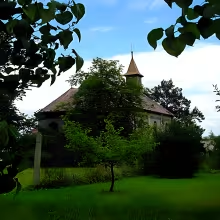
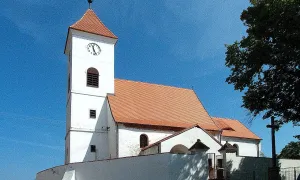
The Church of Saints Cyril and Methodius in České Budějovice is a significant historical monument located in the Suché Vrbné district. Completed in 1935, this Neo-Romanesque church serves as both a place of worship and a reflection of early 20th-century Czechoslovakia's architectural trends and community spirit. Its construction was driven by the local population's growing need for their own parish center.
The origins date back to 1923 when Monsignor Václav Řepa, then a priest in Dobrá Voda, initiated a fundraising campaign to meet the increasing demand for a church in Suché Vrbné. This led to purchasing land in 1926 where the church now stands. Construction began in March 1935, based on designs by Budějovice architect Procházka, and was completed within a year. Prague architect Major planned the interior paintings, executed by Jelínek and Bašný. The church was consecrated on December 26, 1935, with over a thousand attendees.
Architecturally, it features a single-nave structure, presbytery, and two sacristies in the Neo-Romanesque style. Its dimensions create an imposing yet harmonious structure: a nave measuring 17×10 meters, a presbytery with an 8-meter radius, and a height of 16.5 meters. The bell tower reaches 9.5 meters. Notably, it houses a bell named after Saint Wenceslas weighing 145 kg, originally from the Budějovice Church of St. Anne. Frescoes in the Beuronese style by Jelínek and Bašný adorn the interior, depicting figures such as Bishop Bárta and architect Procházka.
Following its completion, a monastic building was constructed adjacent to the church in 1936. This structure served various purposes over the years, housing těšitelé until 1950 and later becoming a Kněžský domov for elderly priests from 2000 onwards. The surrounding garden features a cross dated 1876, originally intended for another location.
Today, the Church of Saints Cyril and Methodius remains an active parish center, continuing to serve its community's spiritual needs. Its historical significance, architectural beauty, and artistic elements make it a worthwhile visit for those interested in Czech history and architecture. Visitors are invited to explore this remarkable monument, which stands as a testament to České Budějovice's cultural and religious heritage.
Historical milestones
- 1935
- Construction of the Church of Saints Cyril and Methodius began.
- 1936
- A monastic building was constructed adjacent to the church.
Architectural development
Construction began in March 1935 based on designs by Budějovice architect Procházka and interior paintings were planned by Prague architect Major, with Jelínek and Bašný as the painters. The church was completed within a year, showcasing Neo-Romanesque architectural elements.
Historical events
In 1923, Mons. Václav Řepa initiated a fundraising campaign for the construction of the church to meet the growing needs of the local community in Suché Vrbné.
The church was consecrated on December 26, 1935, with over a thousand attendees witnessing the ceremony led by Mons. Václav Řepa.
Points of interest
- The church's bell tower is notably shorter than the main structure, reaching only 9.5 meters in height, which contrasts with the overall imposing scale of the building.
- Although designed to reflect early 20th-century Czechoslovakia's architectural trends, the interior frescoes are executed in the Beuronese style, a somewhat unexpected artistic choice given its origins from a German Benedictine monastery.
Guide
Show guide text
Welcome to the Church of Saints Cyril and Methodius in České Budějovice—a remarkable testament to Neo-Romanesque architecture completed in 1935. As you stand here at this historic site, imagine stepping back into a time when Czechoslovakia was embracing new architectural expressions that would define its cultural landscape.
The church's structure is impressive with its single nave design, complemented by a presbytery and two sacristies. The harmonious proportions of the building create an imposing yet balanced appearance. As you look around, take in the overall scale of this edifice; it’s a sight that commands respect and admiration.
Construction of this church began in 1935, with Mons. Václav Řepa playing a significant role in its development. The following year saw the addition of an adjacent monastic building, further enhancing the site's spiritual and architectural significance. This period was marked by a desire to reflect the cultural identity of early 20th-century Czechoslovakia through architecture.
As you explore this space, direct your attention to the interior frescoes crafted by Jelínek and Bašný. These artworks add an artistic layer to the church's already rich architectural narrative. The frescoes are a testament to the creative spirit that flourished during this era, capturing both religious themes and local cultural motifs.
An interesting feature of this church is its bell tower. Unlike many others, it stands at only 9.5 meters in height—remarkably shorter than the main structure itself. This unique design choice adds an intriguing contrast to the building's overall grandeur, inviting you to ponder the architectural decisions that shaped its final form.
Now, let your curiosity guide you further as you explore this historic site. Each corner and detail tells a story of faith, artistry, and community. We invite you to continue discovering more about this remarkable place, where history and beauty converge in a truly inspiring way. Thank you for joining us on this journey through the Church of Saints Cyril and Methodius.
Tips for visitors
The best time to visit the Church of Saints Cyril and Methodius is during late spring or early autumn when the weather is pleasant, allowing you to comfortably explore both the church grounds and its surrounding garden. Visiting during these seasons also offers the advantage of fewer crowds, providing a more serene experience. The Neo-Romanesque architecture can be appreciated in better light conditions without the harsh midday sun or the chill of winter.
Parking is available nearby, though it's advisable to check for availability as spaces may fill up quickly on weekends and holidays. Public transport options are accessible, with several bus lines serving České Budějovice, making it easy to reach the church without a car. For those using public transportation, ensure you check the latest schedules online or through local transit apps.
When planning your visit, consider bringing comfortable walking shoes as exploring the area around the church and its garden can be more enjoyable on foot. A camera is recommended for capturing the intricate details of the Neo-Romanesque architecture and the serene beauty of the surrounding landscape. The best spots for photography include the front façade of the church during the golden hour, when sunlight enhances the textures and colors.
For families with children, the Church of Saints Cyril and Methodius offers a peaceful environment to explore the rich history and architectural beauty. Nearby, within 30 minutes, is Suché Vrbné, where you can find additional attractions like local parks or historical sites that are family-friendly. Engaging children in stories about the church's significance and its saints might make the visit more interactive and educational.
Businesses nearby
Do you run a restaurant, accommodation, shop, museum, rental, wellness or other visitor service near this monument? Show yourself directly to the people heading to it — this is how they will see you in the app and on the web:
Nearby
Located in Suché Vrbné, České Budějovice, the church is surrounded by a garden featuring a cross from 1876 originally intended for another location.
Accommodation nearby
Trips and activities nearby
Guided tours, tickets and activities nearby from GetYourGuide
Search tours and activities →Themed route
Tematická výletní trasa: Kostel svatého Cyrila a Metoděje
1. Kostel svatého Cyrila a Metoděje *Typ:* Kostel *Proč stojí za návštěvu:* Tento barokní kostel, nacházející se v Suchém Vrbné, je nejen duchovním centrem, ale také architektonickou perle Českých Budějovic. Jeho bohatý historický význam a krásná barokní architektura ho činí nezbytnou návštěvní pro lidi zamilované do dějin a umění.
2. Zahrada kostela *Typ:* Zahrada *Proč stojí za návštěvu:* Okolní zahrada s křížem z roku 1876 dodává klidnou atmosféru a poskytuje ideální prostor pro relaxaci. Kříž, původně určený jinde, představuje zajímavou historii a je významným prvkem zahrady.
3. Kříž z roku 1876 *Typ:* Historická socha *Proč stojí za návštěvu:* Tento kříž, který byl přenesen do zahrady kostela, je fascinujícím historickým artefaktem. Jeho přítomnost v této lokalitě vypráví zajímavou příběh o jeho původní destinaci a poskytuje vhled do minulosti regionu.
Tato trasa nabízí návštěvníkům možnost prozkoumat nejen kostel svatého Cyrila a Metoděje, ale také jeho okolní zahrady a historický kříž, což vytváří komplexní dojem o této lokalitě.
Seasonal recommendations
Spring: Visiting the Church of Saints Cyril and Methodius during spring offers a unique experience as nature awakens around České Budějovice. The vibrant colors from blooming flowers and lush greenery create a picturesque backdrop for the historic architecture, enhancing its aesthetic charm. Natural light floods the interior through stained glass windows, casting colorful patterns that change with the time of day. Visitors should take advantage of the mild weather by dressing in layers to accommodate fluctuating temperatures. Although spring tends to attract fewer tourists than summer, it's wise to plan your visit during weekdays or early mornings to avoid any potential crowds.
Summer: Summer is an ideal time for exploring the Church of Saints Cyril and Methodius when the days are long and warm, perfect for leisurely sightseeing in České Budějovice. The church often hosts events and activities that celebrate its rich history, making it a lively place to visit during this season. With the high tourist influx, especially in the main summer months, arriving early in the morning is recommended to enjoy a more peaceful experience before the crowds gather. Light clothing is advisable due to the warm weather, but comfortable walking shoes are essential for navigating the city's cobblestone streets.
Autumn: Autumn brings a serene and cozy atmosphere to the Church of Saints Cyril and Methodius, as the surrounding landscape transforms into shades of orange, red, and gold. The cooler temperatures make it an ideal time for photography enthusiasts eager to capture the historic church amidst the changing foliage. As daylight hours shorten, planning your visit during mid-morning can ensure you have ample natural light to appreciate both the interior details and exterior views. Layered clothing is recommended to stay comfortable as temperatures drop throughout the day.
Winter: Winter offers a magical setting for visiting the Church of Saints Cyril and Methodius in České Budějovice, with snow-covered streets and festive decorations enhancing its historic charm. The church's warm interior provides a welcoming contrast to the chilly outdoor conditions, making it a perfect spot for those seeking respite from the cold. Due to shorter daylight hours and potential weather-related closures, checking opening times in advance is advisable. Dressing warmly in layers and wearing waterproof footwear will ensure comfort during your visit, while enjoying the unique winter ambiance of this historic site.
Visualizations and artistic views

Vizualizace jsou generovány umělou inteligencí a slouží jako inspirace.


Atmosphere of the place
Atmospheric visualization of the setting and era
Tips from visitors
No tips yet. Be the first!
Log in and add your tip.


Reviews and comments