



Kostel svatého Filipa a Jakuba (Velešín) Church
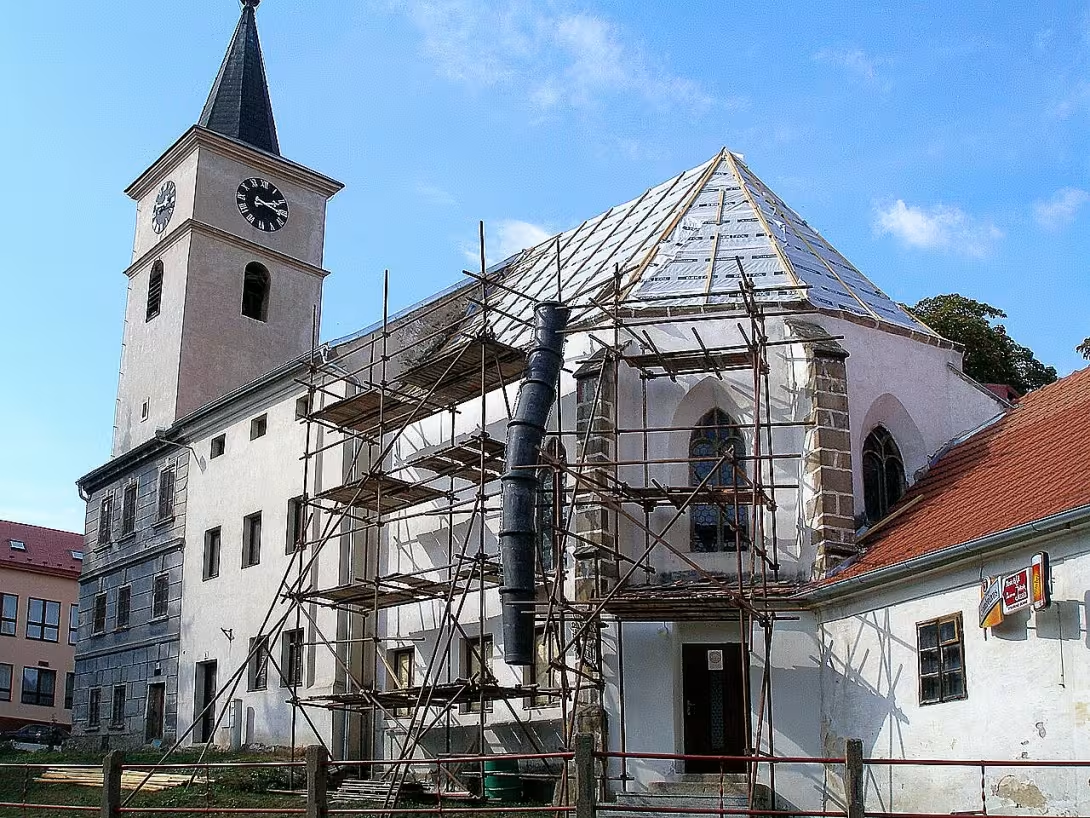
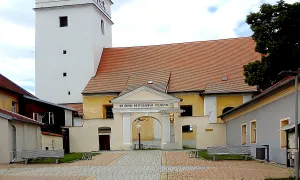
The church of St. Philip and James in Velešín is a former Roman Catholic temple located in the Square of J. V. Kamarita, where together with the Town Hall it creates a dominant whole in its eastern part. His fates reflect the great historical changes experienced by Czech over the last four and a half centuries - from medieval construction to Josephine reforms to modern use as cultural centers.
The treasure of the church remains a mystery to this day. Although Velešín was not a larger village and one temple was already standing here, someone decided to build a second church dedicated to Saint Philip and Jacob at the end of the 15th century. No documents have been retained on the construction or financing process. Only the consecration of the church in 1491 by Bishop Benedict of Valdštejn is known. In the same year, the Old Welsh Church of St. Wenceslas was restored and consecrated. During the 17th century, the temple received further building modifications. In 1631 he was added a tower with three bells, which historians associate with the advent of the noble families of the Kolikreitars and Kusak who settled in Velešín. Forty years later, in 1673, a sacristy was added. Although the temple was architectural, its liturgical use was modest - only two services served annually.
Radical change has come with the Yosephine reforms. In 1785, under the reign of Josef II, the church was abolished. Two years later, in 1787, it was sold to the Welsh village for 155 gold. The building stopped being a temple and became an ordinary house. The temple ship was divided and leased to private persons who had set up apartments there. A hospital was established in the presbytery, a prison was moved to the sacristy. This rebuilt temple served many purposes and during a long life used gradually as a school, since 1928 as a post office, after World War II as a seat of the Local National Committee. In the 1950s, there were other building modifications that tried to preserve preserved art elements, especially wall painting.
Although the church suffered a significant transformation, its architectural value was eventually recognised. In 1958 he was entered on the list of cultural monuments as an exceptional example of the use of a broken church building combining late Gothic and classical elements. After 1989 there were modifications leading with greater respect to the historical importance of the building. Today in house No. 89, which is built into the southern part of the former church, the City Museum and the Information Center are located, which makes a new sense.
Then and now
Drag the slider to compare how the landmark may have looked when it was built with the view today.
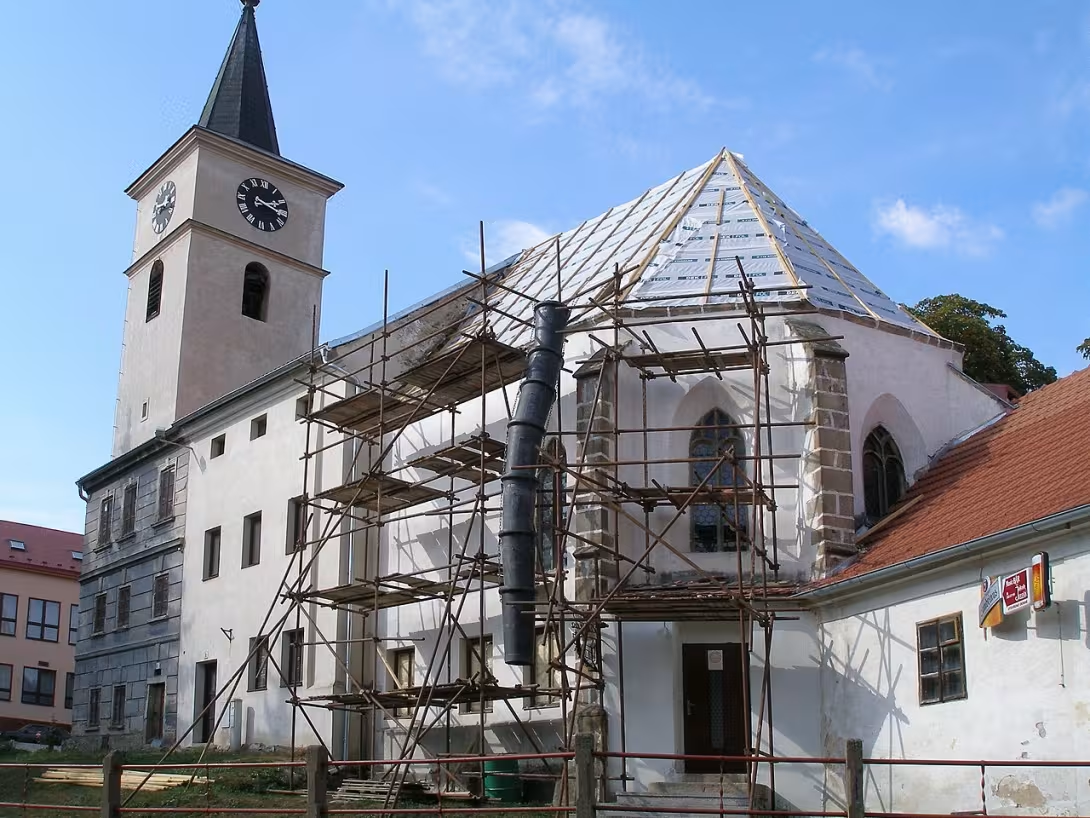

The historical appearance on the left is an AI-generated visualisation and serves as inspiration only.
Historical milestones
- 1491
- The ordination of the church of St. Philip and Jacob by Bishop Benedict of Valdštejn.
- 1631
- Adding a tower with three bells, probably at the behest of the ruling families.
- 1785
- Cancellation of the church as part of the josephin reforms, then sold to the village.
- 1958
- Putting the church on the list of cultural monuments.
Architectural development
The church was founded at the end of the 15th century in a late Gothic style. In 1631, a tower with three bells was built, probably at the initiative of the ruling families Kolikreitars and Kunav. The sacristy was added in 1673. After the abolition in 1785, the temple ship was converted into flats, the presbytery served as a hospital and sacristy as a checkout. Later modifications (20th century) preserved some Gothic elements, but did not maintain the original breakdown of space. In the 1990s, modifications took place with regard to historical significance.
Historical events
- 1491
- The ordination of the church by Bishop Benedict of Valdštejn, together with the repair of the older church of St. Wenceslas.
- 1785
- Cancellation of the church as part of the josephin reforms, then sold to the village.
- 1958
- Putting the church on the list of cultural monuments.
- 1989
- The beginning of sensitive building modifications taking into account historical significance.
Owners
1491-1785 – Roman Catholic Church (parish Velešín); 1787-1950 – municipality Velešín (later townships); from 1950 – municipality Velešín (used for various purposes, including museums).
Points of interest
- The creation of the church of St. Philip and James is surrounded by mystery, as no evidence of its construction or financing is preserved.
- The church was consecrated in 1491 by Bishop Benedict of Valdštejn, as well as the restored older church of St. Wenceslas in Velešín.
- In 1631, a tower with three bells was added to the church, which related to the arrival of the noble families of the Kolikreitars and Kunaz.
- In 1673, sacristy was added to the church, even though it served only two yearly services.
- In 1785 the church was abolished with Josephine reforms and sold to the village two years later for 155 gold.
Guide
This guide is narrated by a synthetic voice generated by artificial intelligence.
Show guide text
This text was created by artificial intelligence and has not been editorially reviewed. It may contain inaccuracies.
The Church of Saint Philip and James in Velešín is a former Roman Catholic church from the late fifteenth century. During the Josephine reforms, it was closed and converted into apartments. The combination of late Gothic with Classicist modifications and the unusual fate of the building led to it being listed as a cultural monument in nineteen fifty-eight. Together with the adjacent town hall, it forms a striking landmark on the eastern side of Velešín square.
To this day, it remains unclear why such a church was built on the square at all. Velešín was not a large settlement and there was already another church there, dedicated to Saint Wenceslas. No documents have been preserved concerning either the construction or its financing. We only know that the church was consecrated in fourteen ninety-one by bishop Benedict of Valdštejn. In the same year, the older Church of Saint Wenceslas, which had been repaired, was also reconsecrated.
In sixteen thirty-one, the church received a tower with three bells. The extension probably relates to the noble families of Kolikreitar and Kunaš, who settled in Velešín at that time. In sixteen seventy-three, a sacristy was added. Nevertheless, the church was used very little. In the seventeenth and eighteenth centuries, only two services were held there per year.
Under the rule of Joseph the Second, the church was closed in seventeen eighty-five, and two years later the town purchased it for one hundred fifty-five guilders. The church nave was then sold to private individuals, who set up apartments in it. A hospital was established in the presbytery and a guard house in the sacristy. The building retained many late Gothic features until a fire in nineteen oh-six.
The spaces in the nave then served various purposes. Besides apartments, a school temporarily had its seat there, from nineteen twenty-eight the post office, and after the Second World War offices of the Local National Committee. Building modifications took place in the nineteen fifties. Although these protected valuable artistic elements, such as wall paintings, they divided the space inappropriately for new uses. From nineteen fifty-seven to nineteen sixty-one, it housed the city archive, and later served as storage for Civil Defence or as a clubhouse for the Socialist League of Youth.
With consideration for the historical value of the building, the church was restored beginning after nineteen eighty-nine. In the building with street number eighty-nine, which is built into the southern part of the church, an information centre and the City Museum are now located.
Tips for visitors
Best time to visit the church of St. Philip and James in Velešín is during the morning hours after opening, when there is a quiet and pleasant light to view the interior. During the summer months it is advisable to avoid the noon hours when the church is often visited by tourists. If you want to experience the atmosphere of the place at sunset, it is recommended to visit in late afternoon hours when light illuminates the facade and creates picturesque shadows.
The church is available by car, parking is possible in public parking lots in the centre of the village. It is recommended to arrive on your own vehicle as public transport to Velešína is not very common. Check the current connection and transport options in the traffic search engine. It is possible to park around the church in a safe and accessible place, which is marked for visitors to historical monuments.
When visiting the church, wear comfortable clothes and shoes as it is an older building with stone stairs and uneven surface. The interior is cold, so bring a light sweater or coat. For a more comfortable tour you can take a map or guide with information about the history of the church, which is available on site.
Photography is allowed in the church, but it is recommended to look for places with natural light such as window openings or access portal. The best photos can be taken in the morning or afternoon light, when the lighting is mild and creates pleasant shadows. In the interior it is advisable to take pictures with the light on to avoid dark and rough images.
In the vicinity of the church of St. Philip and James is worth visiting the church of St. Wenceslas, located in the centre of the village and is just a few minutes' walk away. This older church from the 13th century offers an interesting view of the history of the region and is an ideal addition for your tour. Another interesting thing is the town hall in Velešín, located near both churches and brings another historical context.
For families with children, a visit to the church of St. Philip and James is an interesting opportunity to explore history and architecture. Children can see the old stone sculptures and detailed decorations that fascinate them. It is possible to play on a small playground around the church or to see the surrounding nature. It is also interesting for children to compare two churches in Velešín, which can bring them a better understanding of historical changes in the region.
Frequently asked questions
Is Kostel svatého Filipa a Jakuba (Velešín) open to the public?
Yes, the church is open to the public. The best time to visit is from September to May, when the weather is mild and the interior can be viewed without difficulty.
How do I get to the place by car / public transport?
The church is located in the heart of Velešína. By car you can reach the parking place in front of the church, public transport is available from Prague or České Budějovice.
How much is the entrance fee and is it paid on the spot?
Payment is made directly at the entrance.
Is the tour suitable for children and seniors?
Yes, a church tour is also suitable for families with children. Seniors can use wheelchair access to the church.
How long does the tour take?
The tour of the church takes about 30 minutes, but can be extended to an hour if you want to learn more about its history and architecture.
What are the opening times and booking is required?
The church is open from 9:00 to 17:00. Reservation is not necessary, but we recommend prior ordering for groups of over 10 people.
What's interesting in the immediate vicinity?
The town hall and the J. V. Kamarita Square are located in the immediate vicinity of the church. Other historical monuments such as the ruins of the chateau can be visited nearby.
For kids
Imagine going back to the past, when the church of St. Philip and James was the most sought after in Velešín. Who lived there? It was people who used to feed on agriculture, trade or practice crafts. And what happened here? There were weddings, funerals and other important events.
It was like a big house where all the activity took place. People came here to pray, to kiss and to buy something at the expense. To understand what was going on here, we need to see what the church looked like.
Businesses nearby
Do you run a restaurant, accommodation, shop, museum, rental, wellness or other visitor service near this monument? Show yourself directly to the people heading to it — this is how they will see you in the app and on the web:
Events nearby
Zdroj akcí: otevřená data měst a obcí ČR (Národní katalog otevřených dat) a kalendář akcí Národního památkového ústavu.
Accommodation nearby
Trips and activities nearby
Guided tours, tickets and activities nearby from GetYourGuide
Affiliate link: if you buy from the partner, we may receive a commission. The price for you does not change.
Search tours and activities →Themed route
1. Church of St. Philip and James * Type: * Gothic church from the 15th century with later Baroque adjustments. * Why visit? * It is a dominant sacral building Velešína, known for its fresco and historical importance to the region. The interior with original equipment and altar highlights its artistic and spiritual value.
2. Church of St. Wenceslas * Type: * Roman-Gothic church from the 13th century, adjacent to the church of St. Philip and James. * Why visit? * Older of both churches, connected to the early Christian history of the village. Its architecture and proximity to the main objective allow a comparative view of the development of sacral structures in the area.
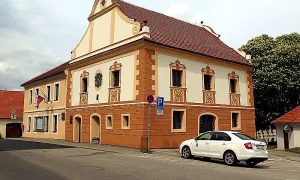
3. City Hall in Velešín * Type: * Classicist building from 18th century on J. V. Kamarita Square. * Why visit? * It represents local administrative traditions and urban development of the village. Its visit closes the circle of historical buildings in the centre of Velešína, which form a unique historical link.
Seasonal recommendations
Spring Velešín Church of St. Philip and Jakub is awakened to life in the spring months along with the surrounding nature - green meadows and flowering trees in the surrounding area provide the monument with an idyllic atmosphere, while the rays of the sun penetrating through glass stained glass windows create a game of colored glare on the stone walls. The sound environment is also specific: in the morning the singing of birds is heard, which is mixed with a quieter ringing from the church tower. Virtually, it is best to visit the church in the first half of spring, when visits are calmer than in the summer months, and this early morning, when light still does not blind the stained glass. Comfortable shoes are recommended for a possible visit to nearby gardens or cemetery, where the first spring flower blooms at this time. The temperatures are variable, so it is advisable to carry a light jacket or raincoat.
Summer In the summer months, the church is transformed into a living scene, where sunlight intensively illuminates its facade and interior, creating a dramatic contrast between the shadow of the inner chapel and the brightness of the outdoor space. The surrounding area is full of green, but also visitors - mainly in July and August, when the monument is often sought after by tourists. The best time to visit is early morning or late afternoon when the heat is more pleasant and the crowds are smaller. It is recommended light but sun protective clothing, hat and plenty of water, especially when visiting nearby gardens or nearby chateau. In summer evenings, there are often free cultural events around the church that add to the atmosphere.
Autumn Autumn brings to Velešína golden colour leaves and a calm, almost meditative atmosphere, where the church looks like a fairy tale, surrounded by forests and fields with maturing grain. The sun shines lower here, which creates fine, warm shades and shadows in the interior of the church that highlight statues and architectural details. The specific environment is also quiet - in September and October the monument is less visited, which allows a quiet tour without rush. It is recommended to wear warmer clothes, especially in November, when evenings can be cool, and comfortable shoes for walking around the forest. The best time is the afternoon, when light is not yet too weak, but the crowds are minimal.
Winter In the winter months, the church of St. Philip and James will turn into a mysterious, almost fairy-tale monument, surrounded by snow and fog, which gives its silhouette on the facade a mystical character. The interior is lit with artificial light, which creates an intimate, calm atmosphere, ideal for meditation or photography. The surroundings are quiet, but the opening hours of the church are shortened in December and January, so it is advisable to check the current hours in advance. Hot, layered clothes, waterproof shoes and gloves are recommended, especially when visiting in advent time when the paths to the monument can be frozen. The best time is the afternoon, when the light is still sufficient, but the attendance is lower than in the pre-Christmas rush.
Visualizations and artistic views


The visualisations are generated by artificial intelligence and serve as inspiration.
Photos from the area
Real photos taken near the monument


Zdroj a licence jsou uvedeny u každého snímku.
Atmosphere of the place
This atmospheric visualisation of the place and period was generated by artificial intelligence. It is not real footage of the location.
Tips from visitors
No tips yet. Be the first!
Log in and add your tip.
Sources and literature
Photos: Miloš Hlávka / Public domain — Wikimedia Commons. The author and licence also appear when you hover over the image.
Faktickým podkladem tohoto textu byl článek na Wikipedii, jehož autory jsou přispěvatelé Wikipedie. Článek je dostupný pod licencí CC BY-SA 4.0.
Location on the map
Příběhy a pověsti
Legendy, pověsti a příběhy spjaté s touto památkou
Fotografie návštěvníků
Zatím žádné fotografie. Buďte první, kdo přidá fotografii z návštěvy!
Log in a přidejte svou fotografii nebo hodnoťte.
Za ověřenou návštěvu v aplikaci získáte víc bodů — poznáme podle GPS, že jste na místě.
Reviews and comments