






Kostel svatého Gotharda (Brozany nad Ohří) Church
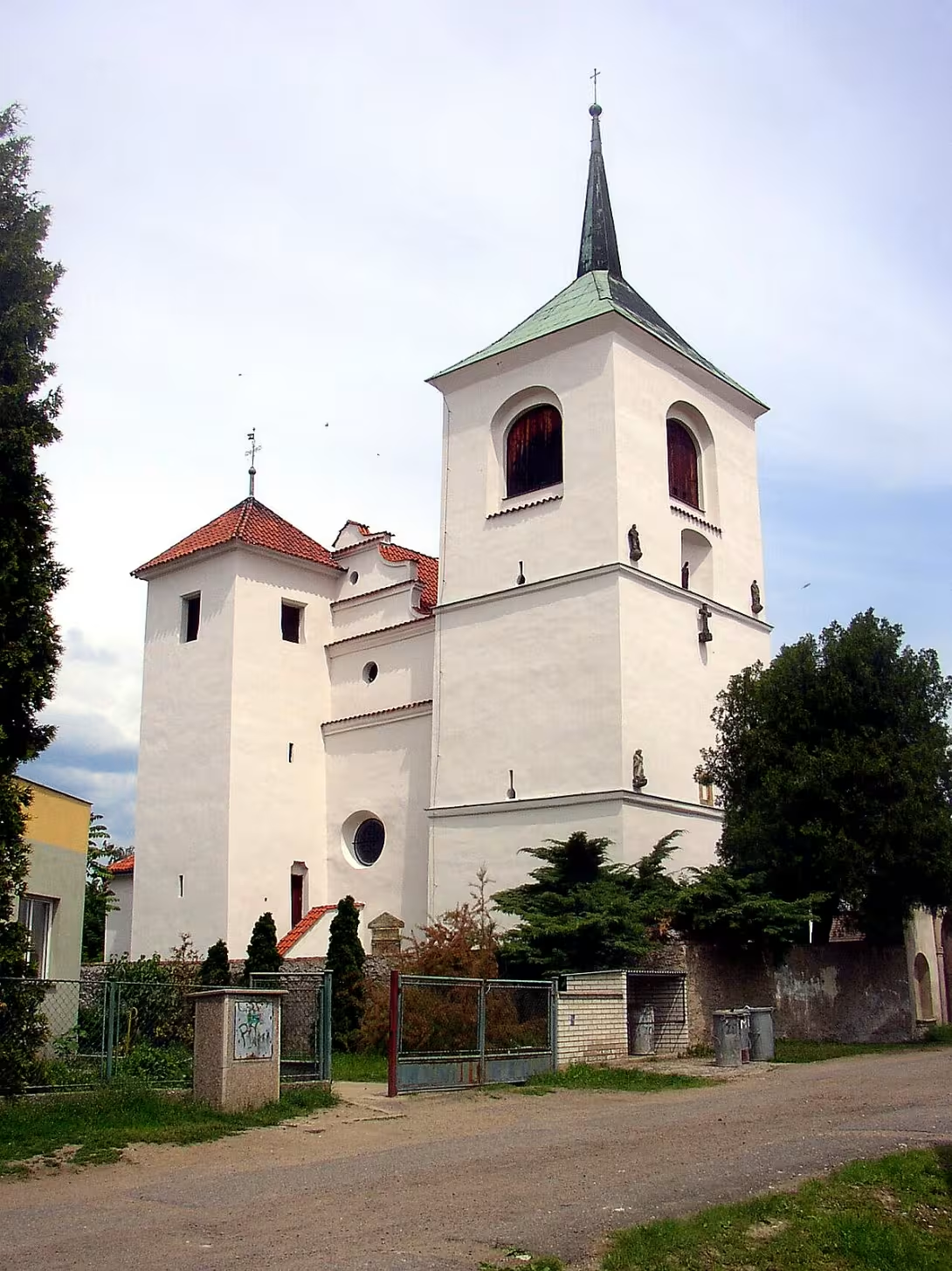
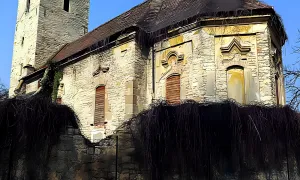
The Church of Saint Gothard in Brozany nad Ohří is an important historical monument, which has been an architectural evolution for centuries. Located in the village of Ústí region, it was originally built in Romanesque style in the early 13th century. In the 14th century, Gothic renovations followed, and in the 16th century, Renaissance modifications took place.
the church is famous for its rich interior, with wall paintings around 1350, renaissance altar of Saxony style from 1571- 1573, baptizable font, pulpit and numerous Renaissance tombstones and epitaphs. It serves as a burial ground for most members of the Brozana branch of the Výšovce family, thus increasing its historical importance.
Architecturally it began in the period of Romanesque with robust structures, rounded arches and strong walls. The Gothic transformation of the 14th century introduced verticality and lightness. The Renaissance adjustments in the 16th century added classic elements such as symmetry and proportion, reflecting the wider European trends of their times.
the church has a longitudinal boat with polygonal presbytery supported by seats from the 14th century. Important external elements include a round northwest tower and southern Renaissance bell tower. Western Romanesque Tower is built from square stone blocks, while the interior can be a late Renaissance vault with low ribs in the ship. Above the victory arch is a fresco from 1770.
An important feature inside is the main altar, a stone Renaissance piece created in 1571 by M. Jobst from Pirna, with columns, image reliefs and carved wings. Two other Renaissance altars from the second half of the 16th century have sound consoles and image reliefs. The church has a late Gothic pulpit with polygonal growth supported by pilasters decorated with palmette motifs. In the first chapel is a stone polygonal font surrounded by colonial arcades, with copper pan dating back to 1664. There are also four Renaissance tombstones from the second half of the 16th century.
The surrounding area adds historical interest. The Baroque statue of St. John Nepomuk on the pedestal stands in front of the church, dated 1726. Near is a Renaissance cemetery portal decorated with balls and a stone crown from the 16th century. The Empire-style chapel from the first half of the 19th century offers pilasters and triangle rectangle.
Today, the Church of St. Gothard remains a protected cultural monument in the Czech Republic, open to visitors to explore rich history and architectural beauty. His well-preserved state offers a view of religious and artistic development for centuries. As a place of worship and burial for the family of Vřešovce, it is a convincing destination for interested people in history, architecture and cultural heritage. Visitors are encouraged to experience this remarkable monument and appreciate its lasting legacy.
Then and now
Drag the slider to compare how the landmark may have looked when it was built with the view today.
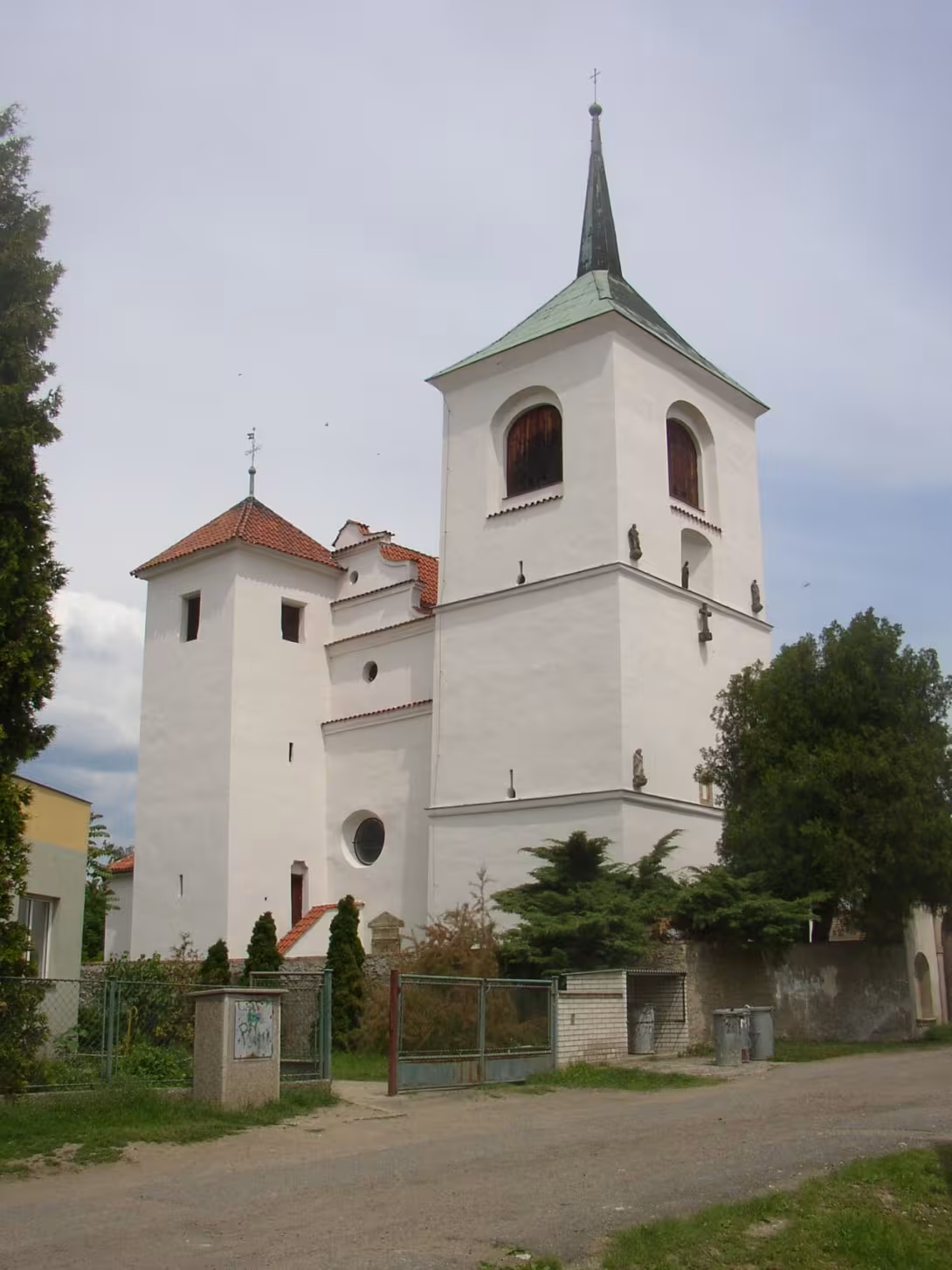
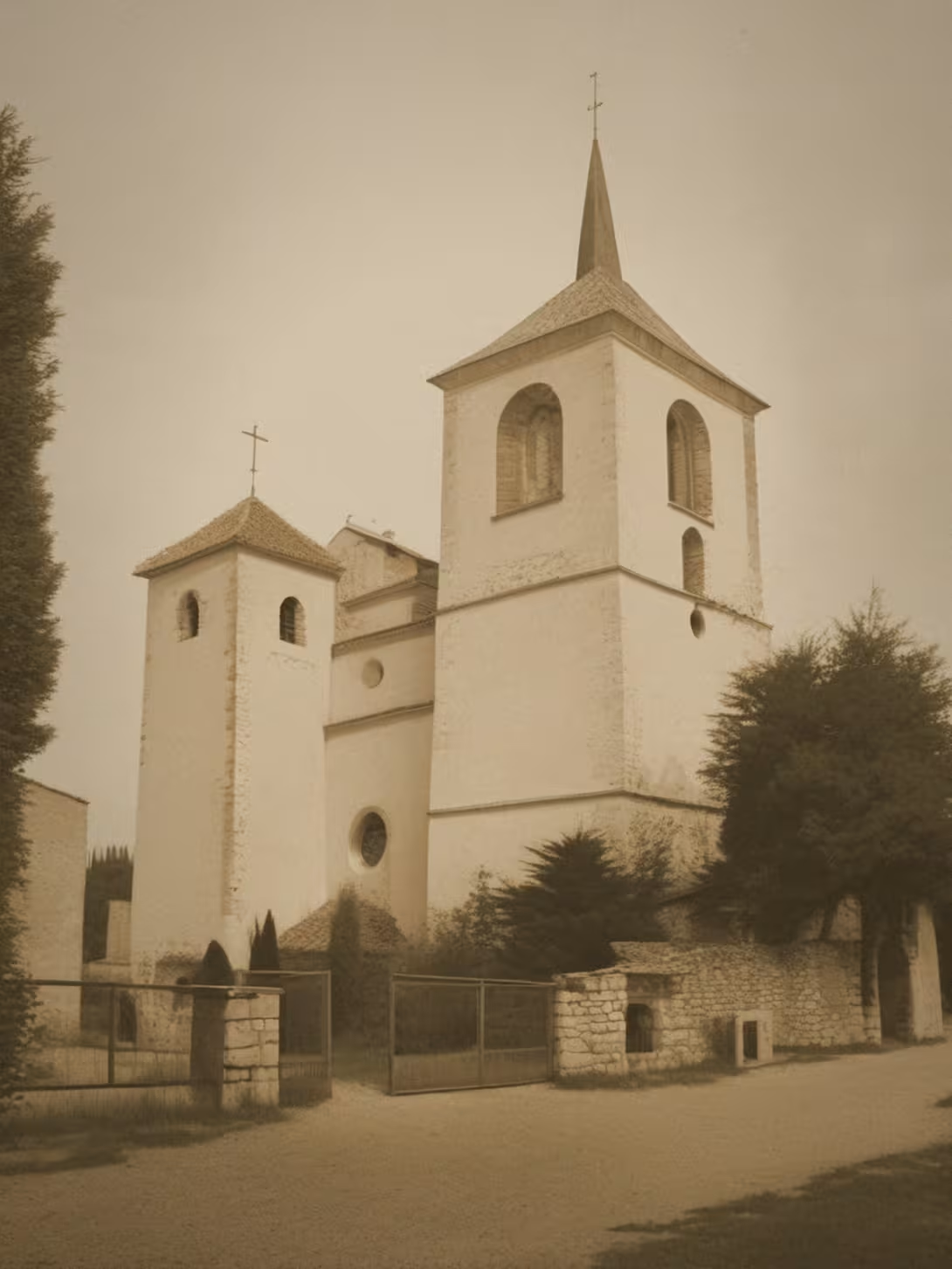
The historical appearance on the left is an AI-generated visualisation and serves as inspiration only.
Historical milestones
- around 1200
- The reception of the church in the romantic style.
- 14th Century
- Gothic renovation with a leading vertical and light.
- 1350
- The decoration of the state with fresco.
- 1571
- Construction of the main altar of Renaissance style.
- 1664
- Installed near the chalice.
- 1770
- The decoration of the fresco over the triumph of the arch.
Architectural development
The Church of Saint Gothard began as a Romanesque structure, later transformed into a Gothic style during the 14th century. It was further modified by Renaissance elements in the 16th century. The church has longitudinal and polygonal presbytery supported by 14-century butlets. Important architectural details include a round tower in the northwest corner and a Renaissance bell tower on the south side.
Historical events
the church was originally built in romanesque style in the second quarter of the 13th century.
In the 14th century she underwent Gothic reconstruction and in the 16th century renaissance adjustments.
Points of interest
- The Church of Saint Gothard has a hidden jewel in its interior: fresco over a triumphant arch dating back to 1770, which gently blends baroque and late Renaissance elements reflecting the artistic transitions of this era.
- A less well-known fact about architecture church is the presence of a round northwest tower. This unique function contrasts with typical square or rectangular towers, which are visible in other Romanesque buildings, and represents a significant regional adjustment.
Guide
This guide is narrated by a synthetic voice generated by artificial intelligence.
Show guide text
This text was created by artificial intelligence and has not been editorially reviewed. It may contain inaccuracies.
Welcome to St. Gothard's Church in Brozany nad Ohří, a remarkable testimony of centuries of architectural and spiritual evolution. As you stand before this honorable structure, take a moment to absorb its peaceful presence - a harmonious mixture of history and devotion that has resisted the test of time.
The origin of this church dates back to the second quarter of the 13th century when it was first built in Romanesque style. This basic period laid the foundations for what would become a wonderful structure, reflecting both the religious zeal and the architectural ambitions of his era. In the 14th century, Gothic renovations introduced elements of verticality and lightness that transformed the church into a more ethereal space that reached the heavens.
As you explore further, notice how each period has left its mark in this sacred place. The inner walls, decorated with frescoes from 1350, tell stories in vibrant shades and intricate details, call for contemplation and wonder. In 1571, the main altar was renovated in Renaissance style, showing how the era values symmetry and proportions.
One of the most interesting features of the church is the hidden jewel over the triumphant arch: the fresco from 1770, which smoothly blends baroque dynamics with late Renaissance elegance. This work of art serves as a visual narrative of artistic transformations that were passing through Europe at this time and offers a view of evolving aesthetic sensitivity.
The family of the Reich, remarkable figures in the history of the region, are closely linked to this church, their legacy intertwined with walls and spiritual life. Their contributions contributed to shaping not only the physical structure but also the cultural heritage of Brozany nad Ohří.
As you continue your research, take a moment to appreciate the craftsmanship of 1664 installation of the copper baptist font - which is proof of the permanent role of the church in the rites and traditions of the community.
Before we complete our journey in this historic place, I urge you to think about his rich tapestry of stories and styles. Every element inside these walls speaks to a chapter in history that invites us to immerse ourselves deeper into understanding the past.
Thank you for joining me in this survey of St. Gothard's Church. Let your visit inspire further curiosity and recognition for the intricate dance between art, architecture and spirituality that defines our common heritage. As you advance, carry with you the memories of this sacred place and its timeless beauty.
Businesses nearby
Do you run a restaurant, accommodation, shop, museum, rental, wellness or other visitor service near this monument? Show yourself directly to the people heading to it — this is how they will see you in the app and on the web:
Events nearby


Zdroj akcí: otevřená data měst a obcí ČR (Národní katalog otevřených dat) a kalendář akcí Národního památkového ústavu.
Nearby
There is a Baroque statue of St. John Nepomuk in front of the church on a pedestal dated 1726. The surrounding area is a Renaissance cemetery portal with balls and a stone crown from the 16th century. Near the Empire- style chapel from the first half of the 19th century offers pilasters and triangle rectangle.
Accommodation nearby
Trips and activities nearby
Guided tours, tickets and activities nearby from GetYourGuide
Affiliate link: if you buy from the partner, we may receive a commission. The price for you does not change.
Search tours and activities →Themed route
Thematic walking tour: Brozany nad Ohří
1. Kostel svatého Gotharda (Brozany nad Ohří) - Church Start your journey on the stunning Church of St. Gothard, a remarkable example of church architecture in Brozany nad Ohří. This church is not only important for its religious significance, but also as a historical monument reflecting centuries of cultural heritage. Explore his architectural details and experience the peaceful atmosphere surrounding this sacred place.
2. Baroque statue of St. John Nepomuk - Statue A short walk from the church, you will find an excellent Baroque statue of St. John Nepomuk standing on a pedestal dated 1726. This statue is worth visiting for its artistic beauty and historical significance, representing deeply rooted Catholic traditions in the region. Take a moment to appreciate the craftsmanship that has resisted the test of time.
3. Portal of Renaissance Cemetery - Portal Continue your research towards the nearby Renaissance cemetery portal. This portal dates back to the 16th century, decorated with balls and has an impressive stone vault. It is a fascinating view of the funeral arts and architecture period, which offers views of historical funeral procedures and artistic expression.
4. A Chapel in Empire style... Close your tour in the Empire-style chapel located close to the cemetery portal. This chapel comes from the first half of the 19th century and is characterized by its elegant pilasters and a distinctive triangle image. It's evidence of the architectural development of a region that blends classic elements with local styles.
This thematic walking tour offers a compact but rewarding experience with historical and cultural monuments Brozany nad Ohří, which provides an overview of the rich past area through preserved architecture and art.
Seasonal recommendations
Spring: The wall of St. Gothard's Church in Brozany nad Ohří in the spring season offers a one-way instrument space under the excellent settlement of the sun rays, which is part of the green leaves of trees and axes of historical architectural elements. The atmosphere is permitted with investments of shrubs in the surrounding area, which is entitled to support new activities. Practical advice deepens the onset early in the morning or late in the evening to avoid a conceived spring crowd of tourists. The carriers provide no information on the possible delay that can be used.
Summer: In the summer period, the Church of St. Gothard is a shining center for its own resources, which are attacked by transferred sunlight and a warm atmosphere. Green vegetation around the church offers new zones that are ideal for relaxing after production historical interiors. Summer approaches that it is not necessary to avoid higher time. Hot rounded and sun-protected, such as hats and brie, are persistent for use.
Autumn: The church's chateau in the autumn store offers melancholy beauty with busy tree leaves and mild temperatures under investigation. The atmosphere is quiet and quiet, often degrading historical details of the skeleton without disturbing crowds of tourists. New rules should be laid down for the non-implementation of the proposal, which should be listed in Annex II to this Regulation. This time is ideal for a quiet visit with the possibility and quiet atmosphere.
Winter: Winter launch of St. Gothard's Church in Brozany nad Ohří into a quiet place, where it is shrouded and offers architectural beauty under the pale sky. The atmosphere is soothing with silence to accompany a peaceful gaping landscape. The proposals to be made in accordance with Article 5 of Regulation (EC) No 1224 / 2009 are set out in the Annex to this Regulation. If they were introduced during the advent trade, this product may be intended for rich people who are destined for rebuilding.
Visualizations and artistic views


The visualisations are generated by artificial intelligence and serve as inspiration.
Photos from the area
Real photos taken near the monument


Zdroj a licence jsou uvedeny u každého snímku.
Tips from visitors
No tips yet. Be the first!
Log in and add your tip.
Sources and literature
Fotografie: User:Miaow Miaow / Public domain — Wikimedia Commons. The author and licence also appear when you hover over the image.
Faktickým podkladem tohoto textu byl článek na Wikipedii, jehož autory jsou přispěvatelé Wikipedie. Článek je dostupný pod licencí CC BY-SA 4.0.
Location on the map
More monuments – Brozany nad Ohří
Show all in the municipality
Příběhy a pověsti
Legendy, pověsti a příběhy spjaté s touto památkou
Příběh: Kostel svatého Gotharda (Brozany nad Ohří)
Bylo to v pondělí ráno, kdy Martin z Brozany nedokázal usnout, uvězněný v mřížce svého vlastního myšlení. Oheň na krbu jen halilo teplo, které se hrabalo po …
Číst příběh
Pověst: Kostel svatého Gotharda (Brozany nad Ohří)
Podle místní pověsti, jež se v Brozanech nad Ohří předává z generace na generaci, není kostel svatého Gotharda pouhou modlitebnou z kamene a malty. Je to mís…
Číst příběhFotografie návštěvníků
Zatím žádné fotografie. Buďte první, kdo přidá fotografii z návštěvy!
Přihlaste se a přidejte svou fotografii nebo hodnoťte.
Za ověřenou návštěvu v aplikaci získáte víc bodů — poznáme podle GPS, že jste na místě.
Reviews and comments