






Kostel svatého Havla (Čečelice) Church
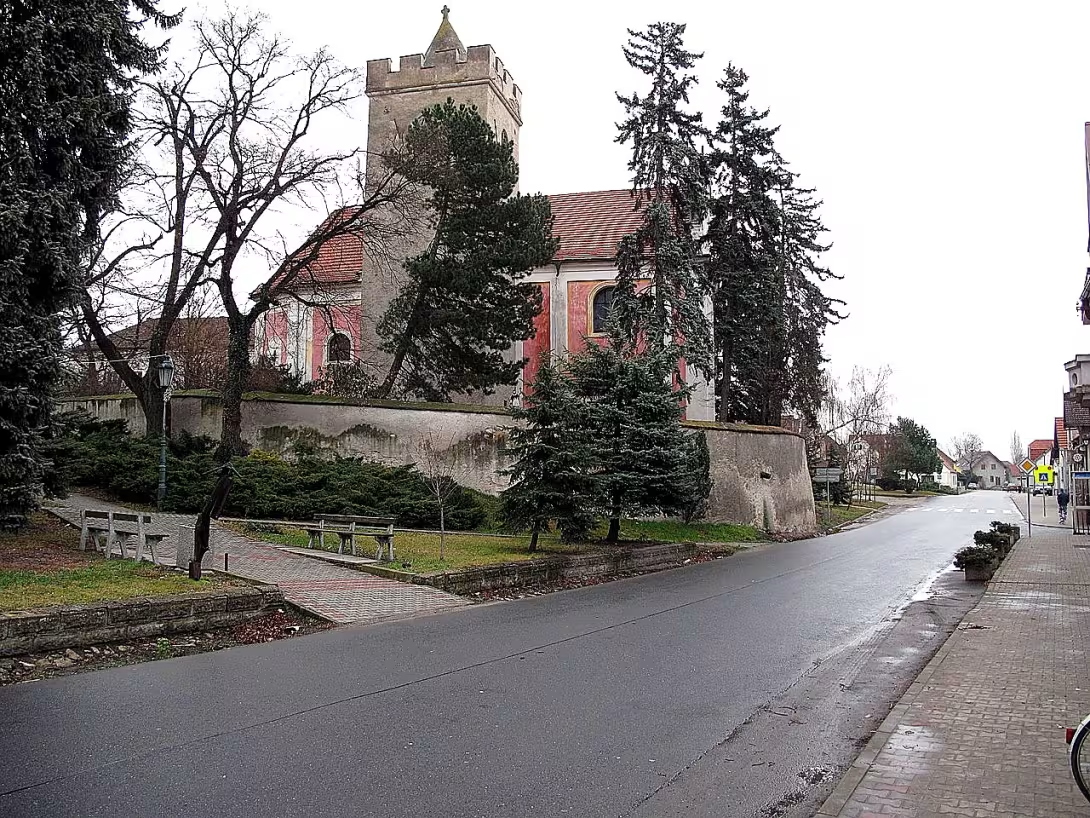
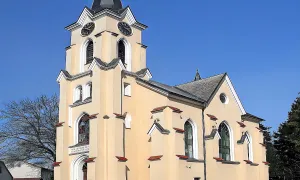
The Church of Saint Wenceslas in Čečelice is a Baroque sacred building protected as a cultural monument since 1966. Situated in the village of Čečelice within the Central Bohemian Region, this church is notable for its historical significance and architectural evolution from Romanesque origins to a Baroque masterpiece. Originally constructed in the early 13th century, it was rebuilt at the end of the 17th century following designs by Mark Antonín Canevalli. The church features a non-orientated layout with its presbytery facing north and retains elements from its Romanesque predecessor, including a tower with two merged windows above each other.
The village of Čečelice first appears in historical records in 1252, when the church was already established at the center of the settlement. The original Romanesque structure dates back to the early 13th century and was built by the Doksany construction workshop. This initial edifice survived tumultuous periods such as the Hussite Wars and the Thirty Years' War, likely undergoing modifications during subsequent restorations. Between 1694 and 1711, a significant transformation occurred when the current Baroque structure replaced the old church according to Mark Antonín Canevalli's project. This new construction was built perpendicular to the original layout, integrating parts of the Romanesque tower into its design.
Architecturally, the Church of Saint Wenceslas is characterized by its single-nave rectangular form with a narrower apse ending the presbytery. The non-orientated structure features a preserved Romanesque tower on the western side, which includes two merged windows and a tribune. The church's main facade has three axes, divided by pilasters and framed by lisenes, while its gable roof is topped with an octagonal lantern surrounded by a parapet at the cornice level. Inside, the presbytery boasts a cross vault, culminating in a barrel vault with lunettes, whereas the nave features flat wooden ceiling beams.
The church's interior is adorned with furnishings primarily from the late 17th century and around 1700. The main altar, a portico-style piece from the latter half of the 17th century, showcases sculptures of Saint Wenceslas and Saint George. Additional altars include one dedicated to Saint Sebastian, featuring large-leaf acanthus motifs, and another honoring Saint Roch with similar decorative elements. A Baroque statue of Saint John Nepomucene from the 18th century graces an early Baroque altar. The pulpit is embellished with boltwork ornamentation, dating back to the same period. Among its notable artifacts is a heraldic tombstone for Marianna Smrčková from Mnichu and Čečelic, depicting her husband's coat of arms.
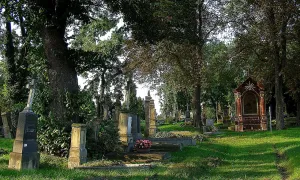
Surrounding the church is an old cemetery, with a parish building located to the north. East of the village lies a Baroque oratory featuring a popular statue of Saint John Nepomucene. Additionally, a newer oratory dedicated to Our Lady stands near a spring within the village. On the village square, visitors can find a sculpture of Saint Wenceslas from 1912 and an iron cross dating back to 1835, mounted on a stone base.
Today, the Church of Saint Wenceslas remains a testament to its rich historical tapestry and architectural evolution. Its preservation as a cultural monument underscores its significance within the region's heritage. Visitors are invited to explore this remarkable site, where history and artistry converge in a serene setting that continues to captivate those who appreciate the enduring legacy of Baroque architecture.
Then and now
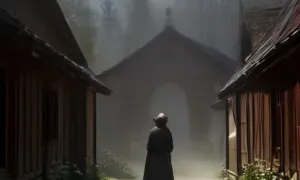
Drag the slider to compare how the landmark may have looked when it was built with the view today.
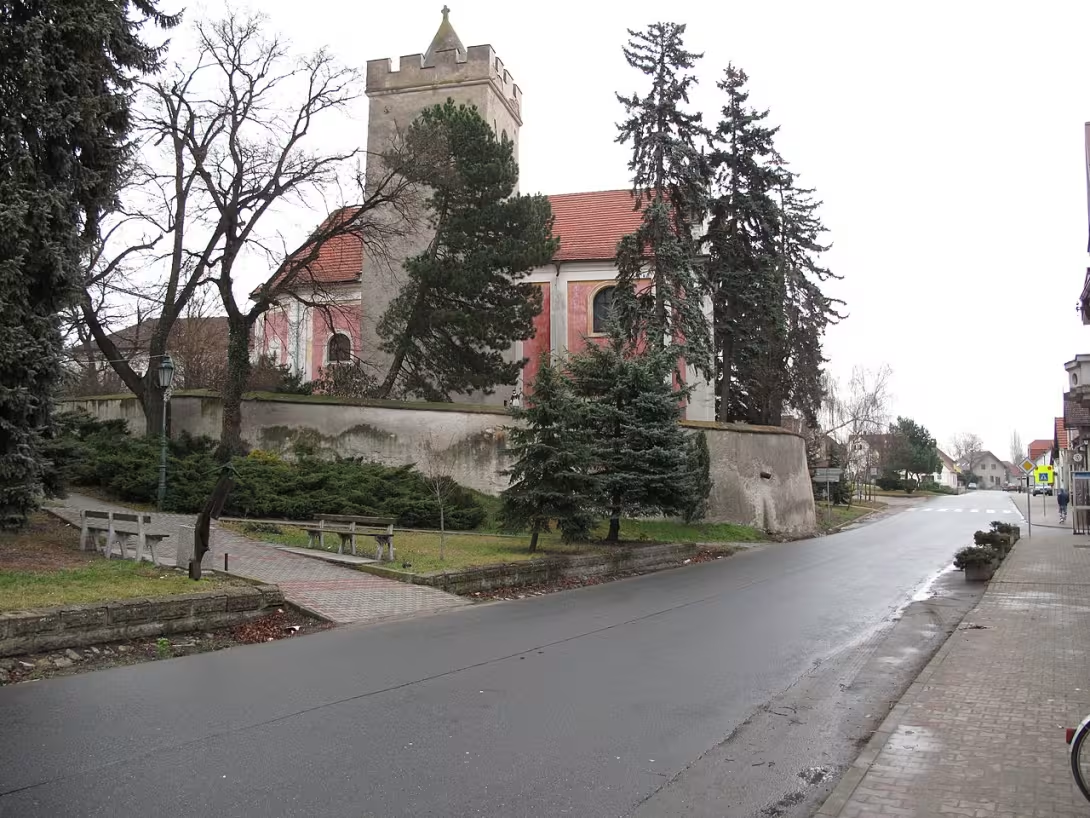

The historical appearance on the left is an AI-generated visualisation and serves as inspiration only.
Historical milestones
- 1252
- The village is first mentioned, with the church already standing at its center.
- 1694-1711
- Construction of the new baroque church according to Mark Antonín Canevalli's project.
Architectural development
The Church of Saint Wenceslas underwent significant architectural transformation from its Romanesque origins in the early 13th century to a baroque style at the end of the 17th century. The original structure was rebuilt by Mark Antonín Canevalli, resulting in a new church built perpendicular to the old one. This transition included retaining parts of the original tower and integrating them into the new design.
Historical events
The original Romanesque church was built in the early 13th century by the Doksany construction workshop.
Between 1694 and 1711, the current baroque structure replaced the old church according to Mark Antonín Canevalli's project.
Points of interest
- The Church of Saint Wenceslas in Čečelice has a unique non-orientated layout with its presbytery facing north, which is atypical for churches that traditionally face east.
- Despite surviving the tumultuous periods of the Hussite Wars and the Thirty Years' War, the church underwent significant architectural transformation between 1694 and 1711 to become the Baroque masterpiece it is today.
- The original Romanesque structure's tower was ingeniously integrated into the new Baroque design, featuring two merged windows that hint at its medieval origins.
- The main altar of the church includes sculptures of Saint Wenceslas and Saint George, reflecting the local veneration for these figures and their historical significance in Bohemia.
- A heraldic tombstone within the church commemorates Marianna Smrčková from Mnichu and Čečelic, showcasing the intricate family crests and personal histories preserved in this sacred space.
Guide
This guide is narrated by a synthetic voice generated by artificial intelligence.
Show guide text
This text was created by artificial intelligence and has not been editorially reviewed. It may contain inaccuracies.
Welcome to the Church of Saint Wenceslas in Čečelice, a remarkable testament to history and architecture nestled in the heart of this picturesque village. As you stand before it, take a moment to absorb its presence—a baroque masterpiece that has withstood the test of time, protected as a cultural monument since 1966.
The origins of this sacred site trace back to the early 13th century, when Čečelice was first mentioned in historical records. At the heart of the village stood an earlier church, its Romanesque foundations laying the groundwork for what would become today's architectural marvel. Fast forward to between 1694 and 1711, a significant transformation took place under the guidance of architect Mark Antonín Canevalli. His vision brought forth a new baroque structure that replaced the older building, infusing it with elegance and grandeur while retaining elements from its predecessor.
As you approach the church, notice its unique non-orientated layout—an architectural curiosity as its presbytery faces north instead of the traditional eastward direction. This distinctive feature sets it apart from many other churches and invites a deeper appreciation for its design. The baroque style is evident in the intricate details that adorn the facade, beckoning you to explore further.
Though specific historical figures tied directly to this site remain largely unknown, the church's resilience through turbulent times like the Hussite Wars and the Thirty Years' War speaks volumes about its significance. Its survival and transformation over centuries reflect a story of endurance and adaptation.
One intriguing aspect that might pique your curiosity is the church's unusual orientation. This architectural decision challenges conventional norms and invites speculation on the influences or necessities that led to such a design choice.
As you conclude your visit, I encourage you to continue exploring Čečelice and its surroundings, where history whispers through every corner. Thank you for joining me in this journey through time at the Church of Saint Wenceslas. Safe travels as you discover more hidden gems in Středočeský kraj.
Tips for visitors
The best time to visit the Church of Saint Wenceslas in Čečelice is during late spring or early autumn when the weather is pleasant, allowing for comfortable exploration of both the church and its surroundings. During these seasons, the surrounding cemetery and nearby natural areas are particularly beautiful, with blooming flowers and lush greenery enhancing the historical ambiance.
The church and its vicinity are accessible by foot from these transportation hubs.
When visiting, it's advisable to bring comfortable walking shoes as you'll likely explore the area on foot. A camera is recommended for capturing the picturesque views of the baroque architecture and serene cemetery. Additionally, consider bringing a light jacket or sweater, especially if visiting in early spring or late autumn, when temperatures can be cooler.
For photography enthusiasts, the best spots include the church itself to capture its baroque features, particularly during golden hour when the sunlight enhances the building's details. The old cemetery offers unique photo opportunities with its historic gravestones and tranquil atmosphere. Additionally, photographing the statue of Saint John Nepomucene in the nearby oratory can provide a striking subject.
Nearby attractions within 30 minutes include the baroque oratory east of Čečelice, which houses a popular statue of Saint John Nepomucene, and another newer oratory dedicated to Our Lady near a village spring. These sites offer additional historical and cultural insights into the region's religious heritage.
For families with children, the Church of Saint Wenceslas provides an educational outing with its rich history dating back to the 13th century. The nearby cemetery can be intriguing for older children interested in local history. Ensure young children are engaged by explaining the significance of the sites and perhaps planning a small picnic near the spring or oratory, making it a fun family day out.
Frequently asked questions
Can the monument be visited?
Religious buildings are usually open mainly during services; at other times a visit is normally arranged with the parish or the operator. We have not verified specific times.
Where is the monument?
Location: Čečelice, Středočeský kraj. The map on this page shows the exact spot.
Why is the monument protected?
It is listed in the Central List of Cultural Monuments of the Czech Republic as a cultural monument (register no. 15827/2-1294).
Businesses nearby
Do you run a restaurant, accommodation, shop, museum, rental, wellness or other visitor service near this monument? Show yourself directly to the people heading to it — this is how they will see you in the app and on the web:
Nearby
Surrounding the church is an old cemetery, with a parish building to the north. Nearby, there is a baroque oratory east of the village, housing a popular statue of Saint John Nepomucene. Additionally, a newer oratory dedicated to Our Lady stands near a spring in the village.
Accommodation nearby
Trips and activities nearby
Guided tours, tickets and activities nearby from GetYourGuide
Affiliate link: if you buy from the partner, we may receive a commission. The price for you does not change.
Search tours and activities →Themed route
Thematic Walking Tour: Čečelice
1. Kostel svatého Havla (Čečelice) - Church Begin your journey at the heart of Čečelice with the Church of Saint Wenceslas, a significant religious and architectural landmark in this quaint village. This church stands as a testament to the area's rich history, offering visitors a glimpse into its past through its serene atmosphere and historical significance.
2. Old Cemetery - Historical Site Just surrounding the church is an old cemetery that provides a tranquil setting for reflection on the village’s heritage. Stroll among the ancient gravestones to appreciate the deep-rooted traditions and stories of those who once called Čečelice home, making it a poignant stop in your exploration.
3. Baroque Oratory - Religious Site A short walk east from the village leads you to a baroque oratory, renowned for housing a popular statue of Saint John Nepomucene. This site is an excellent representation of local religious art and devotion, offering insight into the spiritual life that has shaped the community over centuries.
4. Oratory Dedicated to Our Lady - Religious Site Nearby, discover another oratory dedicated to Our Lady, located near a village spring. This newer structure complements its baroque counterpart by adding modern elements of worship while still maintaining traditional values. The presence of the spring adds an element of natural beauty and tranquility to this spiritual site.
5. Parish Building - Community Center Conclude your tour at the parish building situated to the north of the church. This community hub often hosts various events and activities, reflecting the vibrant social life of Čečelice. It serves as a perfect place to learn more about local customs and engage with residents who can share personal stories and insights into village life.
This thematic walking tour provides an enriching experience through Čečelice's historical and religious landmarks, offering a deep dive into the cultural tapestry of this charming Středočeský kraj village.
Seasonal recommendations
Spring: Visiting the Church of Saint Wenceslas in Čečelice during spring offers a unique experience as nature awakens around this historic site. The surrounding landscape is adorned with blooming flowers and fresh greenery, creating a picturesque setting that enhances the church's architectural beauty. As daylight extends into the evenings, natural lighting beautifully illuminates the façade of the church, offering ideal conditions for photography enthusiasts. Visitors are advised to wear comfortable walking shoes as paths may be muddy from spring rains. Although crowds tend to be moderate, arriving early can ensure a peaceful exploration before more visitors arrive.
Summer: Summer is an excellent time to visit the Church of Saint Wenceslas due to its vibrant atmosphere and longer daylight hours that allow for extended sightseeing opportunities. The lush greenery surrounding the church provides a refreshing backdrop, making it perfect for leisurely strolls or picnics in nearby open spaces. However, this season also attracts larger crowds, especially during peak tourist months. Visitors are recommended to arrive early in the morning to avoid the midday heat and enjoy the site with fewer people. Comfortable clothing and sun protection, such as hats and sunscreen, are essential for a pleasant visit.
Autumn: Autumn brings a stunning transformation to the Church of Saint Waveslas in Čečelice, with vibrant foliage painting the landscape in rich hues of red, orange, and yellow. The cooler temperatures make it an ideal time for walking tours around the church without the discomfort of summer heat. As daylight gradually shortens, capturing photographs during golden hour can result in breathtaking images.
Winter: The Church of Saint Wenceslas offers a serene and mystical experience during winter when snow blankets the surrounding landscape, creating a picturesque scene reminiscent of traditional Christmas cards. The church itself can appear even more majestic against the stark white backdrop, while shorter days mean that visits are best planned for daylight hours to fully appreciate its details. Visitors should dress warmly in layers and wear sturdy footwear suitable for potentially icy paths. Although crowds are minimal, it's wise to verify opening times as they may be reduced during this quieter season.
Visualizations and artistic views


The visualisations are generated by artificial intelligence and serve as inspiration.
Photos from the area
Real photos taken near the monument


Zdroj a licence jsou uvedeny u každého snímku.
Tips from visitors
No tips yet. Be the first!
Log in and add your tip.
Sources and literature
Photos: Juandev / CC BY-SA 3.0 — Wikimedia Commons. The author and licence also appear when you hover over the image.
Faktickým podkladem tohoto textu byl článek na Wikipedii, jehož autory jsou přispěvatelé Wikipedie. Článek je dostupný pod licencí CC BY-SA 4.0.
Location on the map
Příběhy a pověsti
Legendy, pověsti a příběhy spjaté s touto památkou
Fotografie návštěvníků
Zatím žádné fotografie. Buďte první, kdo přidá fotografii z návštěvy!
Log in a přidejte svou fotografii nebo hodnoťte.
Za ověřenou návštěvu v aplikaci získáte víc bodů — poznáme podle GPS, že jste na místě.
Reviews and comments