






Kostel svatého Havla (Chotýšany) Church
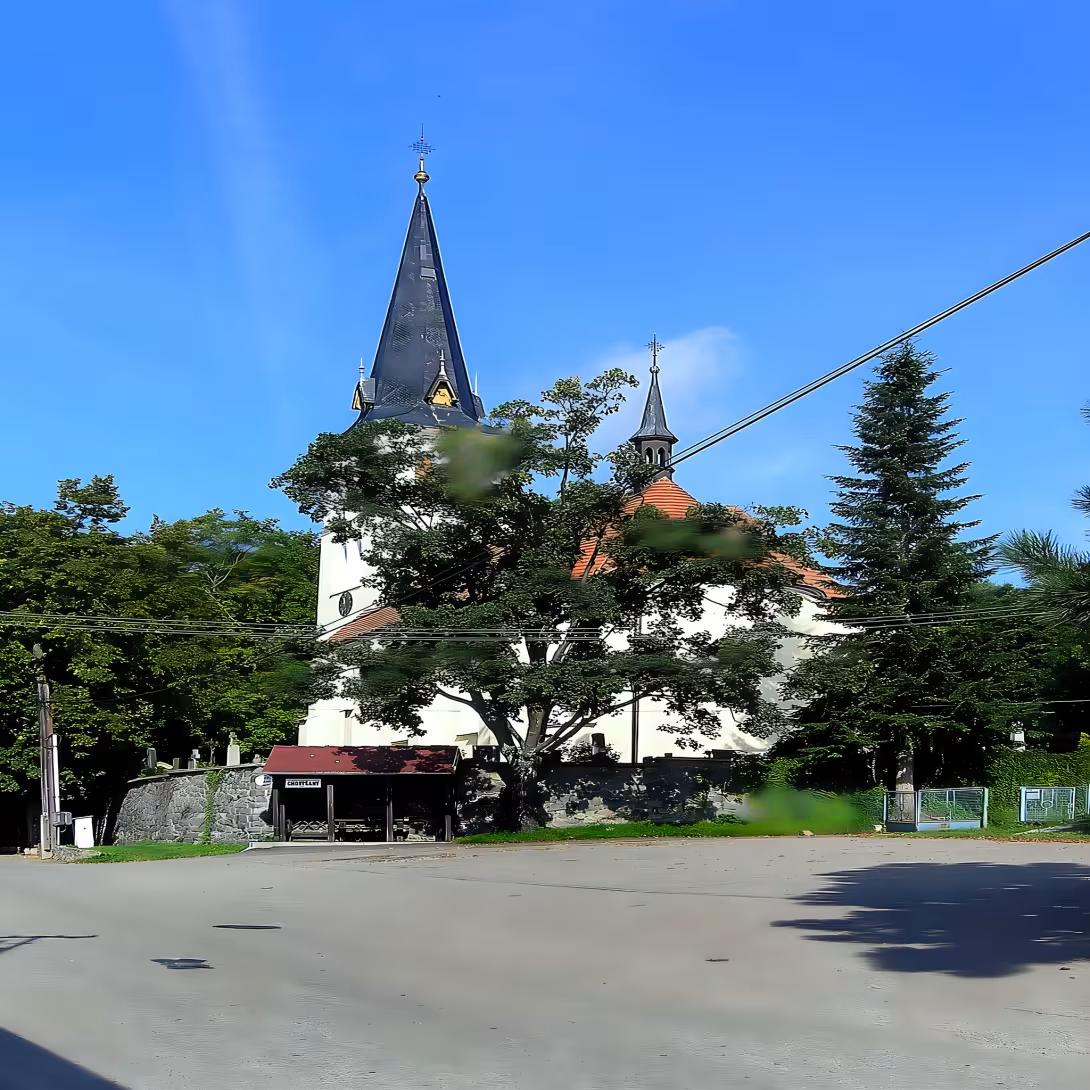
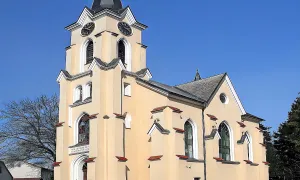
The Church of Saint Havl in Chotýšany is a Gothic church near the road to Tákonín, within Městečko municipality in the Benešov District of Středočeský kraj. Registered as a cultural monument since May 3, 1958, this sacred building stands out for its historical significance and architectural evolution. Its current form dates back to a partial renovation in 1884, reflecting centuries of adaptation and preservation efforts that have maintained its prominence in the region.
The origins of the Church of Saint Havl can be traced back to at least 1350, with earlier references found in parish chronicles as early as 1315. These documents highlight the church's longstanding presence in Chotýšany, marking it as a significant religious site during the Gothic period when Bohemia was part of the Holy Roman Empire. This era was characterized by substantial cultural and political developments that influenced architectural styles across Europe.
Architecturally, the Church of Saint Havl underwent several transformations over the centuries. The most notable renovation occurred in 1884, which shaped its current appearance. A distinctive feature is its church tower, originally damaged by fire in 1897 but promptly repaired within the same year. In 1962, two bells were installed in this tower; they originated from a wooden bell tower of the Kajetan monastery on Malá Strana. The larger bell, crafted by Jan Kryštof Löffler and weighing 1380 kg, dates back to 1593 and is adorned with Renaissance reliefs. Additionally, a clock mechanism was added in 1907 by Ludvík Heinz from Prague, enhancing the tower's functionality.
The church also houses several historical artifacts that contribute to its cultural richness. Among these are varhany (organ) built in 1888 by Antonín Mölzer of Kutná Hora and a baroque statue of Saint John Nepomuk from 1794 located before the entrance. Inside, visitors can find a notable náhrobek (tombstone) for Ritter Wilhelm von Ostředka, who died in 1594, as well as a memorial stone erected in 1880 by Count Zikmund Berchtold to honor his noble ancestors from the Vratislav family and their relative, Ritter Jan Jeník z Bratřic. Outside, near the church tower, stands another tombstone dedicated to Adam František Graf von Wrtby, who passed away in Vienna on September 3, 1807.
Today, the Church of Saint Havl remains a testament to its historical and architectural legacy. Visitors can explore its unique blend of Gothic elements with later renovations that have preserved its cultural significance over time. The church's accessibility as a registered monument ensures it continues to be an important site for both local residents and tourists interested in exploring Czech history and architecture.
The Church of Saint Havl is not only a place of worship but also a historical treasure that offers insight into the region's past. Its enduring presence and well-preserved features make it a worthwhile destination for anyone keen on experiencing a piece of Bohemia's rich cultural tapestry. Visitors are invited to explore this remarkable site, where history and artistry converge in a harmonious blend.
Then and now
Drag the slider to compare how the landmark may have looked when it was built with the view today.
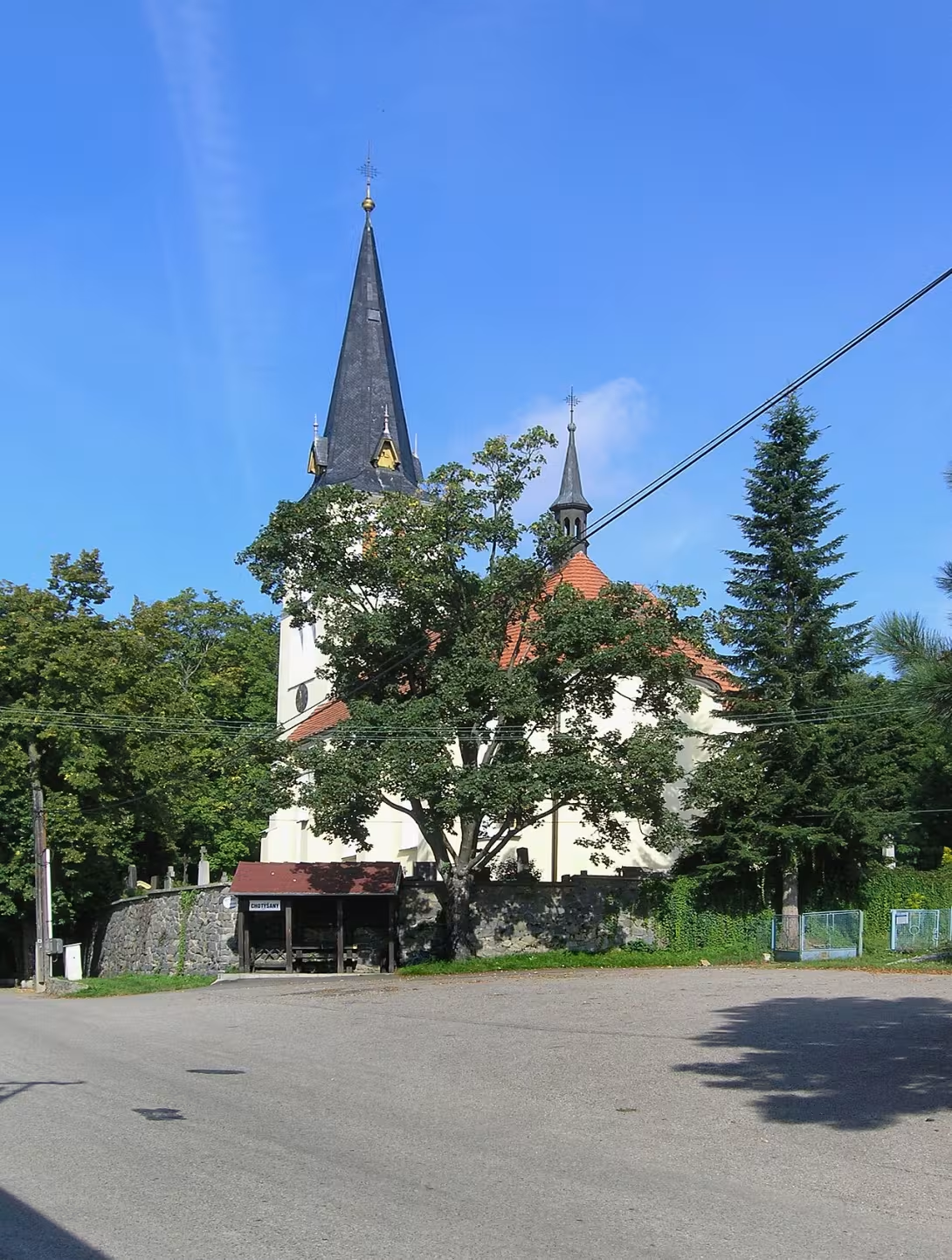
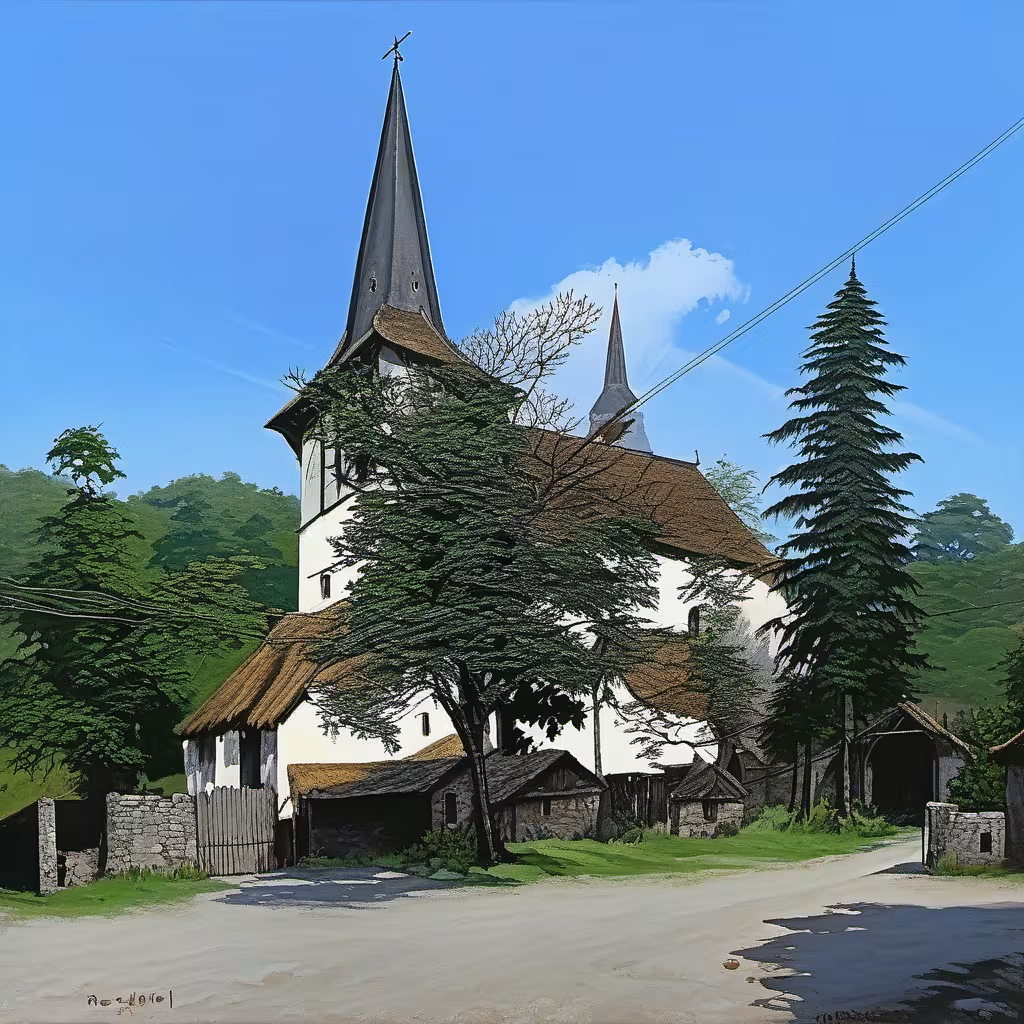
The historical appearance on the left is an AI-generated visualisation and serves as inspiration only.
Historical milestones
- 1350
- First documented mention of the church.
- 1897
- The church tower was damaged by fire and subsequently repaired.
Architectural development
The church underwent a partial renovation in 1884, resulting in its current appearance. In 1962, two bells were installed in the tower, originally from a wooden bell tower of the Kajetan monastery on Malá Strana. The clock mechanism was added to the southern side of the tower in 1907 by Ludvík Heinz from Prague.
Historical events
First documented mention in 1350, with earlier references to its parish chronicle in 1315.
A fire damaged the church tower in 1897, which was repaired later that year.
Points of interest
- The Church of Saint Havl's church tower is notable for housing two bells from the Kajetan monastery on Malá Strana, with the larger bell crafted by Jan Kryštof Löffler in 1593 featuring Renaissance reliefs.
- In 1897, a fire damaged the church tower, but it was promptly repaired within the same year, demonstrating the community's commitment to preserving this historical structure.
- A clock mechanism installed in 1907 by Ludvík Heinz from Prague adds both functionality and historical intrigue to the Church of Saint Havl’s tower.
- The baroque statue of Saint John Nepomuk located before the church entrance dates back to 1794, adding a layer of artistic heritage to the site.
- A memorial stone near the church tower honors Adam František Graf von Wrtby, who died in Vienna on September 3, 1807, linking the church's history with notable figures beyond its immediate locality.
Guide
This guide is narrated by a synthetic voice generated by artificial intelligence.
Show guide text
This text was created by artificial intelligence and has not been editorially reviewed. It may contain inaccuracies.
The Church of Saint Havel in Chotýšanech stands by the road towards Takonín. As a cultural monument, it has been registered since May 3rd, 1958. The first written mention of it comes from the year 1350, though the parish chronicle recalls its beginnings already in 1315. The adjoining cemetery appears in sources from the year 1357.
The church acquired its present appearance in 1884, when it underwent a partial reconstruction. In 1897, a fire damaged its tower. Later that same year, the tower was repaired. It stands on the western side of the church and measures 45 meters.
Two bells hang in the tower, which were installed there in 1962. They were transported from a wooden bell tower of a former Capuchin monastery on Prague's Malá Strana. The smaller bell weighs 245 kilograms and dates from 1495. The larger one weighs 1380 kilograms and is from 1593. It was cast by Jan Kryštof Löffler with his son Kryštof, and its surface is decorated with Renaissance reliefs.
In 1907, the parish had a clock mechanism installed in the tower with a dial on the southern side. It was made and installed by the Prague company Ludvík Heinz.
In 2000, a fire broke out in the church at the southern altar and also damaged a crystal chandelier. After repairs, the chandelier was rehung in 2012. It is said to consist of nearly seven thousand ornaments. The organ dates from 1888 and was built by the Kutná Hora organ builder Antonín Mölzer.
The church also contains several tombstones. One belongs to the knight Vilém of Ostředka, who died in 1594. Another tombstone from 1880 was commissioned by Count Zikmund Berchtold. Beneath it rest his noble ancestors from the family of Vratislav of Mitrovice and their relative, the knight Jan Jeník of Bratřic. Their remains were originally buried in graves around the church. Outside by the tower stands the tombstone of Adam František, Count of Vrtby, who died on September 3rd, 1807 in Vienna.
In front of the church stands in a niche a Baroque statue of Saint John of Nepomuk from 1794.
Frequently asked questions
Can the monument be visited?
Religious buildings are usually open mainly during services; at other times a visit is normally arranged with the parish or the operator. We have not verified specific times.
Where is the monument?
Location: Chotýšany, Středočeský kraj. The map on this page shows the exact spot.
Why is the monument protected?
It is listed in the Central List of Cultural Monuments of the Czech Republic as a cultural monument (register no. 35288/2-60).
Businesses nearby
Do you run a restaurant, accommodation, shop, museum, rental, wellness or other visitor service near this monument? Show yourself directly to the people heading to it — this is how they will see you in the app and on the web:
Accommodation nearby
Themed route
Tematická výletní trasa: Kostel svatého Havla (Chotýšany)
1. Kostel svatého Havla (Chotýšany) - Kostel Začněte svou cestu u samotného kostela, který je hlavním centrem této trasy. Tento barokní kostel slouží jako významná náboženská a historická památka ve vesnici Chotýšany. Jeho architektura a interiér nabízejí pohled na bohaté umělecké dílo z minulosti, které stojí za podrobnou prohlídkou.
2. Kaple svaté Anny (Městečko) - Kaple Přibližně 5 km od Chotýšan se nachází kaple svaté Anny v Městečku. Tato malá, ale půvabní struktura je známá pro svou klidnou atmosféru a historickou hodnotu. Je to místo ideální pro odpočinek a reflektaci po návštěvě kostela svatého Havla.
3. Městečko - Historický centrum V samotném Městečku, které je blízko kaple svaté Anny, si věnujte čas prozkoumání jeho historického centra. Tato lokalita nabízí pohled na starobylé domy a ulice, které přenášejí do minulosti. Je to ideální místo k procházce a poznání místní kultury.
4. Kostel svatého Vavřince (Městečko) - Kostel Přibližně v centru Městečka se nachází kostel svatého Vavřince, další historický a náboženský bod zájmu. Jeho architektura a umělecká výzdoba jsou přitažlivé pro cestující zájemce o duchovní a kulturní památky.
Tato trasa nabízí kombinaci náboženských, historických a kulturologických zážitků v rámci malého regionu Středočeského kraje.
Seasonal recommendations
Spring: Visiting the Church of St. Wenceslas in Chotýšany during spring offers a unique experience as nature begins to awaken around this historic site. The landscape is painted with vibrant colors from blooming flowers and budding trees, creating an enchanting atmosphere that enhances the church's architectural beauty. As daylight extends into the evening, visitors can enjoy the soft, natural lighting that highlights the intricate details of the structure. Spring tends to be a quieter time for tourists, making it ideal for those seeking a peaceful exploration without large crowds. It is advisable to wear comfortable layers as temperatures can vary, and carrying an umbrella might be wise due to occasional spring showers.
Summer: Summer at the Church of St. Wenceslas in Chotýšany is characterized by its lively atmosphere, with longer days providing ample time for visitors to explore both the church and its surrounding landscapes. The lush greenery and warm sunlight create a picturesque setting that complements the historical architecture beautifully. However, this season attracts more tourists, particularly during peak holiday periods, so arriving early in the day can help avoid crowds. Comfortable walking shoes are recommended due to increased foot traffic, and light, breathable clothing is ideal for staying cool under the summer sun.
Autumn: Autumn brings a magical transformation to Chotýšany with its warm hues of reds, oranges, and yellows enveloping the Church of St. Wenceslas in a cozy blanket of fall colors. The crisp air and golden light create a serene ambiance perfect for photography enthusiasts and those who appreciate nature's seasonal changes. While visitor numbers may decrease compared to summer, it remains a popular time due to the pleasant weather conditions. Layered clothing is advisable as temperatures can fluctuate, and carrying a jacket or scarf might be necessary during cooler afternoons.
Winter: The winter season at the Church of St. Wenceslas offers a quiet and contemplative experience, with snow often blanketing the area in a serene white cover that enhances the church's historical charm. Shorter days mean fewer visitors, allowing for a more intimate exploration of this historic site. The unique lighting during winter evenings provides an opportunity to capture the church's architecture against a backdrop of twilight or early nightfall, creating memorable images.
Visualizations and artistic views


The visualisations are generated by artificial intelligence and serve as inspiration.
Photos from the area
Real photos taken near the monument


Zdroj a licence jsou uvedeny u každého snímku.
Tips from visitors
No tips yet. Be the first!
Log in and add your tip.
Sources and literature
Photos: Czech Wikipedia user Packa / CC BY-SA 3.0, rozlišení zvýšeno umělou inteligencí — Wikimedia Commons. The author and licence also appear when you hover over the image.

Příběhy a pověsti
Legendy, pověsti a příběhy spjaté s touto památkou
Příběh: Kostel svatého Havla (Chotýšany)
Bylo to v pondělí ráno, kdy Jakub zjistil, že se jeho život nerozpadá do kousků a spadne na zem stejně jako list padlého stromu pod ním. Výšiny kolem kostela…
Číst příběh
Pověst: Kostel svatého Havla (Chotýšany)
Staří obyvatelé Chotýšan vyprávějí, že kostel svatého Havla nikdy nestál na tomto místě náhodou. Prý ještě dávno před tím, než kněz poprvé zaznamenal jeho jm…
Číst příběhFotografie návštěvníků
Zatím žádné fotografie. Buďte první, kdo přidá fotografii z návštěvy!
Log in a přidejte svou fotografii nebo hodnoťte.
Za ověřenou návštěvu v aplikaci získáte víc bodů — poznáme podle GPS, že jste na místě.
Reviews and comments