






kostel svatého Havla (Hošťalovice) Church
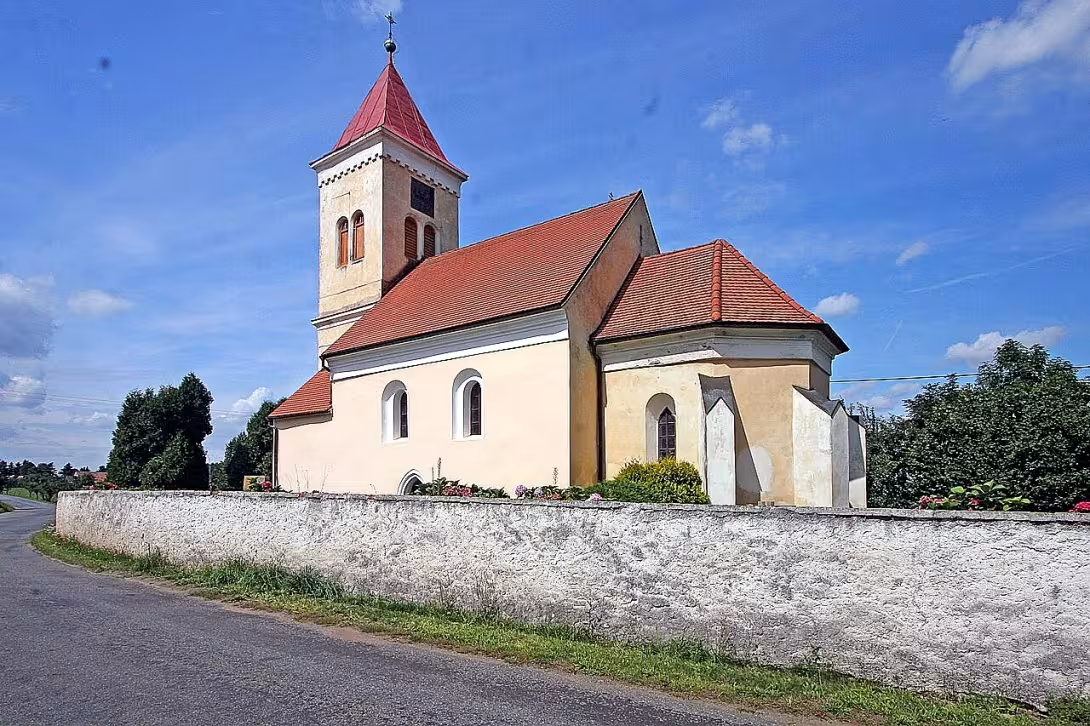
The Church of Saint Gallus in Hošťalovice is an early Gothic monument that has witnessed centuries of history. Constructed around 1300, this church is both an architectural gem and a cultural treasure due to its preserved interior frescoes and historical significance. Its prominence within the village is highlighted by a tower added in 1870, reflecting later architectural influences.
The origin of the Church of Saint Gallus dates back to the early 14th century when Bohemia was part of the Holy Roman Empire under King John of Luxembourg. This era saw significant Gothic architectural developments across Europe, influencing structures like this church. Although specific details about its founders or initial builders remain undocumented, historical sources suggest that its location was strategically chosen due to proximity to important trade routes.
Architecturally, the Church of Saint Gallus is a single-nave structure with smooth plastered walls and an offset pentagonal presbytery supported by stepped pilasters. The sacristy, located on the north side next to the presbytery, adds structural complexity. A notable feature is the louvered portal with framing on the southern wall of the nave, along with a similarly framed eastern window. These elements highlight its early Gothic style, later complemented by 19th-century restorations and additions.
Throughout its history, the Church of Saint Gallus has experienced various fortunes. During the Hussite Wars and the post-White Mountain period, the Hošťalovice parish dissolved, leading to the church's decline. It became a filial church in 1720 when efforts were made to establish a parish there, but it was ultimately decided that the main church would be built in Turkovice instead. The church fell into disrepair by the mid-19th century, with its last service held in 1845 and much of its valuable inventory moved to Turkovice.
Significant restoration efforts began in the late 19th century, culminating in a re-consecration on October 23, 1876. These restorations were made possible through financial contributions from local parishioners across several villages. Further renovations occurred between 1991 and 1996, ensuring both its exterior and interior were preserved for future generations.
The church's location was historically significant as a crossroads of important trade routes, enhancing its role in the region's economic history. Although these paths have largely disappeared or been altered over time, remnants can still be found in the surrounding landscape.
Today, the Church of Saint Gallus stands as a testament to both architectural ingenuity and historical resilience. Its preserved frescoes, despite being covered in 1903, remain an invaluable part of its artistic heritage. Visitors are invited to explore this site not only for its aesthetic beauty but also to appreciate its rich history and cultural significance within the region. The church's enduring presence offers a unique glimpse into the past, making it a worthwhile destination for those interested in history and architecture.
Historical milestones
- 1300
- Construction of the Church of Saint Gallus.
- 1870
- Addition of the historicizing tower.
- 1876
- Re-consecration after restoration.
- 1993
- Re-consecration by Bishop Karl Otčenášek.
Architectural development
Originally built in early Gothic style around 1300, the Church of Saint Gallus saw major restorations and additions in the 19th century. A tower was added in 1870, and significant interior renovations occurred between 1991-1996. The church's frescoes were covered in 1903 but remain a key artistic feature.
Historical events
In the Hussite Wars and post-White Mountain period, the Hošťalovice parish was dissolved, leading to the church's decline.
The church underwent significant restoration in the late 19th century, with a re-consecration on October 23, 1876.
Points of interest
- The Church of Saint Gallus is uniquely noted for its louvered portal and framed eastern window, which are distinctive features of its early Gothic style that have been preserved through centuries.
- Despite the decline during the Hussite Wars and post-White Mountain period when it became a filial church, the Church of Saint Gallus was re-consecrated in 1876 after significant community-driven restoration efforts.
- The church's frescoes, originally covered in 1903, are an invaluable part of its artistic heritage. Their preservation allows visitors to appreciate the intricate artistry from centuries ago.
- Strategically located at a crossroads of important trade routes, the Church of Saint Gallus played a vital role in Hošťalovice’s economic history, even though these paths have largely disappeared today.
- The addition of a tower in 1870 reflects later architectural influences and signifies an era when local communities invested in enhancing their historical buildings to preserve cultural heritage.
Guide
This guide is narrated by a synthetic voice generated by artificial intelligence.
Show guide text
This text was created by artificial intelligence and has not been editorially reviewed. It may contain inaccuracies.
Welcome to Hoštice and the Church of Saint Wenceslas, one of the most splendid monuments of early Gothic architecture in Central Europe. You stand before this historic church, whose ancient walls and elegant lines immediately captivate you. Although it may seem like a place of peace and tranquility, it has a rich history full of stories.
Let's dive into its origins. The Church of Saint Wenceslas was built around the year 1300 as a spiritual center for the residents of Hoštice. While no specific architects are known, its early Gothic style attests to the artistic and technological advancements of that era. This church has survived several centuries of history, including the turbulent 15th century.
Now let's move on to the architecture and features that characterize this church today. Notice its louvered portal and framed eastern window—these elements are the most distinctive marks of early Gothic style that have been preserved for centuries. These details represent elegant design and artistic taste of the time.
Pay attention now to the church tower built in a historicizing style in 1870. This element marked a new chapter for the church, added as a nod to architectural development and aesthetics of the 19th century.
The Church of Saint Wenceslas also went through a period of restoration, which was reflected in its re-consecration in 1876 after renovation. This reconstruction preserved the spirit of the church and allowed it to continue its religious function. In 1993, the church was re-consecrated by Bishop Karel Otčenášek, highlighting its enduring spiritual and community value.
An interesting aspect of this site is how the church survived the turbulent period of the Hussite Wars and subsequent decline after the Battle of White Mountain. Although it became a filial church, its architecture and spiritual significance remained untouched.
Now that you have explored these elements of the Church of Saint Wenceslas, you are invited to discover other local beauties. Every street in Hoštice has a story, and every corner of this historic place has something waiting to be discovered.
Thank you for visiting the Church of Saint Wenceslas. We hope you felt drawn by its historical beauty and spirit. May this guide inspire further exploration of this captivating city. Until next time!
Tips for visitors
The best time to visit the Church of Saint Gallus in Hošťalovice is during late spring or early autumn when the weather is mild, making it pleasant for walking around and exploring the surrounding landscape. These seasons also offer beautiful natural lighting for photography, with soft morning light ideal for capturing the church’s intricate Gothic details.
Public transportation options are accessible, including buses that connect nearby towns; however, it's advisable to check current schedules online before your visit.
When visiting, consider bringing comfortable walking shoes as you'll likely explore the village and its surroundings. A camera is recommended for capturing the stunning architecture of the church and the picturesque landscape. Additionally, bring water and snacks, especially if planning an extended visit or exploring nearby areas.
For photography enthusiasts, the best spots to capture the Church of Saint Gallus are from the gentle elevation where it sits, offering a panoramic view of its structure against the backdrop of Hošťalovice’s landscape. Early morning light accentuates the church's Gothic features, making it an ideal time for photos.
Nearby attractions within 30 minutes include historical trade route remnants and scenic roads that offer insights into the area's rich past. These sites are perfect for a leisurely walk or bike ride, providing context to the region’s history and complementing your visit to the church.
Families with children will find the Church of Saint Gallus an engaging site due to its historical significance and architectural beauty. The surrounding landscape offers ample space for kids to explore safely. Consider bringing a map or guidebook about the church's history to make the visit more interactive and educational for young ones.
Frequently asked questions
Can the monument be visited?
Religious buildings are usually open mainly during services; at other times a visit is normally arranged with the parish or the operator. We have not verified specific times.
Where is the monument?
Location: Hošťalovice, Pardubický kraj. The map on this page shows the exact spot.
Why is the monument protected?
It is listed in the Central List of Cultural Monuments of the Czech Republic as a cultural monument (register no. 18295/6-852).
Businesses nearby
Do you run a restaurant, accommodation, shop, museum, rental, wellness or other visitor service near this monument? Show yourself directly to the people heading to it — this is how they will see you in the app and on the web:
Events nearby
Zdroj akcí: otevřená data měst a obcí ČR (Národní katalog otevřených dat) a kalendář akcí Národního památkového ústavu.
Nearby
The church is situated on a gentle elevation near the village center, with historical trade routes once converging nearby. The surrounding landscape includes roads and remnants of these ancient paths, though much has been altered over time.
Accommodation nearby
Trips and activities nearby
Guided tours, tickets and activities nearby from GetYourGuide
Affiliate link: if you buy from the partner, we may receive a commission. The price for you does not change.
Search tours and activities →Themed route
Thematic Walking Tour: Hošťalovice and the Church of Saint Wenceslas
1. Church of Saint Wenceslas (Hošťalovice) - Type: Historical Landmark - Why Visit: The Church of Saint Wenceslas, perched on a gentle elevation near the village center, is an architectural gem that offers insight into the region's rich history and religious heritage. Its serene location invites visitors to explore its historical significance and enjoy panoramic views of Hošťalovice.
2. Historical Trade Route Remnants - Type: Historical Path - Why Visit: Just a short walk from the church, these remnants of ancient trade routes provide a glimpse into the past when merchants and travelers once traversed this area. Walking along these paths allows you to imagine the bustling activity that once characterized Hošťalovice as a key junction in historical trade networks.
3. Village Center - Type: Cultural Hub - Why Visit: The village center of Hošťalovice is an ideal spot to immerse yourself in local culture and history. As you stroll through the quaint streets, take time to appreciate the traditional architecture and perhaps engage with locals who can share stories about life in this charming Pardubický kraj community.
4. Surrounding Landscape - Type: Scenic Viewpoint - Why Visit: The gentle elevation around Hošťalovice offers stunning views of the surrounding landscape, which includes roads and altered paths that once formed part of significant trade routes. This area is perfect for a leisurely walk or picnic, allowing you to reflect on the region's transformation over time while enjoying nature’s beauty.
This tour provides an enriching experience by connecting visitors with Hošťalovice's historical roots and scenic charm through its most notable features.
Seasonal recommendations
Spring: The arrival of spring breathes new life into the Church of Saint Wenceslas, with lush greenery and blossoming flowers creating a picturesque backdrop that enhances its architectural beauty. The soft morning light filters through budding branches, casting gentle shadows on the church's façade, offering an ideal time for photography. Visitors can enjoy peaceful walks around Hošťalovice as nature awakens, making it a perfect season to explore at a leisurely pace without large crowds. It is advisable to wear comfortable walking shoes and bring a light jacket in case of cool mornings or evenings.
Summer: Summer brings vibrant colors and longer days, allowing for extended visits to the Church of Saint Wenceslas. The warm sunlight accentuates the intricate details of the church's architecture, making it an excellent time for photography enthusiasts. However, with summer being peak tourist season, visitors are advised to arrive early in the morning or later in the afternoon to avoid crowds and enjoy a more intimate experience. Comfortable walking shoes, sunscreen, and light clothing are recommended due to the warm weather.
Autumn: Autumn at the Church of Saint Wenceslas is characterized by a stunning display of fall foliage, with vibrant reds, oranges, and yellows creating a breathtaking natural tapestry around the historic site. The cooler temperatures and golden sunlight provide an ideal atmosphere for enjoying outdoor activities like photography or leisurely strolls through Hošťalovice's scenic landscapes. Visitors should dress in layers to accommodate fluctuating temperatures throughout the day and consider bringing a light jacket as evenings can be quite cool.
Winter: Winter transforms the Church of Saint Wenceslas into a serene and enchanting destination, with snow-covered surroundings adding a magical touch to its historic charm. The soft winter light creates a tranquil ambiance, perfect for quiet reflection or capturing picturesque scenes. Visitors should plan their trip during daylight hours as opening times may be shorter due to the season. It's essential to dress warmly in layers, wear waterproof boots, and bring gloves and hats to comfortably enjoy the winter wonderland setting.
Visualizations and artistic views


The visualisations are generated by artificial intelligence and serve as inspiration.
Photos from the area
Real photos taken near the monument


Zdroj a licence jsou uvedeny u každého snímku.
Tips from visitors
No tips yet. Be the first!
Log in and add your tip.
Sources and literature
Photos: Petr1888 / CC BY-SA 3.0 — Wikimedia Commons. The author and licence also appear when you hover over the image.
Faktickým podkladem tohoto textu byl článek na Wikipedii, jehož autory jsou přispěvatelé Wikipedie. Článek je dostupný pod licencí CC BY-SA 4.0.
Location on the map
More monuments – Hošťalovice
Show all in the municipality

Příběhy a pověsti
Legendy, pověsti a příběhy spjaté s touto památkou
Fotografie návštěvníků
Zatím žádné fotografie. Buďte první, kdo přidá fotografii z návštěvy!
Log in a přidejte svou fotografii nebo hodnoťte.
Za ověřenou návštěvu v aplikaci získáte víc bodů — poznáme podle GPS, že jste na místě.
Reviews and comments