






kostel svatého Havla (Rožná) Church
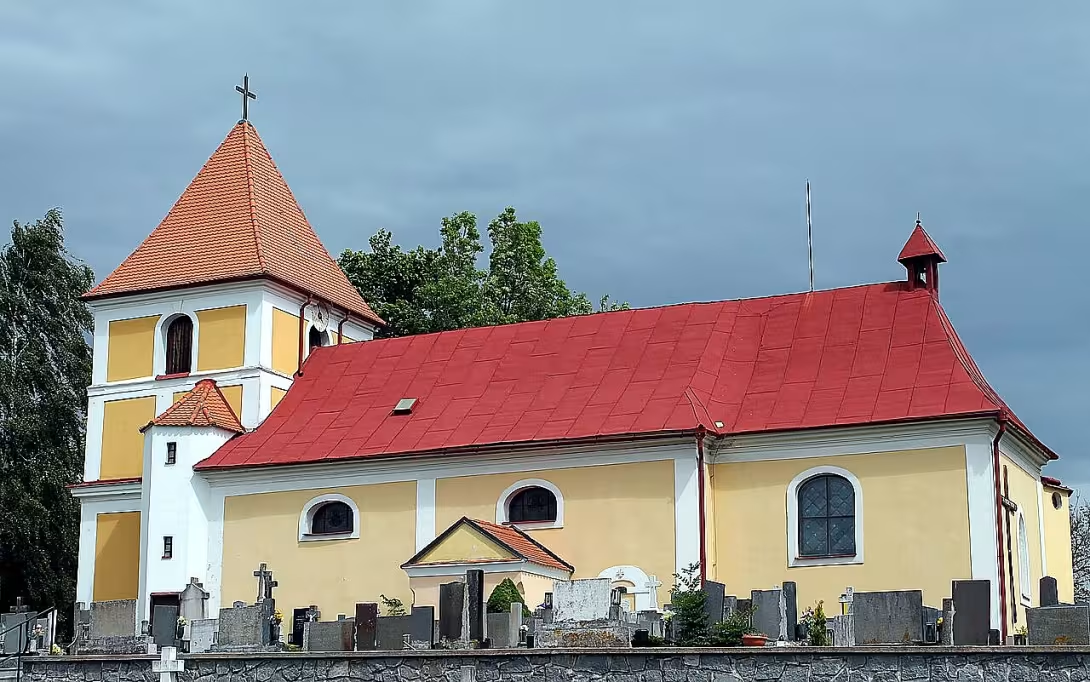
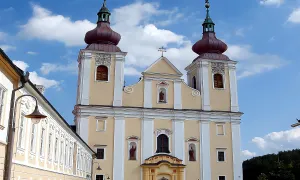
The Church of Saint Wenceslas in Rožná stands as a testament to medieval Gothic architecture on the village's western edge, surrounded by a cemetery. Constructed in the second half of the 13th century, this Roman Catholic parish church is notable for its status as a cultural monument of the Czech Republic. Its architectural significance lies in its single-nave structure with a rectangular chancel and a four-sided tower featuring an external staircase on its façade.
The origins of the Church of Saint Wenceslas date back to the 13th century, during which Bohemia was part of the Holy Roman Empire. This period marked significant Gothic architectural development influenced by the Catholic Church's cultural and religious impact. The church itself is first documented in a chronicle from 1398, indicating its longstanding presence within the community.
Architecturally, the church exemplifies Gothic design with notable modifications over time. Its oldest elements include marble windows, which have endured through centuries of change. Significant Baroque renovations occurred during the 17th and 18th centuries, altering much of the original Gothic structure. A lightning strike in 1894 caused considerable damage to the tower's roof, ceiling, and doors, highlighting the church's vulnerability to natural events.
Throughout its history, the Church of Saint Wenceslas has experienced various administrative changes. Initially dissolved and attached to other parishes, the parish in Rožná was re-established in 1749. This period also saw the construction of a new rectory building in 1765, reflecting ongoing community investment in the church's infrastructure.
Key events in the church's history include its initial mention in 1398 and the re-establishment of its parish in 1749. During both World Wars, the church faced challenges with its bells being requisitioned, only to be replaced later. The cemetery surrounding the church was expanded in 1937 and again in 1987, indicating a growing need for burial space over time.
Today, the Church of Saint Wenceslas remains an accessible cultural monument, inviting visitors to explore its rich history and architectural beauty. Despite numerous modifications, it retains elements of its original Gothic design, offering a glimpse into medieval craftsmanship. Its historical significance and enduring presence make it a worthwhile destination for those interested in Czech heritage and religious architecture.
Visitors are encouraged to experience the Church of Saint Wenceslas firsthand, appreciating its blend of history, artistry, and cultural importance within the picturesque setting of Rožná.
Then and now
Drag the slider to compare how the landmark may have looked when it was built with the view today.
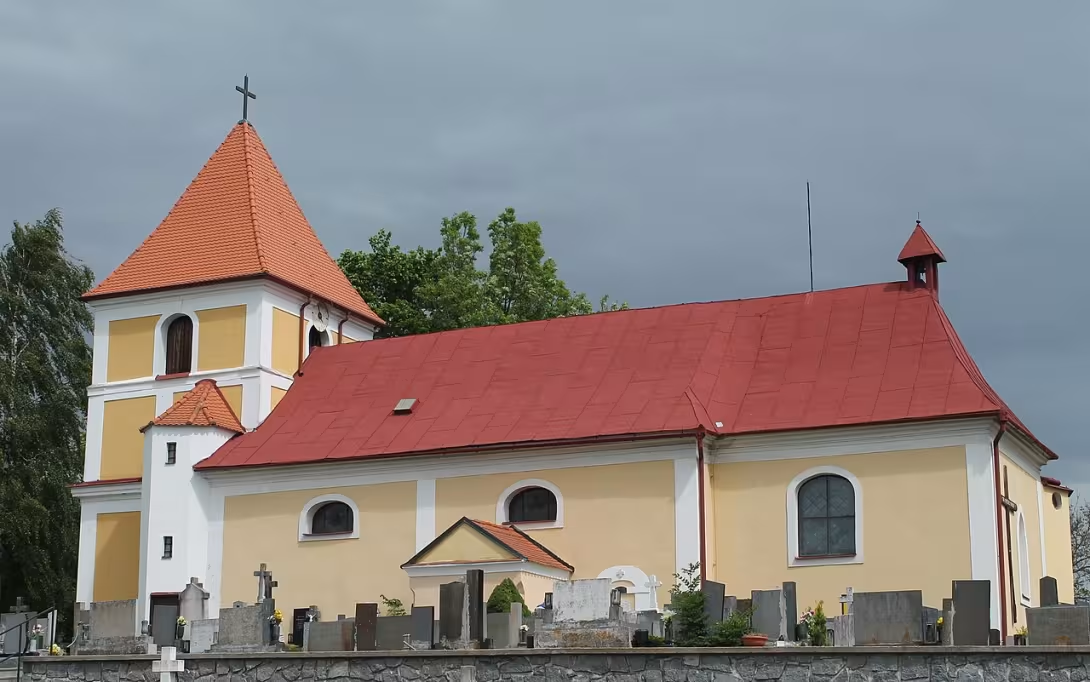

The historical appearance on the left is an AI-generated visualisation and serves as inspiration only.
Historical milestones
- 1250
- Construction of the Church of Saint Wenceslas began.
- 1398
- First documented mention in a chronicle.
- 1749
- Re-establishment of the parish in Rožná.
- 1765
- Construction of a new rectory building.
- 1894
- Lightning strike caused damage to the tower.
Architectural development
Originally built in the second half of the 13th century, the church has undergone several modifications over time. The oldest part is its marble windows. Significant baroque renovations occurred during the 17th and 18th centuries, altering much of the original Gothic structure. A lightning strike in 1894 damaged the tower's roof, ceiling, and doors.
Historical events
The church was first mentioned in a chronicle from 1398.
In 1749, the parish in Rožná was re-established after being dissolved and attached to other parishes in previous centuries.
Points of interest
- The Church of Saint Wenceslas has an intriguing architectural feature: its four-sided tower includes an external staircase on the façade, a unique element that reflects medieval design ingenuity.
- A lightning strike in 1894 caused significant damage to the church's tower roof, ceiling, and doors. This event underscores the vulnerability of historic structures to natural forces and highlights the resilience needed for their preservation.
- During both World Wars, the church faced the requisitioning of its bells, a common practice during wartime that temporarily altered the auditory landscape of Rožná, demonstrating how global conflicts impacted local communities.
- The cemetery surrounding the Church of Saint Wenceslas was expanded twice, first in 1937 and again in 1987. These expansions reflect changing burial practices and population growth over time, indicating an evolving relationship between the community and its sacred spaces.
- Despite numerous architectural modifications through centuries—from Gothic to Baroque—the church retains elements of its original medieval design, offering a rare glimpse into the craftsmanship and aesthetic values of the 13th century.
Guide
This guide is narrated by a synthetic voice generated by artificial intelligence.
Show guide text
This text was created by artificial intelligence and has not been editorially reviewed. It may contain inaccuracies.
The Church of Saint Havel is the parish church of the Roman Catholic parish of Rožná nad Pernštejnem. It stands on the western edge of the village of Rožná, in the middle of the cemetery. It is a Gothic single-nave structure with a rectangular choir. On the front side rises a quadrangular tower with an external staircase. The church is protected as a cultural monument of the Czech Republic.
It was built in the second half of the 13th century. Its oldest parts are considered to be the marble windows. The church is first mentioned in writing in a chronicle from 1398.
The parish was established in 1573, but already in 1590 it was dissolved and attached to the parish in Bystřice nad Pernštejnem. From 1650, Rožná belonged to the parish in Strážku. The independent parish was restored in 1749 and sixteen years later, in 1765, a new rectory building was constructed.
The church underwent many alterations over the centuries. A Baroque reconstruction took place in the 17th and 18th centuries. From the original Gothic structure, only the entrance was preserved. Inside there was already a high altar, two side altars, a choir loft, an organ, an oratory and a sacristy. In 1684 the church acquired a baptismal font. There is also an altar painting of Saint Havel, to whom the church is dedicated.
In 1894 lightning struck the tower. It tore off the roof covering, damaged the ceiling and tore the doors.
Difficult times came with both world wars. During the First World War, two of the three bells were requisitioned. On September 7th, 1924, three new bells were consecrated. However, these met the same fate during the Second World War and were requisitioned again.
The cemetery around the church was expanded twice, first in 1937 and again in 1987.
Tips for visitors
The best time to visit the Church of Saint Wenceslas in Rožná is during late spring or early autumn when the weather is pleasant, making it ideal for exploring both the church and its surrounding cemetery. During these seasons, you can enjoy the lush greenery without the discomfort of summer heat or winter cold. Additionally, visiting outside peak tourist seasons ensures a more tranquil experience, allowing you to appreciate the Gothic architecture in peace.
When planning your visit, consider bringing comfortable walking shoes, especially if you intend to explore the cemetery around the church. A camera is recommended for capturing the stunning Gothic architecture of the single-nave structure. Early morning or late afternoon visits are ideal for photography, as the soft light enhances the textures and details of the building. The western edge location offers a picturesque backdrop for photos.
For families with children, Rožná provides an engaging historical experience. While exploring the church, you can discuss its Gothic architectural features in a way that captures young imaginations. Nearby attractions within 30 minutes include other sites of interest in Kraj Vysočina, which offer additional opportunities for exploration and learning about regional history.
Frequently asked questions
Can the monument be visited?
Religious buildings are usually open mainly during services; at other times a visit is normally arranged with the parish or the operator. We have not verified specific times.
Where is the monument?
Location: Rožná, Kraj Vysočina. The map on this page shows the exact spot.
Why is the monument protected?
It is listed in the Central List of Cultural Monuments of the Czech Republic as a cultural monument (register no. 25915/7-4407).
Businesses nearby
Do you run a restaurant, accommodation, shop, museum, rental, wellness or other visitor service near this monument? Show yourself directly to the people heading to it — this is how they will see you in the app and on the web:
Accommodation nearby
Themed route
Tematická výletní trasa kolem kostela svatého Havla (Rožná)
1. Kostel Svatého Havla, Rožná
Typ: Historická památka
Proč stojí za návštěvu: Tento barokní kostel je nejenom duchovním centrem obce, ale také architektonickou perli s bohatými historickými prvky. Jeho významná stavba a interiér nabízejí návštěvníkům pohled na minulost a uměleckou kreativitu.
2. Nádvoří kostela
Typ: Historické nádvoří
Proč stojí za návštěvu: Nádvoří před kostelem je ideálním místem pro relaxaci a pohled na okolní krajinu. Zde se nachází i náhrobní desky, které svědčí o historii obce a jejích významných osobnostech.
3. Kaple Panny Marie Sněžné
Typ: Kaple
Proč stojí za návštěvu: Tato kaple je místo klidu a útulku, kde si můžete užít poklidnou chvilku v malebném prostředí. Je známá svým jednoduchým architektonickým designem a duchovní atmosférou.
4. Kamenné krabicové hroby
Typ: Historická památka
Proč stojí za návštěvu: Tyto jedinečné kamenné struktury jsou svědky minulých obřadů a kultu. Nabízejí zajímavý pohled na historii místních zvyklostí a tradic.
5. Zámecký park
Typ: Park
Proč stojí za návštěvu: Zámecký park je ideálním místem pro procházku, kde si můžete užít přírodní krásy a klidné prostředí. Je to také skvělý způsob, jak se ponořit do historie a kultury oblasti.
Tato trasa nabízí kombinaci duchovního, kulturního i přírodního prožitku v okolí kostela svatého Havla.
Seasonal recommendations
Spring: The arrival of spring breathes new life into the Church of St. Wenceslas in Rožná, with blooming wildflowers and fresh greenery surrounding the historic site. This season offers a gentle atmosphere as nature awakens, creating picturesque views that enhance your visit. Mornings are ideal for exploring, as they tend to be quieter before larger crowds gather later in the day. Light layers are recommended due to fluctuating temperatures, ensuring comfort during your stroll through the revitalized landscape.
Summer: Summer is the peak season for visiting the Church of St. Wenceslas, with long daylight hours and warm weather inviting visitors to explore both the church's interior and its serene outdoor surroundings. The lush greenery and vibrant wildflowers create a picturesque setting that complements the historic architecture. To avoid crowds, consider arriving early in the morning or later in the afternoon. Lightweight clothing is advisable, along with sun protection such as hats and sunscreen.
Autumn: Autumn transforms Rožná into a stunning tapestry of reds, oranges, and yellows, offering a unique backdrop for visiting the Church of St. Wenceslas. The cooler temperatures make it a comfortable time to explore, while the changing leaves create an enchanting atmosphere around the historic site. Early mornings or late afternoons are ideal times to visit when lighting is most dramatic, enhancing the beauty of both the church and its surroundings. Layered clothing will help you adjust to varying temperatures throughout the day.
Winter: The Church of St. Wenceslas takes on a serene and mystical quality in winter, with snow-covered landscapes providing a tranquil setting for visitors. Shorter daylight hours mean planning your visit during midday when lighting is best for photography or sightseeing. While the church remains open, it's important to dress warmly in layers and wear comfortable shoes suitable for potentially icy paths. The quietness of this season offers a peaceful experience, distinct from busier times of the year.
Visualizations and artistic views


The visualisations are generated by artificial intelligence and serve as inspiration.
Photos from the area
Real photos taken near the monument


Zdroj a licence jsou uvedeny u každého snímku.
Tips from visitors
No tips yet. Be the first!
Log in and add your tip.
Sources and literature
Photos: Harold / CC BY-SA 4.0 — Wikimedia Commons. The author and licence also appear when you hover over the image.
Faktickým podkladem tohoto textu byl článek na Wikipedii, jehož autory jsou přispěvatelé Wikipedie. Článek je dostupný pod licencí CC BY-SA 4.0.
Location on the map


Příběhy a pověsti
Legendy, pověsti a příběhy spjaté s touto památkou
Fotografie návštěvníků
Zatím žádné fotografie. Buďte první, kdo přidá fotografii z návštěvy!
Log in a přidejte svou fotografii nebo hodnoťte.
Za ověřenou návštěvu v aplikaci získáte víc bodů — poznáme podle GPS, že jste na místě.
Reviews and comments