






Kostel svatého Havla (Úhošťany) Church
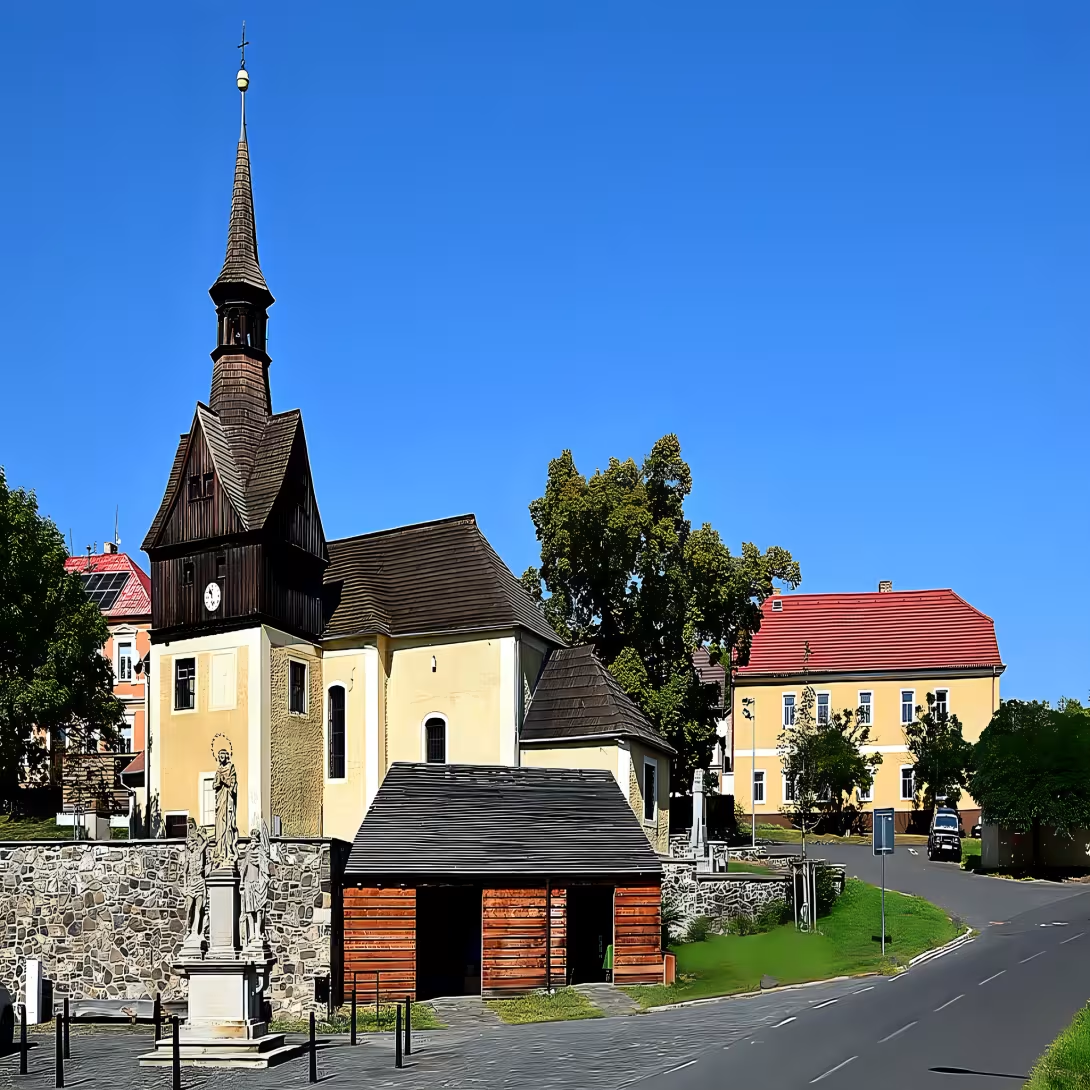
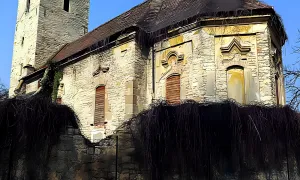
The Church of Saint Wenceslas in Úhošťany is a Roman Catholic church dedicated to Saint Wenceslas, located in the village within the Kadaň District. Its current form dates back to Baroque modifications from the late 18th century. Protected as a cultural monument since 1963, it stands at a crossroads near Kadaň, Brodce, and Kojetín. The church features a single-nave structure with a presbytery and sacristy on the eastern side.
The origins of this church trace back to the early 14th century, during significant religious and political changes in Bohemia. First mentioned in papal tithes records in 1352, it was established as an important ecclesiastical site. It suffered damage during the Hussite Wars but underwent restoration by the mid-15th century. Architectural modifications followed: a tower was added to its southern façade in 1626, and Baroque renovations occurred between 1772 and 1775. Additional updates happened in 1726 and 1891. By the mid-20th century, it fell into disrepair until restoration efforts began in 1999.
Architecturally, the Church of Saint Wenceslas is characterized by its Baroque style from late 18th-century modifications. The structure is oblong and single-nave with a presbytery and sacristy on the eastern side. Originally, the entrance was where the tower now stands; currently, it is accessible via a small vestibule on the western side featuring a barrel vault. This area includes pilasters, and above the door is Kadaň's emblem. The nave is illuminated by large arched windows, while the presbytery has natural stone paving and a small niche in its southern wall. The sacristy features a ribbed vault supported by ribs.
The interior presents a pseudo-Romanesque style with several notable artifacts. These include a Baroque baptismal font from 1699, an early 18th-century sculpture of Saint Vojtěch located in the presbytery, and an image of the Virgin Mary from 1727 within the nave. A bell from 1575 is housed in the tower, which also contains an early 17th-century clock mechanism that once operated a dial on the southern façade.
The church's surroundings include remnants of its historical context. A partially preserved cemetery wall encircles what was once the graveyard, used until 1861. Nearby stood a parish house demolished in 1974. The Úhošťanská lípa, a protected tree, grows near the church’s northern side, adding to the site's historical ambiance.
Today, the Church of Saint Wenceslas stands as a testament to its rich history and architectural evolution. It remains accessible to visitors who wish to explore its cultural significance and appreciate its preserved artifacts. The church offers a glimpse into the past while serving as a cherished landmark in Úhošťany. Its historical value and serene setting make it a worthwhile destination for those interested in Bohemian heritage and ecclesiastical architecture.
Then and now
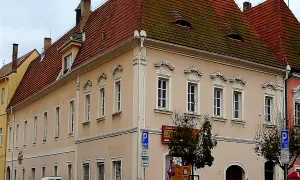
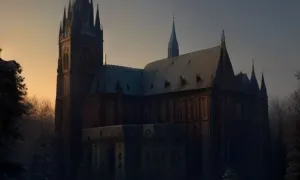
Drag the slider to compare how the landmark may have looked when it was built with the view today.
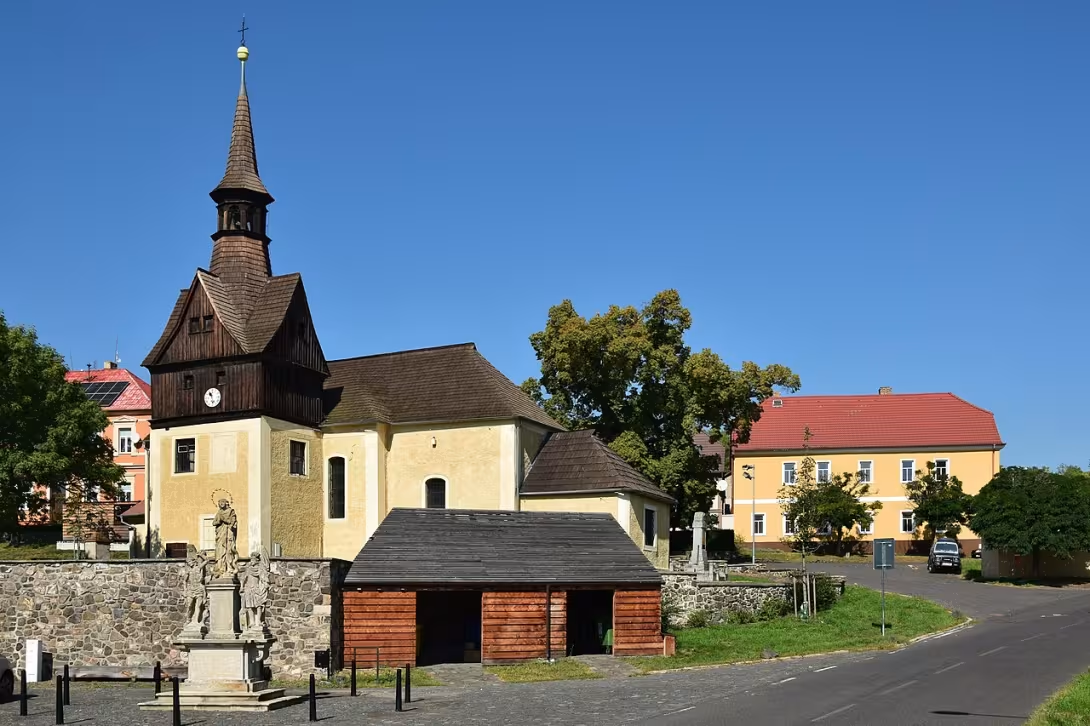
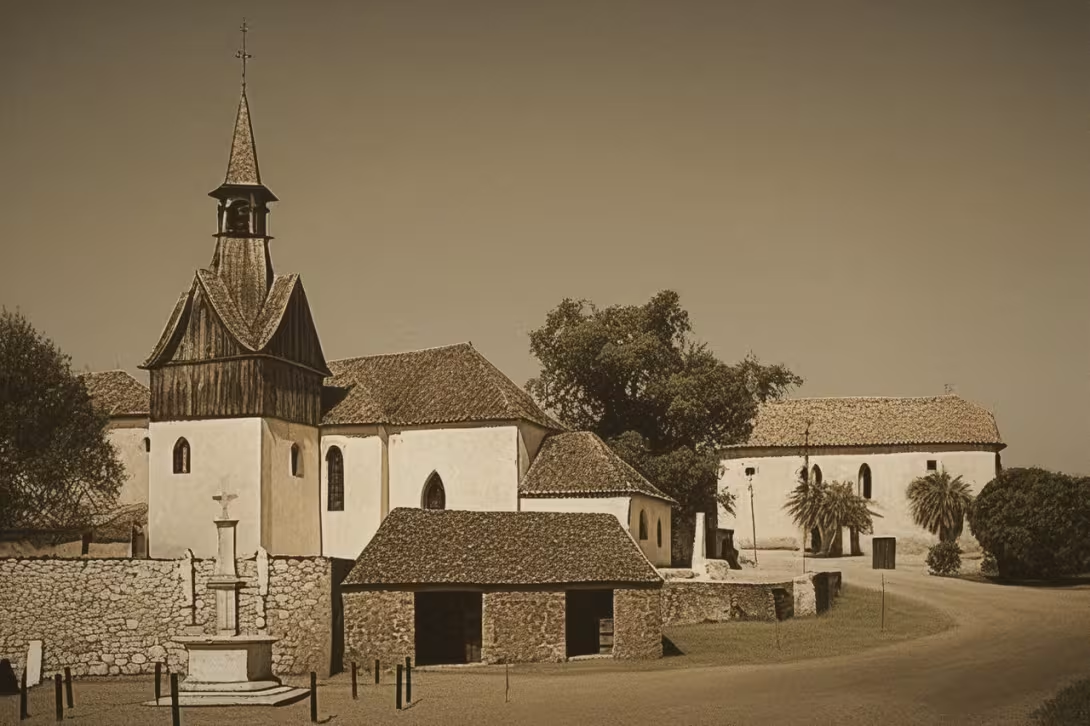
The historical appearance on the left is an AI-generated visualisation and serves as inspiration only.
Historical milestones
- 1352
- The church was mentioned in papal tithes records.
- 1626
- A tower was added to the southern façade of the church.
Architectural development
Originally constructed at the beginning of the 14th century, the church underwent several modifications. A tower was added to its southern façade in 1626, and it experienced Baroque renovations between 1772 and 1775. Further updates occurred in 1726 and 1891. The church fell into disrepair in the mid-20th century but restoration efforts began in 1999.
Historical events
The church was first mentioned in papal tithes records in 1352.
It suffered significant damage during the Hussite Wars but was restored by the mid-15th century.
Points of interest
- The Church of Saint Wenceslas has a unique architectural feature where the original entrance is now occupied by its tower; visitors enter through a small vestibule on the western side with a barrel vault and pilasters. - An early 17th-century clock mechanism, once used to operate a dial on the southern façade, remains in the church's tower, showcasing historical timekeeping technology. - The Úhošťanská lípa, a protected tree near the northern side of the church, adds to the site’s historical ambiance and is part of its natural heritage. - Despite suffering damage during the Hussite Wars, the church underwent significant restoration by the mid-15th century, reflecting resilience in Bohemian ecclesiastical history. - The Baroque baptismal font from 1699 inside the church highlights the rich artistic embellishments that characterize its interior design.
Guide
This guide is narrated by a synthetic voice generated by artificial intelligence.
Show guide text
This text was created by artificial intelligence and has not been editorially reviewed. It may contain inaccuracies.
The Church of Saint Havel stands in the northern part of Úhošťany in the Chomutov district, at the crossroads of the road from Kadaň to Brodce and to Kojetín. Since 1963, it has been protected as a cultural monument.
The church was built at the beginning of the 14th century and appeared in lists of papal tithes in 1352. During the Hussite Wars it was severely damaged and was not restored until the second half of the 15th century. The tower on the southern façade was added in 1626 and was further modified in 1726 and 1891. The present appearance of the church results from a Baroque reconstruction from 1772 to 1775, and a sacristy was added in 1782. In the second half of the 20th century, the church was neglected and fell into disrepair. Repairs began only in 1999 with the renovation of the roof frame and roof. Later, the sandstone slab floor was replaced and the buttressing pillars on the southern side were removed.
It is a rectangular single-nave structure with a presbytery and sacristy on the eastern side. The original entrance was where the tower now stands. Entry is now from the west through a small vestibule with a flat vault. Its façade is decorated with pilasters and above the door is the coat of arms of the city of Kadaň. From the vestibule, stairs lead to the western wooden oratory. Another oratory by the southern wall of the nave is accessible by a spiral staircase in the tower. The flat-ceilinged nave is lit by large arched windows. The sacristy has a cross vault with ribs and a small window protected by an S-shaped wrought-iron grille. The tower has a boarded belfry story and a hipped roof with triangular gables. The roof of the church is topped by an octagonal sanctus turret with a spire.
The interior furnishings are in the pseudo-Romanesque style, though some older objects have been preserved. A Baroque baptismal font dates from 1699, a statue of Saint Adalbert from the first half of the 18th century, and a statue of the Virgin Mary from 1727. The bell in the tower is from 1575. A Gothic statue of the Madonna from 1380 to 1400 was formerly part of the altar and is now housed in the Regional Museum in Chomutov. The tower also contains a pendulum clock mechanism from the early 17th century. It was wound with a crank once a day and drove the dial on the southern side of the tower.
Burials took place around the church until 1861. The abandoned cemetery is partly surrounded by a preserved wall. In its northern part grows the Úhošťanská linden tree, protected as a memorial tree. West of the church stood a rectory, which was demolished in 1974. On the village green below the church stands a sculptural group of the Virgin Mary Immaculate with Saint Florian and Saint Sebastian from 1717.
Tips for visitors
The best time to visit the Church of Saint Wenceslas in Úhošťany is during late spring or early autumn when the weather is pleasant, and the surrounding landscape is particularly beautiful. Additionally, visiting outside peak tourist season ensures a more tranquil experience.
Public transport is also an option; check the latest routes and schedules in advance using a travel planner or local transit website to ensure you have the most current information.
When visiting the Church of Saint Wenceslas, consider bringing comfortable walking shoes for exploring the area around the church, including its cemetery wall. A camera is recommended to capture the architectural beauty of the Baroque-style church and the serene atmosphere of the site. Additionally, bring a hat or sunscreen if you plan to visit during sunny days.
Photography enthusiasts will find several spots ideal for capturing the Church of Saint Wenceslas. The best light is typically early in the morning or late afternoon when the sun casts soft shadows, enhancing the church's architectural details. Try photographing from the northern side near the Úhošťanská lípa tree to include this protected natural element in your shots.
For families with children visiting the Church of Saint Wenceslas, consider exploring nearby attractions within a 30-minute drive or walk. While there are no specific child-friendly sites mentioned within the immediate vicinity, the natural surroundings provide ample space for children to play and explore safely.
Frequently asked questions
Can the monument be visited?
Religious buildings are usually open mainly during services; at other times a visit is normally arranged with the parish or the operator. We have not verified specific times.
Where is the monument?
Location: Úhošťany, Ústecký kraj. The map on this page shows the exact spot.
Why is the monument protected?
It is listed in the Central List of Cultural Monuments of the Czech Republic as a cultural monument (register no. 37099/5-804).
Businesses nearby
Do you run a restaurant, accommodation, shop, museum, rental, wellness or other visitor service near this monument? Show yourself directly to the people heading to it — this is how they will see you in the app and on the web:
Events nearby
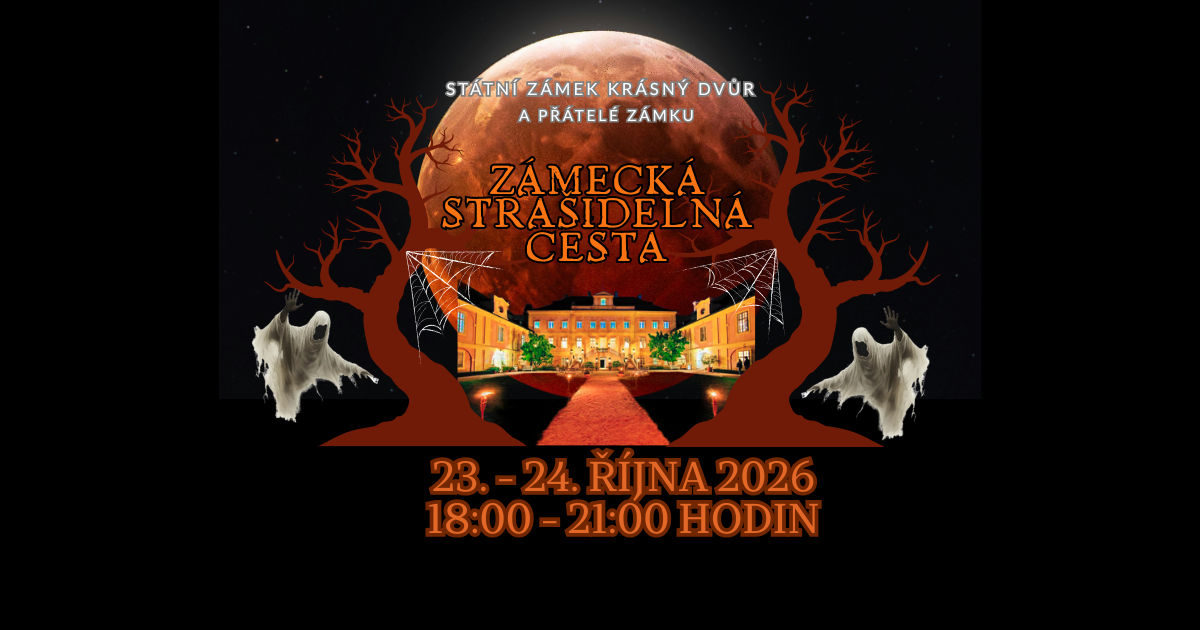
Zdroj akcí: otevřená data měst a obcí ČR (Národní katalog otevřených dat) a kalendář akcí Národního památkového ústavu.
Nearby
A partially preserved cemetery wall surrounds the former graveyard. Nearby, there was once a parish house demolished in 1974. The Úhošťanská lípa, a protected tree, grows near the church's northern side.
Accommodation nearby
Themed route
Tematická výletní trasa: Kostel svatého Havla (Úhošťany)
1. Kostel svatého Havla
Typ: Religiózní památka
Proč stojí za návštěvu: Tento barokní kostel je nejen duchovním centrem obce Úhošťany, ale také architektonickou perli s bohatou historií. Jeho interiér nabízí pohled na krásná umělecká díla a důkladně zachovaný kostelní interiér.
2. Zachováná část hřbitovní zdi
Typ: Historický prvek
Proč stojí za návštěvu: Tato částečně zachovaná zeď je svědkem minulosti a poskytuje pohled na historii obce. Je to místo, kde si můžete představit život v minulých stoletích a jeho změny.
3. Úhošťanská lípa
Typ: Chráněný strom
Proč stojí za návštěvu: Tento starobylý dub je nejen přirozenou krásou, ale také historickým a ekologickým milníkem v obci. Jeho zelená klenba poskytuje klidné místo pro odpočinek a reflektování.
4. Bývalé fara
Typ: Historické místo
Proč stojí za návštěvu: I když byla demolice v roce 1974, její bývalé místo připomíná důležitost a vliv fara na komunitu. Je to část historie obce, kterou si můžete představit a ocenit.
Tato trasa nabízí návštěvníkům pohled do minulosti Úhošťan a umožňuje prozkoumat jejich historické i přírodní dědictví.
Seasonal recommendations
Spring: The arrival of spring at Church of St. Wenceslas in Úhošťany is marked by a gentle reawakening of nature, with blossoming trees and vibrant greenery surrounding the historic site. This season offers a serene atmosphere as visitors can enjoy the soft light filtering through budding branches, enhancing the church's architectural details. During springtime, it's advisable to dress in layers due to fluctuating temperatures; mornings may be cool while afternoons warm up. The visitor numbers are moderate, making this an ideal time for those seeking a peaceful exploration without large crowds.
Summer: Summer brings long daylight hours and lush surroundings to the Church of St. Wenceslas, with the full bloom of nature providing a picturesque backdrop. This is the peak season for tourism, so it's wise to arrive early in the morning or later in the afternoon to avoid larger groups of visitors. The warm weather allows for comfortable exploration, but wearing breathable clothing and bringing water are recommended to stay hydrated and cool under the sun.
Autumn: Autumn transforms the Church of St. Wenceslas into a canvas of rich colors as leaves change from green to shades of orange, red, and gold. This season offers a unique atmospheric charm with softer lighting enhancing the church's historical features. While visitor numbers begin to decrease compared to summer, it remains a popular time for those wishing to experience the beauty of fall foliage. Layered clothing is advisable due to cooler temperatures, and bringing a light jacket can ensure comfort during your visit.
Winter: Winter at the Church of St. Wenceslas provides a tranquil setting with snow-covered landscapes creating a serene and almost ethereal atmosphere around the historic structure. The shorter days mean earlier closures, so planning ahead and arriving early is recommended to make the most of your visit. Due to colder temperatures, dressing warmly in layers, including hats and gloves, is essential for comfort. This season offers a unique opportunity to experience the church's quiet beauty, with fewer visitors allowing for a more intimate exploration.
Visualizations and artistic views


The visualisations are generated by artificial intelligence and serve as inspiration.
Photos from the area
Real photos taken near the monument


Zdroj a licence jsou uvedeny u každého snímku.
Tips from visitors
No tips yet. Be the first!
Log in and add your tip.
Sources and literature
Photos: Petr Kinšt / CC BY-SA 4.0, rozlišení zvýšeno umělou inteligencí — Wikimedia Commons. The author and licence also appear when you hover over the image.
Faktickým podkladem tohoto textu byl článek na Wikipedii, jehož autory jsou přispěvatelé Wikipedie. Článek je dostupný pod licencí CC BY-SA 4.0.
Location on the map

Příběhy a pověsti
Legendy, pověsti a příběhy spjaté s touto památkou
Fotografie návštěvníků
Zatím žádné fotografie. Buďte první, kdo přidá fotografii z návštěvy!
Log in a přidejte svou fotografii nebo hodnoťte.
Za ověřenou návštěvu v aplikaci získáte víc bodů — poznáme podle GPS, že jste na místě.
Reviews and comments