






kostel svatého Isidora (Prušánky) Church
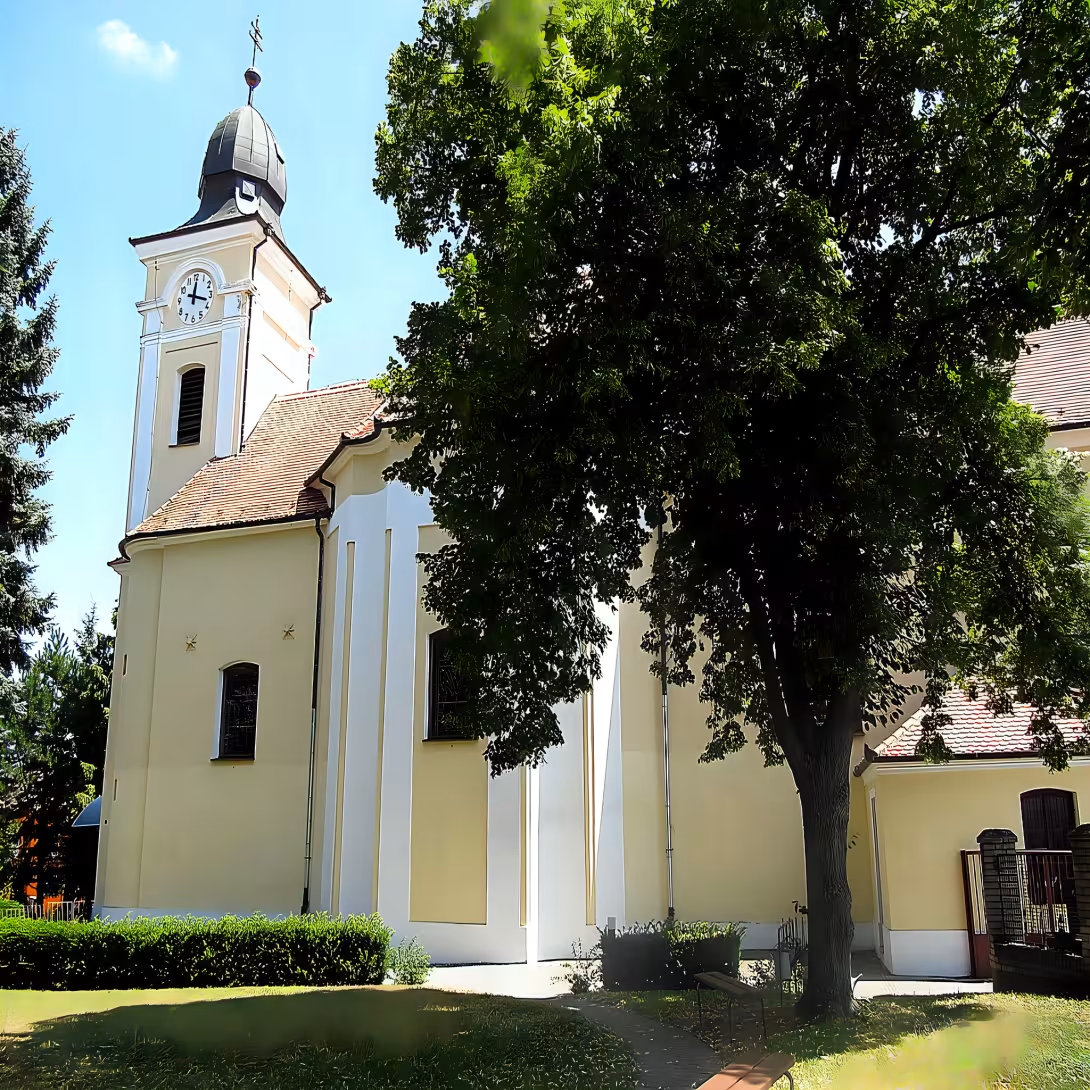
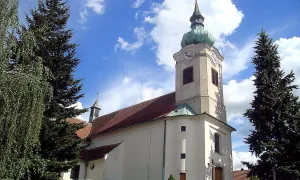
The Church of Saint Isidor in Prušánky is an outstanding example of Baroque architecture that has endured through time and adversity. Situated in the village of Prušánky within the Hodonín District of Jihomoravský kraj, this Roman Catholic church serves as a key local heritage site and an important cultural monument recognized by the Czech Republic. Consecrated on November 11, 1758, it replaced an earlier chapel that had served the community for forty years before deteriorating.
The origins of the Church of Saint Isidor date back to the Baroque period when Bohemia experienced significant cultural and architectural growth under Habsburg rule. Built on the site of a previous chapel dedicated to Saint Isidor, constructed in 1712 but later demolished due to deterioration, this new structure reflects mid-18th century European artistic trends, showcasing the resilience and adaptability of Baroque architecture.
Architecturally, the Church of Saint Isidor has faced numerous challenges. Initially built on unstable clay ground, it began showing signs of subsidence shortly after construction. By 1880, significant structural interventions were necessary; the nave was stabilized with steel cables and reinforced by a concrete band. Additionally, seven supporting pillars were erected to prevent further deterioration, highlighting innovative engineering solutions used to preserve the building's integrity.
The church has also endured dramatic events that have shaped its history. During World War II, it suffered damage from artillery fire, necessitating extensive post-war repairs. The resilience of the structure is evidenced by the re-casting of its bells twice—first in 1917 and again in 1942—to replace those lost or damaged over time.
In recent decades, the Church of Saint Isidor has undergone several restorations to maintain its historical and architectural significance. A notable renovation occurred in 1995, followed by the construction of a new sacristy between 1996 and 1997. This period also saw the creation of a surrounding park, enhancing the church's accessibility and appeal as a cultural site. Additionally, early in 2003, the church's stained glass windows were reconstructed, further preserving its artistic heritage.
Today, the Church of Saint Isidor remains an accessible and cherished landmark. Its status as a protected cultural monument underscores its importance to both the local community and visitors interested in Baroque architecture and European history. The combination of historical resilience, architectural ingenuity, and ongoing preservation efforts makes it a compelling destination for those exploring Czech heritage.
Visitors are invited to experience the Church of Saint Isidor firsthand, where they can appreciate its enduring beauty and significance as a testament to human creativity and perseverance.
Then and now
Drag the slider to compare how the landmark may have looked when it was built with the view today.
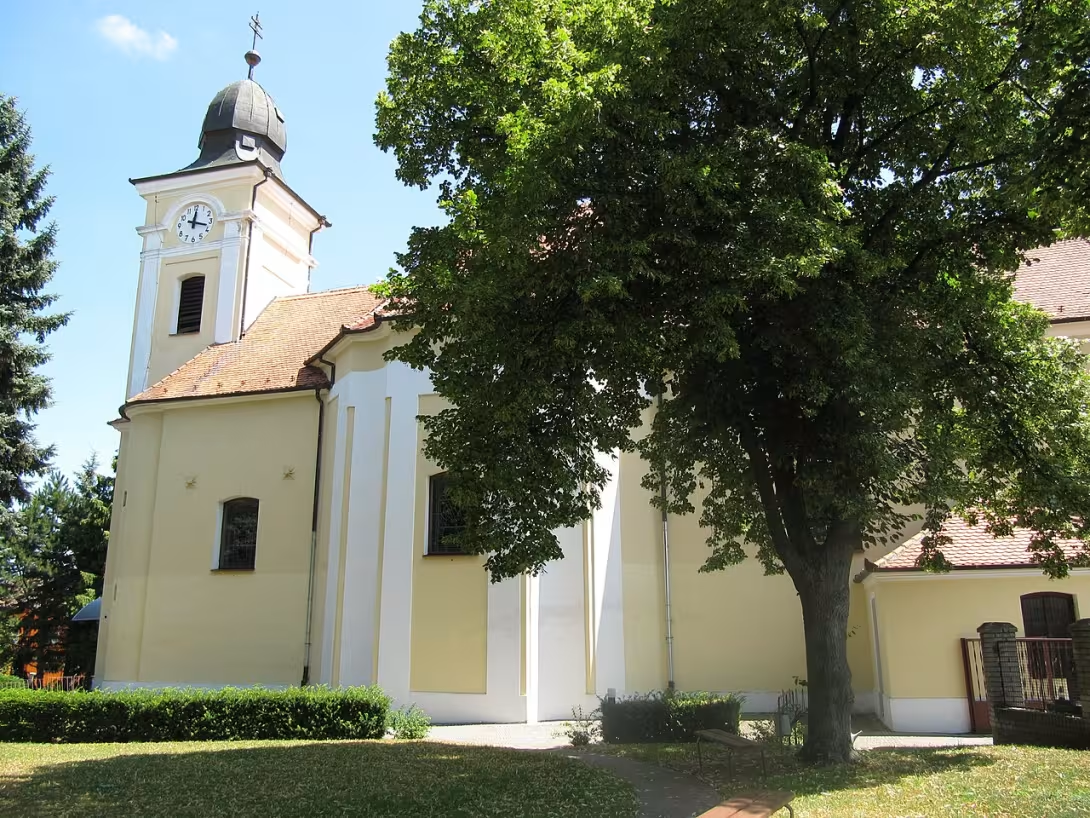

The historical appearance on the left is an AI-generated visualisation and serves as inspiration only.
Historical milestones
- 1712
- Konstrukce původní kaple svatého Isidora.
- 1758
- Konsekrace kostela svatého Isidora.
- 1880
- Stabilizace lodní části ocelovými kabely a betonovou páskou.
- 1917
- První znova lití zvonů kostela.
- 1942
- Druhé znova lití zvonů po škodách druhé světové války.
- 1995
- Významná rekonstrukce kostela.
Architectural development
The Church of Saint Isidor has undergone several significant structural interventions over its history. Initially built in 1758, it faced subsidence issues due to unstable ground, leading to reinforcement with seven pillars by 1880 and the addition of a steel cable system for stabilization. Post-World War II repairs addressed artillery damage, and further renovations included bell re-casting in 1917 and 1942, as well as window reconstructions in early 2003.
Historical events
In 1712, a chapel dedicated to Saint Isidor was constructed but later demolished due to deterioration. It was replaced by a new church consecrated on November 11, 1758.
During World War II, the church suffered damage from artillery fire.
Points of interest
- The Church of Saint Isidor was built on unstable clay ground, leading to early subsidence issues that required innovative engineering solutions like steel cables and concrete bands by 1880.
- Despite its Baroque origins, the church's bells have been recast twice—once in 1917 and again in 1942—to replace those lost or damaged over time, showcasing resilience through changing eras.
- The church has witnessed dramatic historical events, including damage from artillery fire during World War II, which necessitated extensive post-war repairs to restore its structure.
- A significant renovation took place in 1995, followed by the construction of a new sacristy between 1996 and 1997, reflecting ongoing efforts to preserve and enhance the church's historical significance.
- In early 2003, the church underwent reconstruction of its stained glass windows, ensuring the preservation of its artistic heritage while maintaining its appeal as a cultural site.
Guide
This guide is narrated by a synthetic voice generated by artificial intelligence.
Show guide text
This text was created by artificial intelligence and has not been editorially reviewed. It may contain inaccuracies.
The Parish Church of Saint Isidore in Prušánky in the Hodonín region is a Roman Catholic church and a cultural monument. Its history begins in seventeen twelve, when the community built a chapel dedicated to Saint Isidore. The chapel served for forty years, but then it became so dilapidated that they tore it down. A new church with the same dedication arose in its place. It was consecrated on the eleventh of November seventeen fifty-eight.
However, the builders had founded the church on unstable clayey soil. Over time, cracks therefore appeared in the masonry and the building began to slowly shift. It became necessary to gradually support the church with seven pillars. In eighteen eighty, they pulled together the nave with iron ties and reinforced the crown of the masonry with a reinforced concrete ring.
The church was repaired many times. The most serious structural interventions came after the Second World War, when it was damaged by artillery fire. The bells also went through difficult times. They were requisitioned twice, first in nineteen seventeen and secondly in nineteen forty-two. Today four bells hang in the tower.
The most recent repair took place in nineteen ninety-five. Between nineteen ninety-six and nineteen ninety-seven, a new sacristy was added and a park was created around the church. At the beginning of two thousand and three, the stained glass windows were reconstructed.
Frequently asked questions
Can the monument be visited?
Religious buildings are usually open mainly during services; at other times a visit is normally arranged with the parish or the operator. We have not verified specific times.
Where is the monument?
Location: Prušánky, Jihomoravský kraj. The map on this page shows the exact spot.
Why is the monument protected?
It is listed in the Central List of Cultural Monuments of the Czech Republic as a cultural monument (register no. 28740/7-2367).
Businesses nearby
Do you run a restaurant, accommodation, shop, museum, rental, wellness or other visitor service near this monument? Show yourself directly to the people heading to it — this is how they will see you in the app and on the web:
Accommodation nearby
Themed route
Tematická výletní trasa: Kostel svatého Isidora (Prušánky)
1. Kostel svatého Isidora (Prušánky) - Kostel Začněte svou cestu u tohoto důležitého náboženského a historického střediska v obci Prušánky. Tento kostel je známý svou architekturou a bohatou historií, která přitahuje návštěvníky z celého regionu. Je to ideální místo pro ty, kdo mají rádi historii a duchovní umění.
2. Obecní úřad Prušánky - Místní instituce Po navštívění kostela se podívejte na obecní úřad v Prušáncích, který je nedaleko. Toto místo nabízí vhled do místní správy a aktuálních událostí ve vesnici. Je to skvělý způsob, jak se dozvědět více o komunitě Prušánky.
3. Kaple svaté Anny - Kaple Krátce po obecním úřadu najdete kapli svaté Anny. Tato malá kaple je známá svou klidnou atmosférou a krásným výhledem na okolní krajinné prvky. Je to místo, které nabízí pokoj a možnost si uvolnit po prozkoumání kostela.
4. Náves Prušánky - Veřejné náměstí Navštivte centrální náves v Prušácích, kde se můžete podívat na místní architekturu a uvolnit si s pohledem na vesnický život. Toto místo je ideální pro ty, kdo chtějí poznat každodenní život v Prušácích.
5. Místní obchody a restaurace - Kulturní zážitek Zaverejte svůj výlet návštěvou místních obchodů a restaurací, kde můžete prozkoumat tradiční jídla a produkty regionu. Toto je skvělý způsob, jak se přiblížit kulturním tradicím Prušánek a užít si pohostinnost obyvatel.
Tato trasa nabízí komplexní pohled na historii, kulturu a každodenní život v Prušácích, což ji činí ideální pro ty, kdo chtějí poznat tento malebný kout Jihomoravského kraje.
Seasonal recommendations
Spring: Visiting the Church of Saint Isidorus in Prušánky during spring offers a serene experience as nature begins to awaken from its winter slumber. The church is bathed in soft, warm light that accentuates its architectural details and highlights the budding greenery surrounding it. This time of year brings fewer visitors, allowing for a more intimate exploration of this historical site. It's advisable to wear layers, as temperatures can be mild but unpredictable with occasional rain showers. Early morning visits are recommended to enjoy the tranquil atmosphere before any potential springtime crowds.
Summer: The summer season at the Church of Saint Isidorus is characterized by vibrant green landscapes and longer daylight hours, creating an ideal setting for photography enthusiasts eager to capture the church's beauty in full bloom. This period sees a higher influx of tourists, so planning your visit early in the day can help avoid larger crowds. Light clothing is recommended due to warmer temperatures, along with comfortable shoes for any walking tours in the surrounding areas. The extended daylight also provides ample time to explore and appreciate the historical significance of the church.
Autumn: Autumn brings a picturesque transformation to the Church of Saint Isidorus with its rich palette of reds, oranges, and yellows reflecting off the historic architecture. This season offers a unique atmosphere as cooler temperatures make for a more comfortable visit compared to summer. The falling leaves create a magical backdrop that enhances the church's charm. While visitor numbers begin to decrease towards the end of autumn, wearing layers is still advisable due to fluctuating weather conditions. An afternoon visit can be particularly rewarding when the light casts long shadows and highlights the intricate details of the church.
Winter: Visiting during winter provides an enchanting experience at the Church of Saint Isidorus, with snow possibly adorning its surroundings, creating a fairy-tale-like scene. Wearing warm clothing is essential, including hats and gloves, to ensure comfort during your exploration. Winter mornings offer a peaceful atmosphere with fewer visitors, making it an ideal time to appreciate the quiet beauty of this historical site against the backdrop of a crisp winter landscape.
Visualizations and artistic views


The visualisations are generated by artificial intelligence and serve as inspiration.
Photos from the area
Real photos taken near the monument


Zdroj a licence jsou uvedeny u každého snímku.
Tips from visitors
No tips yet. Be the first!
Log in and add your tip.
Sources and literature
Photos: palickap / CC BY 3.0, rozlišení zvýšeno umělou inteligencí — Wikimedia Commons. The author and licence also appear when you hover over the image.
Faktickým podkladem tohoto textu byl článek na Wikipedii, jehož autory jsou přispěvatelé Wikipedie. Článek je dostupný pod licencí CC BY-SA 4.0.
Location on the map


Příběhy a pověsti
Legendy, pověsti a příběhy spjaté s touto památkou

Fotografie návštěvníků
Zatím žádné fotografie. Buďte první, kdo přidá fotografii z návštěvy!
Log in a přidejte svou fotografii nebo hodnoťte.
Za ověřenou návštěvu v aplikaci získáte víc bodů — poznáme podle GPS, že jste na místě.
Reviews and comments