



kostel svatého Jakuba Většího (Kamenice) Church
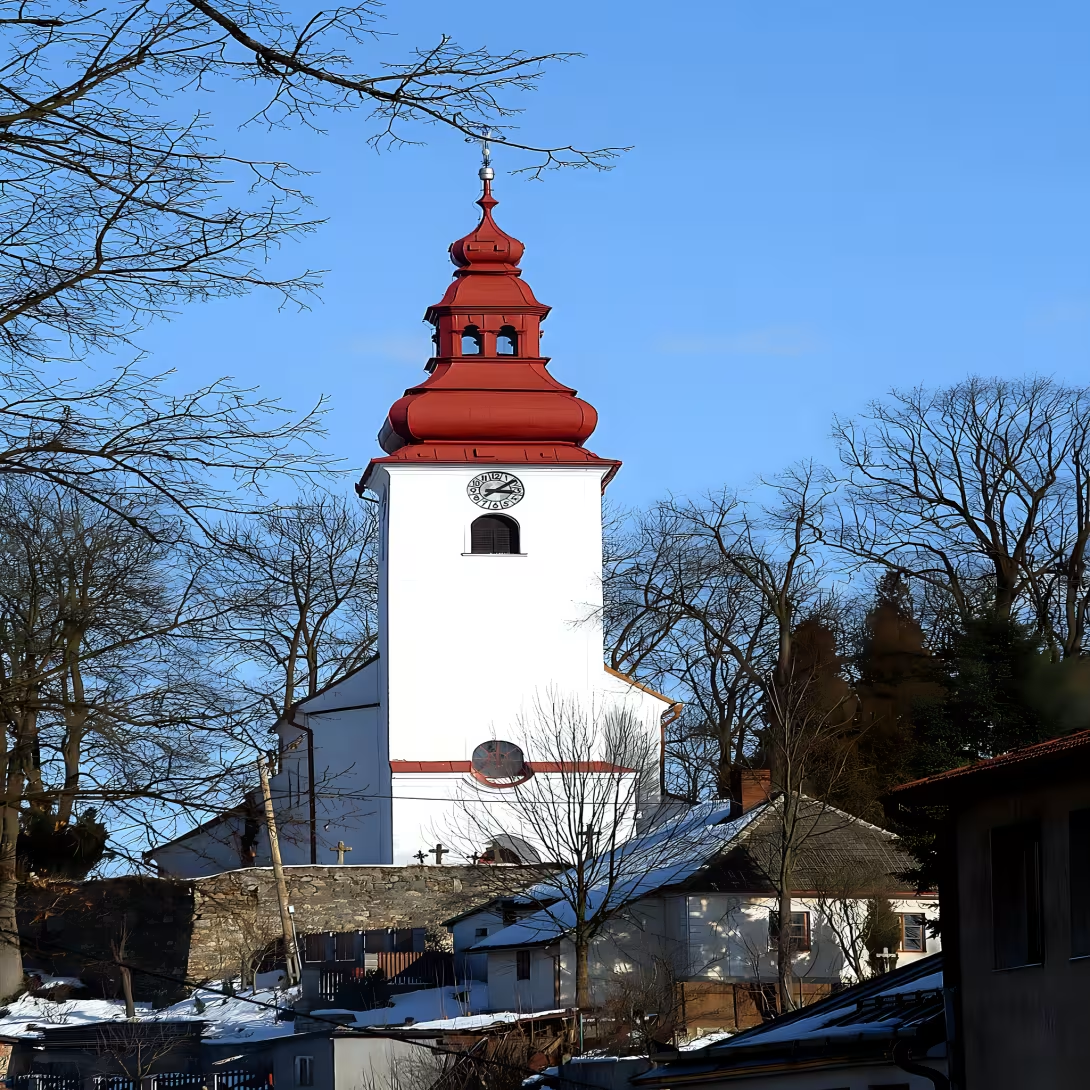
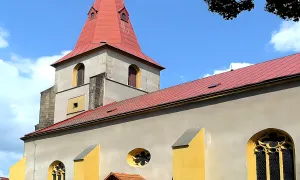
The Church of Saint James the Greater in Kamenice stands as a testament to architectural evolution and cultural heritage within the Czech Republic. Prominently located on a hill at the village center, this Romanesque church features a polygonal chancel and a Renaissance spire, reflecting its historical modifications over centuries. As a parish church for the Roman Catholic community, it holds significant cultural value and is protected as a national monument of the Czech Republic.
The earliest documented mention of the Church dates back to the 15th century under the patronage of Josef Valdštejn Vartenberk. However, its origins likely trace back to the late 12th or early 13th century, indicating its longstanding presence in the region. During the second half of the 15th century, significant changes were made: a new chancel was constructed and a southern entrance added around 1536, marking an important phase in its architectural development.
Architecturally, the Church began as a Romanesque structure but underwent several modifications reflecting broader stylistic shifts. Around 1536, a tower was added to enhance its silhouette. In 1648, a sacristy was constructed on the north side, and by 1723, Baroque renovations expanded its features with additions like a rood loft and gallery. The late 19th century saw further transformations; between 1892 and 1903, the interior underwent reconstruction, new windows were installed, and significant changes to the portal's stone framing occurred.
The Church has been home to several notable altars over time. The main altar dedicated to Saint James the Greater was rebuilt in 1894, while other altars have seen dedications change from figures like the Virgin Mary and Saint Wenceslas to Cyril and Methodius, and Saint Joseph. In 1910, a Stations of the Cross were installed, adding to its religious significance.
Throughout its history, the Church has witnessed various events that reflect both local and broader historical contexts. During the late medieval period, Bohemia was part of the Holy Roman Empire, experiencing significant cultural transformations. The architectural evolution from Romanesque through Gothic to Renaissance styles mirrors these shifts. In 1902, polychromy by Cyril Čeloud was installed, adding artistic value to its interior.
Today, the Church remains a focal point for both worship and historical interest in Kamenice. It is accessible to visitors who wish to explore its rich history and architectural beauty. The Church's preservation as a national monument underscores its importance not only to the local community but also to those interested in Czech cultural heritage. Its storied past and continued relevance make it a worthwhile destination for anyone seeking to connect with the historical tapestry of the region.
Then and now
Drag the slider to compare how the landmark may have looked when it was built with the view today.
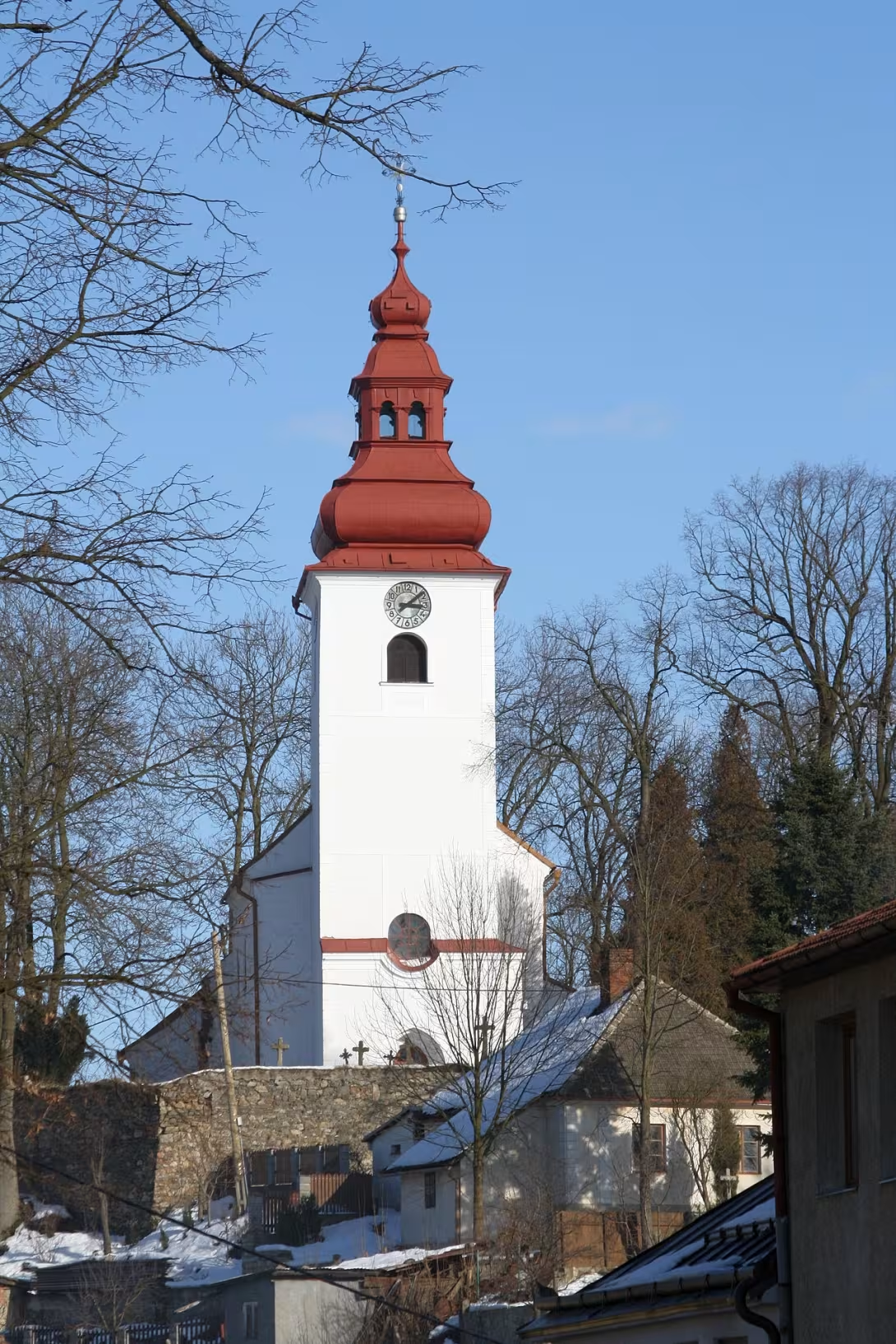

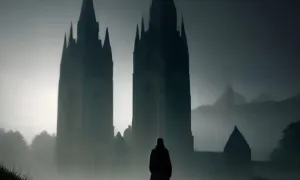
The historical appearance on the left is an AI-generated visualisation and serves as inspiration only.
Historical milestones
- 1536
- A tower was added to the church.
- 1648
- A sacristy was built on the north side of the church.
- 1723
- The church underwent Baroque renovations and expansions.
- 1892
- Interior reconstruction and installation of new windows occurred.
- 1902
- Polychromy by Cyril Čeloud was installed in the church.
Architectural development
Originally Romanesque, the church was modified in the late 15th century with a new chancel and southern entrance. A tower was added around 1536, followed by a sacristy in 1648. Baroque renovations occurred in 1723, adding a rood loft and gallery. The interior was reconstructed in 1892, and significant changes were made between 1892-1903.
Historical events
First documented mention in the 15th century under patronage of Josef Valdštejn Vartenberk.
Reconstruction in the second half of the 15th century, including a new chancel and southern entrance around 1536.
Major renovations between 1892 and 1903, including interior reconstruction and installation of new windows.
Points of interest
- The Church of Saint James the Greater may have origins dating back to the late 12th or early 13th century, suggesting it was built during a time when Romanesque architecture was prevalent in Europe, long before its first documented mention in the 15th century.
- In 1536, a significant architectural change occurred with the addition of a southern entrance and a tower, reflecting Renaissance influences that were sweeping through Europe at the time, marking an important transition from purely Romanesque styles.
- The Church's interior saw notable artistic enhancements when polychromy by Cyril Čeloud was installed in 1902, adding vibrant colors and intricate designs that contributed to its aesthetic appeal during a period of renewed interest in church artistry.
- Over the centuries, the altars within the Church have undergone numerous changes; for instance, an altar originally dedicated to Saint Wenceslas was later rededicated to Cyril and Methodius, reflecting shifting religious focuses and cultural influences over time.
- The addition of the Stations of the Cross in 1910 not only enhanced the Church's spiritual significance but also aligned with a broader trend across Europe where such installations became integral to Catholic worship spaces during that era.
Guide
This guide is narrated by a synthetic voice generated by artificial intelligence.
Show guide text
This text was created by artificial intelligence and has not been editorially reviewed. It may contain inaccuracies.
The Church of Saint James the Greater, also called Saint James the Elder, stands on a hill in the center of Kamenice, in the middle of the cemetery. It is the parish church of the Roman Catholic parish of Kamenice u Jihlavy and is protected as a cultural monument.
It is a single-nave structure that is Romanesque in its core. It has a polygonal presbytery and a prismatic tower from the Renaissance period. Later it underwent Baroque modifications.
It was probably built at the end of the twelfth century or at the beginning of the thirteenth century. However, the first written mention dates only from the fifteenth century. At that time, Joseph Valdštejn Vartenberk was the patron of the church. In the second half of the fifteenth century, the church acquired a new presbytery. A new entrance was also opened, so from that time on entry has been from the southern side. Around the year fifteen thirty-six, a tower was added, and around the year sixteen forty-eight a sacristy on the northern side. In the year seventeen twenty-three, the church was renovated again. It received a gallery and a vestibule, and the tower was also repaired.
Inside there are three altars. The main one is dedicated to Saint James the Greater. The original main altar did not survive; in the year eighteen ninety-four it was replaced by the present one. The side altars belong to Saints Cyril and Methodius and to Saint Joseph. Previously they were dedicated to the Virgin Mary and to Saint Wenceslaus.
An extensive renovation took place between the years eighteen ninety-two and nineteen oh-three. The church received new windows and the stone frame of the portal was partly moved. In the year eighteen ninety-two the interior was renewed and an organ was acquired. Two years later a cement floor was laid. In the year nineteen oh-two Cyril Čeloud decorated the interior with colorful paintings. The Stations of the Cross were added in the year nineteen ten.
In the year nineteen twenty-four large trees that grew around the church in the cemetery were cut down. The church acquired a new organ in the year nineteen eighty-two. The history of the village and the church is described in a book that the municipality of Kamenice published in the year two thousand and six.
Tips for visitors
The best time to visit the Church of Saint James the Greater in Kamenice is during late spring or early autumn when the weather is pleasant, allowing for comfortable exploration of the church's architecture and surroundings. These seasons offer mild temperatures and vibrant natural scenery, enhancing your experience as you explore this historical site. Additionally, visiting outside of peak tourist season can provide a more serene atmosphere, making it easier to appreciate the intricate details of the Romanesque structure and its Renaissance spire.
Public transportation options are accessible, with buses connecting Kamenice to nearby towns; however, specific schedules should be checked prior to your visit.
When visiting the church, bring comfortable walking shoes as you may want to explore the surrounding village and its pathways. A camera is recommended for capturing the stunning views from the hill where the church is situated, especially during golden hour when the light accentuates the structure's features. Additionally, consider bringing a small bottle of water and some snacks if you plan on spending an extended period exploring.
For photography enthusiasts, the best spots to capture the Church of Saint James the Greater are from the hilltop where it stands, offering panoramic views of Kamenice. The morning light provides soft illumination that highlights the church's architectural details, while late afternoon sunlight creates dramatic shadows and contrasts. Be mindful of other visitors when taking photos inside the church.
For families with children, consider visiting the local playgrounds or exploring nature trails in the surrounding countryside, offering opportunities for outdoor activities and relaxation.
Frequently asked questions
Can the monument be visited?
Religious buildings are usually open mainly during services; at other times a visit is normally arranged with the parish or the operator. We have not verified specific times.
Where is the monument?
Location: Kamenice, Kraj Vysočina. The map on this page shows the exact spot.
Why is the monument protected?
It is listed in the Central List of Cultural Monuments of the Czech Republic as a cultural monument (register no. 17242/7-4925).
Businesses nearby
Do you run a restaurant, accommodation, shop, museum, rental, wellness or other visitor service near this monument? Show yourself directly to the people heading to it — this is how they will see you in the app and on the web:
Accommodation nearby
Themed route
Tematická výletní trasa: Kostel svatého Jakuba Většího (Kamenice)
1. Kostel svatého Jakuba Většího (Kamenice) - Hlavní cíl
Typ: Náboženská památka
Proč stojí za návštěvu: Tento barokní kostel je nejen duchovním centrem obce, ale také architektonickou perli s bohatými historickými prvky. Jeho vnitřek nabízí krásné fresky a sochy, které přitahují návštěvníky z celého regionu.
2. Obecní dům (Kamenice)
Typ: Historický objekt
Proč stojí za návštěvu: Tento elegantní barokní obecní dům se nachází v centru Kamenice a sloužil jako administrativní sídlo. Jeho architektura je příkladem místního uměleckého vkusu z doby, kdy byl postaven.
3. Stará škola (Kamenice)
Typ: Historický objekt
Proč stojí za návštěvu: Tato budova připomíná dny starých školních tradic a je svědkem historie vzdělávání ve vesnici. Je zajímavé prozkoumat její interiér, který zachovává prvky z minulosti.
4. Podzimní tržnice (Kamenice)
Typ: Kulturní akce
Proč stojí za návštěvu: Pokud váš výlet spadne do podzimu, nenacházíte lepší příležitost než navštívit tržnici. Zde můžete objevit místní produkty a potraviny, ale také se zapojit do kulturních akcí, které obohacují atmosféru obce.
Tato trasa vám nabídne komplexní pohled na historii a kulturu Kamenice, od náboženských po administrativní a vzdělávací prvky, doplněné o místní kulturní událost.
Seasonal recommendations
Spring: Spring at the Church of Saint James the Greater in Kamenice offers a vibrant display of nature as cherry blossoms and wildflowers begin to bloom, creating a picturesque setting for visitors. The soft light filtering through budding trees enhances the church's architectural beauty, casting gentle shadows that add depth to its historic features. During this season, it's advisable to wear comfortable layers due to fluctuating temperatures; mornings can be cool while afternoons warm up. To avoid larger crowds and fully enjoy the serene atmosphere, consider visiting on weekdays or during early morning hours.
Summer: Summer is a popular time for exploring the Church of Saint James the Greater in Kamenice, with long days providing ample sunlight to illuminate its intricate details. The lush greenery surrounding the church creates an inviting outdoor space perfect for leisurely walks after your visit. However, this season also brings increased visitor numbers, especially during peak tourist periods. To make the most of your experience, plan to arrive early in the morning or later in the afternoon when it's less crowded. Don't forget a hat and sunscreen to stay comfortable under the summer sun.
Autumn: Autumn at the Church of Saint James the Greater is characterized by a stunning palette of warm colors as leaves turn shades of red, orange, and gold. The crisp air enhances the church’s historical ambiance, providing an ideal backdrop for photography enthusiasts. This season often sees fewer tourists compared to summer, allowing for a more tranquil visit. Dress in layers to accommodate cooler temperatures, and consider bringing a light jacket or sweater for your walk around the church grounds.
Winter: Winter transforms the Church of Saint James the Greater into a serene and almost mystical site with snow-covered surroundings that highlight its architectural elegance. The shorter days mean earlier closures, so plan your visit accordingly to ensure you have enough time to explore. While winter can be quieter in terms of visitor numbers, it's essential to dress warmly in layers, including a hat, gloves, and sturdy boots for navigating potentially icy paths. If visiting during the holiday season, enjoy the festive atmosphere that adds an extra layer of charm to your experience.
Visualizations and artistic views


The visualisations are generated by artificial intelligence and serve as inspiration.
Photos from the area
Real photos taken near the monument

Zdroj a licence jsou uvedeny u každého snímku.
Tips from visitors
No tips yet. Be the first!
Log in and add your tip.
Sources and literature
Photos: Jiří Sedláček (Frettie) / CC BY 3.0, rozlišení zvýšeno umělou inteligencí — Wikimedia Commons. The author and licence also appear when you hover over the image.
Faktickým podkladem tohoto textu byl článek na Wikipedii, jehož autory jsou přispěvatelé Wikipedie. Článek je dostupný pod licencí CC BY-SA 4.0.
Location on the map


Příběhy a pověsti
Legendy, pověsti a příběhy spjaté s touto památkou
Fotografie návštěvníků
Zatím žádné fotografie. Buďte první, kdo přidá fotografii z návštěvy!
Log in a přidejte svou fotografii nebo hodnoťte.
Za ověřenou návštěvu v aplikaci získáte víc bodů — poznáme podle GPS, že jste na místě.
Reviews and comments