






Kostel svatého Jakuba Většího (Libiš) Church
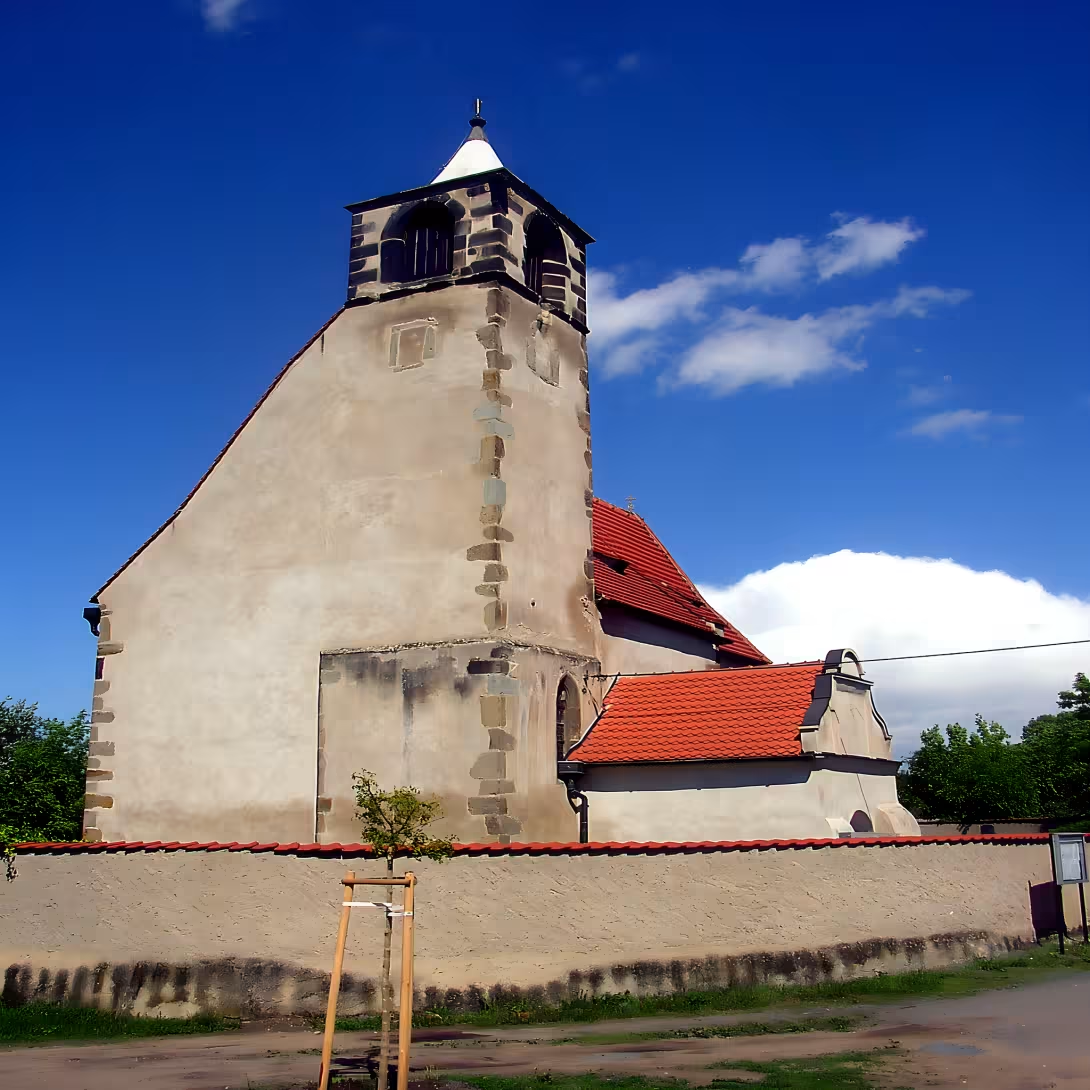
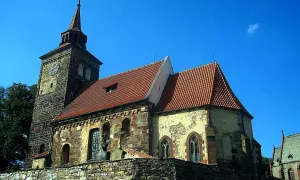
Church of St. James Bigger in Libiši is a small Gothic building located on the northeast edge of the village. It dates back to the end of the 14th century, serving as a place of worship and historical monuments. Important features include massive walls typical of fortified architecture and rare frescoes that offer insights into the Gothic art surviving centuries of conflict. Strategic design church reflects its dual role of religious place and refuge in times of danger.
Historical records indicate that the church existed in 1374 or 1386, as indicated in the confirmation books of the Prague Archdiocese, indicating that it had already been established. By 1391, the contract with the master builder Petr Lútka for the construction of a similar church in Medonosek suggests that he could also build this one. The origin of the church is considered Romanesque from the 13th century, later rebuilt at the beginning of the 14th century.
It is architecturally characterised by its single-boat structure with a five-sided office and massive walls typical of fortified churches or tanks. The lack of a significant external cut distinguishes it from many other Gothic structures. During the Renaissance period, a wooden bell tower was added, followed by a veranda and sacristy during the Baroque era. These supplements reflect evolving architectural styles while preserving the original Gothic essence.
the church has witnessed several key events throughout history. During Hussite wars in the 15th century, his frescoes were covered to protect them from damage, but they survived intact. In 1942-43, these frescoes passed the first famous restaurant of the academic painter China, which preserved this invaluable piece of Gothic art for future generations.
Today, the Church of St. Jacob the Great remains an important historical and cultural place. It is part of the parish of the Roman Catholic parish of Neratovic and continues to serve as a place of worship. The church has passed through various restaurants over the years which ensure its preservation for visitors and worshippers. Its frescoes, which have survived centuries of conflict and reconstruction efforts, remain evidence of its historical importance.
Visitors Libiše can explore this remarkable monument and appreciate both its architectural beauty and rich history. St. James Greater Church offers a unique view of Gothic art and architecture, making it a valuable destination for people interested in cultural heritage. His permanent presence as a place of worship and historic refuge calls for exploration and reflection on his historical past.
Then and now
Drag the slider to compare how the landmark may have looked when it was built with the view today.
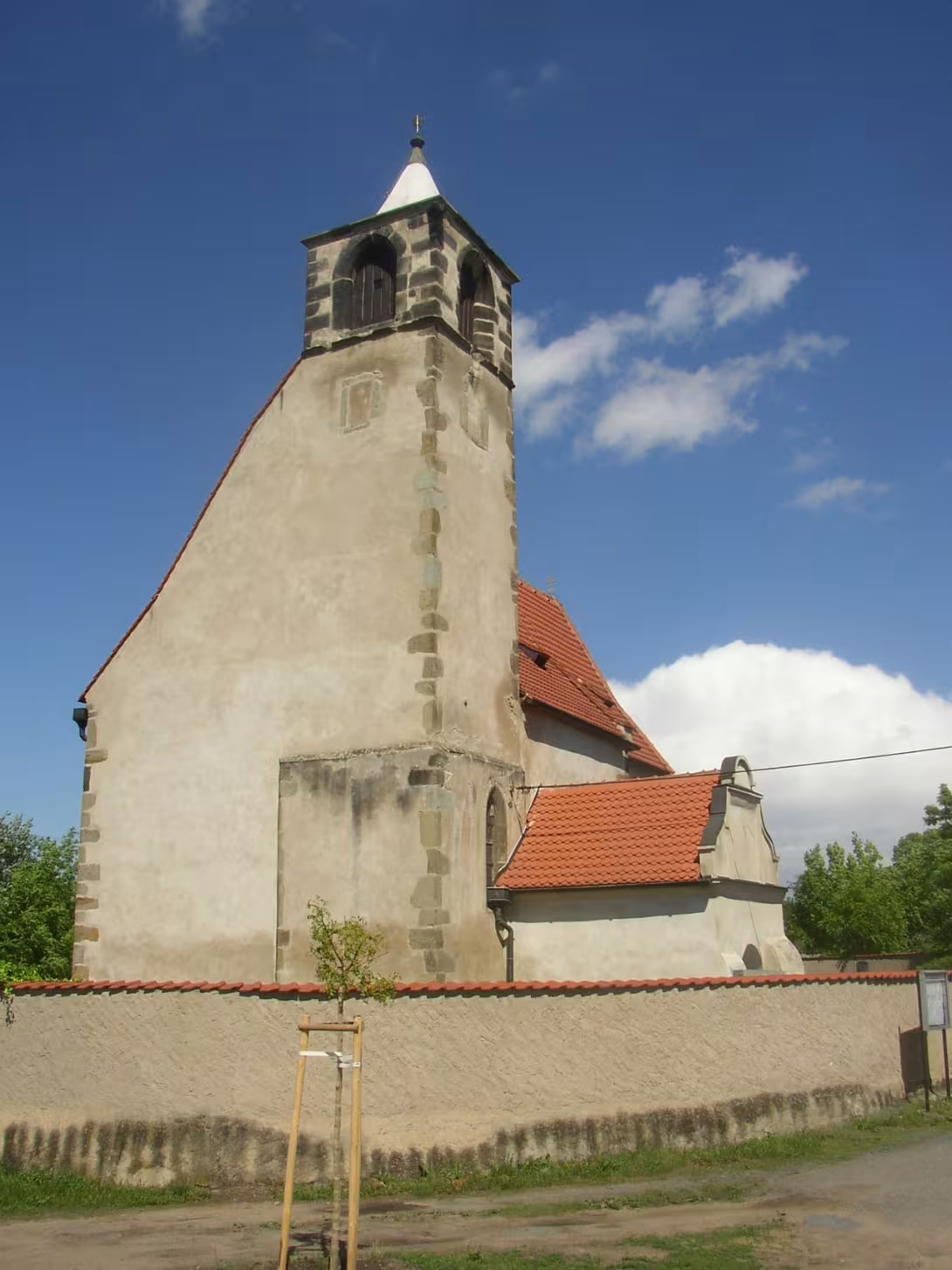

The historical appearance on the left is an AI-generated visualisation and serves as inspiration only.
Historical milestones
- 1374
- It is mentioned in the confirmation books of the Prague Archdiocese.
- 1386
- Another mention in the confirmation books of the Prague Archdiocese.
- 1391
- Contract with master builder Petr Lútka for church in Medonosek, which will be built similarly.
- 1541
- Tower construction marked with stone table at the entrance.
Architectural development
Originally Romanesque from the 13th century, the church was rebuilt in the early 14th century. It is equipped with a single-boat structure with a five-sided office and lacks a distinctive external portion, typical of fortified churches or tanks. The Renaissance period saw the addition of the wooden bell tower and later the porch and sacristy in the Baroque era.
Historical events
1374 or 1386: mentioned in the confirmation books of the Prague Archdiocese, indicating its existence.
1391: Contract with master builder Petr Lútka for church in Medonosek, which is to be built in the same form as this.
1541: Tower construction, marked with stone table at the entrance.
Points of interest
- The church of St. James Greater frescoes were hidden during Hussite wars to protect them from damage, but remarkably survived intact, showing their resilience and historical value.
- Master builder Petr Lútka, who was contracted in 1391 for a similar project in Medonosek, believed that he also constructed this church connecting him to his remarkable architectural work of this era.
- Unlike many Gothic buildings, the church lacks significant external cutting power, which distinguishes it architecturally and reflects its unique design in the initial phase of construction.
- The addition of wooden bell tower in the Renaissance period, followed by veranda and sacristy during the Baroque era, highlights the development of architectural styles while preserving the original Gothic essence of the church.
- In 1942-43 the academic painter Čela carried out the first known restoration of fresco church, ensuring their preservation for future generations and the preservation of this invaluable work of Gothic art.
Guide
This guide is narrated by a synthetic voice generated by artificial intelligence.
Show guide text
This text was created by artificial intelligence and has not been editorially reviewed. It may contain inaccuracies.
Welcome to the Church of St. Jacob the Great in Libiši! As you stand before this peaceful structure nestled on the northeast edge of the village, take a moment to absorb its quiet majesty - proof of Gothic craftsmanship from the late 14th century.
This small but important church serves as a place of worship and as a historical monument. Its massive walls reflect strategic design typical of fortified architecture, showing at a time when protection was paramount. As you look around, notice how these robust structures have resisted centuries and preserved their stories so that we can explore them today.
Let's dive into his origins. The Church of St. Jacob the Great first appeared in historical records in the confirmation books of the Prague Archdiocese in 1374. In 1386, it was referred to and referred to as an important religious place even then. Fast forward to 1391, and we find the master builder Petr Lútka contracted for a similar project in Medonosek, underlining his central role in Gothic architecture.
Now focus on the fresco church. These remarkable works were once hidden during the stormy Hussite wars to protect them from damage. Their survival through such conflict is nothing more than miraculous, offering us a rare view of the rich tapestry of gothic art that will persist in time.
As you stand here, imagine the skilled hands of Petr Lútka forming this sacred space. Although much of him remains hidden in mystery, his legacy lives on in the lasting beauty and resilience of this church. In 1541, the stone table at the entrance marked the construction of its tower - a silent witness to the passage of time.
Before you leave, think about the layers of history that cover this page. Every stone has a story, every fresco whispers from the past that calls us to think and explore further.
Thank you for joining me today at St. Jacob the Great Church in Libiši. May your curiosity ignite if you continue to uncover secrets within his walls.
Frequently asked questions
Can the monument be visited?
Religious buildings are usually open mainly during services; at other times a visit is normally arranged with the parish or the operator. We have not verified specific times.
Where is the monument?
Location: Libušino náměstí, Libiš, Středočeský kraj. The map on this page shows the exact spot.
Why is the monument protected?
It is listed in the Central List of Cultural Monuments of the Czech Republic as a cultural monument (register no. 27984/2-1393).
Businesses nearby
Do you run a restaurant, accommodation, shop, museum, rental, wellness or other visitor service near this monument? Show yourself directly to the people heading to it — this is how they will see you in the app and on the web:
Nearby
ITEX Show interactive overview of the surroundings - restaurants, accommodation, rentals and other places within a 15 km radius.
Data: OpenStreetMap contributors, 15 km radius.
‡ Historical monuments
- Bedřich Smetana (2.4 km)
- Jan Hus (3.6 km)
- homta Janu Palachovi (7.0 km)
- Kaplica (8.1 km)
- Mars (11.6 km)
- Egyptian Pavilon (11.9 km)
- Historical Vodočet (12.9 km)
- Fallen citizens 1914- 1918 (13.1 km)
Restaurant and catering
- Špičajda (0.7 km - Mělnický 634)
- Na Stephen (1.1 km)
- Solid Jistotax (2.6 km)
- FraJa (2.7 km)
- Glazier (2.7 km - On Skalky 936)
- Marten Restaurant (2.7 km - 28 October 919)
- Drak (2.7 km)
- Mouse Maš (2.7 km)
Accommodation
- Alabama (7.2 km)
- Hotel Jaro (7.9 km - 17 November 174 / 2)
- Reks (8.1 km)
- Vojkovna (9.5 km)
- Josef Kubovsky (11.8 km)
- Olga (12.4 km)
- Golem (12.4 km)
- Milada (12.9 km)
› Rental and sports
- Cycling Pivonka (2.6 km)
- Olympia (2.6 km)
- Sokolovna Přívory (5.8 km - U Sokolovna 243)
- Sokol All-taty (6.2 km - T. G. Masaryka 342)
- Fitness Siesta (8.2 km - New 3422)
- Cykla Erben (8.2 km - Railway station 3740)
- Cycloservis (8.4 km)
- Cykla Pavlichek (9.2 km)
© Tourism and nature
- Long top (6.2 km)
- Horní zdymadlo (7.1 km)
- V Luke (9.5 km)
- Jenišovický vr (10.0 km)
- Sfinga (11.9 km)
- Lhota (bath.) (12.3 km)
- Na Dole (ferry) (12.9 km)
- Klecany (lock) (13.1 km)
Accommodation nearby
Trips and activities nearby
Guided tours, tickets and activities nearby from GetYourGuide
Affiliate link: if you buy from the partner, we may receive a commission. The price for you does not change.
Search tours and activities →Themed route
Thematic Travel Route: Church of St. Jacob the Greater in Libiši
1.Kostel svatého Jakuba Většího (Libiš) * Type: * Religious landmark * Why is it worth visiting: * This baroque church, built in the 18th century, is the architectural pearl district Libiš. Its rich history and art elements such as frescoes and statues offer a thin view of the past of this area.
2. Parish house in Libiši * Type: * Historical building * Why is it worth visiting: * Located right next to the church and weakened as the center of the parish for centuries. It is a classical architecture and history as the seat of the clergy enriches the permitted quantity of the product.
3. Libiš pond * Type: * Local incremental attractions * Why is it worth a visit: * This small pond is an ideal place for relaxation and position contribution of fauna. Their critical water and surrounding green land offers an escape handed down by the city's rut, allowing the natural beauty of the area to be withdrawn and used.
4. The bell tower of St. Jacob's Church * Type: * Architectural element * Why is it worth a visit: * The bell tower that applies to all things that offer no historical intentions about the bell and is a role in the community, but also an impetus lodged on the village Libiš. It is an ideal place for those with great costs and history.
5. St James Vítší * Type: * Cultural space * Why is it worth a visit: * The nation is carrying a prochka around the church, but also a place to support local cultures and history. There are regular events and exhibitions that go into the historical process.
This route offers a comprehensive use of the cultural and historical richness of Libiš, with a view to its own costs and natural beauty.
Seasonal recommendations
Spring: Visit of St. Jacob the Great Church in Libiši during spring offers a unique experience as nature wakes up around this historic place. Blossoming flowers and pulsating greenery create a picturesque background that increases the architectural beauty of a church with natural light playing through windows of coloured glass. This season is ideal for photographic enthusiasts who want to capture a harmonious blend of history and nature. If you want as much of your visit as possible, consider coming in the morning when there are fewer crowds, allowing you to appreciate the calm atmosphere fully. Dress comfortably in layers because temperatures may vary, but generally it is rather mild for a light jacket.
Summer: Summer is the main season for exploring the church of St. Jacob the Great, with long daily hours that provide enough time to enjoy both the church and its surroundings. Thanks to the fresh green and warm weather it is ideal for peaceful walks in the area. However, it is also the tip of the tourist season, so expect more crowds, especially on weekends. To avoid the rush and rush, plan your visit early in the morning or later in the afternoon. Wear comfortable shoes and light clothes to stay cool under the summer sun.
Autumn: Autumn brings a stunning transformation to the church of St. Jacob the Great with its warm shades of red, orange and yellow leaves creating a magical atmosphere around this historic place. Thanks to cold temperatures, the ideal time for a peaceful visit is without the discomfort of summer heat. While the church remains open, some nearby outdoor attractions may have shortened hours or be closed due to the season. Dress in layers and bring a light jacket to customize fluctuating temperatures typical of autumn days.
Winter: The St. James Greater Church takes on a charming character in winter, with its snow covered surroundings offering peace and almost mystical surroundings. While the church itself is well maintained and open to visitors all year round, some outdoor areas may be less accessible thanks to snow or ice. Winter visits are quieter compared to other seasons that provide a more intimate experience of this historic place. Make sure you dress warmly in layers and wear comfortable shoes suitable for potentially icy paths.
Visualizations and artistic views


The visualisations are generated by artificial intelligence and serve as inspiration.
Photos from the area
Real photos taken near the monument

Zdroj a licence jsou uvedeny u každého snímku.
Tips from visitors
No tips yet. Be the first!
Log in and add your tip.
Sources and literature
Photos: User:Miaow Miaow / Public domain, rozlišení zvýšeno umělou inteligencí — Wikimedia Commons. The author and licence also appear when you hover over the image.
Faktickým podkladem tohoto textu byl článek na Wikipedii, jehož autory jsou přispěvatelé Wikipedie. Článek je dostupný pod licencí CC BY-SA 4.0.
Location on the map

Příběhy a pověsti
Legendy, pověsti a příběhy spjaté s touto památkou
Fotografie návštěvníků
Zatím žádné fotografie. Buďte první, kdo přidá fotografii z návštěvy!
Log in a přidejte svou fotografii nebo hodnoťte.
Za ověřenou návštěvu v aplikaci získáte víc bodů — poznáme podle GPS, že jste na místě.
Reviews and comments