



Kostel svatého Jakuba Většího v Kounicích Church
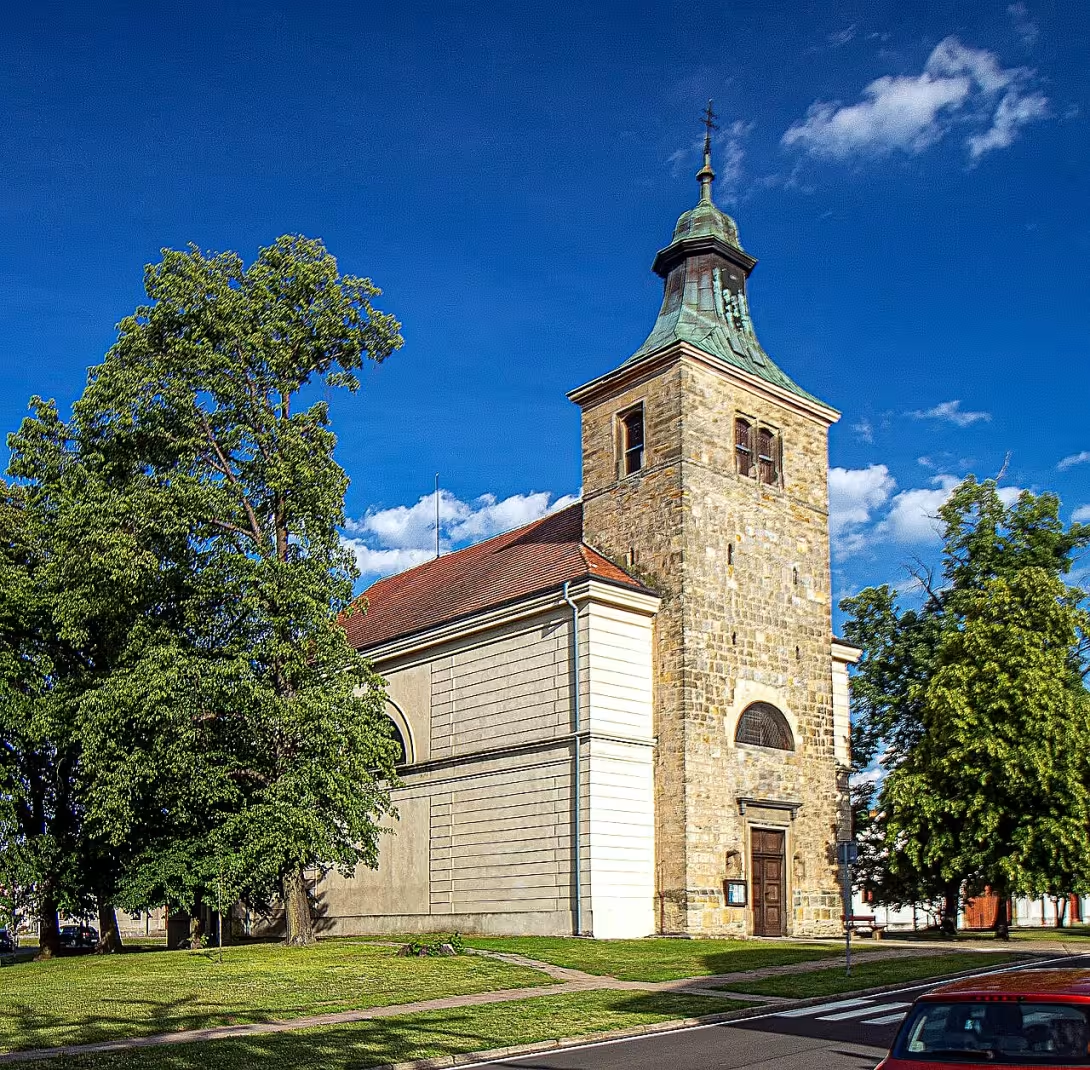
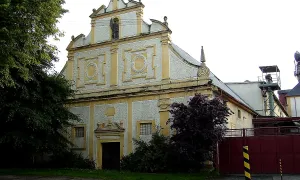
The Church of Saint James Bigger in Kounice is a Roman Catholic filial church near the city centre and its chateau. Originally gothic, he went through significant baroque modifications over time. This historical monument is characterized by a preserved Gothic tower that once served as an armed guard tower and reflected its multifaceted past. The church has cultural significance with elements from different periods, including works by Ferdinand Maximilian Brokoff.
The church probably dates back to the 12th century, where it is a witness of centuries of Czech history. His first documented mention is in 1350 within the parish Dean Kouří, indicating its long-term regional importance. Until 1352 he was recognized as a parish church with Zdeněk, Jan and Jiří from Kounik, who were listed as patrons.
Architectural, the church shows a mixture of styles due to its evolution in time. The original Gothic structure was modified during the Baroque period, including a reduction in tower height by one story in 1769. This change probably included the removal of the wood upper level as indicated by historical records. A medieval stone wall from the original building was discovered under the Baroque plaster applied in these modifications during the reconstruction of 1988. At the beginning of the 19th century, further changes included a wider ship and neo-Romanesque apps designed by Matyáš Čermák.
The church's ownership and administration have recorded remarkable figures throughout history. The patrons of Zdenek, John and George of Kounic were already significant in the first days of the parishioners. During the Baroque period, valuable pieces from the Ferdinand Maxmilian Brokoff workshop were added to the interior of the church, which was commissioned by Count Václav of Morzin. These elements highlight the connection of the church with important local characters and artists.
Key events include his first documented mention in 1350 and significant architectural changes during the Baroque period in 1769. The discovery of the medieval stone masonry under the Baroque plaster during the reconstruction of 1988 adds to its historical scheme. The church also hides the original organs of 1907 created by Henry Schiffner and adds another layer of historical value.
Today, the Church of St. James the Great remains an accessible and culturally important place inside the Kounice. It is part of the parish under the vicariate Cologne, which ensures its continued religious function and preservation. Visitors can appreciate its architectural evolution from Gothic to Baroque styles, along with unique elements such as Brokoff's works and Schiffner's organs. The historical layers of the church make it a valuable destination for people interested in Czech history and architecture.
St. Jacob the Great Church in Kounice is not only proof of the region's rich cultural heritage, but also a permanent symbol of architectural development. Its mixture of Gothic, Baroque and neo-Romanesque elements offers a unique view of the past, making it a must-visit for lovers of history and architecture as well.
Then and now
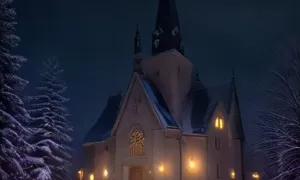
Drag the slider to compare how the landmark may have looked when it was built with the view today.
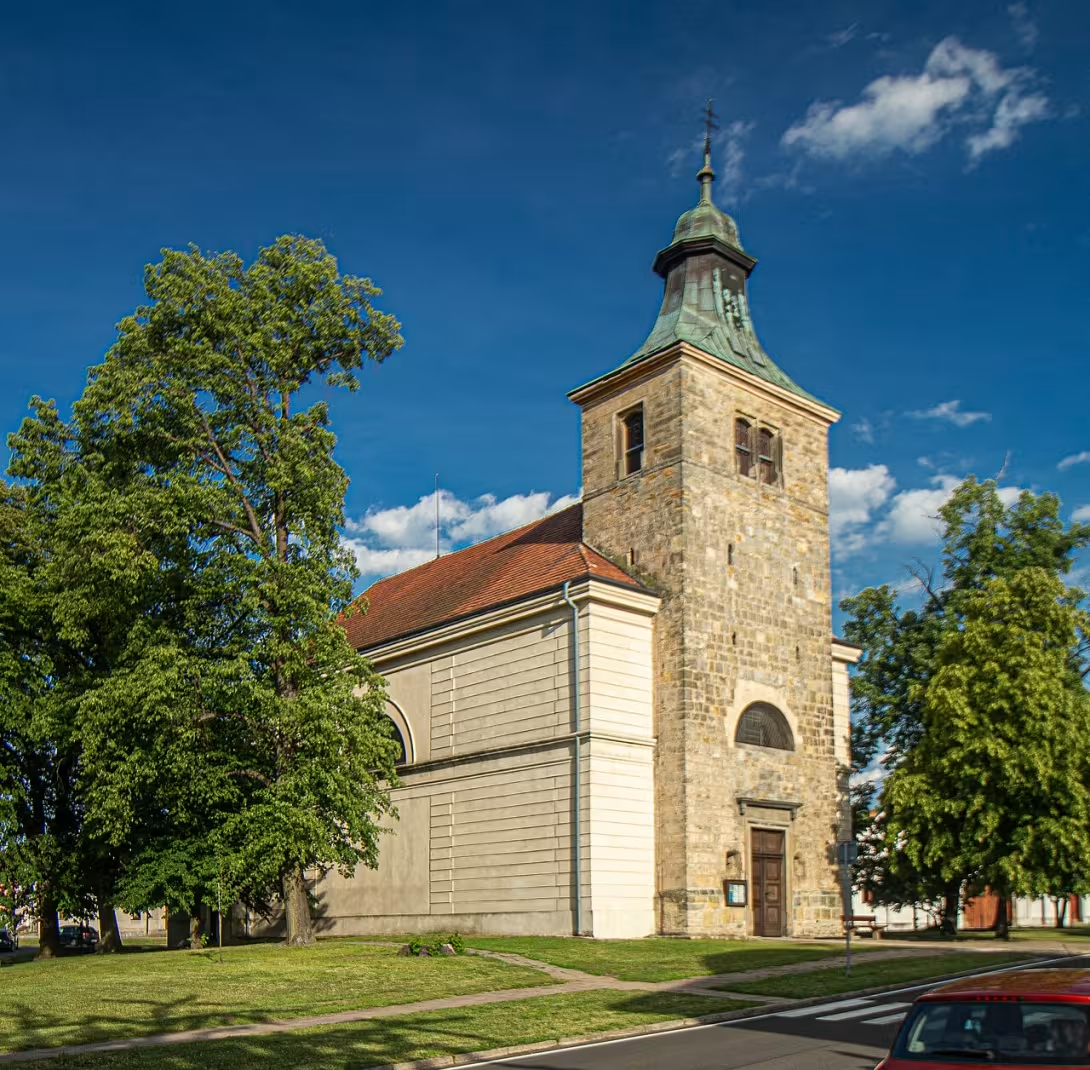
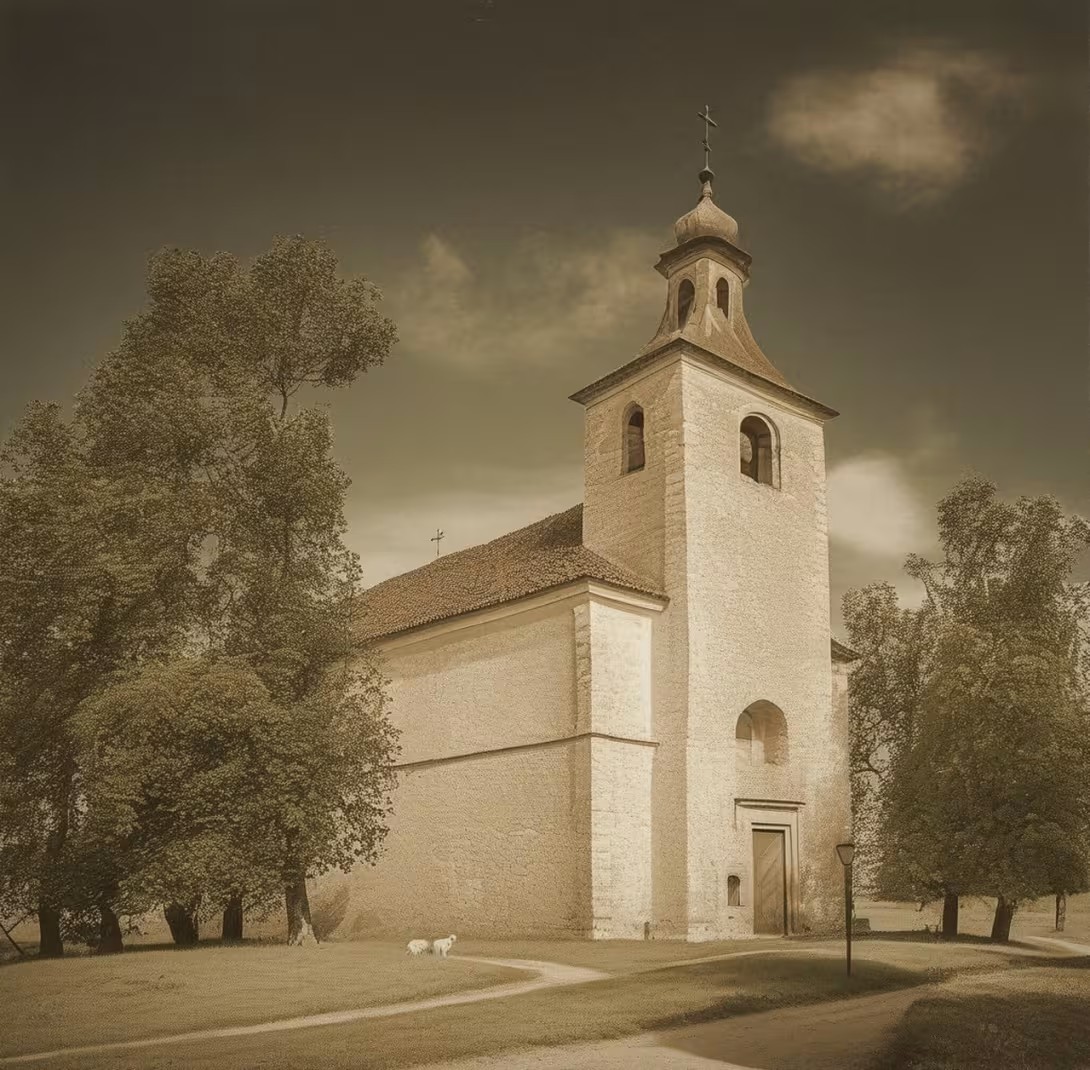
The historical appearance on the left is an AI-generated visualisation and serves as inspiration only.
Historical milestones
- 1350
- The first documented mention at the Kuríma Parish Theatre.
- 1352
- Recognized as a parish church with the patrons of Zdenek, John and George from Kounice.
- Around 1769
- The Baroque adjustments reduced the tower height by one story.
- 1988
- Medieval stone wall discovered under baroque plaster during reconstruction.
- 1907
- Installation of the original organs created by Henry Schiffner.
Architectural development
The original Gothic structure of the church was modified during the Baroque period, including a decrease in tower height. At the beginning of the 19th century she went through other changes with a wider boat and neo-Romanesque apps designed by Matyáš Čermák. In the interior there are valuable works from Ferdinand Maxmilian Brokoff.
Historical events
- 1350
- The first documented mention at the Kuríma Parish Theatre.
- 1769
- Baroque modifications included a reduction in tower height by one story.
Points of interest
- The Church of Saint James Greater originally served as an armed guard tower that reflects its strategic importance alongside its religious function.
- During the reconstruction of 1988, medieval stone masonry was discovered under the Baroque plaster, revealing layers of history and architectural evolution within the church structure.
- The church contains original organs from 1907 produced by Henry Schiffner, adding historical significance to the interior of the building thanks to its unique craftsmanship and sound.
- In 1769 the tower height was reduced by one story, probably involving removing the wooden top level, showing how architectural modifications were made for practical reasons over time.
- The church organizes a work by Ferdinand Maximilian Brokoff, which was commissioned by Count Václav Morzin during the Baroque period and which connects him with important local figures and artists of his time.
Guide
This guide is narrated by a synthetic voice generated by artificial intelligence.
Show guide text
This text was created by artificial intelligence and has not been editorially reviewed. It may contain inaccuracies.
Welcome to the Church of St. Jacob the Great in Kounice, a remarkable mixture of history and architecture nestled near the city centre and its chateau. As you stand here, take a moment to absorb the calm atmosphere around this Roman Catholic filial church. The construction in front of you is filled with centuries of stories with Gothic origin beautifully supplemented by baroque modifications.
The path of the Church began around 1350 when it was first documented in the parish theatre Kouřima. Until 1352 he was recognised as a parish church under the patronage of Zdeněk, John and Jiří from Kounice. This meant the beginning of his important role within the community.
Architecturally, you will notice preserved Gothic towers, which once served a dual purpose - not only as a place of worship, but also as armed watchtowers, which emphasize its strategic importance. Although baroque modifications around 1769 reduced tower height by one story, they added layers to its historic tapestry. As you now look at the church, imagine the medieval stone masonry, which was uncovered during the reconstruction of 1988 under a baroque plaster - proof of its rich architectural evolution.
The church also has cultural significance with contributions from important personalities such as Ferdinand Maximilian Brokoff and architect Matyáš Čermák. These individuals left their mark on the church, adding depth to its historical story.
One of the interesting aspects of this site is its transformation in time. The discovery during the reconstruction of 1988 revealed layers of history which talk about craft and architectural trends for centuries. It's a reminder of how places like this serve as living records of our past.
As you continue your research, consider the stories embedded in every stone and hand that shaped them. This church is not just a building, it is a chronicle of faith, art and resistance.
We invite you to dive deeper into his history and perhaps reveal personal connections or observations as you walk through this sacred space. Thank you for joining us on this journey through time at St. James the Great Church in Kounice.
Tips for visitors
The best time to visit the church of St. Jacob the Great in Kounice is at the end of spring or early autumn, when there is pleasant weather for walking around the historic city centre and exploring nearby monuments such as chateau Kounice. These seasons offer mild temperatures and a beautiful natural environment, improving your experience without crowds often found during the top tourist season. In addition, a visit on a weekday can provide a quieter atmosphere that will allow you to fully appreciate the architecture and quiet environment of the church.
Walking around the city and its historical monuments is suitable due to the compact nature of the area.
When visiting St. Jacob the Greater Church, consider bringing comfortable walking shoes as you will probably explore both the church grounds and surrounding areas like chateau Kounice. A camera or smartphone is recommended for photography, especially if you want to capture complicated details of Gothic and Baroque architecture church. In addition, wearing a light jacket could be useful due to variable weather conditions.
For photographers, the best places around St. Jacob's Church Bigger are near sunrise or sunset when lighting highlights architectural features. The facade church is especially remarkable in the soft morning light, while the surrounding landscape offers a beautiful background during the golden hour. Exploration of the area at the beginning of the day can also provide opportunities to capture the city and the chateau with fewer people around.
Within 30 minutes drive from Kounice, you can visit nearby Kounice Chateau, which is an excellent place to explore after visiting the church. The chateau complex offers historical views and picturesque views of typical Central Bohemia landscape. For families with children, this area provides sufficient space for walking and enjoying outdoor activities, which is a great supplement to your itinerary.
Frequently asked questions
Can the monument be visited?
Religious buildings are usually open mainly during services; at other times a visit is normally arranged with the parish or the operator. We have not verified specific times.
Where is the monument?
Location: Kounice, Středočeský kraj. The map on this page shows the exact spot.
Why is the monument protected?
It is listed in the Central List of Cultural Monuments of the Czech Republic as a cultural monument (register no. 16034/2-1836).
Businesses nearby
Do you run a restaurant, accommodation, shop, museum, rental, wellness or other visitor service near this monument? Show yourself directly to the people heading to it — this is how they will see you in the app and on the web:
Nearby
the church is located near the chateau Kounice and in the landscape typical of Central Bohemia, surrounded by historical architecture and natural features characteristic of the region.
Accommodation nearby
Themed route
Thematic cruise route: Kostel svatého Jakuba Většího v Kounicích
1. Church of St. Jacob the Greater - * Type: * Religious monument - * Why is it worth visiting: * This Baroque church is the most famous historical monument in Kounice. Its rich architectural decals and the ductile atmosphere by recalculating the essentials that can be used to obtain information about the historical state. This is important from the route to be used on the surrounding region and architecture.
2. Chateau Kounice - * Type: * Historical building - * Why is it worth a visit: * Located in the lightning cube of St. James Vetěší, what from other than the ideal next brick on the route. This chateau is a representative of the history and culture of the Středočeský kraj region. It should be borne in mind that architecture and information acquired following a notification that there is no advance payment for every traveler.
3. Historical architectural elements - * Type: * Architecture - * Why is it worth a visit: * After a far-sighted church and chateau have its own historical architectural elements that enclose these pamples. These tufts are direct worlds of rich Kounice and offer valuable insight into life in the region for centuries. A walk outside this structure is like walking through a mass trail that converts dense fuels to smaller cultures and history.
This route offers, on the basis of the possibility of applying to the rich history of Kounice, the screening of architectural gems and the setting of resting moments in the natural environment of the Central Bohemia region.
Seasonal recommendations
Spring: St. James Vetěch's Church in Kounice Spring offers one experience where living colours that are intertwine with historical architectural businesses. Trees and shrubs count quantities, which means they steal quantities for the photographic cube and are surrounding cabbage. The atmosphere is calm with a slight surge of rights, which allows the possibility of sale. For the purposes of this Regulation: It is not known that, on the basis of objective guidelines that could be applied, these measures should be considered appropriate for all.
Summer: The Church of St. James Vetší offers the production of opportunities, which is the historical beauty, which have the main flight zone. Sunshine days can be architectural details and can only be used if they are intended for other projects concerning churches. Summer is a period when it is to be adapted, in particular by cruise and family, to be carried out for a longer number of entrances. It's exciting to move early in the morning or later to avoid the peak of the crowd. LIVE ON THE VISITOR, TOO, FULFILLED BY LINE HORK AT DAY AND MORE CHANCE FOR A SOON PROFESSIVE. Forget to take the umbrella, designed round and plenty of drinking.
Autumn: The St. Jacob Vystí Church in autumn offers a one-man atmosphere where the green nature travels into the color scarves and some detours. This time of year is ideal for milestones photographers because trees and bushes in the surrounding skeleton provided a beautiful background. Despite falling depending on whether this aid is applicable. IT DOES NOT STOP HEAVEN AND MAY EVEN DURING NOT PLASTER TO PROTECT YOURSELF AGAINST WEAKY THINGS AND REDUCED WOODS. Notwithstanding the fact that, for the purposes of this Decision, it is necessary to determine what the conditions of this Regulation are and what the conditions of this Regulation are.
Winter: The winter value of the Church of St. James Vetěž is encouraged by its architectural beauty, which is surrounded by an ice forest and an engraving. The atmosphere in this case may be indicated except that it is State aid which is intended for the purpose of providing information. However, it is important to cross over to cool conditions with warmer clothes and wind bends such as blankets or squares. The opening time may be shorter than the time required to establish that it is appropriate to adapt to this plan. This Regulation shall be binding in its entirety and directly applicable in all Member States.
Visualizations and artistic views


The visualisations are generated by artificial intelligence and serve as inspiration.
Photos from the area
Real photos taken near the monument


Zdroj a licence jsou uvedeny u každého snímku.
Tips from visitors
No tips yet. Be the first!
Log in and add your tip.
Sources and literature
Photos: VitVit / CC BY-SA 4.0 — Wikimedia Commons. The author and licence also appear when you hover over the image.
Faktickým podkladem tohoto textu byl článek na Wikipedii, jehož autory jsou přispěvatelé Wikipedie. Článek je dostupný pod licencí CC BY-SA 4.0.
Location on the map


Příběhy a pověsti
Legendy, pověsti a příběhy spjaté s touto památkou
Fotografie návštěvníků
Zatím žádné fotografie. Buďte první, kdo přidá fotografii z návštěvy!
Log in a přidejte svou fotografii nebo hodnoťte.
Za ověřenou návštěvu v aplikaci získáte víc bodů — poznáme podle GPS, že jste na místě.
Reviews and comments