



kostel svatého Jakuba Většího (Želetice, okres Hodonín) Church
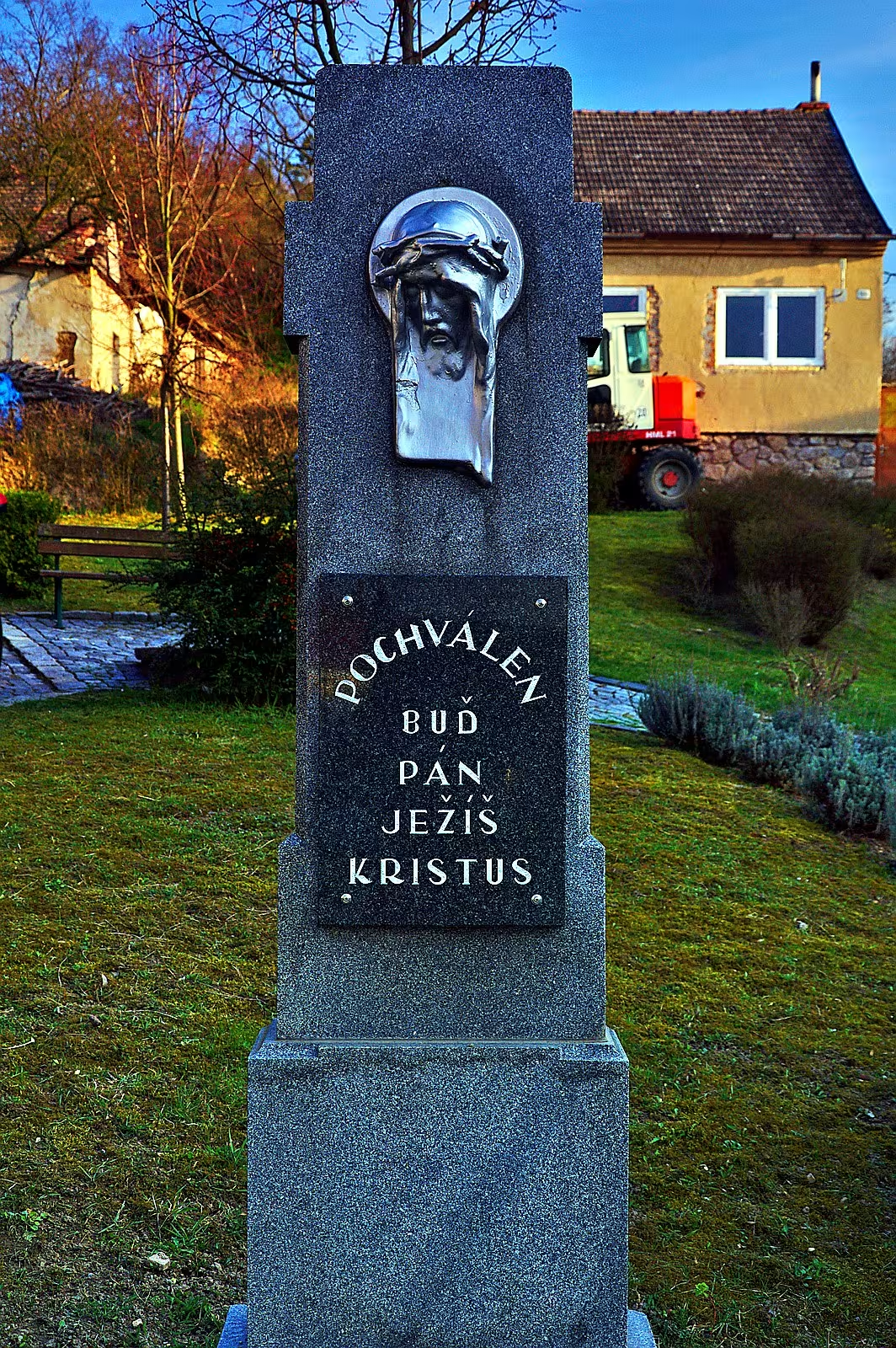
The church of St. Jacob the Greater in Želetky in Hodonín is a Gothic sacral building founded in the middle of the 13th century. The building is protected as a cultural monument of the Czech Republic. Among its most distinctive features is the oblique connection of the ship to the presbytery, whose cause remains unexplained to this day.
The creation of the church in the middle of the 13th century falls into the period of intense colonization and development of Gothic architecture under the rule of the Přemyslovovci. At that time, the power of the Church was consolidated in Europe and medieval cities developed, creating ideal conditions for building similar halibut.
The architecturally oldest core of the building is a gothic presbytery with a winning arch. In the 18th century the temple passed through Baroque modifications and in 1925 it was extended by the side chapel. The fact that the church's ship is oblivious to the presbytery remains a distinct feature. The reason for this non-traditional arrangement is unknown.
The history of the building affected the period of decline in the 16th century when the building was decayed. It was restored in 1606. Subsequently, the church was repeatedly plundered and damaged during the Thirty Years' War and in the fall of Kurucs in the early 18th century. The extensive repairs of the damaged area took place between 1721 and 1732. The last significant building change was the extension of the lateral chapels in 1925.
Today the sanctuary serves as a parish temple of the local Roman Catholic parish. It is located in Želetky, a village with a rich wine tradition and agricultural landscape.
This church is a valuable piece of evidence of the historical development of sacral architecture in South Moravia, which has preserved its Gothic core despite war conflicts and structural changes. The visit to Želetec offers an opportunity to explore this cultural monument and to think about its unusual disposition, which still raises professional questions.
Historical milestones
- 1250
- The establishment of a church in the middle of the 13th century.
- 1606
- Restoring the church after the period of non-maintenance in the 16th century.
- 1721
- Commencing repairs to the damaged church after war conflicts.
- 1925
- The extension of the lateral chapels to the existing ship.
Architectural development
The oldest core of the building is a Gothic presbytery with a winning arch. The church ship is inclined towards the presbytery, which is an architectural oddity with unclear origin. In the 18th century the building was baroque and in the 20th century it was supplemented with a side chapel.
Historical events
In the 16th century, the church stopped being maintained and decayed. A major repair of the damaged building took place between 1721-1732. In 1925, there was a significant structural adjustment in the form of a side chapel extension.
Points of interest
The church was founded in the middle of the 13th century. - The distinctive feature of the construction is the oblique connection of the ship to a presbytery whose cause is unknown. - The oldest core of the building is a gothic presbytery with a winning arch. - In the eighteenth century the temple passed through baroque modifications and in nineteen hundred twenty-five it was extended to a side chapel. - The construction was decayed in the sixteenth century, it was restored in the year sixteen hundred and six.
Guide
Show guide text
This text was created by artificial intelligence and has not been editorially reviewed. It may contain inaccuracies.
Welcome to the church of St. Jacob the Bigger in Železice! You are facing a historic building that is not only an important sacral building, but also a key element of local cultural heritage. Look up at the elegant lines of the church and the perception of its atmosphere will bring you a sense of connection to the past.
The church of St. Jacob the Greater has its roots dating back to the mid-13th century, which makes it one of the older sacral buildings in this area. Established at a time when Catholic faith was constantly developing and strengthening in these territories, it served as a spiritual centre for the local community. During his long-term life, the church passed through countless periods of historical changes and challenges.
Now let's look at the architecture you can see. The oldest part of the construction is a gothic presbytery with a winning arch, which is a characteristic element of this time. This detail represents not only the artistic processing, but also the technology and aesthetics of the then construction. Note also the oblique connection of the ship to the presbytery - this architectural choice arouses interest and is one of the many stories this church hides.
Although there are no known specific personalities associated with its creation, it is clear that many people whose lives were closely linked to this holy place were behind its construction. Over the centuries the church passed through various periods of repair and enlargement, as evidenced by records of reconstruction in 1606 and early 18th century.
An interesting feature is not only the historical context, but also the architectural features that are difficult to explain - for example, the exact cause of the ship's oblique connection to the presbytery remains unknown. This detail may be a hint of adaptation to the original terrain or unique architectural inspiration.
I recommend paying more attention to the surrounding areas of the church, which can offer even more stories and atmosphere. Whether you're exploring his interior or looking at the courtyard, every piece of this monument has its own secret.
Thank you for your attention and wish you a relaxing walk. I wish you to take not only your memories, but also a deeper understanding of the history and culture of this place.
Tips for visitors
The best time to visit is during the morning or in the late afternoon sun, when soft light beautifully highlights the historical masonry and details of the church facade. In the summer months you will appreciate a pleasant shadow around the building.
If you use public transport, we recommend checking the current connection in the respective timetable search engine.
To visit, bring comfortable shoes to move around the sights and the camera. The best shots are obtained from a slight distance from the main gate, where the church's total silhouette stands out in contrast to the surrounding landscape.
The surroundings of Želetice are ideal for walks in the agricultural landscape, which is famous for its wine tradition. You can go on a slow hike on local roads and admire the typical South Moravian countryside.
For families with children the place is suitable as a stop during a trip to discover history. The surrounding area of the church offers a quiet environment where children can relax while you look at the exterior of this important sacral monument.
Frequently asked questions
Can the monument be visited?
Religious buildings are usually open mainly during services; at other times a visit is normally arranged with the parish or the operator. We have not verified specific times.
Where is the monument?
Location: Jihomoravský kraj. The map on this page shows the exact spot.
Why is the monument protected?
It is listed in the Central List of Cultural Monuments of the Czech Republic as a cultural monument (register no. 1000126749).
Businesses nearby
Do you run a restaurant, accommodation, shop, museum, rental, wellness or other visitor service near this monument? Show yourself directly to the people heading to it — this is how they will see you in the app and on the web:
Nearby
Obec Želetice se nachází v okrese Hodonín v Jihomoravském kraji, v oblasti bohaté na vinařskou tradici a zemědělskou krajinu.
Accommodation nearby
Themed route
Thematic cruise route around St. Jacob's Church (Želetice, Hodonin district)
1. Church of St. Jacob the Greater
Type: Religious monument
Why is worth a visit: This church is an important historical and architectural monument that attracts its beautiful and rich history. It is an ideal place for those interested in the history of religious art.
2. Wine complex in Želetky
Type: Wine
Why is worth a visit: The village is famous for its rich vineyard tradition. Visit the local wine area where you can see the process of making wine and appreciate local products.
3. Agricultural landscape around Želetice
Type: Agricultural area
Why is it worth a visit: When walking through the surrounding fields and gardens enjoy a view of the vast agricultural landscape that is characteristic of this region. It is an ideal place to relax and explore natural beauties.
4. Local Market in Railway
Type: Market
Why is it worth a visit: Visit the local marketplace where products from the area are sold and you can discover local gastronomy. It's a great way to get to know the cultural traditions and lifestyle of the people.
This route offers you a clear view of the cultural and natural richness surrounding St. Jacob the Greater Church.
Seasonal recommendations
In the spring, the church's surroundings awaken to life. Fresh grass and flowers begin to grow around the building, creating a fresh and joyous environment. The light is soft in this period and very pleasant to observe the details of the construction. I recommend visiting the morning when the air is the cleanest. Dress well because the weather can quickly change between cold and heat.
The summer season offers long days and intense sunlight, which beautifully highlights the shapes of the church. Bright green in the surroundings provides a pleasant shade. Due to high temperatures and greater interest in humans, it is best to arrive early in the morning to avoid the greatest heat and crowds. Put on light and breathable clothes and don't forget to drink.
Autumn brings gold and brown to the landscape. The atmosphere becomes calmer and melancholy, which complements the historical character of the monument perfectly. The morning mist can create a mysterious mood around the church. For a walk in the leaves I recommend firm shoes and a warmer layer of clothing. The best time to visit is the afternoon when the sun shines below and the colors are the most distinctive.
In winter time, there is silence and the landscape is full and clear. Without leaves on trees, the surrounding horizons are better visible. The light is weak and the days are short. Due to the cold you need to have very warm clothes and good shoes in case of snow or frost. Plan a visit around noon to use the most daylight.
Visualizations and artistic views


The visualisations are generated by artificial intelligence and serve as inspiration.
Photos from the area
Real photos taken near the monument


Zdroj a licence jsou uvedeny u každého snímku.
Tips from visitors
No tips yet. Be the first!
Log in and add your tip.
Sources and literature
Photos: This image is a work by Mercy. When reusing, please credit me as: Mercy from Wikimedia Commons. I would appreciate being / CC BY-SA 3.0 — Wikimedia Commons. The author and licence also appear when you hover over the image.
Faktickým podkladem tohoto textu byl článek na Wikipedii, jehož autory jsou přispěvatelé Wikipedie. Článek je dostupný pod licencí CC BY-SA 4.0.
Location on the map


Příběhy a pověsti
Legendy, pověsti a příběhy spjaté s touto památkou
Fotografie návštěvníků
Zatím žádné fotografie. Buďte první, kdo přidá fotografii z návštěvy!
Log in a přidejte svou fotografii nebo hodnoťte.
Za ověřenou návštěvu v aplikaci získáte víc bodů — poznáme podle GPS, že jste na místě.
Reviews and comments