






Kostel svatého Jana Křtitele (Kostelec nad Černými lesy) Church
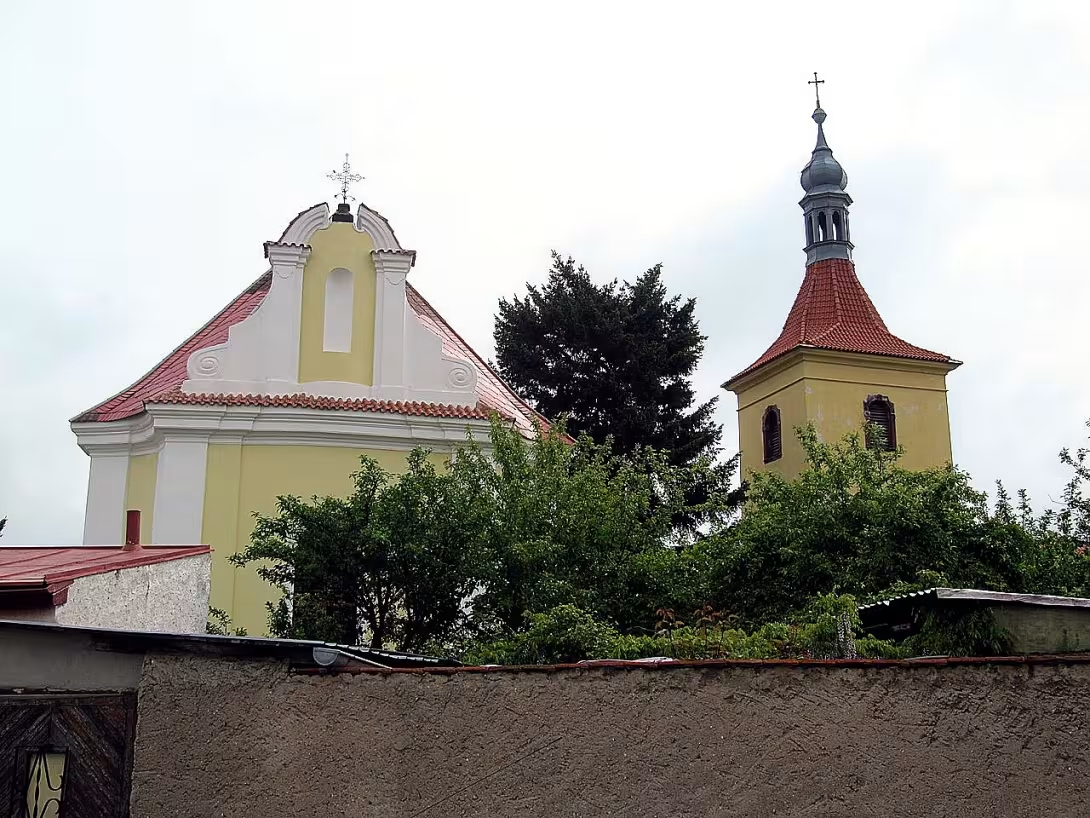
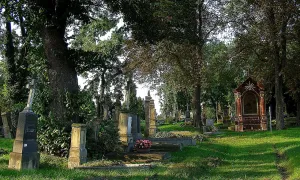
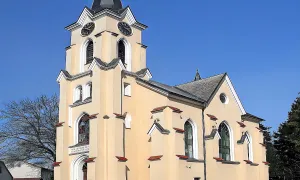
The church of St. John the Baptist stands in Prague suburb, an unusual place - inside the home block, west of the square, in the place of the once abolished cemetery. How do you get here? The street from Prague Street from the south gradually uncovers it. Due to its location, it remains hidden from the side view and that makes it an interesting discovery for anyone who takes time to explore local topography.
The church was established before 1613 as a parish building bound with the Utraquist cemetery. By 1600 he served the cemetery in nearby Aldashín, only then the burial center moved here. The building was born until the Czech company was dealing with the consequences of the Hussite Reformation. Soon after, however, she had to be tested. In 1644, when Swedish troops invaded the city, the church was destroyed. The treatment lasted long - until 1679 it was repaired. The testimonies of those times are inscriptions carved in stone: on the west portal the inscription "16 MRA 79.S. I0ANNES BAPTISTA ORA NOBIS 'and on the portal south year 1703. Another test hit him in the 18th century - a fire damaged him in 1756. Soon after, from 1777 to 1783, he underwent a major reconstruction, which is attributed to the submission probably by the Tyrolean architect of the late Baroque and classicism of J. Jäger.
An interesting resettlement took place in 1737. A new parish church of All the Holy Angels of the Guardians and Religious Service was built in the square; until then, it was held here since 1726. This changed the status of the construction in the filial chapel.
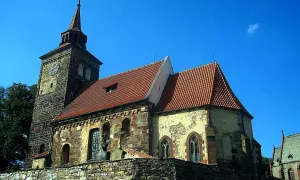
It is an architectural structure on a rectangular plan with a rectangular presbytery and sacristy in the longitudinal axis. The façade is decorated with excavated corners and facade with a volute shield. The ship is a glass sail, as well as a presbytery; There's a couple of pilasters in the corners. The Krucht is overarched by a vaulted arch with lunettes on two pillars. The sculpture decoration - statues of St. Barbara and St. Catherine - was preserved in nothing of the presbytery from the mid-18th century. The main Baroque altar bears the image of the Baptist of the Lord; In the southern part of the ship stands the altar of St. John Evangelist with Baroque architecture beheaded on boards. On the north wall is a painting of "The Wall of St. Catherine" from the same time. The four sandstone Baroque sculptures - Saint Shebestian, Our Lady, Saint Florian and Saint Francis Xaversky - commemorate the demolishment of the original sculpture from the square which took place in 1889. Later, these statues were transferred to the nearby Church of All Saints in Uhranev.
The bell tower, probably built at the same time as the church, got its present appearance after the fire. Until 1894, she served as a town bell tower; then the bells were transferred to the newly built tower of the parish church in the square. Today, the bell tower is covered with a chamber lamb with a lantern and stands as a guardian of memory.
At present, there are occasional exhibitions and premises - church, bell tower, former cemetery, wall and land - are protected as a real cultural monument of the Czech Republic.
Then and now
Drag the slider to compare how the landmark may have looked when it was built with the view today.
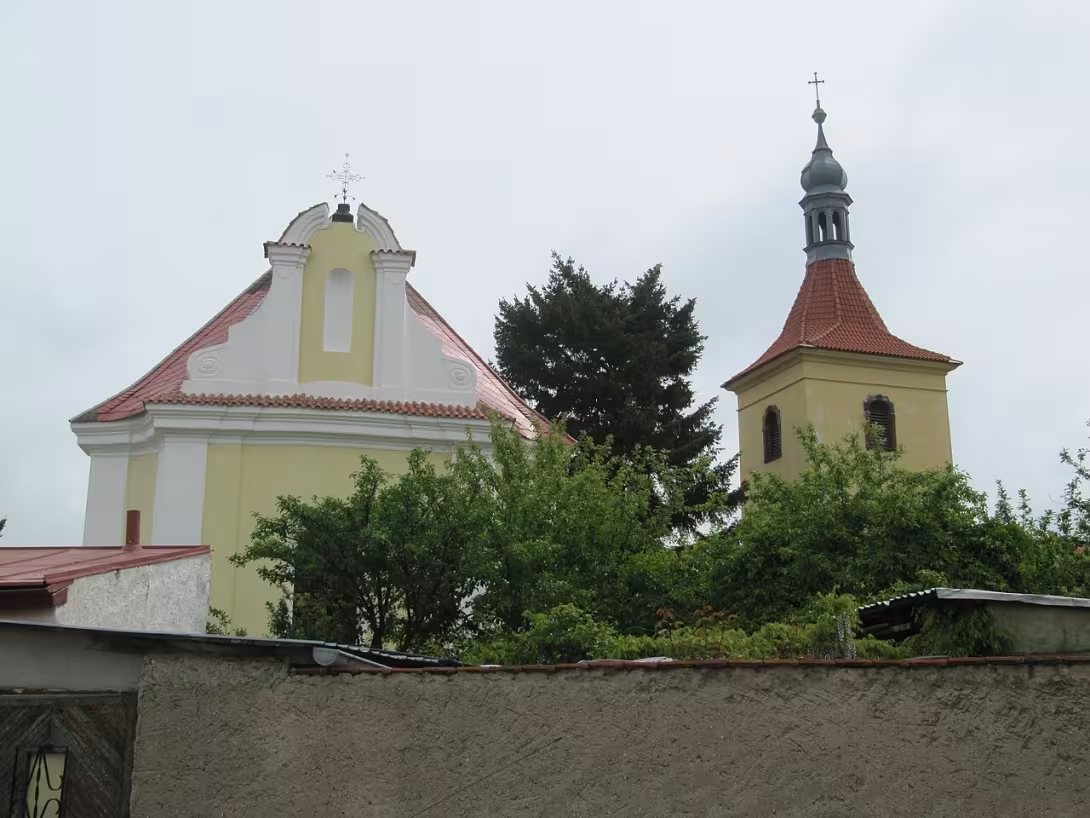
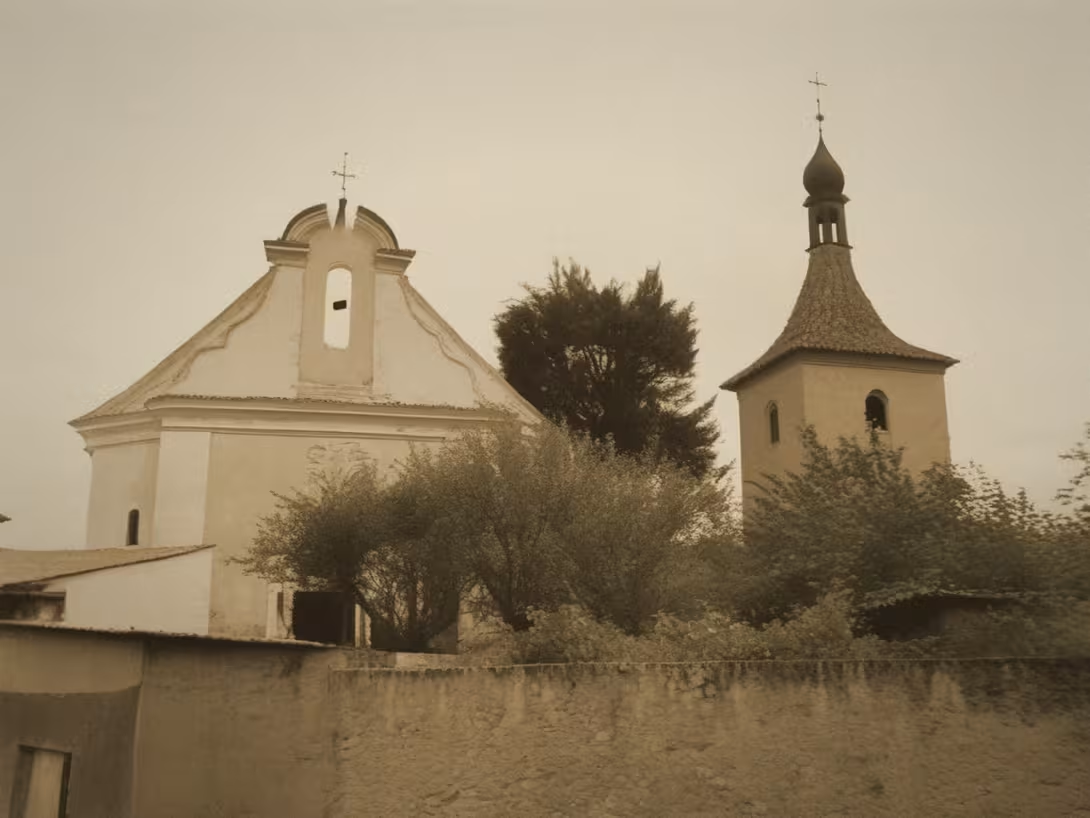
The historical appearance on the left is an AI-generated visualisation and serves as inspiration only.
Historical milestones
- 1644
- Destruction of the church by Swedish troops
- 1679
- Repair of church
- 1756
- Damage to the church by fire
- 1777
- Beginning of rebuilding in late Baroque and Classicism
Architectural development
Originally, the attractive church underwent gradual reconstruction, especially after the fire in the 18th century. The current appearance in late Baroque and Classicism was probably printed by Tyrolean architect J. Jägr. The construction has a one-storey design with a presbytery and a saddle roof.
Historical events
In 1644, the church was destroyed by Swedish troops. From 1777 to 1783, a large reconstruction took place in late Baroque and Classicism. In 1756, the building was damaged by a fire.
Owners
parish
municipality
Points of interest
- The Church of St. John the Baptist stands inside the home block in Prague suburb, which is an unusual location. - In 1644 the church was destroyed by Swedish troops and repaired until 1679. - On the west portal is the inscription "16 MRA 79.S. I0ANNES BAPTISTA ORA NOBIS 'and on the southern portal year 1703. - In 1737, the services were moved to a new parish church, which changed the status of the original building to a filial chapel. - The bell tower acquired its present form after the fire in 1756 and served as a town bell tower until 1894.
Guide
This guide is narrated by a synthetic voice generated by artificial intelligence.
Show guide text
This text was created by artificial intelligence and has not been editorially reviewed. It may contain inaccuracies.
Welcome to this historically rich place where we are standing in front of the church of St. John the Baptist in Kostelec over the Black Forest. This Roman Catholic filial church is located inside the home block of Prague suburb, which is an unusual location for such a monument. In front of you is a one-storey building with a rectangular plan and a distinctive Baroque architecture that attracts you with its volute shields.
Let's dive into the history of this church. Its beginnings date back to the 17th century, when it was destroyed in 1644 by Swedish troops. This tragic moment is an important part of his history. However, the church was not left in a state of depravity; was repaired and reopened in 1679. It is a testament to the resilience and endurance of the community that was trying to preserve this important cultural object.
Now let's pay attention to architectural details. The facade of the church is decorated with inscriptions and portals that are part of its history. On the west portal is the inscription "16 MRA 79.S. I0ANNES BAPTISTA ORA NOBIS ', which reminds you of the past and spiritual importance of this place. The southern portal is marked in 1703, which shows the next stage of its history.
Key events also include a fire in 1756 which damaged the church again. However, this was not the end of his story. In 1777 the reconstruction began in late Baroque and Classicism under the guidance of architect Jan Jägra. This phase has brought new life and other layers of its historical wealth to the church.
The interesting thing about this place is not only its unique location inside the home block, but also its ability to survive several disasters and become an important cultural center. The church of St. John the Baptist is indeed a place full of stories that await being discovered.
Let us now explore the surrounding area and note the other details that make this church so unique. Every aisle and every stone can tell its story about the past of this place.
Thank you for looking at this historic monument. We hope that this church inspired you and encouraged you to explore not only the church over the Black Forest, but also its rich history. When we meet again in another interesting place!
Tips for visitors
The best time to visit the church of St. John the Baptist in Kostelec over the Black Forest is autumn or spring. During these months, the sunny afternoon offers ideal light for the photograph, which highlights the Baroque architecture of the church. In addition, there is a mild attendance at the time and nature around the monument offers beautiful green landscapes.
Parking in Kostelec nad Černých Forests is possible on local parking lots located near the centre. For those travelling by public transport, the church is easily accessible by bus from nearby towns and municipalities. Current connections and times can be found in the online search engine.
When visiting, you should take a camera or a mobile phone to capture the beauty of the church. It is also important to wear suitable clothes, especially if you visit the memory in colder months. Don't forget to wear sunglasses for sun protection during photography.
For families with children, visiting St. John the Baptist Church is a suitable choice. Children can appreciate the historical significance and architectural details that can be observed inside and outside the building. In addition, the surrounding area is quiet and natural, offering the possibility of a short walk or a free game.
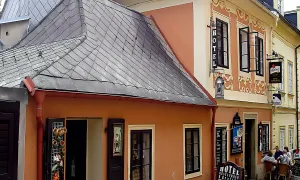
In the vicinity of St. John the Baptist church there is a abolished cemetery and Prague Street, which offers several historical houses. These places are interesting for those who want to explore local architecture and history. It is also possible to discover other small attractions such as traditional Czech restaurants or shops nearby.
Frequently asked questions
Is Kostel svatého Jana Křtitele (Kostelec nad Černými lesy) open to the public?
Yes, the church is open to the public. Opening hours: 9: 00- 17: 00.
How do I get to the place by car / public transport?
The location is well accessible by bus from Prague (about 30 minutes) or by car on the D1 motorway. Parking is possible in the vicinity of the church.
How much is the entrance fee and is it paid on the spot?
Admission to church is free, but donation is welcome.
Is the tour suitable for children and seniors?
Yes, a church tour is also suitable for families with children and seniors. The church has wide stairs, which are also accessible to people with disabilities.
How long does the tour take?
The church tour takes approximately 30-60 minutes.
What are the opening times and booking is required?
The church is open daily from 9: 00 to 17: 00. Reservation is not required, but for larger groups it is recommended to contact local administration.
What's interesting in the immediate vicinity?
In the vicinity of the church there is a nature reservation and park where you can take a pleasant walk or picnic.
For kids
Imagine going back to the past. The place you're going today is a little magic church in the village of Kostelec over the Black Forest. It was like "We went back to the Middle Ages.".
There were a lot of people, but none of them saw it as such a big and beautiful church. At that time the church was still small and simple, but eventually it began to grow and change.
Businesses nearby
Do you run a restaurant, accommodation, shop, museum, rental, wellness or other visitor service near this monument? Show yourself directly to the people heading to it — this is how they will see you in the app and on the web:
Events nearby
Zdroj akcí: otevřená data měst a obcí ČR (Národní katalog otevřených dat) a kalendář akcí Národního památkového ústavu.
Nearby
Cancelled cemetery, Prague Street and the home block in Kostelec nad Černých šemí.
Accommodation nearby
Trips and activities nearby
Guided tours, tickets and activities nearby from GetYourGuide
Affiliate link: if you buy from the partner, we may receive a commission. The price for you does not change.
Search tours and activities →Themed route
Thematic cruise route: Church of St. John the Baptist and the surroundings
1.Kostel svatého Jana Křtitele (Kostelec nad Černými lesy) - * Type: * Church monument - * Why is it worth visiting: * This Baroque church is an architectural pearl village Kostelec nad Černými lesy. Its history dates back to the 17th century and stands out with a rich interior with beautiful frescos and statues that attract visitors from all over the region.
2. Cancelled cemetery - * Type: * Historical site - * Why is it worth visiting: * The original cemetery around the church, which has been abolished and rebuilt in the past, is today a place with a rich history. His remains are witnessed by the transformation of the village and offer insight into the life of older generations.
3. Prague Street - * Type: * Historical aisle - * Why is it worth visiting: * This street is the oldest part of the church over the Black Forest, where many historic houses are located. Walk on Prague Street offers an authentic view of the architecture and atmosphere of the past.
4. Home block in Kostelec nad Black Forest - * Type: * Architectural monument - * Why is it worth a visit: * This home block is an example of a working-class living in the 20th century. Its simple but functionalist design reflects the history and development of the village during the industrial era.
This route offers visitors the opportunity to explore not only the main destination, the church of St. John the Baptist, but also other historical and architectural attractions nearby.
Seasonal recommendations
Spring: The spring season offers visitors a view of the awakening landscape around the church, when fresh green contrasts with historical construction. The morning sun creates soft, pleasant lighting ideal for capturing details of architecture. We recommend to come in the morning when the air is still fresh. Due to the variable weather, prepare for layered clothing to protect you from morning cold and afternoon heat.
Summer: During the summer months the surroundings of the monument are the most lively and full of dense vegetation. Intense sunlight highlights the structure of the facade, but it may be too sharp for detailed observation. For the best experience, we recommend visiting in the early morning to avoid the greatest heat and potential visitor groups. Do not forget the sun protection and plenty of fluids for pleasant passage through the surroundings.
Autumn: Autumn moons bring a quiet atmosphere to the place, complemented by golden leaves and occasional morning fog surrounding the tower. The light is low and very colorful in this period, which gives the memory a magical touch. It is advisable to wear firmer shoes for wet terrain and warmer clothing. The ideal time for a tour is the afternoon hours, when the colors of autumn nature are the best.
Winter: In winter, the church is very majestic in the landscape, especially if the surrounding area is covered with snow and silence. The day is short and light quickly disappears, so you must plan a visit in clear morning hours. Due to the cold and possible traffic restrictions, we recommend careful monitoring of the current opening times. For a comfortable stay near the sights it is necessary to wear very warm clothes, scarf and quality gloves.
Visualizations and artistic views


The visualisations are generated by artificial intelligence and serve as inspiration.
Photos from the area
Real photos taken near the monument


Zdroj a licence jsou uvedeny u každého snímku.
Atmosphere of the place
This atmospheric visualisation of the place and period was generated by artificial intelligence. It is not real footage of the location.
Tips from visitors
No tips yet. Be the first!
Log in and add your tip.
Sources and literature
Fotografie: Palickap / CC BY-SA 3.0 — Wikimedia Commons. The author and licence also appear when you hover over the image.
Faktickým podkladem tohoto textu byl článek na Wikipedii, jehož autory jsou přispěvatelé Wikipedie. Článek je dostupný pod licencí CC BY-SA 4.0.
Location on the map

Příběhy a pověsti
Legendy, pověsti a příběhy spjaté s touto památkou
Fotografie návštěvníků
Zatím žádné fotografie. Buďte první, kdo přidá fotografii z návštěvy!
Přihlaste se a přidejte svou fotografii nebo hodnoťte.
Za ověřenou návštěvu v aplikaci získáte víc bodů — poznáme podle GPS, že jste na místě.
Reviews and comments