



Kostel svatého Jana Křtitele ve Vroutku Church
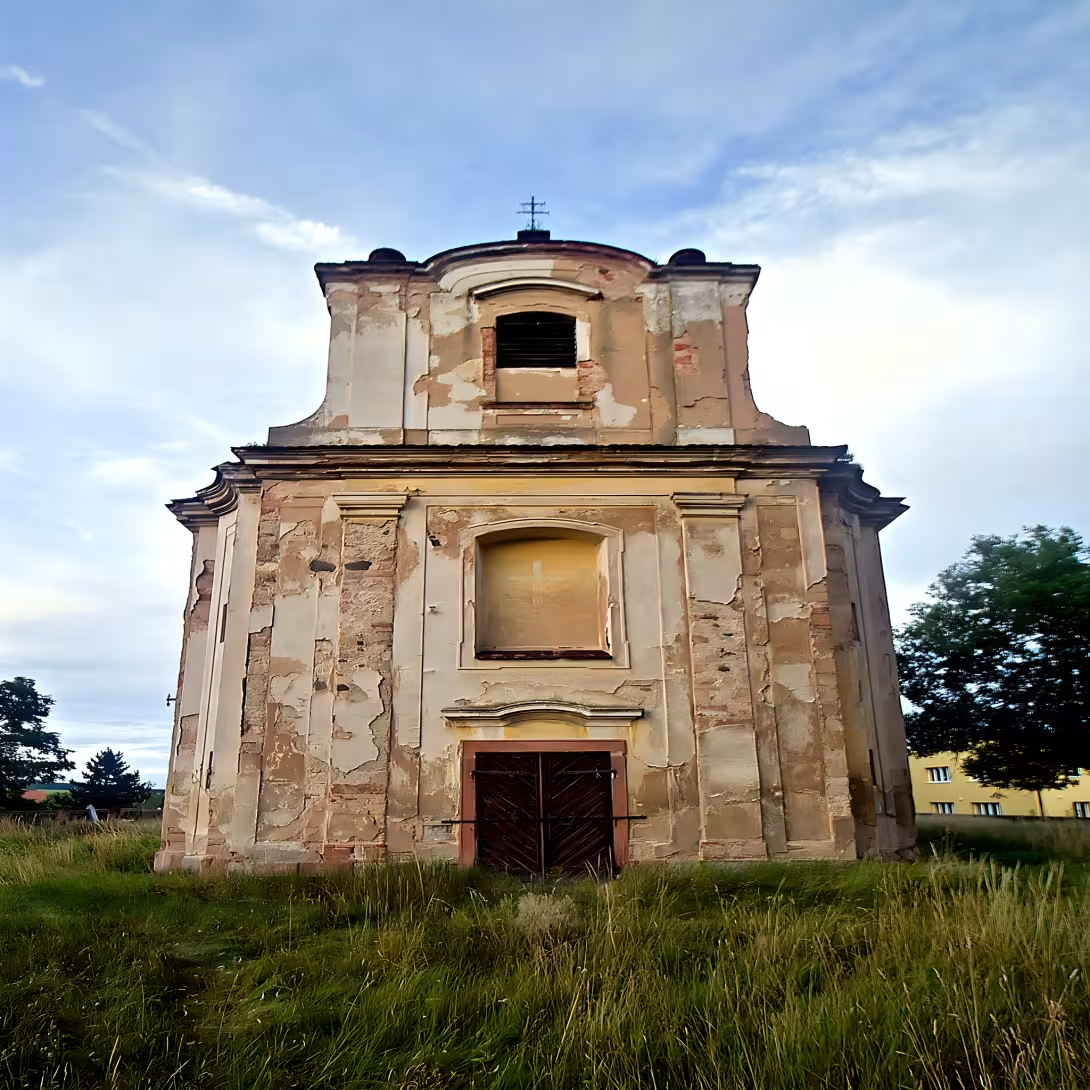
St. John the Baptist Church in the Ústí Region is one of the cultivated examples of Baroque architecture in the northern Bohemian countryside. The building from 1726 stands in the heart of the city of Vroutek, district of Louny, at the историческém cemetery, where it became an essential part of the local character and nature of the village. Its location and size greatly dominates the surroundings.
A single-boat oriented building grows from walled walls and submerses its eye with the richness of baroque detail. A tributary completed by a presbytery is characteristic, supplemented on both sides by ground ports, which today serve as sacristy. Roofs are covered with saddle solutions with fibre-cement templates. The most successful architectural element is the octave sandtus lid with lantern and stylized onion, whose top is crowned by the cross. Western facade is decorated with atician shield with cross; at his heels are stonewalled pigs which bear witness to the care of the original builders.
The facade is divided by lizene frames and in a typical Baroque spirit combines large window holes with broken plaster. The Послedé color finish uses warm gold ochre in the main surface of the walls, supplemented by white tectonic elements. The interior keeps a flat ceiling and a richly equipped chapel with an original Baroque device from the second half of the eighteenth century. Among the rarer artifacts is an empirical tombstone at the right entrance to the sacristy, which bears the year 1840.
The cemetery around the church tells the course of time. Originally used to bury parishioners, it was officially abolished in the middle of the nineteenth century. World War II left heavy marks - many tombstones were damaged. There are currently approximately sixty tombstones in various conservation states. The cemetery and church are surrounded by a centuries-old wall with two entrances; The west entrance no longer opens to people, while the east gate with a stone staircase and mosaic remains a meeting point. There was a small morgue on the right of the main temple, which disappeared completely from the landscape.
The church, including the wall, is protected as a cultural monument. For many years, however, the construction has been decaying, and its exterior has spoken of neglect. Since 2013, however, the situation has changed thanks to volunteers from the citizens' association Budíček, who are gradually restituting both the temple itself and the adjacent cemetery. Their efforts give construction a chance at a second life.
Visiting the church is a visit to the past of Vroutka and the wider North Bohemian region. A modest yet dignified Baroque building reminds of how firmly human life and its spiritual dimension have been embedded in these regions. > > > >
Then and now
Drag the slider to compare how the landmark may have looked when it was built with the view today.
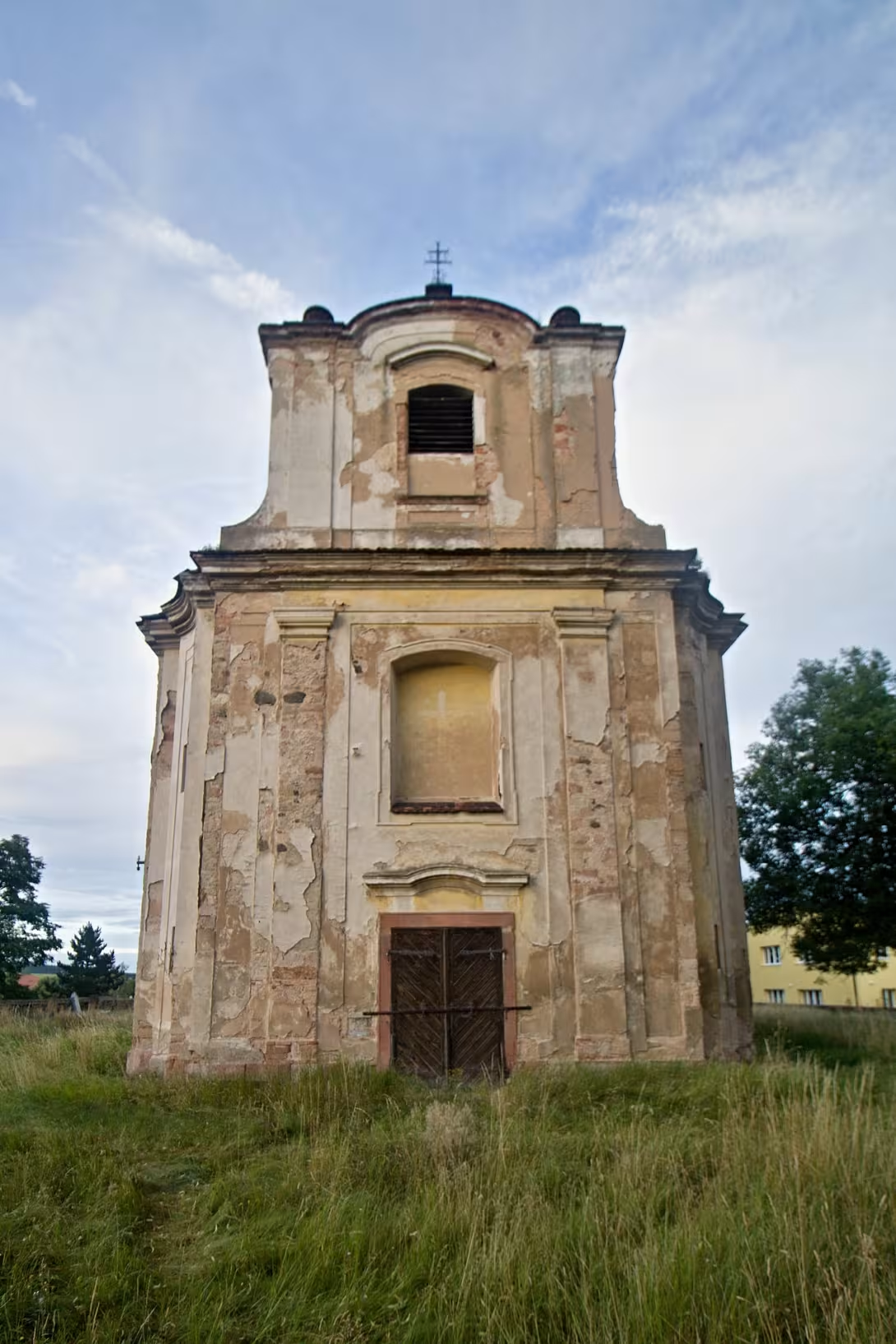
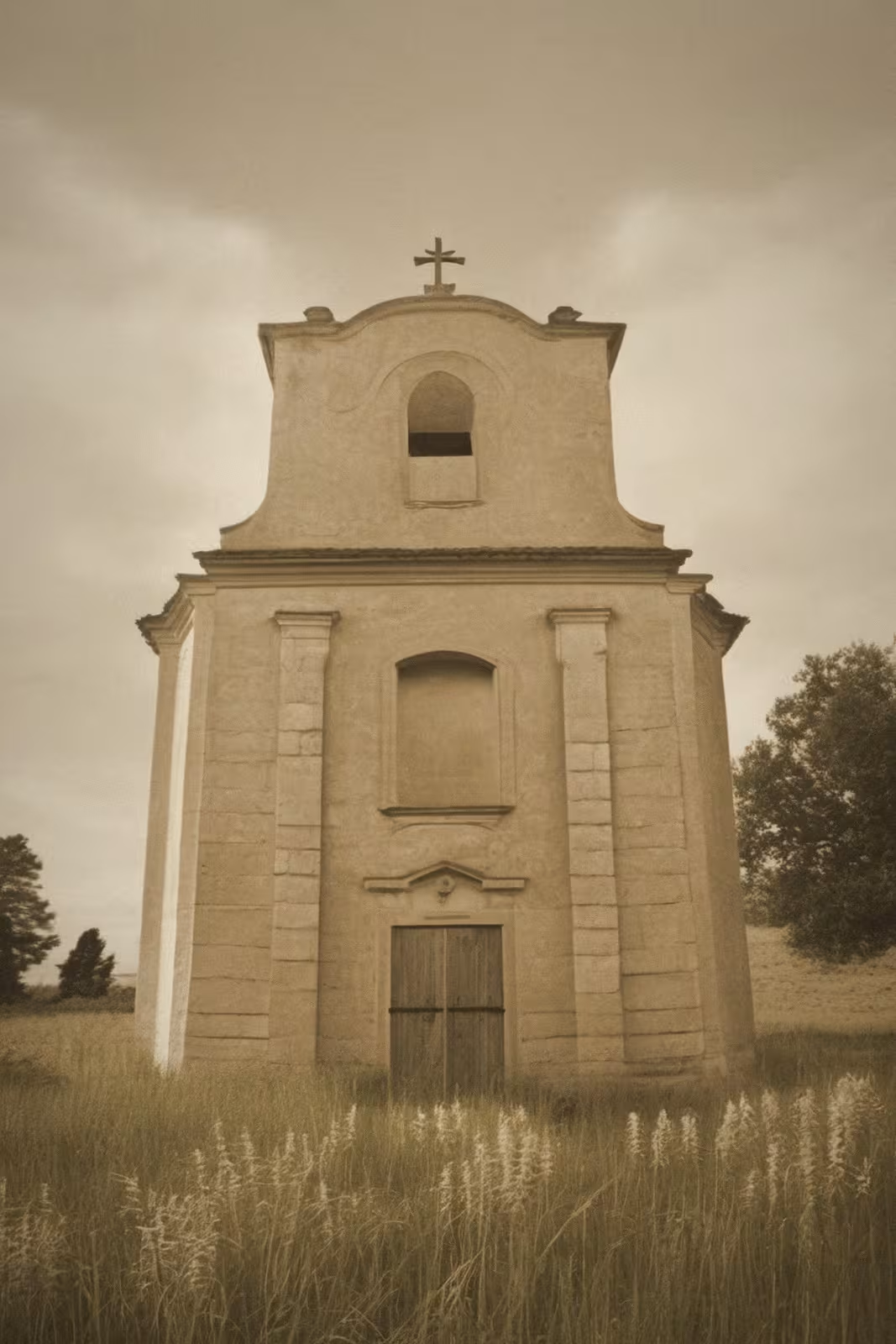
The historical appearance on the left is an AI-generated visualisation and serves as inspiration only.
Historical milestones
- 1726
- The Church of St. John the Baptist.
- 1840
- Putting an empirical tombstone near the sacristy.
Architectural development
The church is an oriented, single-boat brick building with Baroque facilities from the second half of the 18th century. The facade has Lizzy frames and smooth, stale plaster. The interior is flat-ceiling.
Historical events
- 1726
- The Church of St. John the Baptist.
- 1840
- Putting an empirical tombstone near the sacristy.
Points of interest
- St. John the Baptist Church is a cultivated example of Baroque architecture in the northern Bohemian countryside. - The construction from 1726 stands in the heart of the city of Vroutek and dominates the surroundings with its size. - The most successful architectural element is the octave sandtus lid with lantern and stylized onion, whose top is crowned by the cross. - The cemetery around the church has approximately sixty tombstones in various conservation states. - The church, including the wall, is protected as a cultural monument.
Guide
This guide is narrated by a synthetic voice generated by artificial intelligence.
Show guide text
This text was created by artificial intelligence and has not been editorially reviewed. It may contain inaccuracies.
The Baroque parish church of Saint John the Baptist in Vroutek dates from 1726. It belongs to the historic core of the town in the Louny district. It stands in the cemetery in the middle of the village, and therefore is clearly visible and significantly contributes to the unique character of the entire place. The church, together with its surrounding wall, is protected as a cultural monument. Nevertheless, it has been deteriorating for a long time.
It is a single-nave brick structure, oriented with the chancel facing east. A narrower chancel, enclosed by three walls, adjoins the nave. On both sides of the chancel stand ground-floor annexes, which serve as sacristies. The nave and chancel are covered with gabled roofs made of diagonally laid asbestos cement tiles, while the annexes have hipped roofs. Above the chancel rises an octagonal Sanctus tower with a sheet metal covering. It has a lantern and an onion dome and ends with a finial topped by a cross.
The western façade is crowned by a gable ending in a flat arch. At its peak is a cross, and at the base of the gable stand stone ornaments called crockets. The nave and chancel are illuminated by large, tall arched windows with wooden frames divided into panels. The façade is articulated by vertical strips, called pilasters, which create frames. The smooth plaster is heavily weathered, but traces of the last colour scheme are still visible on it. The wall surfaces were painted in golden ochre and the architectural elements in broken white. Inside, the church has a flat ceiling.
The church furnishings are Baroque and date from the second half of the eighteenth century. At the right entrance to the sacristy is an Empire-style tombstone from 1840.
The old cemetery around the church was closed in the middle of the nineteenth century. After the Second World War, vandals destroyed a considerable number of tombstones. In spring 2014, approximately sixty tombstones remained there in varying degrees of damage. The cemetery and church are surrounded by a perimeter wall with two entrances. The older western entrance is no longer in use. On the east side is a gate with steps and a stone mosaic. To the right of the main church entrance once stood a smaller chapel, which later served as a mortuary. Today no trace of its foundations remains.
Since 2013, the church and cemetery have been restored by volunteers from the civic association Budíček.
Tips for visitors
The best time to visit is early morning or late afternoon, when soft light best highlights baroque details of the facade and architecture of the church.
When visiting, we recommend taking a photographic machine and choosing a suitable, respectful garment that matches the nature of the sacral space. For the best pictures, focus on the tripartite presbyterium and view of the church in the context of the local cemetery that dominates the building.
For families with children, the surrounding area of the church offers a peaceful walk through the historical heart of the village, which is a suitable opportunity to familiarize with local history in a peaceful environment.
Since the church is located in the historical core, we recommend to explore the adjacent cemetery, which with the church building forms one whole space.
Frequently asked questions
Can the monument be visited?
Religious buildings are usually open mainly during services; at other times a visit is normally arranged with the parish or the operator. We have not verified specific times. According to the heritage register the structure is in poor condition – do not enter it and take care nearby.
Where is the monument?
Location: Vroutek, Ústecký kraj. The map on this page shows the exact spot.
Why is the monument protected?
It is listed in the Central List of Cultural Monuments of the Czech Republic as a cultural monument (register no. 42928/5-1484).
For kids
Imagine going back 300 years until you don't know what a car or a TV is yet. Our ancestors lived in the village of Vroutek and among them was the church of St. John the Baptist.
The church was built in 1726 and gradually became the center of the life of local people. They were artisans who came to the village to build a house or a merchant who brought new goods into town. The church was also a place where weddings, funerals and other important events were held.
Businesses nearby
Do you run a restaurant, accommodation, shop, museum, rental, wellness or other visitor service near this monument? Show yourself directly to the people heading to it — this is how they will see you in the app and on the web:
Events nearby
Zdroj akcí: otevřená data měst a obcí ČR (Národní katalog otevřených dat) a kalendář akcí Národního památkového ústavu.
Nearby
The historical core of the city Vroutek in the district of Louny in the Ústí region.
Accommodation nearby
Themed route
1. Church area - outdoor area. A place for a peaceful walk and a view of the exterior facade of the building. 2. Interior of St. John the Baptist Church - sacral space. A tour of interior equipment and admiration of architecture. 3. Church tower - sightseeing section. Output to height for view around the village Vroutek.
Seasonal recommendations
Spring - After winter sleep, the meadow blossoms around the church and the first green shoots awaken along the way. The light in the morning penetrates through the stained glass and creates fine colored reflections on stone columns, which underlines the gothic details. We recommend coming soon after sunrise when visitors are less and the atmosphere is calm. Laminated clothing is suitable - it may be cold, but during the day the temperature increases rapidly. Take comfortable shoes because the surrounding paths are still slightly slippery after the rain.
Summer - In the summer months, the sun waters the facade of the church with a bright golden light, highlighting stone carvings and high towers. The surrounding forests are bright green and the scent of flowers complements the quiet noise of the river that flows near. In the main summer season the traffic increases, so it is best to arrive early in the morning or late in the afternoon when the crowds are smaller and the light is softer. Dress lightly, but don't forget the hat and sunscreen because the shadow in the area is limited. Water in the nearby stream may be refreshing, but be careful on slippery rocks.
Autumn - The color palette of the autumn forest - orange, red and golden leaves - creates a picturesque contrast to the dark stone of the church. In the late afternoon, the sun rays penetrate between the branches and illuminate the windows with warm, soft light. We recommend planning a visit for late afternoon, when the light changes and the crowds slowly decrease. Clothes should be warmer, with waterproof jacket, because autumn rains are common. Take a hot tea thermometer, which is well suited for walking around the surrounding fields, where the harvest is starting to ripen.
Winter - In winter the church gets a mystical look under snow, which covers both the roof and the surrounding paths. The sun rays in the middle of the morning reflect the white coat and create contrast to dark stone columns, while the interior lighting highlights the details of architecture. The opening time is shorter, therefore it is advisable to arrive immediately after opening so that there is time for a tour even with regard to the cold. Dress in warm layers, don't forget your hat, gloves and tight shoes with anti-slip soles, because the roads can be icy. In Advent Time, you can soak up a calm atmosphere of candles and Christmas melodies in the church, but the crowds are still limited.
Visualizations and artistic views


The visualisations are generated by artificial intelligence and serve as inspiration.
Photos from the area
Real photos taken near the monument


Zdroj a licence jsou uvedeny u každého snímku.
Tips from visitors
No tips yet. Be the first!
Log in and add your tip.
Sources and literature
Photos: VitVit / CC BY-SA 4.0, rozlišení zvýšeno umělou inteligencí — Wikimedia Commons. The author and licence also appear when you hover over the image.
Faktickým podkladem tohoto textu byl článek na Wikipedii, jehož autory jsou přispěvatelé Wikipedie. Článek je dostupný pod licencí CC BY-SA 4.0.
Location on the map
Příběhy a pověsti
Legendy, pověsti a příběhy spjaté s touto památkou
Fotografie návštěvníků
Zatím žádné fotografie. Buďte první, kdo přidá fotografii z návštěvy!
Log in a přidejte svou fotografii nebo hodnoťte.
Za ověřenou návštěvu v aplikaci získáte víc bodů — poznáme podle GPS, že jste na místě.
Reviews and comments