






kostel svatého Jana Křtitele (Velká Chyška) Church
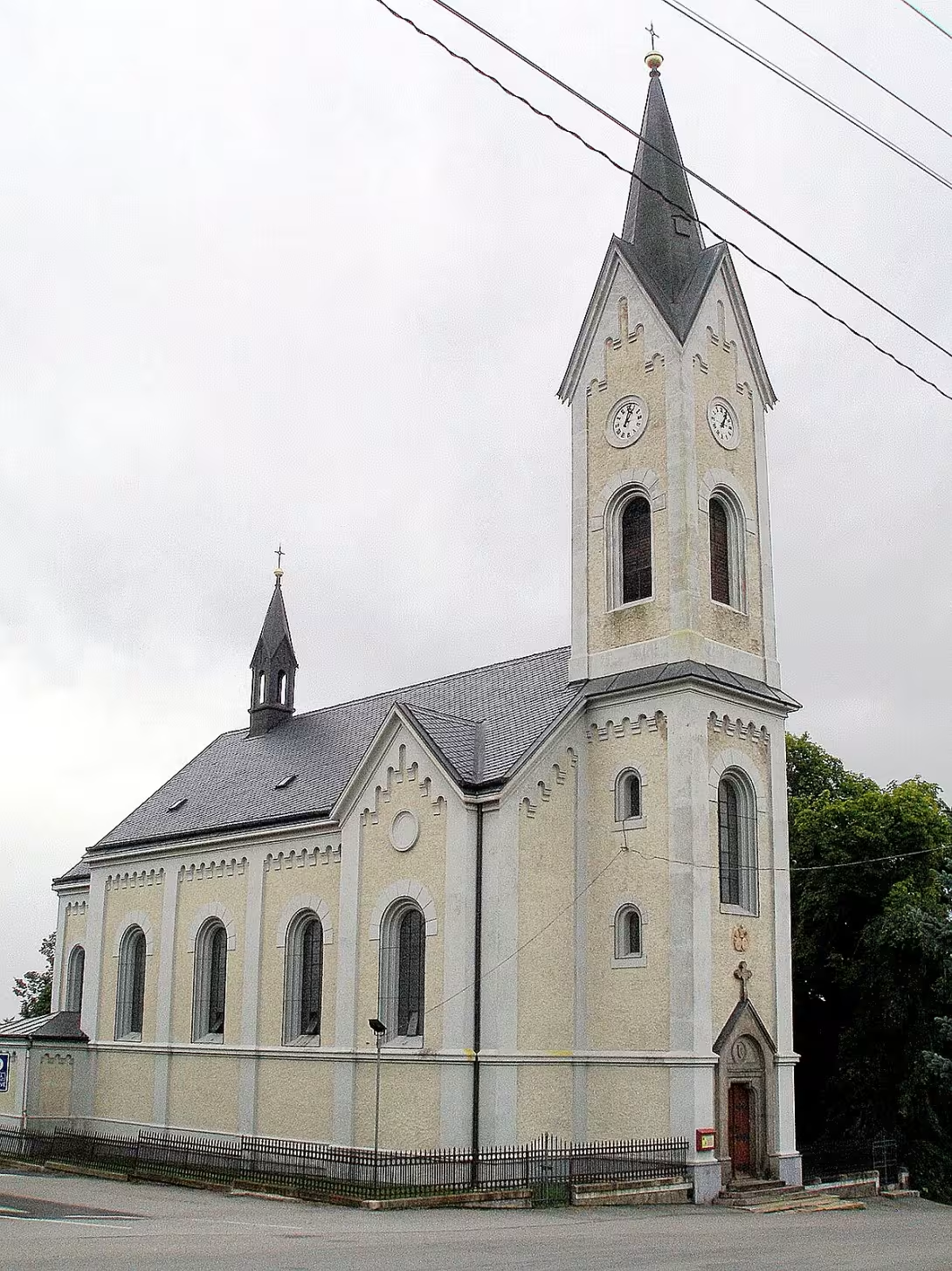
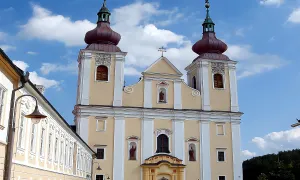
The Church of Saint John the Baptist in Velká Chyška is a notable example of Neo-Romanesque architecture, reflecting centuries of religious and cultural history. Situated in the village square within the Pelhřimov district, this Roman Catholic filial church stands out for its architectural purity and harmonious integration into its surroundings. Originally built as a Romanesque structure by the Strahov Premonstratensians during an unspecified medieval period, it underwent significant transformations to reach its current form.
The site's origins trace back to 1143 when Duke Vladislav II donated the villa Cisca to the Strahov Premonstratensians. This marked the start of a long-standing religious presence in Velká Chyška, with the initial Romanesque church later evolving into a Gothic building featuring a spire. The Gothic structure was destroyed by fire in 1698 but rebuilt within the same year. However, this reconstruction did not meet community needs and was demolished in 1897 for a new design.
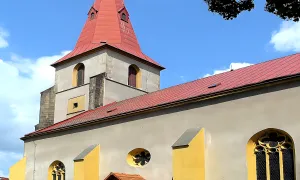
The current Neo-Romanesque church, constructed between 1897 and 1898, resulted from collaborative efforts by architects František Rožánka and Alois Potůček. Under the patronage of Strahov Premonstratensian abbot Zikmund Starý, this new structure was designed to embody a clean architectural style that complements its setting on the village square. The church features a Latin cross floor plan with a five-sided presbytery and a bell tower topped by a spire. A smaller sacristy and a decorative gable above the presbytery add to its distinctive appearance.
Internally, the church retains elements from its predecessors, including furnishings dating back to the 18th century. These pieces were partially transferred from the earlier Gothic structure, creating a blend of historical continuity within the modern architectural framework. The main altar is dedicated to Saint John the Baptist, reflecting the church's titular dedication and spiritual focus.
The church complex includes a baroque parsonage, adding another layer of historical interest. This building was adorned with paintings by Premonstratensian artist Siard Nosecký, enhancing its cultural significance. An intriguing feature is an epitaph embedded in the exterior wall of the presbytery, commemorating Kateřina Bernička z Kraselova with a coat of arms and Czech inscription from 1578.
Today, the Church of Saint John the Baptist remains under the ownership of the Strahov Premonstratensians, continuing its legacy as a site of religious importance. Its architectural elegance and historical depth make it an attractive destination for visitors interested in exploring Bohemian history and ecclesiastical art.
Visitors to Velká Chyška are invited to experience this unique monument firsthand. The church's harmonious design, coupled with its storied past, offers a compelling glimpse into the region's cultural heritage. Whether drawn by architectural beauty or historical curiosity, the Church of Saint John the Baptist promises an enriching and memorable visit.
Historical milestones
- 1143
- The site was donated to the Strahov Premonstratensians by Duke Vladislav II.
- 1698
- The Gothic church burned down and was rebuilt.
- 1897–1898
- A new Neo-Romanesque church was constructed.
Architectural development
The original Romanesque church, built by the Strahov Premonstratensians, was transformed into a Gothic building with a spire. After its destruction in 1698 and an inadequate rebuild, it was demolished in 1897 to make way for a Neo-Romanesque structure designed by František Rožánka and Alois Potůček. The new church features a Latin cross floor plan, a five-sided presbytery, and a bell tower with a spire.
Historical events
1143: The site known as villa Cisca was donated to the Strahov Premonstratensians by Duke Vladislav II.
1698: The Gothic church burned down and was subsequently rebuilt.
1897–1898: A new Neo-Romanesque church replaced the previous structure.
Owners
The church was originally under the patronage of the Strahov Premonstratensians, who have maintained ownership since its initial construction in the medieval period.
Points of interest
- The Church of Saint John the Baptist was originally a Romanesque structure built by the Strahov Premonstratensians in an unspecified medieval period, showcasing how architectural styles evolved over centuries to reach its current Neo-Romanesque form.
- An intriguing epitaph embedded in the church's exterior wall commemorates Kateřina Bernička z Kraselova with a coat of arms and Czech inscription from 1578, providing a personal historical connection to the community’s past.
- The baroque parsonage associated with the church features paintings by Premonstratensian artist Siard Nosecký, adding an artistic layer to its cultural significance beyond its architectural beauty.
- Despite being rebuilt multiple times due to destruction and changing needs, the church retains 18th-century furnishings from its predecessor Gothic structure, blending historical continuity within its modern framework.
- The Neo-Romanesque design of the current church was a collaborative effort by architects František Rožánka and Alois Potůček under the patronage of Strahov Premonstratensian abbot Zikmund Starý, reflecting a strategic vision to harmonize architectural purity with its village square setting.
Guide
This guide is narrated by a synthetic voice generated by artificial intelligence.
Show guide text
This text was created by artificial intelligence and has not been editorially reviewed. It may contain inaccuracies.
Welcome to the Church of Saint John the Baptist in Velká Chyška, a testament to centuries of architectural evolution and spiritual devotion. As you stand here, take a moment to absorb the serene presence of this Neo-Romanesque edifice that gracefully rises before you. Its sturdy walls and harmonious proportions speak volumes about its storied past.
The origins of this sacred site trace back to 1143 when Duke Vladislav II generously donated the land to the Strahov Premonstratensians, a community dedicated to spiritual life and service. Initially constructed as a Romanesque structure, it embodied the architectural styles of its time with simplicity and strength. However, fate had other plans; in 1698, a devastating fire consumed the Gothic iteration that followed, leading to a reconstruction that was regrettably too modest for the community's needs.
In response to this inadequacy, between 1897 and 1898, architects František Rožánka and Alois Potůček embarked on creating what you see today—a Neo-Romanesque church. This new design not only restored its spiritual function but also redefined its architectural identity with a refined elegance that harmonizes with the surrounding landscape.
As you explore further, take a moment to appreciate the craftsmanship of this era. The church's façade invites contemplation, while the spire reaches skyward as if in silent prayer. Inside, though we won't delve into specifics not documented here, imagine the atmosphere of devotion and history that fills the space.
This site is also intertwined with intriguing historical narratives, including those involving Zikmund Starý, whose life and works are part of its rich tapestry. Additionally, an unusual epitaph embedded within the church walls adds a layer of mystery to your visit, inviting you to ponder the stories encapsulated in stone.
As we conclude our journey here, I invite you to linger a while longer, soaking in the ambiance and perhaps reflecting on the many lives that have passed through this sacred space. Thank you for joining me today at the Church of Saint John the Baptist in Velká Chyška. May your visit inspire further exploration and discovery. Safe travels!
Tips for visitors
The best time to visit the Church of Saint John the Baptist in Velká Chyška is during the late spring or early autumn months. During these times, the weather is typically mild and pleasant, making it ideal for exploring both the church and its surroundings without the discomfort of extreme heat or cold. Additionally, visiting outside of peak tourist seasons can provide a more serene experience, allowing you to appreciate the architectural details and historical ambiance in peace.
For those preferring public transport, there are accessible routes that can be checked through a local transit search tool. This flexibility ensures that whether you're driving or taking public transport, reaching the church and its baroque parsonage is straightforward.
When planning your visit to the Church of Saint John the Baptist, it's advisable to bring comfortable walking shoes as you'll likely explore both the church interior and its surrounding area. A camera is also recommended to capture the stunning architecture and serene atmosphere. Additionally, consider bringing a light jacket or sweater, as temperatures can vary, especially in the evenings.
For photography enthusiasts, the best spots around the Church of Saint John the Baptist are those that offer views of both the church itself and its baroque parsonage, painted by Siard Nosecký. Early morning or late afternoon provides the most flattering natural light for capturing the intricate details and textures of these historic buildings. The village square offers a picturesque setting for wide-angle shots.
Families with children will find Velká Chyška an engaging destination. While exploring the church, consider involving your children in learning about its history and architectural style to make the visit more interactive. Nearby, within a 30-minute drive or walk, are natural landscapes perfect for family picnics or leisurely walks, offering a great opportunity to explore the local flora and fauna.
Frequently asked questions
Can the monument be visited?
Religious buildings are usually open mainly during services; at other times a visit is normally arranged with the parish or the operator. We have not verified specific times.
Where is the monument?
Location: Velká Chyška, Kraj Vysočina. The map on this page shows the exact spot.
Why is the monument protected?
It is listed in the Central List of Cultural Monuments of the Czech Republic as a cultural monument (register no. 21018/3-3326).
Businesses nearby
Do you run a restaurant, accommodation, shop, museum, rental, wellness or other visitor service near this monument? Show yourself directly to the people heading to it — this is how they will see you in the app and on the web:
Nearby
The church stands prominently on the village square of Velká Chyška, surrounded by a baroque parsonage painted by Premonstratensian artist Siard Nosecký.
Accommodation nearby
Themed route
Thematic Walking Tour of Velká Chyška
1. Church of Saint John the Baptist (Main Attraction) - Type: Historical Church - Why Visit: This prominent church stands at the heart of Velká Chyška's village square, offering a glimpse into the region's rich architectural heritage. Its historical significance and serene atmosphere make it an essential starting point for any exploration of the area.
2. Baroque Parsonage - Type: Historical Building - Why Visit: Located adjacent to the church, this baroque parsonage was painted by the renowned Premonstratensian artist Siard Nosecký. The building's artistic and architectural details provide insight into the cultural history of Velká Chyška.
3. Village Square - Type: Public Space - Why Visit: As the central hub of Velká Chyška, this square offers a picturesque setting that reflects the village's communal life and historical evolution. It provides an excellent opportunity to appreciate the harmonious coexistence of historical structures in their natural urban context.
This thematic tour encapsulates the essence of Velká Chyška by focusing on its most significant historical landmarks, offering visitors a comprehensive understanding of the area's cultural heritage within a short walking distance.
Seasonal recommendations
Jaro: In the spring, the Church of St. John the Baptist in Velká Chyš is enlivened by the gentle breath of newly growing vegetation, adding vibrancy and green hues to the surrounding landscape. Sunny days provide ideal lighting for photography, while mild temperatures allow comfortable strolls around the monument. Visitors can expect moderate attendance, making it an ideal time for a detailed exploration of historical details without too much crowd pressure. It is recommended to wear comfortable shoes and light clothing with the option to add layers, as temperatures can be variable.
Léto: Summer means full bloom of nature around the Church of St. John the Baptist with lush vegetation and flowering surroundings, creating a lively and exciting atmosphere. Sunny days are ideal for visiting, but long summer days may mean higher numbers of visitors, especially during peak holiday weeks. Additionally, warm temperatures make an early morning or late afternoon visit more pleasant. It is recommended to wear light clothing, sunglasses, and plenty of water, especially if you plan to explore the surrounding landscape.
Podzim: In autumn, the Church of St. John the Baptist in Velká Chyš takes on a unique atmosphere with its colorful leaf-covered landscape architecture providing a beautiful backdrop for photography. Temperatures are mild and the air is often calm, creating a comfortable environment for visiting. Despite shorter days, visitor numbers can still be relatively high due to the appeal of autumn colors. It is recommended to wear layered clothing and consider visiting earlier or later to avoid potential crowds.
Zima: The winter season brings a quiet and serene atmosphere around the Church of St. John the Baptist with often snow-covered landscapes transforming the scenery into a mildly fantastical view. Despite fewer visitors, it will be necessary to wear warm clothing, including sweaters and hats, to ensure comfort during your visit. Additionally, it is advisable to equip yourself with rubber boots as needed for snowy or wet surfaces.
Visualizations and artistic views


The visualisations are generated by artificial intelligence and serve as inspiration.
Photos from the area
Real photos taken near the monument


Zdroj a licence jsou uvedeny u každého snímku.
Tips from visitors
No tips yet. Be the first!
Log in and add your tip.
Sources and literature
Photos: Miloš Hlávka / CC BY-SA 3.0 — Wikimedia Commons. The author and licence also appear when you hover over the image.
Faktickým podkladem tohoto textu byl článek na Wikipedii, jehož autory jsou přispěvatelé Wikipedie. Článek je dostupný pod licencí CC BY-SA 4.0.
Location on the map

Příběhy a pověsti
Legendy, pověsti a příběhy spjaté s touto památkou
Fotografie návštěvníků
Zatím žádné fotografie. Buďte první, kdo přidá fotografii z návštěvy!
Log in a přidejte svou fotografii nebo hodnoťte.
Za ověřenou návštěvu v aplikaci získáte víc bodů — poznáme podle GPS, že jste na místě.
Reviews and comments