



Kostel svatého Jana Nepomuckého (Bukovno) Church
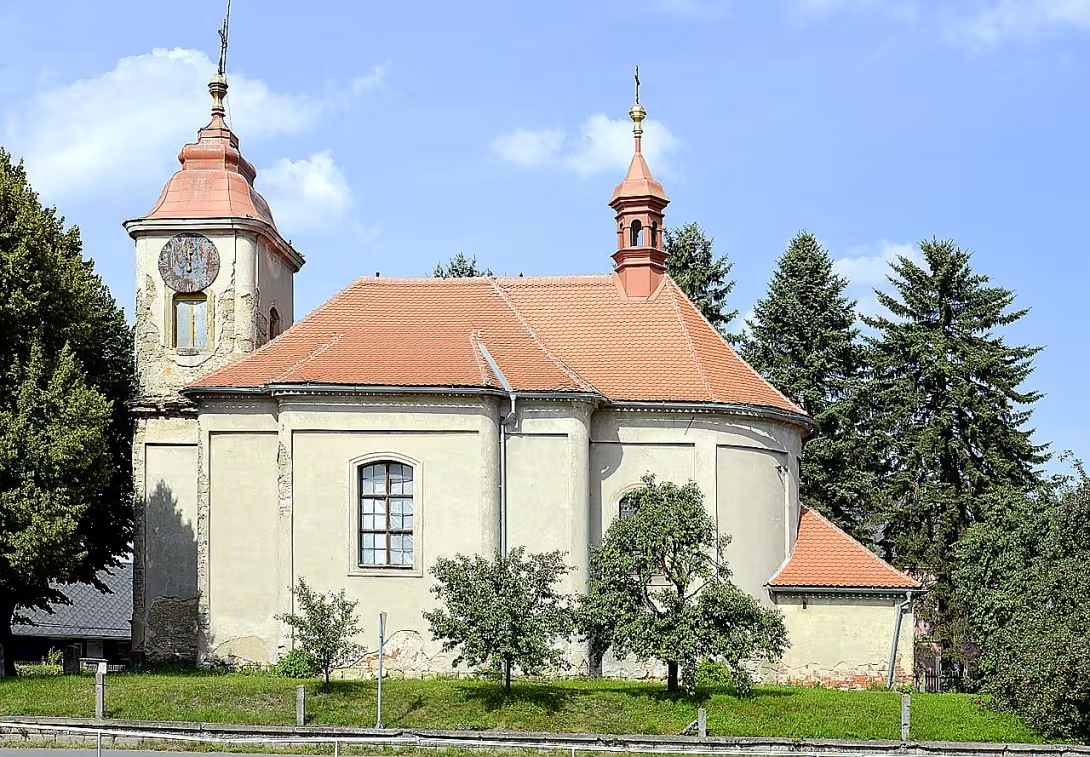
The Church of Saint John of Nepomuk in Bukovno is a late Baroque church prominently located on the village square. Constructed between 1769 and 1770, it exemplifies the architectural style that thrived under the Habsburg Monarchy's influence during this period. Recognized for its historical significance, the church has been protected as a cultural monument since 1967. Currently, from 2024 to 2026, it is undergoing reconstruction to preserve both its structural integrity and historical value.
Built when Bohemia was part of the Habsburg Monarchy, the Church reflects significant cultural and architectural development. The late Baroque style, prevalent in religious architecture across Europe at this time, showcases artistic innovation and Catholic influence. This era emphasized grandeur and elaborate detail, evident in the church's design.
Architecturally, the church features a single nave with wavy sides, central risalits, and rounded corners, embodying the late Baroque style. It includes an oblong presbytery closed by an arch and is crowned by a pyramidal tower topped with a tin helmet. The vault of the church is lower than originally planned, adding uniqueness to its structure. Inside, the nave boasts a concave wooden rostrum, while the presbytery features a flat ceiling. Notably, the church houses Rococo furnishings from 1770, including a framed main altar supported by two flying angels. A panelled side altar contains a statue of the Madonna and is flanked by statues of St. Joseph and St. Anne crafted by M. Jelínek ml. from Kosmonosy.
In front of the church stands a Baroque sculpture of the Virgin Mary, dating back to 1749. This sculpture, like the church itself, has been protected as a cultural monument since May 3, 1958, highlighting its artistic and historical importance within the community.
Today, the Church of Saint John of Nepomuk remains an important cultural and architectural landmark in Bukovno. Its ongoing reconstruction from 2024 to 2026 aims to ensure that future generations can appreciate its historical significance and architectural beauty. Visitors are invited to explore this remarkable site, where history and artistry converge, offering a glimpse into the region's rich cultural heritage.
Then and now
Drag the slider to compare how the landmark may have looked when it was built with the view today.
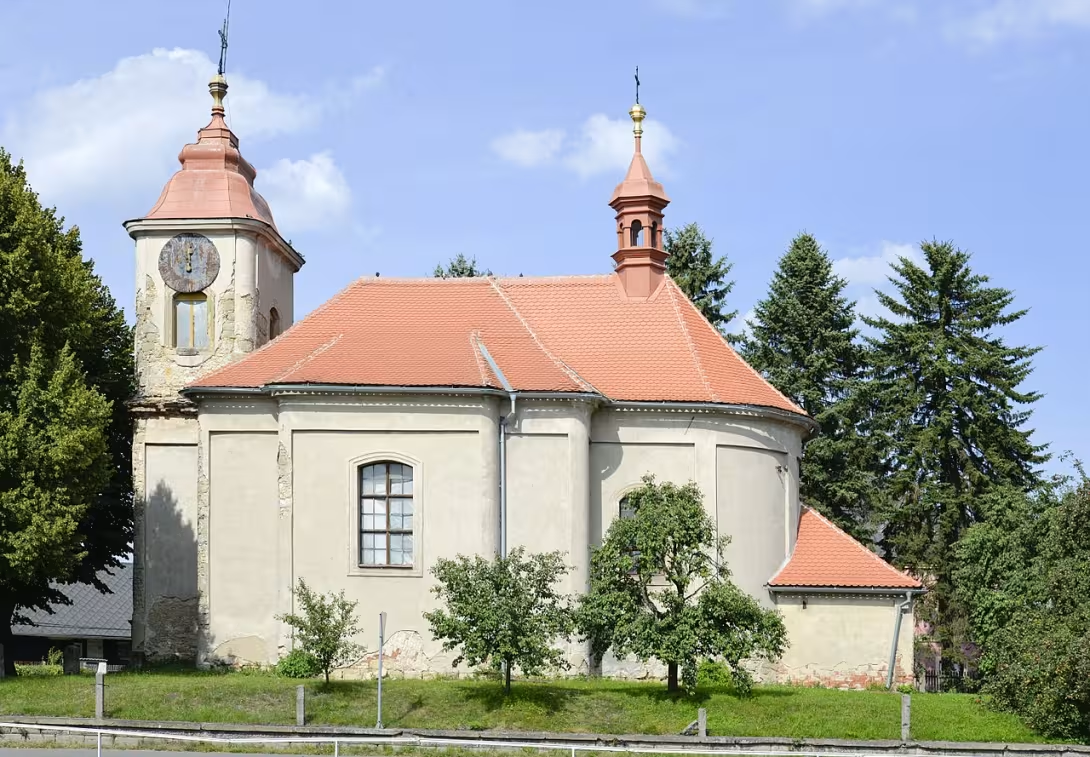

The historical appearance on the left is an AI-generated visualisation and serves as inspiration only.
Historical milestones
- 1749
- Creation of the baroque statue of the Virgin Mary.
- 1769
- Beginning of construction of St. John Nepomucene Church.
- 1770
- Completion of church construction and installation of Rococo furniture.
- 1958
- Protection of the statue of the Virgin Mary as a cultural monument.
- 1967
- Protection of St. John Nepomucene Church as a cultural monument.
- 2024
- Start of reconstruction of the church for its preservation.
Architectural development
The Church of Saint John of Nepomuk features late Baroque architecture with a single nave, wavy sides, central risalits, and rounded corners. It includes an oblong presbytery closed by an arch and a pyramidal tower topped with a tin helmet. The church's vault is lower than originally planned, and it has a rostrum in the form of a concave wooden structure.
Historical events
The church was constructed between 1769 and 1770.
It has been protected as a cultural monument since 1967.
Guide
This guide is narrated by a synthetic voice generated by artificial intelligence.
Show guide text
This text was created by artificial intelligence and has not been editorially reviewed. It may contain inaccuracies.
The Roman Catholic parish church of Saint John of Nepomuk stands in the town square in Bukovně. It is a Late Baroque building that was built between 1769 and 1770. Since 1967, it has been protected as a cultural monument. The church gradually fell into disrepair, and therefore it is undergoing reconstruction between 2024 and 2026.
The church has a single nave. Its sides are undulating, with risalits protruding from the middle and the edges are rounded. The nave is followed by a rectangular presbytery closed off by an arch. The western facade is dominated by a prismatic tower with a metal helmet. The windows are rectangular and topped with a segmental arch at the top.
The nave is covered by a barrel vault. However, it is lower than the original building project envisioned. In the presbytery there is a vault with a flat section, and the sacristy has a flat ceiling. The wooden gallery has a curved, concave shape.
The interior furnishings are Rococo and date from 1770, from the time when the building was completed. The main altar is a frame altar supported by two flying angels. The side altar is panel-style. In the middle it has a small display case, called a shrine, with a statue of the Madonna. On either side stand statues of Saint Joseph and Saint Anne by the sculptor Jelínek the Younger from Kosmonos. The pulpit is decorated with a cartouche with a figural motif. The oldest piece of furnishing is a stone font. It is Late Renaissance, dating from 1629 and is therefore more than a hundred years older than the church itself.
In front of the church stands a Baroque statue of the Virgin Mary from 1749. It is twenty years older than the church and has been registered as a cultural monument since May 3, 1958.
Tips for visitors
The best time to visit the Church of Saint John of Nepomuk in Bukovno is during late spring or early autumn, when the weather is pleasant for walking around the village square and exploring nearby areas. These seasons offer mild temperatures and beautiful natural scenery, making it ideal for a leisurely visit. Additionally, visiting outside peak tourist season can provide a more serene experience with fewer crowds.
The church is accessible by car and public transport; however, it's advisable to check current routes and schedules in advance for convenience.
When visiting the Church of Saint John of Nepomuk, bring comfortable walking shoes as there might be uneven paths around the village square. A camera is recommended to capture the architectural beauty of the church and its surroundings. Additionally, consider bringing water and snacks, especially if planning an extended visit or exploring nearby areas.
For photography enthusiasts, the best spots for capturing images are from the front of the church where you can frame it with the Baroque sculpture of the Virgin Mary in the background. Early morning light provides a soft glow that enhances the intricate details of the architecture, while late afternoon offers dramatic shadows and warm tones. Always be respectful of any restrictions on photography within the church itself.
In addition to the Church of Saint John of Nepomuk, consider visiting the nearby Baroque sculpture of the Virgin Mary from 1749, which is a significant cultural monument in its own right. For those willing to explore further, there are other historical sites and natural landscapes within a 30-minute drive that offer additional insights into the region's rich history and culture.
Frequently asked questions
Can the monument be visited?
Religious buildings are usually open mainly during services; at other times a visit is normally arranged with the parish or the operator. We have not verified specific times. According to the heritage register restoration is under way, so access may be restricted.
Where is the monument?
Location: Bukovno, Středočeský kraj. The map on this page shows the exact spot.
Why is the monument protected?
It is listed in the Central List of Cultural Monuments of the Czech Republic as a cultural monument (register no. 46751/2-1525).
Businesses nearby
Do you run a restaurant, accommodation, shop, museum, rental, wellness or other visitor service near this monument? Show yourself directly to the people heading to it — this is how they will see you in the app and on the web:
Events nearby
Zdroj akcí: otevřená data měst a obcí ČR (Národní katalog otevřených dat) a kalendář akcí Národního památkového ústavu.
Nearby
In front of the church stands a Baroque sculpture of the Virgin Mary from 1749, which is also protected as a cultural monument since May 3, 1958.
Accommodation nearby
Themed route
Tematická výletní trasa: Kostel svatého Jana Nepomuckého (Bukovno)
1. Kostel svatého Jana Nepomuckého
Typ: Historická památka
Proč stojí za návštěvu: Tento barokní kostel je centrálním duchovním a historickým srdcem obce Bukovno. Jeho architektura a interiér představují bohatou historii regionu, což jej činí nezbytným pro každého, kdo se zajímá o dědictví Středočeského kraje.
2. Barokní socha Panny Marie
Typ: Kulturní památka
Proč stojí za návštěvu: Umístěná před kostelem, tato socha z roku 1749 je významnou kulturní památkou chráněnou od května 1958. Její umělecká hodnota a historické pozadí nabízejí návštěvníkům pohled do minulosti, kdy byla socha vytvořena jako symbol víry a ochrany.
3. Nádvoří kostela
Typ: Historický areál
Proč stojí za návštěvu: Nádvoří kostela nabízí klidné místo pro odpočinek a reflexi, zatímco si užíváte pohled na barokní architekturu. Toto místo sloužilo jako centrum komunitního života v minulosti a dodnes přitahuje návštěvníky svým klidem a historickou atmosférou.
4. Věž kostela
Typ: Architektonická památka
Proč stojí za návštěvu: Věž nabízí jedinečný pohled na okolní krajinu Bukovna a je výjimečnou příležitostí pro ty, kteří chtějí ocenit architektonické detaily z vyšší perspektivy. Je to také symbolické místo, které připomíná historii a význam kostela v regionu.
5. Interiér kostela
Typ: Historická expozice
Proč stojí za návštěvu: Interiér kostela je bohatý na umělecké prvky, jako jsou sochy a fresky, které představují duchovní a historické aspekty regionu. Prozkoumáním těchto detailů mohou návštěvníci lépe pochopit kulturní význam tohoto místa pro obyvatele Bukovna.
Tato trasa nabízí komplexní pohled na historické a kulturní dědictví Kostela svatého Jana Nepomuckého, přičemž každý bod poskytuje jedinečné poznatky o jeho významu pro obec Bukovno.
Seasonal recommendations
Jaro: A visit to the Church of Saint John of Nepomuk in Bukovná during spring is special thanks to the blossoming nature surrounding the church. The rising sun illuminates new leaves and flowering shrubs in the nearby garden, giving visitors a sense of renewal and life. The atmosphere is calm with mild crowds as the church begins to attract more tourists. For comfort, it's recommended to wear clothing suitable for changing weather—a combination of warm and light layers, as spring weather can be unexpectedly chilly. The best time to visit is in the early afternoon when the sun lights up the church and its surroundings in ideal lighting.
Léto: Summer brings long days filled with light that shines on the Church of Saint John of Nepomuk and its surrounding landscape. This time is ideal for a visit due to pleasant temperatures and views, as the greenery becomes most vibrant. However, with the growth of tourism, crowds can be higher, especially during peak summer season. It's advisable to arrive early in the day to enjoy a more peaceful visit and make the most of the warm light for photography. Wearing lightweight clothing with long sleeves is recommended for sun protection, along with plenty of water to stay hydrated during your visit.
Podzim: In autumn, Bukovná transforms into a golden paradise as tree leaves take on vibrant colors. This change in nature provides a unique atmosphere for visiting the Church of Saint John of Nepomuk, with softer and warmer sunlight. Autumn is typically a quieter period with fewer tourist crowds, allowing for a more intimate experience. It's recommended to wear warmer clothing and possibly a scarf for protection against chilly winds. The best time to visit is in the early afternoon when the light illuminates the church in pastel colors and shadows remain short.
Zima: Winter Bukovná offers a frosty view of the Church of Saint John of Nepomuk, where snow coverings and ice patterns add magic and a serene atmosphere. The sunlight is less intense, allowing for capturing unique shadowing of the church and surrounding buildings. This period has the fewest tourist crowds, increasing the possibility for a peaceful visit. It's important to have warm clothing, including fur-lined hats and gloves, and to visit the church during clear days when the sun lights up the snowy landscape.
Visualizations and artistic views


The visualisations are generated by artificial intelligence and serve as inspiration.
Photos from the area
Real photos taken near the monument


Zdroj a licence jsou uvedeny u každého snímku.
Tips from visitors
No tips yet. Be the first!
Log in and add your tip.
Sources and literature
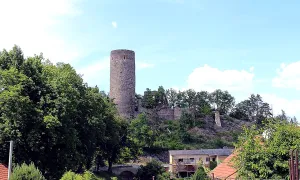
Photos: Jirka Dl / CC BY-SA 4.0 — Wikimedia Commons. The author and licence also appear when you hover over the image.
Faktickým podkladem tohoto textu byl článek na Wikipedii, jehož autory jsou přispěvatelé Wikipedie. Článek je dostupný pod licencí CC BY-SA 4.0.
Location on the map





Příběhy a pověsti
Legendy, pověsti a příběhy spjaté s touto památkou
Fotografie návštěvníků
Zatím žádné fotografie. Buďte první, kdo přidá fotografii z návštěvy!
Log in a přidejte svou fotografii nebo hodnoťte.
Za ověřenou návštěvu v aplikaci získáte víc bodů — poznáme podle GPS, že jste na místě.
Reviews and comments