



Kostel svatého Jana Nepomuckého (Krahulčí) Church
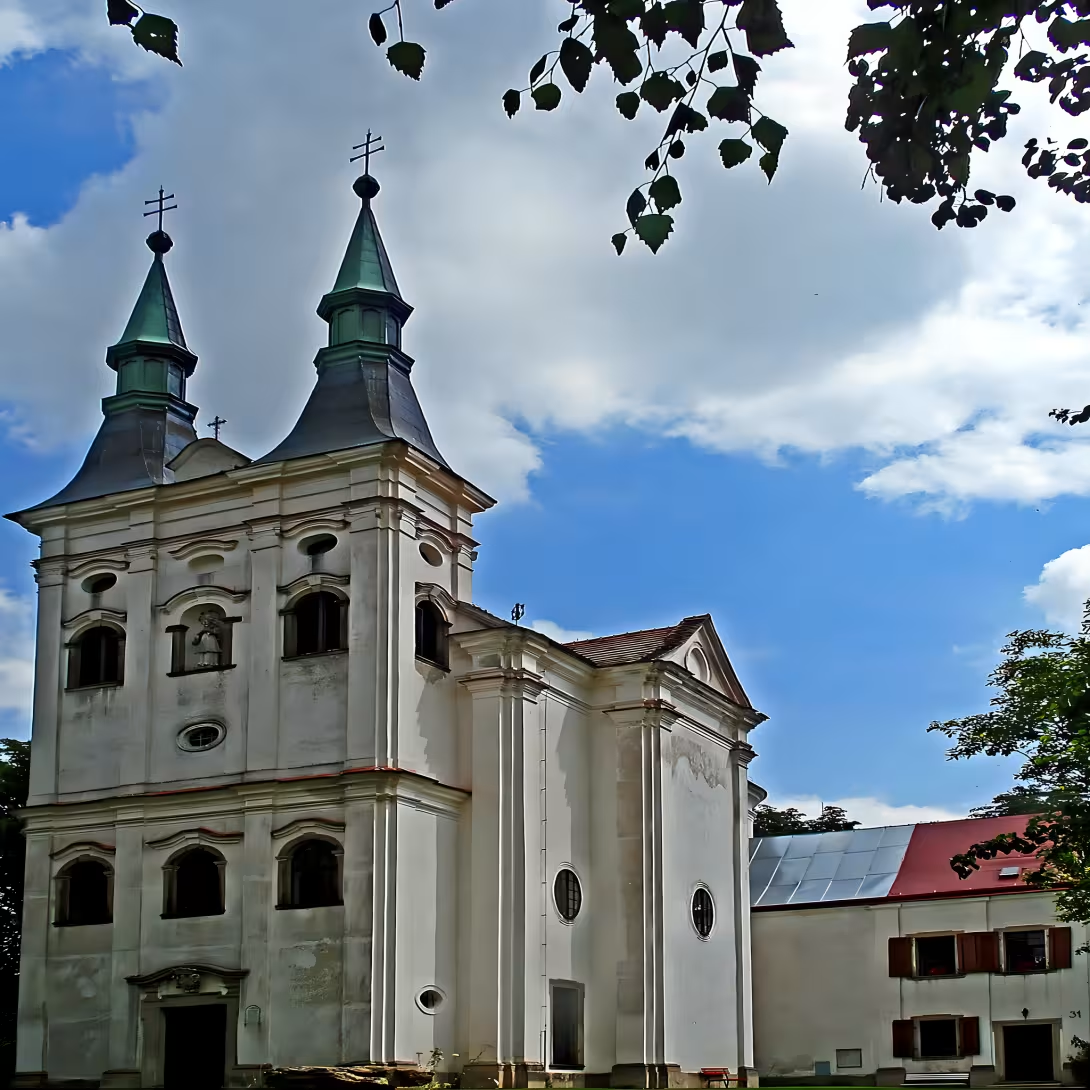
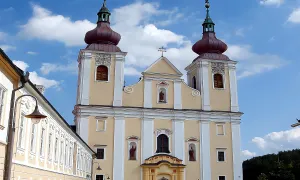
The Church of Saint John Nepomucene in Krahulčí is a Roman Catholic church situated on a hill above Telč, along the road from Telč to Krahulčí. Constructed between 1726 and 1729 during the Baroque period, it stands as a cultural monument of the Czech Republic. This single-nave structure features a prominent vertical orientation and was originally topped by a dome or lantern, now absent. The church is notable for its historical significance, architectural style, and connection to Saint John Nepomucene.
Built between 1726 and 1729 under the patronage of František Antonín z Liechtensteinu-Kastelkornu and his wife Mariá Anna z Hallweilu, its construction coincided with the canonization of Saint John Nepomucene. This significant event in the Catholic Church led to its consecration on July 4th, 1729. The Baroque style prevalent during this period reflects the grandeur favored by the Catholic Church across Europe, and the church's architecture is influenced by both local traditions and broader European trends.
Architecturally, the church exhibits a distinctive Baroque design with a single-nave layout and vertical orientation. It features six windows and two towers at its eastern facade. Originally, it had a central dome or lantern, which was removed following a fire in 1830 caused by a lightning strike. The church's windows are positioned in the middle height of the structure, creating an illusion that makes it appear shorter than it actually is. In 1991-1992, significant restoration efforts were undertaken, including replacing damaged roofs with copper sheeting and installing electrical wiring.
Throughout its history, the Church of Saint John Nepomucene has experienced several dramatic events. A lightning strike in 1830 led to a fire that damaged the roof and bells, resulting in the removal of the central dome. Another fire occurred during a storm on August 18th, 1934, severely damaging the towers and roof. Repairs were completed by November 1935. There is an unverified claim about plans for establishing a Franciscan monastery at this site, but no historical sources confirm this.
Today, the Church of Saint John Nepomucene remains a significant cultural monument in the Czech Republic. It offers visitors scenic views from its hilltop location above Telč and serves as a testament to Baroque architecture and religious history. The church is accessible to the public, providing an opportunity to explore its historical and architectural features.
The Church of Saint John Nepomucene stands as a remarkable example of Baroque architecture and religious heritage in the Czech Republic. Its rich history and connection to significant figures make it a worthwhile destination for those interested in cultural and historical exploration. Visitors are invited to experience this unique monument and appreciate its enduring legacy.
Then and now
Drag the slider to compare how the landmark may have looked when it was built with the view today.
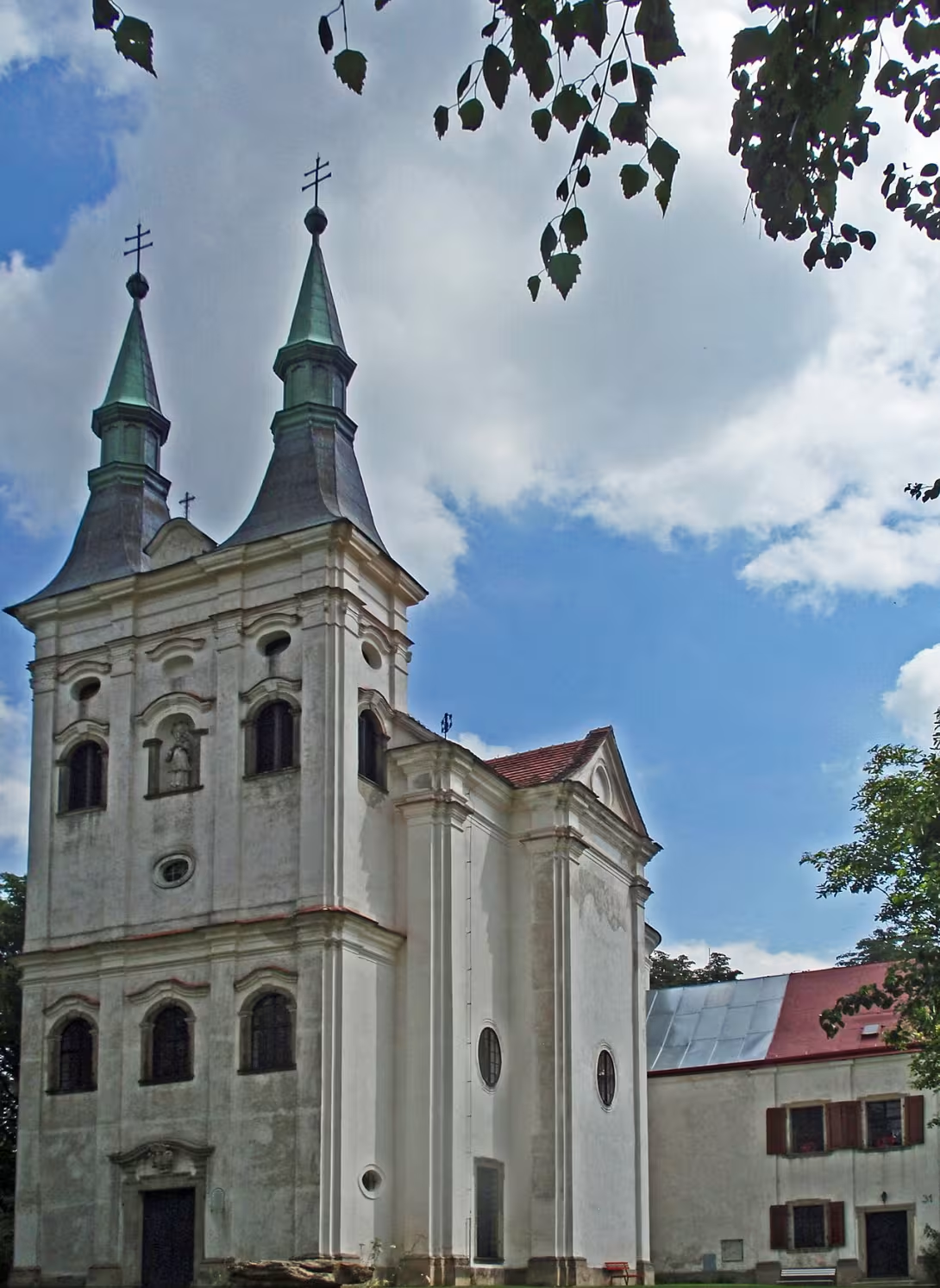
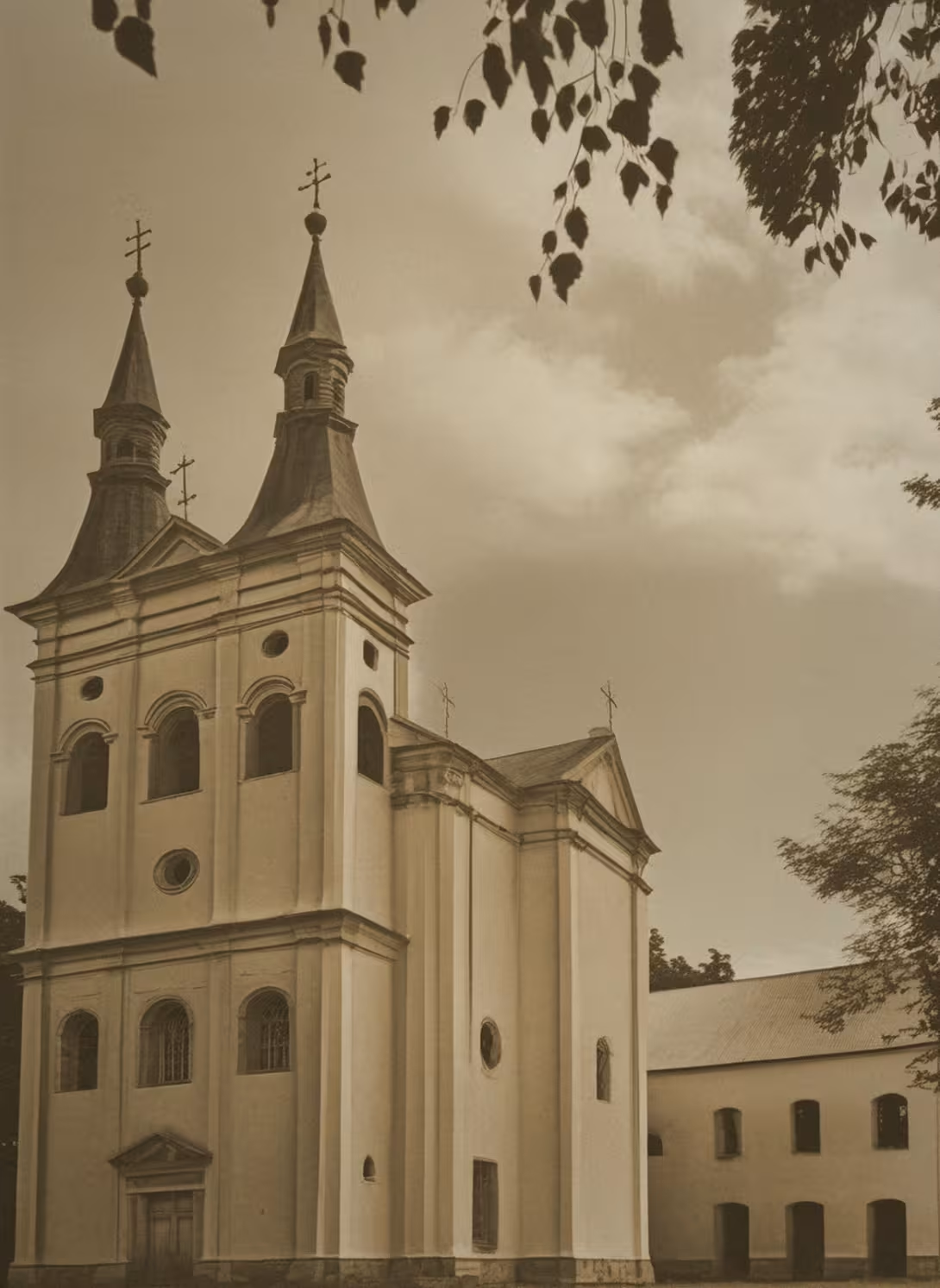
The historical appearance on the left is an AI-generated visualisation and serves as inspiration only.
Historical milestones
- 1726
- Beginning of the construction of St. John Nepomucene Church.
- 1729
- The church was consecrated after the canonization of St. John Nepomucene.
- 1830
- A fire caused by lightning led to the removal of the central cupola or lantern.
- 1934
- A second fire damaged the towers and roof.
- 1935
- The church repairs were completed.
- 1991
- Beginning of restoration, replacement of roofs, and installation of electrical equipment.
Architectural development
The church underwent significant changes after its initial construction in the early 18th century. Following fires in 1830 and 1934, it lost its central dome and suffered extensive roof damage. Restoration efforts included replacing damaged roofs with copper sheeting in 1991-1992 and installing electrical wiring.
Historical events
- 1729
- The church was consecrated on July 4th, shortly after Saint John Nepomucene's canonization.
- 1830
- A lightning strike caused a fire that damaged the roof and bells, leading to the removal of the central dome.
- 1934
- Another fire occurred during a storm on August 18th, damaging the towers and roof severely. Repairs were completed by November 1935.
Points of interest
- The Church of Saint John Nepomucene was built during a period when the canonization of its namesake saint had just been declared, linking it directly to significant religious developments in the Catholic Church at that time.
- Despite being constructed with grand Baroque elements like a central dome or lantern, this feature was removed due to a lightning strike-induced fire in 1830, altering its original architectural design.
- There is an intriguing yet unverified legend suggesting plans for establishing a Franciscan monastery on the site of the church, though no historical evidence supports these claims.
- The church's windows create an optical illusion that makes it appear shorter than it actually is, demonstrating clever Baroque architectural techniques designed to manipulate perceptions of space and height.
- In 1991-1992, the church underwent significant restoration, including replacing its damaged roofs with copper sheeting, a material choice reflecting both practicality and historical authenticity.
Guide
This guide is narrated by a synthetic voice generated by artificial intelligence.
Show guide text
This text was created by artificial intelligence and has not been editorially reviewed. It may contain inaccuracies.
On a hilltop above Telč, along the road from Telč to Krahulčí, stands the pilgrimage church of Saint John of Nepomuk. It is protected as a cultural monument and belongs as a subsidiary church to the Telč parish.
The church was built between 1726 and 1729. The construction was financed by Francis Anthony of Liechtenstein-Kastelkorn and his wife Mary Ann of Hallweil. It was consecrated on July 4, 1729, about four months after Saint John of Nepomuk was canonized.
The church was repeatedly damaged by storms. On June 10, 1830 at 9 p.m., lightning struck the northern tower. In the resulting fire, the tile roof and roof timbers burned, and the bells were also damaged. Following this disaster, the central dome was removed. Another fire occurred on August 18, 1934. Lightning then struck the towers, which collapsed onto the roof and severely damaged it. Repairs lasted until November 1935. A major renovation took place in 1991 and 1992. Electricity was then brought into the church and the tower roofs received copper sheeting.
This is a single-nave Baroque church, strikingly vertical, with the floor plan of an unequal-armed cross. Over its center was originally a dome or lantern with six windows, and its opening is still visible today. The chancel is set back and ends in a semicircle. Above the eastern façade rise a pair of towers. The stone portal at the entrance bears a cartouche with the founders' alliance coat of arms. In the gable of the side aisle is a blind oval window.
The effect of the windows in the nave is interesting. They are not pierced at the vault level, but in the middle height of the church. A visitor therefore gains the impression that the church is lower than it actually is.
On the south side of the presbytery adjoins an unfinished wing of the building with four rooms, including a sacristy. In the past, the manor hunter lived there. According to tradition, it was an attempt to establish a Franciscan monastery, though no sources have yet confirmed this.
The main altar is dedicated to Saint John of Nepomuk and depicts the veneration of the saint. In the recesses of the side chapels stand two other altars with paintings by the painter François de Röettiers. The painting in the southern chapel depicts Saint Francis of Assisi. In the painting in the northern chapel, Saint John thanks the Holy Trinity for the strength to fulfill his duties.
Tips for visitors
The best time to visit the Church of Saint John Nepomucene in Krahulčí is during late spring or early autumn. During these months, the weather is generally pleasant, allowing visitors to enjoy the scenic views from the hilltop location without the discomfort of summer heat or winter cold. Additionally, visiting outside peak tourist seasons can provide a more serene experience with fewer crowds, making it easier to appreciate the church's Baroque architecture and its surrounding landscape.
For those preferring public transport, regional buses connect Telč to Krahulčí, with schedules varying by season. The journey from Telč offers picturesque views of the Vysočina Region’s rolling hills.
When visiting the Church of Saint John Nepomucene, it is recommended to bring comfortable walking shoes as there may be some inclines leading up to the church. Additionally, carrying a camera and possibly a hat or sunscreen can enhance your experience, especially if you plan on exploring the surrounding area. A light jacket might also be useful in case of cooler temperatures at higher elevations.
For photography enthusiasts, the best spots for capturing images of the Church of Saint John Nepomucene are from the hilltop where it is situated, offering panoramic views of Telč and the surrounding landscape. Early morning or late afternoon provides the most favorable lighting conditions, casting soft shadows that highlight the church's architectural details. The Baroque style of the church makes it a visually striking subject against the backdrop of the Vysočina Region’s natural beauty.
Exploring these nearby locations can provide additional context to the region's rich cultural heritage and offer more opportunities for sightseeing.
For families with children, visiting Krahulčí can be an educational and enjoyable outing. The church’s location offers ample space for kids to explore safely while learning about history and architecture. Nearby Telč provides family-friendly activities such as strolling through its historic streets or enjoying local cuisine at a café. It's advisable to check if there are any guided tours available that cater specifically to children, offering interactive ways to engage with the site’s history.
Frequently asked questions
Can the monument be visited?
Religious buildings are usually open mainly during services; at other times a visit is normally arranged with the parish or the operator. We have not verified specific times.
Where is the monument?
Location: Krahulčí, Kraj Vysočina. The map on this page shows the exact spot.
Why is the monument protected?
It is listed in the Central List of Cultural Monuments of the Czech Republic as a cultural monument (register no. 34830/7-4956).
Businesses nearby
Do you run a restaurant, accommodation, shop, museum, rental, wellness or other visitor service near this monument? Show yourself directly to the people heading to it — this is how they will see you in the app and on the web:
Events nearby
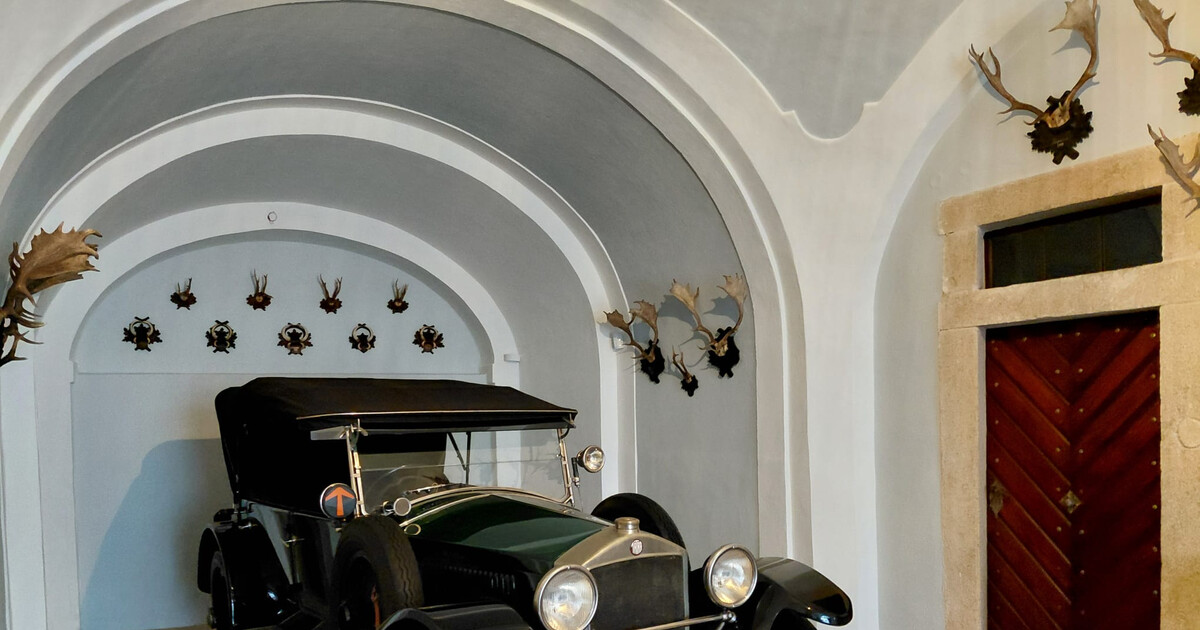
Zdroj akcí: otevřená data měst a obcí ČR (Národní katalog otevřených dat) a kalendář akcí Národního památkového ústavu.
Nearby
Located on a hill above Telč, the church offers scenic views and is near other historical sites in the region. The surrounding landscape includes rolling hills typical of the Vysočina Region.
Accommodation nearby
Trips and activities nearby
Guided tours, tickets and activities nearby from GetYourGuide
Affiliate link: if you buy from the partner, we may receive a commission. The price for you does not change.
Search tours and activities →Themed route
Tematická výletní trasa: Kostel svatého Jana Nepomuckého (Krahulčí)
1. Kostel svatého Jana Nepomuckého (Krahulčí) - Typ: Historická památka - Proč stojí za návštěvu: Tento barokní kostel, postavený v 18. století, je nejen duchovním centrem obce Krahulčí, ale také poskytuje jedinečné panoramatické vyhlídky na okolní krajiny Vysočina Regionu. Jeho umístění na výšině nad Telčem z něj činí ideální místo pro pochopení historické a kulturní důležitosti oblasti.
2. Panoramatická vyhlídka z kostela - Typ: Vyhlídka - Proč stojí za návštěvu: Z výšiny, kde se nachází kostel, si můžete užít impozantního pohledu na oblast Telče a okolní lesnaté kopce. Tato vyhlídka nabízí nejen krásné fotografické příležitosti, ale také vhled do typických krajinových rysů Vysočina Regionu.
3. Nádvoří kostela - Typ: Historický areál - Proč stojí za návštěvu: Nádvoří kostela je klidným místem, kde si můžete užít momentu odpočinku a reflektovat nad historií a architekturou tohoto místa. Je to také ideální místo pro pochopení kontextu kostela v rámci obce Krahulčí.
4. Věž kostela - Typ: Architektonický prvek - Proč stojí za návštěvu: Výška věže nabízí další perspektivu na okolní krajinu a je to nezapomenutelné zážitkové místo, zejména pro ty, kteří mají rádi historickou architekturu. Navíc poskytuje zajímavý pohled na interiér kostela.
Tato trasa nabízí kombinaci duchovního zážitku a krásných výhledů, což ji činí ideální pro ty, kteří chtějí objevit historii a přírodu Vysočina Regionu.
Seasonal recommendations
Spring: The arrival of spring at the Church of Saint John Nepomucene in Krahulčí brings a refreshing atmosphere as nature awakens around this historic site. Visitors can enjoy the vibrant colors of blooming flowers and lush greenery, which provide a picturesque backdrop for exploring the church's architectural beauty. As daylight hours lengthen, the soft spring light enhances the intricate details of the church’s design. During this time, it is advisable to wear comfortable layers as temperatures may vary, and to arrive early in the morning to avoid larger crowds that gather later in the day.
Summer: Summer at Krahulčí offers an ideal setting for experiencing the Church of Saint John Nepomucene under bright sunlight, which highlights its architectural features. The warm weather invites visitors to spend more time outdoors, exploring both the church and the surrounding natural landscape. This is a peak tourist season, so it's recommended to arrive early to avoid crowds and ensure a more peaceful visit. Light clothing and sun protection are essential due to the higher temperatures and increased exposure to sunlight.
Autumn: The autumn months transform the Church of Saint John Nepomucene into a serene haven with its rich tapestry of fall colors. The surrounding landscape is painted in shades of gold, red, and orange, creating a stunning visual feast that complements the church’s historic charm. This season offers a more tranquil experience as the summer crowds diminish. Visitors should dress warmly to enjoy their visit comfortably, especially during cooler mornings and evenings. Late afternoon visits can be particularly rewarding when the soft autumn light casts a warm glow over the site.
Winter: Visiting the Church of Saint John Nepomucene in winter provides a unique atmosphere characterized by quietude and the stark beauty of the landscape under snow or frost. The church, set against a backdrop of bare trees and possibly snow-covered grounds, offers a contemplative experience that is both serene and picturesque. Due to shorter daylight hours and colder temperatures, it’s important for visitors to dress warmly in layers and plan their visit during daylight to make the most of the limited opening times. Arriving early can also help avoid any potential closures due to inclement weather conditions.
Visualizations and artistic views


The visualisations are generated by artificial intelligence and serve as inspiration.
Photos from the area
Real photos taken near the monument


Zdroj a licence jsou uvedeny u každého snímku.
Atmosphere of the place
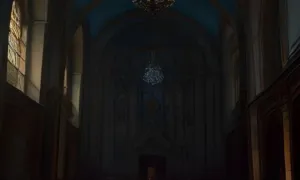
This atmospheric visualisation of the place and period was generated by artificial intelligence. It is not real footage of the location.
Tips from visitors
No tips yet. Be the first!
Log in and add your tip.
Sources and literature
Photos: Isolda11 / CC BY-SA 3.0, rozlišení zvýšeno umělou inteligencí — Wikimedia Commons. The author and licence also appear when you hover over the image.
Faktickým podkladem tohoto textu byl článek na Wikipedii, jehož autory jsou přispěvatelé Wikipedie. Článek je dostupný pod licencí CC BY-SA 4.0.
Location on the map


Příběhy a pověsti
Legendy, pověsti a příběhy spjaté s touto památkou
Fotografie návštěvníků
Zatím žádné fotografie. Buďte první, kdo přidá fotografii z návštěvy!
Log in a přidejte svou fotografii nebo hodnoťte.
Za ověřenou návštěvu v aplikaci získáte víc bodů — poznáme podle GPS, že jste na místě.
Reviews and comments