






Kostel svatého Jana Nepomuckého (Svatý Jan) Church
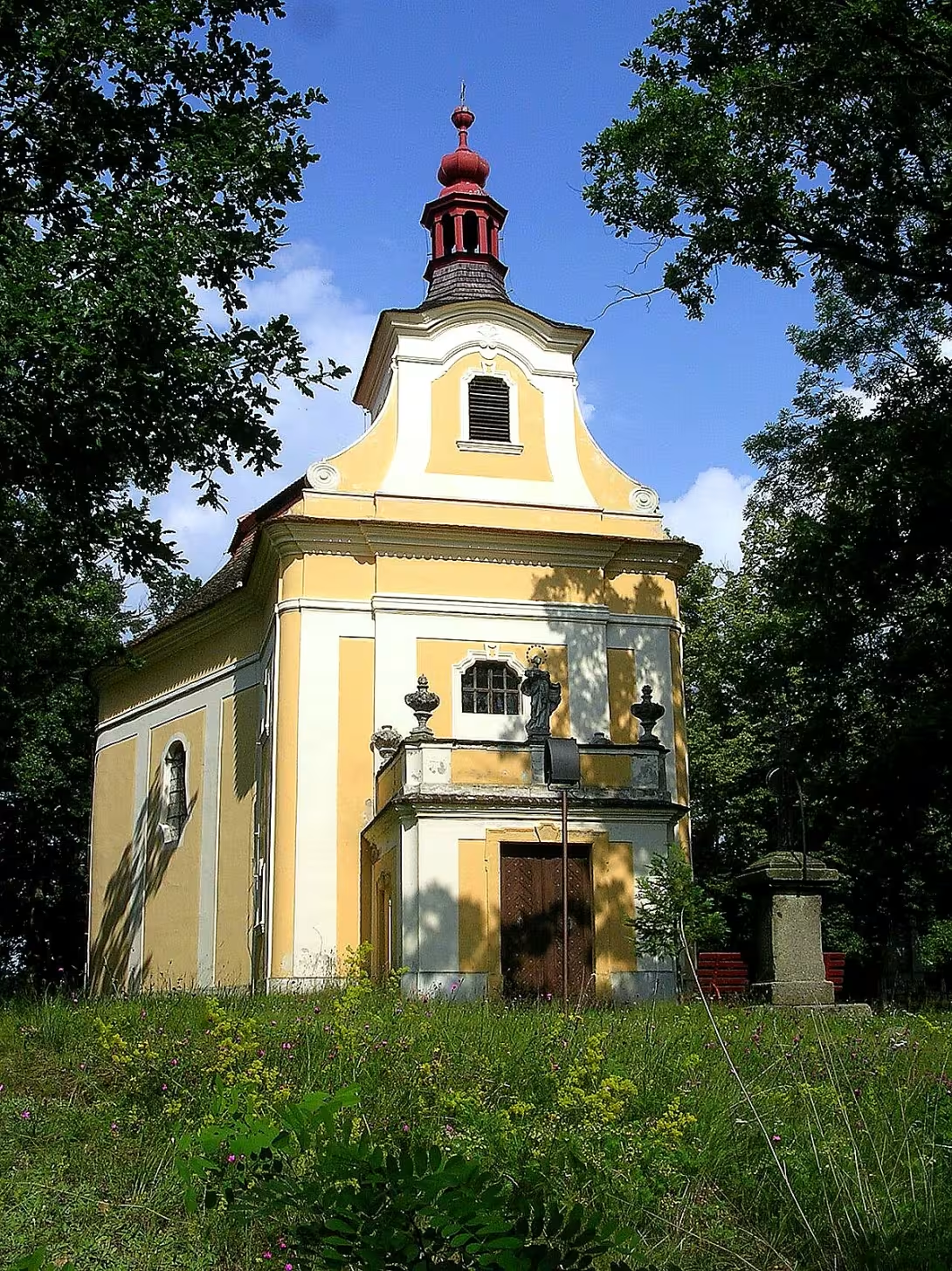
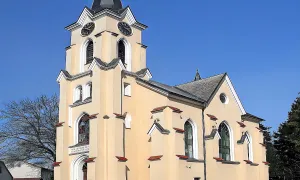
Church of Saint John Nepomucen in Saint Jan is a remarkable Baroque church, located on a hill near Skýšov, famous for its miraculous spring, which historically drew pilgrims. Originally built as a pilgrimage chapel in 1705 Adam Ignác Mladota ze Solopysk, the site developed into a contemporary church between 1760 and 1764 thanks to an increasing number of visitors. The church is characterized by its unique basic heart-shaped plan and a distinctive Mansard roof, making it an architectural jewel in the Central Bohemian region.
The origin of this monument dates back to when the Czechs were part of the Habsburg monarchy, experiencing significant religious and cultural developments in the 18th century. The initial chapel built in 1705 Adam Ignác Mladota ze Solopysk served as a spiritual sanctuary for those who sought miraculous drugs from the nearby spring. As the number of pilgrims grew, Norbert Kfelíř ze Zakšova, then owner of the property, commissioned enlargement to a larger church dedicated to Saint John Nepomucen between 1760 and 1764. This transformation was consecrated on 16 May 1764 by Jan František Kfelíř, indicating a significant milestone in its history.
The church of St. John Nepomucena stands behind its baroque style, characterised by a unique basic heart-shaped plan and a distinctive Mansard roof, which allegedly does not have a Central Bohemian counterpart in the region. the church has undergone significant renovation over the years; In 1870, both the tower and the main altar were reworked, along with the installation of new organ pipes. A separate entrance to the choir was added in 1903, thereby increasing availability while electricity was introduced in 1949, modernising its facilities.
Owning and managing the church recorded significant characters such as Adam Ignác Mladota ze Solopysk and Norbert Kfelíř ze Zakšova who played key roles in their development. The church became an independent parish in 1856, but later contacted Králová Hora nad Vltava in 2009, reflecting changes in administrative structures in time.
Several key events and curiosities indicate the history of this site. In 1976 the church and its surrounding cemetery appeared in the film "Alone by the forest" and added a layer of cultural importance. Since 2011, the church has been having irregular benefit concerts with serious music that contribute to the participation of the community. In addition, the tradition of Svatohubert Mass is celebrated every November with the participation of hunters and their trumpeters, highlighting local customs.
Today, the Church of St. John Nepomucena remains a cultural monument, listed as a protected monument in the Czech Republic. Regular services are held on Sunday at 11:15 and Friday in non-winter months at 16:00, maintaining its role as a place of worship. Visitors can appreciate not only its architectural beauty, but also its historical importance and community traditions.
Saint John Nepomucen Church offers a unique combination of history, architecture and cultural heritage, making it a valuable destination for interested people to explore the rich tapestry of Czech religious monuments. Its permanent legacy as a place of pilgrimage and worship invites visitors to experience its peaceful atmosphere and historical depth.
Then and now
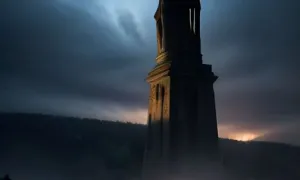
Drag the slider to compare how the landmark may have looked when it was built with the view today.
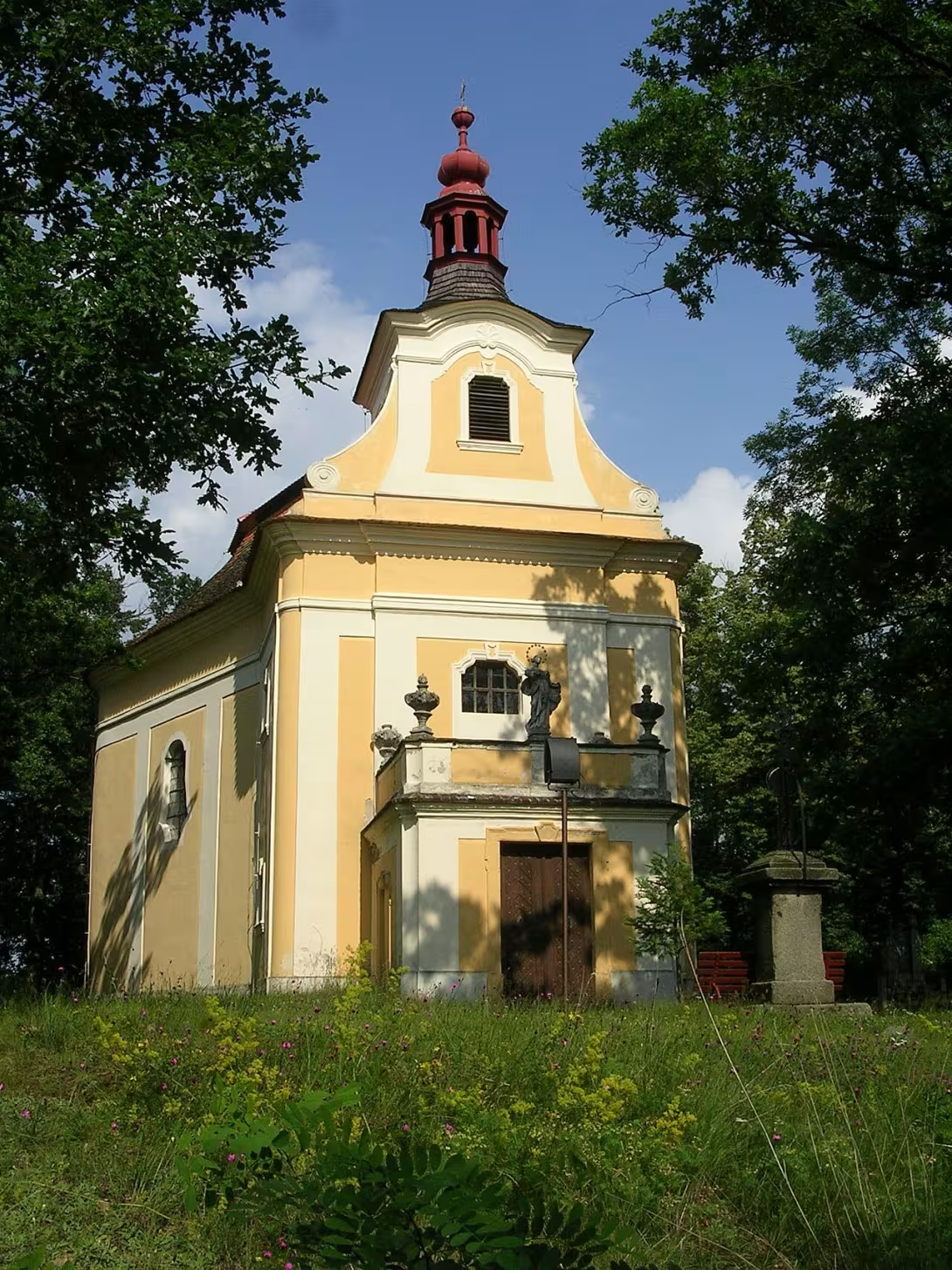
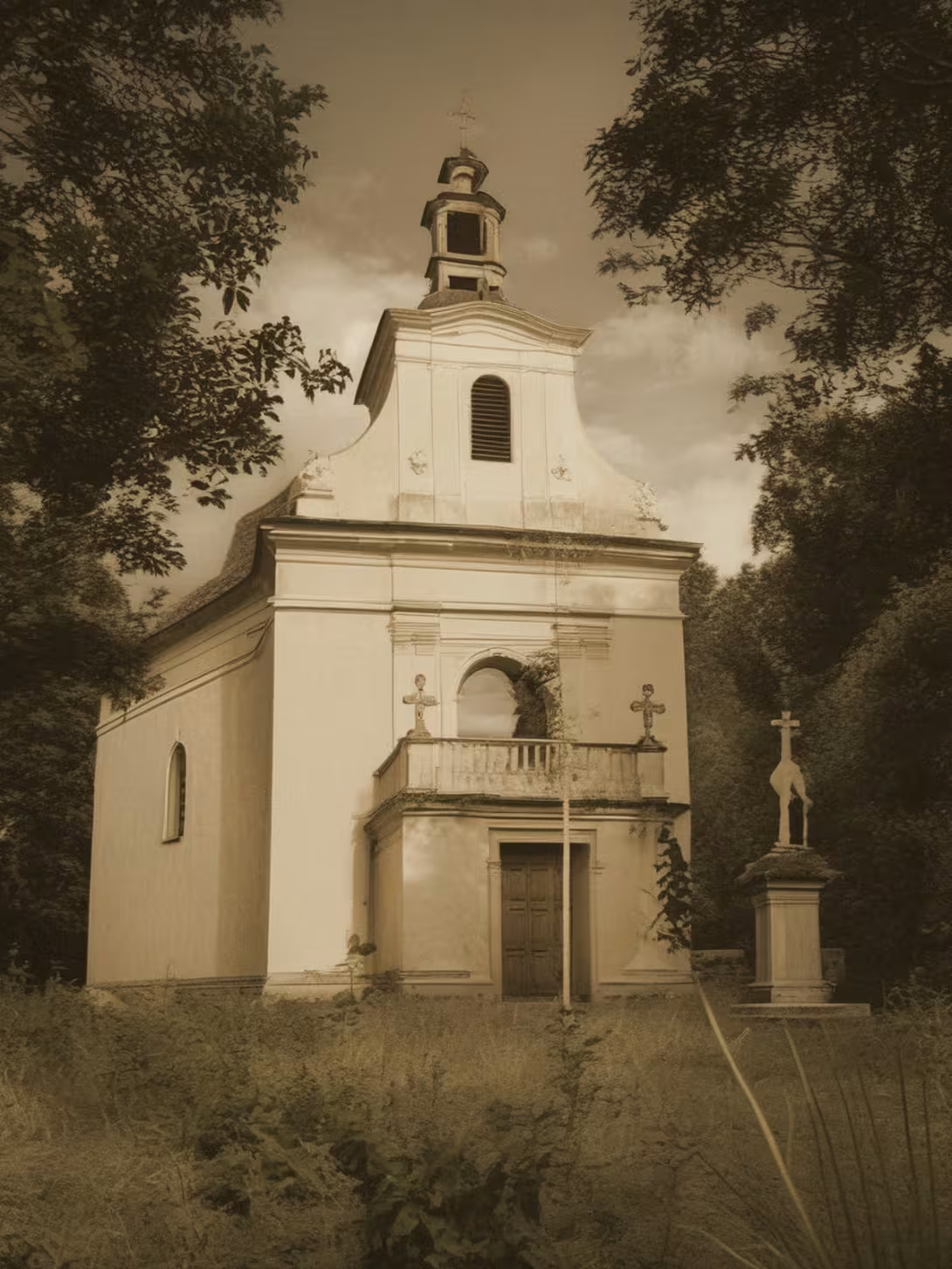
The historical appearance on the left is an AI-generated visualisation and serves as inspiration only.
Historical milestones
- 1764
- the church was sanctified by Jan František Kfelíř.
- 1856
- Svatý Jan was promoted to an independent parish.
- 2009
- The parish has joined the King's Mountain over Vltava.
Architectural development
The original chapel built in 1705 was extended to the present Baroque church between 1760 and 1764. The church underwent significant reconstruction in 1870 and 1933, including changes to its tower, main altar and organ. In 1903 a separate entry into the congregation was added and in 1949 electricity was installed.
Historical events
Construction of the pilgrimage chapel in 1705 Adam Ignác Mladota ze Solopysk.
Enlargement to the church between 1760 and 1764, sanctified on 16 May 1764, Jan František Kfelíř.
Owners
Adam Ignác Mladota ze Solopysk (1705)
Norbert Kfelíř ze Zakšova (18th century)
Points of interest
- Church of Saint John It has a unique basic heart-shaped plan and a mansard roof, architectural elements that are allegedly unbeatable in the Central Bohemia region. - The miracle spring church was the focal point of pilgrims since its inception as a chapel in 1705, drawing visitors looking for treatment and spiritual comfort. - In 1976 the church gained cultural importance by appearing in the film "Alone by the forest," which highlighted its role outside religious functions. - Every year the church celebrates the traditions of Svatohubert Mass, including local hunters and their trumpets, reflecting regional customs and community involvement. - Since 2011, the church has organized irregular benefit concerts with serious music, strengthens cultural engagement with the community and supports music heritage.
Guide
This guide is narrated by a synthetic voice generated by artificial intelligence.
Show guide text
This text was created by artificial intelligence and has not been editorially reviewed. It may contain inaccuracies.
Welcome to St. John, where history and architecture create a unique symphony that speaks to the heart and eye of visitors. You stand before the church of St. John Nepomucena, known as Svatý Jan. This Baroque church boasts a view of a nearby mountain near Skysov and is home to a legendary miracle spring.
Let's dive into his history. In 1705 this place became important when Adam Ignác Mladota ze Solopysk built a small chapel as a place for pilgrims. As the number of pilgrims increased over time, the chapel was extended to the present church between 1760 and 1764. In 1764, this sacred place was given its sacred journey thanks to Jan František Kfelíř, marking a new chapter in its rich history.
Look at the unique architecture of the church. Its unusual base and Mansard heart-shaped roof are truly magnificent, which in the Central Bohemian region represents an unparallel design. Notice the elegant facade and elevated position of the church on the hill, giving him a majestic attitude.
This place is also associated with key historical figures. Adam Ignác Mladota ze Solopysk not only founded the chapel, but was also an important force for its development. Norbert Kfelíř ze Zakšova and Jan František Kfelíř played a fundamental role in sanctification and subsequent recognition of the church as an independent parish in 1856.
Let's look at one of his features: a miraculous spring. Since its beginning in 1705, this spring has attracted pilgrims seeking comfort and healing. This tradition continues today, further enriches the spiritual nature of this place.
Whether you admire his architectural details or observe the gentle flow of the miraculous spring, Svatý Jan offers much to explore. This church is truly a living reminder of the past and of the spiritual sanctuary.
I suggest you take the time to explore this historic monument. With every step here, you can feel a deep connection with the past and the stories of these places to preserve. I hope your visit will be full of discoveries and inspiration.
Thank you for listening to me, and I hope you'll come back for another survey of this rich historical place. Until we meet again in Holy John!
Tips for visitors
Best time to visit St. John's Church Nepomuzene is at the end of spring or early autumn when the weather is mild and pleasant for walks around the natural landscape. These seasons offer clear skies and comfortable temperatures, making it ideal for exploring both the church and its nearby miracle spring. In addition, a visit outside the peak of summer months can provide a calmer experience that allows you to appreciate the peace of beauty area without large crowds.
Parking is available near the hill where the church is located, although the premises can be limited due to the popularity of the site among visitors. For those who prefer public transport, there are regional buses and train Hlašov, from which a short walk takes you to St. John. It is appropriate to check the current traffic possibilities in advance using an online search tool or local travel resources to ensure smooth access.
When visiting St. John Nepomucene's church, it is recommended to bring comfortable walking shoes because there are some tendencies leading up to the church on its slope. In addition, consider bringing a light jacket or sweater because temperatures may vary, especially in the morning or late hours. A bottle of water and refreshments can also be useful if you plan to spend several hours exploring the area.
For photo lovers, the best places to capture the church are from the hill where it stands, offering panoramic views of the surrounding landscape. Early morning light provides a soft glow that increases baroque architecture, while late afternoon may cast dramatic shadows and warm tones on site. The amazing spring nearby also offers picturesque shooting options with its natural setting.
Besides the church itself, visitors should explore the miraculous spring known for attracting pilgrims over the years. Within 30 minutes of St. John's, you can visit the castle Skysov and its beautiful gardens, which offers a view of historical architecture and a fresh landscape. These pages provide additional context and will enrich your understanding of the cultural heritage of the region.
For families with children, the church of St. John Nepomuceno and the surrounding area offers a quiet environment for exploration. The natural landscape around the church is ideal for peaceful walks or picnics in designated areas. Involve children with stories about the history of the site and the importance of a miraculous spring to make a visit both educational and pleasant.
Businesses nearby
Do you run a restaurant, accommodation, shop, museum, rental, wellness or other visitor service near this monument? Show yourself directly to the people heading to it — this is how they will see you in the app and on the web:
Nearby
the church is located on a hill near Hýšov, famous for its miraculous spring, which attracted pilgrims. The surrounding landscape includes natural elements typical of Středočeský kraj.
Accommodation nearby
Themed route
Thematic walking tour: Svatý Jan and its miraculous spring
1.Kostel svatého Jana Nepomuckého (Svatý Jan) - Type: Church - Why Visitor? Start your journey to the stunning hilly site location of this church, famous for its architectural beauty and spiritual importance. The church is dedicated to St. John of Nepomuk, revered in Czech history, known for his martyrdom and miracles associated with water.
2. Miracle Spring - Type: Natural functions - Why Visitor? Just outside the church, discover the miraculous spring, which has been a pilgrimage for centuries. In the spring it is said that they have healing properties and offers a quiet place to think about its historical significance and enjoy a quiet natural environment.
3. Hilltop Views - Type: Screenplay - Why Visitor? Climb the hill around the church to capture breathtaking panoramic views of Středočeský kraj. The landscape is characterized by rolling hills and lush greenery that provide a perfect background for photography or simply enjoying the beauty of nature.
4. Church of the Nave - Type: Internal space - Why Visitor? Explore the interior of St. John Nepomuk's Church where you can admire its complex altars and historical artifacts. Navigation offers a peaceful atmosphere to appreciate the artistic heritage of the church and spiritual atmosphere.
5. Church Tower - Type: Architectural functions - Why Visitor? Climb the tower for increased views of Svatý Jan and its surroundings. This sightseeing point provides not only a stunning view, but also a view of the architectural design and historical importance of the church structure.
This tour summarises the spiritual, natural and cultural essence of St. John, making it a valuable experience for visitors who are interested in history, architecture and nature.
Seasonal recommendations
Spring: St. John Nepomuk's Church's chateau in spring shopping A sudden contribution to the revival with the arrival around, where trees roar and which are supplied for the consumption of goods. Sunny days offered by optimal planting for photographic architectural details, while small temperatures allowed by a pass around the monument. They can expect no crowds and just the opportunity for a peaceful profit. It is recommended to wear comfortable shoes because the terrain around it can be unedited since spring desti. The best times on the basis are postponed, when the suns read states and facades in the golden light.
Summer: Summer to translate the Church of St. John of Nepomuk a lively atmosphere with its day of breath and a warm sunny saint, which is its historical architecture. In the event that the conditions set out in Article 4 (1) (a) are met, the competent authority shall: Importing the post is supplied to ensure the difficulty of ensuring sufficient time for relaxation and other history of the skeleton without a shoddy crowd duty. The warm round with short gloves or hat is slick for the forbidden bow of sunlight, and you must not forget enough water.
Autumn: Autumn offers St. John of Nepomuk's Melancholic beauty with colored tree leaves and temperate temperatures. The atmosphere is calm and allowed, which means that the ideal support for relaxing the sights without superior crowd duty. The sunny days are permanent, allowing beautiful photographs with natural background in a golden and red shade. Inventory bodies should be considered as round, especially in the evening when temperatures fall rapidly. The best data on the basis of this Decision are set out in Annex I.
Winter: Winter trade in St. John Nepomuk's Church encourages a one-way agreement with a possible extension of the church, provided that it does not have any new contracts, which is its historic business. The opening times should be calculated that the cool temperature and less sunny light, so the intrusion should be included in the availability point. The atmosphere is calm with minimal crowd, allowing for a personal profile and other historical aspects of the skeleton. The warm round, beekeeping hat and glove is persistent for the use of these substances. The best time on the basis is the relevant postponed time, so as not to fill the possibilities that require that there are no worlds and no heat from the short countries.
Visualizations and artistic views


The visualisations are generated by artificial intelligence and serve as inspiration.
Photos from the area
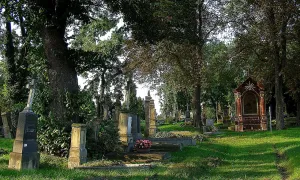
Real photos taken near the monument


Zdroj a licence jsou uvedeny u každého snímku.
Tips from visitors
No tips yet. Be the first!
Log in and add your tip.
Sources and literature
Photos: cs:ŠJů / CC BY-SA 3.0 — Wikimedia Commons. The author and licence also appear when you hover over the image.
Faktickým podkladem tohoto textu byl článek na Wikipedii, jehož autory jsou přispěvatelé Wikipedie. Článek je dostupný pod licencí CC BY-SA 4.0.
Location on the map
Příběhy a pověsti
Legendy, pověsti a příběhy spjaté s touto památkou
Fotografie návštěvníků
Zatím žádné fotografie. Buďte první, kdo přidá fotografii z návštěvy!
Log in a přidejte svou fotografii nebo hodnoťte.
Za ověřenou návštěvu v aplikaci získáte víc bodů — poznáme podle GPS, že jste na místě.
Reviews and comments