






Židovský hřbitov v Drážkově Jewish cemetery
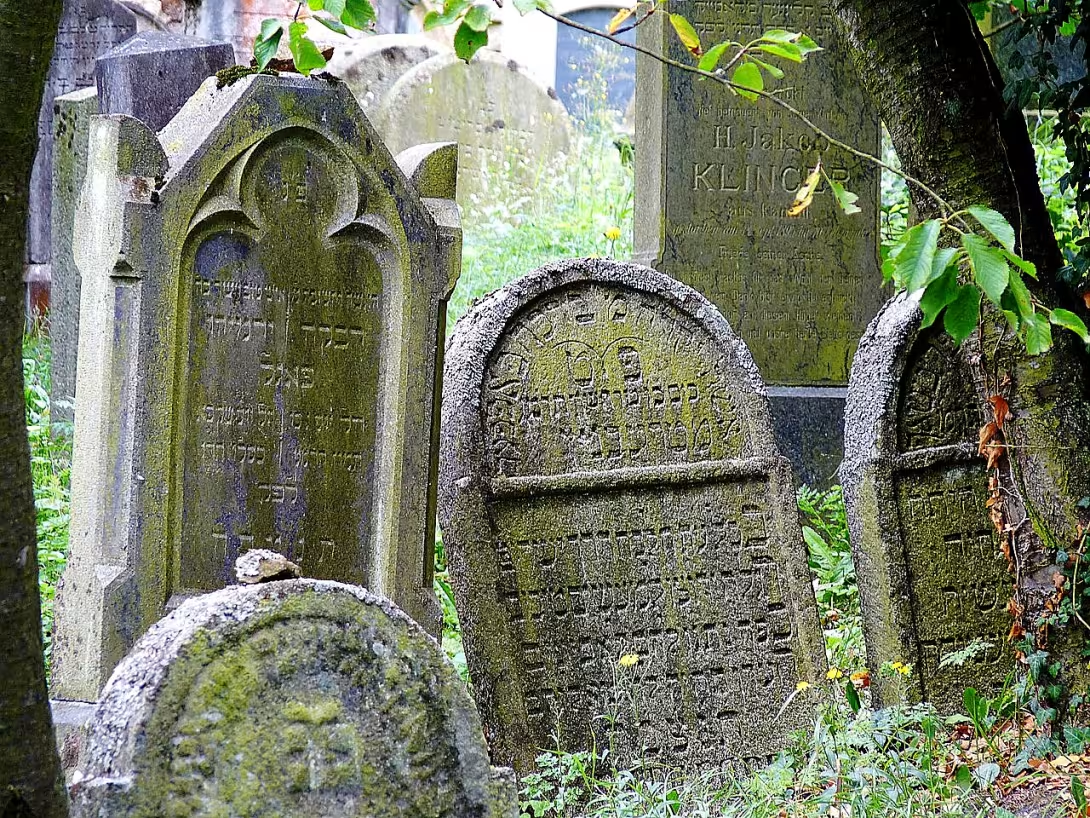
Židovský hřbitov v Drážkově is located in the cadastral area of Řadova, part of the municipality of Svatý Jan in the district of Příbram, approximately two kilometres southwest of the village of Dreszkov. It was founded in response to a plague epidemic in 1679- 1680, which destroyed Jewish communities around Kamýk nad Vltava and Dreszkov.
This cemetery is an important example of the historic burial ground, which served as a resting place for Jews from nearby villages. It spread gradually to the mid-19th century. It is protected as a cultural monument of the Czech Republic and retains an authentic character with a number of tombstones - from simple rustic to richly decorated with symbols.
The creation of the cemetery was linked to massive deaths during the epidemic. According to the charter of 1680, preserved in the photograph, the cemetery was founded on the property of the owner Václav Hrušovský from Hrušov and Skrejšov. He secured the land and allowed regular funerals for the payment of 20 ray. At the same time, he set an annual fee of six gold coins for the local Jewish community.
The architecture of the cemetery reflects its original function. Originally, it was wooden fenced, later rebuilt into a stone wall, extended in 1791 and mid-19th century. In 1850 the morgue was built with a stone table tahara, a typical element of Jewish ceremonies. The tombstones are varied - from rustic to decorated with reliefs and symbols that express the personal lives and beliefs of the deceased.
The cemetery served as a burial ground for Jews from around the world, and gradually spread to funerals from further villages such as Nalžovice, Animal and Petrovice. The last funerals took place here in 1936 and 1941. Today it is accessible on a dirt road diverting from Kamýk nad Vltavou to Řadova from road II / 102. It is well maintained and presents an interesting example of a historical Jewish burial ground with rich monument value. His visit helps to understand the history of Jewish life in the region and the tradition of funeral ceremonies.
Then and now
Drag the slider to compare how the landmark may have looked when it was built with the view today.
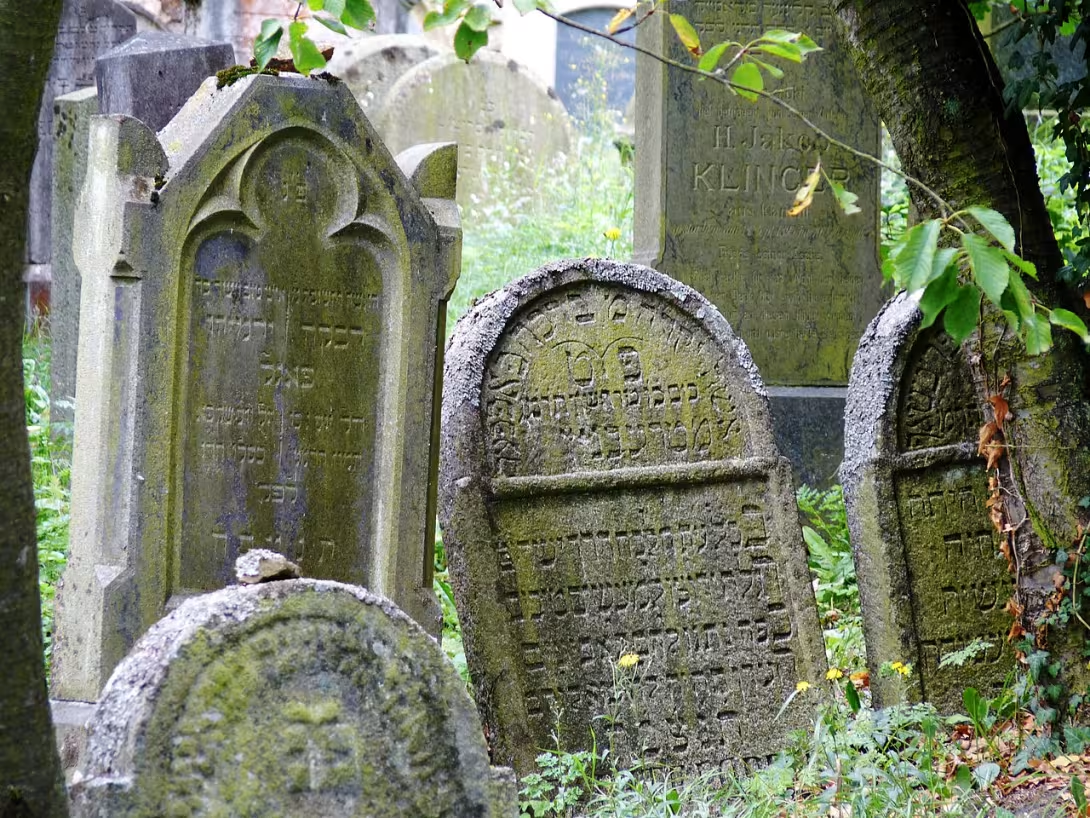
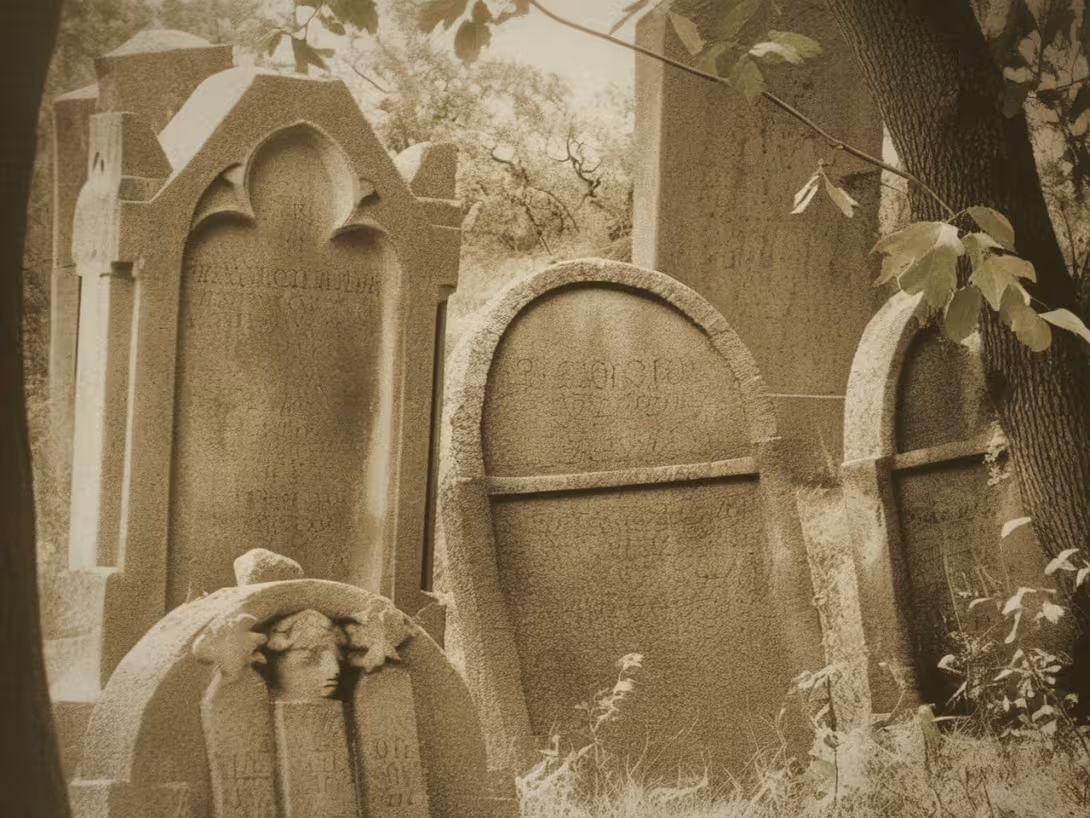
The historical appearance on the left is an AI-generated visualisation and serves as inspiration only.
Historical milestones
- 1679- 1680
- The plague epidemic destroyed Jewish villages around Kamýk nad Vltavou and Dreszkov, causing the creation of a new cemetery
- 1680
- The establishment of a Jewish cemetery in Dresden on the property of Václav Hrušovský from Hrušov and Skrejšov, allowed regular funerals for payment
- 1791
- The first expansion of the cemetery and the reconstruction of the stone wall
- 1850
- Built morgue with stone table tahara for Jewish ceremonies
- around 1800-1850
- The gradual expansion of the cemetery up to the middle of the 19th century
- 1936-1941
- Last funerals in the cemetery in Dresden
Architectural development
The cemetery was created as a small burial ground of 60 m ², and later it grew twice - in the 19th century the synagogue was added in Dresden and in the mid-19th century the morgue was built. The materials were originally stone tombstones and later more decorated stones were added. The castle floor was originally wooden, later stone, with a gate in the east.
Historical events
- 1680
- The foundation of the cemetery based on the founding charter of Václav Hrušovský from Hrušov, which provided burial grounds for Jews from around Kamýk and Dreszkov
- 1791
- First significant expansion of the cemetery and replacement of temporary fencing with stone wall
- 1850
- Position of morgue and new border with gate, including preserved ritual table for tahara
- 1936
- Last funeral ceremony in the cemetery before the occupation of the Protectorate of Bohemia and Moravia
Owners
The owner of the land was Václav Milota Hrušovský from Hrušov and on Skrejšov (1680-?); later, his descendants possessed the estate.
Points of interest
- The Jewish cemetery was created in response to a plague epidemic between 1679 and 1680, which destroyed Jewish settlements in the area of Kamýk nad Vltava and Dreszkov.
- The cemetery was based on the property of the owner of the farm Václav Hrušovský from Hrušov and Skrejšov, who secured the place and allowed regular funerals for a fee.
- In 1850 there was built a morgue with a typical Jewish stone table tahara.
The last funerals at the cemetery took place in 1936 and 1941.
- The cemetery is protected as a cultural monument of the Czech Republic and is well maintained.
Guide
Show guide text
This text was created by artificial intelligence and has not been editorially reviewed. It may contain inaccuracies.
Welcome to the place where time has stopped, and where every one with a wind of stone surface tells the story of human faith, survival and relentless fate. You are standing in front of the gateway to history, deeply linked to the fate of the people who once lived here, believed and worked. In front of your eyes is a Jewish cemetery in Dresden. Do you feel the quiet seriousness and calm that exists here? This place is not just a set of tombstones spread in the landscape. It is a living testimony about how human communities had to adapt to the relentless forces of nature and how they sought to preserve their dignity even in the darkest times.
Let's go back together to when everything started and understand why this place was created here. Before you there is a story that tells of a great misfortune and the need to seek a new home even for those who can no longer walk among the living. At the end of the seventeenth century, exactly in the years of a thousand six hundred seventy-nine to a thousand six hundred eighty, the surrounding area of Kamýk nad Vltava and Dresden's devastating plague epidemic struck. This disease was at that time a terrifying force, which was not only a body, but a whole social structure. She destroyed Jewish villages all around and left behind a void. People lost their homes and their sacred places where they once worshipped their ancestors.
It was this tragedy that triggered the need to create a new place for the deceased to rest. In the year one thousand six hundred eighty this cemetery in Dresden was officially established. However, this was not a process that would have taken place without the intervention of the outside world. In order for this sacred space to arise, consent was required for the owner of the nearby estate. This man was Václav Hrušovský from Hrušov and Skříšov. Thanks to his decision and his permission, which allowed regular funerals for a certain fee, this cemetery could begin to exist on his property in the cadastral territory of Rádova. Imagine the time situation where every thing had to be as sensitive as the place for funerals, negotiated and approved within the order at that time.
Now pay attention to what you see around you and what you can perceive while walking. Although time has left its mark in this place and many things have gradually changed, you can tell in detail the different periods of growth and bloom of this space. Notice the perimeter wall that determines the boundaries of this place. This wall has not been here since the beginning, when the cemetery was founded in the seventeenth century. The first significant expansion and transformation into solid stone construction of the cemetery was passed only in the year one thousand seven hundred ninety-one. This wall then gave the place the sense of closure, protection and dignity that the sacred place requires.
If you go any closer to the buildings, you may encounter a morgue that was built around the year of the thousand and eight hundred and fifty. Note its appearance, which corresponds to its time of origin and serves very important purposes. There was a stone table in this building that was necessary for ritual preparation of the body before the funeral. This table was a place where faith met the relentless reality of death, where sacred ceremonies took place, and where families prepared for the final farewell to their loved ones. Although these rituals are now remote for many, they were the fundamental pillar of their spiritual life for the then community.
Now let's think about who's resting here. Although the names of individual persons in our records may not always be expressed loudly, every stone and every tombstone here speaks of the entire community. This cemetery was not only a place for local residents, but gradually it became an important cultural and spiritual point for Jews from all around. It was the people who sought peace here, who built their lives here and who had to pay for this place to ensure a dignified departure for their ancestors. We see a trail of two centuries of human life, traditions and constant time movement.
The interesting thing to think about during your walk is the time frame of the last funerals that have taken place here. Look at the chronology of this place, which tells about constant growth until the mid-nineteenth century. But then there was silence. The last funerals that took place in Dresden took place in the years of a thousand nine hundred thirty-six to a thousand nine-forty-one. This period is very sensitive and very sad in history. Why did the funerals stop in this place? What fate of human generations in these years has decided that this place will no longer serve for new funerals? This quiet gap in history that separates us from the last human traces in this place remains one of the greatest mysteries you can perceive here.
Now I'm going to sound you to continue your peaceful and thoughtful walk. Look at the different parts of the cemetery, see the atmosphere of this place and take the time to perceive the silence that exists here. Every corner, every wall and every tombstone has its own history that you can find here if you look at them with patience. Let yourself be carried away by a sense of peace and memory of those who once sought their last rest here. Thank you for joining us on this short journey through time and for paying attention to this important place. We wish you another pleasant and peaceful visit.
Tips for visitors
An ideal visit from the first half of May to the end of September is when the weather is pleasant and nature is in full beauty. In summer it is also possible to observe the beautiful sunlight in the cemetery, which increases the aesthetic value of the visit. In winter the place is quieter, but the light is weaker and the shooting possibilities are limited.
Parking on site is not directly secured, but there are several free parking places nearby the village Svatý Jan. The location is available by car - from Dresden is about 1.5 to 2 kilometres southwest. For public transport is the nearest stop in St. Jana, from where is the possibility of walking to the cemetery. It is recommended to check the current connection in advance or use the taxi service.
It is advisable to take comfortable clothes for walking, sunglasses and sun protection (e.g. a hat or scarf) because the light in the cemetery can be intense. It is also useful to have a small diary or camera to capture historical monuments. For families with children it is good to prepare small toys or books because some parts of the cemetery are quiet and children can be pleasant to observe the sights in peace.
The best places for photography are accessible tombstones with well preserved inscriptions and landscape background with surrounding forests and field roads. The light is best in the morning or midday sun, when the light is softer and reflected well in stone monuments. The important thing is to respect the ban on photography on certain tombstones that can be protected as cultural monuments.
Kamík nad Vltavou
A historical residence with a rich Jewish past. The place is famous for its old houses and historical monuments that resemble Jewish settlements. The surrounding area is comfortable natural spaces, ideal for walks and relaxation. There is also the possibility to visit the local museum, which deals with the history of the region.
Nalžovice
Small historic town with beautiful architecture and pleasant atmosphere. In Nalžovice there are old Jewish cemeteries and historical houses which are interesting for visitors. The surrounding landscape is rich in forests and field roads, allowing hiking and exploring local nature.
The cemetery can be interesting for children in terms of historical tombstones and quiet atmosphere. Children can enjoy a walk between monuments and observe old stone statues. It is recommended to choose the time to visit when there are fewer visitors so that children can explore the place without a busy environment. In the vicinity of Saint John and Dresden you can also visit nature reserves or small watercourses that children may consider a pleasant addition to the visit.
Businesses nearby
Do you run a restaurant, accommodation, shop, museum, rental, wellness or other visitor service near this monument? Show yourself directly to the people heading to it — this is how they will see you in the app and on the web:
Nearby
Nachází se v blízkosti obce Svatý Jan, asi 2 km jihozápadně od Drážkova. V okolí se nachází přírodní krajina s lesy a polními cestami. V okolí se nachází také historické sídla jako Kamýk nad Vltavou a Nalžovice, kde žili židé.
Accommodation nearby
Themed route
Thematic cruise route: Židovský hřbitov v Drážkově and surroundings
1.Židovský hřbitov v Drážkově Type: Cultural monument This old cemetery is proof of Jewish history in the region. There are hundreds of tombstones with traditional Jewish inscriptions that preserve the memory of the past. It's a place of peaceful reflection and memories of the ancestors.
2. Camel over Vltava * * Type: History Jews have lived in this historic city since the Middle Ages. Walk on the old streets and visit local monuments (e.g. synagogue) will show how the Jewish community developed. Historical houses with typical architecture are also interesting.
3. Naljovice * * Type: Cultural traditions There are traces of Jewish life preserved in this village. Local monuments, such as old Jewish cemeteries or historic houses, remind us of the past. It is also interesting to know local traditions and history from the point of view of local people.
4. Cemetery in Dresden * * Type: Peace and reflection After visiting the cemetery it is recommended to relax in its surroundings. Around the cemetery there is a small park with quiet fields where you can relax and enjoy natural peace. It is also convenient to look around the cemetery and its peripheral tombstones.
End of route After visiting all points you can go back to Dresden and visit local shops or restaurants. The route is ideal for those who want to know the history and culture of the region from the perspective of the Jewish community.
Seasonal recommendations
Spring: In the spring, the Jewish cemetery in Dresden is transformed into a flowering garden where emerging flowers and trees celebrate new weather. The sun's rays penetrate among ancient tombs, giving the place a soft and peaceful atmosphere. It is advisable for the visit to go in the early afternoon when the temperature is pleasant and the crowds are still few. It is recommended to wear clothes for change because temperatures can be medium and morning and evening can be colder.
Summer: The summer visit to the Jewish cemetery in Dresden offers long sunny days that allow a detailed view of historical monuments. The sun illuminates ancient inscriptions and tombs, which is the perfect time for photography. Due to high temperatures, it is recommended to come early to avoid the hottest time and crowd. Wear sunglasses, short gloves and hat is suitable for sun protection.
Autumn: In autumn, the Jewish cemetery in Dresden offers fewer visitors, allowing a quieter walk. November trees coloured in red and yellow shades provide the place with melancholy beauty. Sunshine days are still convenient for visiting, but evenings quickly become cold and dark. Wearing warmer clothes and maybe even blankets for winter is appropriate, especially if you plan to take an extended walk.
Winter: The winter visit to the Jewish cemetery in Dresden offers a quiet and quiet space where the atmosphere is peaceful and lonely. Snow sheets may add a romantic mood, but at the same time it is recommended to be careful on cold surfaces. The opening hours are usually shorter, so it is advisable to visit the cemetery in the early afternoon. Wearing warm clothes, boots with hooves and perhaps even blankets is essential for comfort during the visit.
Visualizations and artistic views


The visualisations are generated by artificial intelligence and serve as inspiration.
Photos from the area
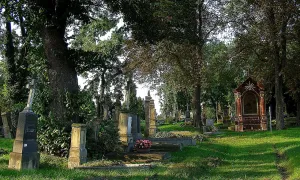
Real photos taken near the monument


Zdroj a licence jsou uvedeny u každého snímku.
Tips from visitors
No tips yet. Be the first!
Log in and add your tip.
Sources and literature
Photos: Czeva / CC BY-SA 3.0 — Wikimedia Commons. The author and licence also appear when you hover over the image.
Faktickým podkladem tohoto textu byl článek na Wikipedii, jehož autory jsou přispěvatelé Wikipedie. Článek je dostupný pod licencí CC BY-SA 4.0.
Location on the map
Příběhy a pověsti
Legendy, pověsti a příběhy spjaté s touto památkou
Fotografie návštěvníků
Zatím žádné fotografie. Buďte první, kdo přidá fotografii z návštěvy!
Log in a přidejte svou fotografii nebo hodnoťte.
Za ověřenou návštěvu v aplikaci získáte víc bodů — poznáme podle GPS, že jste na místě.
Reviews and comments