



Kostel svatého Jana Nepomuckého (Vrkoslavice) Church
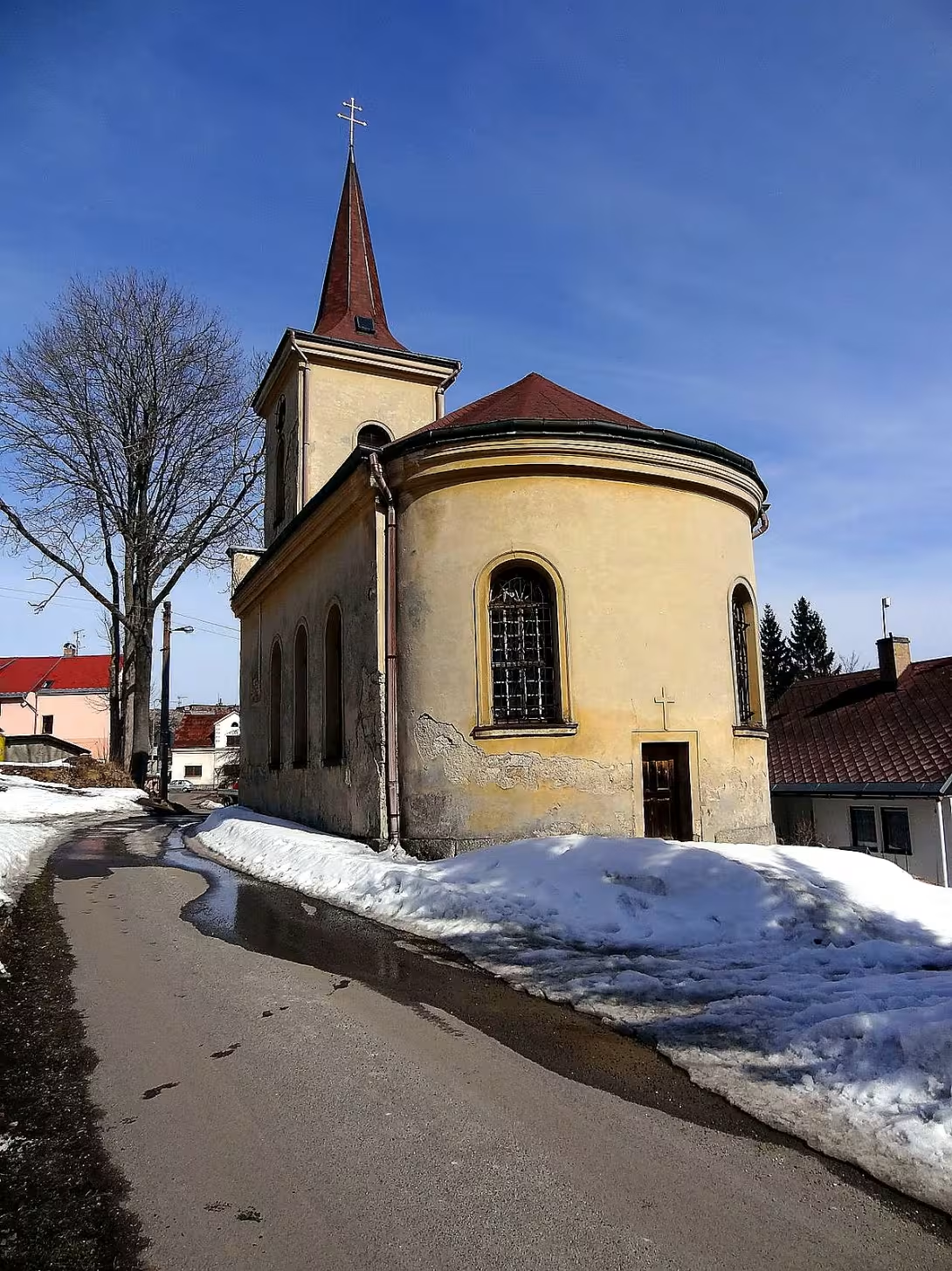
The church in Vrkoslavice is a sacral building dedicated to St. Jan Nepomukki. Originally served as a philic church of the Roman Catholic parish in the deanery of Jablonec nad Nisou in the liberal vicariate, but later he was transferred to the property of the Orthodox Church. At that time he also obtained the secondary initiation of the Mother of God. The building is sometimes referred to as a chapel in local sources, which is reflected in the name of the surrounding street "U Kála," although church resources promote it to the church.
The construction was built in the second half of the 19th century. The years 1867- 1871 are most commonly mentioned, although some sources show the construction from 1881. The exact dating remains uncertain.
Architecturally, it is a rectangular building with a semi-circular finish and a dominant tower in the western facade. The tower is covered by lisenas and supplemented by a rectangular portal. Particularly interesting are the semi-circular glass windows of the tower and the niche containing the statue of St. John Nepomuk from 1900. The side facades are decorated with three windows ending in half-circle. The interior is glazed with a segmental vault and is decorated with illusory pilasters with a mould and a ledge.
The inner furnishings of the church reflect its Catholic roots. The main altar is dedicated to St. John of Nepomuk and the church contains a statue of Christ Dopitel from the first half of the 19th century. The church was originally equipped with an organ from Trutnov organist Wenzel Lorenz, which dates back to 1900. Their configuration included Principal 8 ', Cover 8' and Octava 4 'on the manual, on the pedal then Bas 8'. After transferring the church to Orthodox Church in 2014, the organ was taken away.
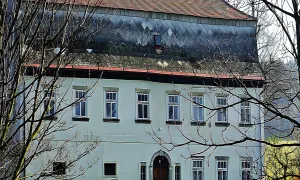
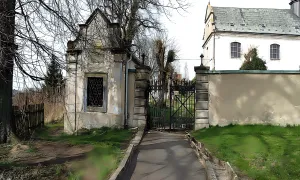
The church is not an isolated building. In its vicinity is a niche chapel, which is probably from the first half of the 19th century - it is a rectangular construction with columns and a semi-circular arch in the shield. There is also a rectory nearby, which also comes from the first half of the 19th century. The original rectangular structure was later extended by another rectangular element connected in the axis perpendicular to the original structure. On the ground floor there are oblong windows and a portal, on the floor it retains wooden Yona Pilasters and rectangular windows. The roof of the rectory is of the Mansard type.
Then and now
Drag the slider to compare how the landmark may have looked when it was built with the view today.
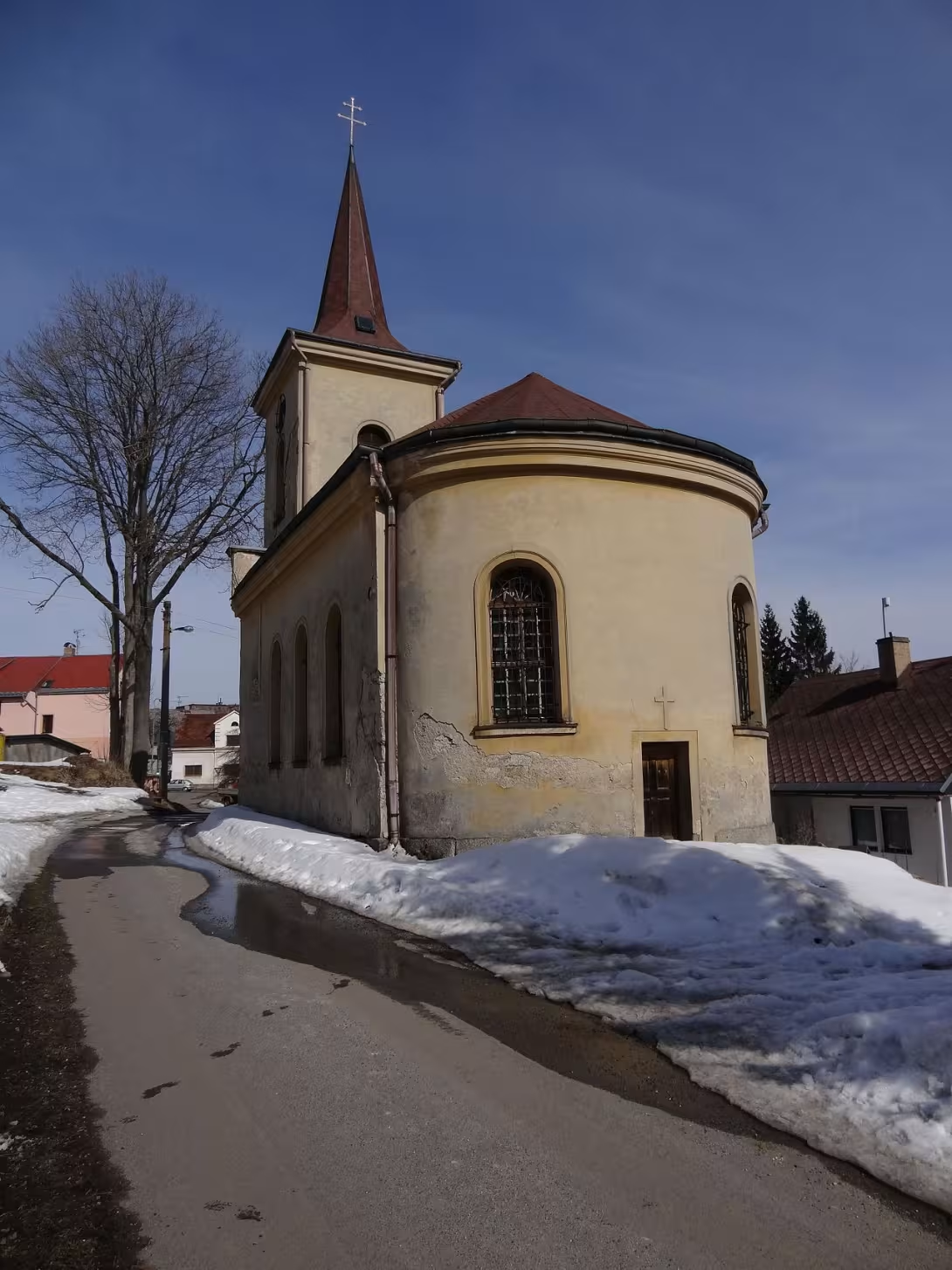

The historical appearance on the left is an AI-generated visualisation and serves as inspiration only.
Historical milestones
- 1867
- The official opening of the church as a Roman Catholic filial church.
- 1871
- The construction of St. John Nepomuk's church.
- 1900
- Delivery of nothing with a statue of St. John Nepomuk at the church tower.
- 2014
- Transfer of the church to the property of Orthodox Church and change of initiation to the Mother of God.
Architectural development
The church was built in 1867-1871 as a simple rectangular building with a semi-circular finish and a tower in the western facade. The tower is divided by lizenas, rectangular portals and semi-circular glazed windows. The interior is a glass segment vault with illusionary pilasters and friezes. In the first half of the 19th century, a nearby niche chapel and rectory were built, which are architecturally related. The church was built of stone and bricks, typical of historism.
Historical events
- 1867
- The beginning of the construction of the church as a Roman Catholic filial church in Vrkoslavice.
- 1900
- Location of nothing with a statue of St. John Nepomuk in the church tower.
- 2014
- Transfer of the church to the property of the Orthodox Church and change of initiation to the Mother of God.
Owners
Roman Catholic Church
Orthodox Church
Points of interest
- The church was originally a filial church of the Roman Catholic parish in the deanery of Jablonec nad Nisou, later moved into the possession of Orthodox Church and obtained secondary initiation of the Mother of God.
- Construction was established in the second half of the 19th century, the most frequently reported years 1867- 1871, but some sources refer to the year 1881.
- The tower of the church is covered by lizenas and contains a niche with a statue of St. John Nepomuk from 1900.
- In the interior there is a statue of Christ Dopitel from the first half of the 19th century and the original organ from organist Wenzel Lorence with registers Principal 8 ', Cover 8' and Octava 4 'on the manual, Bas 8' on the pedal.
- Close to the church stands a niche chapel and rectory from the first half of the 19th century, which was later extended by another part.
Guide
This guide is narrated by a synthetic voice generated by artificial intelligence.
Show guide text
This text was created by artificial intelligence and has not been editorially reviewed. It may contain inaccuracies.
The church in Vrkoslavicích is dedicated to Saint John of Nepomuk. Originally it was a Roman Catholic subsidiary church, which in terms of spiritual administration belonged to the parish of the deanery Jablonec nad Nisou in the Liberec vicariate. Later it was transferred to the ownership of the Orthodox Church and received a new dedication, namely to the Mother of God.
The building is sometimes referred to as a chapel. This is also where the street name U Kaple comes from. Church sources, however, classify it among churches. It was built between 1867 and 1871, though other records indicate the year 1881.
It is a rectangular building with a semicircular apse and a tower on the western façade. The tower is articulated with pilaster strips and has a rectangular portal, windows curved into a semicircle, and a niche with a statue of Saint John of Nepomuk from 1900. On the side façades there are three windows each with semicircular termination. The interior of the church is covered with a barrel vault. The walls are decorated with illusionistic pilasters, a frieze, and a cornice.
The altar is dedicated to Saint John of Nepomuk. The statue of the Suffering Christ dates from the first half of the nineteenth century. The church originally contained a small organ by the Trutnov organ builder Wenzel Lorenz. It was made before 1900 and had one manual with three stops and a pedal with one stop. When the church passed to the Orthodox Church in 2014, the organ was removed.
Not far from the church stands a recessed chapel, which apparently dates from the first half of the nineteenth century. It is rectangular, with columns and a semicircular arch in the gable. From the same period apparently dates the rectory. Originally it had a rectangular floor plan, and later another rectangular section was added to it perpendicularly along the axis. On the ground floor it has rectangular windows and a portal, on the upper floor wooden Ionic pilasters and likewise rectangular windows. The building is covered with a mansard roof.
Frequently asked questions
Can the monument be visited?
Religious buildings are usually open mainly during services; at other times a visit is normally arranged with the parish or the operator. We have not verified specific times.
Where is the monument?
Location: Vrkoslavice, Liberecký kraj. The map on this page shows the exact spot.
For kids
Imagine going back into the past to a time when the country was full of peace and tranquility. The city Vrkoslavice was a small town where people lived in harmony with nature. And among them stood the beautiful church of St. John Nepomuk.
It was like in a game when the door to your past opened and you could look at the people who lived here. At that time the church was a small temple where prayers and singing took place. People came from the surrounding villages to relax and ask God for protection and crops.
Businesses nearby
Do you run a restaurant, accommodation, shop, museum, rental, wellness or other visitor service near this monument? Show yourself directly to the people heading to it — this is how they will see you in the app and on the web:
Events nearby

Zdroj akcí: otevřená data měst a obcí ČR (Národní katalog otevřených dat) a kalendář akcí Národního památkového ústavu.
Accommodation nearby
Trips and activities nearby
Guided tours, tickets and activities nearby from GetYourGuide
Affiliate link: if you buy from the partner, we may receive a commission. The price for you does not change.
Search tours and activities →Themed route
Thematic cruise route: Baroque and Classicist treasures Vrkoslavic
1. St. John Nepomuk Church * Type: * Sacral building, Baroque church from 1745. * Why visit? * Unique architecture with rich interior decoration connecting folk and artistic tradition. The exterior facade with pilasters and shield is a typical example of 18th century regional sacral architecture.
2. Envelope Chapel * Type: * Small semi-circular end chapel from the 1st half of the 19th century. * Why visit? * A modest but typical example of rural sacral architecture, which shows how religious architecture has adapted to smaller communities. Located in the immediate vicinity of the church, so it is an ideal supplement for the overall impression.
3. Fara in Vrkoslavice * Type: * Classicist building with Mansard roof and wooden Yonian Pilasters. * Why visit? * Originally a simple rectory, later expanded, shows the development of rural development. The interior with pilasters refers to the classicist influences that were reflected in smaller objects in the region.
* The route is designed so that the visitor gradually explores the sacral and civic architecture of the village, all points connected with each other by short walking paths. *
Seasonal recommendations
Spring In the spring months, St. John Nepomuk's Vrkoslavický church is dressed in green robes when nature wakes up around him - meadows flourish and forests turn into brighter tones. The morning sun penetrates through the stained glass and creates a light game on the stone walls, while the interior has a quiet, almost intimate atmosphere. The sound environment is also specific: the singing of birds and the noise of the wind in the trees is complemented by the silence of the church, which is visited mainly by local residents and peace lovers. Practical advice: the best time to visit is early in the morning or in the afternoon when the church is less visited. Comfortable shoes are recommended, because after rainy spring days the roads to the memory can be muddy. A warmer outfit is also suitable, as evenings are cold, and bring a small umbrella - spring weather is variable.
Summer In the summer months the church offers a unique combination of historical atmosphere and lively rural landscape. The sun shines directly into the interior, where warm shades are reflected on the walls, while outside the visitors are attracted by surrounding trees and green surroundings. In the main summer season the church is visited more often by tourists who enjoy walking around the area and it is therefore advisable to come early in the morning to avoid crowds. Practical advice: is recommended light, but the sun's clothing and hat or hat, because the noon sun can be intense. It is cold in the interior, so wear a light sweater or scarf. Water in the area is often available, but still take a bottle, especially during long walks. Comfortable shoes are also suitable, as they walk comfortably on dry summer paths.
Autumn Autumn brings a magical atmosphere to Vrkoslavice where St. John Nepomuk's church becomes part of a golden landscape picture. The woods are dyed in red, orange and yellow tones, while the church has a quiet, almost meditative mood. The evening sun penetrates through the stained glass and creates fine shadows on the stone walls that supply the interior with a mysterious character. The sound environment is also specific: the rustling of deciduous leaves and distant bells from surrounding villages complement the silence of the church. Practical advice: at this time the weather is cold and wet, so wear warm but comfortable clothes to protect you from the winds. Fixed shoes are also recommended, because after rainy days the paths can be slippery. The best time to visit is in the afternoon when the light is softer and the church is often almost empty.
Winter The winter visit to St. John Nepomuk's church is a unique experience, when the monument becomes a peaceful hiding place from the freezing outdoor environment. The snow covers the surrounding landscape and creates a white background while the interior has a warm and cozy atmosphere. The sun shines only briefly through the stained glass, but its light gives the church a special spell. In winter, the church is often visited by locals who come here for peace and quiet. Practical advice: warm but non-restrictive clothing is suitable to protect you from freezing. Solid footwear with anti-slip soles is also recommended as the roads can be frozen. The best time to visit is this afternoon when there are fewer people out there and the light is more pleasant.
Visualizations and artistic views


The visualisations are generated by artificial intelligence and serve as inspiration.
Photos from the area
Real photos taken near the monument


Zdroj a licence jsou uvedeny u každého snímku.
Atmosphere of the place
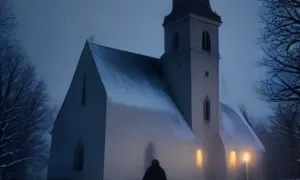
This atmospheric visualisation of the place and period was generated by artificial intelligence. It is not real footage of the location.
Tips from visitors
No tips yet. Be the first!
Log in and add your tip.
Sources and literature
Photos: MartinVeselka / CC BY-SA 4.0 — Wikimedia Commons. The author and licence also appear when you hover over the image.
Faktickým podkladem tohoto textu byl článek na Wikipedii, jehož autory jsou přispěvatelé Wikipedie. Článek je dostupný pod licencí CC BY-SA 4.0.
Location on the map
Příběhy a pověsti
Legendy, pověsti a příběhy spjaté s touto památkou
Fotografie návštěvníků
Zatím žádné fotografie. Buďte první, kdo přidá fotografii z návštěvy!
Log in a přidejte svou fotografii nebo hodnoťte.
Za ověřenou návštěvu v aplikaci získáte víc bodů — poznáme podle GPS, že jste na místě.
Reviews and comments