



kostel svatého Jiljí (Komárov) Church
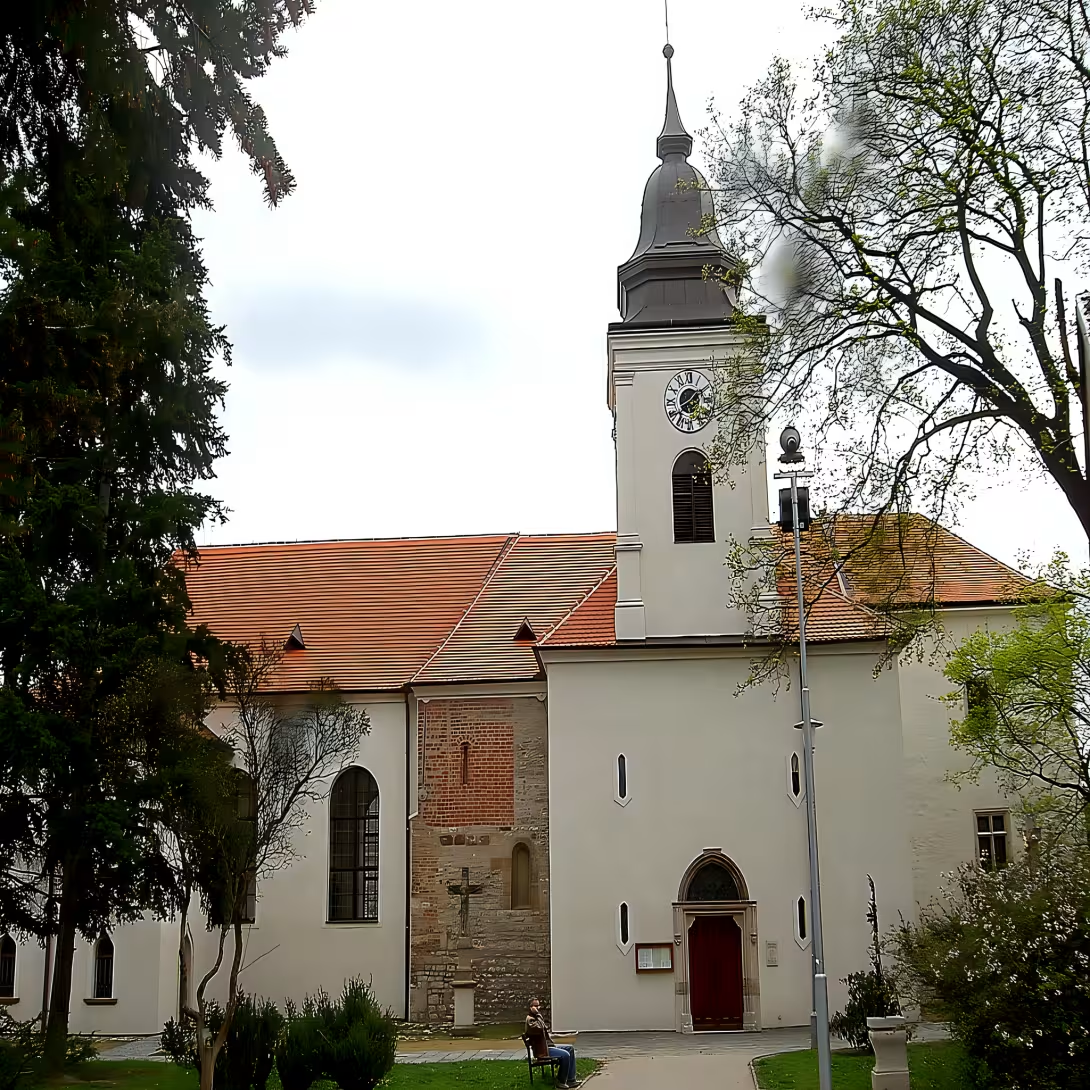
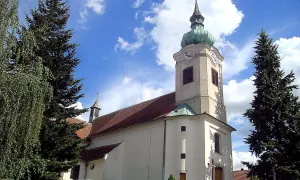
Holy Church Jilji is located in the Brno district of Komárov on the territory of the Brno-south district, specifically in Černovická Street. It is one of the oldest functional buildings in Brno and is protected as a cultural monument of the Czech Republic.
At the end of the 12th century, the Roman temple was built on the site of an older chapel dedicated to St. Gilya. The church belonged to the order of benedictines, which by 1220 built a residential tower on the western front. Around the temple there was a monastery taking up the place of today's gardens between the church and the street of Lužna. Archaeological research conducted by the Brno City Museum led by Dr. Dana Cejnková showed that the Benedict monastery, known as Porta Dei (Gate of God), was established during the 12th century and disappeared in 1527.
In the following centuries the church passes through many metamorphoses. After 1350 the east wall was torn down and added a gothic choir with a presbytery. After the 30-year war, the original Romanesque ship was encapsulated in Baroque style and created large new windows. From the original романsk building until today, there is only one small window in the north wall. At the end of the 18th century, on the occasion of the establishment of the mosquito parish, the building was given a new tower. In 1854 the chapel of the sacristy of reconciliation was added, originally designated as sacristy, and in the 19th century the church underwent further neo-gothic modifications.
The largest renewal took place between 1997 and 2004 when static collateral, dehumidification, roof replacement, reconstruction of roofing and facades, modernization of electrical installation and restoration of internal and external stone elements were carried out. The mobiliary was also restored so that it corresponded liturgically and artistically to the beginning of the third millennium.
The church is also connected to Baroque pilgrimage. From the mosquito meadow, pilgrims left for Mariazell, while local parishioners gathered to pray for their safe return. On their arrival, there was a feast with bread and cakes called pie feast. This tradition was attended by Emperor František II. with his wife in 1834. The ceremony was renewed in 1996 as amended.
In the church you can also see a concrete from an unknown gypsum cycle located during Christmas time on the left side of the presbytery. Bethlehem is open to the public on 25 December and 1 January from 14 to 18 hours. The church of St. Gilji is a place where architectural and spiritual history of Brno meets.
Then and now
Drag the slider to compare how the landmark may have looked when it was built with the view today.
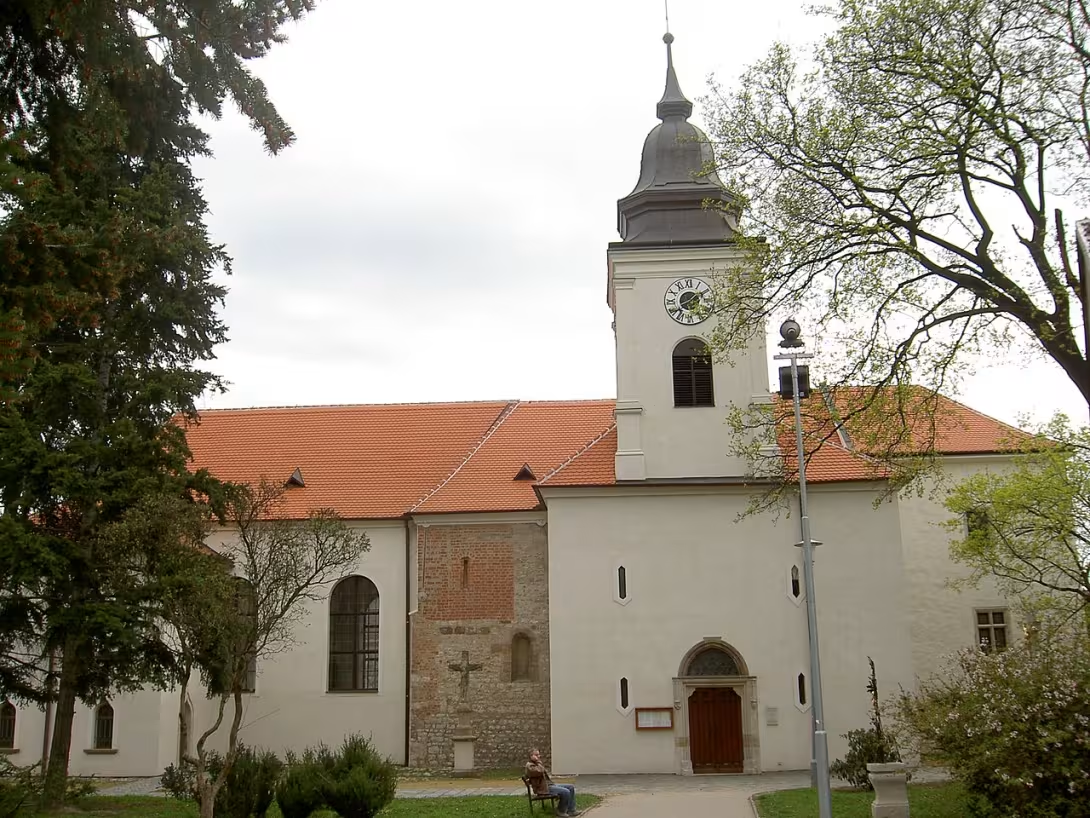
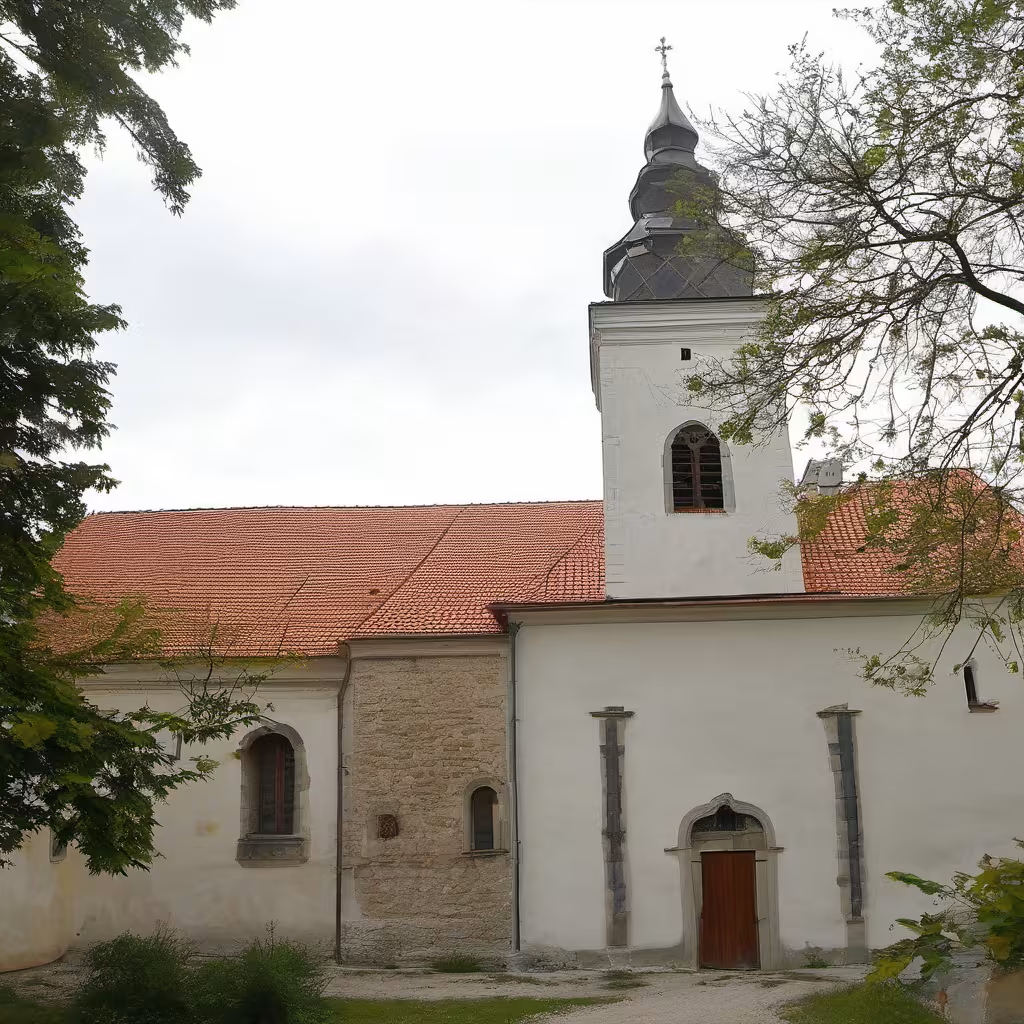
The historical appearance on the left is an AI-generated visualisation and serves as inspiration only.
Historical milestones
- End of the 12th Century
- Status of the original Romanesque church
- before 1220
- Adding the residential tower to the west facade
- po 1350
- Adding the Gothic choir and presbytery
- 1527
- The demise of the Benedict monastery
- 1834
- Visit of emperor Franz Joseph II at the Festival of the Pie Festival
- 1854
- Addition of the Chapel of Sacrament of Reconciliation
- 1997-2004
- Extensive reconstruction and stability of the church
Architectural development
The original Romanesque building was expanded with a new choir and presbytery. After the 30-year war, the baroque treatment took place with a new clenching and windows. In the 19th century, the church was remodeled in a neo-gothic way and in 1854 the chapel of the sacrament of reconciliation was added.
Historical events
The position of the original Romanesque church at the end of the 12th century; Adding the Gothic choir and presbytery after 1350; Zanik Benedict monastery in 1527; Large reconstruction in 1997- 2004.
Owners
Benedict Order (until 1527)
Points of interest
- It is one of the oldest functional structures in Brno. - At the site used the Benedict monastery Porta Dei, which originated in the 12th century and died in 1527. - The original Romanesque building has until today preserved the only small window in the north wall. - In 1834, Emperor František II. and his wife took part in the tradition of pie festival. - During the Christmas period, there is a nativity of an unknown gypsum cycle in the church.
Guide
This guide is narrated by a synthetic voice generated by artificial intelligence.
Show guide text
This text was created by artificial intelligence and has not been editorially reviewed. It may contain inaccuracies.
You will find the Church of Saint Egidius in the Komárov district of Brno, on the territory of the Brno-South city section in Černovická street. It belongs to the oldest buildings in Brno that still serve their original purpose today, and it is protected as a cultural monument.
The original Romanesque church was built at the end of the twelfth century in the village of Luh, as the present-day Komárov was called back then. It was constructed on the site of an older chapel dedicated to Saint Egidius. The church belonged to the Benedictines, who added a residential tower to its western façade by the year twelve twenty. It was part of a monastery that bore the name Porta Dei, meaning the Gate of God. The monastery was located in the area of today's gardens between the church and Lužná street. It was founded in the twelfth century and disappeared in fifteen twenty-seven. Its remains were uncovered by archaeologists from the Brno City Museum. During an investigation in nineteen seventy-six, the remains of the original chapel were also discovered, which were then covered up again.
Over the centuries, the building underwent significant changes. After thirteen fifty, the eastern wall was torn down and the church received a Gothic choir with a presbytery. After the Thirty Years' War, the Romanesque nave was given a Baroque vault and large windows were cut into the walls as they are today. The only preserved Romanesque window is in the northern wall. The tower dates from the end of the eighteenth century, when the Komárov parish was established and the church underwent further modifications. In eighteen fifty-four, a sacristy was added, which today serves as the chapel of the sacrament of reconciliation. During the nineteenth century, the church was further modified in the Neo-Gothic style.
Between nineteen ninety-seven and two thousand and four, the church underwent major reconstruction. The building was structurally secured and dried out. It received new roof trusses, roof coverings for the towers, new façades and electrical installation, and stone elements were restored both inside and outside. The furnishings were also restored to match the liturgical and artistic standards of the beginning of the third millennium.
An interesting tradition is also connected with the church. During the Baroque period, pilgrims would depart from the Komárov meadow heading to Mariazell. While they were on their way, the Komárov parishioners would gather for prayers. On the day of Saint Egidius, they would welcome the returning pilgrims with bread and pastries, and from this comes the name Pastry Festival. In eighteen thirty-four, Emperor Francis the Second and his wife attended it on the eve of the festival. The celebration was revived in modified form in nineteen ninety-six.
At Christmas, a nativity scene with plaster figurines by an unknown author is displayed in the main nave on the left side of the presbytery.
Tips for visitors
The best time to visit the church of St. Jilje in KomárovA is an early spring or late autumn day when the weather is quiet and the temperature is pleasant. This period offers ideal conditions for exploring historic buildings without excessive sunlight or heat.
The current connection can be found in the online search engine.
When visiting the Holy Church Jilji will wear a suitable suit because the room will probably be cold. In addition, we recommend handbags or backpacks for hiding electronic devices and sun protection.
Photography of the church of St. Jilji offers many possibilities. The best light is usually in the early morning or late afternoon when shading and lighting is best reflected. The garden around the church and the remains of the Benedict monastery also offers special views.
In the surroundings of Komárova it is possible to visit the mosquito meadow, which is an ideal place for relaxation in nature. For families with children, this place is particularly suitable because it offers space for playing and exploring nature in a quiet environment.
Frequently asked questions
Can the monument be visited?
Religious buildings are usually open mainly during services; at other times a visit is normally arranged with the parish or the operator. We have not verified specific times.
Where is the monument?
Location: Komárov, Jihomoravský kraj. The map on this page shows the exact spot.
Why is the monument protected?
It is listed in the Central List of Cultural Monuments of the Czech Republic as a cultural monument (register no. 1000128467).
For kids
Imagine going back to the past in the Middle Ages. The place where the small town of Komárov now lies was once a bloated village. Hell knows what you could see and hear at the time!
It was like a big game where everyone played their parts. Where there were gardens full of wonderful fruits, where rivers of delicious water flowed and where there were massive trees that protected the village from the wind.
Businesses nearby
Do you run a restaurant, accommodation, shop, museum, rental, wellness or other visitor service near this monument? Show yourself directly to the people heading to it — this is how they will see you in the app and on the web:
Events nearby


Zdroj akcí: otevřená data měst a obcí ČR (Národní katalog otevřených dat) a kalendář akcí Národního památkového ústavu.
Nearby
The remains of the Benedict monastery and the mosquito meadow.
Accommodation nearby
Trips and activities nearby
Guided tours, tickets and activities nearby from GetYourGuide
Affiliate link: if you buy from the partner, we may receive a commission. The price for you does not change.
Search tours and activities →Themed route
1. Remains of the Benedict Monastery (Historical Place) - Discover traces of the ancient monastery existence that shaped the history of this place. 2. Church of St. Jilji (Komárov) (Sacral monument) - The main destination of the trip, which you will enjoy with its architecture and spiritual peace. 3. Komárov meadow (Natural location) - An ideal place to relax and enjoy the quiet atmosphere in the open landscape.
Seasonal recommendations
In spring, the church surrounds the awakening nature and fresh green, which contrasts beautifully with the facade of the temple. Soft spring light is ideal for observing the details of the building in peace. We recommend to dress more layers of clothing because the weather is variable, and visit the place in the morning when the air is the cleanest.
The summer season brings intense sun and rich colors surrounding the countryside. The atmosphere is full of energy, but inside the church you will find pleasant cold and quiet. Due to high season and high attendance, it is best to arrive first thing in the morning to avoid the biggest crowds. Don't forget light, breathable clothing and sun protection.
The autumn visit is accompanied by golden leaves and often fog wounds, which give the monument a mysterious and melancholy mood. Low sun creates long shadows and dramatic lighting, which is very grateful for photography. Due to frequent collisions, select waterproof shoes and plan to arrive in the second half of the day.
In winter the church is very intimate and quiet, especially if the landscape is covered with snow. In Advent Time there is a special room and quiet. It is necessary to wear warm winter clothes and to verify in advance the opening times which are shorter during this period than in the other parts of the year.
Visualizations and artistic views


The visualisations are generated by artificial intelligence and serve as inspiration.
Photos from the area
Real photos taken near the monument

Zdroj a licence jsou uvedeny u každého snímku.
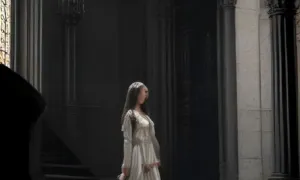
Atmosphere of the place
This atmospheric visualisation of the place and period was generated by artificial intelligence. It is not real footage of the location.
Tips from visitors
No tips yet. Be the first!
Log in and add your tip.
Sources and literature
Photos: Dezidor / CC BY 3.0, rozlišení zvýšeno umělou inteligencí — Wikimedia Commons. The author and licence also appear when you hover over the image.
Faktickým podkladem tohoto textu byl článek na Wikipedii, jehož autory jsou přispěvatelé Wikipedie. Článek je dostupný pod licencí CC BY-SA 4.0.
Location on the map

Příběhy a pověsti
Legendy, pověsti a příběhy spjaté s touto památkou
Fotografie návštěvníků
Zatím žádné fotografie. Buďte první, kdo přidá fotografii z návštěvy!
Log in a přidejte svou fotografii nebo hodnoťte.
Za ověřenou návštěvu v aplikaci získáte víc bodů — poznáme podle GPS, že jste na místě.
Reviews and comments