






kostel svatého Jiljí (Moutnice) Church
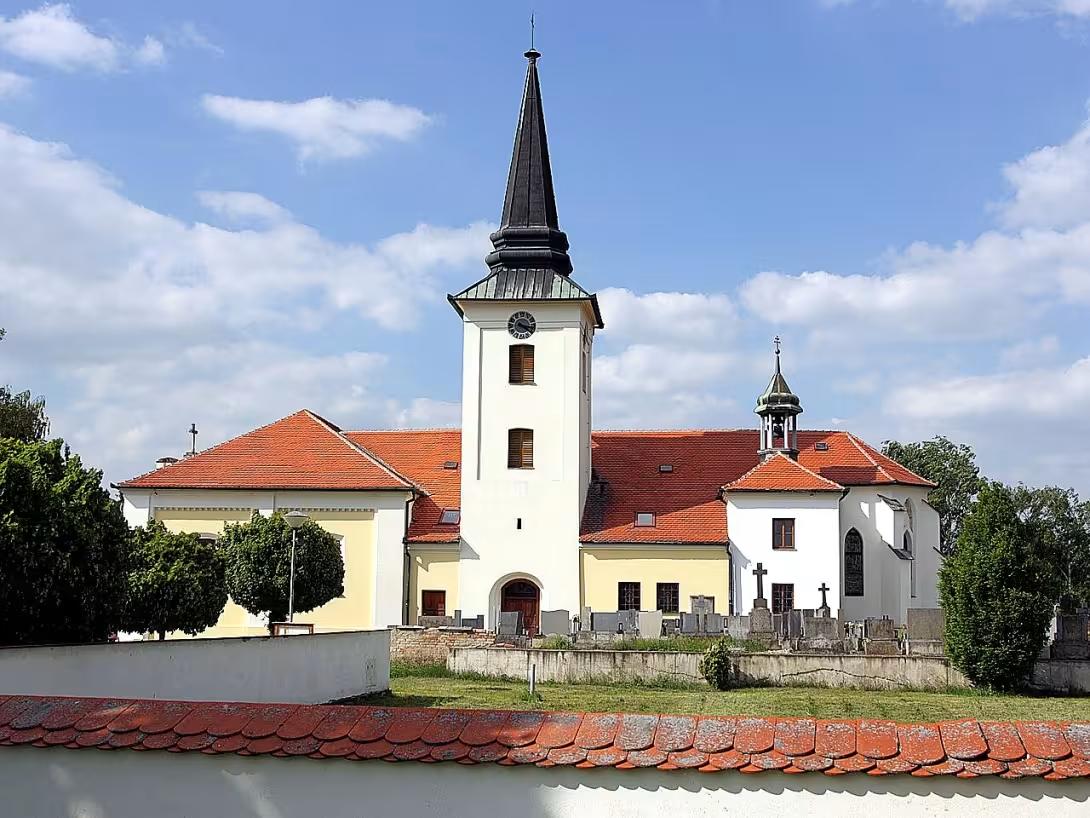
The Church of Saint Giles in Moutnice is a Romanesque church with Gothic modifications, located in the Jihomoravský kraj region. It serves as the parish church for the local community and holds cultural significance as it is protected as a monument of the Czech Republic. The core structure dates back to the late 13th century, reflecting its historical importance.
The origins of the Church of Saint Giles trace back to the late Romanesque period, with initial construction in the late 13th century. Historical records show that King Václav II granted patronage to the Dominican nuns at St. Anne's Convent in Old Brno on June 3, 1298, marking a significant moment in its early history. This era saw the flourishing of Romanesque architecture across Europe before transitioning into the Gothic style.
Architecturally, the church began as a late Romanesque structure with preserved walls of the nave and part of the presbytery. In the second half of the 14th century, it underwent significant Gothic modifications, including a new polygonal chancel and a tower on the south-eastern side of the nave. The church continued to evolve; in 1697, a sacristy was added following authorization from Olomoucká konzistoř. Further enhancements included an oratory built by Franz Diebl in 1851 and major expansions in 1867 that introduced a new three-aisled nave in an eclectic style.
Ownership and administration of the church have seen various influential figures over time. Initially, patronage was granted to the Dominican nuns at St. Anne's Convent in Old Brno by King Václav II. Later patrons included the Neuwald family and local religious figures such as Jan Josef Křenek, who played a role in its development.
Several key events have marked the history of the Church of Saint Giles. In 1867, during significant renovations, the church's tower was heightened and covered with red-tarred shingles. A cornerstone laying ceremony on April 1, 1867, involved placing a special parchment document inside it, along with other items from that era. The church has also been the site of various restorations, including one in 1825 funded by the Neuwald family and another comprehensive renovation in the mid-19th century.
Today, the Church of Saint Giles stands as a testament to its rich history and architectural evolution. It remains accessible to visitors interested in exploring its historical significance and architectural beauty. The surrounding cemetery adds to the serene atmosphere, making it a worthwhile destination for those keen on delving into the cultural heritage of southern Moravia.
The Church of Saint Giles is not only an architectural marvel but also a symbol of the region's historical narrative. Its preservation as a cultural monument underscores its importance in Czech history. Visitors are invited to explore this remarkable site and appreciate its enduring legacy.
Then and now
Drag the slider to compare how the landmark may have looked when it was built with the view today.
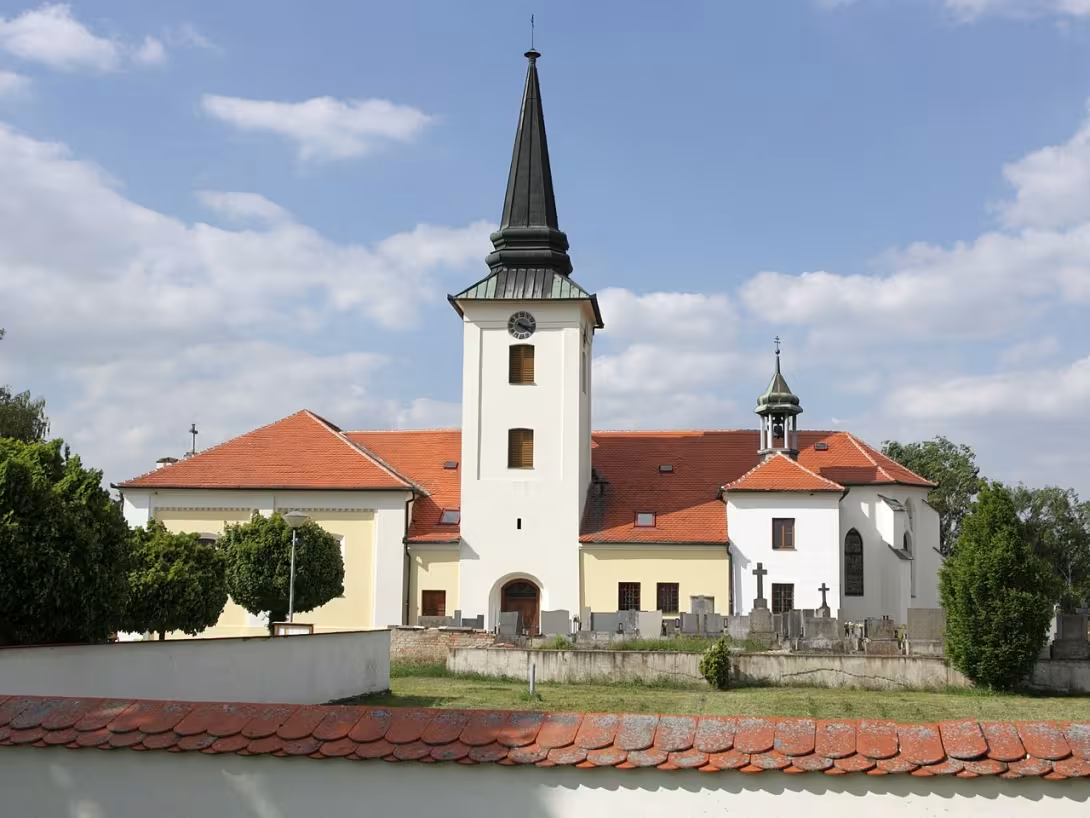

The historical appearance on the left is an AI-generated visualisation and serves as inspiration only.
Historical milestones
- 1298
- King Václav II granted patronage to the Dominican nuns at St. Anne's Convent in Old Brno.
- 1696
- Olomoucká konzistoř authorized the addition of a sacristy by the Dominicans residing in Těšany.
Architectural development
The church began as a late Romanesque structure with preserved walls of the nave and part of the presbytery. In the second half of the 14th century, it underwent Gothic modifications including a new polygonal chancel and a tower on the south-eastern side. Further changes occurred in the 17th to 19th centuries, such as the addition of an oratory by Franz Diebl in 1851 and significant expansions in 1867.
Historical events
- 1298
- King Václav II granted patronage to the Dominican nuns at St. Anne's Convent in Old Brno.
- 1697
- A sacristy was added to the church, authorized by Olomoucká konzistoř.
Owners
The patronage was initially granted by King Václav II in 1298 to the Dominican nuns at St. Anne's Convent in Old Brno. Later, it came under the influence of various patrons including the Neuwald family and local religious figures.
Points of interest
- The cornerstone of the Church of Saint Giles was laid on April 1, 1867, and inside it, a parchment document from that era was placed along with other contemporary items, serving as a time capsule for future generations.
- In 1697, the church received authorization from Olomoucká konzistoř to add a sacristy, indicating its significance within the ecclesiastical hierarchy of the region during that period.
- The Neuwald family played a pivotal role in the church's history by funding restoration work in 1825, showcasing their influence and commitment to preserving local heritage.
- Architecturally unique, the church features a blend of Romanesque foundations with Gothic modifications from the late 14th century, including a polygonal chancel and an eclectic three-aisled nave added in 1867.
- The Church of Saint Giles was granted patronage by King Václav II to the Dominican nuns at St. Anne's Convent in Old Brno on June 3, 1298, marking an early significant connection between the church and royal authority.
Guide
This guide is narrated by a synthetic voice generated by artificial intelligence.
Show guide text
This text was created by artificial intelligence and has not been editorially reviewed. It may contain inaccuracies.
Welcome to the Church of Saint Giles in Moutnice, a remarkable testament to history nestled within the Jihomoravský kraj region. As you stand before this architectural gem, take a moment to absorb its serene presence and imagine the centuries it has witnessed.
The origins of this church trace back to the late 13th century, marking an era rich with historical significance. It was during this time that King Václav II granted patronage to the Dominican nuns at St. Anne's Convent in Old Brno, a pivotal moment that laid the foundation for the church’s enduring legacy.
As you observe its structure, notice how it harmoniously blends Romanesque and Gothic elements—a testament to its architectural evolution over time. The addition of a sacristy authorized by Olomoucká konzistoř in 1696 reflects the ongoing care and adaptation by those who cherished this sacred space.
Among the historical figures associated with this church is Jan Josef Křenek, whose contributions have left an indelible mark on its story. Their efforts are woven into the very fabric of this place, inviting you to explore deeper connections with its past.
One intriguing aspect of the Church of Saint Giles is its cornerstone, laid on April 1, 1867. Within it lies a parchment document from that era, along with other contemporary items—a time capsule intended for future generations. Imagine the stories and secrets it holds, waiting to be discovered by those who seek them.
As you continue your exploration, let yourself be drawn into the church’s atmosphere, where history whispers through every stone and beam. This cultural monument is not just a building; it's a living narrative of faith, community, and resilience.
We invite you to delve further into its mysteries, perhaps uncovering more than what meets the eye. Thank you for visiting this cherished site, and may your journey here inspire a deeper appreciation for the stories etched in time.
Frequently asked questions
Can the monument be visited?
Religious buildings are usually open mainly during services; at other times a visit is normally arranged with the parish or the operator. We have not verified specific times.
Where is the monument?
Location: č.p. 21, Moutnice, Jihomoravský kraj. The map on this page shows the exact spot.
Why is the monument protected?
It is listed in the Central List of Cultural Monuments of the Czech Republic as a cultural monument (register no. 15588/7-839).
Businesses nearby
Do you run a restaurant, accommodation, shop, museum, rental, wellness or other visitor service near this monument? Show yourself directly to the people heading to it — this is how they will see you in the app and on the web:
Nearby
Surrounding the church is a cemetery. The area features natural landscapes typical of southern Moravia and nearby historical sites such as Rožáry.
Accommodation nearby
Trips and activities nearby
Guided tours, tickets and activities nearby from GetYourGuide
Affiliate link: if you buy from the partner, we may receive a commission. The price for you does not change.
Search tours and activities →Themed route
Thematic Tour Itinerary: Moutnice and Surroundings
1. Church of Saint Giles (Moutnice) - Type: Historical Church - Why Visit: The Church of Saint Giles is the centerpiece of this tour, offering a glimpse into the architectural beauty and spiritual heritage of southern Moravia. Its serene atmosphere makes it an ideal starting point for exploring the region's rich history.
2. Moutnice Cemetery - Type: Historical Cemetery - Why Visit: Surrounding the Church of Saint Giles is a cemetery that provides insight into local traditions and historical narratives through its tombstones and memorials. Walking among these markers offers a reflective experience, connecting visitors with past generations who lived in this area.
3. Rožáry - Type: Historical Site - Why Visit: Located nearby, Rožáry is an intriguing site that complements the historical narrative of Moutnice. It features remnants of ancient structures and artifacts that offer a deeper understanding of the region's past civilizations and their way of life.
This itinerary offers a concise yet enriching exploration of Moutnice’s cultural and historical landscape, ensuring visitors gain a comprehensive appreciation of this charming part of southern Moravia.
Seasonal recommendations
Spring: Visiting the Church of Saint Giles (Moutnice) during spring offers a serene experience as nature awakens, with blossoming flowers and fresh greenery surrounding the historic site. The soft morning light enhances the church's architectural details, creating an ideal atmosphere for photography enthusiasts. As you explore, be mindful that this is a popular time for outdoor activities; consider visiting early in the day to avoid larger crowds. Dress comfortably in layers to accommodate fluctuating temperatures typical of spring weather.
Summer: Summer at the Church of Saint Giles (Moutnice) provides vibrant natural beauty with lush landscapes and clear skies, making it perfect for those who appreciate picturesque settings. However, this peak tourist season means higher visitor numbers, so arriving early can help you enjoy a more tranquil experience. The church may be busier during weekends, so plan accordingly if you prefer quieter visits. Wear light, breathable clothing to stay comfortable in the warm weather and bring sunscreen for protection.
Autumn: Autumn transforms the Church of Saint Giles (Moutnice) into a stunning canvas of reds, oranges, and yellows as the foliage changes color. The cooler temperatures offer a more relaxed atmosphere compared to summer crowds, making it an excellent time for leisurely exploration. The soft autumn light adds warmth to the church’s historic features, enhancing its charm. Dress in layers to adjust to varying weather conditions, and consider visiting on weekdays when there are fewer visitors.
Winter: Winter at the Church of Saint Giles (Moutnice) presents a quiet and contemplative atmosphere with snow-covered surroundings that add a magical touch to the site's historical ambiance. The shorter daylight hours mean earlier closures, so plan your visit in advance to maximize time spent exploring. It’s advisable to dress warmly in layers and wear comfortable shoes for walking on potentially icy paths. Although visitor numbers are generally lower, the church may host special events during festive seasons that could attract more people.
Visualizations and artistic views


The visualisations are generated by artificial intelligence and serve as inspiration.
Photos from the area
Real photos taken near the monument

Zdroj a licence jsou uvedeny u každého snímku.
Tips from visitors
No tips yet. Be the first!
Log in and add your tip.
Sources and literature
Photos: RomanM82 / CC BY-SA 3.0 — Wikimedia Commons. The author and licence also appear when you hover over the image.
Faktickým podkladem tohoto textu byl článek na Wikipedii, jehož autory jsou přispěvatelé Wikipedie. Článek je dostupný pod licencí CC BY-SA 4.0.
Location on the map




Příběhy a pověsti
Legendy, pověsti a příběhy spjaté s touto památkou
Fotografie návštěvníků
Zatím žádné fotografie. Buďte první, kdo přidá fotografii z návštěvy!
Log in a přidejte svou fotografii nebo hodnoťte.
Za ověřenou návštěvu v aplikaci získáte víc bodů — poznáme podle GPS, že jste na místě.
Reviews and comments