






kostel svatého Jiljí (Platěnice) Church
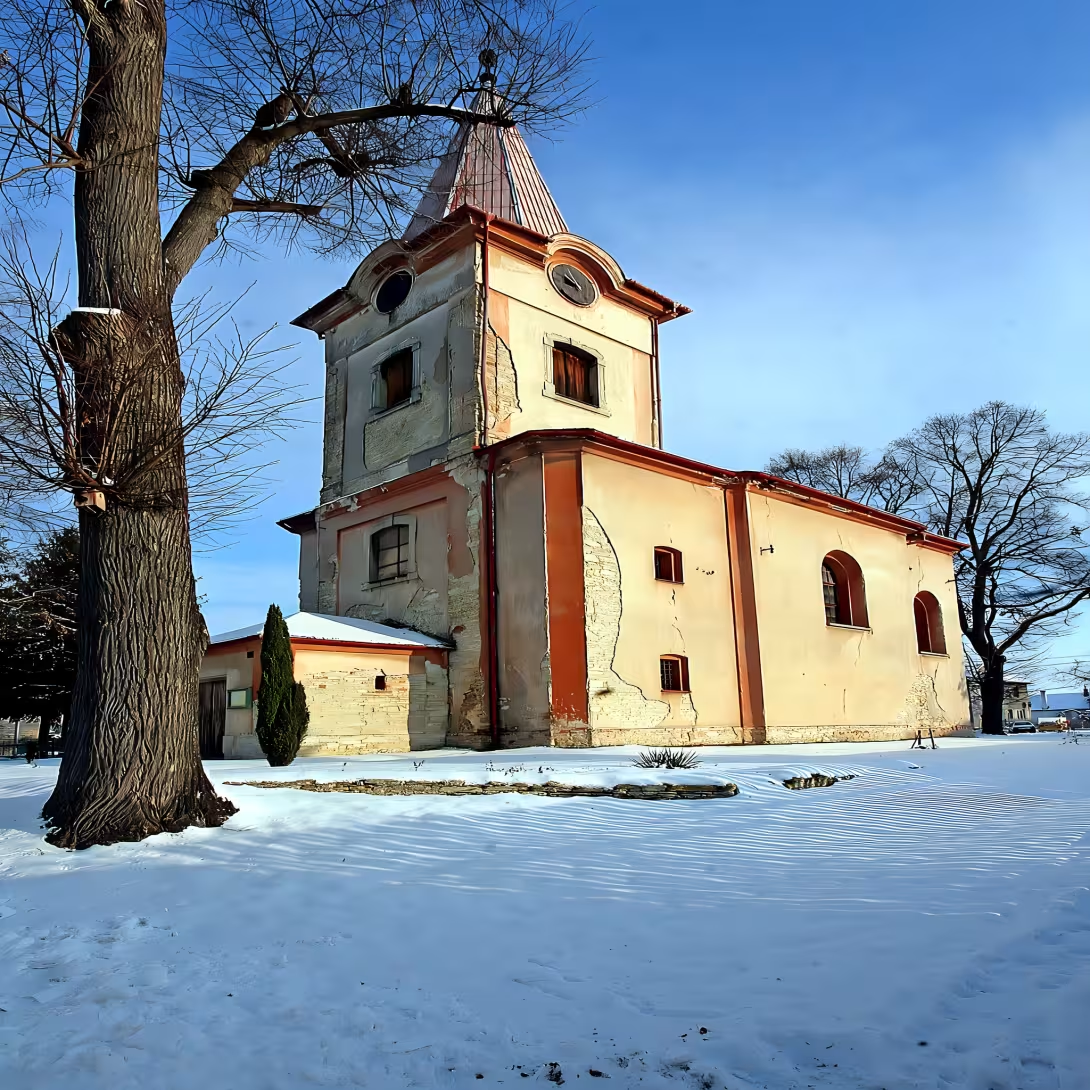
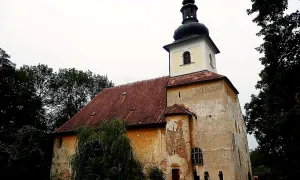
The Church of Saint Giles in Platěnice is a notable Baroque church located in the village of Platěnice, part of Moravany in Pardubice District. Recognized as a cultural monument, it stands on the site of an earlier wooden structure and was constructed in 1748 according to plans by architect Tomáš Haffenecker. This church is significant for its architectural style and historical and cultural value within the region.
The earliest documented mention of the Church of Saint Giles dates back to 1350 when it was listed among parishes transferred to the bishopric of Litomyšl. By 1615, records indicate that it served as a filial church under Rovná. The current Baroque structure replaced an older wooden church in 1748, reflecting mid-18th-century architectural trends and cultural influences when Bohemia was part of the Habsburg Monarchy.
Architecturally, the Church of Saint Giles features a distinctive orientation with a presbytery, nave, and tower housing a gallery. The building includes plastered bases, subtly profiled cornices, and pilasters at corner niches. Its design incorporates a bell tower with a gallery, a sacristy measuring 2.80 meters in length and 2 meters in width, and windows with semi-circular arches that illuminate both the nave and presbytery.
The church underwent modifications in the 19th century, enhancing its historical significance. The main altar is adorned with a wooden mensa painted to resemble marble, featuring a Rococo sanctuary above it. Central to this ensemble is an image of Saint Salvator from Chrudim. Flanking the altar are two Corinthian columns topped with angel figures, supporting an image of kneeling Saint Giles. Additional artistic elements include "good shepherd" motifs and depictions of evangelists on the pulpit.
Today, the Church of Saint Giles remains a filial church under the Roman Catholic parish of Horní Roveň. Its rich history and architectural beauty make it a worthwhile destination for visitors interested in exploring Bohemian Baroque art and heritage. The church's preservation as a cultural monument ensures that its historical significance continues to be appreciated by future generations.
Then and now
Drag the slider to compare how the landmark may have looked when it was built with the view today.
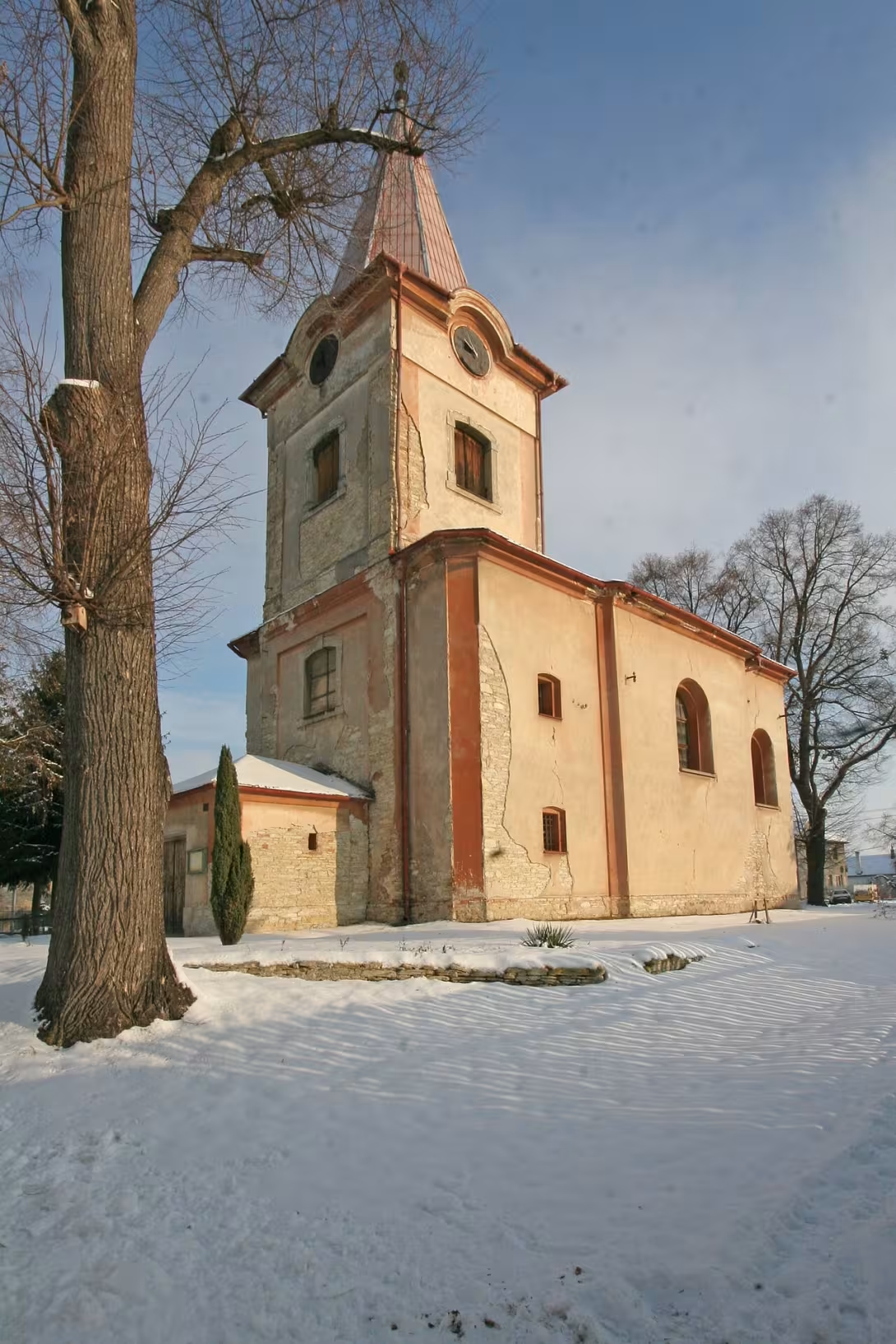

The historical appearance on the left is an AI-generated visualisation and serves as inspiration only.
Historical milestones
- 1748
- Construction of the current baroque church began.
Architectural development
The current baroque structure replaced an earlier wooden church in 1748, designed by Tomáš Haffenecker. The church underwent modifications in the 19th century and features elements such as a bell tower with gallery, a sacristy, and windows with semi-circular arches that illuminate both the nave and presbytery.
Historical events
- 1350
- The church was first mentioned in documents as part of the parishes transferred to the bishopric of Litomyšl.
- 1615
- It is recorded as a filial church under Rovná.
Points of interest
- The Church of Saint Giles was initially mentioned as part of a parish transfer to the bishopric of Litomyšl in 1350, highlighting its long-standing ecclesiastical significance.
- Before the current Baroque structure, an earlier wooden church occupied the site, indicating that the location has been a spiritual center for centuries.
- Architecturally, the church features a unique combination of plastered bases and subtly profiled cornices with pilasters at corner niches, reflecting mid-18th-century Bohemian design influences under Habsburg rule.
- The main altar includes Rococo elements, such as Corinthian columns topped with angel figures, showcasing the artistic trends that influenced church decoration in this era.
- In the 19th century, modifications were made to the church, enhancing its historical value and ensuring its preservation for future generations.
Guide
This guide is narrated by a synthetic voice generated by artificial intelligence.
Show guide text
This text was created by artificial intelligence and has not been editorially reviewed. It may contain inaccuracies.
The Church of Saint Aegidius stands in the village of Platěnice, which is part of the municipality of Moravany in the Pardubice region. It is a Baroque structure protected as a cultural monument.
The church here is first mentioned in 1350, when it belonged among the parishes transferred to the Litomyšl bishopric. In 1615 it is listed as a daughter church of Rovně. At that time, however, a different building stood here. A church inventory from 1677 describes a wooden church with a beautifully painted ceiling and a gallery, with a silver chalice and three bells. The present stone church was built in its place in 1748 according to plans by the architect Tomáš Haffenecker. In the nineteenth century it was renovated. Today it is a daughter church of the Roman Catholic parish of Horní Roveň.
The structure is oriented and modest. It consists of a choir, a four-sided nave with a barrel vault and a pyramidal tower beneath which is the gallery. The façade is complemented by a four-sided vestibule. The facades are articulated by rendered plinth, slightly profiled cornice and pilasters on the beveled corners. The nave and choir are lit on both sides by two windows topped with semicircles.
The high altar has a wooden, marble-painted mensa with a Rococo sanctuary. Above it hangs a painting of Saint Salvator of Chrudim. On the sides stand obelisks with cherubs' heads and above them winged angels who are bowing. A Latin inscription on the back states that the altar was decorated in 1780 and 1781 by the painter Matěj Pirý from Stlechlovic. On the wall behind the mensa are two marble Corinthian columns with angels and between them a painting of kneeling Saint Aegidius. Before him lies a crown and a doe pierced by an arrow, in the clouds the Virgin Mary with the Christ Child. The painting is signed by the Chrudim painter Josef Ceregetti. The altar is framed by statues of Saint Adalbert and Saint Prokop, who treads on a devil. They were created by the local-born sculptor Jakub Teplý.
A wooden pulpit from the second half of the nineteenth century is painted to resemble marble. It is decorated with symbols of the evangelists, namely an ox, a lion, an eagle and an angel, as well as the good shepherd and a figure representing faith with the Ten Commandments. In the corners of the nave stand two three-meter obelisks from the second half of the eighteenth century. On the pews of the newer gallery are three carved cartouches with scenes of the last judgment. They come from the old gallery and their author was probably also Jakub Teplý. The sacristy is entered through oak doors with a wrought lock from the eighteenth century.
Three bells hang in the tower. The oldest of them was cast in 1658 to the honor of God and Saint Gothard. It has a diameter of ninety-three centimeters and is decorated with a Latin psalm and a Czech inscription.
Frequently asked questions
Can the monument be visited?
Religious buildings are usually open mainly during services; at other times a visit is normally arranged with the parish or the operator. We have not verified specific times.
Where is the monument?
Location: Platěnice, Pardubický kraj. The map on this page shows the exact spot.
Why is the monument protected?
It is listed in the Central List of Cultural Monuments of the Czech Republic as a cultural monument (register no. 38656/6-5202).
Businesses nearby
Do you run a restaurant, accommodation, shop, museum, rental, wellness or other visitor service near this monument? Show yourself directly to the people heading to it — this is how they will see you in the app and on the web:
Accommodation nearby
Themed route
Thematic Walking Tour: Platěnice and Surroundings
Welcome to a charming journey through the quaint village of Platěnice, where history and tranquility blend seamlessly. This tour focuses on exploring the local heritage centered around St. Giles Church (Platěnice) and its immediate surroundings.
1. St. Giles Church (Platěnice) - Church Begin your exploration at this historic church, a centerpiece of Platěnice's spiritual life. The architecture reflects centuries of devotion and community gatherings. Its serene atmosphere offers a perfect start to appreciate the village's rich cultural tapestry.
2. Local Historical Markers - Points of Interest As you stroll through the village, take time to observe any historical markers or plaques that detail significant events or figures associated with Platěnice. These markers provide insights into the village’s past and its evolution over the years, enriching your understanding of local history.
3. Village Square - Gathering Place Head towards the heart of Platěnice, where the village square serves as a communal hub for locals and visitors alike. This area often hosts small gatherings or markets, offering a glimpse into everyday life in this charming locale. It's an ideal spot to soak in the ambiance and perhaps engage with friendly residents.
4. Traditional Village Homes - Architectural Tour Take a leisurely walk around Platěnice to admire its traditional village homes. The architecture showcases local building styles that have stood the test of time, offering a visual narrative of the region's cultural heritage. Notice the craftsmanship in the wooden details and the harmonious blend with nature.
This tour provides an intimate look at Platěnice’s historical and cultural essence, inviting you to immerse yourself in its peaceful charm. Enjoy your journey through this picturesque village!
Seasonal recommendations
Spring: Visiting the Church of Saint Giles in Platěnice during spring offers a serene and rejuvenating experience, as the surrounding landscape bursts into life with vibrant wildflowers and lush greenery. The gentle play of sunlight through budding trees creates a magical atmosphere, enhancing the church's historic charm. As temperatures begin to warm up, it’s advisable to wear layers that can be adjusted throughout your visit. While crowds are generally manageable, arriving early in the morning allows you to enjoy the tranquility before more visitors arrive.
Summer: Summer is an ideal time for exploring the Church of Saint Giles, with long daylight hours providing ample opportunity to appreciate its architectural details under bright sunlight. The warm weather invites visitors to linger and explore the surrounding countryside, which is alive with activity during this peak tourist season. To avoid larger crowds, consider visiting in the early morning or later afternoon. Comfortable walking shoes and light clothing are recommended, along with sun protection such as hats and sunscreen.
Autumn: Autumn brings a stunning display of colors to the area around the Church of Saint Giles, with fiery reds, oranges, and yellows painting the landscape. This season offers a cozy and reflective atmosphere, perfect for appreciating the church’s historical ambiance in a more subdued light. As days become shorter and cooler, dressing warmly is essential, along with carrying a jacket or sweater to adapt to changing temperatures throughout your visit. The autumn months tend to see fewer visitors, allowing for a more intimate exploration of this historic site.
Winter: Winter transforms the Church of Saint Giles into a picturesque scene, often blanketed in snow that accentuates its architectural beauty and creates a peaceful, almost ethereal atmosphere. While the cold weather necessitates warm clothing and possibly thermal layers, visiting during this season offers a unique perspective on the church’s surroundings, which can be quite magical under a layer of frost or snow. The winter months typically see fewer visitors, providing a quieter experience for those who venture out in the colder days.
Visualizations and artistic views


The visualisations are generated by artificial intelligence and serve as inspiration.
Atmosphere of the place
This atmospheric visualisation of the place and period was generated by artificial intelligence. It is not real footage of the location.
Tips from visitors
No tips yet. Be the first!
Log in and add your tip.
Sources and literature
Photos: Petr1888 / CC BY-SA 3.0, rozlišení zvýšeno umělou inteligencí — Wikimedia Commons. The author and licence also appear when you hover over the image.
Faktickým podkladem tohoto textu byl článek na Wikipedii, jehož autory jsou přispěvatelé Wikipedie. Článek je dostupný pod licencí CC BY-SA 4.0.
Location on the map

Příběhy a pověsti
Legendy, pověsti a příběhy spjaté s touto památkou

Fotografie návštěvníků
Zatím žádné fotografie. Buďte první, kdo přidá fotografii z návštěvy!
Log in a přidejte svou fotografii nebo hodnoťte.
Za ověřenou návštěvu v aplikaci získáte víc bodů — poznáme podle GPS, že jste na místě.
Reviews and comments