






Kostel svatého Jiří a svatého Martina Church
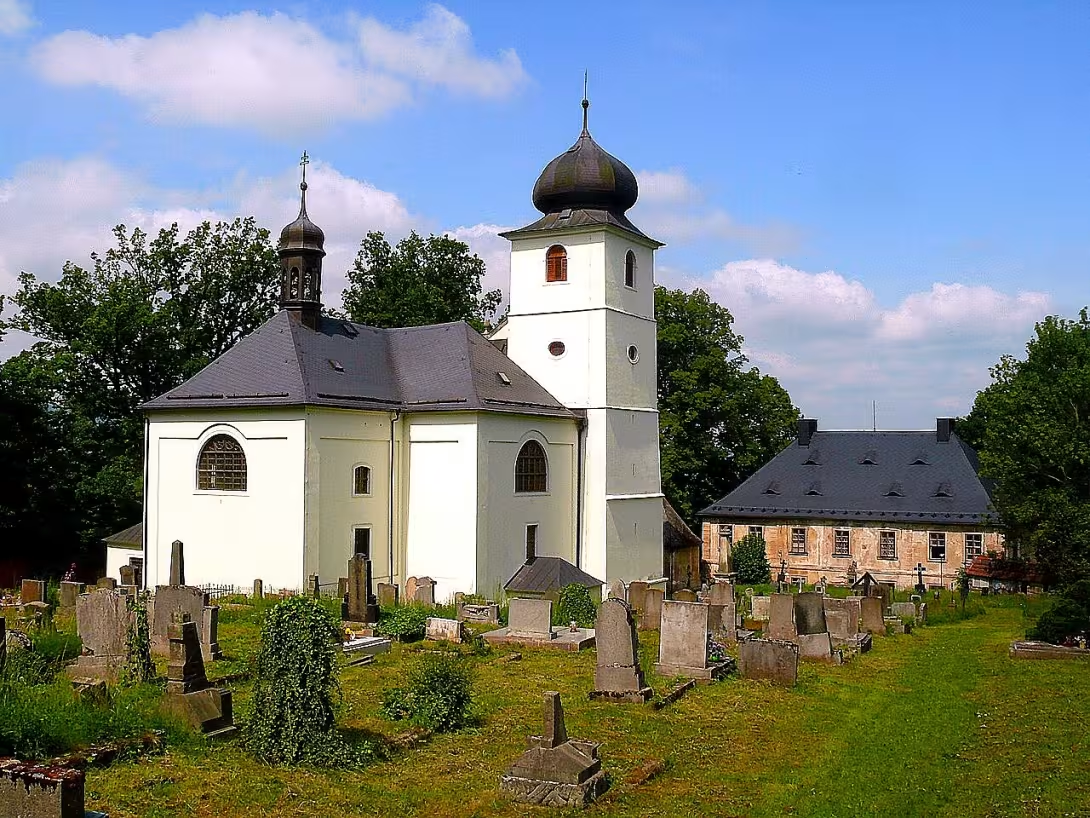
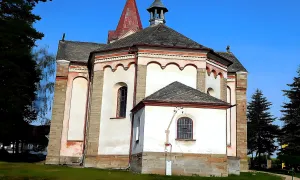
The Church of Saint George and Saint Martin in Martínkovice is a remarkable Roman Catholic church recognized both as a cultural monument and, since July 1, 2022, as a national cultural monument. Located in the village of Martínkovice within the Královéhradecký kraj region, this church holds historical significance dating back to its first mention in 1384 as a parish church. The current baroque structure, built between 1692 and 1698 by Jan Baptista Allio, replaced much of the original Gothic building while retaining its distinctive tower.
The origins of the Church trace back to the late Middle Ages, with its initial mention in 1384 as a parish church. This period marked the beginning of its long-standing religious significance in the region. By the late 17th century, during Bohemia's time under the Habsburg Monarchy, the church underwent significant architectural transformation. The existing Gothic structure was largely replaced by a new baroque design, retaining only the original tower. Martin Allio z Löwenthalu initiated this renovation, executed by his nephew Jan Baptista Allio, diverging from designs by Dientzenhofer who influenced other churches in the Broumov group.
Architecturally, the church is distinguished by its early baroque style and Greek cross floor plan. It is surrounded by an active cemetery enclosed by a maintained wall, with chapels for the Stations of the Cross attached to it. Inside, frescoes by F.A. Scheffler adorn the walls, depicting themes such as the Assumption of the Virgin Mary and scenes from the lives of its patron saints, Saint George and Saint Martin, along with Saint Cecilia above the choir loft.
Throughout its history, the church has seen various changes in administration and purpose. Initially serving as a parish church, it became a filial church to the Broumov parish at the beginning of 2010. A notable event occurred on April 5, 1999, when a new altar painting was consecrated during services. This artwork, created by Vjačeslav Iljašenko, features a local vicar as Saint Martin and serves as a poignant reminder of contemporary financial challenges within the church.
The church also houses one-manual pipe organs with 744 pipes, crafted between 1769 and 1771 by Broumov organ builder Franz Süssmuth. These organs are unique as they represent the only surviving work of this particular craftsman and were regularly used in services until the 1970s. They underwent restoration in 2010 to preserve their historical value.
In recent years, significant efforts have been made to restore and maintain the church's architectural heritage. Between 1995 and 2014, a total of 9,075,000 Kč was allocated for its preservation under the Program záchrany architektonického dědictví (Program for the Rescue of Architectural Heritage).
Today, the Church of Saint George and Saint Martin remains an accessible site that continues to attract visitors interested in its rich history and architectural beauty. Its blend of historical significance, artistic elements, and ongoing preservation efforts make it a worthwhile destination for those exploring the cultural heritage of the Královéhradecký kraj region. Visitors are invited to experience this unique monument, which stands as a testament to the enduring legacy of baroque architecture in Bohemia.
Then and now
Drag the slider to compare how the landmark may have looked when it was built with the view today.
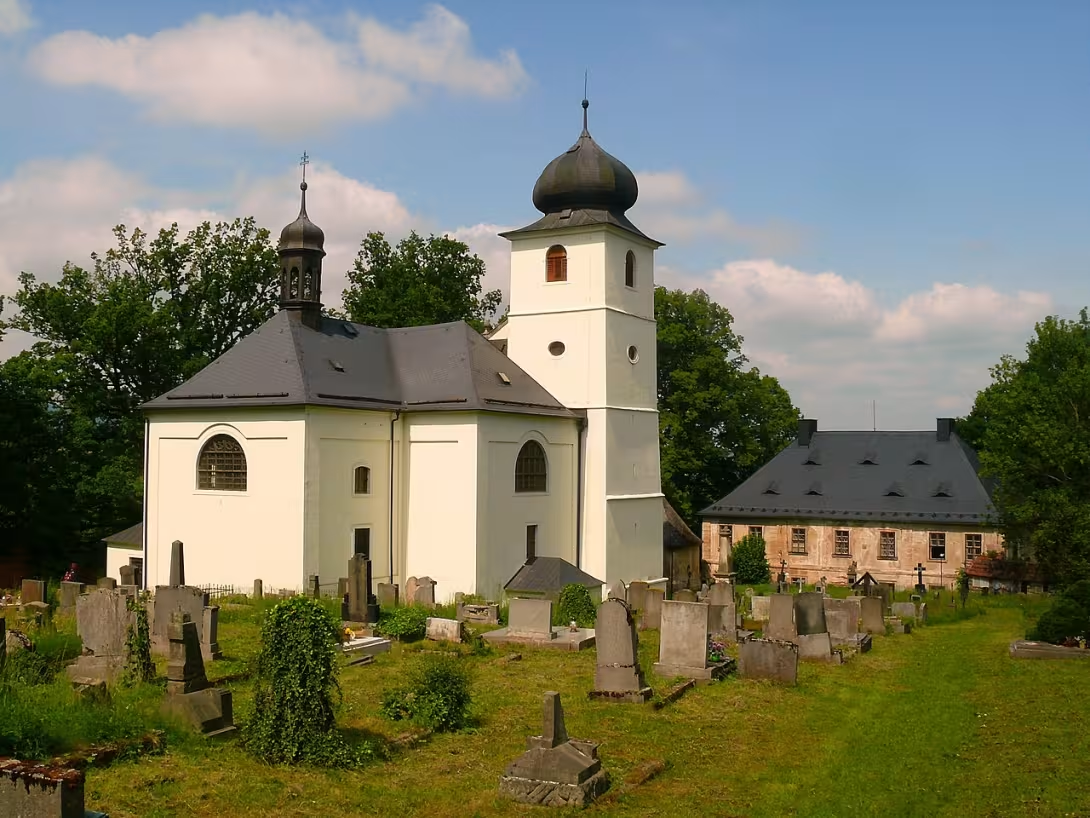
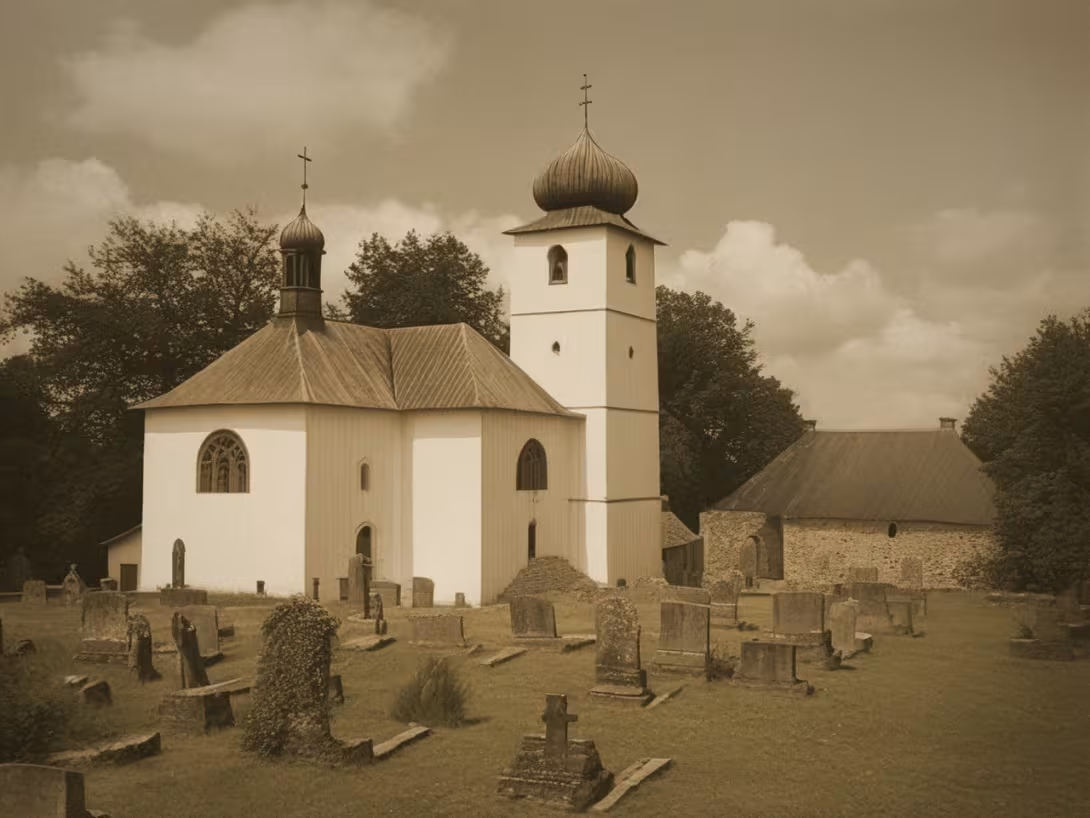
The historical appearance on the left is an AI-generated visualisation and serves as inspiration only.
Historical milestones
- 1384
- The church is first mentioned as a parish church.
- 1692
- Construction of the current baroque structure began.
- 1698
- Completion of the baroque church construction by Jan Baptista Allio.
Architectural development
The church's architectural evolution began with its Gothic origins, which were largely replaced in the late 17th century. The new baroque design featured a Greek cross floor plan and included frescoes by F.A. Scheffler depicting themes such as the Assumption of the Virgin Mary and scenes from the lives of the church’s patrons. A significant addition was made on April 5, 1999, when a new altar painting was consecrated during services.
Historical events
In 1384, the church was first mentioned as a parish church.
Between 1692 and 1698, the current baroque structure was built by Jan Baptista Allio.
Points of interest
- The Church of Saint George and Saint Martin features frescoes by F.A. Scheffler that include a depiction of the Assumption of the Virgin Mary and scenes from the lives of its patron saints, blending religious art with local history.
- One of the church's unique aspects is its one-manual pipe organs crafted between 1769 and 1771 by Franz Süssmuth; these are the only surviving works by this Broumov organ builder, highlighting a rare piece of musical heritage.
- Despite being largely replaced during the baroque transformation in the late 17th century, the church retains its original Gothic tower, symbolizing a physical connection between different architectural eras and styles within one structure.
- The altar painting consecrated on April 5, 1999, features a local vicar as Saint Martin, serving as both an artistic tribute to community figures and a reflection of contemporary challenges faced by the church.
- Between 1995 and 2014, a substantial investment of 9,075,000 Kč was made for the restoration of the church under the Program záchrany architektonického dědictví, showcasing ongoing efforts to preserve its architectural heritage.
Guide
This guide is narrated by a synthetic voice generated by artificial intelligence.
Show guide text
This text was created by artificial intelligence and has not been editorially reviewed. It may contain inaccuracies.
Welcome to the Church of Saint George and Saint Martin in Martínkovice—a remarkable blend of history and artistry that has stood as a testament to faith and culture for centuries. As you stand here, take a moment to absorb the grandeur before you; this church is not just an architectural marvel but also a beacon of cultural heritage recognized both locally and nationally.
Let's delve into its origins. The Church of Saint George and Saint Martin was first mentioned as a parish church in 1384. However, it underwent a significant transformation between 1692 and 1698. During this period, the existing Gothic structure was replaced by an elegant baroque design, crafted under the guidance of architects Martin Allio z Löwenthalu and Jan Baptista Allio. Interestingly, while much of the original building was transformed, its tower remained—a silent witness to the church's storied past.
As you gaze upon this historic edifice, notice how the architecture speaks volumes about its baroque roots. The Church’s design reflects a period when artistry and grandeur were paramount in religious structures. Although specific details like frescoes are visible today, they are part of a broader narrative that blends religious themes with local history.
Now, let's turn our attention to some fascinating aspects within the church. One of its most captivating features is the series of frescoes by F.A. Scheffler. These artworks include depictions of the Assumption of the Virgin Mary and scenes from the lives of Saint George and Saint Martin—the church’s patron saints. The frescoes not only enhance the spiritual ambiance but also serve as a visual narrative that connects visitors with the region's religious heritage.
Another unique element within this sacred space is its one-manual pipe organ, an instrument that adds to the church’s auditory charm. Imagine the harmonious sounds filling the air during services or special occasions—a testament to the blend of art and spirituality that defines this place.
As you continue your exploration, I invite you to immerse yourself in the atmosphere and ponder the many stories these walls could tell. Each corner and crevice holds echoes of the past, beckoning you to uncover more about its history and significance.
Thank you for joining me on this journey through time at the Church of Saint George and Saint Martin. As we conclude our audio tour, I encourage you to continue exploring and discovering what makes Martínkovice's cultural heritage so rich and enduring. Safe travels as you venture further into the wonders of Královéhradecký kraj!
Businesses nearby
Do you run a restaurant, accommodation, shop, museum, rental, wellness or other visitor service near this monument? Show yourself directly to the people heading to it — this is how they will see you in the app and on the web:
Accommodation nearby
Themed route
Thematic Tour Itinerary: Martínkovice
1. Kostel svatého Jiří a svatého Martina (Church) - Begin your journey at the heart of Martínkovice with the Church of St. George and St. Martin, an architectural gem that stands as a testament to the region's rich history and cultural heritage. This church is renowned for its stunning Baroque architecture, intricate frescoes, and serene atmosphere, making it a must-visit for anyone interested in religious art and historical landmarks.
2. Obecní úřad Martínkovice (Municipal Office) - A short walk from the church will lead you to the Obecní úřad Martínkovice. This building serves as the administrative center of the village, offering insights into local governance and community life. Visitors can appreciate its traditional architectural style and learn about the history of Martínkovice through informational displays available at the entrance.
3. Místní tržiště (Local Market Square) - Continue your exploration by visiting the Místní tržiště, a charming market square that lies in close proximity to the church. This area is perfect for experiencing local culture and community spirit. The square often hosts small markets where you can find regional produce and artisanal goods, providing an authentic taste of life in Martínkovice.
4. Stará škola (Old School) - Conclude your tour at the Stará škola, a historic building that once served as the village schoolhouse. This site offers a glimpse into the educational history of Martínkovice and showcases traditional architectural elements. Visitors can appreciate its preserved structure and learn about the generations of students who walked its halls.
This itinerary provides a comprehensive overview of Martínkovice's cultural and historical highlights, ensuring an enriching experience for all visitors.
Seasonal recommendations
Spring: Visiting the Church of Saint George and Saint Martin during spring offers a unique experience as nature awakens around Martínkovice. The surrounding landscape bursts with vibrant colors, providing a picturesque backdrop to the historic church. The soft light filtering through budding trees enhances the architectural details of the structure, creating an ethereal atmosphere that is both serene and invigorating. This season is ideal for photography enthusiasts looking to capture the harmony between nature and architecture. Visitors should wear comfortable layers as temperatures can be mild but unpredictable, and it's advisable to arrive early in the morning to enjoy a peaceful visit before larger crowds gather.
Summer: Summer at the Church of Saint George and Saint Martin is characterized by long daylight hours that illuminate the church’s intricate details beautifully. The lush greenery surrounding the site offers a refreshing escape from the summer heat. This is the peak tourist season, so expect larger crowds, especially on weekends. To fully enjoy your visit, consider arriving early in the morning or later in the afternoon to avoid the midday sun and throngs of visitors. Light, breathable clothing and comfortable walking shoes are recommended, along with a hat and sunscreen for protection against the strong summer sun.
Autumn: Autumn brings a warm, golden glow to the Church of Saint George and Saint Martin as the leaves change color in Martínkovice. The crisp air and softer light create an inviting atmosphere that encourages leisurely exploration of the church and its surroundings. This season is perfect for those who appreciate the beauty of fall foliage and prefer visiting during less crowded times. Visitors should dress warmly, as temperatures can drop significantly, especially later in the day. Carrying a light jacket or sweater will ensure comfort while exploring the historic site.
Winter: The Church of Saint George and Saint Martin takes on a magical quality during winter, with snow-covered landscapes adding to its charm. The subdued lighting and quietness of the season create an intimate atmosphere that is perfect for reflection and appreciation of the church’s architecture. However, visitors should be prepared for shorter opening hours due to the colder weather, so planning ahead is essential. Warm clothing, including a coat, gloves, and a hat, is necessary to stay comfortable during your visit. If snowfall occurs, sturdy boots will help navigate any slippery paths around the site.
Visualizations and artistic views


The visualisations are generated by artificial intelligence and serve as inspiration.
Photos from the area
Real photos taken near the monument

Zdroj a licence jsou uvedeny u každého snímku.
Tips from visitors
No tips yet. Be the first!
Log in and add your tip.
Sources and literature
Fotografie: JanBedřich / CC BY-SA 4.0 — Wikimedia Commons. The author and licence also appear when you hover over the image.
Faktickým podkladem tohoto textu byl článek na Wikipedii, jehož autory jsou přispěvatelé Wikipedie. Článek je dostupný pod licencí CC BY-SA 4.0.
Location on the map

Příběhy a pověsti
Legendy, pověsti a příběhy spjaté s touto památkou

Fotografie návštěvníků
Zatím žádné fotografie. Buďte první, kdo přidá fotografii z návštěvy!
Přihlaste se a přidejte svou fotografii nebo hodnoťte.
Za ověřenou návštěvu v aplikaci získáte víc bodů — poznáme podle GPS, že jste na místě.
Reviews and comments