



kostel svatého Jiří (Věžná) Church
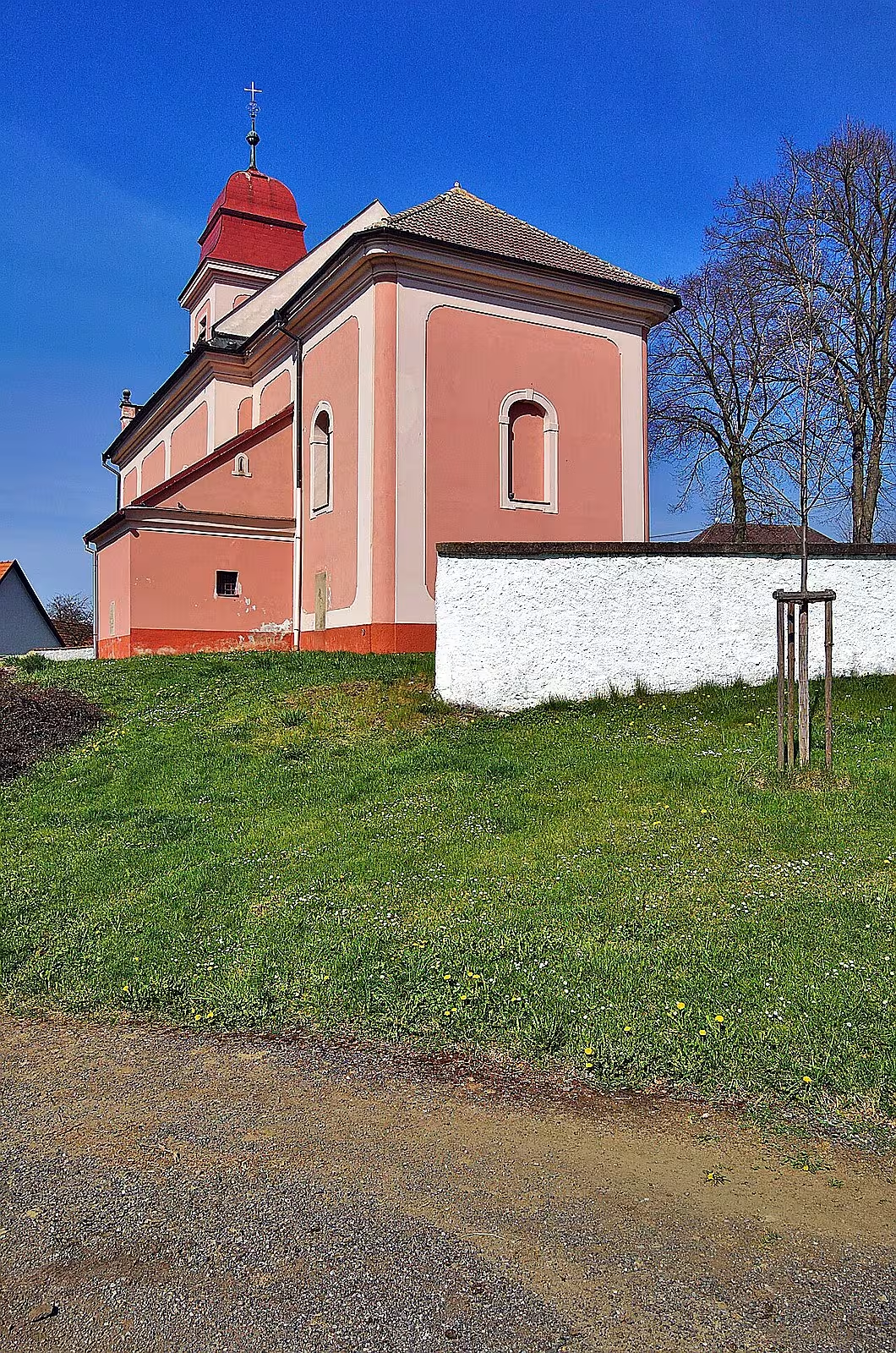
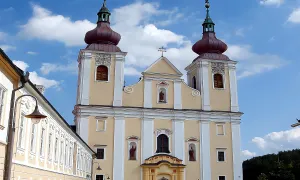
The Church of Saint George in Věžná stands as a testament to historical continuity and architectural evolution within the Czech Republic's Vysočina Region. First documented in 1358, this Roman Catholic parish church reflects broader European artistic trends through significant transformations. Originally Gothic, it was expanded and rebuilt between 1733 and 1734 into its current Baroque style. Recognized as a cultural monument of the Czech Republic, the Church is notable for its architectural significance and rich collection of artworks.
The origins trace back to the late medieval period when Bohemia was part of the Holy Roman Empire. Its first recorded mention in 1358 marks it as an enduring religious site through centuries of political and religious shifts. By the early 18th century, under Habsburg rule, the church underwent a significant transformation aligning with the Baroque movement sweeping across Europe. This period saw its expansion and stylistic overhaul from Gothic architecture to elaborate Baroque design.
Architecturally, the Church showcases the transition from medieval to early modern European styles. The main altar is particularly noteworthy for its late Baroque canvas painting created in 1764 by an unknown artist from Tábor. This artwork replicates a mid-16th-century panel painting, illustrating continuity and reverence for historical art within the church's evolution. Additionally, Rococo side altars painted in 1864 by Bedřich Kamarýt add to the artistic richness of the interior. The church also features a Baroque pulpit from the late 17th century, further emphasizing its architectural significance.
Throughout its history, the Church has remained under the administration of the Roman Catholic parish of Věžná. Its transformation in the early 18th century reflects broader trends rather than specific ownership changes or dramatic events. The church's enduring presence as a religious and cultural site highlights its importance within the community.
The Church is not only an architectural marvel but also a repository of historical artworks. The main altar’s canvas painting from 1764, a copy by an unknown artist from Tábor, replicates a mid-16th-century panel, showcasing the church's dedication to preserving artistic heritage. Additionally, the Rococo side altars painted in 1864 by Bedřich Kamarýt add layers of historical and artistic value.
Today, the Church remains accessible to visitors who wish to explore its rich history and architectural beauty. As a cultural monument, it offers insights into the religious and artistic developments that have shaped the region over centuries. Its blend of Gothic origins and Baroque transformation makes it a compelling site for those interested in European art and architecture.
The Church of Saint George is more than just a historical structure; it is a living testament to the cultural and architectural evolution of its time. Visitors are invited to explore this remarkable monument, where history and art converge, offering a unique glimpse into the past while standing proudly in the present.
Then and now
Drag the slider to compare how the landmark may have looked when it was built with the view today.
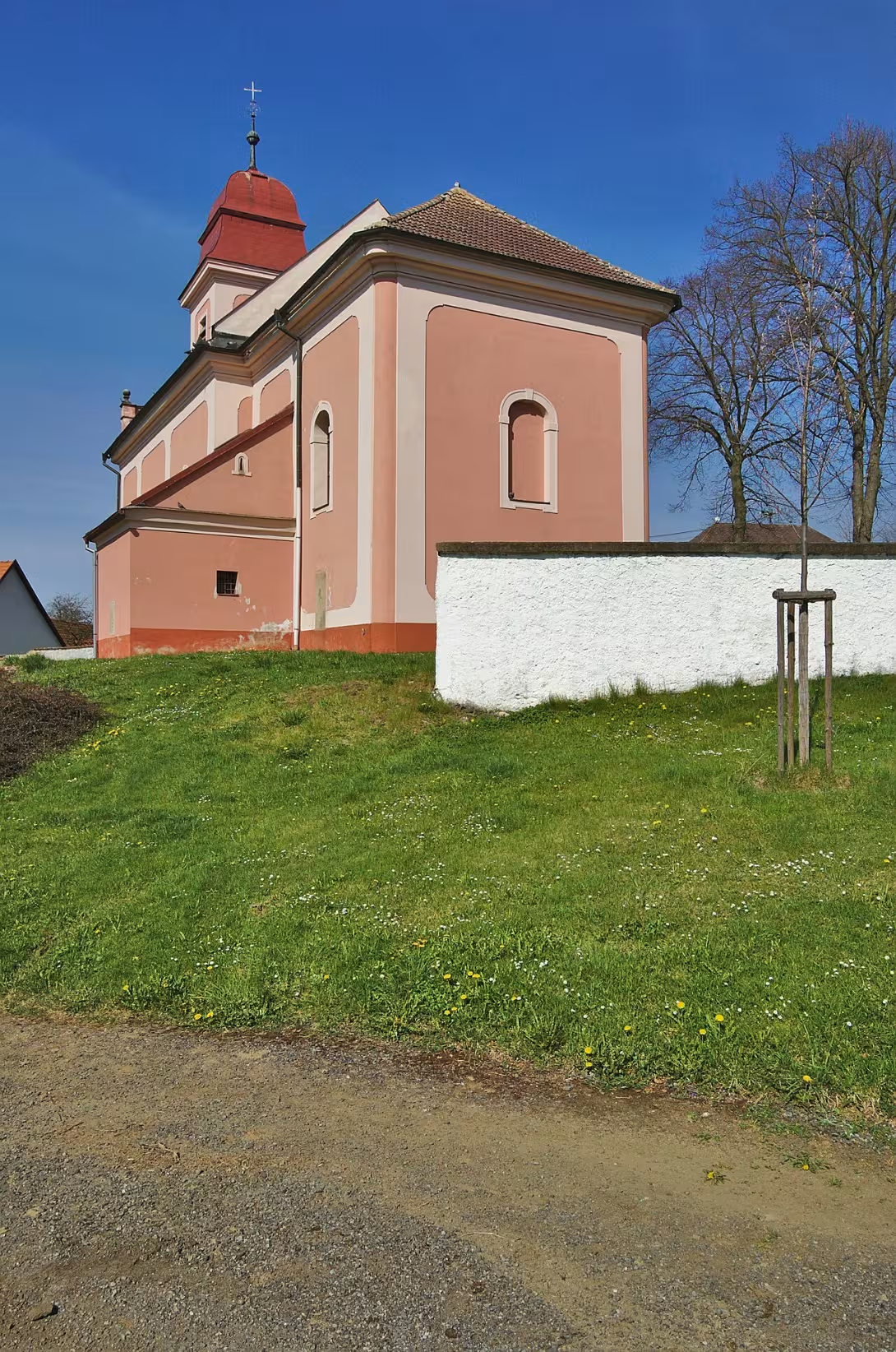
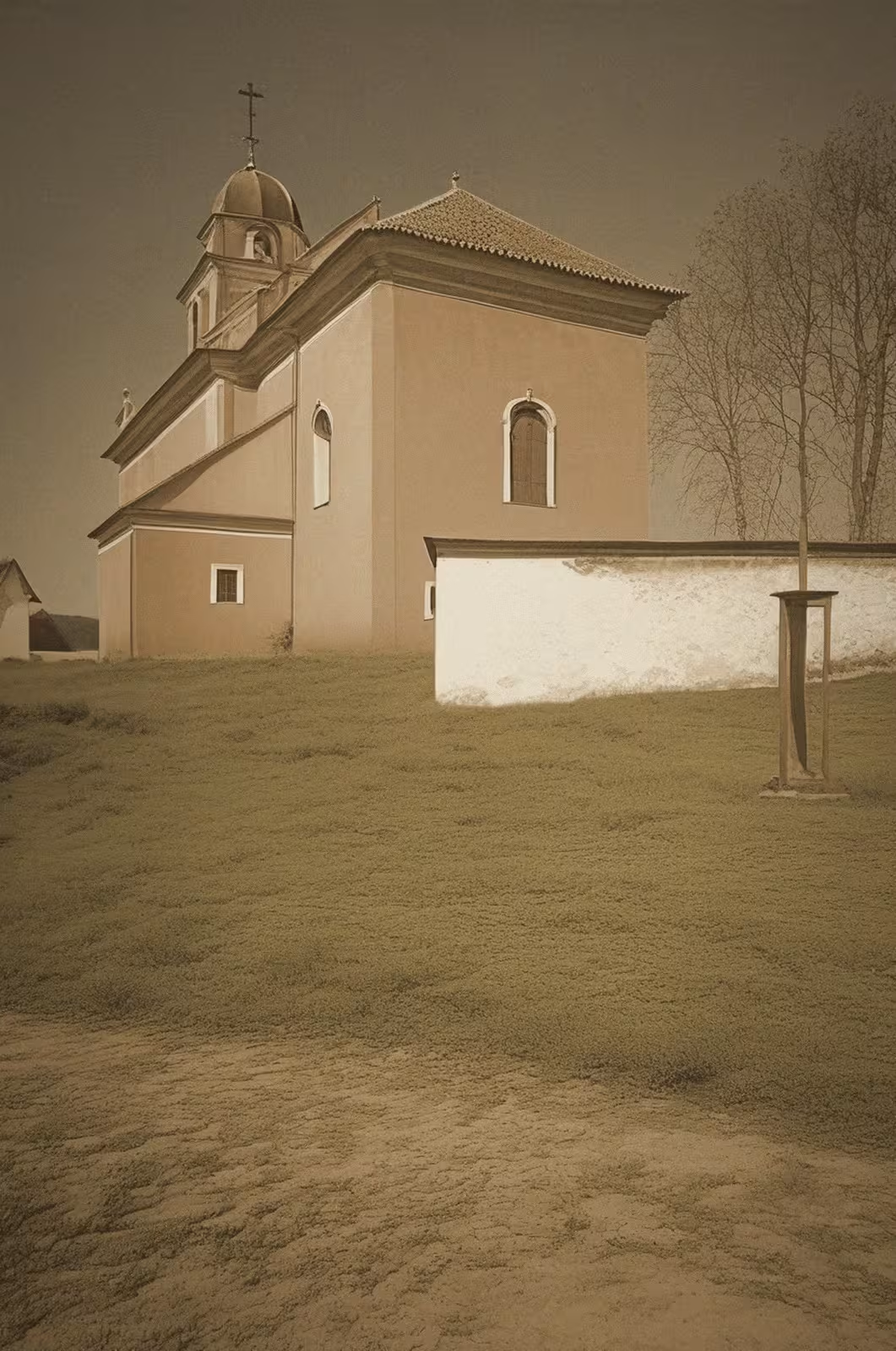
The historical appearance on the left is an AI-generated visualisation and serves as inspiration only.
Historical milestones
- 1358
- First documented mention of the Church of Saint George.
- kolem 1350
- Estimated origin period as a late medieval religious site.
- 1733
- Expansion and transformation to Baroque style began.
- 1734
- Completion of the church's expansion into Baroque style.
- 1764
- Creation of late Baroque canvas painting for main altar.
- 1864
- Rococo side altars painted by Bedřich Kamarýt.
Architectural development
The Church of Saint George began as a Gothic structure, with its first recorded existence dating back to 1358. In the early 18th century, specifically from 1733 to 1734, it underwent significant architectural changes when it was expanded and transformed into Baroque style. The church features a late Baroque main altar with a canvas painting from 1764, alongside Rococo side altars painted in 1864 by Bedřich Kamarýt.
Historical events
First documented mention of the church in 1358.
Expansion and Baroque reconstruction between 1733 and 1734.
Points of interest
- Despite its Baroque transformation in the early 18th century, the Church of Saint George retains elements from its original Gothic structure, illustrating a rare blend of medieval and modern architectural styles within one building.
- The main altar’s canvas painting from 1764 is particularly intriguing as it replicates an earlier mid-16th-century panel. This suggests a deep reverence for historical artworks, with the church preserving artistic continuity by commissioning replicas to honor past creations.
- An unknown artist from Tábor created the late Baroque painting of the main altar in 1764. The anonymity of this artist adds a layer of mystery and highlights how some contributors to cultural heritage remain unrecognized despite their significant impact.
- The Rococo side altars, painted by Bedřich Kamarýt in 1864, are not only later additions but also reflect a stylistic shift from Baroque to Rococo. This transition within the church's interior showcases evolving artistic trends and tastes over time.
- Although recognized as a cultural monument, the Church of Saint George has avoided major ownership changes or dramatic historical events that often alter such sites. Its continuous administration by the Roman Catholic parish of Věžná underscores its role as a stable community landmark through centuries of change.
Guide
This guide is narrated by a synthetic voice generated by artificial intelligence.
Show guide text
This text was created by artificial intelligence and has not been editorially reviewed. It may contain inaccuracies.
Welcome! You are standing in front of the Church of St. George, a historical monument at the heart of the village of Věžná. It is a Romanesque Catholic parish church located in the Vysočina region. The first mention of the church dates back to 1358 and was originally built in Gothic style. However, between 1733 and 1734, it underwent a significant transformation that changed its style to Baroque.
Let's move to the main entrance of the church and look up. Notice that the facade of the church is adorned with Baroque elements added during this renovation. Take a look at the façade and note the details typical of Baroque architecture.
Now, pay attention to the main altar. It features a late Baroque winged altar created in 1764. This is truly an impressive piece of art that adorns the church.
The Church of St. George is an exceptional example of the combination of medieval and modern architecture. Despite the Baroque renovation carried out in the 18th century, the church still retains elements of its original Gothic architectural style. That's really a rarity.
Let's move to one of the side altars and take a look at the Rococo paintings created in 1864. They are beautiful examples of Rococo art that adorn the church.
An interesting fact is that the Church of St. George is protected as a cultural monument of the Czech Republic. This means it is considered an important part of our cultural heritage.
Allow me to invite you to further explore the church. It's truly a beautiful place offering many interesting details and historical stories. I hope you enjoy your visit to this lovely landmark.
Frequently asked questions
Can the monument be visited?
Religious buildings are usually open mainly during services; at other times a visit is normally arranged with the parish or the operator. We have not verified specific times.
Where is the monument?
Location: Věžná, Kraj Vysočina. The map on this page shows the exact spot.
Why is the monument protected?
It is listed in the Central List of Cultural Monuments of the Czech Republic as a cultural monument (register no. 17958/3-3334).
Businesses nearby
Do you run a restaurant, accommodation, shop, museum, rental, wellness or other visitor service near this monument? Show yourself directly to the people heading to it — this is how they will see you in the app and on the web:
Accommodation nearby
Themed route
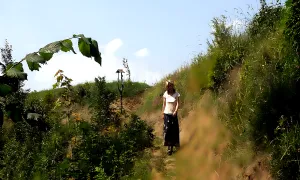
Viewpoint Trail to the Church of St. George
1. Church of St. George (Věžná) - worth visiting for its unique architecture and history. 2. Chapel of St. John of Nepomuk (Věžná) - worth visiting for its peaceful atmosphere and beautiful architecture. 3. Cemetery in Věžná (Věžná) - worth visiting for its historical graves and view of the Church of St. George. 4. Memorial to World War Victims (Věžná) - worth visiting for its symbolism and remembrance of historic events.
Seasonal recommendations
Jaro:
In the spring, St. George's Church is surrounded by flowers and greenery, creating a pleasant atmosphere. The specific feature of this season is the spring lighting that illuminates the interior spaces of the church. For a visit in the spring, we recommend coming early to avoid large crowds of tourists. The best time to visit the church is during the morning hours when it's still quiet, and you can better explore the interior.
Léto:
In summer, St. George's Church is the most visited, so it's a good idea to come early to avoid large crowds. A unique feature of this season is the summer lighting that illuminates the church's interior spaces, creating a pleasant atmosphere. In summer, it's also beautiful to stroll around the church and its surroundings, where there are many flowers and greenery.
Podzim:
In autumn, St. George's Church is surrounded by beautiful fall nature, with leafy trees and golden hues. A specific feature of this season is the autumn lighting that creates a pleasant atmosphere. For an autumn visit, we recommend coming early to avoid large crowds of tourists attracted by the school holidays.
Zima:
In winter, St. George's Church is closed but open on some days for visitors. The unique feature of this season is the winter lighting that illuminates the church's interior spaces and creates a pleasant atmosphere. For a visit in winter, we recommend dressing warmly as the indoor temperature can be low. The best time to visit the church is during the morning hours when it's still quiet, and you can better explore the interior.
Visualizations and artistic views


The visualisations are generated by artificial intelligence and serve as inspiration.
Photos from the area
Real photos taken near the monument

Zdroj a licence jsou uvedeny u každého snímku.
Tips from visitors
No tips yet. Be the first!
Log in and add your tip.
Sources and literature
Photos: Jiří Komárek / CC BY-SA 4.0 — Wikimedia Commons. The author and licence also appear when you hover over the image.
Faktickým podkladem tohoto textu byl článek na Wikipedii, jehož autory jsou přispěvatelé Wikipedie. Článek je dostupný pod licencí CC BY-SA 4.0.
Location on the map


Příběhy a pověsti
Legendy, pověsti a příběhy spjaté s touto památkou
Fotografie návštěvníků
Zatím žádné fotografie. Buďte první, kdo přidá fotografii z návštěvy!
Log in a přidejte svou fotografii nebo hodnoťte.
Za ověřenou návštěvu v aplikaci získáte víc bodů — poznáme podle GPS, že jste na místě.
Reviews and comments