



kostel svatého Josefa (Hutisko) Church
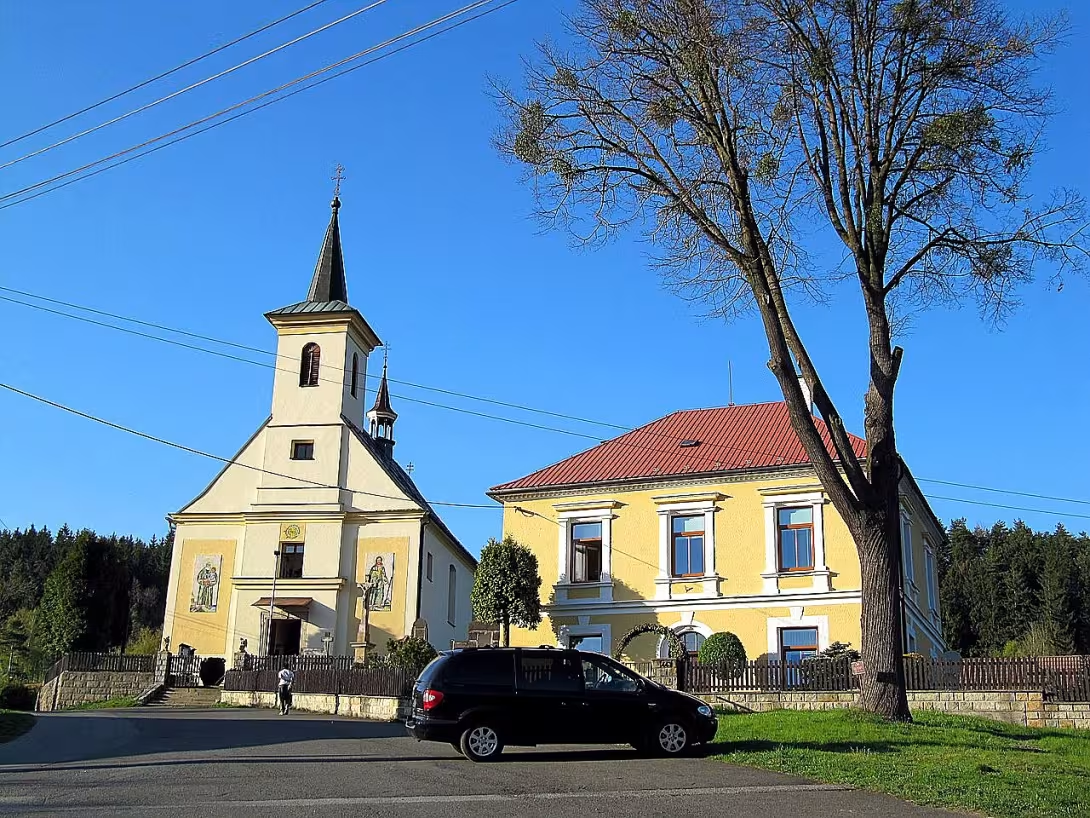
The Church of Saint Joseph, also known as the Church of Saint Joseph the Foster-Father, is a parish church located in Hutisko-Solanec near Rožnov pod Radhoštěm. Originally built as a wooden chapel in 1732, it was replaced by a stone structure around 1748 after a fire destroyed its predecessor. Recognized and protected as a cultural monument since June 6, 1994, the church is notable for its baroque architectural elements and various renovations over the centuries.
The origins of the Church of Saint Joseph date back to the early 18th century during significant cultural and religious developments under Habsburg rule in the region. The initial wooden church built in 1732 served as a filial chapel, overseen by the parish priest from Rožnov pod Radhoštěm. This era saw a fusion of traditional folk art with baroque influences across Moravia, reflected in the architectural style and religious practices associated with the church.
Architecturally, the Church transitioned from its original wooden form to a stone structure around 1748 following a devastating fire. The reconstruction was significantly influenced by builder Jan Jiří Görig. In 1846, under parish priest Jakub Čámek's guidance, the church expanded with a new tower and entrance adorned with a stone portal. Later in the late 20th century, its exterior facades were updated with mosaics created by academic painter Luďka Majera, enhancing its visual appeal.
Throughout its history, various administrators and benefactors played crucial roles in the church's development. Local chaplains like Kristián Mošnovský z Příbora initially oversaw construction. Solanecký fojt Jiří Křenek significantly financed the stone church's construction, leaving a lasting legacy with his late baroque tombstone that stood near the church until 1952.
Key events in the church’s history include its transformation into an independent parish in 1843 and subsequent renovations between 1928 and 1950. During this period, academic painter František Podešva decorated the interior with murals reflecting Moravian folk art themes, capturing New Testament motifs that added to the church's artistic richness.
Today, the Church of Saint Joseph stands as a testament to its historical and cultural heritage. It remains accessible to visitors interested in exploring its architectural beauty and rich history. The church is surrounded by a cemetery and lies near Rožnov pod Radhoštěm, approximately 6 km east of its center, making it an intriguing destination for those keen on discovering the region's past.
The Church of Saint Joseph offers more than historical insights; it provides a glimpse into Moravia’s cultural tapestry during significant periods. Its blend of baroque and folk art elements makes it a unique monument worth visiting. Whether drawn to its architectural details or storied past, this church invites exploration and appreciation for its enduring legacy in the region.
Then and now
Drag the slider to compare how the landmark may have looked when it was built with the view today.
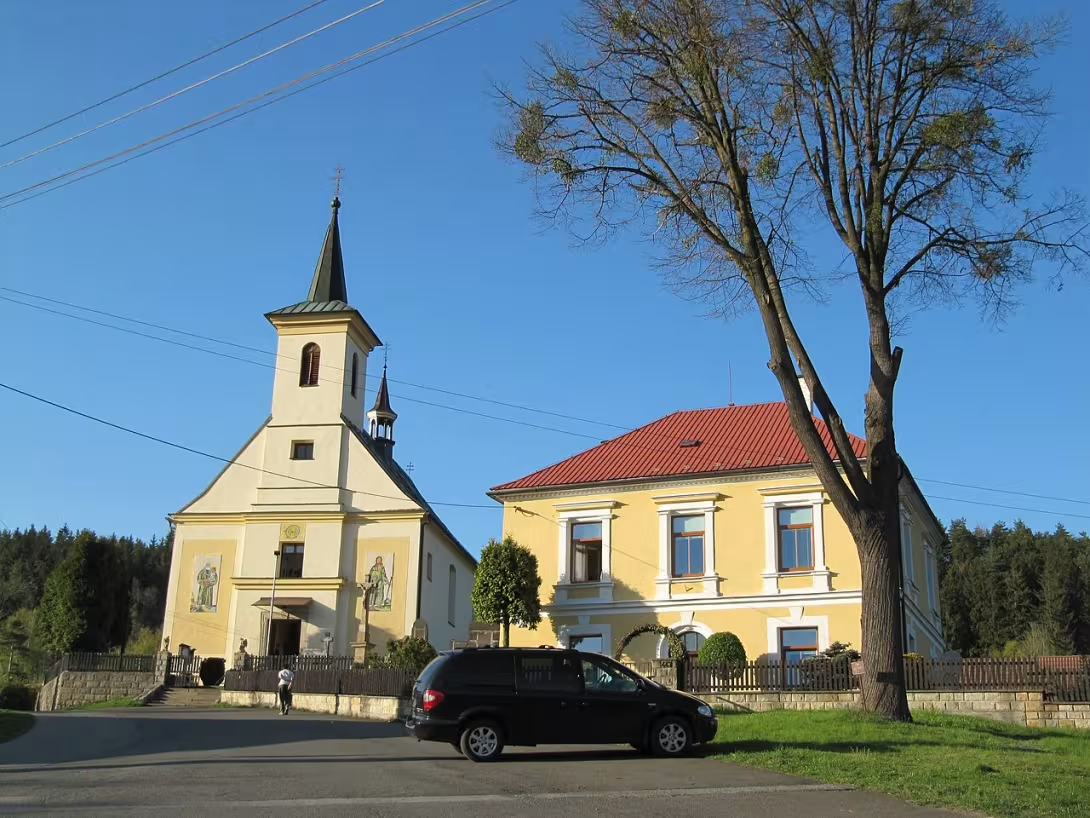

The historical appearance on the left is an AI-generated visualisation and serves as inspiration only.
Historical milestones
- 1732
- Construction of the original wooden church.
- 1748
- Rebuilding as a stone church after a fire.
- 1843
- Hutisko became an independent parish.
- 1846
- Renovations added a tower and new entrance.
Architectural development
The Church of Saint Joseph began as a wooden chapel in 1732. After a fire, it was rebuilt as a stone structure around 1748 with the help of builder Jan Jiří Görig. The church expanded significantly in 1846 under parish priest Jakub Čámek, adding a tower and new entrance. In the late 20th century, its exterior facades were updated with mosaics by Luďka Majera.
Historical events
The original wooden church was built in 1732.
A stone church replaced the wooden structure around 1748 after a fire.
In 1843, Hutisko became an independent parish.
The church underwent significant renovations between 1928 and 1950.
Points of interest
- The Church of Saint Joseph was originally a wooden chapel built in 1732, which highlights the early use of wood as a primary building material before transitioning to stone due to fire damage. - Jan Jiří Görig played a significant role in reconstructing the church into its current stone form after the original wooden structure burned down around 1748.
- The late baroque tombstone of Solanecký fojt Jiří Křenek, who funded much of the stone church's construction, stood near the church until 1952, marking a physical testament to his contribution and legacy.
- František Podešva decorated the interior with murals between 1928 and 1950, incorporating Moravian folk art themes that reflect New Testament motifs, adding an artistic layer to the church's cultural significance.
- The church was transformed into an independent parish in 1843, a key event marking its growing importance within the local community and religious landscape.
Guide
This guide is narrated by a synthetic voice generated by artificial intelligence.
Show guide text
This text was created by artificial intelligence and has not been editorially reviewed. It may contain inaccuracies.
The Church of Saint Joseph, also called the Church of Saint Joseph the Foster Father, is a parish church in the village of Hutisko-Solanec. It stands on the border of the former villages of Hutisko and Solanec, about 6 kilometres east of the centre of Rožnov pod Radhoštěm. Since 6 June 1994 it has been protected as a cultural monument.
A wooden church originally stood at this site, built during the year 1732. It was a filial church and came under the jurisdiction of the priest of Rožnov. In addition to Hutisko, it also served Horní Bečva, Prostřední Bečva, Solanec and Velké Karlovice. The spiritual care was provided by local priests, and the first of them was Kristián Mošnovský from Příbor.
The wooden church burned down and around 1748 it was replaced by a brick single-nave building. The Hukvaldy master mason Jan Jiří Görig participated in its construction. Most of the costs were paid by the Solanec bailiff Jiří Křenek, who lived from 1708 to 1766. His sandstone late baroque tombstone stood by the church until 1952. Then it was taken from the cemetery together with the tombstone of his wife Rozina. Since the second half of the nineteen sixties, both tombstones have been in the collections of the Valašské muzeum v přírodě in Rožnov pod Radhoštěm.
Hutisko became a separate parish only in 1843. Three years later, under the first priest Jakub Čámek, the church was enlarged. It acquired a bell tower and a new main entrance with a stone portal. In the early nineteen seventies the outer facades were renovated and mosaics were added to them from the studio of academic painter Luďek Majer. Around the church lies a cemetery.
The interior features a magnificent main altar with a painting of Saint Joseph. It is complemented by two side altars dedicated to the Virgin Mary Helper and to Saints Peter and Paul. In 1928 and 1950, when priests Karel Ješka and Jaroslav Říčný worked here, academic painter František Podešva, who lived from 1893 to 1979, decorated the interior with paintings. His paintings capture New Testament motifs in the style of folk art of Moravian Valašska. The painting in the chancel was, however, touched up in 1993.
Tips for visitors
The best time to visit the Church of Saint Joseph in Hutisko is during late spring or early autumn, when the weather is mild and pleasant for walking around the cemetery and exploring nearby sites like Valašské muzeum v přírodě. These seasons offer beautiful natural scenery without the crowds that might be present during peak summer months. Additionally, visiting on a weekday can provide a more tranquil experience compared to weekends.
It's advisable to check current transport links online or at local tourist information centers to plan your route effectively.
When visiting the Church of Saint Joseph, it’s a good idea to bring comfortable walking shoes as there may be uneven paths in and around the cemetery. Also consider bringing a hat and sunscreen for sun protection, especially if you're exploring during warmer months. A camera or smartphone is recommended to capture the serene beauty of the church and its surroundings.
For photography enthusiasts, the best spots are likely to be at the entrance of the church where the wooden structure can be fully appreciated against the backdrop of the cemetery, as well as any open areas around the Valašské muzeum v přírodě for capturing broader landscape shots. Early morning or late afternoon light is ideal for photography, providing soft and warm lighting that enhances the historical features of the church.
Nearby attractions within a 30-minute drive include the Valašské muzeum v přírodě, which offers insights into the natural history and cultural heritage of the region. This museum provides an engaging experience for visitors interested in both nature and local traditions. Additionally, Rožnov pod Radhoštěm itself is worth exploring for its charming town center and other historical sites.
Frequently asked questions
Can the monument be visited?
Religious buildings are usually open mainly during services; at other times a visit is normally arranged with the parish or the operator. We have not verified specific times.
Where is the monument?
Location: Hutisko, Zlínský kraj. The map on this page shows the exact spot.
Why is the monument protected?
It is listed in the Central List of Cultural Monuments of the Czech Republic as a cultural monument (register no. 12571/8-3826).
Businesses nearby
Do you run a restaurant, accommodation, shop, museum, rental, wellness or other visitor service near this monument? Show yourself directly to the people heading to it — this is how they will see you in the app and on the web:
Nearby
The church is surrounded by a cemetery and is located near Rožnov pod Radhoštěm, approximately 6 km east of its center. The area includes other historical sites such as the Valašské muzeum v přírodě.
Accommodation nearby
Themed route
Tematická výletní trasa: Kostel svatého Josefa a okolí Hutisko
1. Kostel svatého Josefa (Hutisko)
Typ: Religiózní památka
Proč stojí za návštěvu: Tento kostel je významnou architektonickou strukturou ve vesnici Hutisko, nabízející pohled na bohatou historii a tradice regionu. Jeho umístění vedle hřbitova dodává míru a klidu návštěvníkům.
2. Hřbitov u kostela svatého Josefa
Typ: Historický areál
Proč stojí za návštěvu: Hřbitov, který obklopuje kostel, je místo klidné reflexe a nabízí zajímavé historické epitafy. Je to ideální místnost pro pochopení minulosti komunity Hutisko.
3. Valašské muzeum v přírodě
Typ: Kulturní a přírodní atrakce
Proč stojí za návštěvu: Toto muzeum je skvělým místem pro objevování tradic Valašska, kombinující kulturní expozice s přírodou. Nabízí interaktivní výstavy a pohledy na život ve venkovském prostředí regionu.
4. Rožnov pod Radhoštěm (přibližně 6 km západ)
Typ: Město s historickou architekturou
Proč stojí za návštěvu: Navzdory tomu, že není přímo v okolí, Rožnov pod Radhoštěm je pohodlný cíl pro doplnění trasy. Město nabízí historické památky a širokou nabídku kulturních aktivit, což umožňuje hlubší poznání regionální kultury.
Tato trasa vám poskytne komplexní pohled na historii a kulturu oblasti Hutisko a okolí.
Seasonal recommendations
Spring: Visiting the Church of Saint Joseph in Hutisko during spring offers a unique experience as the surrounding landscape bursts into life with vibrant wildflowers and budding trees, creating an enchanting atmosphere that complements the historic architecture. The soft, natural light filtering through the foliage enhances the church's details, making it ideal for photography enthusiasts. Visitors should be prepared for occasional rain showers typical of this season by wearing comfortable layers and waterproof shoes. Although crowds are generally manageable, arriving early in the morning can provide a serene experience before more people arrive.
Summer: The summer months bring warm sunshine to Hutisko, illuminating the Church of Saint Joseph with bright, golden light that accentuates its architectural beauty. This is an excellent time for visitors who enjoy exploring historical sites under clear skies and pleasant temperatures. However, it's advisable to visit early in the morning or later in the afternoon to avoid the peak midday heat and larger crowds typical of summer tourism. Comfortable walking shoes and sunscreen are essential, as well as staying hydrated during your exploration.
Autumn: Autumn transforms Hutisko into a picturesque setting with its rich tapestry of reds, oranges, and yellows, providing a stunning backdrop for the Church of Saint Joseph. The cooler temperatures make it an ideal time to wander through the area, enjoying the crisp air and tranquil atmosphere. This season is perfect for those who appreciate the changing leaves and milder weather conditions. Visitors should dress in layers to accommodate fluctuating temperatures throughout the day and consider bringing a light jacket or sweater as evenings can be brisk.
Winter: The winter months envelop the Church of Saint Joseph in Hutisko with a serene, almost ethereal quality under a blanket of snow, creating a magical atmosphere that enhances its historic charm. Visitors should dress warmly in layers and wear insulated footwear to stay comfortable during their visit. Bringing gloves and a hat is also advisable, as well as being prepared for potential icy pathways around the site.
Visualizations and artistic views


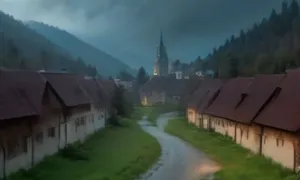
The visualisations are generated by artificial intelligence and serve as inspiration.
Tips from visitors
No tips yet. Be the first!
Log in and add your tip.
Sources and literature
Photos: Palickap / CC BY-SA 3.0 — Wikimedia Commons. The author and licence also appear when you hover over the image.
Faktickým podkladem tohoto textu byl článek na Wikipedii, jehož autory jsou přispěvatelé Wikipedie. Článek je dostupný pod licencí CC BY-SA 4.0.
Location on the map

Příběhy a pověsti
Legendy, pověsti a příběhy spjaté s touto památkou
Fotografie návštěvníků
Zatím žádné fotografie. Buďte první, kdo přidá fotografii z návštěvy!
Log in a přidejte svou fotografii nebo hodnoťte.
Za ověřenou návštěvu v aplikaci získáte víc bodů — poznáme podle GPS, že jste na místě.
Reviews and comments