



Kostel svatého Josefa (Úherce) Church
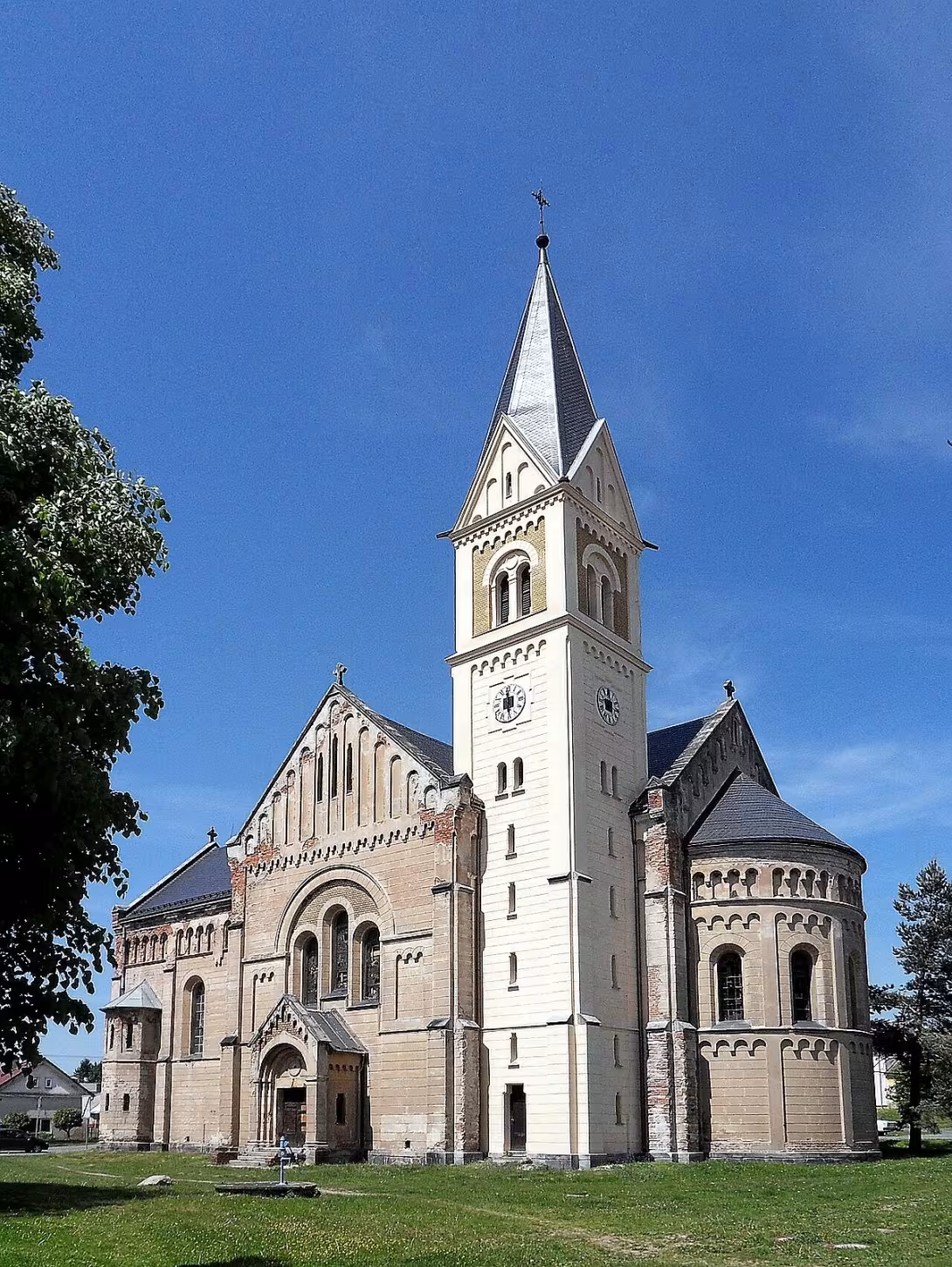
The Church of Saint Joseph in Úherce is a notable example of Neo-Romanesque architecture from the early 20th century. Situated at the northwest corner of the village square, this church reflects the architectural and cultural shifts of its era. Constructed between 1900 and 1901, it replaced an older Baroque predecessor that had deteriorated by the late 19th century. The new structure was consecrated on December 15, 1901, by Bishop Dr. Václav Frind, marking a significant moment in the village's history.
The origins of this church are deeply rooted in Úherce's historical context and its surrounding region. First documented in 1213 when King Přemysl Otakar I confirmed a donation to a Premonstratensian convent in Chotěšov, Úherce later became associated with the Teplá Abbey. This abbey held significant influence over the area until the late 18th century. By 1785, an expozitura was established, and by 1787, Úherce had its own parish church under the patronage of the Teplá Abbot. The Baroque church that preceded the current Neo-Romanesque structure was built in a modest style with a small tower added only in 1827. By 1899, it had fallen into disrepair and was demolished to make way for new construction.
Architecturally, the Church of Saint Joseph is notable for its adherence to the Neo-Romanesque style, part of the broader European trend known as Historicism during this period. This movement saw a revival of medieval and Renaissance forms blended with modern techniques. The church's design, attributed to either František Josef Erhart or Josef Schaffer, features a cruciform nave with truss ceilings and a tower situated at the southeast corner between the presbytery and transept. Its windows are triple-arched and adorned with stained glass paintings depicting significant religious figures such as St. Norbert and St. Hroznata, linking it to the Premonstratensian order.
Throughout its history, the church has experienced various changes in ownership and use. After the expulsion of the German population in the 1950s, the church fell into disuse and was repurposed for agricultural activities until 2002. Recognizing its historical significance and structural vulnerability, the local community took steps to preserve it. In 2006, a foundation was established to oversee restoration efforts, which included repairing the roof, installing parts of the stained glass windows, and restoring the clock and bell on the tower.
Today, the Church of Saint Joseph stands as a preserved monument reflecting both its historical significance and architectural beauty. Despite its period of neglect, concerted restoration efforts have ensured that it remains accessible to visitors interested in exploring its rich history and artistic features. The church's stained glass windows, intricate design elements, and connection to the Premonstratensian order make it a worthwhile destination for those keen on understanding the cultural heritage of Úherce.
Visiting the Church of Saint Joseph offers a unique glimpse into the architectural evolution and historical narrative of this region. Its preservation allows contemporary audiences to appreciate the blend of historical styles that characterize early 20th-century Bohemian architecture. As such, it stands as an inviting testament to the enduring legacy of its creators and the community's dedication to preserving their cultural heritage.
Then and now
Drag the slider to compare how the landmark may have looked when it was built with the view today.
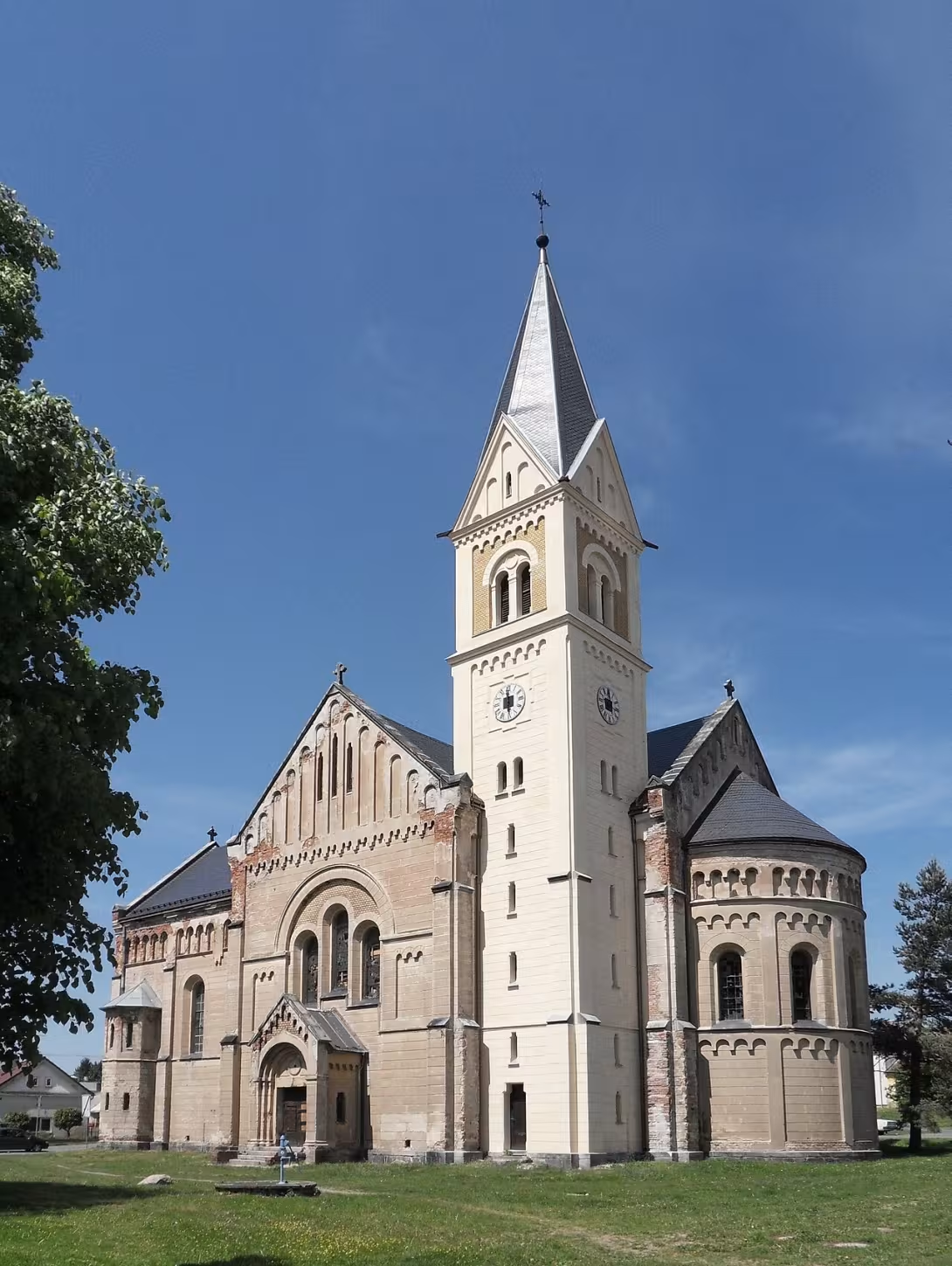
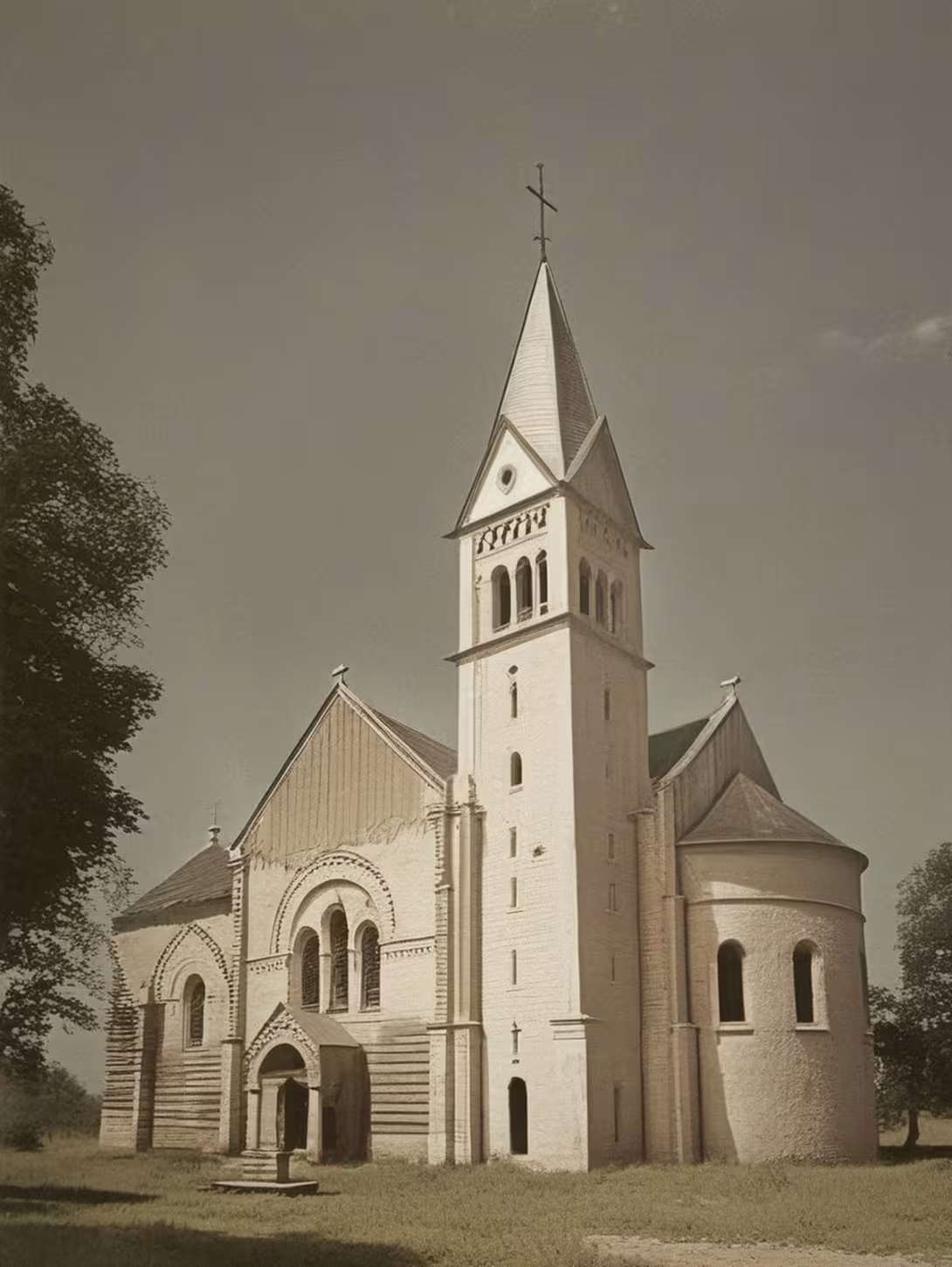
The historical appearance on the left is an AI-generated visualisation and serves as inspiration only.
Historical milestones
- 1901
- The Church of Saint Joseph was consecrated by Bishop Dr. Václav Frind.
- 1899
- The Baroque predecessor church was closed due to its poor condition.
Architectural development
The Church of Saint Joseph was constructed between 1900 and 1901 following a Neo-Romanesque design by architects František Josef Erhart or Josef Schaffer. It replaced an earlier Baroque structure that had become dilapidated, necessitating its demolition. The new church features a cruciform layout with truss ceilings and a tower at the southeast corner.
Historical events
In 1899, the deteriorating Baroque church was closed and demolished to make way for a new construction.
The foundation stone of the new church was laid on March 19, 1900, by Abbot Alfred Ambros Clementso.
On December 15, 1901, Bishop Dr. Václav Frind consecrated the newly completed church.
Points of interest
- The Church of Saint Joseph replaced an older Baroque church that had a small tower added only in 1827, indicating the original structure's modest beginnings before its replacement with the Neo-Romanesque design.
- The stained glass windows in the church depict St. Norbert and St. Hroznata, linking it to the Premonstratensian order, which has historical ties to Úherce dating back to a donation confirmed by King Přemysl Otakar I in 1213.
- After being repurposed for agricultural activities post-1950s due to the expulsion of the German population, the church underwent significant restoration efforts starting in 2006, highlighting its resilience and cultural importance despite periods of neglect.
- The church's architectural design is attributed to either František Josef Erhart or Josef Schaffer, showcasing a blend of medieval and Renaissance forms typical of the Historicism movement in early 20th-century Europe.
- Despite falling into disrepair by 1899, leading to its demolition, the Church of Saint Joseph was consecrated on December 15, 1901, marking a pivotal moment in Úherce's history as it transitioned from Baroque to Neo-Romanesque architecture.
Guide
This guide is narrated by a synthetic voice generated by artificial intelligence.
Show guide text
This text was created by artificial intelligence and has not been editorially reviewed. It may contain inaccuracies.
The Church of Saint Joseph stands in the northwestern corner of the village green in Úherce, a village approximately one and a half kilometers south of Nýřany. It is a neo-Romanesque building from the year 1901.
Úherce is first mentioned in the year 1213. At that time, King Přemysl Otakar the First confirmed that the village had been donated to a female Premonstratensian monastery in Chotěšov. It remained in its possession until the year 1782. Three years later, an exposition was established there, and from 1787 onwards, Úherce became a parish, whose right of presentation belonged to the abbot of the monastery in Teplá.
A smaller Baroque church once stood on the site of today's church. It had a chancel finished with three sides, a rectangular nave, and a tower in the front. At first, it only had a small turret on the roof; the main tower was added to it only in the year 1827. It could hold 480 people. By the year 1899, it had become so dilapidated that they had to close it, and a year later they tore it down. In the meantime, services were held in a wooden temporary chapel.
The foundation stone of the new building was solemnly laid on March nineteenth, 1900 by the abbot of Teplá. According to some sources, the plans were drawn up by František Josef Erhart from Plzeň, according to others by Josef Schaffer from Mariánské Lázně. By the end of the year 1901, the church was completed, and on December fifteenth, it was consecrated by bishop Václav Frind.
The nave has a cruciform floor plan. Both the longitudinal and transverse parts have beam ceilings. The tower stands in the southeastern corner between the chancel and the transverse nave. Triple windows are filled with stained glass paintings. The northern window depicts Saint Hrozata with views of the monasteries in Teplá and in Chotěšov, the southern window depicts Saint Norbert. In the transverse nave are altars of Saint Vojtěch and Saint John of Nepomuk. Opposite them are niches, in one stands a baptismal font, in the other a statue of Our Lady of Lourdes. Four bells were cast in the year 1901 by the imperial and royal court bellfounder Petr Hölzer in Vienna New Town. All of them bear the Teplá coat of arms, and the largest is decorated with reliefs of works of mercy.
Services ended in the nineteen fifties, when the German population was evacuated. The church then served agriculture until the year 2002, and it found itself in acute danger. The municipality took it over and began extensive restoration work. Since 2006, a foundation has been taking care of its renovation. Thanks to it, the church has a completely repaired roof, part of new stained glass windows, a clock and a bell in the tower.
Frequently asked questions
Can the monument be visited?
Religious buildings are usually open mainly during services; at other times a visit is normally arranged with the parish or the operator. We have not verified specific times. According to the heritage register restoration is under way, so access may be restricted.
Where is the monument?
Location: Náves, Úherce, Plzeňský kraj. The map on this page shows the exact spot.
Why is the monument protected?
It is listed in the Central List of Cultural Monuments of the Czech Republic as a cultural monument (register no. 42051/4-1639).
Businesses nearby
Do you run a restaurant, accommodation, shop, museum, rental, wellness or other visitor service near this monument? Show yourself directly to the people heading to it — this is how they will see you in the app and on the web:
Accommodation nearby
Trips and activities nearby
Guided tours, tickets and activities nearby from GetYourGuide
Affiliate link: if you buy from the partner, we may receive a commission. The price for you does not change.
Search tours and activities →Themed route
Tematická výletní trasa: Kostel svatého Josefa v Úhercích
1. Kostel svatého Josefa (Úherce)
Typ: Náboženská památka
Proč stojí za návštěvu: Tento barokní kostel je centrem duchovního života v Úhercích. Jeho bohatě zdobený interiér a historické odkazy na místní komunitu činí z něj nezbytnou atrakci pro každého, kdo cestuje do Plzeňského kraje.
2. Místní památkový park
Typ: Historický park
Proč stojí za návštěvu: Nacházející se v blízkosti kostela, tento park nabízí klidnou přestávku a krásné zelené prostory. Je to ideální místo k odpočinku po prohlídce kostela a poslouchání místních pohádek o historii obce.
3. Muzeum Úherců
Typ: Historické muzeum
Proč stojí za návštěvu: Muzeum nabízí cenný vhled do historie a kultury Úherců, s výstavami zaměřenými na místní tradice a dědictví. Je to skvělý způsob, jak se dozvědět více o životě obyvatel této oblasti po celá staletí.
4. Staré radnice
Typ: Historický architektonický objekt
Proč stojí za návštěvu: Tato budova, nacházející se v centru Úherců, je příkladem místního architektonického stylu. Její historie a význam pro obecní správu dělají z ní zajímavou destinaci pro ty, kteří se zajímají o místní historii.
5. Náměstí Úherců
Typ: Historické náměstí
Proč stojí za návštěvu: Centrální náměstí obce je nejen klíčovým místem pro setkávání a akce, ale také domovem různých historických budov. Je to skvělý způsob k ukončení výletu, přičemž si můžete užít atmosféry obce a jejího dědictví.
Tato trasa nabízí komplexní pohled na historii a kulturu Úherců, s hlavním zaměřením na kostel svatého Josefa.
Seasonal recommendations
Spring: Visiting the Church of St. Joseph in Úherce during spring offers a unique experience as nature awakens around this historic site. The surrounding landscape is adorned with blooming flowers and fresh greenery, creating a vibrant backdrop that enhances the church's architectural beauty. The soft, warm light of early mornings or late afternoons can cast enchanting shadows and illuminate the intricate details of the building. This season sees moderate crowds as locals and tourists alike take advantage of the pleasant weather to explore outdoor sites. It is advisable to wear comfortable layers since temperatures can vary throughout the day. Early morning visits are recommended to enjoy a quieter atmosphere before larger groups arrive.
Summer: Summer at the Church of St. Joseph in Úherce is characterized by long, sunny days that highlight the church's stonework and stained glass windows with bright illumination. The warm weather invites visitors to explore not only the church but also the surrounding natural beauty, making it a perfect time for outdoor activities nearby. However, this season also brings larger crowds due to its popularity among tourists seeking cultural experiences in Plzeňský kraj. To avoid long lines and ensure a more personal experience, consider visiting early in the morning or later in the afternoon. Dressing in light, breathable clothing is essential to stay comfortable during your visit.
Autumn: Autumn transforms the Church of St. Joseph in Úherce into a picturesque scene with its rich palette of reds, oranges, and yellows as the leaves change color. The cooler temperatures provide a more serene atmosphere for visitors, allowing them to appreciate the church's architecture without the summer crowds. This is an ideal time for photography enthusiasts who wish to capture the historic site against the backdrop of fall foliage. While the weather can be unpredictable, with occasional rain showers, it’s wise to wear layers and bring a waterproof jacket. Visiting in late morning or early afternoon ensures optimal lighting conditions for exploring.
Winter: The Church of St. Joseph in Úherce takes on a magical quality during winter, when snow blankets the surrounding landscape, creating a serene and almost ethereal atmosphere. The church's features are accentuated by the soft glow of artificial lights against the snowy backdrop, offering a unique perspective that differs from other seasons. Dress warmly in layers, including thermal clothing and waterproof outerwear, to stay comfortable during your exploration. Winter is also a quieter time with fewer visitors, allowing for a more intimate experience of this historic landmark.
Visualizations and artistic views


The visualisations are generated by artificial intelligence and serve as inspiration.
Photos from the area
Real photos taken near the monument


Zdroj a licence jsou uvedeny u každého snímku.
Tips from visitors
No tips yet. Be the first!
Log in and add your tip.
Sources and literature
Photos: Jik jik / CC BY-SA 3.0 — Wikimedia Commons. The author and licence also appear when you hover over the image.
Faktickým podkladem tohoto textu byl článek na Wikipedii, jehož autory jsou přispěvatelé Wikipedie. Článek je dostupný pod licencí CC BY-SA 4.0.
Location on the map
More monuments – Úherce
Show all in the municipality

Příběhy a pověsti
Legendy, pověsti a příběhy spjaté s touto památkou
Fotografie návštěvníků
Zatím žádné fotografie. Buďte první, kdo přidá fotografii z návštěvy!
Log in a přidejte svou fotografii nebo hodnoťte.
Za ověřenou návštěvu v aplikaci získáte víc bodů — poznáme podle GPS, že jste na místě.
Reviews and comments