



Zámek Hořákov Chateau
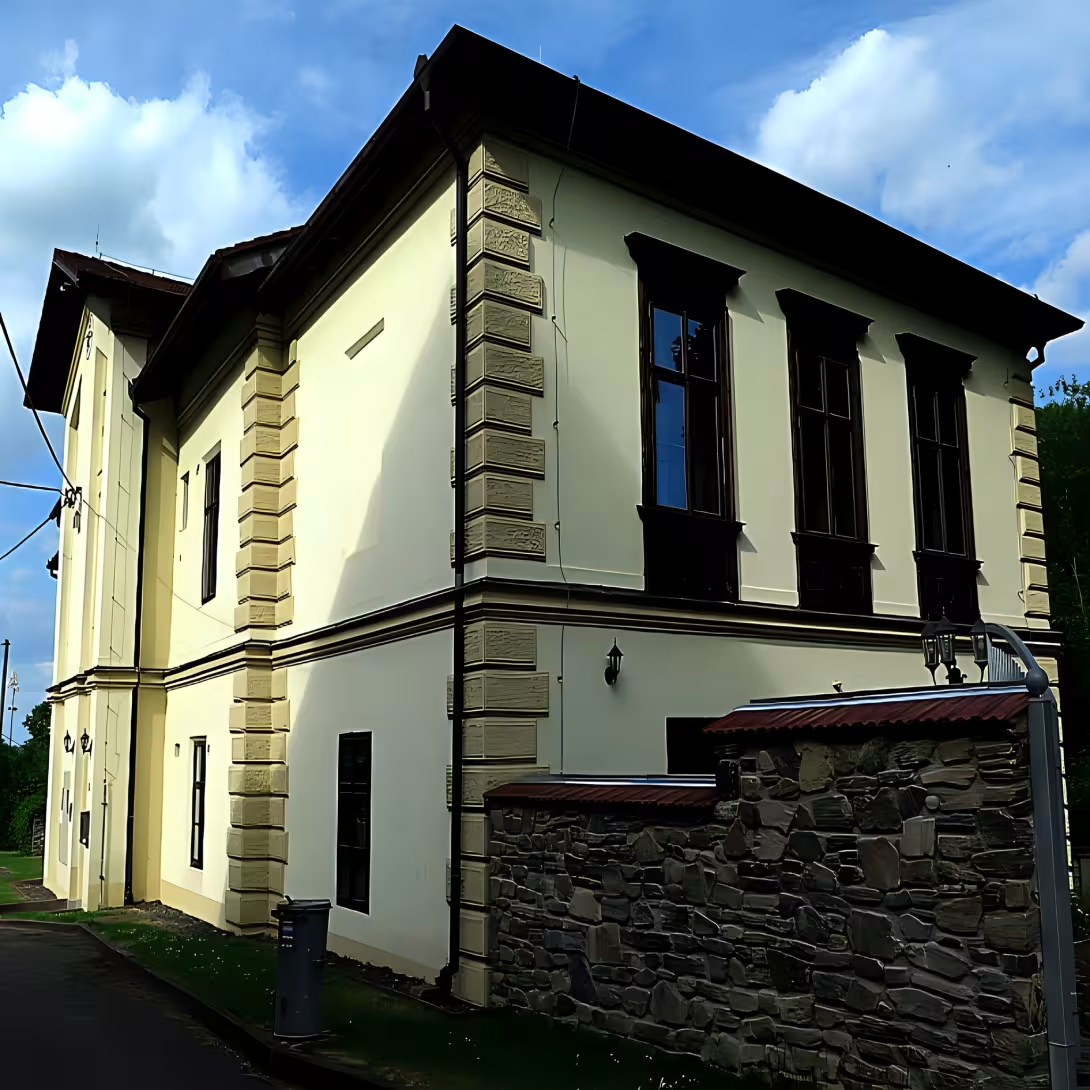
Zámek Hořákov is located in a small village in the Klatov region and grows up in a landscape with a rich history dating back to the Middle Ages. Since the 14th century, the knighthood was built here by Jan Strkovec z Hořákova. From this period, two of the oldest rooms on the ground floor, which resemble its ancient past, have been preserved in the castle.
Today's appearance of the castle was created as a new building in a spirit of historical architecture in the last decades of the 19th century. It was built by Petr Kordík, a local investor involved in rail transport. But a difficult financial situation forced him to sell the castle to his son-in-law Peter Zipperer of Enggenthal. In 1891, he sold it to Bedřich Brábek.
The fate of the building changed significantly in 1897 when Josef František Černín z Chudenic acquired it. This owner decided to rebuild the castle and expand significantly - he added two side wings in the Art Nouveau style, which gave the castle its characteristic form. For Chernin he served as a holiday home where he could move away from rural life. Part of his property was the valuable library of his wife Marie of the Des Fours-Walderod family, who he had moved here. The library accounted for approximately 864 volumes and represented the cultivated interest of the owner in art and science; today, its parts are deposed at the nearby Kozel Castle.
After the First World War, the castle's heritage belonged to the Countess Schönborn. But their ownership ended after World War II, when the castle was confiscated on the basis of Benes' decrees. In the subsequent decades until the 1990s, the building served as a children's sanitarium, a remarkable chapter in its history.
From an architectural point of view, the castle is an example of Art Nouveau extensions, which are especially reflected in the lateral wings. The inner spaces are treated as flat ceilings, except for the two oldest rooms on the ground floor. The original mobility guy didn't preserve himself. The castle is surrounded by a historical park and is supplemented by economic buildings - barns and stables that form the traditional look of the rural area.
Since September 22, 2010 the Hořákov Castle has been protected as a cultural monument. It represents an interesting example of the transformation of a medieval fortress into a representative Art Nouveau mansion and tells the story of alternating owners and their governments. The visitor can follow the layered history of Czech nobility, changing tastes and fate of property in the turbulent history of the 20th century.
Then and now
Drag the slider to compare how the landmark may have looked when it was built with the view today.
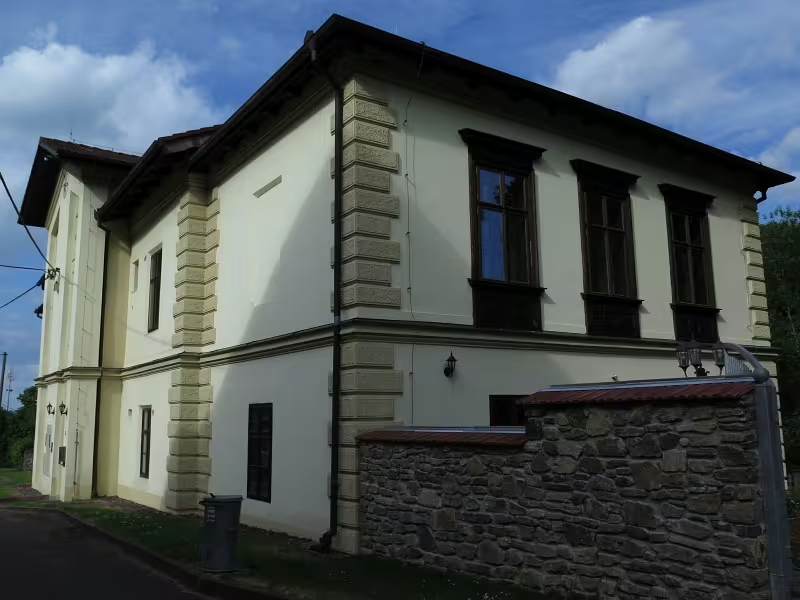

The historical appearance on the left is an AI-generated visualisation and serves as inspiration only.
Historical milestones
- 2010
- The castle was declared a cultural monument.
Architectural development
Originally founded as a new building in the spirit of historical architecture, the castle has undergone expansion and conversion into Art Nouveau style under the direction of Josef Franz Černín. Outside the main building are the premises of the farm and park, with original rooms in the two oldest parts of the ground floor.
Historical events
- 14th Century
- The founding of the original knighthood by Jan Strkovec of Hořákova.
- 1891
- The sale of Peter Kordik to Peter Zipperer from Enggenthal.
- 1897
- Reconstruction and extension of Josef Franz Černín from Chudenice to Art Nouveau style.
- 2010
- The castle was declared a cultural monument.
Owners
The sequence of owners with years if available, otherwise zero.
Points of interest
- Zámek Hořákov has its roots dating back to the 14th century, when the knighthood was built here by Jan Strkovec of Hořákova.
- Today's appearance of the castle was created as a new building in a spirit of historical architecture in the last decades of the 19th century, built by Petr Kordík.
- Josef František Černín z Chudenic rebuilt and expanded the lock by two side wings in Art Nouveau style in 1897.
- The castle served as a holiday home for Josef František Černín, who moved here a valuable library of his wife Marie from the family Des Fours- Walderod.
- After World War II, the castle was confiscated on the basis of Benes' decrees and served as a children's sanitarium until the 1990s.
Guide
This guide is narrated by a synthetic voice generated by artificial intelligence.
Show guide text
This text was created by artificial intelligence and has not been editorially reviewed. It may contain inaccuracies.
Hořákov is a small village in the Klatovy region, which today belongs to Běšiny. There is a castle standing in it, a historicizing building from the nineteenth century. It has been a cultural monument since September 22, 2010.
Originally, a knight's fortress from the fourteenth century stood on the site of the castle. It was founded by Jan Strkovec of Hořákov. However, today's building did not arise from the reconstruction of the fortress. It is a new building from the end of the nineteenth century, built in the spirit of historicizing architecture.
The castle was built by Petr Kordík, who invested in the local railway. However, he soon found himself in a difficult financial situation, and so he sold the castle to his son-in-law Peter Zipperrer from Enggentthal. He sold it further in 1891 to Bedřich Brábek.
In 1897, Josef František Černín from Chudenice acquired the castle. He reconstructed it and expanded it with two side wings in Art Nouveau style. Hořákov served him as a recreational residence. He had his wife Marie's library brought into the castle, from the family Des Fours-Walderode. It originally comprised 864 volumes. Some of them are today stored at Kozel castle.
After the First World War, the castle was inherited by the aristocratic Schönborn family. After the Second World War, it was confiscated on the basis of the Beneš decrees. Until the 1990s, the building then served as a children's sanatorium.
In addition to the main building, the complex includes farm buildings, namely barns and stables, as well as a park. Inside the castle, all spaces have flat ceilings, with the exception of two oldest rooms on the ground floor. The original interior furnishings have not been preserved.
Tips for visitors
The best time to visit the castle Hořákov is autumn or spring when there are beautiful colors and sunlight ideal for photography. At these times you can also make sure of mild experiences that improve traffic.
When visiting, pick up a map of the castle to help you better understand its history and architectural details. Also remember to bring your protective sunglasses and enough drinking glasses, especially during the summer.
For the photography of the Hořákov castle are the best places on its north side where the sun is best captured in the afternoon. An interesting detail for photographers can also be the interior with historical elements.
In the vicinity of the castle you can visit the National Park Plasy, which is ideal for a short walk or picnic. For families with children, this park also offers the opportunity to explore nature and learn about local fauna.
Frequently asked questions
Can the monument be visited?
Some buildings of this kind are open for guided tours, others serve another purpose or are privately owned. We have not verified whether and when this monument is open – please ask the operator.
What are the opening hours and admission?
We have not verified the opening hours or admission. Current information is published by the operator.
Where is the monument?
Location: Hořákov č.p. 5, Běšiny, Plzeňský kraj. The map on this page shows the exact spot.
Why is the monument protected?
It is listed in the Central List of Cultural Monuments of the Czech Republic as a cultural monument (register no. 104064).
For kids
Imagine going back to the time when the Czech king Vladislav Jagellonian was on the throne and the country was full of life, work and playfulness. It was a time when people lived in small villages and cities like Hořákov were key to wealth and power.
Zámek Hořákov was already standing at the place where it stands today, but at that time it was much smaller and easier than the one we know today. It was a wooden building with walls and shingles roof. But still, the castle was the center of life around here, and people came here to see King Vladislav of Jagellonsky.
Businesses nearby
Do you run a restaurant, accommodation, shop, museum, rental, wellness or other visitor service near this monument? Show yourself directly to the people heading to it — this is how they will see you in the app and on the web:
Events nearby
Zdroj akcí: otevřená data měst a obcí ČR (Národní katalog otevřených dat) a kalendář akcí Národního památkového ústavu.
Nearby
Ambient landscape, other monuments, natural elements up to 5 km or zero.
Accommodation nearby
Themed route
Route: Hořákov - Zámek Hořákov
1. Zámek Hořákov (main objective) - Zámek Hořákov is a remarkable example of Renaissance architecture in Pilsen Region. His history dates back to the 16th century, when he built the House of Lords from Vlkanov. In the 17th century the castle underwent a Baroque reconstruction. There is a remarkable hall with a vault and an Empire chapel. 2. St. Nicholas Church - St. Nicholas Church is a parish church in the village Hořákov. It's an early Gothic church built in the 13th century. In the 17th century it underwent a Baroque reconstruction. The church is famous for its Gothic frescos and Baroque altars. 3. Hořákov pond - Hořákov pond is a small pond located near the castle. It has cultural and historical value and is used for recreational purposes.
Seasonal recommendations
Spring:
Spring is the perfect time to visit the Hořákov Castle, because nature is in full bloom and the surrounding castle is attracted by flowers. The atmosphere is full of optimism and expectations. It is advisable to besiege in the morning to avoid crowds.
Summer:
Summer is the main season for visitors to the castle Hořákov. We recommend that visitors arrive early to avoid crowds starting to form in the afternoon.
Autumn:
In autumn the Hořákov Castle is surrounded by beautiful colours of autumn nature. The atmosphere is calm and calm. It is advisable to besiege in the late evening to avoid crowds.
Winter:
Winter season is ideal for visiting the castle Hořákov because there are fewer visitors and the atmosphere is calm. We recommend that visitors arrive in the morning to avoid a closed door and to have sufficient time for a tour.
Visualizations and artistic views


The visualisations are generated by artificial intelligence and serve as inspiration.
Photos from the area
Real photos taken near the monument

Zdroj a licence jsou uvedeny u každého snímku.
Atmosphere of the place
This atmospheric visualisation of the place and period was generated by artificial intelligence. It is not real footage of the location.
Tips from visitors
No tips yet. Be the first!
Log in and add your tip.
Sources and literature
Photos: Sovicka169 / CC BY-SA 4.0, rozlišení zvýšeno umělou inteligencí — Wikimedia Commons. The author and licence also appear when you hover over the image.
Faktickým podkladem tohoto textu byl článek na Wikipedii, jehož autory jsou přispěvatelé Wikipedie. Článek je dostupný pod licencí CC BY-SA 4.0.
Location on the map
More monuments – Hořákov
Show all in the municipality

Příběhy a pověsti
Legendy, pověsti a příběhy spjaté s touto památkou
Fotografie návštěvníků
Zatím žádné fotografie. Buďte první, kdo přidá fotografii z návštěvy!
Log in a přidejte svou fotografii nebo hodnoťte.
Za ověřenou návštěvu v aplikaci získáte víc bodů — poznáme podle GPS, že jste na místě.
Reviews and comments