



Kostel svatého Linharta (Citov) Church
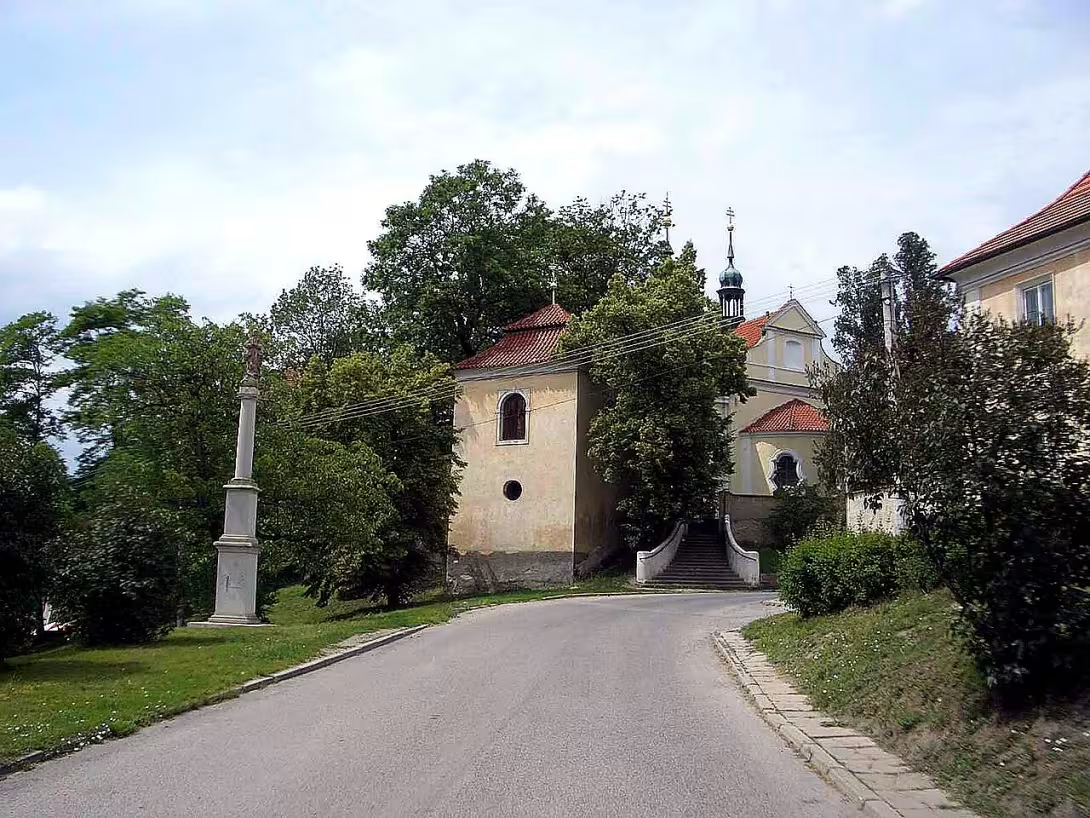
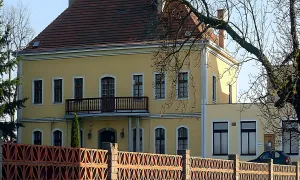
The church of St. Linhart stands on the roof of the city in the district of Mělník by the road connecting Mělník and Roudnice above Labem. It is a protected Baroque building complex including a temple, a bell tower, a fence wall and a cemetery. It is not a building of monumental dimensions, but its organic modesty makes it an authentic testament to the long life of a small Czech village.
The church dates from the beginning of the 13th century. Tradition ascribes its creation to an undetermined woman, whom we see on the stone relief of the tympanone - kneeling before the cross with the image of crucified Christ. This solution is interesting and puts the donor at the center of attention in an unusual way. The oldest written mention of the church is from 1268, when Smil of Cítov owned it. In 1352 it was already included as a parochial anchor, indicating its ever-increasing importance.
In the 17th and 18th centuries the temple went through gradual changes. The second half of the 17th century brought minor modifications and equipment. The fundamental transformation took place in 1753 through Baroque reconstruction. The ship was extended on the west side and attached a fancy new facade with a volute shield. The facade contains three niche: in the middle of the statue of St. Joseph with Jesus, on the sides of St. Wenceslas and St. Florian. This iconographic program is typical of Czech rural temples.
Remarkable is that the original Romanesque ensemble remained under the Baroque layer. In the reconstruction in 1943, the historian Václav Mencl systematically discovered and documented the circumferential wall of the ship, the apside and other elements. The last major repairs took place in the 1990s.
The temple includes a bell tower, which according to some records was created by the cargo of Count Jan Hubert from Hartig in the first half of the 18th century. The protected complex also includes a fenced wall and an old cemetery. The parish house and the pestilence column with the statue of the Virgin Mary Immaculata from 1713 are protected separately.
The interior is mostly baroque. The main altar presents a rococo work from the mid-18th century with statues of St. Linhart and St. Nicholas; It also contains a 17th century painting of St. Linhart. Ecclesiastes came from the Baroque, but were modified in the 19th century. In the side chapel there are two altars with sculptor reliefs of St. Hubert and St. Anna. The stone baptizer with carved reliefs and wooden lid from the first half of the 18th century is special.
Visiting the church pays off mainly because of its strata - you can see here the foundations from the 13th century, which the Baroque architecture of the 18th century has sensitively transformed, and everything complements the ordinary repairs of the 20th century. This continuity makes the church a living testament to the history of a small Czech village.
Then and now
Drag the slider to compare how the landmark may have looked when it was built with the view today.
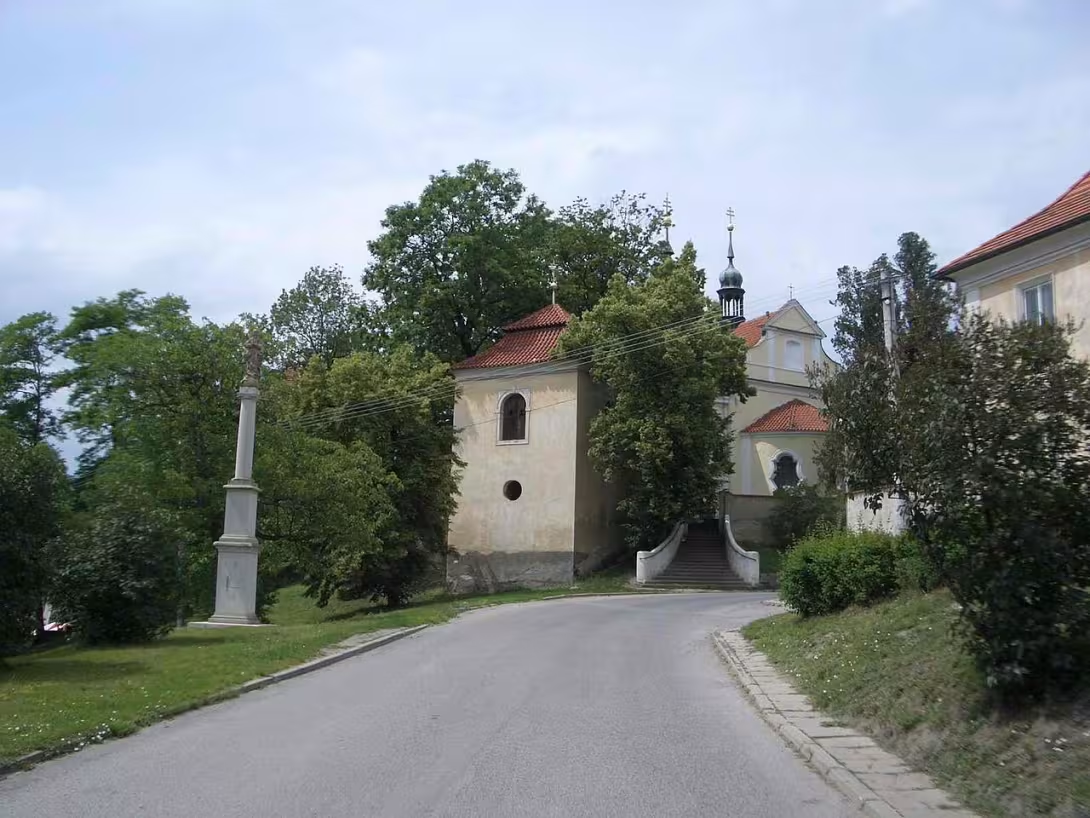
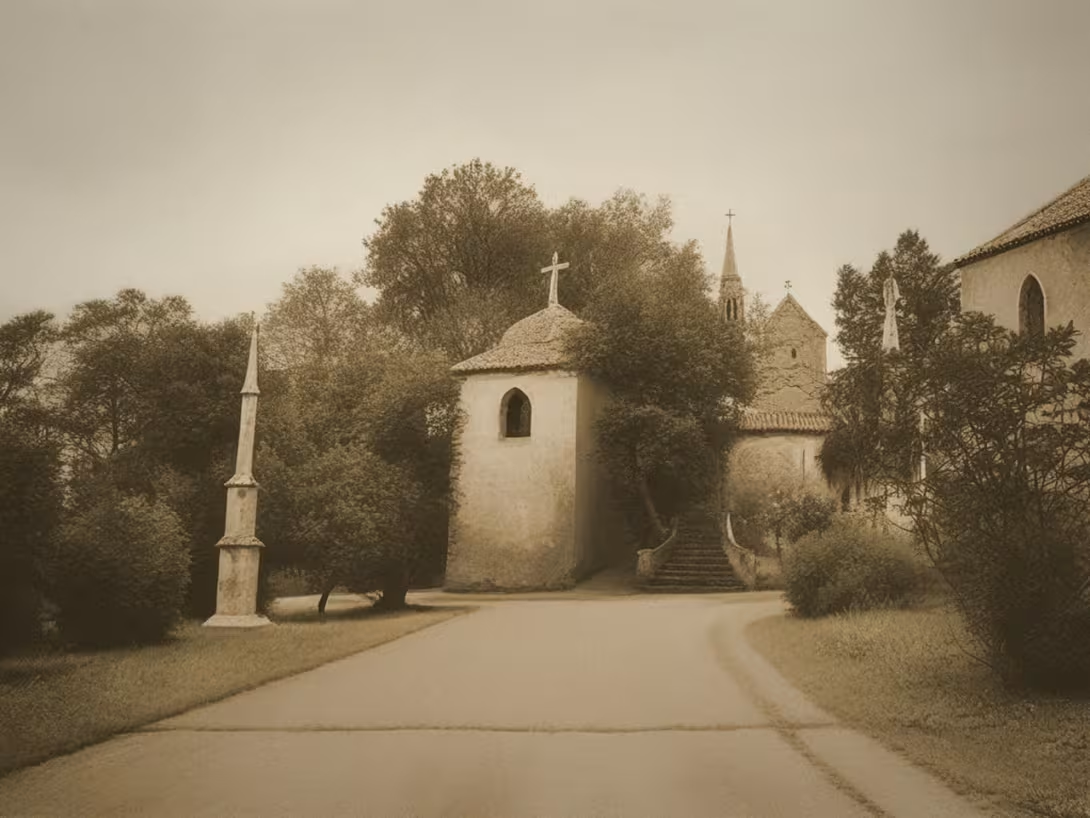
The historical appearance on the left is an AI-generated visualisation and serves as inspiration only.
Historical milestones
- 1210
- The establishment of St. Linhart's Church as a Roman sacral building
- 1268
- First written mention of ownership of the church by Smilem from Etitov
- 1352
- The church became parochial
- 1753
- Basic Baroque reconstruction of the church, including extension of the ship and construction of the facade
- 1690
- Status of the bell tower in the church area
Architectural development
The church was created as a one-ship Romanesque building with a semi-circular apside in the early 13th century. In the 17th century there were partial modifications to the interior, but the main Baroque reconstruction took place in 1753. During it the boat was extended on the west side and added a newly decorated facade with a volute shield. The original Romanesque building preserved the circumferential wall of the ship, apsid and tympanone with relief. The bell tower was built in 1690, probably at the expense of Count John Hubert of Hartig.
Historical events
1268 - First written mention of ownership of the church by Smilem of Etitov.
1352 - Church became parish.
1753 - A fundamental Baroque reconstruction of the church, including the extension of the ship and the construction of a magnificent facade.
1943 - The discovery and documentation of original Romanesque building elements during reconstruction.
Owners
The first written mention of ownership of the church dates back to 1268, when Smil of Cítov owned it. Since the 14th century the church has been parochial and its other history is connected to local noble families, such as the earls of Hartig in the 18th century.
Points of interest
- St. Linhart's Church is a Baroque building complex that includes a bell tower, a wall and a cemetery in addition to the temple.
- The original Romanesque church from the beginning of the 13th century is hidden under the Baroque layer, but it was discovered and documented by the historian Václav Mencl during the reconstruction of 1943.
- On the stone relief of the tympanone is depicted an indefinite woman who kneels before the cross with crucified Christ.
- The first written mention of the church dates back to 1268 when Smil of Etitov owned it.
- The bell tower was probably built at the expense of Count John Hubert of Hartig in the first half of the 18th century.
Guide
This guide is narrated by a synthetic voice generated by artificial intelligence.
Show guide text
This text was created by artificial intelligence and has not been editorially reviewed. It may contain inaccuracies.
The Church of Saint Linhardt stands on a hilltop in the middle of Cítov in the Mělník region, near the road from Mělník to Roudnice nad Labem. Together with the bell tower, the cemetery wall, stairs and a Marian column, it forms a Baroque architectural complex that is protected as a cultural monument.
However, the origins of the church date back to the beginning of the thirteenth century. The construction was supported at that time by a woman whose name we do not know. However, her likeness has been preserved. A relief in the tympanum depicts her kneeling before a cross with an engraved body of the crucified Christ. The first written mention comes from the year 1268 and names the church's owner, Smila of Cítov. By 1352, the church was already a parish church.
Various modifications and new furnishings came in the second half of the seventeenth century. A fundamental transformation came in 1753. The nave was extended on the western side and received a splendid façade with a curly gable and three niches. In the center is a statue of Saint Joseph with the Christ Child, with statues of Saint Wenceslas and Saint Florian on either side.
From the original Romanesque building, the perimeter walls of the nave, the apse, the tympanum and some other architectural elements remained. These were discovered during reconstruction in 1943 and were described by Václav Mencl. After that, only minor repairs and modifications followed, the last one in the nineteen nineties.
The bell tower dates according to one source from 1690. However, Ludvík Böhm places it in the first half of the eighteenth century and states that it was built at the expense of Count Jan Hubert of Hartigen. The protected complex also includes the cemetery wall and the old cemetery, where burials no longer take place.
The interior furnishings are predominantly Baroque. The main altar has Rococo architecture from the mid-eighteenth century. It features a painting of Saint Linhardt from the seventeenth century and Baroque statues of Saint Linhardt and Saint Nicholas. The Baroque pulpit was modified in the nineteenth century. In the side chapel are two altars with reliefs of Saint Hubert and Saint Anne. A stone baptismal font with carved reliefs and a wooden lid dates from the first half of the eighteenth century.
Separately protected in the village are also the parish house and a plague column with a statue of the Immaculate Virgin Mary from 1713.
Frequently asked questions
Is Kostel svatého Linharta (Citov) open to the public?
Yes, the church is open to the public. The opening hours are 9:00 to 5:00.
How do I get to the place by car / public transport?
The Church of St. Linhart is located in the heart of the village of Cítov. The car can be reached by road III / 0003, which leads from Mělníka to Cítov. Public transport is available by connection from Mělníka.
How much is the entrance fee and is it paid on the spot?
Payment takes place directly inside the church.
Is the tour suitable for children and seniors?
Yes, a church tour is also suitable for families with children and seniors. The church has accessible staircases and uncomplicated spaces.
How long does the tour take?
The church tour takes approximately 30-45 minutes, depending on the speed of the visitors.
What are the opening times and booking is required?
St. Linhart's Church is open to the public from 9:00 to 5:00. Reservation is not necessary, but prior contact with the church is recommended when visiting larger groups.
What's interesting in the immediate vicinity?
In the vicinity of the church is located the historical village of Cítov with several cultural-historical monuments such as former mills or settlements.
For kids
Imagine going back 816 years and sitting in a small village of Etitos at Mělník. The church of St. Linhart was already on the hill in the centre of the village and was the center of the life of the local people.
It was like a small fortress protecting the village from raids. There was a cemetery around the church where they buried the locals. The church stood high above the village so that its bells could report good news to all corners.
Businesses nearby
Do you run a restaurant, accommodation, shop, museum, rental, wellness or other visitor service near this monument? Show yourself directly to the people heading to it — this is how they will see you in the app and on the web:
Events nearby
Zdroj akcí: otevřená data měst a obcí ČR (Národní katalog otevřených dat) a kalendář akcí Národního památkového ústavu.
Nearby
- 1713
Accommodation nearby
Themed route
Thematic cruise route from Citova
1.Kostel svatého Linharta (Citov) - * Type: * Church - * Why is it worth visiting: * This Baroque church is not only a cultural monument but also a centre of the spiritual life of the village. Its architecture and historical significance make it the ideal start of your trip.
2. Fara in Capita - * Type: * Church parish - * Why is it worth a visit: * Located close to the church of St. Linhart and is also protected as a cultural monument. Fara offers an interesting view of the history of the local clergy and architecture.
3. Platoon with Virgin Mary Immaculate - * Type: * Sculpture monument - * Why is it worth visiting: * This historic plague column from 1713 is located approximately 500 metres from the church. It is part of a protected area and symbolizes the spiritual protection of the population.
4. Natural Reserve Black les - * Type: * Natural reservation - * Why is it worth visiting: * This reservation offers an opportunity to explore the original forest ecosystems and diverse fauna. It is an ideal place to relax in nature after visiting historical monuments.
This route offers a combination of cultural and natural experiences, which is the perfect choice for a day trip.
Seasonal recommendations
Spring: In the spring period, the Church of St. Linhart in Citov boasts warm sunlight, which brightly decorates the interior of the church and paints a lively palette of colours on its frescoes. The garden around the monument begins to bloom, which adds to the atmosphere a touch of a new beginning. Visitors should choose clothes suitable for a mild temperature and prepare for possible rain because spring weather can suddenly be variable. The best time to visit is in the morning or evening when we avoid crowds and can enjoy a quiet view of the church in a fine light game.
Summer: In summer, the Church of St. Linhart offers visitors a cool refuge from sun fire. The atmosphere is full of life, where people gather around the church in the afternoons and evenings, often having fun under the shady trees. It is advisable to visit early in the morning or later in the evening to avoid heat and crowds that are particularly numerous during the main summer season. Don't forget the sun protection and enough drinking stuff.
Autumn: Autumn brings the Church of St. Linhart in Citov a beautiful golden palette of colors, when tree leaves take on live colors. The sunny days are warm and ideal for walking around the sights, while cooler evenings bring a calmer visit to the church itself. Clothes should be suitable for mild temperatures and rain, because autumn weather is often variable. The best times to visit are early morning or late evening, when you can resort from the crowds and see the church in a quiet atmosphere.
Winter: Winter brings the Church of St. Linhart in Citov a unique atmosphere where its architectural elements are exposed in the snow curtain. Sun rays illuminating the church interior add magic and peace to the visit, especially during advent time. Visitors should be equipped with warm clothes and suitable shoes for cold surfaces. Due to the shorter daylight, the best time to visit the morning is when they can enjoy quiet moments without crowds and overlooking the winter landscape around the monument.
Visualizations and artistic views


The visualisations are generated by artificial intelligence and serve as inspiration.
Photos from the area
Real photos taken near the monument

Zdroj a licence jsou uvedeny u každého snímku.
Atmosphere of the place
This atmospheric visualisation of the place and period was generated by artificial intelligence. It is not real footage of the location.
Tips from visitors
No tips yet. Be the first!
Log in and add your tip.
Sources and literature
Photos: Svenkaj / CC BY-SA 4.0 — Wikimedia Commons. The author and licence also appear when you hover over the image.
Faktickým podkladem tohoto textu byl článek na Wikipedii, jehož autory jsou přispěvatelé Wikipedie. Článek je dostupný pod licencí CC BY-SA 4.0.
Location on the map





Příběhy a pověsti
Legendy, pověsti a příběhy spjaté s touto památkou
Fotografie návštěvníků
Zatím žádné fotografie. Buďte první, kdo přidá fotografii z návštěvy!
Log in a přidejte svou fotografii nebo hodnoťte.
Za ověřenou návštěvu v aplikaci získáte víc bodů — poznáme podle GPS, že jste na místě.
Reviews and comments