






Kostel svatého Linharta (Hlavice) Church
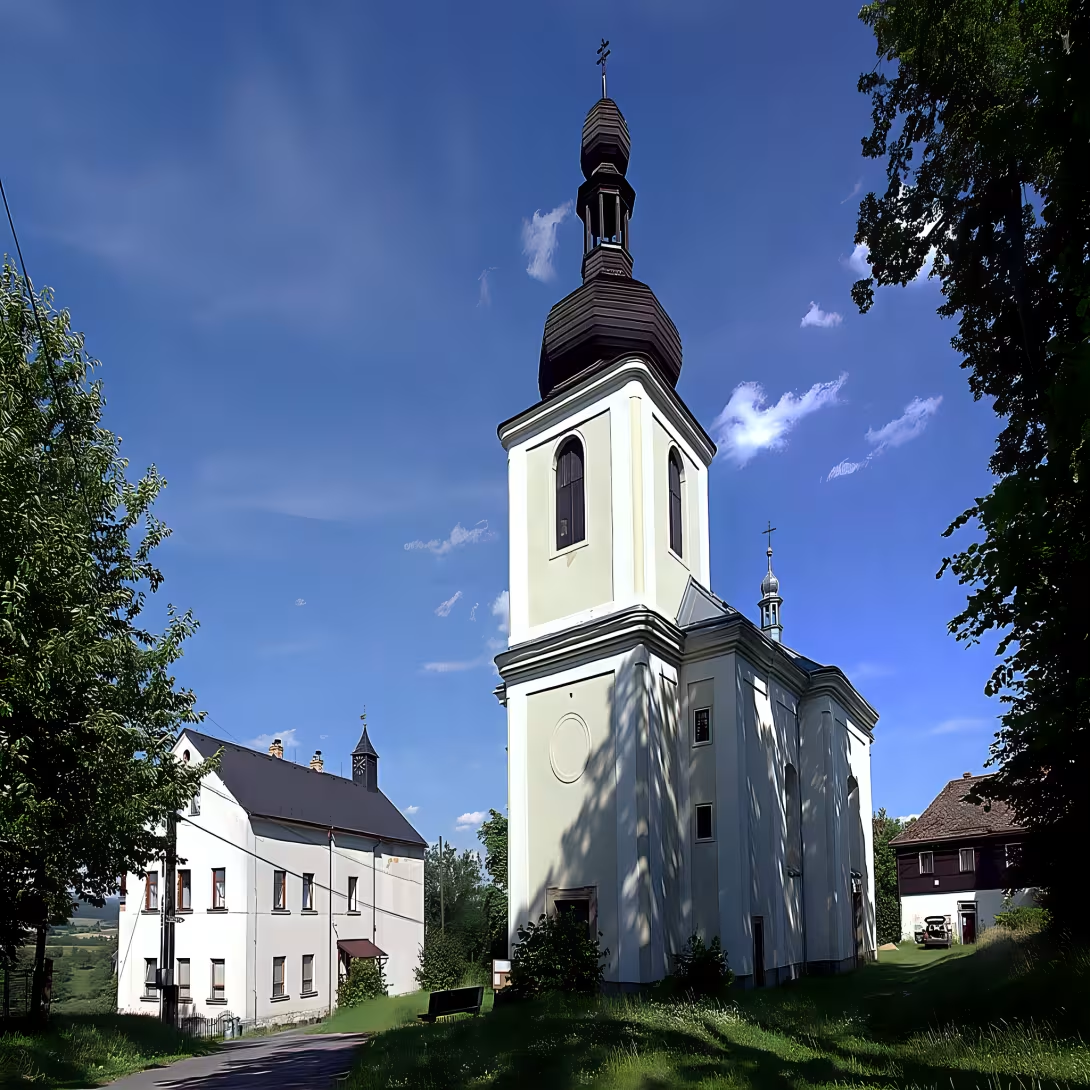
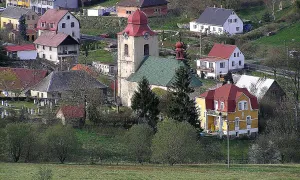
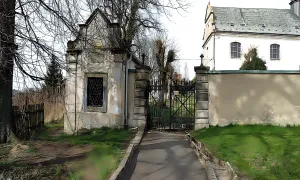
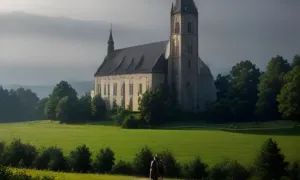
St. Linhart's Church in Hlavice is a late Baroque sacred building located in the highest place of the village, known as' Head '. He's standing at a school and a parish house in the east. Recognised as a cultural monument in the Czech Republic, it serves as both a parish church and a pilgrimage place where pilgrims have historically gathered for the blessing against animal plague.
The origin of this church dates back to the mid-18th century when the Czechs were under the Habsburg monarchy. In 1747, a serious epidemic affected the area, but it spared the parish Hlavice. This event led to the construction of a church between 1748 and 1759. The church became famous for its procession to Saint Linhart, patron saint of cattle, after this miraculous saving from the plague.
Architecturally, it's a one-ship rectangular construction made of sandstone blocks. It has central risties on both sides, rectangular chancel, and top towers covered with shingle on the facade. The tower is segmented by pilasters with segmental windows and contains a hall inside. The roof and presbyter vault are covered with tin templates, while the facade is divided into light green fields framed by white Pilaster frames.
The inner furnishings of the church mainly reflects the rococo style. The main altar is Rococo-framed piece supported by angels, with the picture of St. Linhart painted by J. Maschka in 1894. In addition, there are rooted statues on the altar holes and a historically significant painting showing the procession of the plague from Munich Hradiště to Hlavice in 1748, even though it is considered artistically weak.
In front of the church stands the statue of Saint Linhart surrounded by symbols representing his miracles: half-characters horse, bull, goats and sheep. This statue lies on a concave base with relief depicting these miracles, reflecting the style of Matthias Braun around 1740. There is also a statue of St. John Nepomucena nearby.
Today, St. Linhart's Church remains an active parish church and a pilgrimage place. Its historical significance and architectural beauty make it a useful visit for those interested in Baroque art and religious history. The atmosphere described in his novels by Caroline Light adds to its cultural charm and invites visitors to experience this unique blend of faith and heritage.
Then and now
Drag the slider to compare how the landmark may have looked when it was built with the view today.
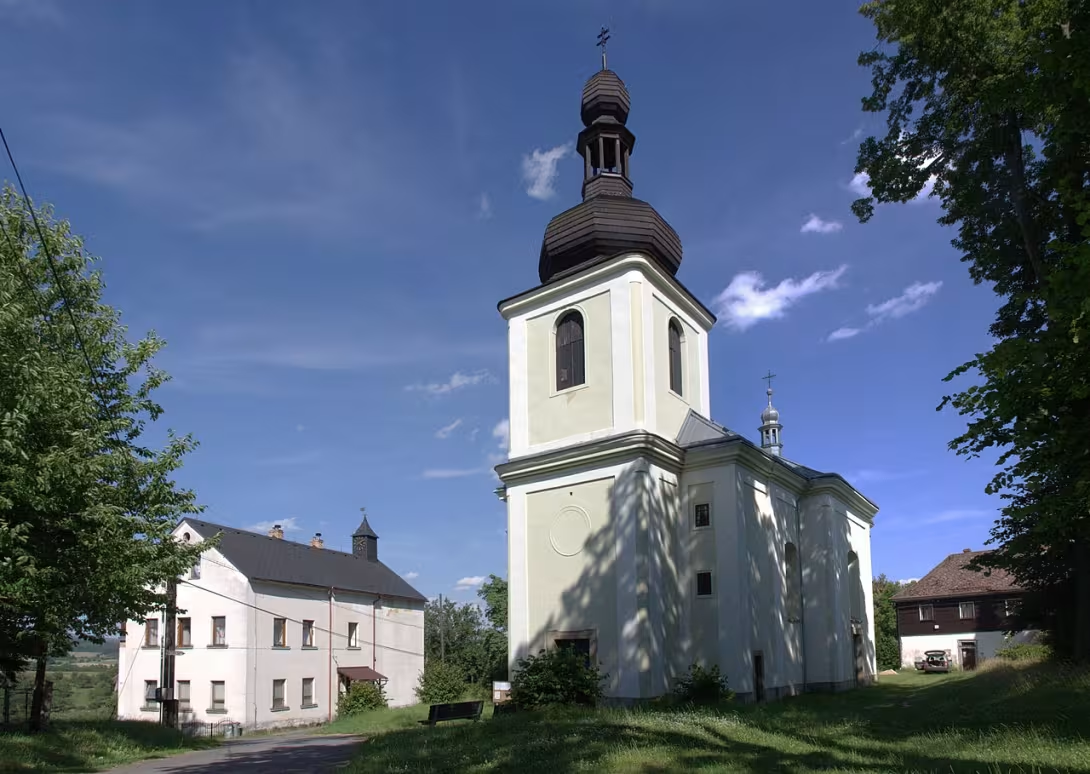
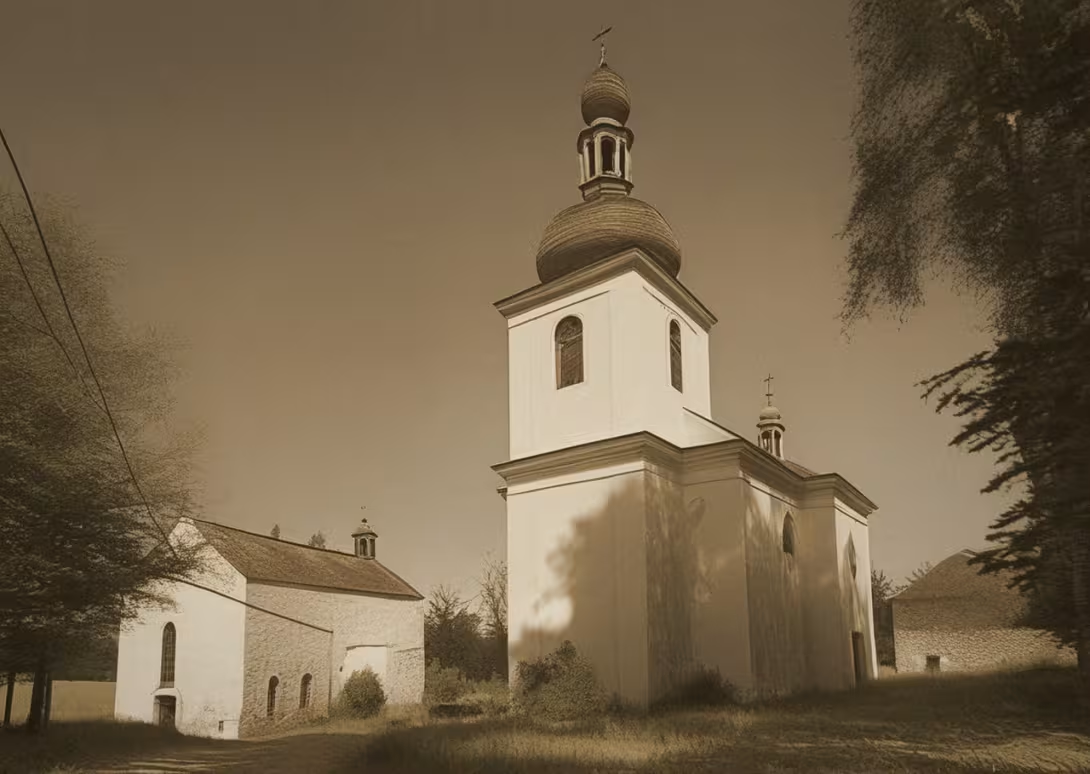
The historical appearance on the left is an AI-generated visualisation and serves as inspiration only.
Historical milestones
- 1748
- the church became a place for the procession to Saint Linhart after the animal plague epidemic which spared Hlavice parish.
Architectural development
The Church of Saint Linhart is a late baroque single-boat rectangular building built from sandstone blocks. It has a central risalite on both sides with a rectangular cannon and a pointed tower with a panelling in the front. The tower is divided by pilasters with segment windows and inside is the hall. The roofs are covered with tin templates, while the presbytery has a arched ceiling. The facade is divided into light green fields framed by white pilaster frames.
Historical events
In 1747, the surrounding area was affected by a major epidemic of animal plague, but it spared the parish Hlavice, which triggered the construction of the church between 1748 and 1759. The church became known for its procession to Saint Linhart, patron saint of livestock.
the church gained literary fame thanks to the works of Caroline Svělová, which described the atmosphere of the pilgrimage Hlavice in its novels.
Points of interest
- The Church of St. Linhart is located in the highest place in Hlavice known as' Head ', which translates into' head 'in English, symbolizing its endurance and importance in the village.
- Despite the fact that it was spared from a serious epidemic in 1747, which affected the surrounding area, the construction of the church was inspired by this miraculous event, which led to its completion between 1748 and 1759 as an expression of gratitude and faith.
Guide
This guide is narrated by a synthetic voice generated by artificial intelligence.
Show guide text
This text was created by artificial intelligence and has not been editorially reviewed. It may contain inaccuracies.
Welcome to the Church of Saint Linhart in Hlavice, a beacon of history and spirituality hidden in the heart of this charming village. As you stand here on 'Head,' or 'Head' as it translates, you are in the highest place in Hlavice - a place that not only gives the village its name, but also symbolizes the church at the top of the community.
The Church of St. Linhart is a late Baroque sacred building, standing gracefully in the middle of an open space. Its location next to the school and parish house in the east adds to a quiet atmosphere, inviting you to a world where history and faith intersect. This church has long been recognized as more than just a place of worship; It is a pilgrimage that attracts visitors who seek blessing against animal plague, which is proof of its permanent spiritual importance.
Let's immerse ourselves in its origins and historical context. In 1748, the church became a focus of processions dedicated to Saint Linhart, after an animal plague epidemic, which remarkably spared the parish Hlavice. This event meant the beginning of its role as a sanctuary against adversity, linking the fate of the community to the divine protection that they believe Saint Linhart is offering.
As you look at the church, take in its architectural beauty. While specific details of his creators remain covered in mystery, the late Baroque style talks about volumes with its elegant lines and harmonious proportions. The very presence of this structure at such a point of view causes contemplation - not only about its aesthetic attraction, but also about the countless stories it has endured silently for centuries.
The history of the church is rich in stories of resistance and faith. One cannot help but be touched by the story of how the people of Hlavice turned to this sacred place for comfort and protection in times of crisis. It is proof of their unwavering faith in the intercession of Saint Linhart.
Now, let your curiosity lead you to one of the most interesting aspects of the church - precisely why it came known as a pilgrimage place. At a time when farm animals were part of life, like the country itself, this church offered a blessing against animal plague, which attracted people from a wide and wide area in hopes of protecting their livelihoods.
As we conclude our journey through time at St. Linhart's Church, I urge you to stay a little longer. Let your senses absorb the peace that surrounds this sacred space. Whether it's a gentle whisper of history or a silent prayer that's been heard inside these walls, there's something deeply moving around here.
Thank you for joining me. Let your visit inspire reflection and discovery as you continue to uncover stories carved into Hlavice itself. Goodbye until our paths cross again in search of the hidden treasures of history.
Tips for visitors
The best time to visit the church of St. Linhart in Hlavice is late in spring or early autumn when the weather is mild, so it is pleasant to walk around the village and discover the church of land. These seasons also offer beautiful natural lighting, which increases architectural details of the church. In addition, a visit outside the main holidays can provide a quieter experience with fewer crowds.
Parking near St. Linhart's church is generally comfortable because there are spaces nearby where the church is located in the village's highest point. Public transport options are also accessible, but it is advisable to check current routes and plans through online search or local travel resources for the most up-to-date information.
When visiting the church in Saint Linhart, consider bringing comfortable walking shoes as you explore the open space around the church. The camera is recommended to capture the stunning Baroque architecture and detailed statue of St. Linhart with its surrounding symbols. Among the best photographic sites are the front part of the church, where natural light highlights complex details of statues.
Near, within a 30-minute walk or short drive, you can explore other local attractions that complement your visit to St. Linhart's Church. While there are no specific places in this document, typical nearby places may include historical monuments or picturesque views around Hlavice. For families with children, consider bringing with you some refreshments and water for a comfortable trip. The open area around the church can be a pleasant place for children to explore.
Businesses nearby
Do you run a restaurant, accommodation, shop, museum, rental, wellness or other visitor service near this monument? Show yourself directly to the people heading to it — this is how they will see you in the app and on the web:
Events nearby
Zdroj akcí: otevřená data měst a obcí ČR (Národní katalog otevřených dat) a kalendář akcí Národního památkového ústavu.
Nearby
In front of the church stands the statue of Saint Linhart surrounded by symbols representing his miracles: half-characters horse, bull, goats and sheep. The statue lies on a concave base with relief depicting these miracles, reflecting the style of Matthias Braun around 1740. There is also a statue of St. John Nepomucena nearby.
Accommodation nearby
Trips and activities nearby
Guided tours, tickets and activities nearby from GetYourGuide
Affiliate link: if you buy from the partner, we may receive a commission. The price for you does not change.
Search tours and activities →Themed route
Thematic travel plan: Legacy of Saint Linhart
1.Kostel svatého Linharta (Hlavice) - Type: Church - Why Visit: Start your journey in the heart of Hlavice with the stunning Church of St. Linhart, proof of Baroque architecture and spiritual heritage. Explore its complicated design and calm atmosphere that inspired generations.
2. Statue of Saint Linhart - Type: Statue - Why Visit: Just outside the church stands an evocative statue of St. Linhart. This statue is surrounded by symbols representing its miracles - half-bodied horses, bull, goats and sheep. Created in the style of Matthias Braun around 1740, it offers insight into the artistic expression and religious narrative of its time.
3. Discount on Concave Base - Type: artwork - Why Visit: Take a closer look at the concave base supporting the statue of Saint Linhart. Reliably depicts his miracles, he provides a visual story that enhances your understanding of local folklore and artistic traditions from the 18th century.
4. Statue of St. John Nepomuceno - Type: Statue - Why Visit: Near, you will find another charming piece: statue of St. John Nepomucena. This statue contributes to the spiritual environment of the area and offers a moment to think about the topics of faith and devotion that are central to the cultural identity of the region.
This thematic tour invites you to immerse yourself in a rich historical and artistic heritage around the Church of St. Linhart, which will provide you with a deeper appreciation of its importance within the Hlavice.
Seasonal recommendations
Spring: St. Linhart's Church's entrance to the spring-possible acquisition of one experience, where nature lags out of the general winter allowed. Green meadows and which shrub around were supplied only with paints and odours that were intended for production. The sunny world transforming the atmosphere of the living, ideal to walk past the historic bridges of the cube. Despite the growing crowd at a distance of warmer weather, it is to be with the longer opening hours that can be planned new rights according to your conditions. The immaterial grant of the aid is not conditional on complementary shoes and exclusion for small forms, the abyss also enjoyed the green edge of the cubes.
Summer: Summer in Hlavice encourages St. Linhart's Church to take the test in the sun, where the green landscape is the most beautiful. The sun illuminates the church architecture and its own dramatic states that go into the historical interior. However, it should be borne in mind that this is the fact that it is a specific measure to be taken. We recommend visiting the church early in the morning or later in the evening to avoid heat and davom. You wear a light suit, a protective product and enough drinking drink to enjoy your journey along the way that is best suited.
Autumn: The Holy Church In autumn, Linharta offers one moved on to its historical architecture by a walled city of sunny goods and golden colours of leaves. The atmosphere is calm, with mild crowds, which allows intimate prosthetic church interiors. In this case, steps may be taken which should be carried out in case the number of days would fall in order to verify that the conditions laid down in Article Nositte are met by warm cabbages and protective shoes for use during cold autumn days. This solution is ideal for those with a direct-access rest facility.
Winter: The winter intensity of the St. Linhart skeleton offers a magical foundation for the structure of the walled ice rays and perhaps a doctrine of light snow that gives a romantic impression. The atmosphere is calm with minimal content, which means that it is a combination of products which are the subject of interiors without being a different product. The Nimenia opening hours this season may be nothing with daylight and cold weather, so it is important to check the updates. Wear warm suits, incl. fur coat or hat, protective shoes and perhaps an umbrella, help to the snow product. This season is ideal for those who look calm demanding with one-way production.
Visualizations and artistic views


The visualisations are generated by artificial intelligence and serve as inspiration.
Photos from the area
Real photos taken near the monument

Zdroj a licence jsou uvedeny u každého snímku.
Tips from visitors
No tips yet. Be the first!
Log in and add your tip.
Sources and literature
Fotografie: Martin Mašek / CC BY-SA 4.0, rozlišení zvýšeno umělou inteligencí — Wikimedia Commons. The author and licence also appear when you hover over the image.
Faktickým podkladem tohoto textu byl článek na Wikipedii, jehož autory jsou přispěvatelé Wikipedie. Článek je dostupný pod licencí CC BY-SA 4.0.
Location on the map
Příběhy a pověsti
Legendy, pověsti a příběhy spjaté s touto památkou
Fotografie návštěvníků
Zatím žádné fotografie. Buďte první, kdo přidá fotografii z návštěvy!
Přihlaste se a přidejte svou fotografii nebo hodnoťte.
Za ověřenou návštěvu v aplikaci získáte víc bodů — poznáme podle GPS, že jste na místě.
Reviews and comments