






Kostel svatého Linharta (Jirkov) Church
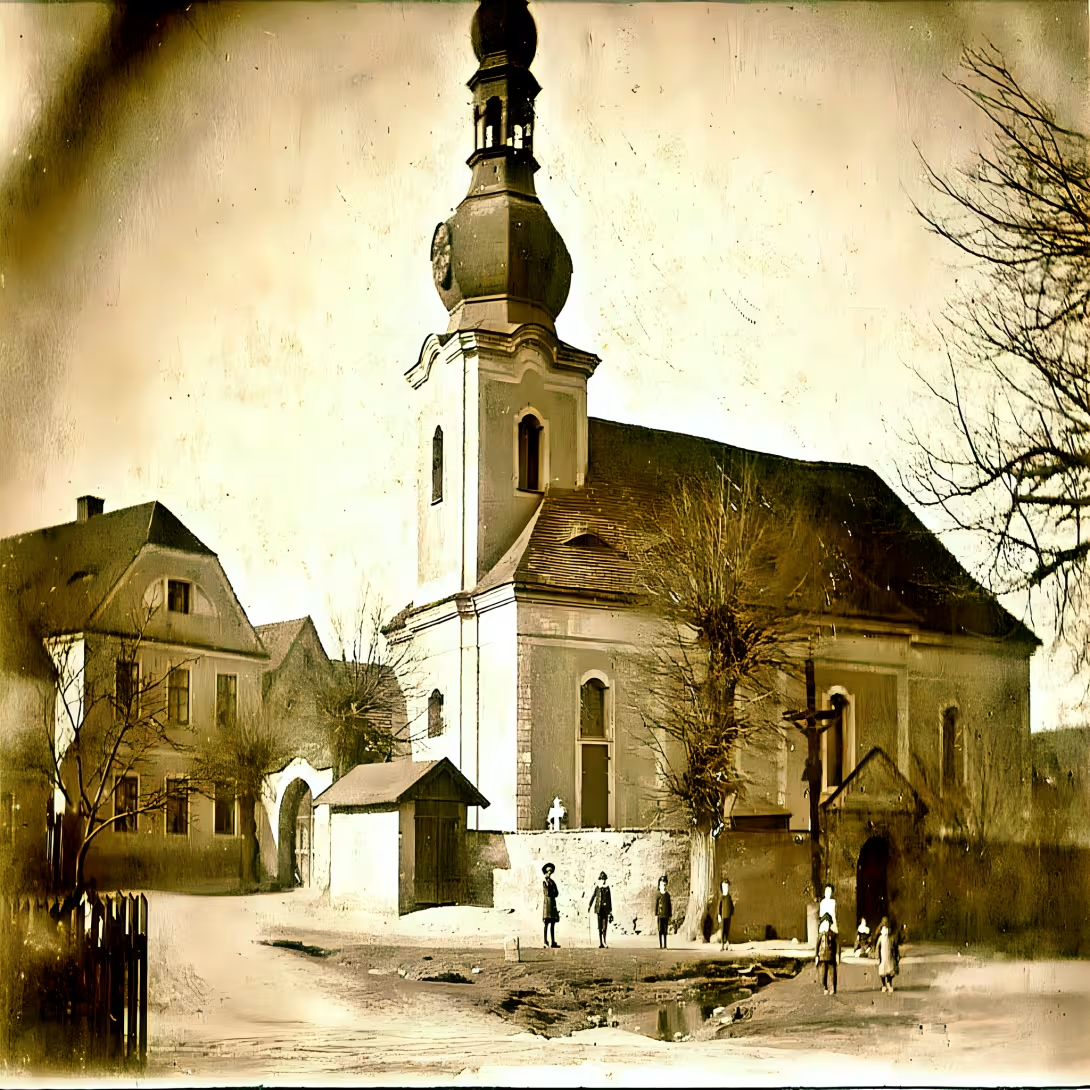
Objekt se nedochoval — na místě dnes nestojí. Následující text popisuje jeho historii, ne současnou návštěvu.
The Church of Saint Linhart in Březence, near Jirkov, was a Roman Catholic cemetery church with historical significance dating back to the second half of the 14th century. Originally constructed in Gothic style, it underwent significant architectural changes between 1749 and 1769 when it transitioned into Baroque style. The church served as a filial church within the Jirkov parish after its own parish was dissolved at the end of the 18th century. Despite plans for restoration due to its deteriorating condition in the 1970s, the church was demolished in 1982 to improve road visibility.
The Church of Saint Linhart's origins trace back to the late 14th century, a period when Bohemia was part of the Holy Roman Empire and experienced significant cultural and architectural developments. During this time, Gothic style was prevalent across Europe for ecclesiastical architecture. The church initially served as an independent parish but later became a filial church within Jirkov's larger parish structure after its own dissolution in the late 18th century.
Architecturally, the Church of Saint Linhart began as a Gothic structure characterized by its single-nave design with a rectangular floor plan and a right-angled presbytery adjoining the nave without a triumphal arch. Over time, it underwent significant changes between 1749 and 1769 when it was transformed into Baroque style. The church's exterior featured lisened wall framing, while an octagonal spire towered above its western façade. A sacristy attached to the presbytery featured a barrel vault ceiling. Inside, the nave once supported a gallery on two pillars and three semicircular arches.
Throughout its history, the Church of Saint Linhart was associated with notable figures such as Brothers Jan and Huk z Alamsdorfu, who in 1363 established a chapel dedicated to Saint Erasmus within the church. The transformation from Gothic to Baroque style between 1749 and 1769 marked a significant period in its architectural evolution.
The church's interior once housed various religious artifacts and artworks. Its main altar, dating back to the second half of the 18th century, featured a tabernacle-shaped mensa, a shrine, and a glass case containing a Gothic sculpture of Saint Linhart from around 1510. A side portal altar dedicated to Saint Anthony of Padua was adorned with an image of the saint in a carved rocaille frame, accompanied by sculptures of Saints Florian and Vitus. Another side altar honored the Immaculate Conception of the Virgin Mary. Additional furnishings included a Rococo pulpit with a sculpture of Saint Savior and confessional booths. A crucifix from around 1520 was attributed to Ulrich Creutz's circle, while an older polychromed wooden statue of the Madonna dated back to the mid-14th century but later found its place in the Chomutov Museum. The church also housed a Renaissance sandstone baptismal font from 1587, featuring a palm frond cup with an inscription.
Despite plans for restoration due to its deteriorating condition by the 1970s, where only the roof was notably damaged, the Church of Saint Linhart faced an unfortunate fate. In 1982, after its heritage protection status was revoked, it was demolished to improve road visibility along a nearby communication route. This decision marked the end of its physical presence but not its historical significance.
Today, while the church no longer stands, its legacy remains significant for those interested in Bohemian history and ecclesiastical architecture. The site serves as a reminder of the region's rich cultural heritage and the architectural transitions from Gothic to Baroque styles that characterized this period. Visitors can reflect on the church's historical importance and its role within the local community through documented artifacts and records preserved elsewhere, such as in museums. Its story invites exploration into the broader narrative of religious and architectural evolution in Bohemia.
Then and now
Drag the slider to compare how the landmark may have looked when it was built with the view today.
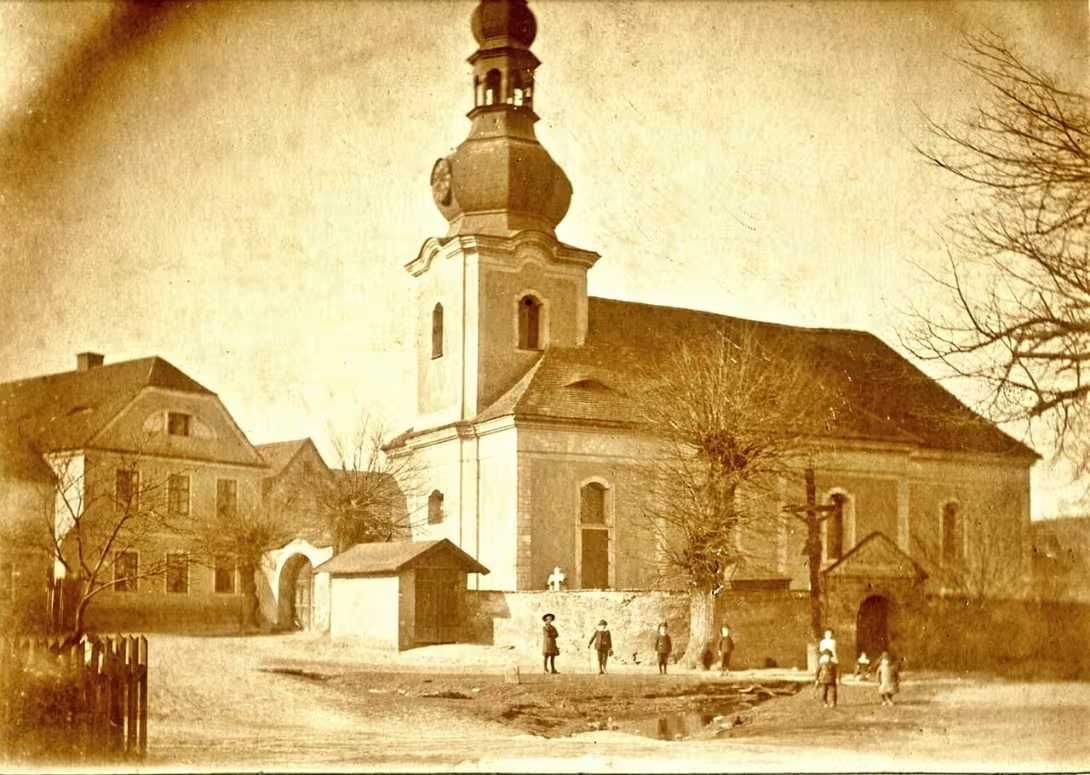

The historical appearance on the left is an AI-generated visualisation and serves as inspiration only.
Historical milestones
- kolem 1350
- Založení kostela svatého Linharta v gotickém stylu.
- 1363
- Bratři Jan a Huk z Alamsdorfu založili kapli svatého Erasma.
- 1749-1769
- Přestavba kostela do barokního stylu.
- konec 18. století
- Zánik samostatné farnosti a přechod na filiální kostel v Jirkově.
- 1982
- Demolice kostela pro zlepšení viditelnosti silnice.
Architectural development
The Church of Saint Linhart began as a Gothic structure in the late 14th century. It underwent significant architectural changes between 1749 and 1769, transitioning to Baroque style. Throughout the 19th century, it experienced several repairs. Despite its deteriorating condition by the 1970s, only the roof was notably damaged.
Historical events
1363: Brothers Jan and Huk z Alamsdorfu established a chapel dedicated to Saint Erasmus within the church.
1749-1769: The church was transformed from Gothic to Baroque style.
1982: The church was demolished after its heritage protection status was revoked.
Points of interest
- The Church of Saint Linhart was originally associated with the Brothers Jan and Huk z Alamsdorfu, who established a chapel dedicated to Saint Erasmus in 1363, highlighting its early significance as more than just a church. - Despite plans for restoration due to deteriorating conditions in the 1970s, the Church of Saint Linhart was demolished in 1982 to improve road visibility, marking an abrupt end to its centuries-long history.
- The main altar from the second half of the 18th century featured a Gothic sculpture of Saint Linhart dating back to around 1510, showcasing the blend of artistic styles present within the church over time.
- An older polychromed wooden statue of the Madonna, originally housed in the church, was later relocated to the Chomutov Museum, indicating its historical and artistic value beyond the original site.
- The Renaissance sandstone baptismal font from 1587 included a palm frond cup with an inscription, reflecting the intricate craftsmanship and religious significance embedded within the church's artifacts.
Guide
This guide is narrated by a synthetic voice generated by artificial intelligence.
Show guide text
This text was created by artificial intelligence and has not been editorially reviewed. It may contain inaccuracies.
The Roman Catholic cemetery church of Saint Linhart stood in Březenci near Jirkau in the Chomutov district. It no longer exists today. Its story ended in 1982 with its demolition by explosives.
The church originated in the second half of the fourteenth century. From the year 1363, there survives a mention of two brothers, Jan and Huk from Alamsdorf, who had an altar of Saint Erasmus established there. The originally Gothic structure was adapted in the Baroque style between 1749 and 1769, and throughout the nineteenth century it underwent several repairs. By the end of the eighteenth century, the Březenci parish had been abolished. The church then became a filial of the Jirkau deanery, and a school was built in place of the now unnecessary parish house. On the first and second Sunday after the feast of Saint Linhart, pilgrimages were held to the church.
In the seventies of the twentieth century, the church was spoken of as dilapidated, though only the roof was in poor condition. Reconstruction was being considered. In 1982, however, the church lost its heritage protection status, and that same year it was demolished by explosives so it would not obstruct the view for drivers on the adjacent road.
It was a single-nave structure with a rectangular floor plan. The nave was directly followed by a right-angled presbytery and behind it a sacristy with a barrel vault. The outer walls were divided by pilaster frames. Above the western façade rose a prismatic tower. In the nave stood a gallery on two pillars with three semicircular arches.
The main altar dated from the second half of the eighteenth century. In a glazed cabinet on it stood a Gothic statue of Saint Linhart from around 1510. The side altar of Saint Anthony of Padua was decorated with a painted image of the saint in a carved Rococo frame and statues of Saint Florian and Saint Vitus. The second side altar was dedicated to the Immaculate Conception of the Virgin Mary. The furnishings also included a Rococo pulpit with a statue of Saint Salvator and a confessional.
Among the most precious objects was a crucifix from around 1520 from the circle of Ulrich Creutz and a statue of Saint Sebastian from the same period. Even older was a painted wooden statue of the Madonna from the middle of the fourteenth century, later displayed in the Chomutov museum. From the year 1587 came a Renaissance sandstone baptismal font with an inscription.
Businesses nearby
Do you run a restaurant, accommodation, shop, museum, rental, wellness or other visitor service near this monument? Show yourself directly to the people heading to it — this is how they will see you in the app and on the web:
Nearby
Located near Jirkov in the Ústecký region, the site once hosted pilgrimages on the first and second Sundays after Saint Linhart's feast day. The surrounding area is characterized by typical Central European landscapes.
Visualizations and artistic views


The visualisations are generated by artificial intelligence and serve as inspiration.
Photos from the area
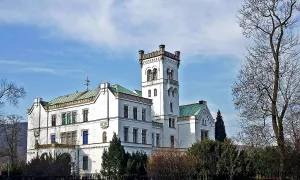
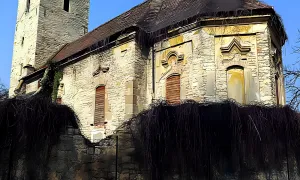
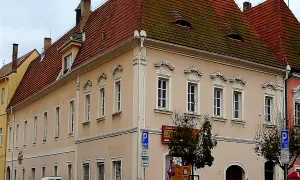
Real photos taken near the monument


Zdroj a licence jsou uvedeny u každého snímku.
Atmosphere of the place
This atmospheric visualisation of the place and period was generated by artificial intelligence. It is not real footage of the location.
Tips from visitors
No tips yet. Be the first!
Log in and add your tip.
Sources and literature
Photos: autor neuveden / Public domain, rozlišení zvýšeno umělou inteligencí — Wikimedia Commons. The author and licence also appear when you hover over the image.
Faktickým podkladem tohoto textu byl článek na Wikipedii, jehož autory jsou přispěvatelé Wikipedie. Článek je dostupný pod licencí CC BY-SA 4.0.
Location on the map

Příběhy a pověsti
Legendy, pověsti a příběhy spjaté s touto památkou
Fotografie návštěvníků
Zatím žádné fotografie. Buďte první, kdo přidá fotografii z návštěvy!
Log in a přidejte svou fotografii nebo hodnoťte.
Za ověřenou návštěvu v aplikaci získáte víc bodů — poznáme podle GPS, že jste na místě.
Reviews and comments