



kostel svatého Linharta (Prameny) Church
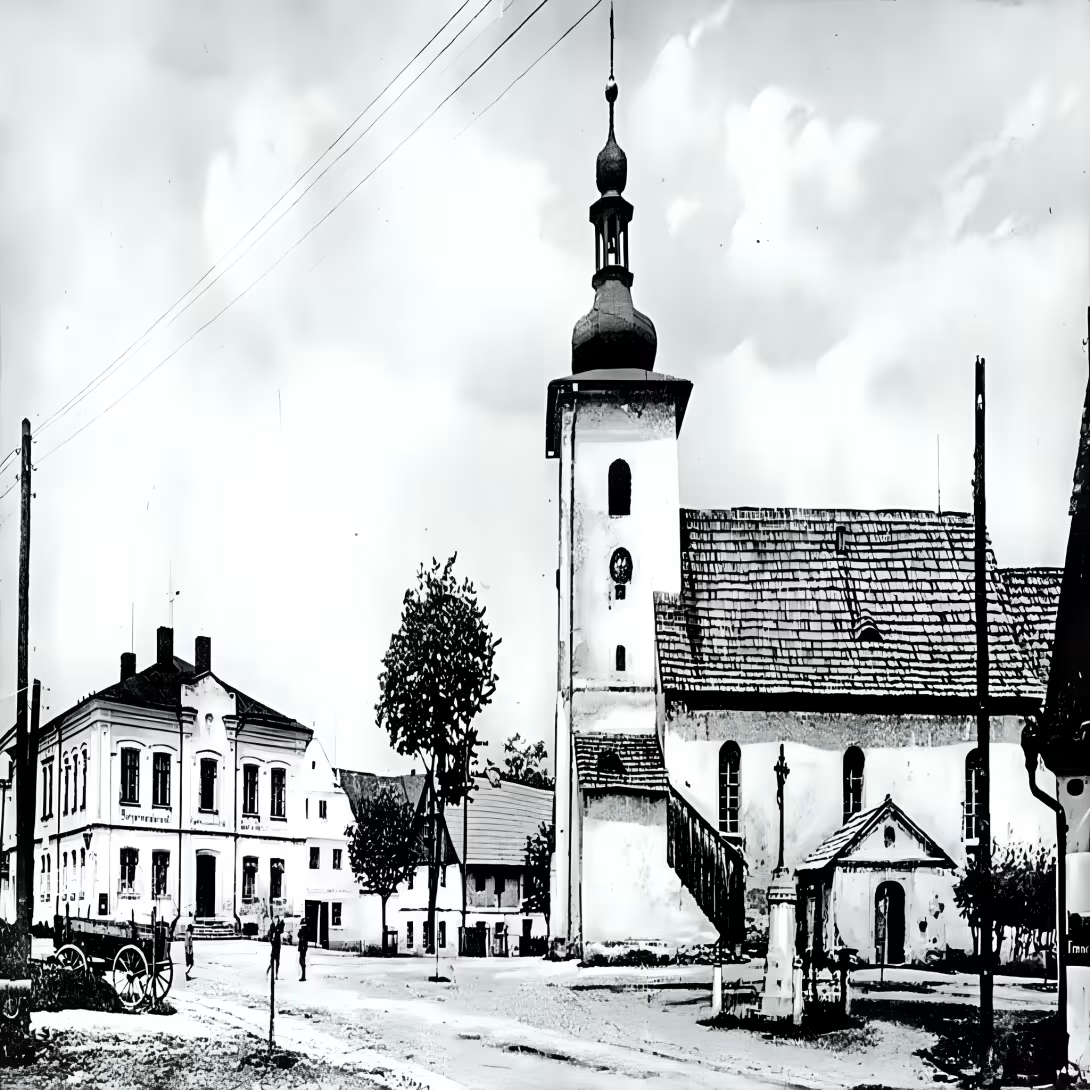
Objekt se nedochoval — na místě dnes nestojí. Následující text popisuje jeho historii, ne současnou návštěvu.
St. Linhart's Church in Prameny, now part of Karlovarský kraj, was a notable parish church with origins dating back to the late Gothic period. It underwent significant transformations during the Renaissance and Baroque periods before its complete demolition in 1958. This site is historically significant due to its architectural evolution and the cultural shifts it witnessed over centuries.
The first mention of St. Linhart's Church dates to 1357, when a priest named Andreas was recorded as serving there. The church initially emerged during the mid-14th century under Charles IV, who promoted mining and urban development in Bohemia. By the late Gothic period, it had become an established parish church. In the 16th century, Prameny and its surrounding villages transitioned to Protestantism, with evangelicals serving as priests until a re-Catholicization led to the church becoming a filial of St. Peter and Paul's Church in Mnichov until 1710.
Architecturally, St. Linhart's Church was originally built in the late Gothic style but underwent significant reconstruction between 1615 and 1618, transforming it into its Renaissance form. The original bell tower was replaced with a new Baroque one early in the 17th century due to structural issues. Further Baroque modifications were made in 1768, enhancing its architectural complexity. By the mid-20th century, however, neglect led to its deterioration and eventual demolition in 1958.
Throughout its history, St. Linhart's Church experienced various ownerships and administrative changes. Initially under the control of the lords of Rýzmburk, who received it as a fief from Charles IV, the church later saw shifts due to religious transformations and political upheavals. After World War II, the expulsion of German inhabitants and the establishment of military training grounds in the area led to its abandonment.
One notable curiosity is that a local resident, Thusnelda Tanzerová, donated an organ to the church in the early 20th century, which was later moved after the church's demolition. The church's interior once featured richly decorated altars and frescoes, including a main altar of St. Linhart created by Anton Hahn in 1868 and renovated in 1905.
Today, there is no physical structure remaining at the site of St. Linhart's Church, as it was completely razed in 1958. Despite its absence, the historical significance of this church remains a point of interest for those exploring the cultural heritage of Prameny. Visitors can reflect on the architectural and religious transformations that once took place here, offering insights into the region's rich history.
Then and now
Drag the slider to compare how the landmark may have looked when it was built with the view today.
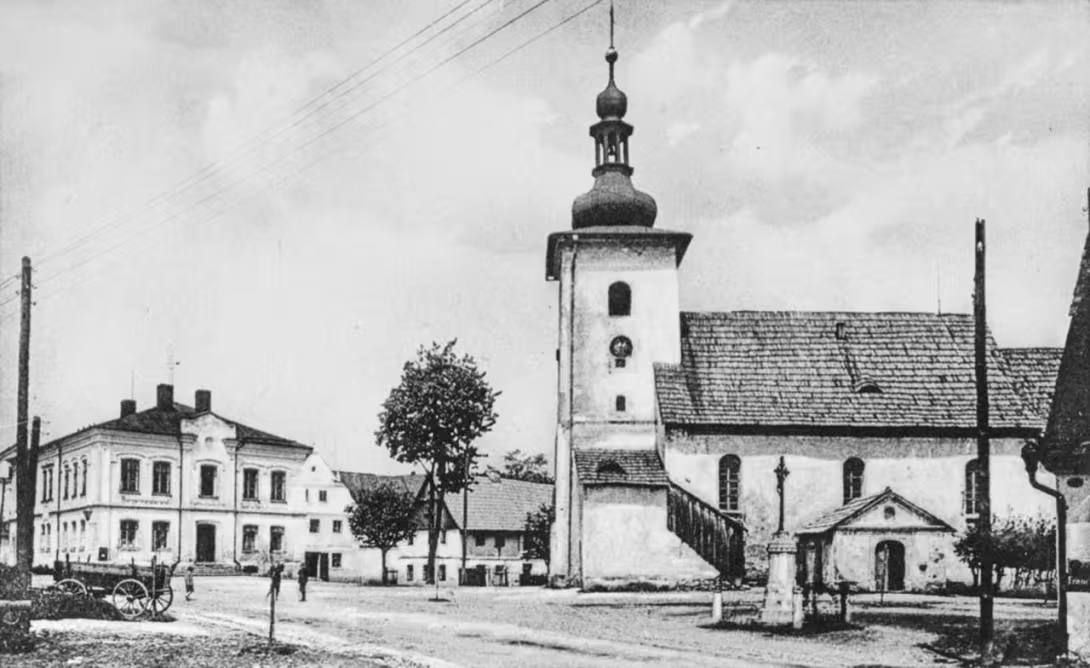

The historical appearance on the left is an AI-generated visualisation and serves as inspiration only.
Historical milestones
- 1357
- První zmínka o kostele svatého Linharta.
- Kolem 1350
- Vznik kostela v době vlády Karla IV.
- 16. století
- Přechod na protestantismus a sloužení evangelických kněží.
- 1615
- Rekonstrukce kostela do renesančního stylu.
- 1768
- Barokní úpravy kostela.
- 1958
- Demolice kostela svatého Linharta.
Architectural development
St. Linhart's Church was initially a late Gothic structure, later transformed during the Renaissance period between 1615 and 1618. The original bell tower was replaced with a new Baroque one in the early 17th century. Further Baroque modifications were made in 1768. By the mid-20th century, the church fell into disrepair and was ultimately demolished.
Historical events
- 1357
- First mention of a priest at St. Linhart's Church.
- 1615-1618
- Significant reconstruction transforming the church into its Renaissance form.
- 1958
- Complete demolition of the deteriorated church structure.
Points of interest
- Despite its demolition, St. Linhart's Church in Prameny once housed an organ donated by local resident Thusnelda Tanzerová in the early 20th century, which was later relocated after the church’s destruction.
- Originally built in the late Gothic style, the church underwent significant architectural transformations during the Renaissance and Baroque periods, reflecting broader cultural shifts in Bohemia over centuries.
- The church experienced a religious transition when Prameny and its surrounding villages converted to Protestantism in the 16th century, with evangelicals serving as priests until re-Catholicization efforts led to it becoming a filial of St. Peter and Paul's Church in Mnichov by 1710.
- Control over St. Linhart’s Church shifted hands multiple times due to political and religious changes, initially being under the lords of Rýzmburk before later alterations post-World War II when German inhabitants were expelled and military training grounds established nearby.
- The church featured richly decorated interiors, including a main altar of St. Linhart created by Anton Hahn in 1868, which was renovated in 1905, showcasing the artistic contributions to its historical significance despite its eventual demolition.
Guide
This guide is narrated by a synthetic voice generated by artificial intelligence.
Show guide text
This text was created by artificial intelligence and has not been editorially reviewed. It may contain inaccuracies.
The Church of Saint Linhart in Prameny in the Cheb region no longer stands. Once a parish church, it fell into disrepair after 1945 and was demolished in 1958.
Its history dates back to the time when the lords of Rýzmberk received from Charles IV the mining settlement of Prameny as a fief, with the right to conduct free mining operations. The first mention of the church comes from the year 1357. The then owner of the Bečov estate appointed the Prameny parish priest, a clergyman named Andreas, to office. How the original late Gothic church looked and who built it is not known.
In the sixteenth century, Prameny and the surrounding villages converted to Protestantism and the parish priests were Evangelicals. After recatholization, the church became a filial to the parish church of Saints Peter and Paul in Mnichov, and remained so until 1710. Between 1615 and 1618, it underwent a fundamental reconstruction into a late Renaissance form. From the Gothic structure, the ground plan remained, as well as the pointed portal on the southern wall of the nave and the door frame to the sacristy. The original bell tower in front of the western façade had apparently already needed to be demolished by the early sixties of the seventeenth century due to its poor condition. It was replaced by a new, early Baroque tower. In 1700, a vaulted vestibule was added on the southern side, and the last late Baroque modifications took place in 1768.
The church had one rectangular nave, a presbytery and sacristy on the east side. On the west side, a pyramidal tower with an onion dome and large clocks was attached to it. The nave was covered with a shingled roof. Inside was a wooden, colorfully painted coffered ceiling. On the columns stood a robust wooden gallery with three branches, on whose pillars the year 1692 was carved. The organ, which was donated by a local resident, Thusnelda Tanzerová, was transported to the church in Velká Hleďseba in the nineteen fifties. In front of the church stood a Gothic stone poor box, one meter and thirty centimeters tall.
The main altar of Saint Linhart was made in 1868 by the carpenter master Anton Hahn from Čistá. The side altars and pulpit also came from him, dating from 1883, completed by Johann Weninger from Horní Slavkov. On the evangelical side also stood an altar of Saint John of Nepomuk.
After the war, the German population was expelled. The municipality, which bore the name Sangerberg until 1947, was not resettled, and the Slavkovský Forest became a military training ground. Prameny survived only because its first command headquarters was located there. The abandoned church was, on the basis of a mass demolition order from 1957, razed to the ground a year later.
Businesses nearby
Do you run a restaurant, accommodation, shop, museum, rental, wellness or other visitor service near this monument? Show yourself directly to the people heading to it — this is how they will see you in the app and on the web:
Events nearby


Zdroj akcí: otevřená data měst a obcí ČR (Národní katalog otevřených dat) a kalendář akcí Národního památkového ústavu.
Visualizations and artistic views


The visualisations are generated by artificial intelligence and serve as inspiration.
Photos from the area
Real photos taken near the monument


Zdroj a licence jsou uvedeny u každého snímku.
Tips from visitors
No tips yet. Be the first!
Log in and add your tip.
Sources and literature
Photos: neznámý - pohlednice z roku 1925 / CC BY-SA 4.0, rozlišení zvýšeno umělou inteligencí — Wikimedia Commons. The author and licence also appear when you hover over the image.
Faktickým podkladem tohoto textu byl článek na Wikipedii, jehož autory jsou přispěvatelé Wikipedie. Článek je dostupný pod licencí CC BY-SA 4.0.
Location on the map

Příběhy a pověsti
Legendy, pověsti a příběhy spjaté s touto památkou

Fotografie návštěvníků
Zatím žádné fotografie. Buďte první, kdo přidá fotografii z návštěvy!
Log in a přidejte svou fotografii nebo hodnoťte.
Za ověřenou návštěvu v aplikaci získáte víc bodů — poznáme podle GPS, že jste na místě.
Reviews and comments