



kostel svatého Marka (Markovice) Church
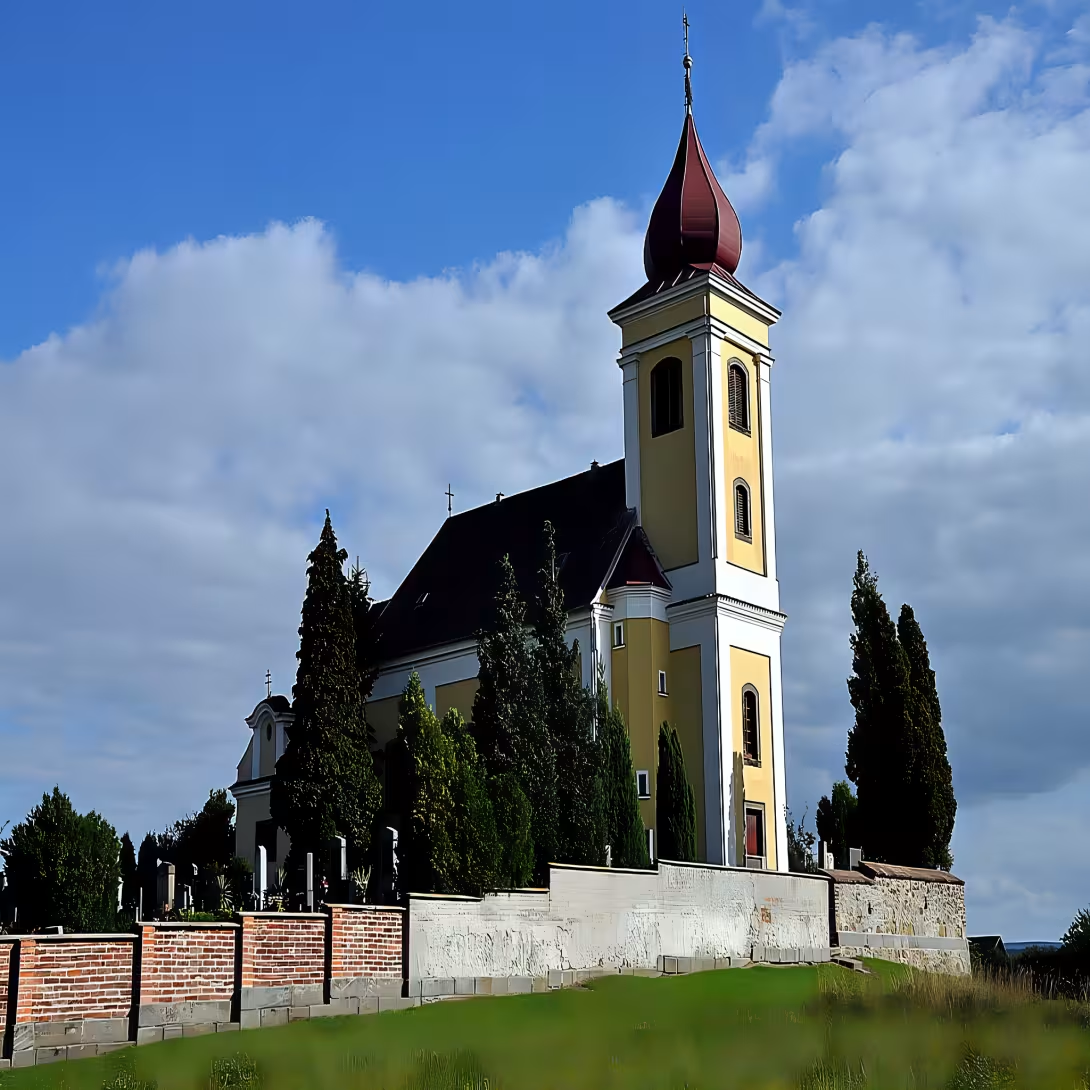
The Church of Saint Mark in Markovice stands as a testament to the architectural evolution from Gothic to Baroque styles, reflecting significant historical transitions over centuries. Situated on a hill in the village of Markovice within the Chrudim district of Pardubický kraj, this church is not only a prominent landscape feature but also a protected cultural heritage site. First mentioned in 1350 as a parish church, it underwent substantial Baroque modifications in the first half of the 18th century, marking its transformation into a notable historical monument.
The origins of the Church of Saint Mark trace back to the mid-14th century when Bohemia was part of the Holy Roman Empire under Charles IV. This period saw the flourishing of Gothic architecture and education, setting the stage for the church's initial construction in this style. Although specific details about its original builders are not documented, the church's early mention as a parish indicates its importance to the local community at that time.
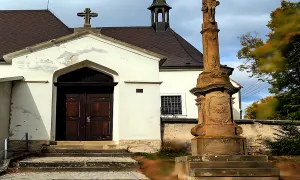
Architecturally, the Church of Saint Mark began as a Gothic structure but was later transformed into Baroque architecture during the early 18th century. The church is a single-nave building with a semi-circular presbytery and an attached side sacristy. Its western facade features a prominent square tower topped with a bulbous dome, constructed at the beginning of the 20th century. This new tower replaced the original Baroque bell tower, which was demolished as part of renovation efforts. The church's façade is adorned in ochre-yellow, with white pilasters adding to its visual appeal. Windows on either side of the nave and presbytery are framed with sandstone, enhancing the building's aesthetic.
The interior of the Church of Saint Mark reflects a blend of Gothic and Baroque influences. The presbytery boasts a vaulted ceiling with ribs and spandrels typical of cross-vaulting, while the nave features flat ceilings supported by Tuscan pilasters. A wooden pulpit is situated on the western side, adding to the church's historical ambiance. Noteworthy interior elements include the main altar from the early 18th century, featuring an acanthus frame and a painting by J. Papáček. Additionally, the side altars, such as that of Saint Anthony with its intricately carved grapevine motifs on column shafts, date back to 1653. The Renaissance-style pulpit, adorned with images of the evangelists, dates from the first half of the 17th century.
Today, the Church of Saint Mark and its surrounding cemetery, enclosed by a wall since 1958, remain significant cultural heritage sites. Visitors can appreciate the church's historical architecture and artistic elements, which offer insights into the region's past. The site is accessible to those interested in exploring the rich history and architectural evolution that this monument represents.
The Church of Saint Mark in Markovice is not only a place of worship but also a symbol of cultural heritage and historical continuity. Its journey from Gothic origins to Baroque transformation encapsulates centuries of artistic and architectural development. Visitors are invited to explore this remarkable site, where the echoes of history resonate through its walls and structures.
Then and now
Drag the slider to compare how the landmark may have looked when it was built with the view today.
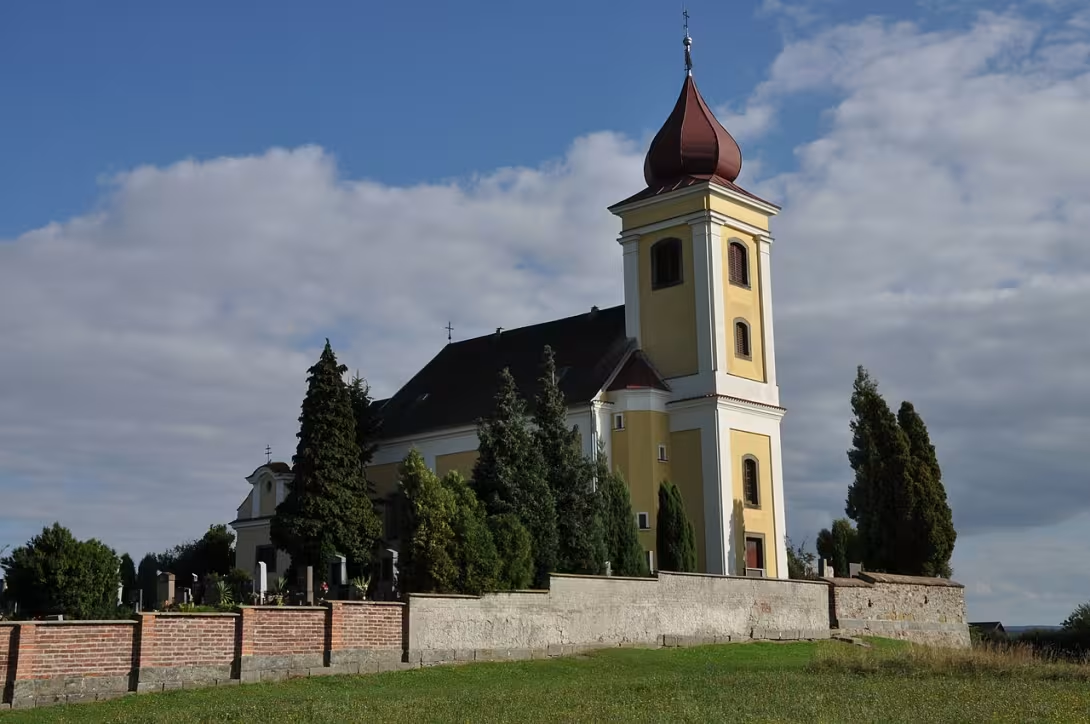

The historical appearance on the left is an AI-generated visualisation and serves as inspiration only.
Historical milestones
- 1350
- The Church of Saint Mark is first mentioned as a parish church.
- c. 1350
- The original building in Gothic style during the reign of Emperor Charles IV.
- first half of the 17th century
- A Renaissance pulpit with images of the evangelists was built.
- 1653
- The side altar of Saint Anthony with grapevine motifs carved on the columns.
- first half of the 18th century
- Baroque renovations of the church, including the main altar and a new bell tower.
- 1958
- A fence around the cemetery next to the church was constructed.
Architectural development
The Church of Saint Mark began as a Gothic structure and underwent significant Baroque renovations in the early 1700s. The original Baroque bell tower was replaced by a new square tower with a bulbous dome at the beginning of the 20th century, leading to the demolition of the old bell tower.
Historical events
First mentioned in 1350 as a parish church.
Baroque modifications made in the first half of the 18th century.
Points of interest
- The Church of Saint Mark's western facade features a square tower topped with a bulbous dome, which was constructed at the beginning of the 20th century. This tower replaced an original Baroque bell tower that had been demolished during renovations, reflecting changes in architectural preferences over time.
- One intriguing aspect of the church is its side altar dedicated to Saint Anthony, dating back to 1653. The intricately carved grapevine motifs on the column shafts are a unique artistic feature that highlights the detailed craftsmanship of the Baroque period.
- A Renaissance-style pulpit from the first half of the 17th century can be found within the church. This pulpit is adorned with images of the evangelists, showcasing an interesting blend of religious iconography and artistry from different historical periods.
- The main altar in the Church of Saint Mark features a painting by J. Papáček, dating to the early 18th century. While not widely known outside the region, this work contributes to the church's rich collection of Baroque art and reflects local artistic traditions.
- Although specific details about the original builders of the church are not documented, its mention as a parish in 1350 indicates its longstanding importance to the community of Markovice, serving both religious and social functions throughout history.
Guide
This guide is narrated by a synthetic voice generated by artificial intelligence.
Show guide text
This text was created by artificial intelligence and has not been editorially reviewed. It may contain inaccuracies.
The Baroque church of saint Mark stands on a hill in the village of Markovice, which is a local part of the district town of Chrudim. Together with the cemetery, it forms a striking landmark of the entire area. The church complex along with the cemetery, which is surrounded by a cemetery wall, has been protected as a cultural monument of the Czech Republic since nineteen fifty-eight.
The church is originally Gothic. It is first mentioned in the year thirteen fifty, when there was a prebend here, that is, a parish. It later ceased to exist. In the first half of the eighteenth century, the church took on its Baroque appearance.
It is a single-nave structure. On the east side it is enclosed by a semicircular presbytery, that is, the space around the main altar, and a sacristy adjoins it from the side. The western façade is dominated by a tall square tower with an onion dome, which is covered with sheet metal and topped with a metal cross. The tower is relatively young, it was built only at the beginning of the twentieth century. The original Baroque bell tower thus lost its purpose and was demolished.
The façade of the church is ochre yellow and the walls are divided by white vertical strips, which are called pilaster strips. The nave is lit on both sides by three windows each with sandstone frames. The same set of three windows also illuminates the semicircular presbytery. The roof of the nave and presbytery is covered with asbestos shingles.
Inside, the presbytery is vaulted with a cross vault, while the nave has a flat ceiling. The walls of the nave are divided by bundles of Tuscan pilasters, that is, flat columns projecting from the wall. On the west side is a wooden gallery.
The main altar with an acanthus frame and a ribbon dates from the beginning of the eighteenth century and is decorated with a painting by the painter Papáček. Even older is the side altar of saint Anthony from sixteen fifty-three. The shafts of its columns are covered with richly carved ornaments of vine leaves and are also supplemented with figures. The oldest piece of furnishing is a Renaissance pulpit from the first half of the seventeenth century with four images of the evangelists.
Frequently asked questions
Can the monument be visited?
Religious buildings are usually open mainly during services; at other times a visit is normally arranged with the parish or the operator. We have not verified specific times.
Where is the monument?
Location: Chrudim IV, Pardubický kraj. The map on this page shows the exact spot.
Why is the monument protected?
It is listed in the Central List of Cultural Monuments of the Czech Republic as a cultural monument (register no. 30151/6-813).
Businesses nearby
Do you run a restaurant, accommodation, shop, museum, rental, wellness or other visitor service near this monument? Show yourself directly to the people heading to it — this is how they will see you in the app and on the web:
Events nearby
Zdroj akcí: otevřená data měst a obcí ČR (Národní katalog otevřených dat) a kalendář akcí Národního památkového ústavu.
Nearby
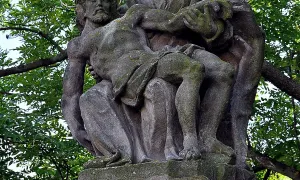
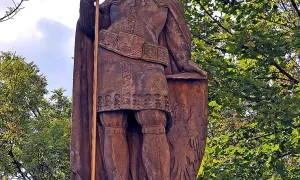
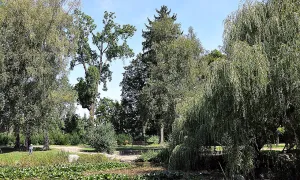
Located on a hill in Markovice, this church is a significant landmark within its landscape. The area includes a cemetery enclosed by a wall since 1958, contributing to the site's cultural heritage status.
Accommodation nearby
Themed route
Tematická výletní trasa: Kostel svatého Marka (Markovice)
1. Kostel svatého Marka
- Typ: Historický kostel
- Proč stojí za návštěvu: Tento kostel, nacházející se na pahorku v obci Markovice, je nejvýraznějším a historicky významným monumentem ve vesnici. Jeho architektura odráží bohatou duchovní tradici regionu a slouží jako centrum komunity po staletí.
2. Kostelní hřbitov
- Typ: Historický hřbitov
- Proč stojí za návštěvu: Obklopený zdí od roku 1958, tento hřbitov je klíčovou součástí kulturního dědictví obce. Poskytuje pohled na historické epitafie a památníky, které představují životy místních obyvatel po generace.
3. Vnitřek kostela
- Typ: Náboženský interiér
- Proč stojí za návštěvu: Vnější krása kostela svatého Marka je pouze předehrou k jeho bohatému vnitřku. Navštívte vnitřek, abyste ocenili umělecké detaily jako fresky a sochy, které ilustrují duchovní historii a umělecký vkus doby.
4. Kostelní věž
- Typ: Historická věž
- Proč stojí za návštěvu: Vystupující nad kostelem, tato věž nabízí panoramatický pohled na okolní krajinu. Je to nejen architektonický úspěch, ale také symbol trvalosti a duchovního dohledu nad obcí.
5. Nádvoří kostela
- Typ: Historické nádvoří
- Proč stojí za návštěvu: Nádvoří je klidným místem pro odpočinek a reflexi. Zde můžete uvolnit mysl, zatímco se podíváte na kostel svatého Marka z jiného úhlu a oceníte jeho místo v historii a komunitě.
Tato trasa nabízí návštěvníkům hluboký pohled do duchovní a kulturní historie obce Markovice, zaměřený na její nejvýraznější památku.
Seasonal recommendations
Spring: Visiting the Church of Saint Mark during spring offers a unique experience as nature awakens around Markovice, with blooming flowers and lush greenery framing the historic structure. The soft morning light enhances the church's architectural details, creating an ethereal atmosphere perfect for photography enthusiasts. Visitors should dress in layers to accommodate fluctuating temperatures typical of this season. While crowds are generally manageable, arriving early can provide a more peaceful experience before larger groups gather.
Summer: Summer is the peak season for exploring the Church of Saint Mark, with warm weather inviting visitors to enjoy the surrounding outdoor areas and gardens. The church's stone facade glows under the bright sunlight, offering a striking contrast against clear blue skies. This time of year sees higher visitor numbers, so arriving early in the morning or later in the afternoon can help avoid crowds. Comfortable walking shoes and light clothing are recommended due to longer daylight hours and increased foot traffic.
Autumn: Autumn at the Church of Saint Mark is characterized by a stunning display of fall foliage, with vibrant reds, oranges, and yellows creating a picturesque backdrop for the historic site. The cooler temperatures make it an ideal time for leisurely exploration without the summer heat. This season often sees fewer visitors, providing a more tranquil atmosphere. Visitors should wear warm layers to stay comfortable as the days shorten and temperatures drop.
Winter: Winter transforms the Church of Saint Mark into a serene and enchanting destination, with snow-covered landscapes adding a magical touch to its historic architecture. The shorter daylight hours mean that visits are best planned for midday when natural light is at its peak. Due to potential inclement weather, visitors should dress warmly in insulated clothing and wear sturdy footwear. Winter also tends to see reduced visitor numbers, offering a quieter experience, though some services or facilities may have limited operating hours.
Visualizations and artistic views


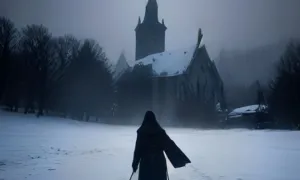
The visualisations are generated by artificial intelligence and serve as inspiration.
Photos from the area
Real photos taken near the monument


Zdroj a licence jsou uvedeny u každého snímku.
View from the area
This animation was generated by artificial intelligence from a real photograph of the surroundings. The motion and details are not real footage of the location.
Tips from visitors
No tips yet. Be the first!
Log in and add your tip.
Sources and literature
Photos: Ben Skála, Benfoto / CC BY-SA 3.0, rozlišení zvýšeno umělou inteligencí — Wikimedia Commons. The author and licence also appear when you hover over the image.
Faktickým podkladem tohoto textu byl článek na Wikipedii, jehož autory jsou přispěvatelé Wikipedie. Článek je dostupný pod licencí CC BY-SA 4.0.
Location on the map
Příběhy a pověsti
Legendy, pověsti a příběhy spjaté s touto památkou
Fotografie návštěvníků
Zatím žádné fotografie. Buďte první, kdo přidá fotografii z návštěvy!
Log in a přidejte svou fotografii nebo hodnoťte.
Za ověřenou návštěvu v aplikaci získáte víc bodů — poznáme podle GPS, že jste na místě.
Reviews and comments