






Neuperský dvůr Villa
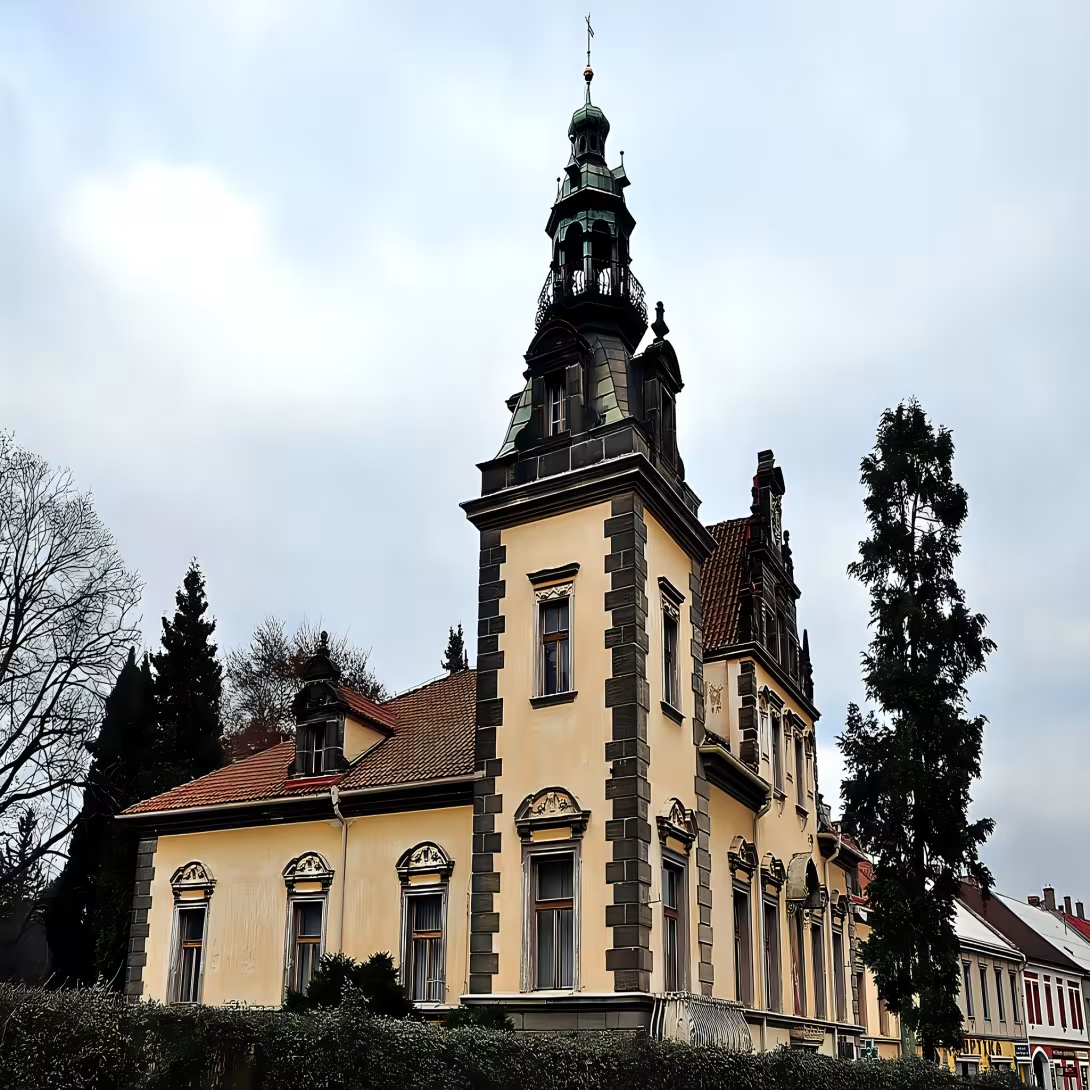
Neuperský dvůr, also known as Wiesner's Villa, is a historically significant object no. 55 / IV on Masaryk Square in Chrudim. This cultural monument of the Czech Republic has undergone many modifications since the end of the 16th century. Its present form in the spirit of historism dates back to the end of the 19th century.
The oldest written mention of the house dates back to 1599. The Czech countries were then in the period of the late Renaissance under the rule of Emperor Rudolf II, when the religious tension of the previous Thirty Years' War grew in Europe. A year later, in 1600, the owner of the building became Samuel Kuchynka.
The original Renaissance building underwent a major transformation in 1879. At that time the reconstruction was carried out according to the design of architect František Schmoranz younger. As part of these works, the corner tower was added and the facade was supplemented by sculptures, namely Adam's work by Edmund Hellmer. On the facade there is also a painting depicting Saint Anne Samothird with Saint Joseph and Saint Jáchym. The villa includes a historic garden, founded in the second decade of the 18th century by the family of Millesim, with two monument protected illusions.
The property history of the house is colorful. After Samuel Kitchenko the object was owned by Leonard Neuperk z Neuperku, Baron Kustoš or the House Cyrana of Bolleshaus-Trippenbach-Hellinger. In 1797 the Kitchenettes became owners again. A significant break occurred in 1871, when an industrialist František Wiesner bought the building. After World War II, the house became state owned, but after 1989 it was returned to the Wiesner family as part of the restitution.
In addition to the architectural reconstruction from 1879, the year 2017 is one of the important milestones of modern history when the restaurant based in the building was shut down. Currently, the premises of the villa serve among others as a pharmacy and medical specialist's practice.
Neuperský dvůr is a valuable document of building development in the centre of Chrudim. Thanks to its historical stature, it offers an interesting view of the transformation of urban architecture. Visitors of the city can appreciate the preserved appearance of the villa and its adjacent garden when walking through the historic heart, in the vicinity of which there is, for example, the Museum of Baroque statues or the Chrudimka River.
Then and now
Drag the slider to compare how the landmark may have looked when it was built with the view today.
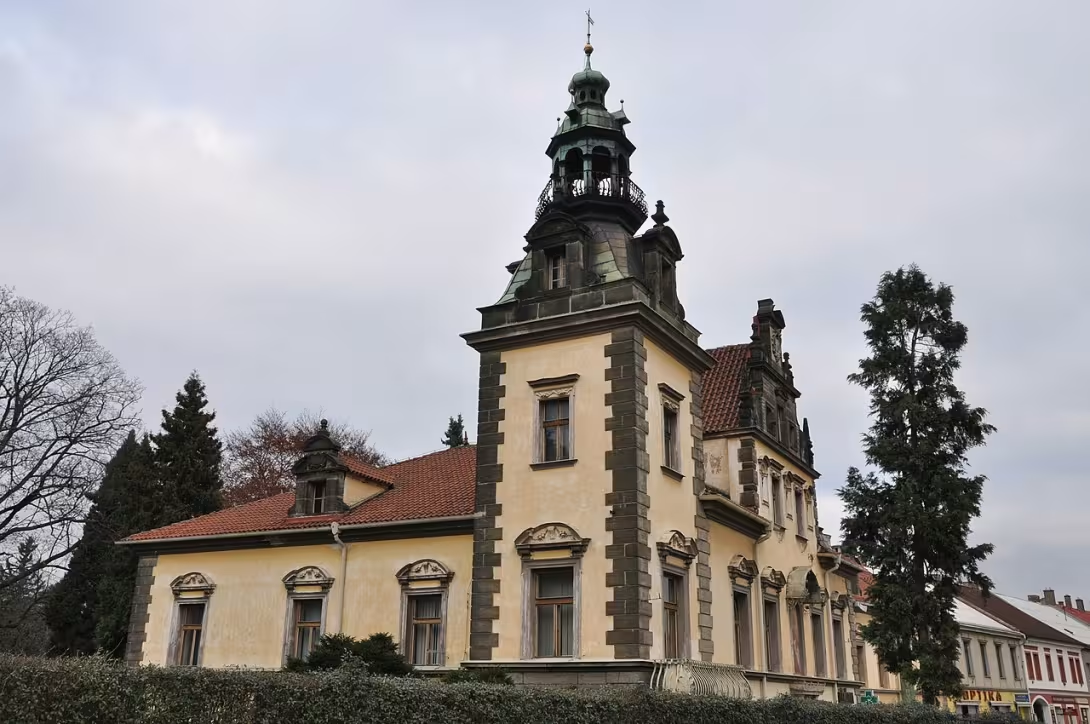
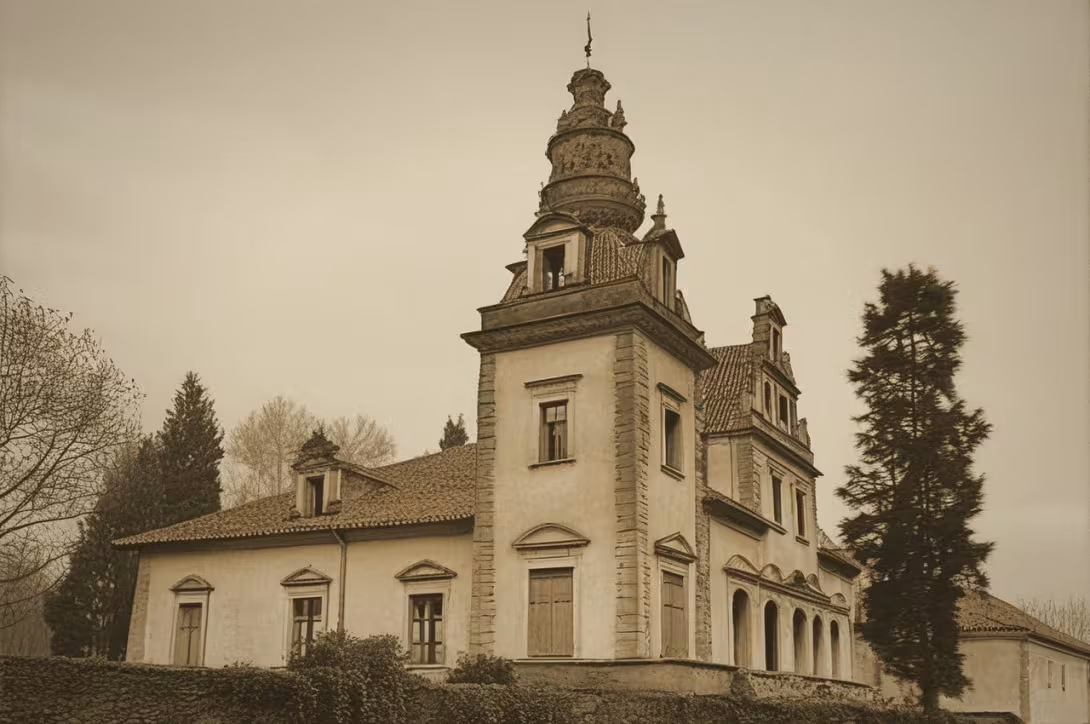
The historical appearance on the left is an AI-generated visualisation and serves as inspiration only.
Historical milestones
- 1599
- The oldest written mention of the house.
- 1871
- The purchase of the house by the industrialist Franz Wiesner.
- 1879
- Rebuilding the house according to the design of František Schmoranz Jr.
- 2017
- End of operation of the restaurant in the building.
Architectural development
The original Renaissance house was fundamentally rebuilt in 1879 in the spirit of history. The corner tower was built and the facade was supplemented with sculptures. The building includes a garden with illusory gates, which originated in the second decade of the 18th century.
Historical events
1599: First written mention of the house. 1879: Significant reconstruction in the spirit of historism according to František Schmoranz Jr. 1989: Return of the building to the original owners under restitution.
Owners
Samuel Kuchynka (from 1600), Leonard Neuperk z Neuperku, Baron Kustoš, genus Cyrana from Bolleshaus-Trippenbach-Hellinger, family Kitchenky (from 1797), František Wiesner (from 1871), state (after 1945), family Wiesner (after 1989).
Points of interest
- The building is also known as Wiesner's villa and is located on Masaryk Square in Chrudim. The oldest written mention of the house dates back to 1599. - The current form in the spirit of history was created in the reconstruction in 1879 according to the design of architect František Schmoranz Jr., when the corner tower and sculpture decoration were added. - The villa includes a historical garden founded in the second decade of the 18th century by the Millesim family, which includes two historically protected illusion gates. - After 1989 the house was returned to the Wiesner family under restitution, while the premises are currently used as a pharmacy and medical specialist's practice.
Guide
Show guide text
This text was created by artificial intelligence and has not been editorially reviewed. It may contain inaccuracies.
Welcome to Chrudim, in the heart of this beautiful city, where history in every corner intersects with the present. Right now, you are standing in Masaryk Square, in a place that is the center of urban life, and one of the most important buildings in the area stands before you. Listen carefully and allow me to lead you through the story of a house you see right in front of you. It's Neuperský dvůr, though many of you may have heard of it under a different name, like Wiesner's villa. Stop for a moment, take a breath and just feel the overall form of this object. Look at its shapes, how it fills the space of the square, and perceive the atmosphere of the place that carries within itself layers of several centuries of history. It's a fascinating place where the old noble tradition meets the ambitions of the nineteenth century industrial flourishing.
Let us now return together in time, deep into the past, to make it clear why this building is so special. Imagine you're standing in this same place over four styles ago. The first written mention of this house dates back to 1599. At that time the object looked quite different, it was probably a typical courtyard of its time, which served as a centre of economic and residential activities. For centuries there lived and ruled by various people, the house passed through the hands of many noble generations, each of which put their share of energy and history into it. It was one of these families that left a trail that remained in the title until today. Leonard Neuperk z Neuperku is one of the key characters we associate with this place, and it is thanks to it that I am talking today about the Neuper Court. It's fascinating to think about how many generations of people have been going through here, how many decisions have been made here and how the world around this house has been changing, while he has persevered.
Now pay attention to what you see right in front of you today. However, what you are seeing today is not the original construction from the sixteenth century, but the result of an ambitious and thoughtful reconstruction from 1879. Look at the overall design of the house. Notice its style, which we professionally call historism. This direction was very popular in the second half of the nineteenth century because it returned to elements from the past and combined them into representative, noble units that were meant to emit stability and wealth. The author of this design was the recognized architect František Schmoranz mladší. It was he who breathed into the building its present form, which so elegantly complements the architecture of the square. One of the most significant elements you should be looking out for now is the corner tower. It is she who was added during the reconstruction and gives the whole building a unique character, rhythm and makes it dominant in space. Look at the facade, perceive its symmetry, and think about the role this building played in the image of the city over a century ago.
But who was behind this radical change and why was this reconstruction carried out? Let's think about the people who left their trail. In 1871 an industrialist František Wiesner bought the house. Imagine the era of the late nineteenth century, the time of steam, iron and the rapid rise of the middle class. Wiesner was a man with a vision, a successful businessman who wanted his seat to reflect his social standing, his taste and, above all, his success in business. He's the one who hired the architect Schmoranz to make the original, ancient house a luxury villa that would be the pride of the city. Other important names like Samuel Kuchynka or later Edmund Hellmer are associated with the house. Each of them has brought a different story, a different era and other priorities to the history of this house. From noble generations, to industrial magnates, to later owners - this house was a silent witness to social changes in Chrudim, a witness to the transition from feudal world to modern industrial city.
You may now find one interesting thing that persists in this place. This object has a kind of double identity that you can perceive today. For one, it is Neuperský dvůr, which is a name that resembles its old, noble roots and connections with Leonard Neuperk. For the second, it is Wiesner's villa, which is a sign referring to the period of greatest prosperity, wealth and architectural change. It is fascinating how one building can represent two completely different epochs of Czech history and how both of these names coexist in people's memories. For years there was also a restaurant, which was a natural meeting place for many people and visitors to the city, a place of social meetings and interviews until 2017, when its operation ended. Try to imagine for a moment all the voices, plans, secrets and discussions that have been spoken out in these walls over the centuries. From the whispers of the nobles in the sixteenth century to the business agreements of the industrialists in the nineteenth to the calls of the guests in the modern-day restaurant.
Now that you know a piece of the story of this house and know who created it and who lived in it, I suggest you go around it one more time. Try to observe it from different angles and notice how light hits it at different times of the day. Neuperský dvůr remains one of the most important historical objects in the Masaryk Square and reminds us that the history of the city is not only in dry data in books, but in stones, plaster and the shapes of buildings that surround us every day. It's a bridge between the past and the present that allows us to touch history in a tangible way.
Thank you for accompanying me on this short journey through time. I hope this view of Neuperský dvůr and Wiesner's villa has helped you understand the soul of this place more. Now I leave you to explore the beautiful Chrudim. Go through the rest of the square, discover more hidden details and enjoy the atmosphere of this city. I wish you a pleasant rest of the day and many other fascinating discoveries on your journey. Goodbye.
Tips for visitors
{'Navsteva': 'The best time to visit is in the morning on working days, when there is a quieter atmosphere around Masaryk Square, which allows you to better perceive the historical architecture of the villa. Weekends are more busy due to tourists in the city centre.', 'transport': 'The location is very well accessible by foot from the city center. If you are arriving by car, use public parking near the historic Chrudim core. By public transport you can easily reach the monument from the main station; Check the specific connections in the current connection search engine.', 'equipped': 'We recommend comfortable shoes for walking on historic tiles in the surroundings. Don't forget to take the camera because the exterior of the villa offers interesting architectural details that excel especially in the soft afternoon light.', 'whoever': 'During the visit do not miss a walk through the historical centre of Chrudim, which is in the immediate vicinity. The Museum of Baroque statues and pleasant relaxation offers nearby surroundings of the river Chrudimka.', 'family': 'For families with children, the location is ideal thanks to the proximity of the park areas and historic alleys which are safe for walks. Children can discover interesting details on the facade of the villa while you enjoy the atmosphere of the square.'}
Businesses nearby
Do you run a restaurant, accommodation, shop, museum, rental, wellness or other visitor service near this monument? Show yourself directly to the people heading to it — this is how they will see you in the app and on the web:
Events nearby
Zdroj akcí: otevřená data měst a obcí ČR (Národní katalog otevřených dat) a kalendář akcí Národního památkového ústavu.
Nearby
Historical centre of Chrudim, Museum of Baroque statues, river Chrudimka.
Accommodation nearby
Themed route
Neuperský dvůr (villa) Type: Historical monument, villa Why is it worth a visit: A unique example of rural villa architecture that offers insight into the life of the noble family of Neupers. The area and the building capture the specific nature of the seat in the outskirts of the city.
Historical center of Chrudim Type: City Core, Monument Zone Why is it worth a visit: After leaving the country villa, you will move to the heart of the city, where baroque and classical architecture is blended. The streets and squares form an ideal contrast to the calm environment of the Neuper Court.
Museum of Baroque sculptures Type: Museum, cultural institutions Why is it worth a visit: In the historical centre you will find this specialized collection that complements the picture of the artistic heritage of the region. Exposure allows you to understand aesthetic values that have affected the surrounding buildings.
River Chrudimka Type: Natural element, water flow Why is worth a visit: Walk along the flow provides relaxation through the cultural program and connects the individual points of the route. Water and green banks form a natural framework for ending trips near historical buildings.
The route begins at the Neuper Court (villa) , where you can see the exterior and possibly the interior of this unique building. Then move towards Historical center of Chrudim, where you can admire the urban development and atmosphere of the old core. In the centre you can stop at the Museum of Baroque sculptures to see art exhibits. At the end of the route you will go to the River Chrudimce, where you will enjoy a quiet environment and a view of the water flow that flows through the city. The entire route is designed to combine architectural monuments with natural elements nearby.
Seasonal recommendations
Spring: Neuperský dvůr in Chrudim offers beautiful experiences in spring with flowering shrubs and trees that revive the surrounding countryside. The sun illuminates pavilions and paths with green light, creating a pleasant atmosphere for visitors. During this period it is advisable to visit the memory of the afternoon, when the sun rays intensify the beauty of the surroundings and bring warmth to postcards. Despite growing children's activities in parks, there are still no great times, so you can fully immerse yourself in the history and architecture of the yard. We advise visitors to wear clothes suitable for mild weather, such as long gloves and a sun hat.
Summer: In summer Neuperský dvůr in Chrudim is a popular place for afternoon walks. Sunshine days bring a lively atmosphere where people gather at fountains and travel on green roads. This time of the year is ideal for visiting early afternoon or evening time to avoid peak crowds. The sunny light illuminates the architectural elements of the yard and creates breathtaking photographs. When visiting it is good to remember warm clothes such as ties or cups, and enough drinking substances to prevent dehydration during long walks.
Autumn: In the autumn period Neuperský dvůr in Chrudim becomes melancholic and quiet atmosphere. The leaves of trees turn into golden and red colors, which gives the landscape a romantic touch. Sunshine is milder than in summer, thus highlighting the peaceful nature of the monument. This time of year is ideal for visiting the afternoon when the temperature is pleasant and the crowd times are minimal. Visitors should wear clothes on mild weather with the possibility to add layers such as skirts or coats, because temperatures can change quickly in autumn days.
Winter: In winter Neuperský dvůr in Chrudim takes a quiet and quiet breath. Frozen green spaces and sun-lit pavilions bring a unique atmosphere that is ideal for relaxation and reflective moments. The opening times of the monument may be shortened, so it is important to plan a visit in the morning to explore and appreciate historical elements as much as possible. This season it is crucial to wear warm clothes such as fur coats and hats to avoid cold and a seizure with fever during the visit.
Visualizations and artistic views


The visualisations are generated by artificial intelligence and serve as inspiration.
Photos from the area
Real photos taken near the monument

Zdroj a licence jsou uvedeny u každého snímku.
Tips from visitors
No tips yet. Be the first!
Log in and add your tip.
Sources and literature
Fotografie: Ben Skála, Benfoto / CC BY-SA 3.0, rozlišení zvýšeno umělou inteligencí — Wikimedia Commons. The author and licence also appear when you hover over the image.
Faktickým podkladem tohoto textu byl článek na Wikipedii, jehož autory jsou přispěvatelé Wikipedie. Článek je dostupný pod licencí CC BY-SA 4.0.
Location on the map
More monuments – Chrudim IV
Show all in the municipality
Příběhy a pověsti
Legendy, pověsti a příběhy spjaté s touto památkou
Fotografie návštěvníků
Zatím žádné fotografie. Buďte první, kdo přidá fotografii z návštěvy!
Přihlaste se a přidejte svou fotografii nebo hodnoťte.
Za ověřenou návštěvu v aplikaci získáte víc bodů — poznáme podle GPS, že jste na místě.
Reviews and comments