



Socha svatého Václava (Chrudim) Statue
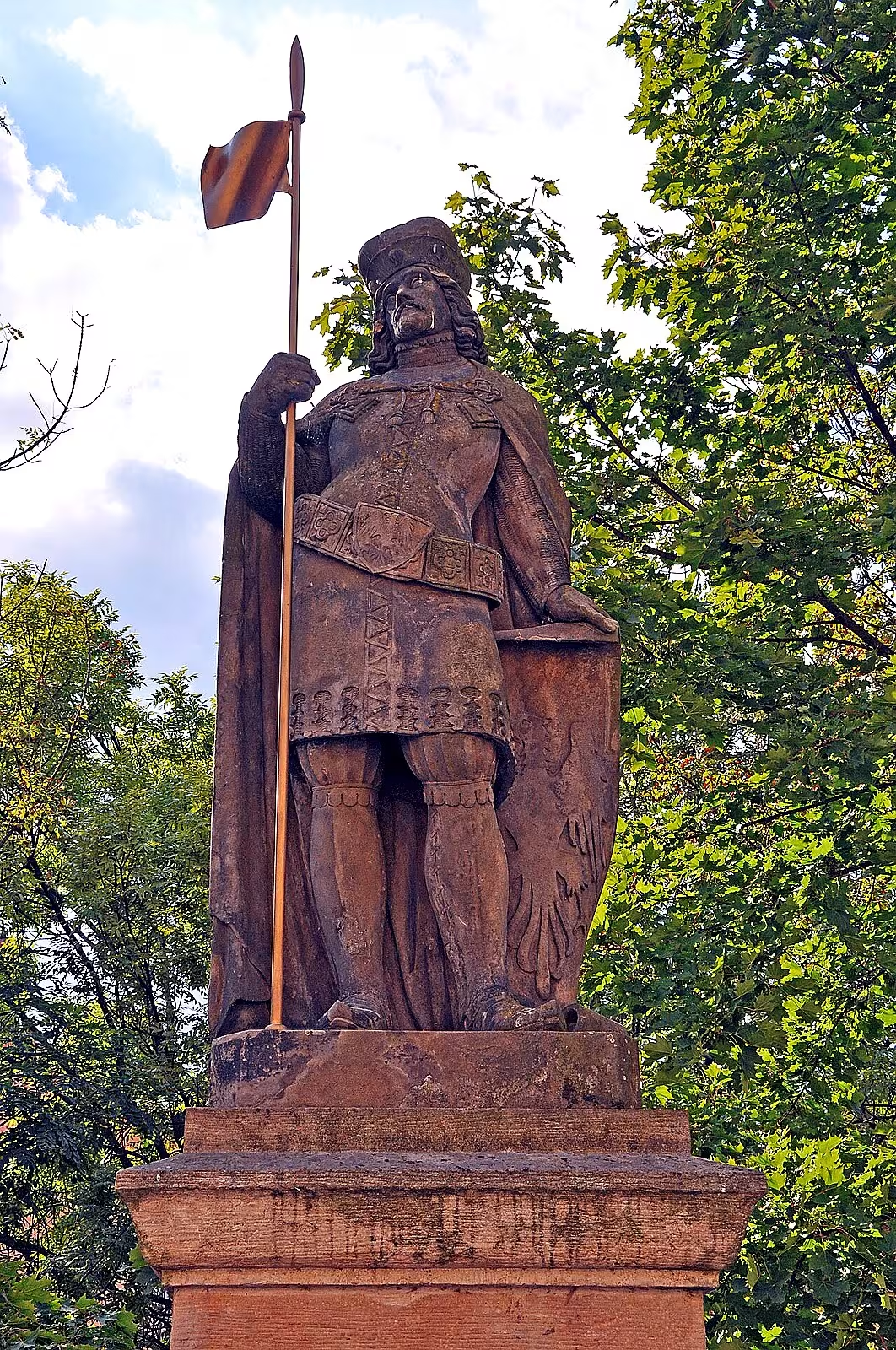
The classical sandstone statue of St. Wenceslas in Chrudim is an important sculpture work from 1847. Since 1958 it has been registered on the list of real cultural monuments of the Czech Republic. The sculpture was created by Prague sculptor František Linn and, after professional restoration, the public space in Široká Street is decorated again.
The creation of the work in the middle of the 19th century falls into a period of maturing classicism. At that time, there was a growing interest in national history and the sacramento tradition, which was linked to the efforts of national emancipation before the revolutionary year 1848. The monument was originally part of a set of statues installed on a sandstone parapet in Široká Street.
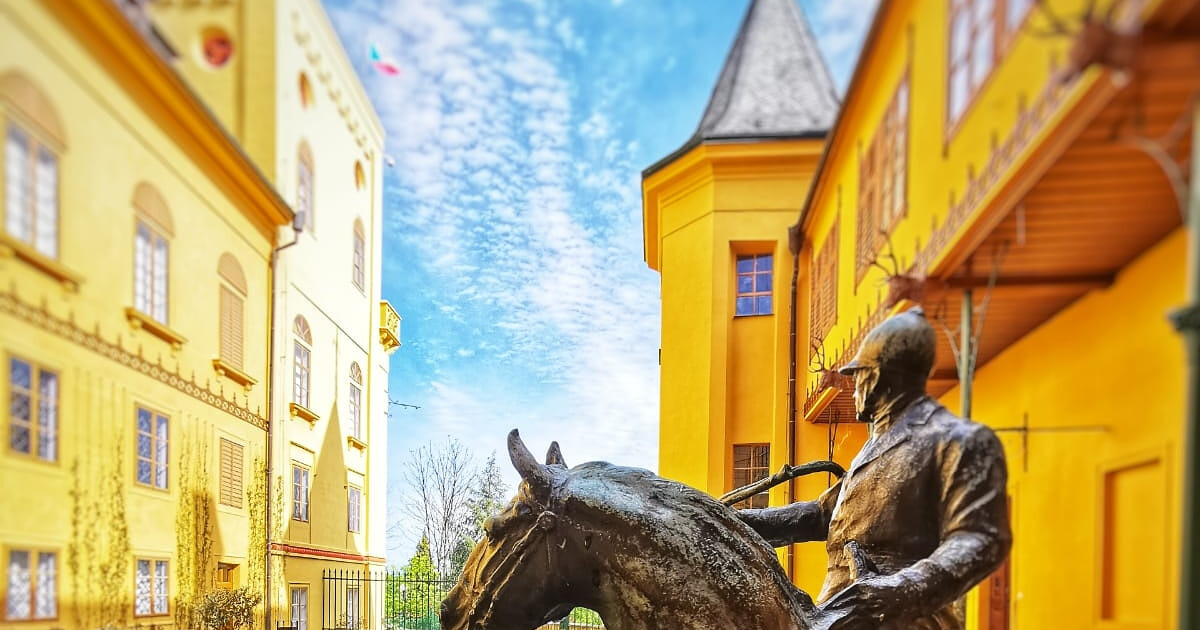
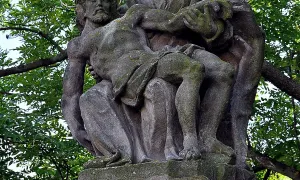
The life-size statue stands on a higher pillar with a profiled ledge. A saint with a bearded face looks up and is dressed in a prince's outfit with a fancy belt and hat. He holds a spear in his right hand, the left one leaning on the shield with the Saint-Clav eagle. The year MDCCCXXXXVII is carved on the left side of the base. The building is based on a modern sandstone windowsill that rises from the bridge at the museum above the city drive.
The fate of the monuments affected urban changes in the 20th century. In 1960, the statue, along with four other saints, was moved to the cemetery at the church of St. Michael the Archangel for the extension of the Wide Street. Back to its original place, it was not until 1997 when it was mounted on a new sandstone parapet.
A significant milestone in modern history was professional restoration in 2023. Thanks to it, the work remains preserved for the next generation as evidence of the historical development of the city and the artistic craft of the 19th century.
Today, this monument forms an important element of the urban monument zone and reminds us of the historical form of the Broad Street. Visitors can see the quality of classical work in its authentic context over the city drive.
Then and now
Drag the slider to compare how the landmark may have looked when it was built with the view today.
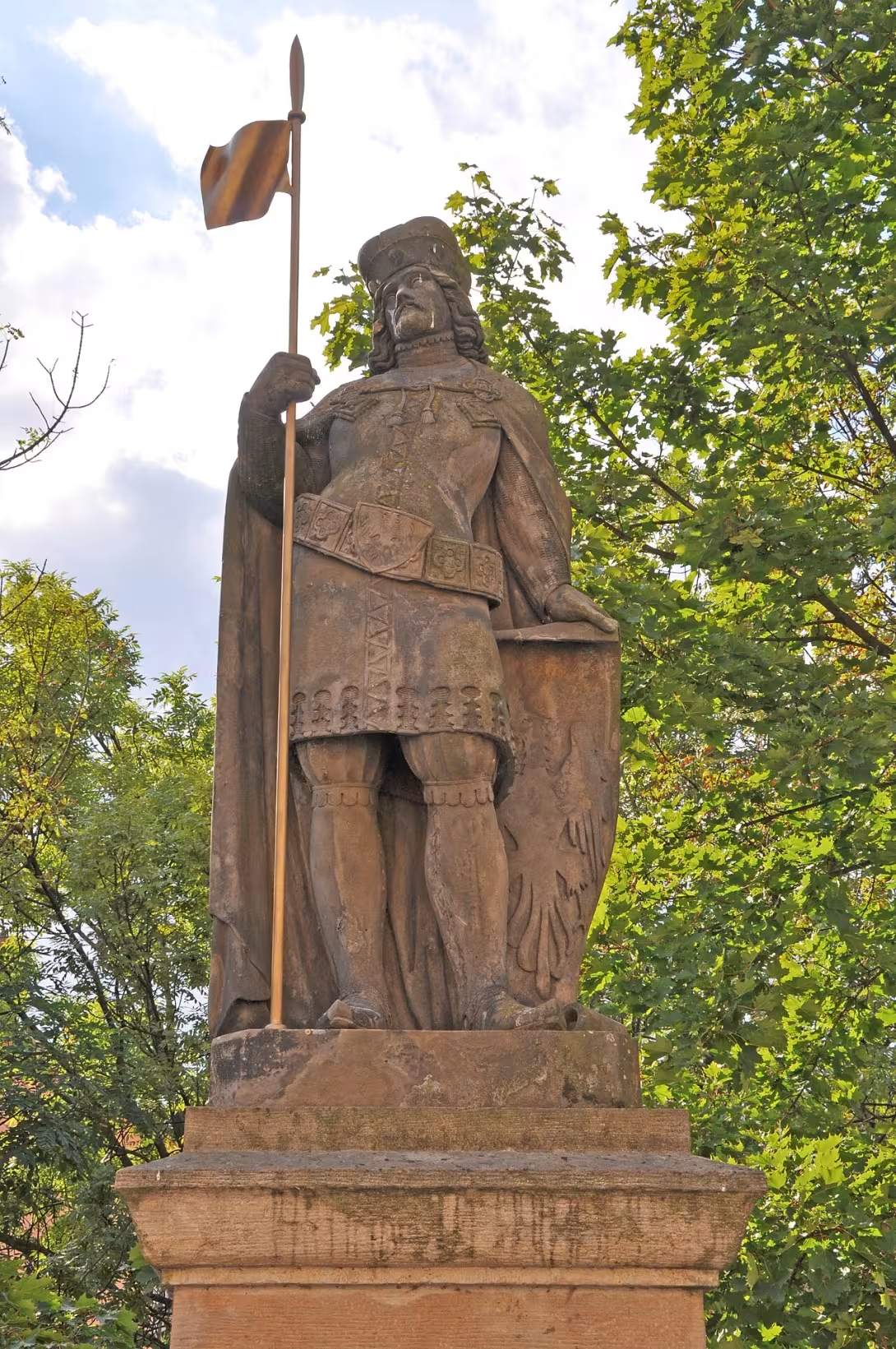

The historical appearance on the left is an AI-generated visualisation and serves as inspiration only.
Historical milestones
- 1847
- The statue of St. Wenceslas by sculptor František Linn.
- 1958
- The statue was declared a cultural monument.
- 1960
- Moving the statue to the cemetery at St. Michael's Church.
- 1997
- Return the statue to the modern parapet in Wide Street.
- 2023
- Carrying out restoration work on the statue.
Architectural development
The statue was originally part of a larger set of sculptures installed on a windowsill in Široká Street. The original base has been replaced by a modern sandstone ramp. The material is sandstone, with the year of origin carved on the pedestal.
Historical events
1960: Transferring the statue to the cemetery at the church of St. Michael the Archangel for the expansion of the street. 1997: Return the statue to the original place on the modern parapet in Široká Street.
Points of interest
- The statue is a classical sandstone made by Prague sculptor František Linn in 1847. - Since 1958 this monument has been listed on the list of real cultural monuments of the Czech Republic. - The saint is life-sized, has a bearded face, and is dressed in a prince's suit with a hat. In 1960, the statue was moved to the cemetery due to the expansion of the street, from which it returned to its original place in 1997. - The year MDCCCXXXXVII is carved on the left side of the base.
Guide
Show guide text
This text was created by artificial intelligence and has not been editorially reviewed. It may contain inaccuracies.
Welcome to Chrudim. You are standing right in the street of Široká and right in front of your eyes is a figure that has been watching over this place for decades, even centuries. Look at her. It's a statue of St. Wenceslas. He seems calm and noble to you, doesn't he? He's a life-size character, which means he's standing right in front of you like a living person, just carved out of solid stone. Feel the present, as this sandstone light rises above the pavement and his face looks into a world that is constantly flowing around him and changing.
Let us now look together at how this work was created. This statue is not just a random piece of stone, but the result of the master's efforts. It was created by Prague sculptor František Linn. If you look at the overall form of the work, you can see in it the features of the time it was created. It was 1847. At that time there was a style called Classicism. This direction sought balance, peace and return to the ideals of ancient times, where harmony and order ruled. And that's the order you can feel carved in a sandstone. Linn worked with material that is soft enough for detailed work, but also strong enough to withstand time. The sandstone has this special quality that carries warmth and nature, which perfectly complements the human form of St. Wenceslas.
Now pay attention to the details you have right in front of you right now. Notice how St. Wenceslas is dressed. He's not an ordinary man, he's a prince. He's wearing a prince's outfit that gives him dignity and pride. He has a hat on his head that complements his noble appearance. If you look closer into his face, you'll see it's bearded. These beards are not only an aesthetic element, but give them wisdom and authority. His whole character radiates a force that is tamed by calm.
Look at his hands. He holds the spear firmly in his right hand. This weapon is a symbol of his role as a protector and soldier who stands on the side of good. The left hand then rests on the shield. On this shield, you can see a very important symbol - the wedding eagle. This eagle is a sign of his lineage and resembles his royal and princely authority. This whole composition, where one hand holds arms and the other one rests on the shield, creates a sense of stability and unwavering. The saint stands firm as if he were part of the very land from which he was carved. And right here, at this point, he's standing on a modern sandstone ramp that provides him with a solid base on this city street.
But the history of this statue is much more colorful and unpredictable than it might seem at first glance. This monument has passed a path that reflects the fate of many things in our world. Since 1958, this statue has been protected as a real-estate cultural monument, which means that its value for all of us is recognised and must be preserved. But over the years, her place in Chrudim has changed. Imagine 1960. That's when the statue was moved from this place to the cemetery to St. Michael's archangel. She was supposed to spend years in silence and peace between her grave, far from the busy street. It was a time when she became more of a silent witness to death and eternity.
However, history has its own laws and wishes of people. There was a major decision in 1997 and the statue came back. He returned to his new sandstone windowsill right here in Široká Street, where he belongs. This return was like a return home. And she's been taken care of recently by a professional eye. In 2023 important restoration work took place on the statue. These works were necessary so that this sandstone piece could continue to be presented beautifully and that its details would not be lost in the fight against rain, wind and time. Thanks to these works, today you can see the statue in its almost original beauty, as people saw in 1847.
The interesting thing that may interest you is the constant transformation of this place. The statue, which was created in Prague to serve in Chrudim, passed through the isolation period in the cemetery and now again serves as part of the urban landscape. It's like time in this piece of stone keeps spinning around. It is a reminder that even when things change, even when they are moved or repaired, their substance and their importance remain the same.
Now that you know the story of this sandstone prince, I suggest you look at him one more time, but this time with the knowledge of everything you just heard. Feel the eagle on the shield, feel the power in the spear, and feel the wisdom in his bearded face. Let yourself drift through the atmosphere of this street and continue your walk through Chrudim. Every corner of this town has its own story that just waits for someone to find out. I wish you a wonderful journey and many other interesting experiences in discovering our monuments. Goodbye.
Tips for visitors
The best time for the tour is in the morning when the sun lights up the front of the statue, which allows the details of sandstone processing to be distinguished. The location is freely accessible throughout the day, so avoid crowds in the early morning hours.
You can walk comfortably from the historical city centre. Check public transport in local connection search, stops are within walking distance.
For photography we recommend using natural light during the day. The best angle for capturing the statue is from a slight ceiling to excel the prince figure of St. Wenceslas. Don't forget to wear comfortable shoes to walk around.
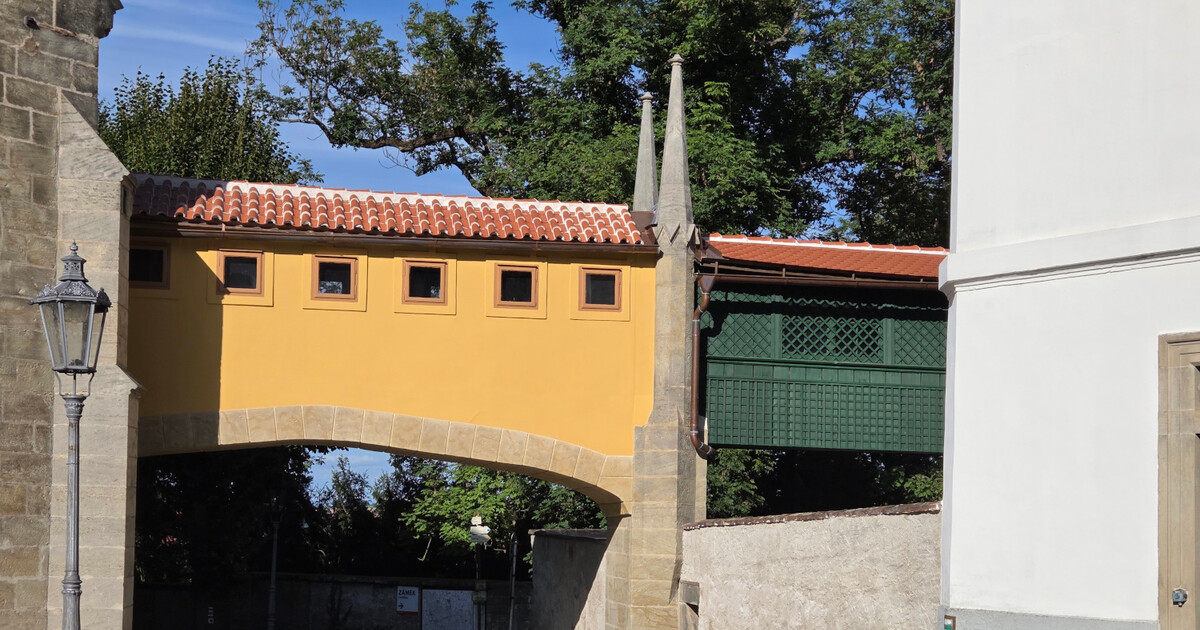
In the immediate vicinity of the statue, you can admire the architecture of St. Michael's archangel church, walk to the bridge by the museum or watch the peaceful flow of the city square. This route is ideal for a short afternoon walk.
For families with children, the location is suitable thanks to flat terrain and near water flow. A walk around the drive and a tour of historical buildings can be an interesting lesson for children in the open air history.
Frequently asked questions
Can the monument be visited?
This is a structure in a public space that can usually be seen from outside free of charge. We have not verified that this particular one is freely accessible.
Where is the monument?
Location: Chrudim IV, Pardubický kraj. The map on this page shows the exact spot.
Why is the monument protected?
It is listed in the Central List of Cultural Monuments of the Czech Republic as a cultural monument (register no. 1581231172).
Businesses nearby
Do you run a restaurant, accommodation, shop, museum, rental, wellness or other visitor service near this monument? Show yourself directly to the people heading to it — this is how they will see you in the app and on the web:
Events nearby
Zdroj akcí: otevřená data měst a obcí ČR (Národní katalog otevřených dat) a kalendář akcí Národního památkového ústavu.
Nearby
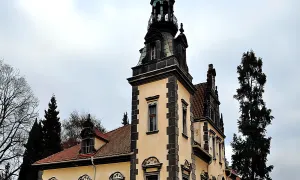
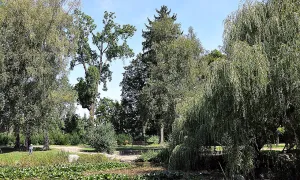
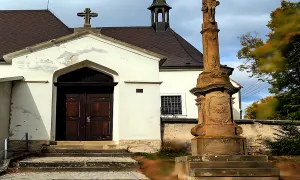
Kostel svatého Michaela archanděla, most u muzea, městský náhon v Chrudimi.
Accommodation nearby
Themed route
Thematic cruise route in Chrudim
1.Socha svatého Václava (Chrudim) - Type: Statue This statue is a symbol of the city and a sacred place for believers. It is located in the central square where ceremonies and prayers take place every year.
2. Church of St. Michael the Archangel - Type: Church - Why is it worth visiting: This Baroque church is one of the most important sacral monuments in Chrudim. Its rich interior and historical history attract many visitors.
3. Bridge to the Museum - Type: Bridge - Why it is worth a visit: This bridge is not only functional but also a beautiful architectural work that connects various parts of the city. It is an ideal place to look at Chrudim from a water perspective.
4. Urban Drive - Type: Drive - Why is it worth a visit: The city drive is a key part of the local water system and provides a beautiful view of the natural landscape. It is an ideal place for relaxing and walking.
Route order: - Start with the statue of St. Wenceslas, which is the center of the square. - Then move towards St. Michael's archangel church, which will be about 5 minutes walk. - You will then go to the bridge near the church. - Close the route by walking through the city drive, located not far from the bridge.
This route offers a view of the history and culture of Chrudim while allowing you to enjoy the beautiful architecture and natural environment of the city.
Seasonal recommendations
In spring, the surroundings of the statue awaken to life and the fine light hits the stone surface. The atmosphere is fresh and hopeful with the first buds. We recommend wearing more layers of clothing because spring weather is very variable. The best thing is to visit the memory in the morning when the space is quiet.
The summer season brings bright sun and rich green nature, which highlights the details of the work. The air is hot and the city is very lively. Due to the high summer season and larger crowds, come as early as possible in the morning. Don't forget the light attire and enough fluid to freshen up.
In autumn, the space around St. Wenceslas is covered in golden colours and morning fog. The light is softer, which creates a nostalgic and calm mood. Suitable are waterproof shoes and a warm sweater. The ideal time for a visit is late afternoon, when the color leaves most glow.
In winter, the statue looks majestic, especially if it is covered by white snow. The atmosphere is quiet and freezing, which underlines the dignity of the monument. It is necessary to wear very warm clothes, hat and gloves. In advent time we recommend planning shorter visits due to low temperatures and earlier darkness.
Visualizations and artistic views


The visualisations are generated by artificial intelligence and serve as inspiration.
Photos from the area
Real photos taken near the monument


Zdroj a licence jsou uvedeny u každého snímku.
Tips from visitors
No tips yet. Be the first!
Log in and add your tip.
Sources and literature
Photos: Ben Skála / CC BY-SA 3.0 — Wikimedia Commons. The author and licence also appear when you hover over the image.
Faktickým podkladem tohoto textu byl článek na Wikipedii, jehož autory jsou přispěvatelé Wikipedie. Článek je dostupný pod licencí CC BY-SA 4.0.
Location on the map
Příběhy a pověsti
Legendy, pověsti a příběhy spjaté s touto památkou
Fotografie návštěvníků
Zatím žádné fotografie. Buďte první, kdo přidá fotografii z návštěvy!
Log in a přidejte svou fotografii nebo hodnoťte.
Za ověřenou návštěvu v aplikaci získáte víc bodů — poznáme podle GPS, že jste na místě.
Reviews and comments