



Kostel svatého Martina (Brtníky) Church
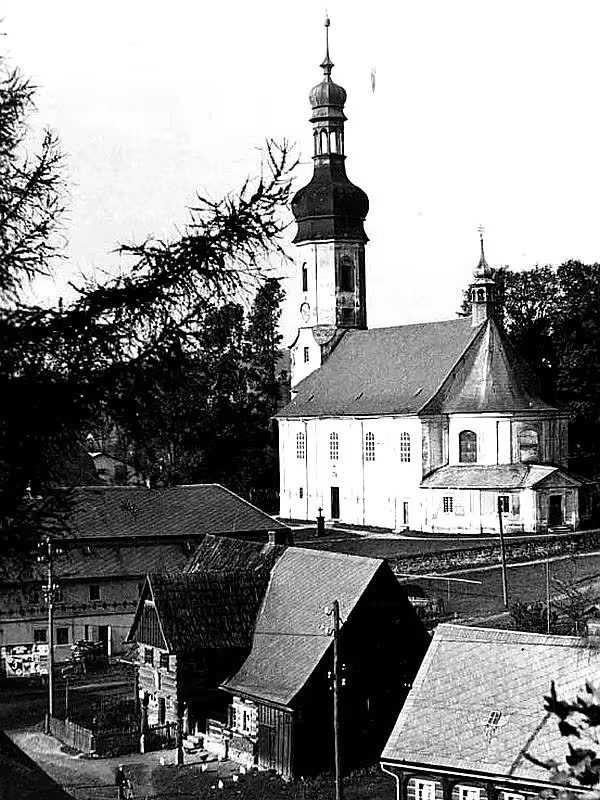
Objekt se nedochoval — na místě dnes nestojí. Následující text popisuje jeho historii, ne současnou návštěvu.
Saint Martin Church in Brtně is a remarkable historical monument, originally served as a Roman Catholic parish church between 1709 and 1717. The Baroque building is located in the village Brtníky in the district of Old Křičany Ústí Region, which was designed by Zacharias Hoffmann. She served her community until her demolition in 1975 for neglect after World War II. Despite the damage to the fire in 1774, it remained an important cultural monument until its final destruction.
The origin of St. Martin's Church dates back to the beginning of the 18th century, when Bohemia was part of the Habsburg monarchy, experiencing significant Baroque cultural development. Historical sources suggest that Brtníky had religious structures, which dates back to at least the mid-12th century, with documented references to the church of Berka of Dubé in the mid 15th century. The decision to build a new church was made by Marie Anežka Salm-Reifferscheidt, owner of Lip, who entrusted Zacharias Hoffmann with its design and construction. This period meant a period of religious and architectural transformation throughout Europe, reconciling with the baroque movement that characterized much of Central European ecclesiastical architecture.
The church of St. Martin was built from 1709 to 1717 in Baroque style with a single-boat structure with attached tower completed in 1717. Part of the design was a semi-circular presbytery with an external gallery. After suffering a fire in 1774, which destroyed most of his interior equipment, he underwent repairs, but eventually fell into elimination after World War II.
St. Martin's Church experienced various stages of ownership and administration during its history. It originally served as a parish church for the local community and became a cultural monument between 1966 and 1974. Despite efforts by local citizens and spiritual administrators to preserve it after World War II, the church was finally torn down in 1975 after the decision of the National Committee Děčín.
Among the key events in the history of the church include its fundamental stone laid in 1709 and its completion in 1717. The 1774 fire damaged the interior significantly, leading to subsequent repairs for centuries. The oldest bell, supposedly from the 15th century, was moved after demolition to Rumburk's Loretta.
Today, the place where the Church of St. Martin once stood is a reminder of the rich historical and cultural heritage of Brtník. Although the physical structure no longer exists, its legacy persists through local memories and historical records. Visitors interested in discovering the past of the region can appreciate the importance of this monument as part of a wider narrative of Baroque architecture and religious history in Bohemia.
The Church of Saint Martin remains a significant symbol of the historical path of Brtníce, which offers knowledge of the architectural and cultural transformations that shaped the area. His story calls for reflection on the persistence of even the most valuable buildings and encourages visitors to explore the layers of history in the region.
Then and now
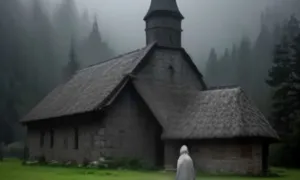
Drag the slider to compare how the landmark may have looked when it was built with the view today.
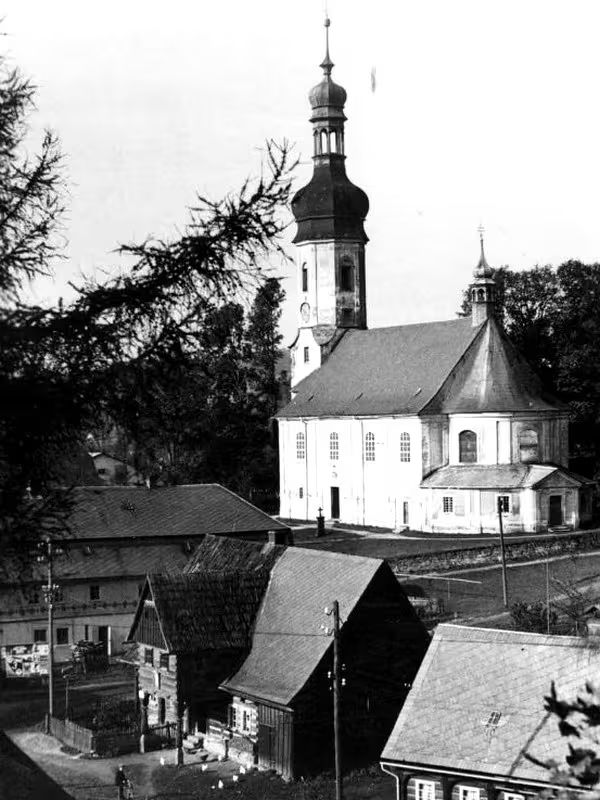

The historical appearance on the left is an AI-generated visualisation and serves as inspiration only.
Historical milestones
- 1709
- The laying of the cornerstone for the Church of St. Martin.
- 1717
- The construction of St. Martin's Church.
- 1774
- The fire damaged the interior of the church, which led to repairs.
- 1966
- A church known as a cultural monument.
- 1975
- The demolition of St. Martin's church for neglect.
Architectural development
The church of St. Martin was built between 1709 and 1717 and represented Baroque architectural elements. The proposal included a single-boat construction with attached tower, which was completed in 1717. After suffering a fire in 1774, he underwent repairs, but eventually fell into decommissioning after World War II.
Historical events
- 1709
- The cornerstone of the new church was laid.
- 1717
- The construction of the church was completed, including its tower.
- 1774
- The fire damaged the church and destroyed most of its interior.
- 1975
- the church was destroyed by decision of the local National Committee in Děčín.
Points of interest
- Despite its baroque origin, the Church of St. Martin had an older religious presence in Brtníky, which dates back to at least the mid-12th century, highlighting the long tradition of church structures in this area.
- The oldest bell church, which is believed to have been created in the 15th century, was rescued from demolition and moved to Rumburk Loreta, which preserved part of its historical heritage despite the destruction of the building.
- Marie Anežka Salm-Reifferscheidt, owner of Lip, played a key role in putting St. Martin's church into operation, reflecting how local nobles affected religious architecture during the Baroque period.
- the church, after suffering from fire damage in 1774, which destroyed most of its interior, underwent repairs, but eventually collapsed after world war ii, illustrating the challenges of maintaining historical structures in stormy times.
- The decision to demolish St. Martin's church in 1975 was made by the National Committee Děčína, which called the controversial end of the important cultural monument and ignited a reflection on the practices of conservation of cultural heritage.
Guide
This guide is narrated by a synthetic voice generated by artificial intelligence.
Show guide text
This text was created by artificial intelligence and has not been editorially reviewed. It may contain inaccuracies.
The Church of Saint Martin in Brtníky was a Roman Catholic parish church. It was built by Zacharias Hoffmann between 1709 and 1717 in the Baroque style. Today it no longer stands. After the Second World War it fell into disrepair and in 1975 it was demolished at the initiative of the Děčín District National Committee, despite being listed as a cultural monument as recently as 1966 to 1974.
The church in Brtníky had a predecessor. According to unsubstantiated reports, a chapel stood here as early as the mid-twelfth century, and a first church, probably wooden, is believed to have been built in 1240. It is first reliably mentioned in the land registers of Berka of Dubá from 1445 and 1446. In 1534 the village converted to Protestantism, and for a short time the Saxon Saupsdorf also belonged to it. The two communities were connected by a church path. During the period of recatholization, the Brtníky church, due to a shortage of priests, became a subsidiary of Lipová and later of Mikulášovice.
The old church was no longer adequate for the growing village. The inhabitants therefore requested its enlargement in 1700. However, the owner of the Lipová estate, Countess Marie Anežka Salm-Reifferscheidtová, decided to build an entirely new church. The foundation stone was laid in 1709. She entrusted both the plans and the construction to Zacharias Hoffmann from Lipová. The carpentry work was supervised by Andreas Breuer from Hrádek nad Nisou, with substantial help from local parishioners. The church was completed in 1716, the tower a year later, and it cost twelve hundred imperial thalers. The local teacher Zacharias Herlt, who served as scribe and foreman on the construction, placed commemorative documents in the tip of the tower spire.
It was a single-nave structure on a rectangular floor plan. A tower adjoined the western façade, octagonal from the third storey, crowned with an onion dome. The presbytery ended in a semicircle and was surrounded by an external passage. The flat ceiling of the nave was decorated with scenes from the Old Testament.
In 1774 a fire damaged the church and most of its furnishings were destroyed. For this reason the furnishings dated mainly from the late eighteenth and the turn of the eighteenth and nineteenth centuries. The altar painting of Saint Martin was painted in 1795 by the Šluknov painter Dominik Kindermann. The painting of Saint John of Nepomuk on the side altar was created by Johann Birnbaum from Jiřetín. The last organ, with nineteen stops, was built in 1924 by the Břevnov organ builder Josef Růžička.
Three bells from the church survive, now housed in the Loreto in Rumburk. The oldest of them is said to date from the fifteenth century. The two-storey rectory, built at the same time as the church, burned down in 2012.
Businesses nearby
Do you run a restaurant, accommodation, shop, museum, rental, wellness or other visitor service near this monument? Show yourself directly to the people heading to it — this is how they will see you in the app and on the web:
Nearby
ITEX Show interactive overview of the surroundings - restaurants, accommodation, rentals and other places within a 15 km radius.
Data: OpenStreetMap contributors, 15 km radius.
‡ Historical monuments
- _ (7.7 km)
- Moral column (8.2 km)
- Muzeum Rumburk (8.2 km)
- ryskámen (9.1 km)
- Oltar Kamen (10.0 km)
- Chaunstejn (10.8 km)
- Neumannmühle (11.3 km)
- Karase-Museum (11.8 km - Nordstraße 21a)
Restaurant and catering
- Berggasthof Prinz-Friedrich-August Baude (10.0 km - Baudenweg 4)
- Schanzenbaude (10.7 km)
- Hotel Bellevue (11.2 km)
- Hainberg (11.2 km - Hainbergstraße 28)
- Neumannmühle Berghütte (11.3 km - Kirnitzschtalstraße 4-5)
- Schweizerhaus (11.5 km)
- Na Sunlight (11.7 km)
- Bierhalle (11.7 km)
Accommodation
- Faraon (7.5 km)
- Zamecek (8.9 km)
- Pension "U Štrejl" (10.8 km)
- Pension Under rock (10.9 km)
- Ferienwohnung Kretschmar (11.1 km - Sportplatzweg 16)
- Gästehaus Windmühle Seifhennersdorf (11.4 km - Neugersdorfer Straße 7)
- Pod Jedlovou (12.2 km)
- Heiterer Blick (12.3 km - August- Bebel-Straße 60)
› Rental and sports
- Keine Kletterhalle, sondern eine Art Kletterturm (sieht eon bisschen wie ein naturbelassener Baumstamm aus, aber extra zum Klettern / Bouldern hergestellt) (6.3 km)
- Sport areal Czech Switzerland (6.4 km)
- Kola Brabec (7.7 km)
- Bicycle rental (8.1 km)
- Gyzna (8.9 km - 84)
- Reisemobile & Freizeitbedarf (12.0 km - Hauptstraße 97a)
- Oberlausitzer Gesundhaus / Ellmar (12.0 km)
- Radland (12.1 km - Talstraße 22)
© Tourism and nature
- Beautiful Buk (4.5 km)
- Black gate - crossroads (6.0 km)
- Doubice (6.8 km)
- Virgin Jedle (7.0 km)
- Narrow stairs (7.7 km)
- Dancer - view (8.7 km)
- Birdstone (12.5 km)
- Cross Stone (13.3 km)
Visualizations and artistic views


The visualisations are generated by artificial intelligence and serve as inspiration.
Photos from the area
Real photos taken near the monument

Zdroj a licence jsou uvedeny u každého snímku.
Tips from visitors
No tips yet. Be the first!
Log in and add your tip.
Sources and literature
Photos: autor neuveden / Public domain — Wikimedia Commons. The author and licence also appear when you hover over the image.
Faktickým podkladem tohoto textu byl článek na Wikipedii, jehož autory jsou přispěvatelé Wikipedie. Článek je dostupný pod licencí CC BY-SA 4.0.
Location on the map
Příběhy a pověsti
Legendy, pověsti a příběhy spjaté s touto památkou
Fotografie návštěvníků
Zatím žádné fotografie. Buďte první, kdo přidá fotografii z návštěvy!
Log in a přidejte svou fotografii nebo hodnoťte.
Za ověřenou návštěvu v aplikaci získáte víc bodů — poznáme podle GPS, že jste na místě.
Reviews and comments