






Kostel svatého Martina (Dolní Město) Church
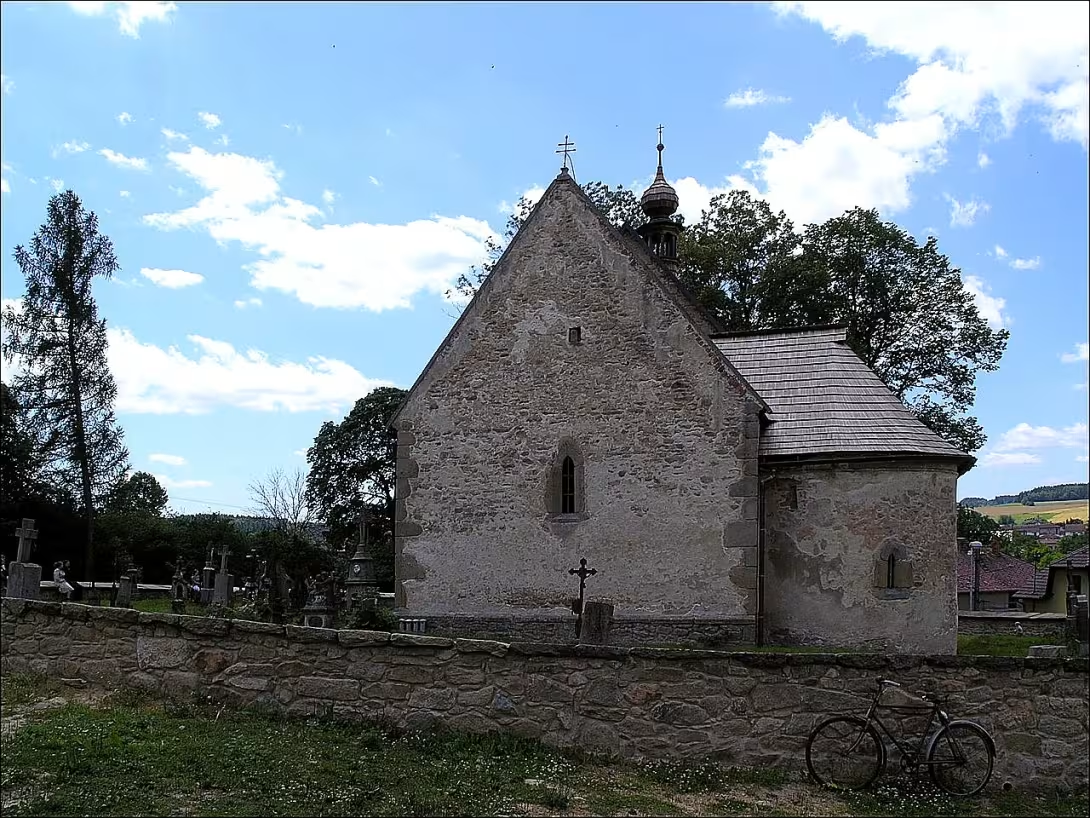
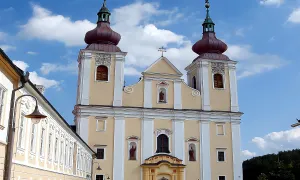
Saint Martin Church in Lower Town is a charming historical monument famous for its well preserved Gothic fresco. Located in a village in Vysočina region, this church dates from at least the middle of the 14th century, with evidence suggesting that it may be even older. It is an important cultural monument and is part of a group known as "Podlipnický" churches from the same time. The Church of Saint Martin is remarkable for its extraordinary 14th-century frescoes on presbytery ribs arches and eastern walls, depicting symbols of four evangelists and angels holding the mandorla with Christ.
The origin of St. Martin's Church is rooted in the middle of the 14th century, when Bohemia was part of the Holy Roman Empire under Charles IV. This period witnessed significant cultural and architectural development throughout Europe, especially in Gothic architecture. While specific details of his original construction remain weak, historical records confirm that the first mention of the church originated from this time. Originally dedicated to St. John the Baptist has undergone several modifications over the centuries, including Renaissance and Baroque renovations, and yet he has retained his basic Gothic character.
The Church of St. Martin features its preserved Gothic elements despite various stylistic changes. The church has remarkable frescoes on the ribbed vaults of the presbytery and the eastern walls of the ship. These frescoes include symbols of the four evangelists, angels holding the mandorlo with Christ and other biblical figures such as Our Lady and Saint John the Baptist. Although some frescoes in the main ship are damaged, scenes such as Saint George fighting the dragon and perhaps allegorical representation of Jan Luxembourg and Elisabeth Přemysnánov can still be recognized.
The Church of St. Martin recorded significant changes in ownership and administration throughout its history. After the Battle of the White Mountain, she ceased to serve as a parish mansion and became a filial church under Sázavou. In 1653 the patronage of the church was officially changed from St. John the Baptist to St. Martin. At the end of the 17th century, Lipník nad Sázavou became a philistine of the parish, which is the status he is now maintaining.
Several key events and curiosities mark the history of this church. Especially in front of the church stands a pillar with a statue of Madonna from the beginning of the 18th century, which complements its historical charm. The frescoes inside are not only artistic treasures, but also provide views into medieval religious iconography and storytelling. Despite certain damage over time, these works of art remain evidence of the skills and dedication of their creators.
Today, the Church of St. Martin remains an accessible place for visitors who are interested in discovering rich history and art. The services are held on Thursday at 16:30, offering a view of its continued religious importance. the church is a well-preserved gothic fresco to make it a must-visit destination for those who want to appreciate medieval European art and architecture.
The Church of Saint Martin is more than an architectural relic; It is living proof of the cultural and spiritual history of the Lower Town and the wider region. Its continuing beauty and historical importance invites visitors to explore its historical past and experience the timeless charm of gothic art firsthand.
Then and now
Drag the slider to compare how the landmark may have looked when it was built with the view today.
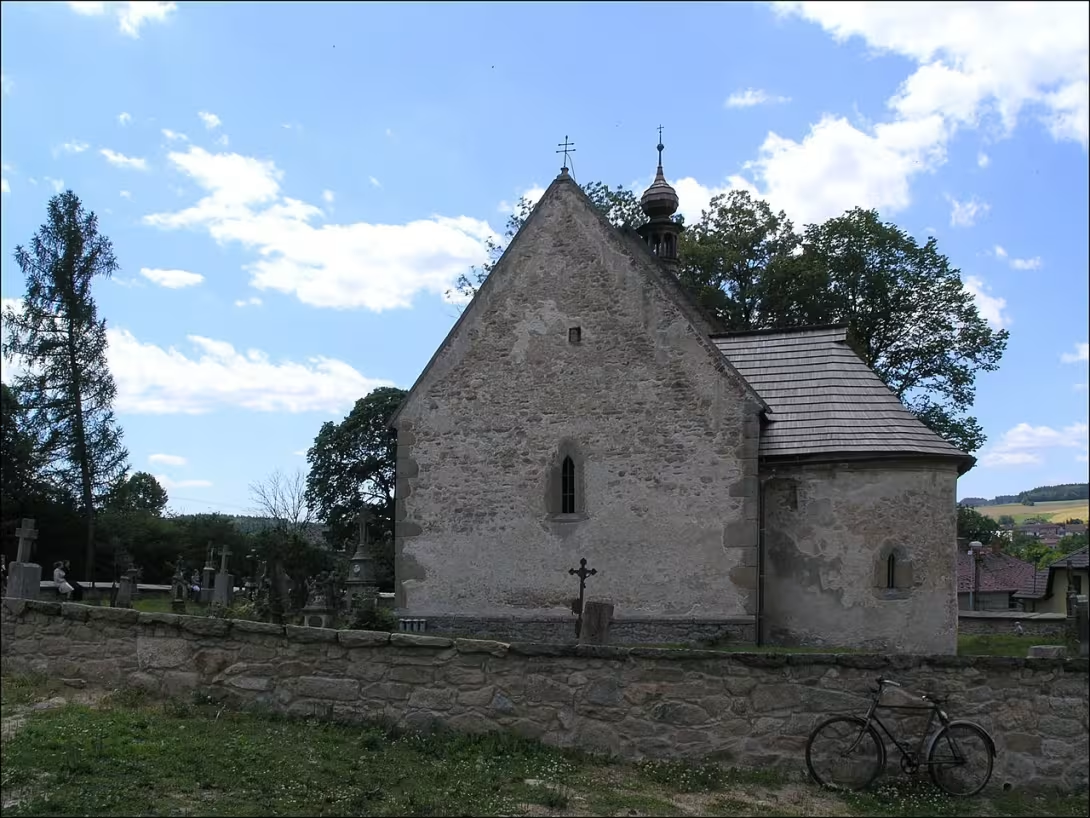

The historical appearance on the left is an AI-generated visualisation and serves as inspiration only.
Architectural development
St. Martin's church was originally dedicated to St. John the Baptist, underwent Renaissance and Baroque renovations while maintaining its Gothic character. The frescoes on the ribbed arches and walls are remarkable for their display of biblical scenes and figures.
Historical events
After the Battle of the White Mountain, the church ceased to be a parish residence and in 1653 it became a filial church under Saint over Sázavou.
The change of patronage to St. Martin was first mentioned in 1653.
Points of interest
- Church Saint Martin is part of a group of churches Podlipnický, which have similar Gothic architectural style and historical importance in Vysočina region.
- Originally dedicated to St. John the Baptist, the church underwent a remarkable change in the patronage of Saint Martin after 1653, reflecting shifts in religious focus in time.
- Despite various renovations in Renaissance and Baroque times, St. Martin's church retains its basic Gothic character, which shows the architectural resilience and adaptability of the era.
- Before the church stands the early 18th-century statue of Madonna on a pillar, adding to its historical charm and serving as a visual reference to the artistic traditions of this period.
- The frescoes inside the church not only depict religious figures as four evangelists, but also contain interesting scenes such as Saint George fighting the dragon, offering views into medieval storytelling and iconography.
Guide
This guide is narrated by a synthetic voice generated by artificial intelligence.
Show guide text
This text was created by artificial intelligence and has not been editorially reviewed. It may contain inaccuracies.
The Church of Saint Martin in Dolní Město in the Havlíčkobrodsko region belongs to a group of three so-called Podlipnician churches from the 14th century. The first written mention of it dates from the middle of the 14th century, though the building is probably even older. The church underwent Renaissance and Baroque modifications, yet it has retained its Gothic character. In front of it stands a column with a statue of the Madonna from the early 18th century. The church is protected as a cultural monument.
It is exceptionally notable primarily for its Gothic frescoes from the 14th century. They have been preserved on the walls of the presbytery and on the eastern wall of the main nave. On the ribbed vault of the presbytery are symbols of the four evangelists and angels carrying a mandorla with a blessing Christ sitting on a rainbow. On the eastern wall of the presbytery kneel the Virgin Mary and Saint John the Baptist. The northern wall was covered with fragments of scenes depicting the Passion.
The paintings in the main nave are damaged. Nevertheless, a scene of Saint George fighting the dragon and the figure of Saint Wenceslaus can still be made out. Beside him are possibly allegorical depictions of John of Luxembourg and Elizabeth Přemyslovna.
Originally, the church was dedicated to Saint John the Baptist. After the Battle of White Mountain, it ceased to be the seat of the parish. It became a subsidiary church and belonged to the parish in Světlá nad Sázavou. The dedication to Saint Martin is first mentioned in 1653. Probably at the end of the 17th century, the church became a chapel of the Lipnice church and remains so to this day.
Tips for visitors
Best time to visit St. Martin's Church in Dolní The city is at the end of spring or early autumn when the weather is mild and pleasant for exploring its Gothic architecture and fresco. These seasons offer optimal lighting conditions for the recognition of complex details of interior works church without crowds that can bring summer months.
Martin's Church can be restricted, so visitors are encouraged to use public transport where possible.
When visiting the church, consider using the camera to capture beautiful gothic frescoes and architectural details. Early morning or late afternoon light provides the best conditions for shooting, casting soft shadows that highlight texture. Interior churches many places where natural light increases the beauty of works of art.
For families with children, discovering St. Martin's church can be both educational and pleasant. Involve your children by explaining the historical importance of Gothic architecture and fresco. Nearby, within 30 minutes drive or walk, there are several parks and open spaces ideal for family picnics or peaceful walks after visiting the church.
In addition to St. Martin's church, visitors should consider exploring nearby attractions within a 30-minute radius. These include historical sites and natural landscapes offering a view of the rich cultural heritage of the region and picturesque beauty. Planning a one-day trip around these places can provide a well-rounded experience of Dolní Město and its surroundings.
Frequently asked questions
Can the monument be visited?
Religious buildings are usually open mainly during services; at other times a visit is normally arranged with the parish or the operator. We have not verified specific times.
Where is the monument?
Location: Dolní Město, Kraj Vysočina. The map on this page shows the exact spot.
Why is the monument protected?
It is listed in the Central List of Cultural Monuments of the Czech Republic as a cultural monument (register no. 38058/6-137).
Businesses nearby
Do you run a restaurant, accommodation, shop, museum, rental, wellness or other visitor service near this monument? Show yourself directly to the people heading to it — this is how they will see you in the app and on the web:
Events nearby
Zdroj akcí: otevřená data měst a obcí ČR (Národní katalog otevřených dat) a kalendář akcí Národního památkového ústavu.
Accommodation nearby
Themed route
Thematic Travel Route: Church of St. Martin and the District of Lower Town
1. Kostel svatého Martina (Dolní Město) - Church - Proc stands behind the church: This historical church is an icon of smaller architecture and rich spiritual tradition. It should be remembered that it is not necessary to make history, but also those that affect the resting conditions and escape in the sanctuary.
2. Lower City Park - Park - Proce is worth filling: It is located in the close proximity of the church and offers a place for relaxation and walks on green areas. It is ideal for deduction or after the appointed church, with the possibility of useful moments in nature.
3. Local Museum - Museum - The reason behind this: This museum focuses on the history and culture of Lower Town, providing a lean insight into the past of the village. As referred to in Article 2 (1) (b) of Regulation (EU) No 1303 / 2013 as referred to in Article 3 (1) (b) of Regulation (EU) No 1303 / 2013 and Article 3 (2) of Regulation (EU) No 1303 / 2013.
4. Lower City Market - Historical Town This market is a living bridge where tradition and modernity meet. It is an ideal point for setting marginal foods, products to be used, which transfers additional quantities to authorised medium-sized cultures.
5. Lower Town National - Historical courtyard - Why standing for filling: Located in the centre of the village and served as an important place for significant changes for centuries. The chief must be designed to be in architectural detail and the permit is reserved for a municipality that might have its own history.
This route will guide you through the tender amount of Lower Town, charging combined production of spiritual, cultural and natural products.
Seasonal recommendations
Spring: A visit to St. Martin's Church in Lower Town has been proposed on the basis of the green surroundings, which has historical dice architecture. Sunshine days are mixed with cold wounds and evenings, which means this activity is not for those with daphs. In this case, information on the scope may be provided in case of distortion of competition. This is due to the fact that these measures are applicable in the light of the conditions of competition laid down in Article 107 (3) (c) of the Treaty.
Summer: The Church of St. Martin is surrounded by living nature, where trees in a full deciduous dress provide an invaluable shadow. Sun days and dark quantities to be put into service, which means that the quantity necessary to achieve the objectives should be used. Importing the supply is crucial for minimising traffic according to maximization of difficulty. Dressed in light, but dressed warm to be transported to sunny days and cool dinner. Forget to bring a forbidden sunscreen and enough water to weigh the nominal day as little as possible.
Autumn: In autumn, the Church of St. Martin offers a single atmosphere with colourful foliage and mild temperatures that improve its performance. The sunny days are set out in the Annex in order to meet the conditions laid down in this Regulation. Less so this season may be considered to be necessary to ensure that the conditions laid down in this Regulation are met. Dress in a layered style to be transported to the fast temperature cancellations during the day.
Winter: The winter value of St. Martin's Church offers a completely different agreement with permitted commitments horizons and a mild freezing interpretation. The light is marched in a soft, shimmering lining, which is the historical architecture of the skeleton. During winter the opening time is possible to be shorter and the difficulty is reduced, allowing for a quiet experience. It shall import the contribution in order to be imposed by decision and by decision with all measures. Dress warm to enjoy your insides without worrying about freezing support outside.
Visualizations and artistic views


The visualisations are generated by artificial intelligence and serve as inspiration.
Photos from the area
Real photos taken near the monument


Zdroj a licence jsou uvedeny u každého snímku.
Tips from visitors
No tips yet. Be the first!
Log in and add your tip.
Sources and literature
Photos: Matěj Baťha / CC BY-SA 2.5 — Wikimedia Commons. The author and licence also appear when you hover over the image.
Faktickým podkladem tohoto textu byl článek na Wikipedii, jehož autory jsou přispěvatelé Wikipedie. Článek je dostupný pod licencí CC BY-SA 4.0.
Location on the map


Příběhy a pověsti
Legendy, pověsti a příběhy spjaté s touto památkou
Fotografie návštěvníků
Zatím žádné fotografie. Buďte první, kdo přidá fotografii z návštěvy!
Log in a přidejte svou fotografii nebo hodnoťte.
Za ověřenou návštěvu v aplikaci získáte víc bodů — poznáme podle GPS, že jste na místě.
Reviews and comments