






Kostel svatého Martina (Dolní Oldřiš) Church
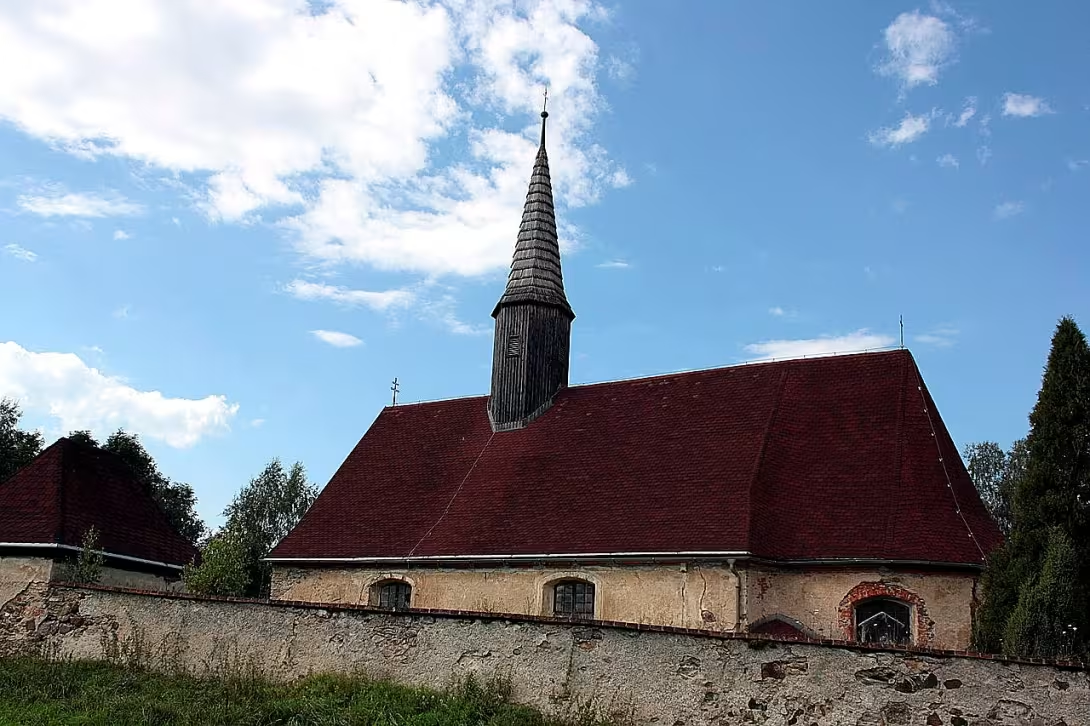
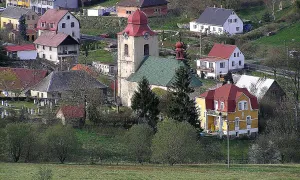
The Church of Saint Martin in Dolní Oldřiš is a medieval structure centrally located in the village, west of the local road. It is recognized as a cultural monument of the Czech Republic, remarkable for historical significance and architectural development from the end of the 13th to 14th century. The origin of the church comes from when Bohemia was part of the Holy Roman Empire, experiencing significant cultural and architectural development. Its Gothic style reflects wider European trends at this time.
The first documented in 1495, probably the church dates from the period between the end of the 13th and 14th centuries. Historical sources suggest a large reconstruction at the turn of the 15th and 16th centuries, supported by dendrochronological dating of wood used for roof construction between 1501-1502. Originally dedicated to Saint Wolfgang in 1665, he was again dedicated to Saint Martin five years later.
The church of St. Martin has a single-boat structure with a rectangular presbyter ending in semi-circular form. It contains rectangular sacristy on the north side and the Aperan entrance porch in the south. The present Baroque appearance of the church was the result of renovation in 1780, 1865 and 1881, which included reconstruction of presbytery and addition of sacristy. These changes united his facades in a coherent baroque style.
The interior is decorated with historical elements, including the main altar and two side altars from the 19th century. The Baroque pulpit with sculptor statues of evangelists supplies its artistic wealth. In addition, four Renaissance tombstones are embedded in the north facade and the east wall of the entrance porch, which resemble remarkable figures like Anna of Eberhardt and Michael of Eberhardt.
Today, the Church of St. Martin stands as evidence of its historic journey through various architectural styles and periods. Since the 1990s it has undergone restoration after deterioration after 1945. Visitors can explore this monument to appreciate its unique blend of medieval origin and baroque transformations. Cultural importance and architectural beauty church makes it a valuable destination for interested people interested in Czech history and heritage.
Then and now
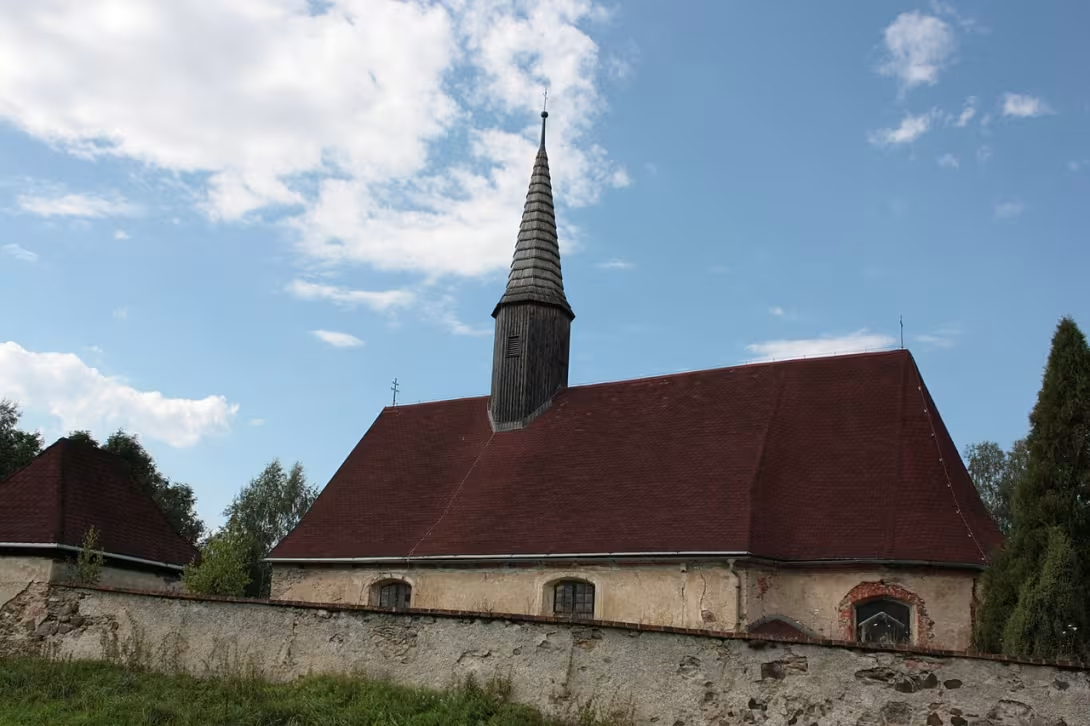
Drag the slider to compare how the landmark may have looked when it was built with the view today.
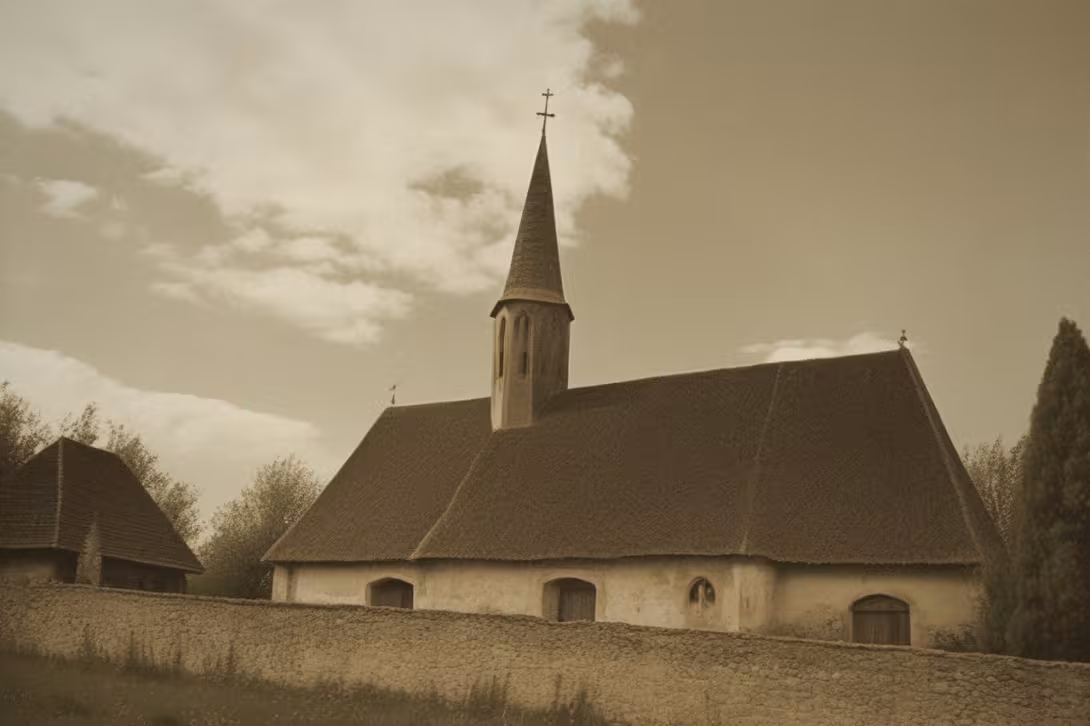
The historical appearance on the left is an AI-generated visualisation and serves as inspiration only.
Historical milestones
- 1495
- the church was first documented.
- 1501
- Dendrochronological dating suggests that wood was cut between these years for roof construction.
- 1665
- the church was dedicated to Saint Wolfgang.
- 1670
- Hand the church over to St. Martin.
Architectural development
the church underwent a major reconstruction at the turn of the 15th and 16th centuries, supported by dendrochronological analysis. After renovations in 1780, 1865 and 1881 she gained her present baroque appearance, which included reconstruction of presbytery and addition of sacristy. The church has unified Baroque facades.
Historical events
the church was first documented in 1495.
Significant reconstruction took place around the turn of the 15th and 16th centuries, as determined by dendrochronological dating of wood used for building the roof between 1501- 1502.
In 1665 the church was dedicated to Saint Wolfgang, but five years later it was rededicated to Saint Martin.
Points of interest
- The Church of Saint Martin was originally dedicated to Saint Wolfgang in 1665 before being rededicated to his current patron, Saint Martin, only five years later. This change reflects the shift in religious or community priorities during this period.
- Despite the medieval origin, the church passed a significant Baroque renovation at the end of the 18th and 19th centuries, which transformed its architectural style and at the same time contained elements like a Baroque pulpit decorated with statues of evangelists, which mixed artistic styles from different times.
- the church has four Renaissance tombstones (tombstones) built in the north facade and the east wall of the entrance porch. These remind of remarkable individuals such as Anna of Eberhardt and Michael of Eberhardt, providing a view of local history and social hierarchy of the time.
- Dendrochronological analysis revealed that the wood used for building the roof dates from 1501-1502, indicating a significant period of reconstruction at the turn of the 15th and 16th centuries. This scientific method of dating emphasizes the architectural evolution of the church during the key historical era.
- Since the deterioration after 1945, the Church of St. Martin has been restored since the 1990s. This ongoing conservation effort underlines its cultural importance and ensures that future generations can appreciate its unique mix of medieval origin and baroque transformations.
Guide
This guide is narrated by a synthetic voice generated by artificial intelligence.
Show guide text
This text was created by artificial intelligence and has not been editorially reviewed. It may contain inaccuracies.
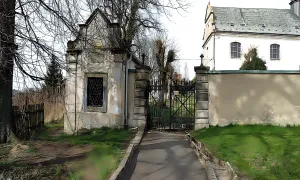
Welcome to the historical church of St. Martin in Dolní Oldřiši, a quiet medieval jewel anchored in the hugging walls of the cemetery. As you stand here, surrounded by a robust shelter that was behind the test of time, take a moment to immerse yourself in the atmosphere of this precious cultural monument.
the church first emerged from the historical pages in 1495 and marked its place as a persistent spiritual and community landmark. Imagine a return to the end of the 15th century when the foundations were laid for what would become a central part of the village's life. The wood used for the construction of the roof was cut between 1501 and 1665, which is a fact revealed by the dendrochronological dating - the conclusion of careful craftsmanship by its builders.
As you look at the architecture of the church, notice its single-boat structure and rectangular presbyters end. These functions speak of the priorities of medieval design, highlight simplicity and functionality and still serve as a place of worship and reflection for generations. The little morgue around here adds another layer to this historical story, which points to the practices and beliefs of the community surrounding life and death.
The history of dedication church is particularly fascinating. Originally dedicated in 1665 to Saint Wolfgang, he underwent a major transformation only five years later when he was rededicated to Saint Martin. This shift reflects changes in religious or communal priorities at this time - the story of evolving identity and spiritual devotion.
While the architects remain unknown, their legacy will remain in every stone and beam of this sacred space. And although there are no specific historical figures directly linked to its origin, the presence of the church has undoubtedly affected countless lives over the centuries.
Now, let me share a special trench: despite its medieval roots, the church underwent these dedication long after it was first built. This change in holy patrons is a reminder of how places like this can evolve with their communities, adapt to new spiritual needs and cultural shifts.
As you continue your research, I urge you to roam, take every detail and imagine the stories that have appeared over time. Whether it's the way the sunlight filters the windows or the silent whisper of history that carried on the wind, it's a lot to discover.
Thank you for joining me in this remarkable place. May your journey Dolní Oldřiš be full of miracles and inspiration. Goodbye until we meet again in another corner of history.
Tips for visitors
Best time to visit St. Martin's church in Dolní Oldřiši is at the end of spring or early autumn, when the weather is pleasant and the surrounding cemetery offers a quiet atmosphere. These seasons provide optimal lighting for photography and allow visitors to enjoy natural beauty without the discomfort of summer heat or winter cold. Moreover, these times are less crowded compared to the peak of tourist seasons, offering a calmer experience.
If you want to provide the most up-to-date information about routes and timetables, check the reliable traffic search tool or contact local transit offices.
When visiting, it is advisable to bring comfortable walking shoes because there may be uneven paths inside the cemetery surrounding the church. In addition, consider bringing a zoom camera to capture detailed pictures of the church architecture from different angles. Hats and sunscreen is recommended if you plan to spend time outside during the sun days.
For lovers of photography, the best places to capture St. Martin's church include his western facade, where natural light illuminates complex details in the morning. The interior offers fine, scattered lighting ideal for shooting windows from coloured glass and architectural elements. Early morning or late afternoon is recommended to use the golden clock of light.
When it comes to nearby attractions within 30 minutes, visitors can explore other historical monuments in the LiberecK region. While there are no specific recommendations, the general proposal is to explore local museums or natural trails that offer knowledge of the cultural and natural heritage of the area. These trips provide additional context and enrich the overall experience of the visit to Lower Oldřiš.
Frequently asked questions
Can the monument be visited?
Religious buildings are usually open mainly during services; at other times a visit is normally arranged with the parish or the operator. We have not verified specific times.
Where is the monument?
Location: Dolní Oldřiš, Liberecký kraj. The map on this page shows the exact spot.
Why is the monument protected?
It is listed in the Central List of Cultural Monuments of the Czech Republic as a cultural monument (register no. 18647/5-4187).
Businesses nearby
Do you run a restaurant, accommodation, shop, museum, rental, wellness or other visitor service near this monument? Show yourself directly to the people heading to it — this is how they will see you in the app and on the web:
Events nearby
Zdroj akcí: otevřená data měst a obcí ČR (Národní katalog otevřených dat) a kalendář akcí Národního památkového ústavu.
Nearby
ITEX Show interactive overview of the surroundings - restaurants, accommodation, rentals and other places within a 15 km radius.
Data: OpenStreetMap contributors, 15 km radius.
‡ Historical monuments
- Church of St. James (9.2 km)
- Muzeum Przedzamcza (10.7 km)
- Hradiště Loučná (10.8 km)
- Railway Museum (11.2 km)
- ruiny kościoła (11.7 km)
- _ (11.7 km)
- Grodzisko Niedów (12.2 km)
- Tonggrund (12.3 km)
Restaurant and catering
- Pivnice Jizeran (10.2 km - Švermova 953)
- Espreso Bar (10.2 km - Palacký 283)
- Guesthouse Ema (10.2 km - Lusatian 767)
- U All Angels Stylish Guesthouse & Bike Bistro (10.5 km - Revolutionary 42)
- Café Zverka (10.7 km - us. T. G. Masaryka 72)
- ASIA FOODS (10.7 km - ČSA 478)
- Besea (10.9 km - Tyršova 927)
- Restaurant near the Kulic (11.4 km)
Accommodation
- Leliwa (7.9 km)
- U Dubu (8.0 km)
- Guesthouse U Mourinek (9.0 km - Jindřichovice pod Smrkem 59)
- Bajkovna Na zumen (9.6 km - Na zumeni 1016)
- Na Rozcests (10.0 km - Lusatian 789)
- Guesthouse Ema (10.2 km)
- Ludvikov Horses & Holiday (10.5 km)
- Jcamp (11.0 km)
› Rental and sports
- Motocross Pertoltice (6.0 km)
- Hall Sportowa (7.7 km - Eliza Orzeszkowej 10)
- LUKS Kwisa (8.4 km)
- Tor kajaków górskich (8.6 km)
- Free time area Strmá (9.9 km - Strmá)
- Cyclosport Cirkl (10.7 km)
- Przystań żeglarska "Izery" (11.2 km)
- Tennis Club Frydlant (11.3 km)
© Tourism and nature
- Chernousy - railway station (8.2 km)
- Dum vecelho ulu (9.1 km)
- Nové Město p. S. (zst) (10.1 km)
- U Burned pubs (11.5 km)
- Singltrek pod Smrk (11.5 km)
- Pod Svinsky vrchem (11.6 km)
- U Kyselky (12.3 km)
- Spring New Town Acid (12.3 km)
Accommodation nearby
Trips and activities nearby
Guided tours, tickets and activities nearby from GetYourGuide
Affiliate link: if you buy from the partner, we may receive a commission. The price for you does not change.
Search tours and activities →Themed route
Thematic cruise route: Kostel svatého Martina (Dolní Oldřiš)
1. Kostel svatého Martina (Dolní Oldřiš) - Church The beginning of his trip at the recluse church of St. Martin, the main brick of our route. This historical church is famous for its architectural beauty and rich history. It is an ideal place for those to be listed in the relevant Member State and in the national plan.
2. Dolní Oldřiš - Local municipality Explore the secluded village Dolní Oldřiš, located in the district of Bulovka, Liberecký kraj. The village offers liquid rural products and is part of the system for those that can be used in the Czech countryside. Walk around the village m allows to appreciate the natural beauty of the surroundings.
3. Ambient forests and field routes - Nature From wherever you are in Dolny Oldřiš, it is possible to reach the surrounding forest areas or field roads. These incremental zones are ideal for relaxing and fulfilling those that are loved by the arrival. It's a great source, how do you think of quiet moments in the countryside.
This route offers combined cultures that are the object and natural beauty, which is also a secondary ideal for industrial bays.
Seasonal recommendations
Spring: In the spring period, the church of St. Martin in Dolný Oldřiš encourages the demanding celebration of new and green splendour, when the colic dose passes. Sunshine days can be an ideal time for planning, because the sun illuminates the church and is in the warm world, which are architectural details. Industrial treatment around the church is also a attraction, with shrub and new leaves on trees. The interior should be adapted in an open but warm dressed, because the weather is many finely mixed. The catch or auxiliary procedure shall be determined for its own use and intended for use.
Summer: Summer recalculates the whole day and warm world of the sun, meaning that the Church of St. Martin offers its own profit of excelling the ethniker for other historical architecture. At present, this report may be presented for the benefit of third countries, in particular for the benefit of that country and in sunny places. The invention should be adjusted so that it is early in the morning, or it would be possible for the evening to enjoy my efforts and avoid the outreach of the crowd. The warm round is recommended, perhaps with a hat or a parallelogram for the paralysis before the sun, while the water should be at hand by drooling with warm attention.
Autumn: In autumn, the church of St. Martin offers a challenging one atmosphere when leaves on lively colors and sunny days provide a survival world. This decision is part of this decision with less sweat of tourists in conjunction with the summer industry, which means that it has more peace and intimacy can be used. The inclusion should be adapted in accordance with the provisions of this Regulation, which means that the measures may be limited to cold expenditure with existing costs. The catch or auxiliary regime is an ideal document for determination, which is a light indication of survival and the crowds is my valid practice.
Winter: The winter shop in Dolný Oldřiš offers St. Martin's Church a quiet, quiet character, where the surrounding landscape is a permitted import or reduced quantity. The atmosphere can be breathtaking, especially when the sun shines on the icy terrain, allowing the innkeeper to appreciate the church in a quiet and quiet place. The warm round, beekeeping hat and glove is persistent for the use of these substances. It should be adjusted early in the morning to avoid the temperature selection and avoid the short opening of the hour in the late hours of the day.
Visualizations and artistic views


The visualisations are generated by artificial intelligence and serve as inspiration.
Photos from the area
Real photos taken near the monument


Zdroj a licence jsou uvedeny u každého snímku.
Tips from visitors
No tips yet. Be the first!
Log in and add your tip.
Sources and literature
Photos: Jan Polák / CC BY-SA 3.0 — Wikimedia Commons. The author and licence also appear when you hover over the image.
Faktickým podkladem tohoto textu byl článek na Wikipedii, jehož autory jsou přispěvatelé Wikipedie. Článek je dostupný pod licencí CC BY-SA 4.0.
Location on the map
Příběhy a pověsti
Legendy, pověsti a příběhy spjaté s touto památkou
Fotografie návštěvníků
Zatím žádné fotografie. Buďte první, kdo přidá fotografii z návštěvy!
Log in a přidejte svou fotografii nebo hodnoťte.
Za ověřenou návštěvu v aplikaci získáte víc bodů — poznáme podle GPS, že jste na místě.
Reviews and comments