



kostel svatého Martina (Dražice) Church
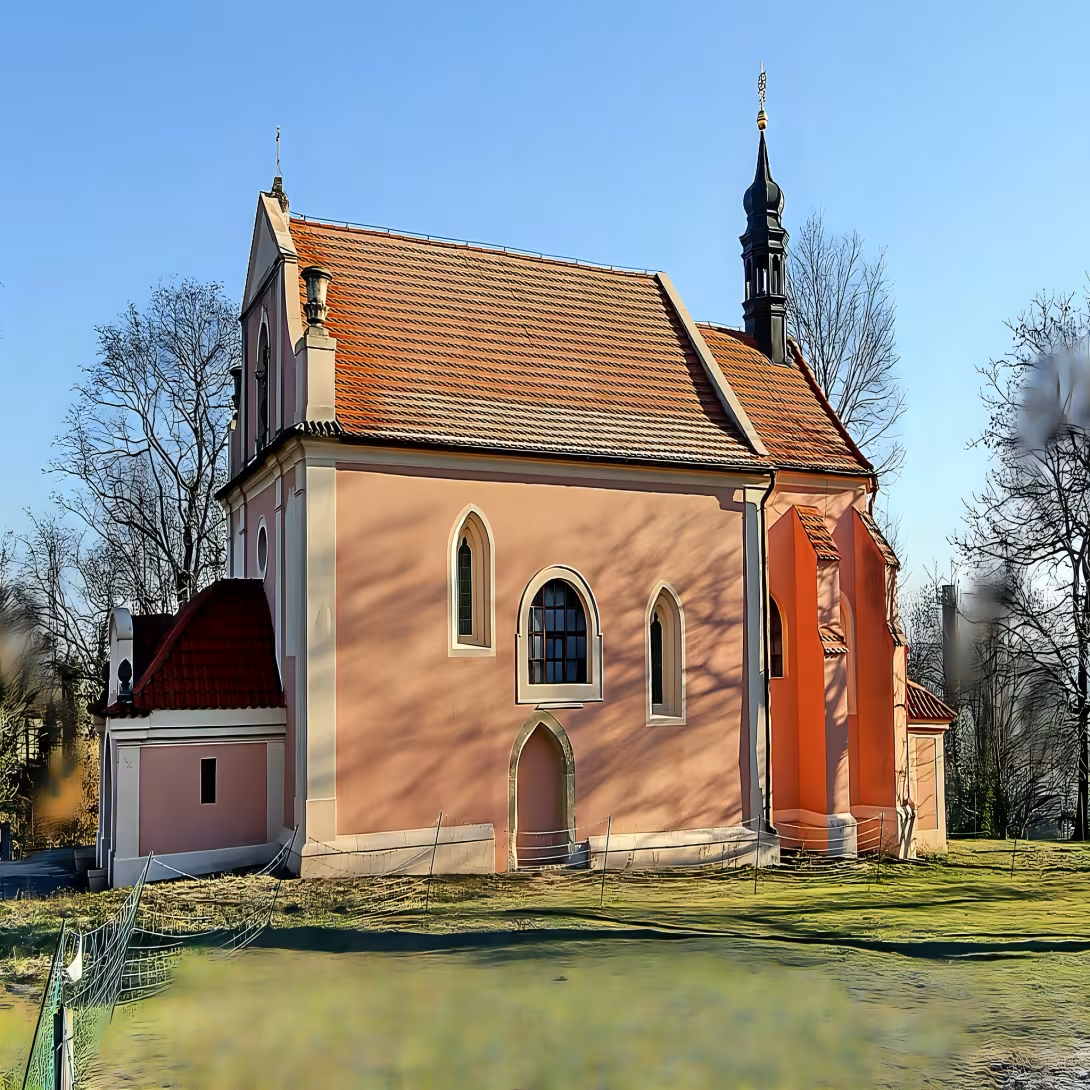
The Church of Saint Martin in Dražice is a remarkable historical monument located in the village of Dražice, within the Benátky nad Jizerou district of Středočeský kraj. Originally constructed in the 14th century and initially dedicated to Saint Ludmila, this sacred building stands out for its early Gothic architectural elements and significant historical narrative. The church is notable not only for its architecture but also for its rich history that reflects broader cultural developments during Bohemia's integration into the Holy Roman Empire under the Luxembourg dynasty.
The origins of the Church of Saint Martin are closely tied to Bishop Jan of Dražice, who initiated its construction in the 14th century. This effort was part of a larger project to establish an independent parish for the people of Dražice, separating them from Zdětín. The church's early Gothic windows and fragments of wall paintings depicting Marian legends from the latter half of the 14th century highlight its architectural significance during this period.
Architecturally, the Church of Saint Martin features elements typical of early Gothic design. Over time, it underwent several renovations that altered its appearance and function. In the early 17th century, a significant renovation was led by Martin Průšek, a mayor from Benátky nad Jizerou. During this period, the church was rededicated to Saint Martin, and an intricately carved wooden altarpiece depicting Saint Martin on horseback giving alms to a beggar was added—a piece now housed in a museum in Benátky nad Jizerou.
The fortunes of the church shifted dramatically over the centuries. In 1783, under Emperor Joseph II's reign, it was secularized and later sold as an agricultural building in 1827. It served various utilitarian purposes, including functioning as a barn or sheepfold. However, its historical significance was rediscovered during a restoration led by František Hofman in 1926, which uncovered valuable wall paintings from the era of Emperor Charles IV.
Throughout its history, the Church of Saint Martin has witnessed several key events and curiosities that underscore its cultural importance. In 2021, marking 1100 years since the martyrdom of Saint Ludmila, the church was rededicated to both Saint Martin and Saint Ludmila, reaffirming its historical and spiritual significance.
Today, the Church of Saint Martin stands as a protected cultural monument in Dražice. Its preservation allows visitors to explore a site rich with history and artistry from different eras. The church's blend of architectural styles and its storied past make it an intriguing destination for those interested in medieval history and Gothic architecture. Visitors are invited to experience this historical gem, which continues to be a testament to the cultural heritage of the region.
Then and now
Drag the slider to compare how the landmark may have looked when it was built with the view today.
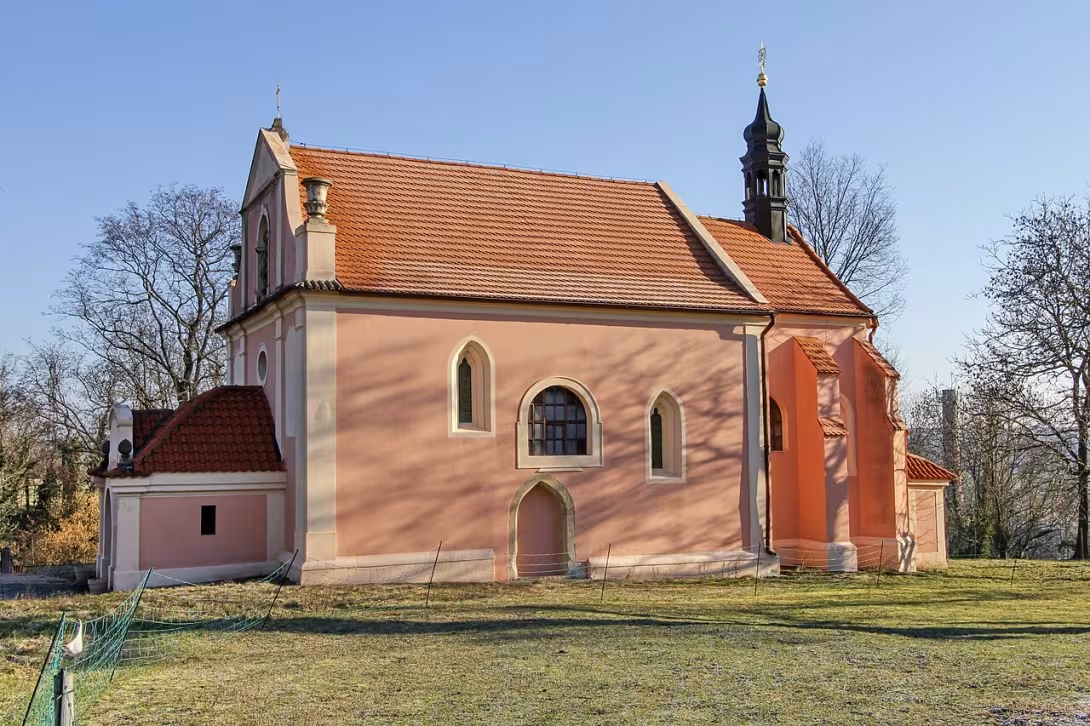

The historical appearance on the left is an AI-generated visualisation and serves as inspiration only.
Historical milestones
- 14th century
- Construction of the church initiated by Bishop Jan.
- Early 17th century
- Renovation and rededication to Saint Martin by Martin Průšek.
Architectural development
The Church of Saint Martin in Dražice was originally built in the 14th century with early Gothic architectural elements. It underwent significant renovations in the early 17th century, including a rededication to Saint Martin and the addition of a carved wooden altarpiece. In the late 18th century, it was secularized and repurposed as an agricultural building. A major restoration in 1926 revealed important wall paintings from the era of Emperor Charles IV.
Historical events
- 14th century
- Construction of the church and castle in Dražice initiated by Bishop Jan.
- Early 17th century
- Renovation by Martin Průšek, a mayor from Benátky nad Jizerou, who rededicated it to Saint Martin.
- 1783
- The church was secularized under Emperor Joseph II and later sold as an agricultural building in 1827.
- 1926
- Restoration led by František Hofman, uncovering valuable wall paintings from the reign of Emperor Charles IV.
Points of interest
- The Church of Saint Martin was originally dedicated to Saint Ludmila before being rededicated to Saint Martin in the early 17th century, reflecting a shift in religious focus over time.
- In 1783, under Emperor Joseph II's reign, the church was secularized and later sold as an agricultural building, serving unusual roles such as a barn or sheepfold for many years.
- A significant renovation led by Martin Průšek added an intricately carved wooden altarpiece depicting Saint Martin on horseback giving alms to a beggar, which is now preserved in a museum in Benátky nad Jizerou.
- The rediscovery of valuable wall paintings from the era of Emperor Charles IV during a restoration led by František Hofman in 1926 highlighted the church's artistic and historical significance.
- In 2021, marking 1100 years since the martyrdom of Saint Ludmila, the church was rededicated to both Saint Martin and Saint Ludmila, reaffirming its dual historical and spiritual importance.
Guide
This guide is narrated by a synthetic voice generated by artificial intelligence.
Show guide text
This text was created by artificial intelligence and has not been editorially reviewed. It may contain inaccuracies.
The Church of Saint Martin in Dražice dates back to the 14th century. However, when it was founded, it was not dedicated to Saint Martin, but to Saint Ludmila. Later it was repaired and rebuilt. To this day it has retained its original Early Gothic windows and inside it contains fragments of wall paintings depicting scenes from the Marian legend from the second half of the 14th century. It is protected as a cultural monument.
The first written mention of the church comes from the so-called Roudnice necrology. We find it in the depiction of Bishop Jan from Dražice, in the text about the construction of Dražice Castle and the church there. The village of Dražice then belonged as a parish to Zdětín. The bishop separated it from the Zdětín parish and gave the church there fifteen Prague grivnas in cash as compensation. He then had a church built at the castle at his own expense to the glory of God and in honor of Saint Ludmila the martyr. He also endowed the church so that the priest and his altar servers could live from the donations, and he added books, chalices and other necessary furnishings.
At the beginning of the 17th century, the mayor of Benátky, Martin Průšek, had the church repaired. The church was then newly dedicated to his patron, Saint Martin. Průšek also gave it an altar painting carved from wood. It depicts Saint Martin on horseback giving his cloak to a beggar. This painting is now housed in the Benátky museum.
In 1783, under the reign of Emperor Joseph the Second, the church was deconsecrated. In 1827 it was sold as a farm building and served as a hay loft or sheep pen. After the land reform, the Cooperative Works in Dražice acquired the building. Thanks to the director František Hofman, the church was repaired and in 1926 they had it consecrated again. During this reconstruction, valuable wall paintings from the time of Emperor Charles the Fourth were uncovered.
On September 4th, 2021, the church was again dedicated also to Saint Ludmila. This took place on the occasion of 1100 years since the martyrdom of Princess Ludmila.
Frequently asked questions
Can the monument be visited?
Religious buildings are usually open mainly during services; at other times a visit is normally arranged with the parish or the operator. We have not verified specific times.
Where is the monument?
Location: Dražice, Středočeský kraj. The map on this page shows the exact spot.
Why is the monument protected?
It is listed in the Central List of Cultural Monuments of the Czech Republic as a cultural monument (register no. 40206/2-1551).
Businesses nearby
Do you run a restaurant, accommodation, shop, museum, rental, wellness or other visitor service near this monument? Show yourself directly to the people heading to it — this is how they will see you in the app and on the web:
Accommodation nearby
Themed route
Tematická Výletní Trasa: Kostel svatého Martina v Dražicích
1. Kostel svatého Martina (Dražice)
Typ: Historická památka
Proč stojí za návštěvu: Tento barokní kostel je centrem kulturního a duchovního života obce Dražice. Jeho architektonické prvky a bohaté interiérní výzdoby přitahují historiky i návštěvníky zájmu o dědictví regionu.
2. Nádvoří kostela
Typ: Historický areál
Proč stojí za návštěvu: Nádvoří poskytuje klidnou atmosféru pro relaxaci a reflektování, zatímco vám umožňuje užít si pohled na kostel z jiného úhlu. Je to ideální místo k procházce a poznávání historických detailů.
3. Dražice: Místní tradiční obchody
Typ: Kulturní zážitek
Proč stojí za návštěvu: Obec Dražice nabízí místní obchodníky a malé podniky, kde si můžete zakoupit tradiční produkty či suvenýry. Je to skvělý způsob, jak se dozvědět více o životě v této oblasti a podpořit místní ekonomiku.
4. Dražické lesy
Typ: Přírodní okolí
Proč stojí za návštěvu: Krátce od kostela se nachází příjemné procházky v Dražických lesech. Jsou ideální pro relaxaci, piknik nebo jen pro chvilku pohledu na přírodu a zároveň nabízejí krásný pozadí pro fotografování kostela.
Tato trasa vám umožní hluboce se ponořit do historie i přírody obce Dražice, což je ideální pro ty, kdo hledají klidnou a autentickou zkušenost.
Seasonal recommendations
Spring: Visiting the Church of Saint Martin in Dražice during spring offers a unique experience as nature awakens around this historic site. The surrounding landscape is adorned with vibrant wildflowers and fresh greenery, creating an enchanting atmosphere that enhances the church's architectural beauty. As daylight extends, the natural lighting beautifully illuminates the intricate details of the church’s façade. Visitors should be prepared for mild weather conditions; light layers are advisable as temperatures can vary. The spring season typically sees fewer tourists compared to summer, making it a pleasant time to explore without large crowds.
Summer: Summer is an ideal time to visit the Church of Saint Martin in Dražice due to long daylight hours and warm weather that allows for leisurely exploration. The lush greenery surrounding the church provides a picturesque backdrop, while the gentle warmth enhances the overall experience. However, this season also attracts more visitors, so it’s advisable to arrive early in the morning to avoid crowds and fully enjoy the site. Comfortable walking shoes and light clothing are recommended to stay cool during your visit.
Autumn: Autumn brings a distinct charm to Dražice with its warm hues of orange, red, and yellow enveloping the landscape around the Church of Saint Martin. The changing leaves create a stunning contrast against the church’s historic architecture, offering photographers and nature lovers an exceptional opportunity for capturing beautiful scenes. Cooler temperatures make it a comfortable time for walking tours, but visitors should consider bringing a light jacket or sweater as evenings can get chilly. This season is generally less crowded than summer, providing a more tranquil atmosphere.
Winter: The Church of Saint Martin in Dražice during winter presents a serene and magical experience with snow-covered surroundings that add to the historic charm of the site. The soft lighting from street lamps combined with falling snowflakes creates a picturesque scene reminiscent of a postcard. Visitors should dress warmly, as temperatures can be quite low, and bring appropriate footwear for potentially icy conditions. Despite the cold, this season offers a peaceful atmosphere with fewer tourists.
Visualizations and artistic views


The visualisations are generated by artificial intelligence and serve as inspiration.
Photos from the area
Real photos taken near the monument


Zdroj a licence jsou uvedeny u každého snímku.
Tips from visitors
No tips yet. Be the first!
Log in and add your tip.
Sources and literature
Photos: Stanislav Jermář / CC BY-SA 4.0, rozlišení zvýšeno umělou inteligencí — Wikimedia Commons. The author and licence also appear when you hover over the image.
Faktickým podkladem tohoto textu byl článek na Wikipedii, jehož autory jsou přispěvatelé Wikipedie. Článek je dostupný pod licencí CC BY-SA 4.0.
Location on the map





Příběhy a pověsti
Legendy, pověsti a příběhy spjaté s touto památkou
Fotografie návštěvníků
Zatím žádné fotografie. Buďte první, kdo přidá fotografii z návštěvy!
Log in a přidejte svou fotografii nebo hodnoťte.
Za ověřenou návštěvu v aplikaci získáte víc bodů — poznáme podle GPS, že jste na místě.
Reviews and comments