






Kostel svatého Martina (Křivce) Church
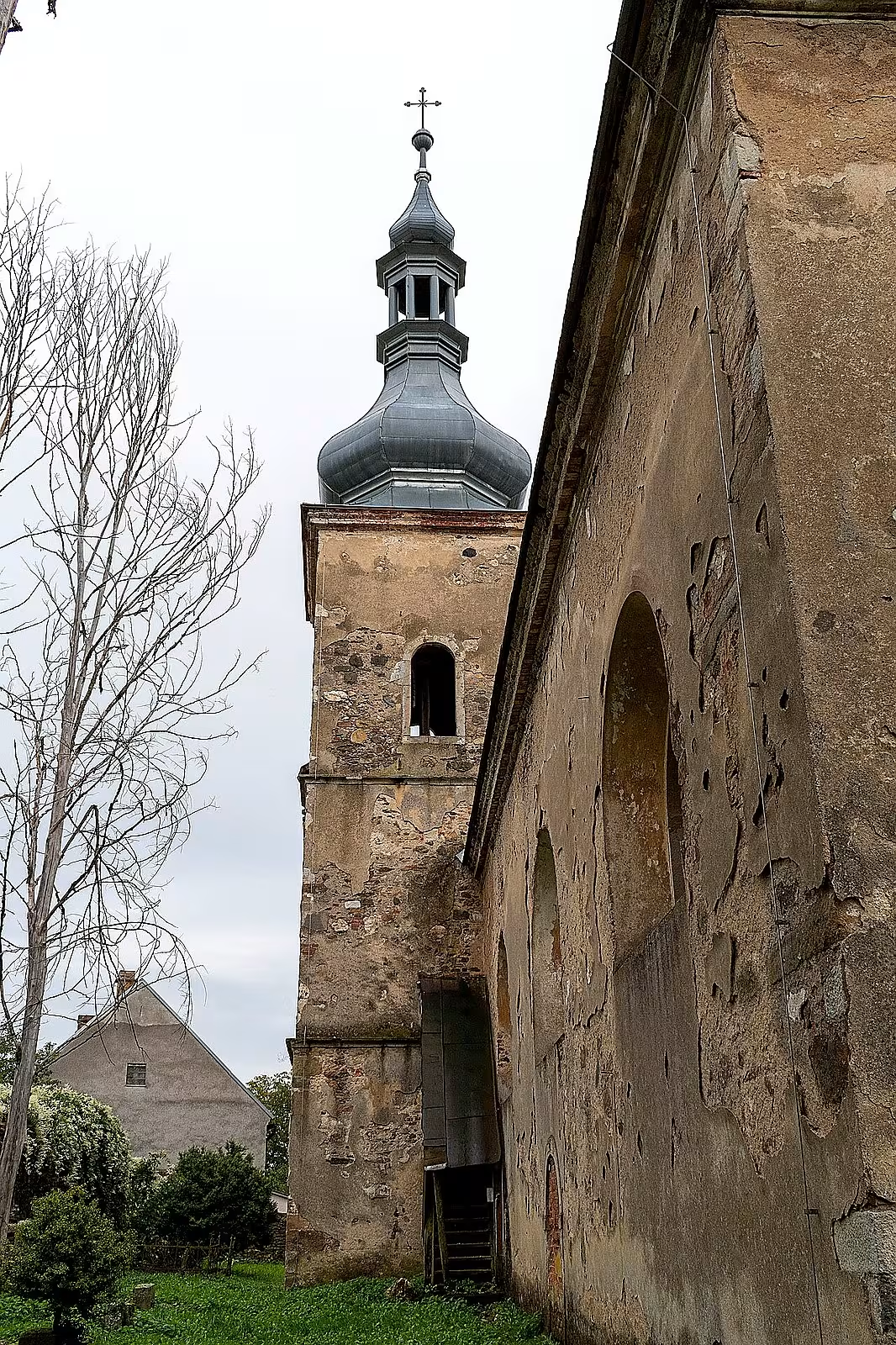
St. Martin's Church in Křivce is an excellent example of Baroque architecture in a small village. Located in the village of Křivce, in the part of the district of Bezdružice in the Pilsen region, this is proof of historical resistance and architectural ambitions. Originally founded the Premonstraten monastery in Teplá, the church replaced the older Gothic structure, which was first documented in 1358. Its importance is highlighted by its designation as a cultural monument of the Czech Republic since 1958.
The origin of St. Martin's Church dates back to the late Middle Ages, when the Premonstraten monastery in Teplá was probably founded. The original Gothic church, first mentioned in historical records in 1358, faced destruction during Hussite wars in 1422. This event has led to an extension of the recovery period for both the village and its sacred place. Despite these challenges, the community endured, and by 1432, evidence of recovery is found in surviving fragments of sermon and manuscript from that time.
At the end of the 17th century, under the leadership of the warm abbot Raymund Wilfert I, a new Baroque church was built between 1669 and 1670. This ambitious project resulted in a structure, the size of which was comparable to the size of nearby Bezdružice, although Křivce was a relatively small location. The architectural transformation from Gothic to Baroque reflects the wider cultural and religious development in the Czech Republic during this period, which was part of the Habsburg monarchy.
The architecture of the church is characterized by its Baroque elements, a style that emerged at the end of the 17th century. Although the specific details of construction materials and design are not fully documented, the scope and ambition of the building under the abbot Wilfert I stress the importance of placing in this religious place. Over time, however, neglect led to structural deterioration, especially after World War II, when the village was depopulated.
The church of St. Martin has experienced various riches throughout its history. The latest major repairs took place in 1906, supported by plans preserved in the archives of the Teplá monastery. At the end of the 20th century, however, the church fell into serious disorder, with parts of its structure collapsing and valuable artifacts being moved to the Heat for conservation.
In response to this decline, the Martinus Civil Association was created in 2005 with a mission to save the church from further disintegration. Their efforts contributed to stabilising the building and culminated in the installation of a new roof by 2008. This initiative not only preserved the physical structure but also revived the interest in the historical and cultural importance of the church.
Today the Church of St. Martin is a symbol of the resilience of the community and the commitment to the preservation of cultural heritage. Visitors can appreciate his baroque architecture and learn about his storyteller's past, which includes the survival of the stormy Hussite wars and has been going through major restaurant efforts in recent decades. The church remains an important cultural monument which offers knowledge of the historical and architectural development of the region.
The Church of St. Martin is proof of the persistent spirit of the Kruvkov Community and their commitment to preserve their heritage. Rich history and architectural beauty make it a valuable destination for interested people to explore the cultural tapestry of the Czech Republic. Visitors are invited to experience this remarkable site where history and art converge in a quiet rural environment.
Then and now
Drag the slider to compare how the landmark may have looked when it was built with the view today.
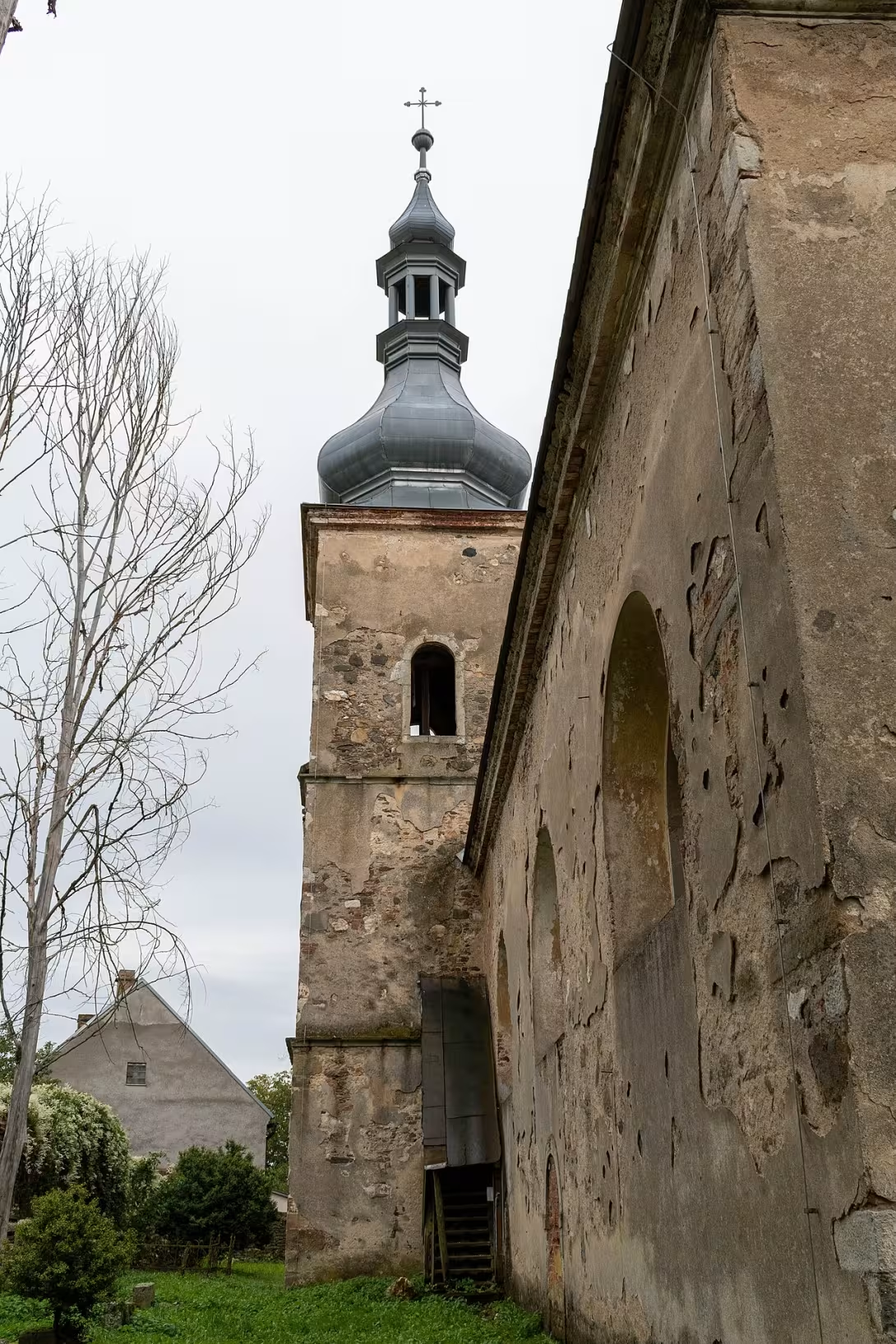
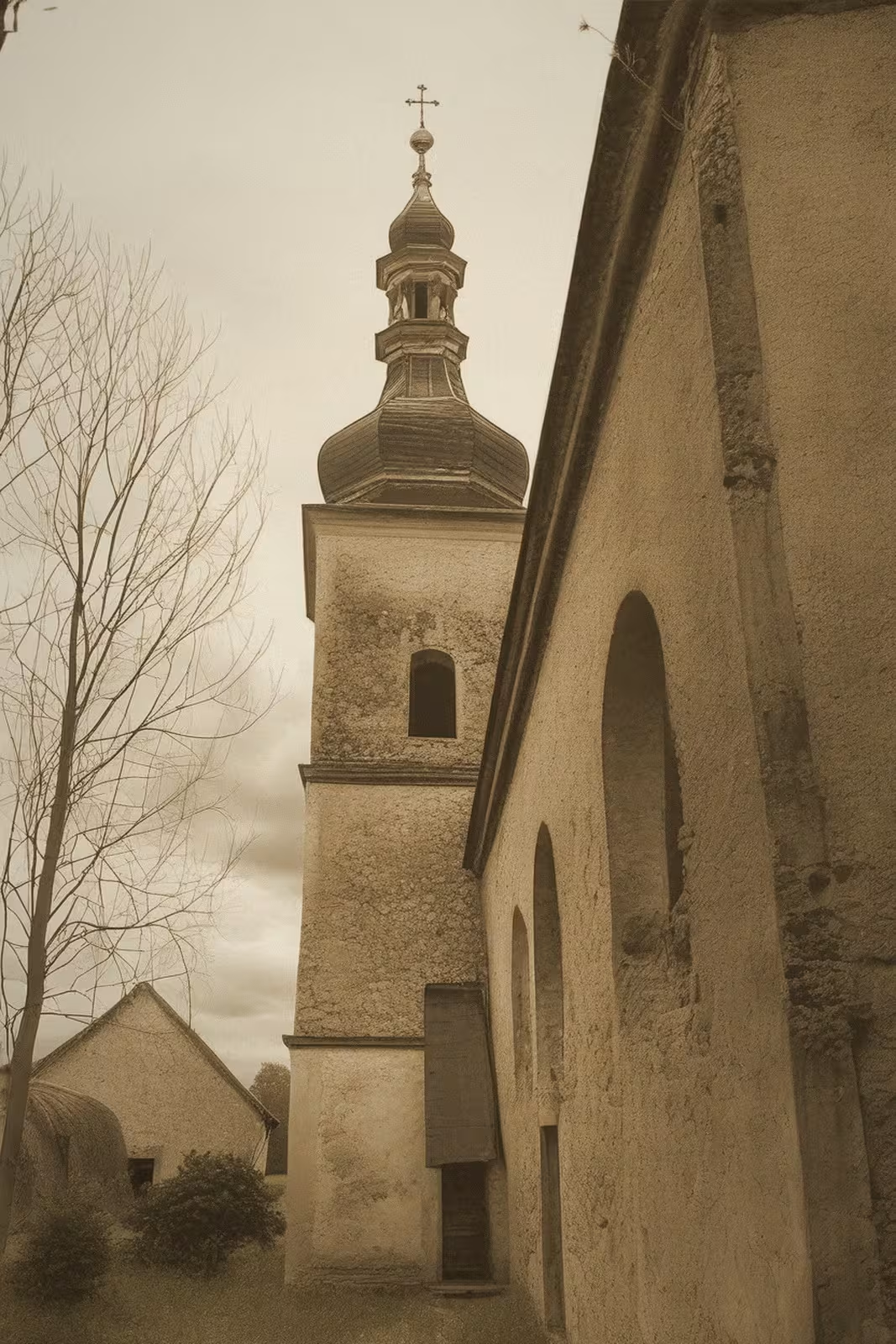
The historical appearance on the left is an AI-generated visualisation and serves as inspiration only.
Historical milestones
- 1358
- First mention of the original Gothic church.
- 1422
- the church was destroyed by Husita.
- 1669
- Construction of the new Baroque church began under the abbot Raymund Wilfert I.
- 1670
- Completion of the Baroque church.
- 1906
- The last major repairs were made to the church.
- 2008
- The reconstruction effort led by the Martinus civil association led to a new roof church.
Architectural development
St. Martin's Church has undergone significant architectural changes from its original Gothic form to the Baroque style at the end of the 17th century. The new church, built in 1669-1670, was designed by the heat abbot Raymund Wilfert I and had a size comparable to the size of nearby Bezdružice. Despite the later neglect that led to structural damage, the reconstruction efforts focused on preserving baroque elements.
Historical events
The original Gothic church was destroyed by Husits in 1422, which led to a long period of restoration of the village and its sacred place.
In 1669-1670, under the leadership of the warm abbot Raymund Wilfert I, a new Baroque church was built despite the fact that Křivce is a small location.
the church suffered considerable neglect after world war ii, leading to serious deterioration by the end of the 20th century.
In 2005, the Martinus Civil Association launched a renewal that successfully prevented further decomposition and restored parts of the structure.
Owners
Originally owned by the abbey Hot, without any concrete changes in ownership.
Points of interest
- The Church of St. Martin was originally founded by the Premonstraten monastery in Teplá and replaced the Gothic structure which dates back to 1358. This connection highlights the long-term religious importance of the church and its links to the monastic influence in the region.
- Despite the destruction during the Hussite wars in 1422, the community around Křivce showed remarkable resilience by reviving its sacred place only ten years later as evidenced by the survival of the manuscripts from this time. This rapid recovery underlines the deep cultural and spiritual importance of the church for its parishioners.
- The transformation from the Gothic structure to the Baroque masterpiece of Abbot Raymund Wilfert I at the end of the 17th century reflects wider cultural shifts in the Czech Republic during the Habsburg monarchy, which illustrates how the architectural styles at the time were influenced by political and religious changes.
- Although it is not extensively documented, the Baroque architecture of the church is referred to as even larger locations in its ambitious scale as Bezdružice. This shows the determination and ingenuity of the community in building such a large structure despite the small size of Křivce.
- The creation of the civil association Martinus in 2005 was key to preventing further decomposition of the church, which led to significant efforts to restore, including the installation of a new roof by 2008. This initiative not only preserved the building, but also restored interest in its historical and cultural heritage, which shows the modern involvement of the community in preserving cultural heritage.
Guide
This guide is narrated by a synthetic voice generated by artificial intelligence.
Show guide text
This text was created by artificial intelligence and has not been editorially reviewed. It may contain inaccuracies.
Welcome to St. Martin's Church in Křivce, a remarkable example of baroque architecture nestled in this charming village environment. As you stand here, take a moment to appreciate the elegant lines and harmonious proportions that define this historical structure. The church rises before you, its presence is proof of centuries of devotion and architectural ambition.
The origin of this sacred site dates back to 1358, when the early Gothic church was first mentioned in historical records. This original structure served as a spiritual beacon for the local community until it met the tragic fate of the Hussite wars in 1422, succumbing to destruction in the hands of zealous reformers. However, the spirit of St. Martin's Church endured.
In 1669, under the leadership of Abbot Raymund Wilfert I, the construction of a new Baroque church began. This ambitious project was completed one year later in 1670, marking the new era of this sacred place. The architectural shift from Gothic to Baroque brought with it air a spectacular and artistic flourishing that continues to attract visitors today.
As you examine the exterior of the church, notice how its Baroque style is characterized by symmetry and attention to detail. While specific visual elements such as towers or statues are not described in detail here, do not hesitate to immerse yourself in the overall aesthetic experience - the way the light is played through the facade creates a welcoming atmosphere that attracts further exploration.
Throughout its history, the Church of St. Martin faced many challenges, including the period of neglect after World War II. However, thanks to the dedication of the civil association Martinus brought a new roof and renewed life in 2008. This commitment will ensure that future generations can continue to experience its beauty and importance.
While many historical personalities associated with the church remain unknown, the connection with the Premonstraten monastery in Telná highlights its long-term religious importance and monastic ties. These connections underscore the role of the church as a spiritual centre for centuries.
As you take this in your surroundings, consider this: despite destruction and neglect, the Church of St. Martin stood still in time and embodied history and hope. It calls on us to think about the stories of those who came before us and the lasting strength of faith and community.
We recommend you continue to explore Křivce and its rich heritage. Whether you roam the surrounding landscapes or dive deeper into local traditions, there is always something to discover in this charming area. Thank you for joining us today at St. Martin's Church, where history and beauty converge.
Frequently asked questions
Can the monument be visited?
Religious buildings are usually open mainly during services; at other times a visit is normally arranged with the parish or the operator. We have not verified specific times. According to the heritage register restoration is under way, so access may be restricted.
Where is the monument?
Location: Křivce, Plzeňský kraj. The map on this page shows the exact spot.
Why is the monument protected?
It is listed in the Central List of Cultural Monuments of the Czech Republic as a cultural monument (register no. 27965/4-1893).
Businesses nearby
Do you run a restaurant, accommodation, shop, museum, rental, wellness or other visitor service near this monument? Show yourself directly to the people heading to it — this is how they will see you in the app and on the web:
Nearby
Křivce is located in a rural area near Bezdržice and Teplá, surrounded by typical Czech landscape. In the region there are other historical sites associated with the premonstraten order.
Accommodation nearby
Themed route
Thematic walking tour: Premonstraten legend
1.Kostel svatého Martina (Křivce) - Type: Church - Why Visit: This stunning church, dedicated to Saint Martin, serves as the main part of our tour. Its architectural beauty and historical importance offers a view of the religious heritage of the premonstratant order in Bohemia. A quiet atmosphere church provides an ideal starting point for exploring this rich history.
2. Premonstrate monastery ruins - Type: Historical pages - Why Visit: Located in a short walk from St. Martin's Church, the ruins of the Premonstraten monastery offer insight into the monastery life that once prospered here. Visitors can explore the remains of this spiritual community and think about its influence in the region.
3. Warm - Type: city - Why Visit: Short ride by car or bus from Křivce, Telova is famous for its own complex Premonstraten monastery. This historic city provides a broader context of the order's impact in Bohemia and has beautiful architecture and cultural monuments that are worth exploring.
4. - Type: Village - Why Visit: Near Bezdružice offers picturesque landscapes typical of the Czech landscape, with its charming village atmosphere complementing our survey of the historical story of the region. The area is ideal for a peaceful walk and an award for country beauty.
This thematic tour draws attention to the permanent legacy of the premonstraten order in the Crossroads and surrounding areas and offers visitors a rich journey through history and culture.
Seasonal recommendations
Spring: St. Martin's Church in Crossroads in the spring incites the church, which intersects with light fields and trees. The sunny days of providing the ideal decision for the photograph, while the initial decision on the award of concessions to be adapted is welcomed in the Annex. Inventory can expect gains in early articles and green landscapes that are unacceptable in this case. Practical advice does not boast or boast new shoes for walking on potentially wet paths and I will have a leading sunny bras because spring sun can be intense. Despite the possibility of returning to the crowd, early or late in the afternoon is recommended to avoid larger connections.
Summer: Summer Kříve offers a warm and sunny atmosphere that passes to other countries that also have the church of St. Martin. This time of year is known world days and intensive solar adoption, which is architectural details of the skeleton during reconstruction. The climate may be warm on its own, meaning that it is entitled to a permit or evening that concerns veal reduced. The intruders should be discarded by light and light suits that are not secured by the sun's shelter and by passing water with them to maintain hydration. Imported quantities shall be delivered for minimisation on the basis of the data set out in Annex II.
Autumn: In autumn, the Church of St. Martin in Crossroads offers games on common leafy trees and small temperatures. This means that it is ideal for those that can be used in calculating costs, without the superior crowds that can be used in calculating costs and being part of them. Sunny days may be determined only if no conditions for disclosure are laid down. Inventories should be transferred to own resources in order to determine that this quantity is not determined and may be deducted. Crossing early in the afternoon or early in the evening to enjoy a quiet process.
Winter: The winter value of St. Martin's Church recalculates a different atmosphere with cool temperatures and possible permits, meaning that the church needs a romantic look. The sunny valuation is included weaker and shorter, but this means that the church is considered to have this decision and rest conditions, especially during restructuring. The vstavas should be recalculated until all is well, when the fur coat or blankets are done. Days are shorter, so it is important to plan, for example, the opening times of the church and to cross early in the afternoon or early in the evening to enjoy a quiet process without large crowds.
Visualizations and artistic views


The visualisations are generated by artificial intelligence and serve as inspiration.
Tips from visitors
No tips yet. Be the first!
Log in and add your tip.
Sources and literature
Photos: Michal Gregor / CC BY-SA 4.0 — Wikimedia Commons. The author and licence also appear when you hover over the image.
Faktickým podkladem tohoto textu byl článek na Wikipedii, jehož autory jsou přispěvatelé Wikipedie. Článek je dostupný pod licencí CC BY-SA 4.0.
Location on the map
More monuments – Křivce
Show all in the municipality

Příběhy a pověsti
Legendy, pověsti a příběhy spjaté s touto památkou

Příběh: Kostel svatého Martina (Křivce)
Bylo to v pondělí ráno, kdy Martin zjistil, že jeho život byl rozbitý. Slunce se ještě nevzneslo nad hory Plzeňského kraje a chlad zářivé noci zůstal v ovzdu…
Číst příběh
Pověst: Kostel svatého Martina (Křivce)
Podle místní pověsti socha svatého Martina v křiveckém kostele nebyla pouhým kusem dřeva vytesaným zbožnými rukama. Staří obyvatelé vyprávějí, že světec sám …
Číst příběhFotografie návštěvníků
Zatím žádné fotografie. Buďte první, kdo přidá fotografii z návštěvy!
Log in a přidejte svou fotografii nebo hodnoťte.
Za ověřenou návštěvu v aplikaci získáte víc bodů — poznáme podle GPS, že jste na místě.
Reviews and comments