






kostel svatého Martina (Skorošice) Church
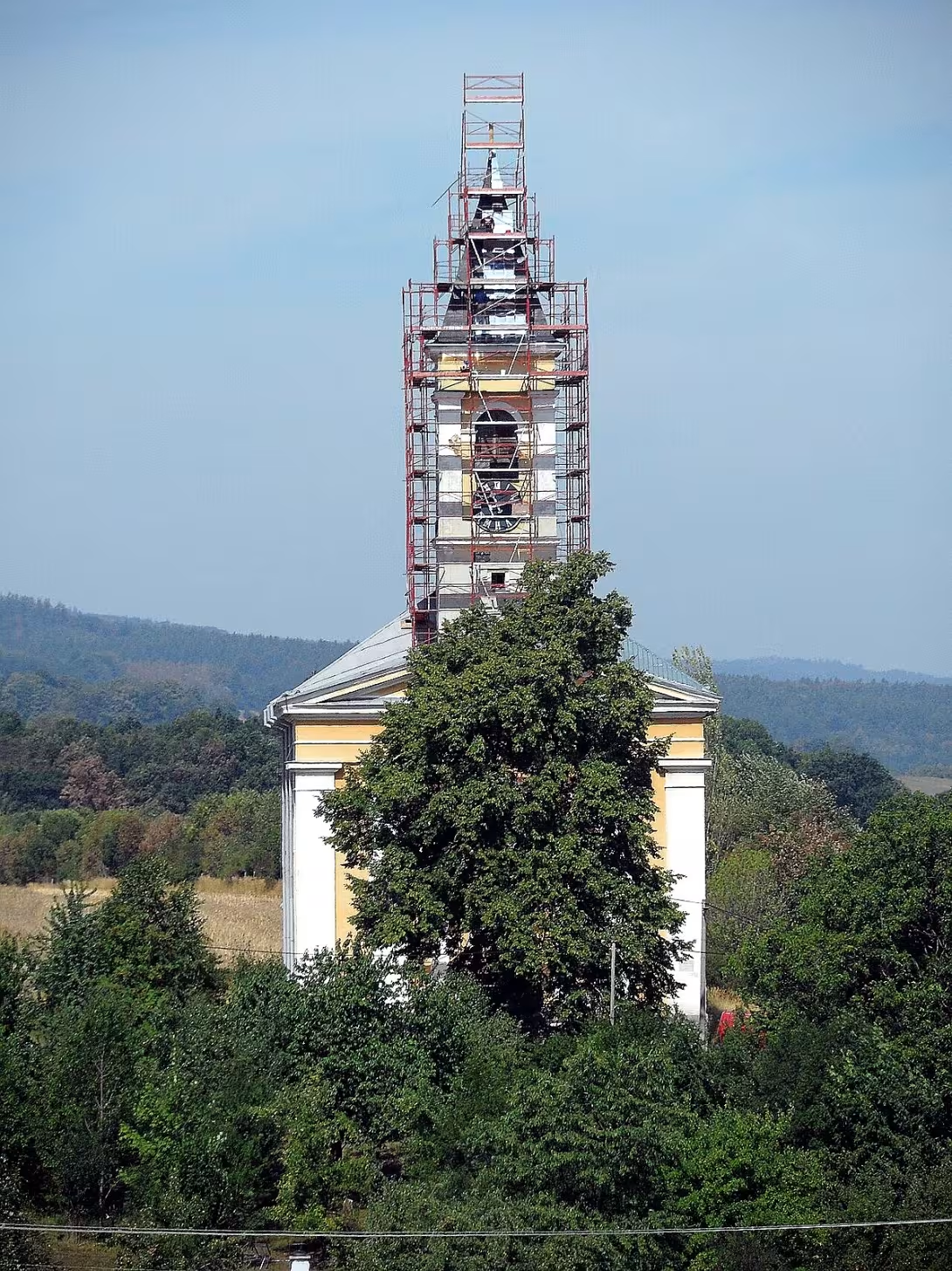
The Church of Saint Martin in Skorošice is a notable historical monument located in Dolní Skorošice within the Jeseník district, Olomoucký kraj. This late Empire-style church stands as an architectural testament to the region's rich history and cultural heritage. Documented since the early 14th century, it has undergone significant transformations, most notably after a devastating fire on November 25, 1833. The reconstruction took place between 1841 and 1844 under architect Franz Gröger.
The church is distinguished not only for its architectural features but also for its surrounding historical elements, including an ancient cemetery with notable sculptures. Its origins trace back to the early 14th century, marking it as a longstanding religious site in Skorošice. However, much of its early history remains undocumented until the fire that destroyed both the church and rectory.
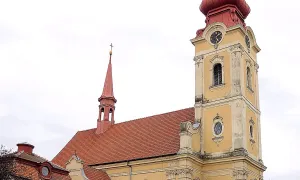
Architecturally, the Church of Saint Martin exemplifies late Empire-style design. It features a single-nave brick structure with an oblong nave transitioning into a recessed semicircular chancel and an adjoining sacristy. The west façade is elegantly divided by two Tuscan pilasters supporting a triangular tympanum, while the entrance is framed by a round window above it. A tower rises from the façade, adorned with corner pilasters and semi-circular arch windows in its upper section. Inside, the church boasts a vaulted ceiling supported by columns and piers.
Throughout its history, the Church of Saint Martin has seen various phases of restoration and artistic enhancement. Notably, in 1923, painter Alois Bauch from Vidnava contributed to the interior with his ceiling painting. Restoration efforts were undertaken during 1971-1974 and again in 2015, ensuring the preservation of its architectural integrity and historical significance.
The church's surroundings add further depth to its historical narrative. In front of the church stands a rococo statue of the Immaculate Virgin Mary, dated 1778, showcasing artistic influences of the period. The nearby ancient cemetery features tombstones crafted by sculptors Josef Obeth and Engelbert Kaps, along with a marble Calvary group by Bernard Kutzer. Additionally, a statue of Saint John of Nepomuk is located along the path leading to the church, enriching its cultural landscape.
Today, the Church of Saint Martin remains an active place of worship under the administration of the Roman Catholic parish in Skorošice, part of the Jeseník deanery within the Ostrava-Opava diocese. Its historical and architectural significance makes it a compelling destination for visitors interested in exploring the cultural heritage of the region. The church's well-preserved structure and surrounding elements offer a glimpse into the past, inviting those who appreciate history to experience its enduring legacy firsthand.
Then and now
Drag the slider to compare how the landmark may have looked when it was built with the view today.
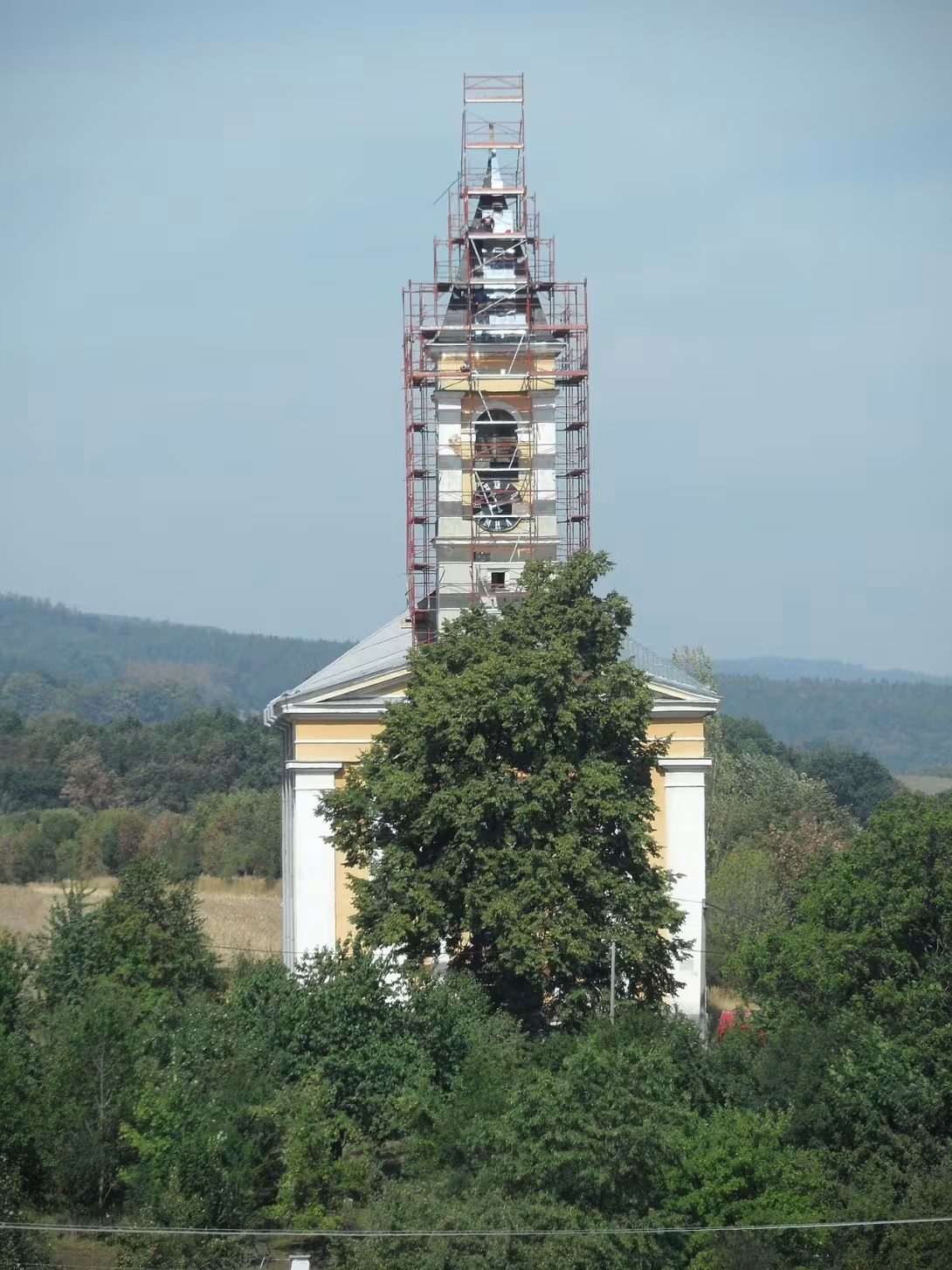

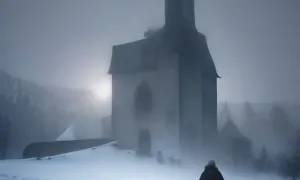
The historical appearance on the left is an AI-generated visualisation and serves as inspiration only.
Historical milestones
- c. 1300
- The Church of St. Martin was first recorded.
- 1833
- On November 25, the church and rectory were destroyed by fire.
- 1841
- Reconstruction began under the direction of architect Franz Gröger.
- 1844
- The reconstruction of St. Martin's Church was completed.
- 1923
- Alois Bauch created a ceiling painting.
- 1971-1974
- The church underwent restoration.
Architectural development
The current structure was built between 1841 and 1844 by architect Franz Gröger. The interior ceiling painting was done by Alois Bauch, a painter from Vidnava, in 1923. Restoration work on the church took place during 1971-1974 and again in 2015.
Historical events
The church was documented at the beginning of the 14th century.
A fire destroyed the church and rectory on November 25, 1833.
Construction of a new church began in 1841 and was completed in 1844.
Points of interest
- The Church of Saint Martin's reconstruction after the 1833 fire introduced late Empire-style elements that were not part of its original structure from the early 14th century. This transformation reflects a blend of historical periods within its architecture.
- An intriguing legend associated with the church involves the statue of Saint John of Nepomuk, located along the path to the church. It is said that those who pray sincerely before it may receive divine guidance or protection on their journey through life's challenges.
- The rococo statue of the Immaculate Virgin Mary in front of the church dates back to 1778 and is believed by locals to have been blessed with miraculous properties, often credited with healing ailments for those who visit and pay homage to it.
- Despite its long history, much of the early documentation about the Church of Saint Martin was lost due to the fire that destroyed both the church and rectory in 1833. This has led to a sense of mystery surrounding its origins and early development.
- The ancient cemetery surrounding the church is home to sculptures by notable artists such as Josef Obeth and Engelbert Kaps, whose works are considered rare examples of funerary art from that era, adding a unique artistic dimension to the site's historical narrative.
Guide
This guide is narrated by a synthetic voice generated by artificial intelligence.
Show guide text
This text was created by artificial intelligence and has not been editorially reviewed. It may contain inaccuracies.
Welcome to the Church of Saint Martin in Skorošice, a serene and captivating historical site nestled within the picturesque landscape of Olomoucký kraj. As you stand before this architectural gem, take a moment to absorb its majestic presence. The church's brick façade, with its elegant late Empire-style elements, invites you into a story that spans centuries.
The Church of Saint Martin first emerged in historical records around 1300, marking it as an enduring witness to the passage of time. Its initial construction was rooted deeply in the medieval period, serving as a spiritual beacon for the local community. However, its journey through history is marked by resilience and transformation. In 1833, tragedy struck when a devastating fire consumed both the church and the adjoining rectory. This event could have been an end but instead became a pivotal moment of rebirth.
The reconstruction that followed was led by the visionary architect Franz Gröger in 1841, culminating in 1844 with a newly transformed structure. Gröger's influence is evident in the church’s architectural details: the oblong nave leading to a recessed semicircular chancel and an adjoining sacristy. As you gaze upon the west façade, notice how it is artfully divided by two Tuscan pilasters supporting a triangular tympanum. The round window above the entrance adds a touch of grace, while the tower rising from the façade is adorned with corner pilasters, creating a harmonious balance between form and function.
As you explore further, imagine the hands that shaped this structure, particularly Franz Gröger's, whose architectural prowess redefined its identity. His work introduced late Empire-style elements, blending seamlessly with the church’s original medieval foundation. This fusion of styles is not just an aesthetic choice but a narrative of adaptation and continuity.
An intriguing aspect of this site is the legend associated with it—a tale woven into the fabric of local folklore that adds mystique to your visit. While legends often evolve over time, they capture the imagination and invite you to ponder the stories whispered through the walls of this sacred space.
In 1923, another layer was added to the church’s artistic narrative when Alois Bauch created a stunning mural on the ceiling, enriching its interior with visual splendor. The church's resilience continued into the modern era, as evidenced by the extensive restoration undertaken between 1971 and 1974, ensuring that it remains a cherished landmark for future generations.
As you stand here today, take a moment to appreciate not just the physical beauty of the Church of Saint Martin but also its historical significance. Each stone tells a story of faith, endurance, and transformation—a testament to the community's dedication to preserving their heritage.
We invite you to continue exploring this remarkable site, discovering more about its history, architecture, and the legends that surround it. Thank you for joining us on this journey through time at the Church of Saint Martin in Skorošice. May your visit inspire curiosity and a deeper appreciation for the stories etched into our shared past.
Frequently asked questions
Can the monument be visited?
Religious buildings are usually open mainly during services; at other times a visit is normally arranged with the parish or the operator. We have not verified specific times.
Where is the monument?
Location: Skorošice, Olomoucký kraj. The map on this page shows the exact spot.
Why is the monument protected?
It is listed in the Central List of Cultural Monuments of the Czech Republic as a cultural monument (register no. 35357/8-1120).
Businesses nearby
Do you run a restaurant, accommodation, shop, museum, rental, wellness or other visitor service near this monument? Show yourself directly to the people heading to it — this is how they will see you in the app and on the web:
Nearby
Nearby features include an ancient cemetery with notable sculptures and a statue of Saint John of Nepomuk along the path leading to the church.
Accommodation nearby
Themed route
Thematic Walking Tour: Skorošice
1. Ancient Cemetery - Type: Historical Site - Why Visit: Begin your journey at the ancient cemetery near the church, where you'll encounter notable sculptures that offer a glimpse into the region's rich history and artistic heritage. The serene atmosphere provides an ideal setting to appreciate these historical artworks.
2. Statue of Saint John of Nepomuk - Type: Sculpture - Why Visit: As you walk along the path leading to the church, stop by the statue of Saint John of Nepomuk. This sculpture is not only a significant religious symbol but also an example of local craftsmanship and devotion, adding depth to your understanding of Skorošice's cultural landscape.
3. Church of St. Martin - Type: Religious Landmark - Why Visit: The main attraction of this tour is the Church of St. Martin in Skorošice. This architectural gem stands as a testament to the region’s historical and religious significance, with its stunning design and spiritual ambiance offering visitors an enriching experience.
This concise itinerary allows you to explore the cultural and historical essence of Skorošice through its notable landmarks within a short walking distance.
Seasonal recommendations
Spring: Visiting the Church of Saint Martin in Skorošice during spring offers a unique experience as nature awakens around this historical site. The surrounding landscape is adorned with vibrant wildflowers and budding trees, creating a picturesque setting that enhances the church's architectural beauty. The gentle warmth of spring brings longer daylight hours, allowing visitors to enjoy extended tours. It’s advisable to wear layers, as temperatures can vary throughout the day. While crowds are generally moderate, arriving earlier in the morning ensures a quieter visit.
Summer: Summer is an ideal time to explore the Church of Saint Martin due to its pleasant weather and lush greenery that frames the historical structure beautifully. The long daylight hours provide ample opportunity for photography or leisurely exploration of the church's intricate details. However, this season also attracts more visitors, especially during peak tourist times, so planning your visit early in the day can help avoid larger crowds. Comfortable walking shoes and light clothing are recommended to stay comfortable under the summer sun.
Autumn: The autumnal months bring a stunning transformation to the Church of Saint Martin's surroundings, with vibrant hues of reds, oranges, and yellows creating an enchanting atmosphere. This season is particularly magical as the foliage complements the historical architecture, offering a serene backdrop for visitors. While the days are shorter, it’s still possible to enjoy the site in good light during late morning or early afternoon. Temperatures can be cool, so wearing warm layers is advisable. Autumn tends to see fewer tourists than summer, making this an excellent time for those seeking a more tranquil experience.
Winter: Winter at the Church of Saint Martin provides a unique charm as snow blankets the landscape, offering a serene and almost mystical view of the historic site. The cooler temperatures and shorter days mean that visits are best planned during daylight hours, with early morning or late afternoon being ideal times to capture the church's beauty in winter light. It’s essential to dress warmly, including wearing hats, gloves, and insulated layers, as outdoor conditions can be quite brisk. While visitor numbers decrease significantly compared to other seasons, this period offers a peaceful atmosphere for those who appreciate the quiet beauty of winter.
Visualizations and artistic views


The visualisations are generated by artificial intelligence and serve as inspiration.
Photos from the area
Real photos taken near the monument

Zdroj a licence jsou uvedeny u každého snímku.
Tips from visitors
No tips yet. Be the first!
Log in and add your tip.
Sources and literature
Photos: Stribrohorak / CC BY-SA 3.0 — Wikimedia Commons. The author and licence also appear when you hover over the image.
Faktickým podkladem tohoto textu byl článek na Wikipedii, jehož autory jsou přispěvatelé Wikipedie. Článek je dostupný pod licencí CC BY-SA 4.0.
Location on the map

Příběhy a pověsti
Legendy, pověsti a příběhy spjaté s touto památkou
Fotografie návštěvníků
Zatím žádné fotografie. Buďte první, kdo přidá fotografii z návštěvy!
Log in a přidejte svou fotografii nebo hodnoťte.
Za ověřenou návštěvu v aplikaci získáte víc bodů — poznáme podle GPS, že jste na místě.
Reviews and comments