



Kostel svatého Martina (Velemín) Church
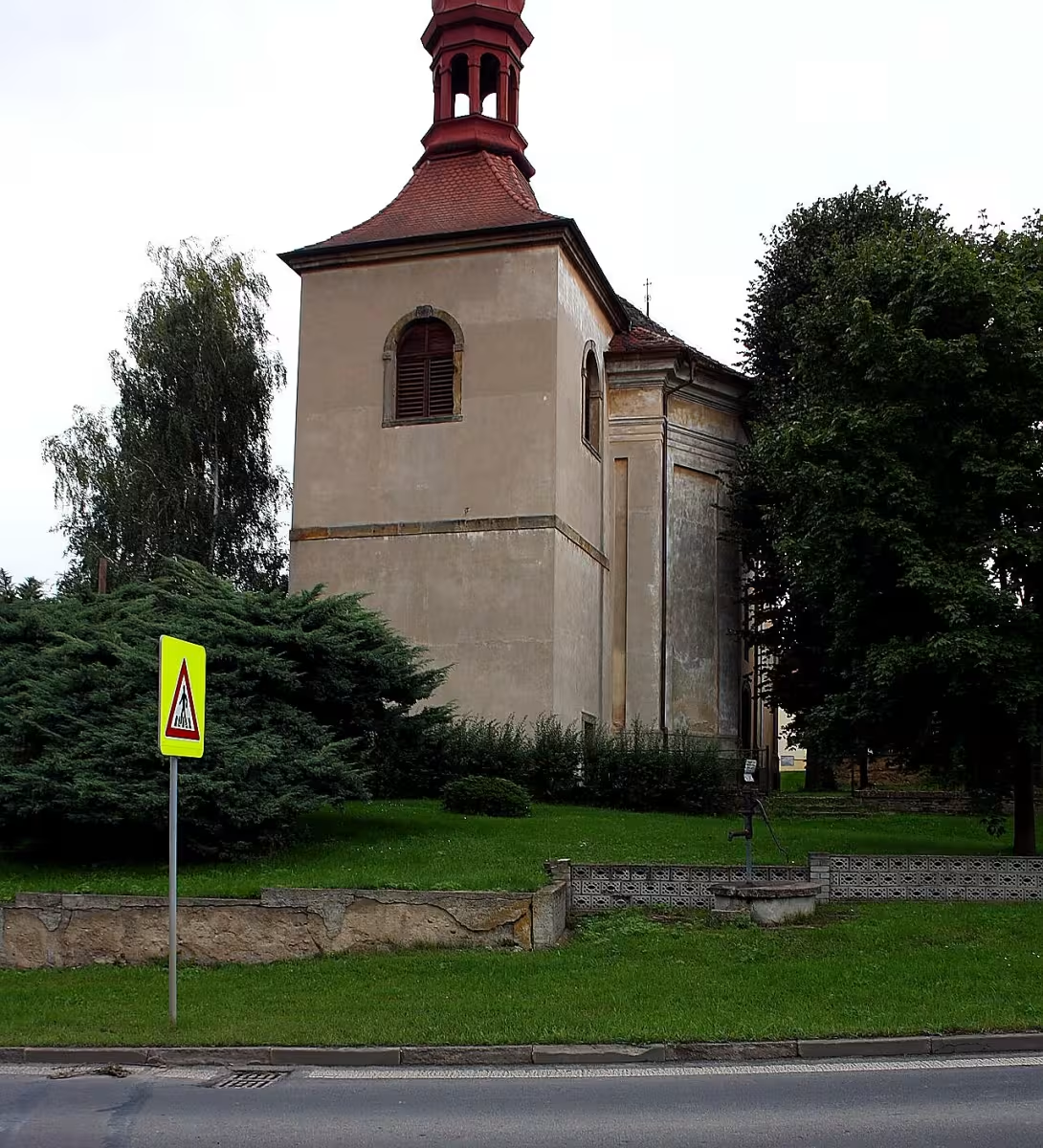
St. Martin's Church in Velemín in Litoměřická is one of the important Baroque sacral buildings of the district. It is believed that the beginnings of its existence date back to the 13th century, when there was plebania. At that time, the village was subject to the St. George's monastery of benedictines in Prague Chateau, which deeply embodies its roots into the medieval church structure.
The creator of today's church was a building from 1735 to 1743, which replaced the older sacral building in the spirit of the late Baroque style. However, the previous building was preserved by the older prism tower, which dates back to 1697 to 1702. The 30-year periods of the second half of the 20th century did not do without wounds - after 1945 the building gradually decayed, only in the 1960s did the outer mantle be restored.
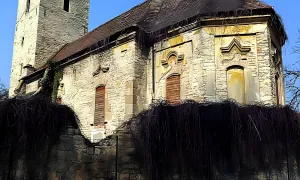
Architecturally, it is a simple one-way building of a rectangular shape with a narrower presbytery ending in Valcovite (segment) and a low rectangular sacristy in the axis. In front of the western facade stands the mentioned massive prism tower with quarted corner, which ends with a low octave roof. Above it there is an occipital bell tower with characteristic onion-shaped beating. The sidecars contain Izizene frames and Casual windows with rounded peaks. In the western field of the south wall a portal is opened with a locked frame over which there is a small niche. The ship's arches are dealt with as tortillas with separate belts, which converge on the front of the pillar, and the circle rests on a massive plate and a full vault.
Inside the church to protect the rich original equipment. The presbytery is dominated by painted illusory altar architecture with the Holy Trinity from Franz Joseph Kučera from 1800. The main painting of St. Martin comes from Prague painter Johann Hössler. All three altars - the main rococo with angels and two sides from the middle of the 18th century - have preserved their historical form. The Rococo pulpit carries symbols of evangelists and reliefs of biblical themes. The confessional with relief decoration dates back to 1752. The Baroque Rococo Organ is decorated with statues of angels and biblical King David. The other prizes include the 1759 painting of St. Vincent Ferrersky, the Rococo paintings of saints, the Baroque crucifix and the Rococo statue of St. Anne Samothird. The Rococo Statue of the Prague Jesulina is stored in the rocaking cabinet.
The church was traditionally surrounded by a cemetery; There's a rectory at his south wall. There are other sacral elements in the surroundings - a Baroque column with a statue of St. John Nepomuk from the 18th century, a Baroque Christ at a pillar from 1753, a column with Immaculata and Pieta from the 18th century with a statue of St. Valpurga on a plinth.
Then and now
Drag the slider to compare how the landmark may have looked when it was built with the view today.
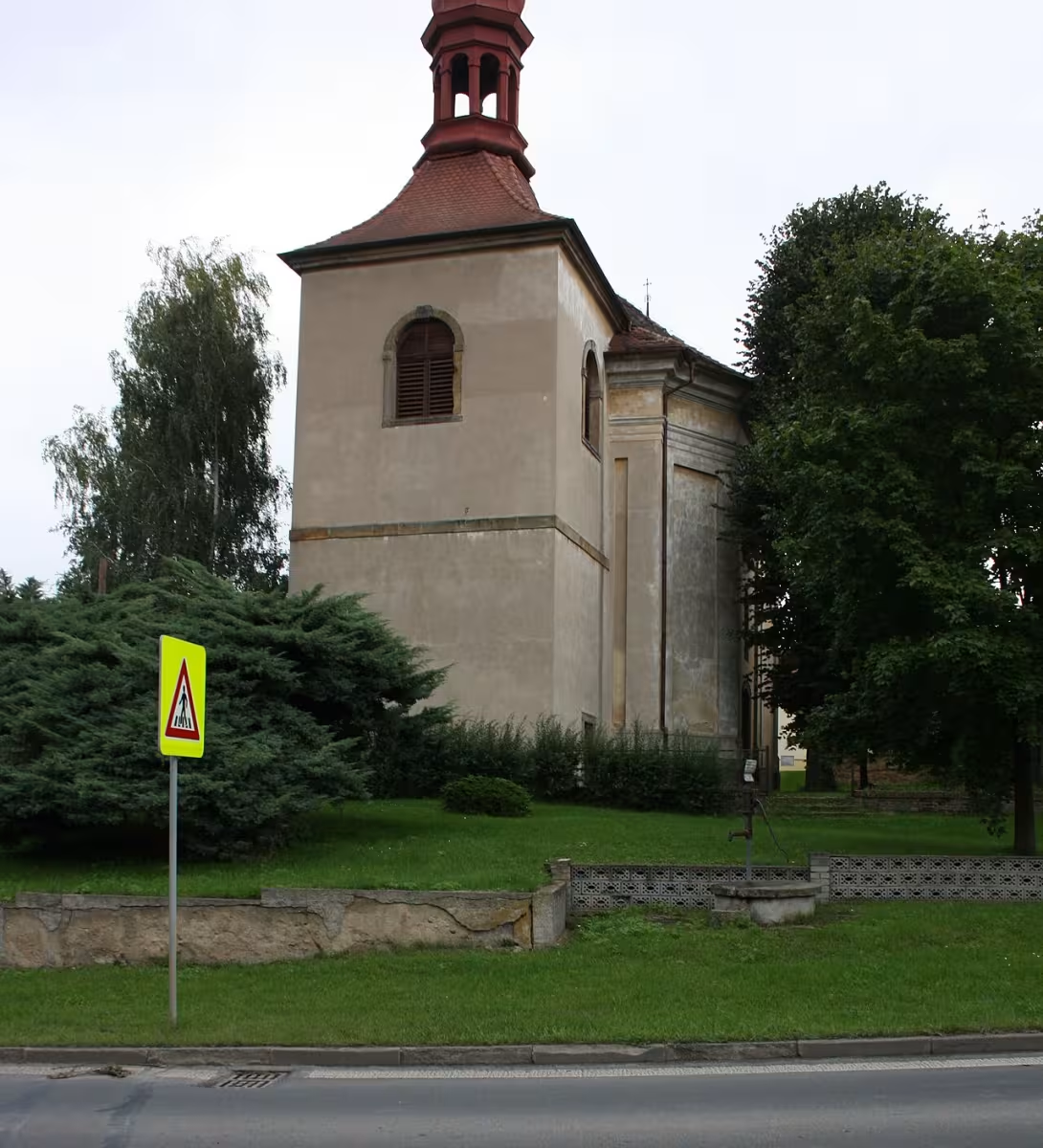

The historical appearance on the left is an AI-generated visualisation and serves as inspiration only.
Historical milestones
- 1697
- An older prism tower built again.
- 1735
- Built a new late Baroque church.
Architectural development
The church has a one-ship rectangular structure with segmentally completed presbytery and sacristy. In 1735-1743 a new Baroque building was built, which replaced the older church. After 1945, there was a decay, but in the 1960s the outer cloak was restored.
Historical events
- 13
- The beginnings of the church are probably dating back to the 13th century.
- 1697
- The older prism west tower has been rebuilt.
- 1735
- The new late Baroque church replaced the old church.
Owners
Originally belonged to the Svatojiřská monastery benedictines in Prague Chateau. After 1945 the construction was decayed and restored in the 1960s.
Points of interest
- St. Martin's Church in Velemín is one of the important Baroque sacral buildings of the district. - It is believed that the beginnings of the church date back to the 13th century, when there was a plebany under the St. John's Monastery of Beneficiaries in Prague Chateau. - Today's form of church was created during the construction years 1735 to 1743, replacing the older sacral structure in the spirit of the late Baroque style. - The previous building was preserved by an older prism west tower dating from 1697 to 1702. - The interior of the church keeps rich original equipment, including painted illusionist altar architecture with the Holy Trinity from Franz Joseph Kuchera from 1800 and the main painting of St. Martin from Johann Hössler.
Guide
This guide is narrated by a synthetic voice generated by artificial intelligence.
Show guide text
This text was created by artificial intelligence and has not been editorially reviewed. It may contain inaccuracies.
The origins of the Church of Saint Martin in Velemíně in the Litoměřice district probably date back to the thirteenth century. At that time, a rectory stood here and the village belonged to the convent of Benedictine nuns at Saint George in Prague Castle. From this earlier period, a pyramidal western tower may have been preserved, though sources place it in the years sixteen ninety-seven to seventeen hundred and two. The old church itself was replaced between seventeen thirty-five and seventeen forty-three by a new late Baroque building, which is now a protected cultural monument.
After nineteen forty-five, the church fell into disrepair. In the nineteen sixties, at least its outer shell was restored.
The church has one rectangular nave, followed by a narrower presbytery with a low sacristy. In front of the western facade stands a massive tower with dressed stone corners, large semicircular-topped windows and a low octagonal roof. The nave's roof nearly exceeds this older tower. Above the church rises an octagonal bell tower with an onion-shaped dome. Side facades are articulated by pilaster strips and windows in the shape of a chasuble, that is, priestly vestments. Above the south portal is a small niche.
Inside the presbytery, illusory altar architecture is painted on the wall, depicting the Holy Trinity and statues of Saint Peter and Saint Paul. It was created by painter Kučera in eighteen hundred. The Baroque painting of Saint Martin was painted by Prague painter Hössler. Both side altars are Rococo from the middle of the eighteenth century. One features a statue of the Virgin Mary, the other a painting of Saint John of Nepomuk.
The Rococo pulpit deserves attention, decorated with symbols of the evangelists and reliefs of biblical scenes, including the Sower and the Good Shepherd on the back. The confessional with reliefs dates from seventeen fifty-two. The Baroque organ has a Rococo case with an angel chapel and King David. In the church we also find a painting of Saint Vincent Ferrer from seventeen fifty-nine, a statue of Saint Anne with Two Companions beneath a baldachin, a small statue of the Prague Infant Jesus in a rocaille case, and a stone statue of Saint John of Nepomuk from seventeen eighty-three.
The church was once surrounded by a cemetery, and a rectory stands by its southern wall. The surrounding area contains a number of Baroque statues. These include a column with Saint John of Nepomuk, a statue of Christ at the Column from seventeen fifty-three with a relief of Saint James, a pillar with the Immaculate Virgin Mary, and in fields near the village of Pieta a relief of Saint Walburga.
Tips for visitors
The best time to visit St. Martin's church is early spring or autumn, when there are fewer tourists and the light hits the Baroque facade with a pleasant soft reflection. At these times you can quietly admire the historical details and soak up the atmosphere of the place.\ nParking is possible directly at the church in a reserved parking lot, which is well marked and easily accessible. If you arrive by public transport, the church is available by bus and train - check the current connection in the traffic search engine.\ nFor a tour take comfortable shoes or umbrella or raincoat, because part of the area can be partially open. We recommend having a bottle of water, a map or an application with GPS and a small snack for families with children.\ nPhotography in the church stands out in the soft morning light, which penetrates through stained glass and illuminates baroque frescos. The best places are the western facade where you can capture the statue of St. John Nepomuk, and the interior with historical altars. For exterior use sunlight on baroque column and Piety.\ nIn the vicinity of the church is worth visiting a baroque column with a statue of St. John Nepomuk, Baroque Piety and the original cemetery with a rectory located near the south wall. All these sights are just a few minutes' walk away and offer a complement to the historical context.
Frequently asked questions
Is Kostel svatého Martina (Velemín) open to the public?
Yes, the church is open to visitors. We recommend checking the current opening hours on the official site of the sights.
How do I get to the place by car / public transport?
The church is easily accessible by car and public transport. Parking possibilities are near the church. Check the current public transport connection in the search engine.
How much is the entrance fee and is it paid on the spot?
Information about the price of admission can be found on the official site of the sights. Admission fees are usually paid when visiting.
Is the tour suitable for children and seniors?
Yes, the church is also accessible to families with children and seniors. The spaces are safe and the historic environment can be interesting for all.
How long does the tour take?
A church tour usually lasts between 30 minutes and one hour, depending on how much time you want to spend inside and outside the building.
What are the opening times and booking is required?
The opening times of the church can be found on the official site of the monuments. There is usually no need for reservations, but we recommend checking.
What's interesting in the immediate vicinity?
In the vicinity of the church there are many Baroque statues, including columns and Piety. These works of art are an interesting addition to visit the church itself.
For kids
Imagine you're on an adventure journey back in time when new buildings began to appear in Velemín like dreams. There, in the middle of the village, stands the magnificent church of St. Martin, which is like an ancient book full of secrets and fairy tales.
If you look closer, you will see not only a beautiful building with gentle baroque cuts, but also a prism tower that turns off into the blue sky like a shadow from the old days. This tower is not just any tower - it was built centuries ago and it is like a time bridge back to the Gothic church that once stood here.
Businesses nearby
Do you run a restaurant, accommodation, shop, museum, rental, wellness or other visitor service near this monument? Show yourself directly to the people heading to it — this is how they will see you in the app and on the web:
Nearby
Originally, the church was surrounded by a cemetery with a rectory at the south wall. There are many statues in the area, including a Baroque column with a statue of St. John Nepomuk and Baroque Pieta.
Accommodation nearby
Trips and activities nearby
Guided tours, tickets and activities nearby from GetYourGuide
Affiliate link: if you buy from the partner, we may receive a commission. The price for you does not change.
Search tours and activities →Themed route
Thematic cruise route around St. Martin's Church (Velemín)
1. Kostel svatého Martina (Velemín) - Main objective Type: Religious monument Why is worth a visit: This Baroque church is not only an architectural pearl but also a witness to the rich history of the village Velemín. Its view includes originally cemetery space and rectory, which gives the overall impression an authentic atmosphere.
2. Fara (Velemín) Type: Religious building Why is it worth visiting: The rectory, built by the south wall of the former cemetery, is an important part of the church complex. Its historical architecture and relationship to St. Martin's Church add depth to understanding local religious tradition.
3. Baroque column with statue of St. John Nepomuk Type: Sculpture element Why is it worth a visit: This Baroque column is an important work of art that attracts attention with its historical and aesthetic value. The statue of St. John Nepomuk symbolizes local attraction and religious devotion.
4. Baroque Pietà Type: Sculpture element Why is worth a visit: Baroque Pietà presents a touching scene with Mary and Christ, which is typical of Baroque artistic tradition. Its location around the church of St. Martin provides emotional depth.
This route offers visitors the opportunity to explore not only the Church of St. Martin itself, but also its surrounding cultural and historical elements. Each of the points visited brings a unique view of the local heritage and artistic creation.
Seasonal recommendations
Spring: In the spring period, the Church of St. Martin in Velemín opens up to new experiences thanks to the intoxicating flowering surroundings. The sun rays illuminate the decorated facades of the church, which contributes to a fine and peaceful atmosphere. This season is a good time to visit the afternoon when the sun rises high above the horizon and illuminates the church with its warm color. It is recommended to wear light clothes with possible umbrella due to sudden spring storms. Visiting may be medium, so it is advisable to come in a calmer part of the day.
Summer: During the summer months, St. Martin's Church offers an exciting experience of sunlight that highlights the details of architecture. The atmosphere is full of life and energy, making the visit ideal for families and lovers of history. The best time to visit the church is in the early afternoon or early evening when you avoid the crowd. Formerly coming may be crucial to ensuring a comfortable experience. It is recommended to wear light clothes and sunglasses in order to fully enjoy the summer day.
Autumn: In the autumn period, St. Martin's Church offers unique experiences thanks to a changing colour spectrum of trees and a quiet atmosphere. The sun sets early, which creates a romantic mood while walking around the church. Visiting is usually lower than in the summer season, so it is advisable to visit the church in quiet periods of time. It is recommended to wear warmer clothes and perhaps an umbrella due to sudden winter storms. The best times to visit are in the afternoon when the sun is still in the sky.
Winter: Winter moons bring the Church of St. Martin in the cosy lighting of the ice rays and quiet atmosphere. At colder temperatures, the church is often less visited, which allows a comfortable exploration of its interiors. The best time to visit is at noon, when the sun rises most above the horizon and illuminates the church with its warm rays. It is recommended to wear warm clothes and shoes suitable for snow ground if possible. Opening hours may be shorter, so it is important to check the current times before visiting.
Visualizations and artistic views


The visualisations are generated by artificial intelligence and serve as inspiration.
Photos from the area
Real photos taken near the monument


Zdroj a licence jsou uvedeny u každého snímku.
Tips from visitors
No tips yet. Be the first!
Log in and add your tip.
Sources and literature
Photos: Juan de Vojníkov / CC BY-SA 3.0 — Wikimedia Commons. The author and licence also appear when you hover over the image.
Faktickým podkladem tohoto textu byl článek na Wikipedii, jehož autory jsou přispěvatelé Wikipedie. Článek je dostupný pod licencí CC BY-SA 4.0.
Location on the map

Příběhy a pověsti
Legendy, pověsti a příběhy spjaté s touto památkou
Fotografie návštěvníků
Zatím žádné fotografie. Buďte první, kdo přidá fotografii z návštěvy!
Log in a přidejte svou fotografii nebo hodnoťte.
Za ověřenou návštěvu v aplikaci získáte víc bodů — poznáme podle GPS, že jste na místě.
Reviews and comments