



kostel svatého Martina (Věžná) Church
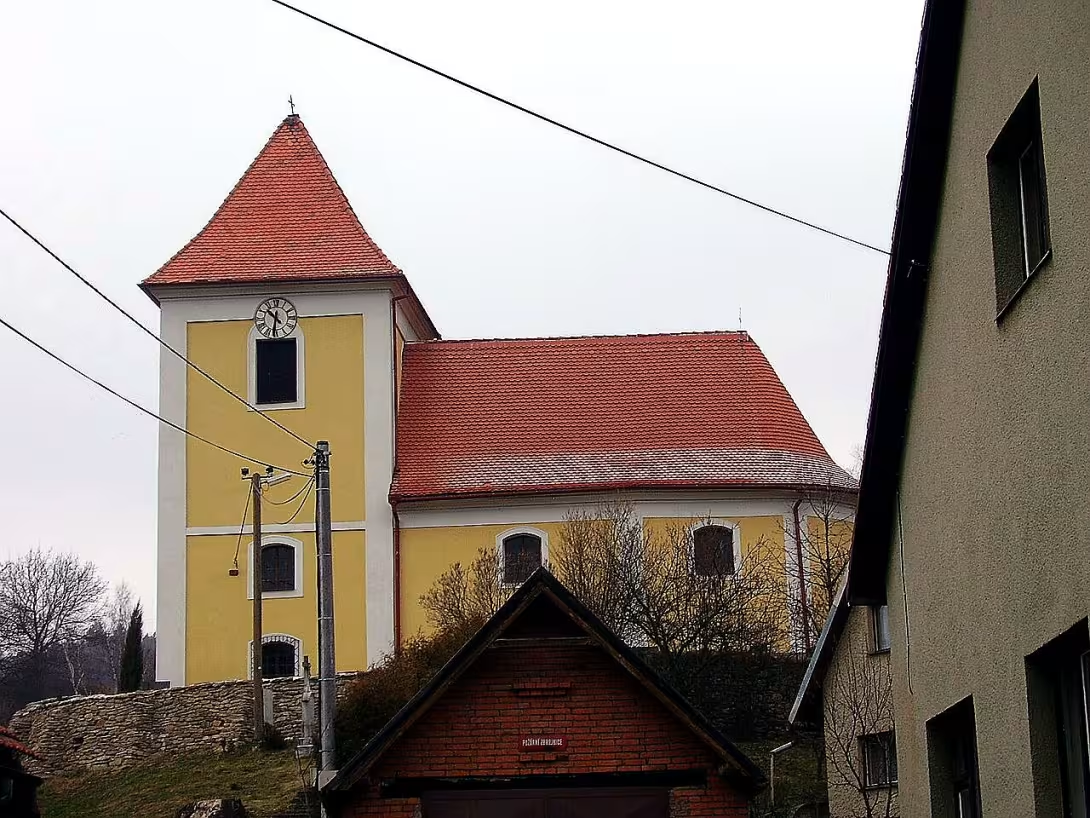
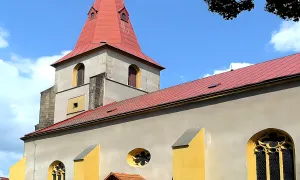
St. Martin's Church is located on the northern edge of the village Věžná, raised in the middle of the fenced cemetery. It is a late Gothic one-boat building, which serves as a filial church in the Roman Catholic parish Rožná nad Pernštejn and is protected as a cultural monument of the Czech Republic.
The church was founded at the end of the 16th century. The oldest written mention of him comes from 1592. Originally there was a parish located in the village Věžná, later moved to Rožná. These transfers are also reflected in the administrative development of the church: in 1672 he fell under the parish in Doubravnik, in 1755 he was added to the cooperative at Pernštejn and finally in 1787 he received permanent membership of the parish in Rožná.
The architecture of the church bears the typical characteristics of its period. The construction is a single boat with a characteristic segment conclusion. A four-sided tower with a tent roof rises on the front side. The church thus located in a high place in the middle of the fenced cemetery was traditional at the time and gave construction dignity and isolation.
The interior of the temple is decorated by the main altar of St. Martin with an altar painting dedicated to his patronage. An important part is also the monumental statue of Christ on the cross in life size.
The bells and organ of the church are particularly remarkable. The oldest bell is from 1630 and is one of the rare specimens that survived the recon during the First World War. At that time two other bells were recited - one from 1701 and the other from 1737. The organ was first purchased in 1680, new in 1939.
The church of St. Martin is thus a testament to more than four centuries of Czech sacral architecture and spiritual life in northern Moravia. It represents an authentic example of the Gothic temple, which preserved its character until today.
Then and now
Drag the slider to compare how the landmark may have looked when it was built with the view today.
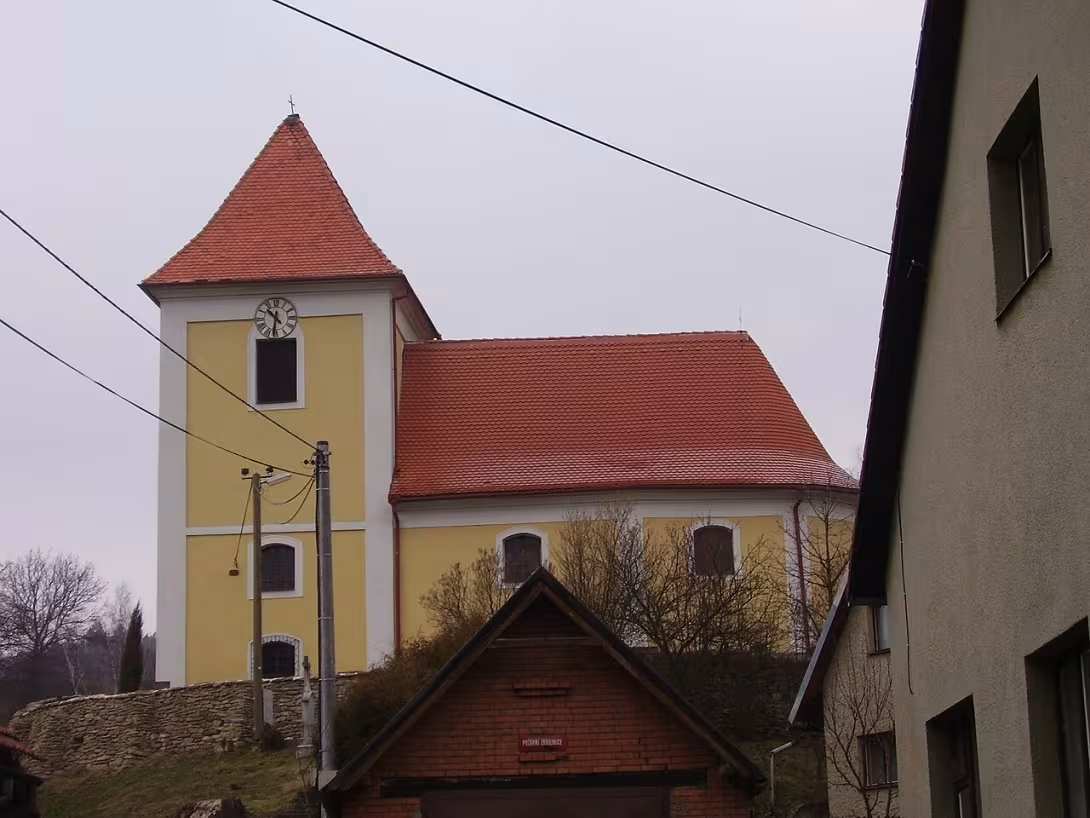

The historical appearance on the left is an AI-generated visualisation and serves as inspiration only.
Historical milestones
- 1592
- First written mention of St. Martin's Church in the village Věžná.
- 1630
- Getting the oldest preserved bell in the church.
- 1680
- Installation of organ to church.
- 1939
- Replacing the organ with new ones.
Architectural development
The church was built at the end of the 16th century as a late Gothic building. There were probably minor modifications over the years, but the basic Gothic structure remained. The roof tent tower is a characteristic element that complements the overall Gothic form. Materials and details correspond to typical late Gothic sacral architecture.
Historical events
The first written mention of the church dates back to 1592, when it was already built. In 1630, the oldest preserved bell was acquired, which also survived the reclining of two other bells during the First World War. In 1680 the organ was installed in the church, which was later replaced by new ones in 1939.
Points of interest
- St. Martin's Church is situated on the north edge of the village Věžná in a high place in the middle of a fenced cemetery.
- The oldest written mention of the church dates back to 1592, although it originated at the end of the 16th century.
- The church went through several administrative changes: in 1672 it belonged to Doubravík, in 1755 it was joined to Pernštejn and since 1787 it has been a filial church of the parish Rožná.
- The oldest bell dates back to 1630 and survived the recitation during the First World War when two other bells were taken (from 1701 and 1737).
- The organ in the church was first purchased in 1680 and then reinstalled in 1939.
Guide
This guide is narrated by a synthetic voice generated by artificial intelligence.
Show guide text
This text was created by artificial intelligence and has not been editorially reviewed. It may contain inaccuracies.
The Church of Saint Martin stands on the northern edge of the village of Věžná on the Vysočina plateau. It is built on an elevated location in the middle of an enclosed cemetery. It belongs as a branch church to the Roman Catholic parish of Rožná nad Pernštejnem and is protected as a cultural monument of the Czech Republic.
This is a late Gothic single-nave structure from the end of the sixteenth century. The first written mention of the church dates from fifteen ninety-two. The nave ends with a segmented choir. On the front side rises a square tower with a pyramidal roof.
Inside there is the main altar of Saint Martin with an altarpiece. The church also contains a life-sized statue of Christ on the cross.
The church administration changed several times over the centuries. The parish originally had its seat directly in Věžná and only later was moved to Rožná. In sixteen seventy-two the church fell under the parish in Doubravník. From seventeen fifty-five it was attached to the cooperative on Pernštejně and was not attached to Rožná until seventeen eighty-seven.
The oldest bell was acquired in sixteen thirty. It survived the First World War, when two other bells were requisitioned. One of them dated from seventeen hundred and one, the other from seventeen thirty-seven. The church acquired an organ in sixteen eighty, and a new one was acquired in nineteen thirty-nine.
Tips for visitors
Best time to visit St. Martin's church is in the summer months, especially in June to September. The warm weather and long days allow you to explore in a quiet environment without direct sunlight, which might be uncomfortable on the high rise. In winter, the church is interesting in its quiet and quiet environment, but the visit may be limited due to shorter daylight conditions. It is recommended to visit the church early in the morning or afternoon when there is less excitement in the cemetery and you can enjoy the atmosphere without crowds.
It is recommended to arrive by car because public transport to the village is not very common. In the vicinity of the village are also cycling trails that allow a pleasant ride from the surrounding villages.
When visiting the church, wear comfortable clothes and shoes because they are located on the high rise and the way to it may be slightly steep. It is also convenient to take a small umbrella or sunglasses because the weather can be unpredictable. If you are planning to take pictures, remember to take batteries and memory cards because there are interesting compositions in the cemetery and around the church. It is also appropriate to take a small laptop or mobile for notes if you want to record details of the interior.
Photography is allowed in the church, but care must be taken to respect other visitors and not violate the rules of conservation. The best places for photos are the outside facade of the church and surrounding the cemetery, where there is pleasant light and natural contrasts. In the interior it is advisable to photograph in the natural light that penetrates the windows, and avoid flashing lightning. The best time for photography is in the morning or afternoon when light is softer and creates pleasant shadows.
There are several interesting places around St. Martin's church worth visiting. Within half an hour of driving by car or cycle you can visit Pernstejn Chateau, which is one of the most important historical monuments of the Žďár nad Sázavou region. The surrounding forests and meadows offer pleasant walks and the possibility of observing nature. In the summer months, various cultural events are also organised in the area, which can be interesting for the whole family.
For families with children, a visit to St. Martin's Church is a great opportunity to explore history and nature. Children can explore the Gothic architecture of the church and have fun in the cemetery where old tombstones and natural details can be observed. There are also small forest trails around the church that are suitable for short walks with children. It is also recommended to visit Pernstejn Chateau where children can see medieval architecture and learn more about the history of the region. It is also interesting for children to observe nature in nearby forests and meadows.
Frequently asked questions
Can the monument be visited?
Religious buildings are usually open mainly during services; at other times a visit is normally arranged with the parish or the operator. We have not verified specific times.
Where is the monument?
Location: č.p. 1, Věžná, Kraj Vysočina. The map on this page shows the exact spot.
Why is the monument protected?
It is listed in the Central List of Cultural Monuments of the Czech Republic as a cultural monument (register no. 36812/7-4603).
For kids
Imagine going back to the past... Until the church of St. Martin's was still young and full of life. Who lived here? People who tried to survive in this beautiful place in the middle of a fenced cemetery. They were peasants, shepherds, businessmen... Together, they created a life net that is no longer there.
As if they looked out of the church window, they would see an amazing view of the surrounding landscape - forests, fields and rivers. They were people who tried to live in harmony with nature. Which is why their memory is so important today.
Businesses nearby
Do you run a restaurant, accommodation, shop, museum, rental, wellness or other visitor service near this monument? Show yourself directly to the people heading to it — this is how they will see you in the app and on the web:
Nearby
There is a fenced cemetery in the vicinity of the church. Near the village Věžná, up to 5 km, there are natural beauty and other historical sites such as Pernstejn Chateau and surrounding forests and meadows, which form the picturesque landscape of the region Žďár nad Sázavou.
Accommodation nearby
Themed route
Thematic cruise route from the village Věžná
1. St. Martin Church (Věžná) - Church The main aim of our route is the church of St. Martin, located in the heart of the village Věžná. This Baroque temple is famous for its architectural beauty and history. Its interior offers attractive frescos and wooden sculptures, which are an excellent example of the artistic traditions of the region.
2. Chateau cemetery near the church - Historical location Approximately 0.5 km from the church is a fenced cemetery with historical burial grounds and tombstones. By exploring this place you can get an understanding of the past of the village and its ancestors who have left the site forever.
3. Pernstejn Chateau - Historical site Another 5 km is the Pernstejn Chateau, one of the most important historical monuments in the region. The chateau is famous for its impressive architecture and beautiful view of the surrounding landscape. Its premises offer insights into the life of the noble family of Pernstejns and the history of the region.
4. Ambient forests and meadows - Natural location After visiting the walls, you can explore the surrounding forests and meadows that form the picturesque landscape of the Žďár nad Sázavou region. These natural formations are an ideal place for relaxation, picnic or short walk where you can enjoy the peace and view of the vast green meadows.
This route offers a combination of historical visits with natural surroundings, allowing you to know the rich culture and beauty of the Vysočina region.
Seasonal recommendations
Spring: In the church of St. Martin in the Faithful Visitors will appreciate the fine sunshine of sunlight, which is projected through large windows on roofs and ceilings. This lighting adds an atmosphere of peace and renewal to the church, ideal for the start of new paths. This season, opening times may sometimes be shorter due to the awakening of plants and preparations for summer time, so it is advisable to check the current schedule. Dress in a similar way to the cold day of autumn to be protected from sudden cold beliefs.
Summer: In the main summer season, St. Martin's Church is a popular destination for local and tourists. The sunny days and long nights offer ideal conditions for exploring historical interiors and surrounding gardens where a pleasant atmosphere of calm is created. Thanks to a higher number of visitors, it is recommended to arrive as early as possible in the morning to escape large crowds and to ensure sufficient time for understanding all details. Put on a bottle, but also prepare sun protection.
Autumn: In the autumn period, St. Martin's Church offers a unique atmosphere. November green and transitional leaf color provide the surrounding romantic look, while colder weather supports a calmer visit without large crowds. Look up warmer clothes and maybe an umbrella for sudden precipitation.
Winter: The Winter Church of St. Martin in Lovna offers a calm and quiet atmosphere where fewer visitors allow a deeper understanding of its history. Freezing air underlines the beauty of architecture and the roof of the church seem even more significant in light of the months. Hot clothes and wind protection are essential for comfortable stay inside and outside the church.
Visualizations and artistic views


The visualisations are generated by artificial intelligence and serve as inspiration.
Photos from the area
Real photos taken near the monument


Zdroj a licence jsou uvedeny u každého snímku.
Tips from visitors
No tips yet. Be the first!
Log in and add your tip.
Sources and literature
Photos: Isolda11 / CC BY-SA 3.0 — Wikimedia Commons. The author and licence also appear when you hover over the image.
Faktickým podkladem tohoto textu byl článek na Wikipedii, jehož autory jsou přispěvatelé Wikipedie. Článek je dostupný pod licencí CC BY-SA 4.0.
Location on the map

Příběhy a pověsti
Legendy, pověsti a příběhy spjaté s touto památkou

Fotografie návštěvníků
Zatím žádné fotografie. Buďte první, kdo přidá fotografii z návštěvy!
Log in a přidejte svou fotografii nebo hodnoťte.
Za ověřenou návštěvu v aplikaci získáte víc bodů — poznáme podle GPS, že jste na místě.
Reviews and comments