






Kostel svatého Martina (Zibohlavy) Church
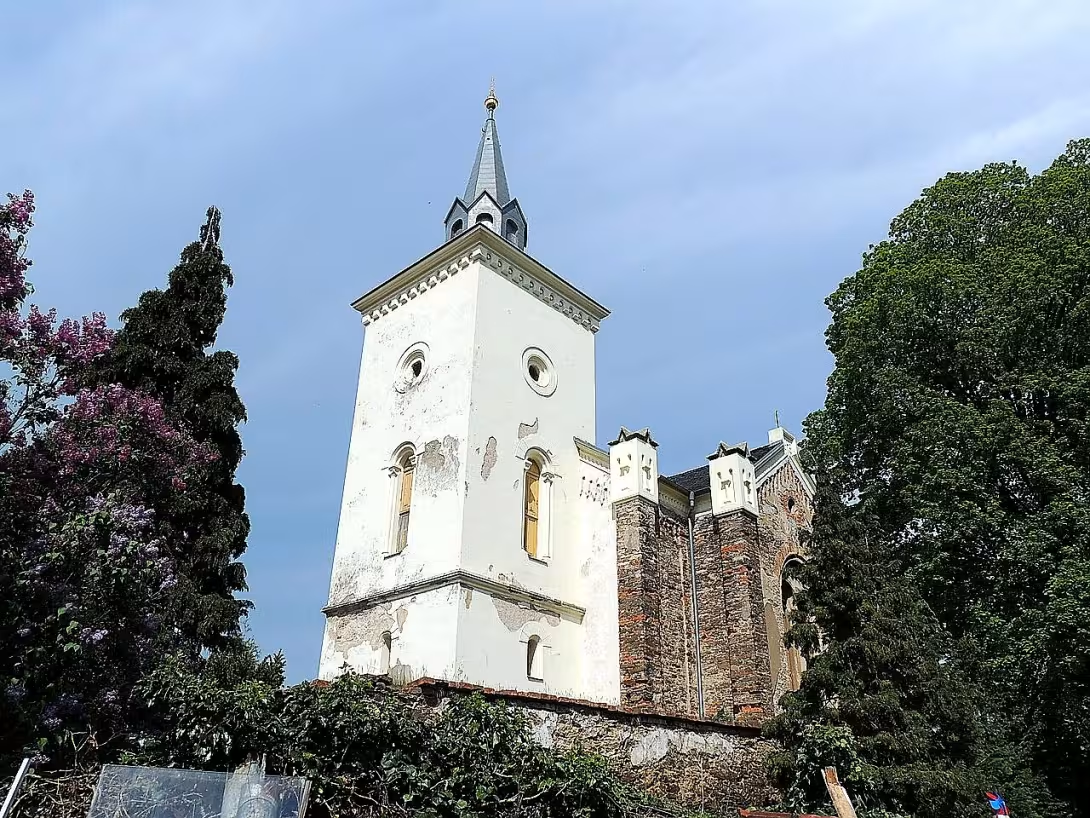
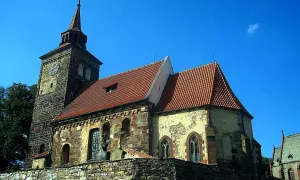
The Church of Saint Martin in Zibohlavy stands as proof of the rich historical tapestry of this picturesque village in Kolín area Středočeský kraj. This Roman Catholic Filipino church is not only the central city of the village, but also a protected cultural monument recognised for its architectural and historical importance. Originally built in the 13th century with the influence of Romanesque, he underwent significant transformations over the centuries, especially after being ravaged during the Thirty Years' War. Today visitors can appreciate his pseudo-Romanesque style, which contains motifs from other historical churches while retaining the elements of his original structure.
The origin of St. Martin's church dates back to the 13th century, when it was built in Romanesque style, which shows architectural trends in this period. By 1358, historical records refer to the church as a parish church, highlighting its importance within the community at that time. For centuries, however, the church has faced significant challenges; It burned down in 1624 and was repaired after three years. The most devastating event occurred during the Thirty Years' War, when Swedish troops plundered the church in 1639, leading to its total destruction.
The current structure of St. Martin's church dates back to 1873, after reconstruction after the destruction of the war. This new building reflects the pseudo-Romanesque architectural style, characterized by decorations inspired by the Church of Romanesque St. James in Jakub near Kutná Hora. The church is equipped with a single-boat structure with a cross plan and a semi-circular apside on the east wall. The characteristic pyramid tower stands in front of the western facade and is added to the architectural charm. The outer walls are evenly decorated with pseudo-Romanesque decorations that contribute to the historical atmosphere of the church.
Inside, the church boasts artistic elements that link it to its historical past. The main altar was created by sculptor J. M. Black at the end of the 18th century and showed skills and art period. The pulpit also shows a picture of St. Martin from the original altar, painted by J. Macháček in 1841, which serves as a reference to the previous history of the church. The church also contains the organ Antonín Mölzer of Kutná Hora, which in 1892 further enriched its cultural heritage.
Throughout its history, the Church of St. Martin witnessed important events that shaped its existence. His mention as a parish church in 1358 underlines his long-standing role within the community. Destruction and subsequent reconstruction after 30 years "War reflects the resilience and enduring importance of this sacred place. These historical milestones stress the Church's ability to resist adversity while preserving its cultural and spiritual importance.
Today, the Church of St. Martin remains an accessible and valuable monument in Zibohlavy. Its status as a protected cultural monument ensures that it will continue to be preserved for future generations. Visitors are portrayed not only by his architectural beauty, but also by his rich history and stories encapsulated inside his walls. The combination of historical elements of the church with artistic craft makes it a valuable destination for interested people to discover the cultural heritage of the Czech Republic.
The Church of St. Martin in Zibohlav is a remarkable example of resilience and historical continuity. His journey from the 13th century of Romanesque structure to his current pseudo-Romanesque form tells the story of survival and adaptation over centuries of change. This church is not only a place of worship, but also a cultural treasure that invites visitors to immerse themselves in the layers of history they embody. Whether you are an enthusiast of architecture, an enthusiast of history, or simply someone looking for a quiet and inspiring environment, St. Martin's Church offers a unique view of the past while standing proudly in the present.
Then and now
Drag the slider to compare how the landmark may have looked when it was built with the view today.
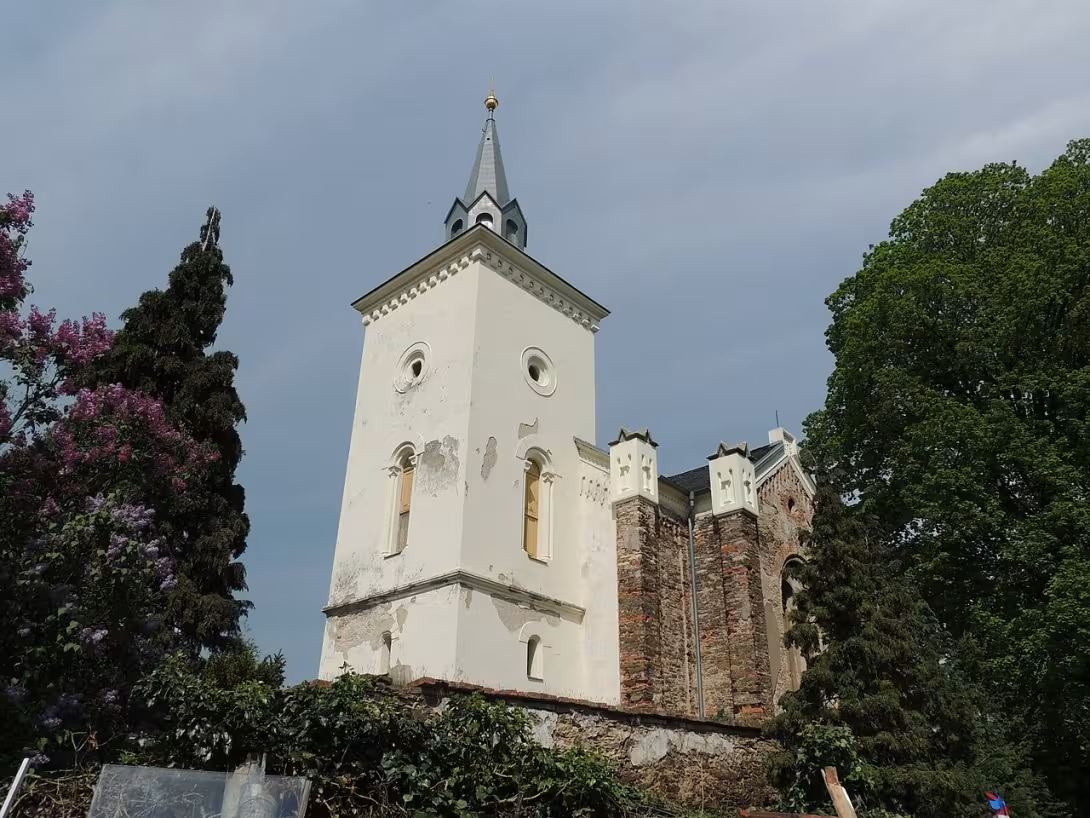

The historical appearance on the left is an AI-generated visualisation and serves as inspiration only.
Historical milestones
- 1358
- the church was mentioned as a parish church.
- 1624
- the church burned down.
- 1639
- Swedish troops plundered the church during the Thirty Years' War.
Architectural development
The current Church of St. Martin dates back to 1873, after its destruction during the Thirty Years' War. It has a pseudo-Romanesque style with decorations inspired by the motifs of St. James's Church in Jakub near Kutná Hora. The interior of the church contains the main altar, which was made by sculptor J. M. Black at the end of the 18th century, and the painting of St. Martin on the pulpit from 1841.
Historical events
The original Romanesque church was mentioned as a parish church in 1358.
In 1624 the church burned down and was repaired three years later.
During the Thirty Years' War in 1639, Swedish troops completely plundered the church.
Points of interest
- St. Martin's Church is protected as a cultural monument of the Czech Republic.
- The original Romanesque church came from the 13th century and was mentioned as a parish in 1358.
- In 1624 the church burned down, three years later it was repaired, but during the Thirty Years' War in 1639 it was completely plundered by Swedish troops.
- The existing church dates from 1873 and only the tower was preserved from the original church.
Guide
This guide is narrated by a synthetic voice generated by artificial intelligence.
Show guide text
This text was created by artificial intelligence and has not been editorially reviewed. It may contain inaccuracies.
Welcome to St. Martin's Church in Zibohlavy, a jewel nestled in the heart of this charming village. As you stand here, take a moment to absorb the quiet atmosphere surrounding this cultural monument protected by the Czech Republic for its historical and architectural significance.
Imagine a return to the 13th century when this church was first built with the influence of Romanesque. Over time she witnessed significant changes, especially after being destroyed during the turbulent 30-year war. Rebuilt in 1873, it now stands as proof of resistance and continuity.
When you look around, notice how the architecture of the church reflects his past. Its contemporary pseudo-Romanesque style contains elements from other historical churches, creating a harmonious blend of old and new. The structure invites you to further explore, with every detail whispering stories centuries away.
Let's dive into the key historical moments associated with this place. In 1358 the church was first mentioned as a parish church, which marked its importance in the community. However, this faced adversity when it burned out in 1624 and later suffered plunder in the hands of Swedish soldiers during the 30 years war in 1639.
An interesting aspect of this church is how it embodies destruction and rebirth. Its survival through such stormy events underlines the remarkable story of endurance and adaptation, which makes it not only a place of worship, but also a symbol of hope for generations.
As you continue to explore Zibohlavy, let St. Martin's Church inspire you with its rich history and architectural beauty. I suggest you roam, immerse yourselves in the atmosphere, and perhaps reveal other stories hidden in this remarkable memory. Thank you for joining me on this journey through time.
Tips for visitors
The best time to visit St. Martin's church in Zibohlavy is at the end of spring or early autumn when the weather is pleasant, allowing you to comfortably explore both the church and its surroundings. These seasons offer lively landscapes that increase the historical charm of the village. Moreover, a visit on a weekday can provide a calmer experience with fewer crowds.
Martin's Church is limited, so it is advisable to use public transport if possible. Always check traffic options using a reliable travel app or website before your visit.
When visiting Zibohlavy, it is recommended to bring comfortable walking shoes as exploring villages may include some walks along uneven paths. The camera is also designed to capture the architectural beauty of the church and its surroundings. Remember to wear water and possibly light snacks, especially if you plan to spend several hours in this area.
For photo lovers, early morning or late afternoon offers the best natural lighting for the capture of St. Martin's church facade and interior details. Soft light in these times can highlight texture and colors beautifully. In addition, exploring the village from different angles can reveal unique perspectives and tracks.
In a 30-minute drive from Zibohlavy visitors can explore other cultural sites or natural landscapes in Středočeský kraj. While there are no specific recommendations available, the regional tourist guide or website often presents nearby attractions offering knowledge of the history and nature of the area.
Frequently asked questions
Can the monument be visited?
Religious buildings are usually open mainly during services; at other times a visit is normally arranged with the parish or the operator. We have not verified specific times.
Where is the monument?
Location: Zibohlavy, Středočeský kraj. The map on this page shows the exact spot.
Why is the monument protected?
It is listed in the Central List of Cultural Monuments of the Czech Republic as a cultural monument (register no. 50871/2-4362).
Businesses nearby
Do you run a restaurant, accommodation, shop, museum, rental, wellness or other visitor service near this monument? Show yourself directly to the people heading to it — this is how they will see you in the app and on the web:
Nearby
PHARMAZobrazit interaktivní přenos okolí - Restaurace, ubytová, početné a další město v okrehu 15 km.
Data: přispěvatelé OpenStreetMap, okreh 15 km.
Historické památky
- TGM (3.6 km)
- památník bitvy u Kolína (4.0 km)
- Regionální muzeum v KolínE (4.2 km - Karlovo náměstí 8)
- Panna Maria Immaculata (4.3 km)
- J.A. Komenskej (4.3 km)
- František Kmoch (4.4 km)
- Potkali se u Kolína (4.6 km)
- České muzeum střibra (9.7 km)
PŘÍLOHA
- Alcatraz (4.1 km - Kouřimská 13)
- Občerství U zastávky (4.2 km)
- Penzion a kavárna Pod Věží (4.3 km - Parléřova 39)
- VESPA Ristorante (4.4 km - Karlovo Náměstí 72)
- Restaurace Na Valech (9.4 km - Husova 16)
- Skalka (9.4 km)
- New Peking Restaurant (9.6 km - Česká 250 / 22)
- EX a kavárna Harmonia (9.7 km - Husova 104 / 9)
PŘÍLOHA
- Hotel Theresia (4.0 km)
- Falconi (4.2 km)
- Ubytova Odeta Kolín (4.6 km - Havlíčkova 260)
- Barbora Kemp (9.0 km - Tyršova 988)
- Penzion Kutna (9.3 km)
- Hotel Kréta (9.5 km)
- Ubytovna Loreká (9.6 km)
- Hotel Mědínek (9.7 km)
Poujčovny a sport
- Střelnice Kolín (3.0 km)
- Motoskola Landa (3.0 km)
- Staj Václav (3.2 km)
- KOLÍNOKRÁM (4.6 km - Havlíčkova 261)
- Nákladní příspěvek (5.0 km)
- SKP Olympia (8.8 km)
- TJ Sparta Kutná Hora (9.1 km)
- Sparta Kutná Hora a.s. (9.5 km)
Garantica Turistika a příroda
- Pašinka (2.1 km)
- Ratboř - kostel (2.6 km)
- VANDROVÉ Podlipanskem (2.7 km)
- Polepy (3.4 km)
- Staré informační centrum Kolín (4.2 km - Na Hradbách 157)
- Kolín (národní) (4.3 km)
- Kolín (rozcestí na Polepskému potoce) (4.7 km)
- Bedřichov (5.1 km)
Accommodation nearby
Trips and activities nearby
Guided tours, tickets and activities nearby from GetYourGuide
Affiliate link: if you buy from the partner, we may receive a commission. The price for you does not change.
Search tours and activities →Themed route
Thematic walking tour: Zibohlavy
1. Kostel svatého Martina (Zibohlavy) - Church Start your journey in the heart of Zibohlavy with the stunning Church of St. Martin. This church is a remarkable example of local religious architecture, which offers visitors a view of the spiritual and cultural history of the region. Its quiet atmosphere provides an ideal starting point for exploring the village's rich heritage.
2. Zibohlavy Village Square - Historic site From the church, feel free to walk to nearby Zibohlavy Village Square. This central area is located in a local tradition and serves as a common centre where you can experience the authentic charm of rural Czech life. The square often hosts small meetings or markets that offer a lively view of the daily rhythm of the community.
3. Local Farmers - Agricultural Heritage A short walk from the village square will bring you to several traditional local agricultural parks. These farms are an integral part of the agricultural heritage Zibohlavy and provide a view of the rural lifestyle that has shaped this area for generations. You can observe traditional agricultural practices, or even engage with local farmers, learn about their craft and production.
4. Walking in the countryside - Nature walking Close your tour by exploring the picturesque walking paths that pass through the picturesque landscape Zibohlavy. These paths offer a peaceful retreat into nature, allowing you to appreciate the fresh landscape and a quiet environment surrounding the village. It is an ideal way to think about daily experiences while enjoying the beauty of Středočeský kraj.
This tour provides a comprehensive view of Zibohlavy, highlighting its cultural, historical and natural attractions in a compact area.
Seasonal recommendations
Spring: In the spring period, St. Martin's Church in Zibohlavy offers a demanding order to divorce the business around which green trees and bushes open with new leaves. To provide ideal services for a photograph of the church in this unraveled glow. No information shall be provided where it is information that may be included in the notice of initiation. It is exciting to design a vacation at the beginning or mid-spring to avoid the rest of the winter snow. Since it is not known whether a tourist situation exists, it can be established that no action is necessary under this Decision. Clothes should be flexible, with the possibility of recalculating layers, because temperatures can be finely mixed.
Summer: Summer is an ideal time for determining the Church of St. Martin in Zibohlavy, where the sun is on the higher mouth and the contribution offers the entire zone. Full quantity of shrubs and trees supplied by chemical contrast with architectural children of the skeleton, which welcome processing of visual material. This Decision is addressed to the Member States in order to decide whether or not to carry out this activity, particularly in Sundays and vertical hours. It is appropriate to provide that, at the beginning of the day, it is not otherwise stated when the crowd is dreaming and transported with sun cover and deciduous sunscreen. In addition, a new point is permitted, which with a new time, because a warm summer can be exhausted.
Autumn: Autumn offers St. Martin's Church in Zibohlední single-bed positions with coloured pallet sheets that can be used for steel forests and fields. This Decision is addressed to the Member States which are providing services which may be provided. The atmosphere is quiet not in summer kisses, which culminates in the accessibility for a quieter experience without large crowds. A series is proposed at the end of the day, when they were blessed with warm and new, which gives a romantic view of the church. Clothes should fall into the layer to cross through cold evenings, and be ordered to be transported to new conditions.
Winter: Winter launch of St. Martin's Church in Zibohlavy is a calm and quiet atmosphere where the church is often covered with snow or frozen leaves. Sun rays can extract dramatic works on walls and windows, which are intended to be a one-way visual recording. Winter is usually the least designated goods for tourists, so it can cover the minimum crowd and a peaceful journey. It is necessary to design a warm suit, including a blanket or a duvet coat, especially if Koná is injected during cold months. In addition, it is custom to check the opening vehicle because there are no memories of having shorter values in winter cities. The wall can be that it is supplied for the maximum sun city and warm atmosphere.
Visualizations and artistic views


The visualisations are generated by artificial intelligence and serve as inspiration.
Photos from the area
Real photos taken near the monument


Zdroj a licence jsou uvedeny u každého snímku.
Tips from visitors
No tips yet. Be the first!
Log in and add your tip.
Sources and literature
Photos: Jstojanov / CC BY-SA 3.0 — Wikimedia Commons. The author and licence also appear when you hover over the image.
Faktickým podkladem tohoto textu byl článek na Wikipedii, jehož autory jsou přispěvatelé Wikipedie. Článek je dostupný pod licencí CC BY-SA 4.0.
Location on the map
Příběhy a pověsti
Legendy, pověsti a příběhy spjaté s touto památkou

Fotografie návštěvníků
Zatím žádné fotografie. Buďte první, kdo přidá fotografii z návštěvy!
Log in a přidejte svou fotografii nebo hodnoťte.
Za ověřenou návštěvu v aplikaci získáte víc bodů — poznáme podle GPS, že jste na místě.
Reviews and comments