

Kostel svatého Maxmiliána Church
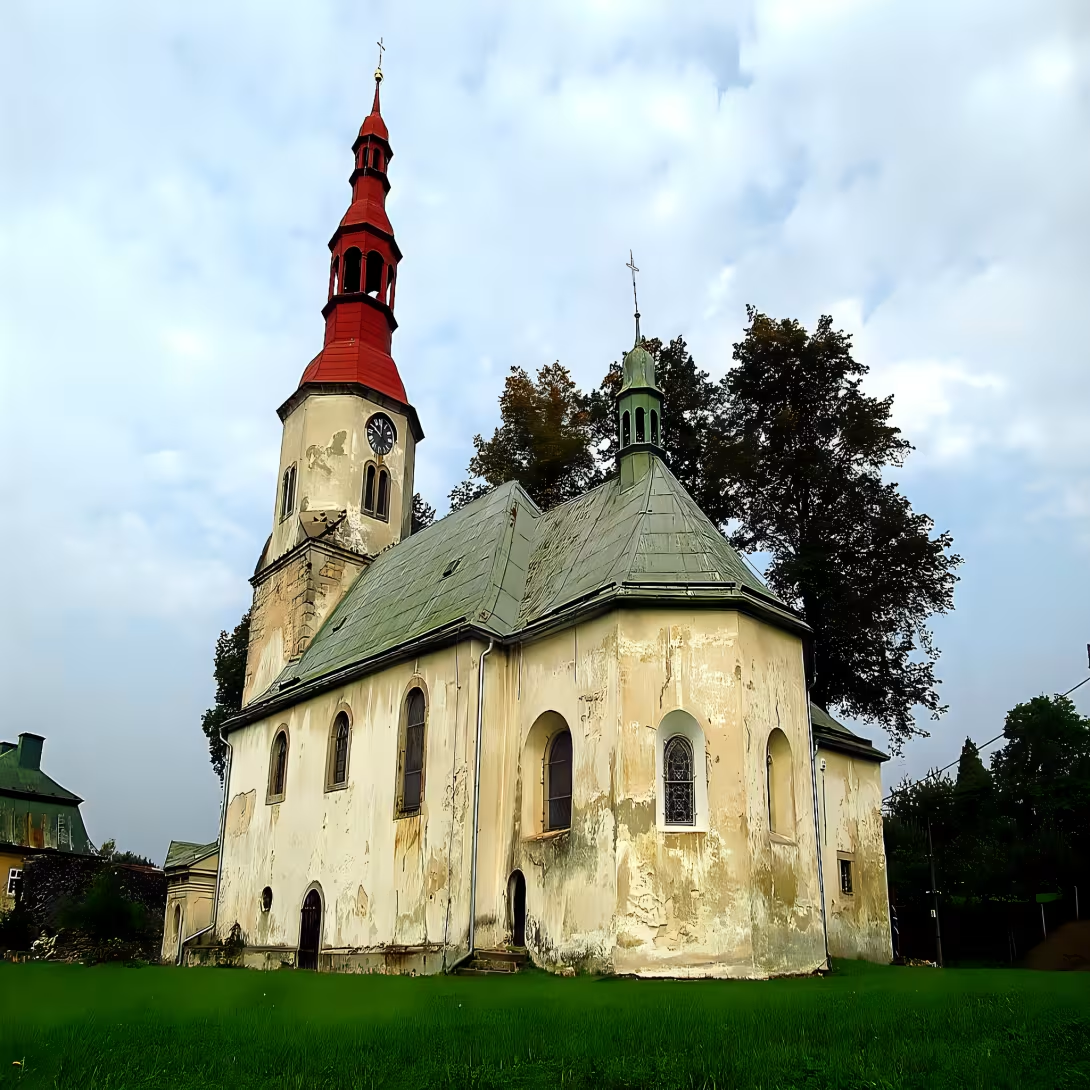
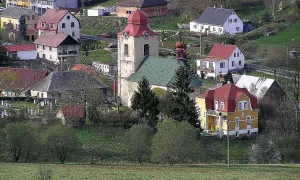
Kostel svatého Maxmiliána in the village Křižany in the district of Liberec is a baroque rebuilt sacral building on Gothic foundations. It is protected as a cultural monument of the Czech Republic. A combination of architectural styles and a unique detail at the adjacent statue of St. John Nepomuk is remarkable.
The first written mention of the church dates back to 1352 and 1384. This corresponds to the period of gothic flourishing in Czech countries during the reign of Luxembourg. Although documents exist, the exact date of origin, the original form and original initiation of the building are not known. According to the historical survey, the oldest parts of the present building date back to the turn of the 15th and 16th centuries.
It is a one-boat rectangular church with smooth facade, polygonal presbytery and western tower. The Gothic origin is now visible only at the part of the presbytery which is glassed in the interior by the rib arch. In 1684, a prism tower was built. Its lower part is prismatic with open hall, the upper part is octagonal. Later Baroque reconstructions reflected the period of reCatholisation and expansion of this style in Europe.
In the interior there is a pseudo-gothic late Baroque main altar and a wooden three-arm ring. At the south wall there is a polychrome wooden sculpture of Christ and the apostles on Mount Olivet. This is a folk work from the early 19th century.
An interesting feature is the origin of the wall of the west tower, which was allegedly used from a demolished chateau. The church is located in the southwest part of the village opposite the local cemetery. In the immediate vicinity, the 18th-century Baroque rectory with a tin mansard stands. The file is supplemented by a grafted barn and partially preserved sandstone stables. The Baroque statue of St. John Nepomuk from 1747 stands before the parish. It's unique by standing on an overturned water jug. On her pedestal are the reliefs of St. Maximilian, St. Francis Xaversky and St. Prisk.
There are currently no regular services in the church. The state of the building is listed as an emergency in the National Heritage Institute catalogue.
The construction represents a valuable historical layered object. It combines elements from Gothic to 19th century folk art. Her visit offers an opportunity to get acquainted with architectural developments in the LiberecK region.
Then and now
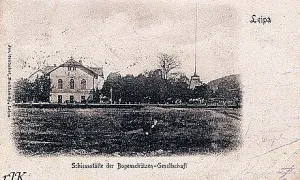
Drag the slider to compare how the landmark may have looked when it was built with the view today.
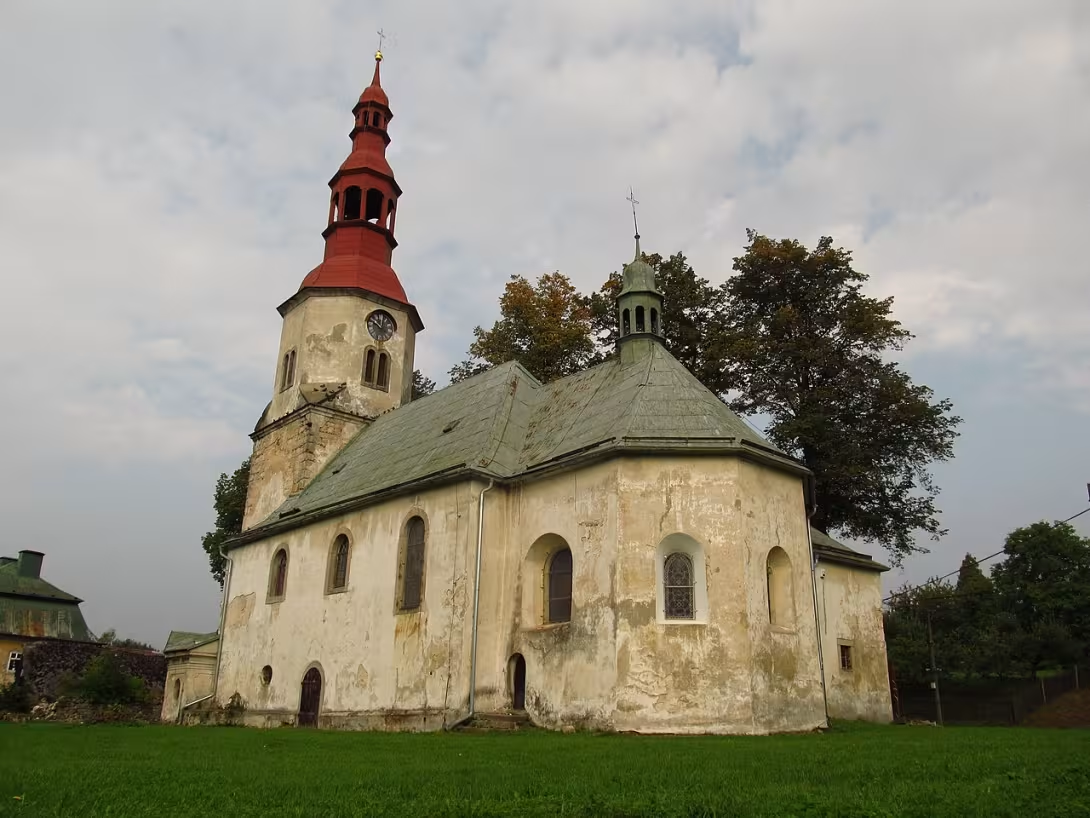
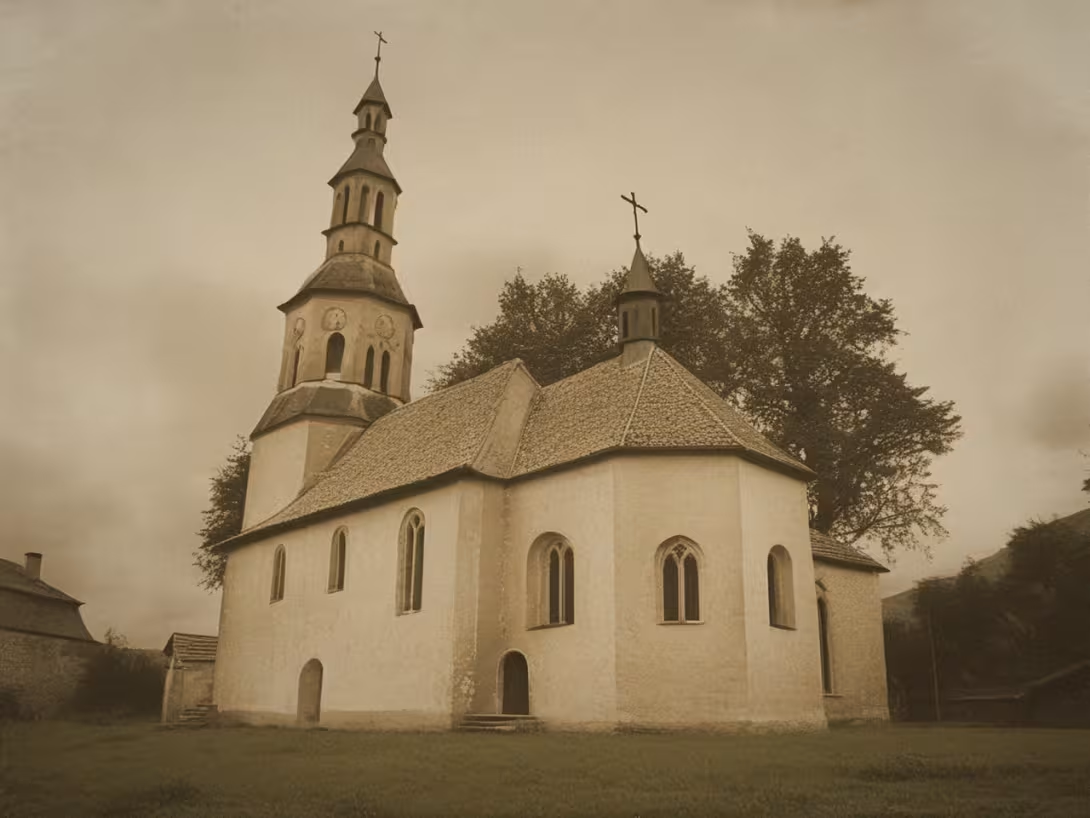
The historical appearance on the left is an AI-generated visualisation and serves as inspiration only.
Historical milestones
- 1352
- First written mention of the church.
- 1384
- Another written mention of construction.
- 1684
- Adding the prism tower.
Architectural development
The construction was built in Gothic, the oldest parts of the current building date back to the turn of the 15th and 16th centuries. In 1684 the prism tower was built, which is on the top of the octagonal tower. Later, a Baroque reconstruction took place, which preserved only the rib-arched presbytery.
Historical events
- Originally Gothic sacral construction
Points of interest
- The building is baroque rebuilt and stands on Gothic foundations. - The Gothic origin is now visible in the interior at the part of the presbytery with the rib arch. The wall of the west tower was supposedly used from a demolished chateau. - In the interior there is a folk wooden work from the early 19th century depicting Christ and the apostles on Mount Olivet. - The statue of St. John Nepomuk from 1747 is unique by standing on an inverted water jug.
Guide
This guide is narrated by a synthetic voice generated by artificial intelligence.
Show guide text
This text was created by artificial intelligence and has not been editorially reviewed. It may contain inaccuracies.
Welcome to the Crusaders. Right now, you're standing in front of St. Maximilian's Church, which in a quiet way tells the story of many centuries. If you look at it, you'll see a structure that looks peaceful and noble in the landscape of Liberec. It's a place where history meets spiritual peace and where every stone hides its own memory. In front of you is a building that looks unified, but is actually the result of long development and several reconstructions.
Let's take a look together at how this building was built. It's fascinating to realize that the roots of this place go deep into the Middle Ages. The first written references to the church introduce us until the year one thousand three hundred fifty-two and then again in the year one thousand three hundred eighty-four. So imagine how many generations of people have served this space as a refuge and a place of prayer. At that time, the construction was founded in the spirit of goth, which was a style that emphasized the vertical and the heading towards the sky. Although the building looks different today, these old foundations are still here and form a solid foundation for everything you see around you.
Now pay attention to architecture and what you can see right in front of you. The church currently combines several periods. Notice its one-ship space and the west tower, which dominates the whole look. This prism tower was built much later, namely in the year one thousand six hundred eighty-four. It's interesting to see how the building evolved from a simple medieval temple to a Baroque building. The Baroque brought more dynamism and decoration into the architecture, which is also evident here.
If you choose to enter, I suggest you focus on details that are not visible from the outside. In the interior you will encounter the main altar, which is performed in a late baroque style, but with elements reminiscent of goth, which is technically called pseudogotry. It's a bridge between old and new. But the real treasure for the lovers of history lies in the part of the presbytery, that is, the space behind the altar. This is where you can still see traces of the original Gothic core of the building. Look at the rib arch, which is clear evidence that the church once looked completely different and that its basic structure survived for centuries.
When you explore space, also observe folk art. In the interior there is a wooden work from the beginning of the nineteenth century which depicts Christ and his apostles. It is a beautiful example of the local craft, which gives space to the human dimension and reminds us that the church was not only the construction of architects but the heart of the community of the people in the Crusaders.
Now, I want to take you to a secret that links you to the very image of the building. Look again at the west tower. There is a saying that the stones and material used for its construction were not brought from the quarry but came from a demolished local chateau. It's a fascinating idea that parts of one noble mansion were reused to build God's house. This material transformation symbolizes the cycle of life and the changes that this place was going through. Although we do not know exactly who the architects of these changes were, their work in us gives us respect for the patience and craftsmanship of ancient builders.
The entire building is today protected as a cultural monument of the Czech Republic, which means that future generations will be able to admire the same details as you are right now. It is proof of how important it is to keep a memory of our ancestors and how it changed the perception of beauty and faith over time.
In front of you now lies space for self-reflection and admiration. Take a look around, see the atmosphere of this quiet corner of the Liberec region, and let yourself be carried away with thoughts until the first time the tower rang here hundreds of years ago. You can look again at the connection of baroque elements with Gothic foundations and try to imagine how the building gradually changed.
Thank you for accompanying me on this short trip to the history of St. Maximilian Church in the Crusaders. I hope this visit has enriched you and that you have felt the spirit of this unique place. Now you're being left to explore the area. I wish you a pleasant rest of the day and a wonderful experience on your next trip to history. Goodbye.
Tips for visitors
Nejvhodnější doba pro návštěvu je pozdní jaro nebo podzim, kdy okolní krajina Libereckého kraje krásně vynikne a chladnější počasí pomáhá při procházce kolem stavby. Do obce se lze dostat vlastním vozem nebo veřejnou dopravou; konkrétní spojení doporučujeme ověřit v aktuálním vyhledávači.
To visit we recommend to wear shoes with fixed soles because you move around historical buildings and cemetery. Due to the emergency condition of the construction, we recommend to maintain increased caution and stay at a safe distance from the walls.
For the best photos we recommend to come in the morning or late afternoon light, which will highlight the details of baroque facade and Gothic foundations. The ideal angle is the view that captures the church together with the Baroque statue of St. John Nepomuk at the overturned javelin.
During your visit, remember to visit the surrounding area, where you will find a local cemetery, a baroque parish from the eighteenth century with a grafted barn and sandstone sty. For families with children it is an interesting element of finding details on the old statue and observing the grafted architecture of the rectory.
Frequently asked questions
Can the monument be visited?
Religious buildings are usually open mainly during services; at other times a visit is normally arranged with the parish or the operator. We have not verified specific times.
Where is the monument?
Location: Křižany, Liberecký kraj. The map on this page shows the exact spot.
Why is the monument protected?
It is listed in the Central List of Cultural Monuments of the Czech Republic as a cultural monument (register no. 39093/5-4365).
For kids
Imagine going back to a time when the Church of St. Maximilian in the Crusaders was still young and full of life. There lived a royal family who ruled the whole country. The city of Křižany was at that time an important market and center of trade.
So, how did it look here? The church stood in the middle of the city and was the center of all activity. People used to meet here at services, merchants would exchange goods, and people would gather on the markets. It was like a game where the church played the role of the hero.
Businesses nearby
Do you run a restaurant, accommodation, shop, museum, rental, wellness or other visitor service near this monument? Show yourself directly to the people heading to it — this is how they will see you in the app and on the web:
Events nearby

Zdroj akcí: otevřená data měst a obcí ČR (Národní katalog otevřených dat) a kalendář akcí Národního památkového ústavu.
Nearby
🏰 Historic sites (124)
- Jackelova bouda 3.0 km
- Muzeum betlémů a hraček 3.1 km
- sv. Jan Nepomucký 3.2 km
- Panna Marie 3.4 km
- Jahnův kámen 3.9 km
- Muzeum betlémů 4.4 km
- Kámen loveckého štěstí 4.7 km
- Mariánský sloup 5.0 km
- Kámen loveckého štestí 5.2 km
- Mohyla letců 5.2 km
- Červený kříž 5.3 km
- Schillerův památník 5.4 km
- Sousoší tří svatých 5.5 km
- Dějiště Kříže u Potoka 5.7 km
- památník těžby uranu 6.1 km
- Děvín 6.1 km
- Todtův kříž 6.4 km
- Janovické poustevny 6.5 km
- Karolína Světlá 6.5 km
- Roimund 6.7 km
🍽️ Restaurants and dining (326)
- Obecný dům Žibřidice 3.1 km
- Údolanka 3.8 km
- U Uhliru 4.0 km +420 482 720 357
- Penzion Eva 4.1 km +420 482 721 150
- V Bezovém Údolí 4.2 km
- Kavárna u Ježka 4.4 km
- Dřevěnka 4.6 km Českolipská 50
- Pod Ještědem 4.9 km web
- Caramba 5.0 km
- Slunce 5.0 km +420 720 020 608 web
- Bouda Tetřeví sedlo 5.4 km
- Bistro Slunce 5.5 km Podvrší 301
- U Pupana 5.5 km
- Rohanka 5.8 km
- Bufet 5.8 km
- horský hotel Ještěd 5.8 km
- Restaurace Luna 6.0 km
- Restaurace Pacifik 6.0 km
- Na Zámečku 1609 6.1 km Děvínská 21 web
- U čtyřlístku 6.3 km
🏨 Accommodation (60)
- Penzion Novina 2.7 km
- Penzion Neuland - Cinibulk 3.1 km +420 482 720 332 web
- V Bezovém Údolí 4.2 km
- U větrné víly 4.2 km web
- Pension Rokytka 4.5 km +420 482 720 397 web
- U Skrblíka 4.7 km Kryštofovo Údolí 122 web
- Jadran 4.7 km
- Camping 2000 4.8 km
- Penzion Pod Ještědem 4.9 km web
- Slunce 5.0 km +420 720 020 608
- Rekreační centrum Hamr na Jezeře 5.5 km Školní
- Hotel Ještěd 5.8 km web
- Black Cattle Camp 5.9 km
- Hotel Pacifik 6.0 km
- Ještěd golf restaurace a penzion 6.6 km
- Jítrava 6.8 km +420485172105 web
- Farma pod Ještědem 7.9 km +420 724 934 216 web
- Penzion Uran 7.9 km Revoluční 246 +420 222 532 547 web
- Čertova zeď 8.4 km
- Hotel Petra 8.5 km Ještědská 680/121 web
🚲 Rentals and sport (46)
- ATV Tours 6.0 km
- Suomi 7.9 km web
- Cyklosport Kerda 9.4 km web
- Sports Direct 9.5 km web
- Cyklo Point 9.6 km
- Husky 9.7 km
- Decathlon 9.8 km Sousedská 625 web
- Kola Dědík 9.9 km
- Sport Brzák 10.2 km web
- Pakli Sport 10.2 km
- hřiště za školou 10.2 km
- A-style 10.4 km
- JB Sport 10.4 km Jeronýmova 22 +420 482 400 045 web
- Kolofix 10.5 km web
- Urban sport 10.9 km Dr. Milady Horákové
- Elektro Kola Liberec 10.9 km web
- Tenis Nisa 11.0 km
- Šutr 11.1 km Hrazená 470/18 web
- Nýč Sport 11.1 km web
- Motokáry Liberec 11.2 km Blažkova 554/1 +420 777 192 939 web
🥾 Hiking and nature (370)
- Krkavčí skály 0.8 km
- Krkavčí skály 0.8 km
- Čihadla 1.4 km
- Havraní návrší 1.8 km
- Loupežnická jeskyně 2.1 km
- Nad Solvayovým lomem 2.1 km
- Lom 2.5 km
- Bukovka 2.6 km
- Zlatá výšina 2.7 km
- Matoušova skála 2.9 km
- Táhlý vrch 3.0 km
- Malý Ještěd 3.1 km
- Malý Vápenný 3.3 km
- Zimův kopec 3.4 km
- Stejskalův kopec 3.4 km
- Strážný kopec 3.6 km
- Svárov 3.8 km
- Školský vrch 3.8 km
- Stříbrník 3.8 km
- Mlýnský vršek 3.9 km
Accommodation nearby
Trips and activities nearby
Guided tours, tickets and activities nearby from GetYourGuide
Affiliate link: if you buy from the partner, we may receive a commission. The price for you does not change.
Search tours and activities →Themed route
Here is a proposal for a thematic walk around the village Křižany:
1. Kostel svatého Maxmiliána - Main Temple. Dominant of a place that serves as the center of the trip. 2. Local cemetery - Funeral. It is located directly opposite the church and offers space for peaceful reflection. 3. Statue of St. John Nepomuk - Baroque sculpture from 1747. It is located in front of the parish on an interesting pedestal in the shape of inverted water dishes. 4. Baroque rectory with grafted barn and sandstone stables - Historical seat of the clergyman from the 18th century. The set of structures represents a typical architecture of its time and region.
Seasonal recommendations
In spring, the surroundings of the temple awaken to live colours and the young green slowly surrounds the walls of the building. The light is soft and pleasant in this period, which helps to observe the facade details. It is recommended that footwear suitable for wet terrain and visit in the morning when the air is the cleanest.
In the summer months the landscape is dominated by green and bright sun, which creates deep shadows in the premises of the monument. The atmosphere is hot and calm, typical of the peak of the season. It is advisable to choose light clothes and a sun hat, while the best time for arrival is time shortly before sunset.
Autumn brings golden shades of leaves and frequent mists to the surroundings, giving the place a mysterious and melancholy touch. The lighting is muted and saturated. A waterproof jacket and solid shoes are essential for visitors, because the journey can be slippery from fallen leaves.
Zimą the landscape is turning into a white space and the silence around the building is almost absolute. Snow highlights the geometry of the building and creates contrast with its material essence. It is necessary to wear a warm layer of clothing and quality winter shoes, with the most atmosphere being felt in clear winter cold days.
Visualizations and artistic views


The visualisations are generated by artificial intelligence and serve as inspiration.
Photos from the area
Real photos taken near the monument


Zdroj a licence jsou uvedeny u každého snímku.
Tips from visitors
No tips yet. Be the first!
Log in and add your tip.
Sources and literature
Photos: Hana Kubíková / CC BY-SA 4.0, rozlišení zvýšeno umělou inteligencí — Wikimedia Commons. The author and licence also appear when you hover over the image.
Faktickým podkladem tohoto textu byl článek na Wikipedii, jehož autory jsou přispěvatelé Wikipedie. Článek je dostupný pod licencí CC BY-SA 4.0.
Location on the map
Příběhy a pověsti
Legendy, pověsti a příběhy spjaté s touto památkou
Fotografie návštěvníků
Přidat fotografiiZatím žádné fotografie. Buďte první, kdo přidá fotografii z návštěvy!
Máte k místu vzpomínku nebo zajímavý příběh?
Log in a přidejte svou fotografii nebo hodnoťte.
Za ověřenou návštěvu v aplikaci získáte víc bodů — poznáme podle GPS, že jste na místě.
Reviews and comments