






Kostel svatého Michaela (Nová Role) Church
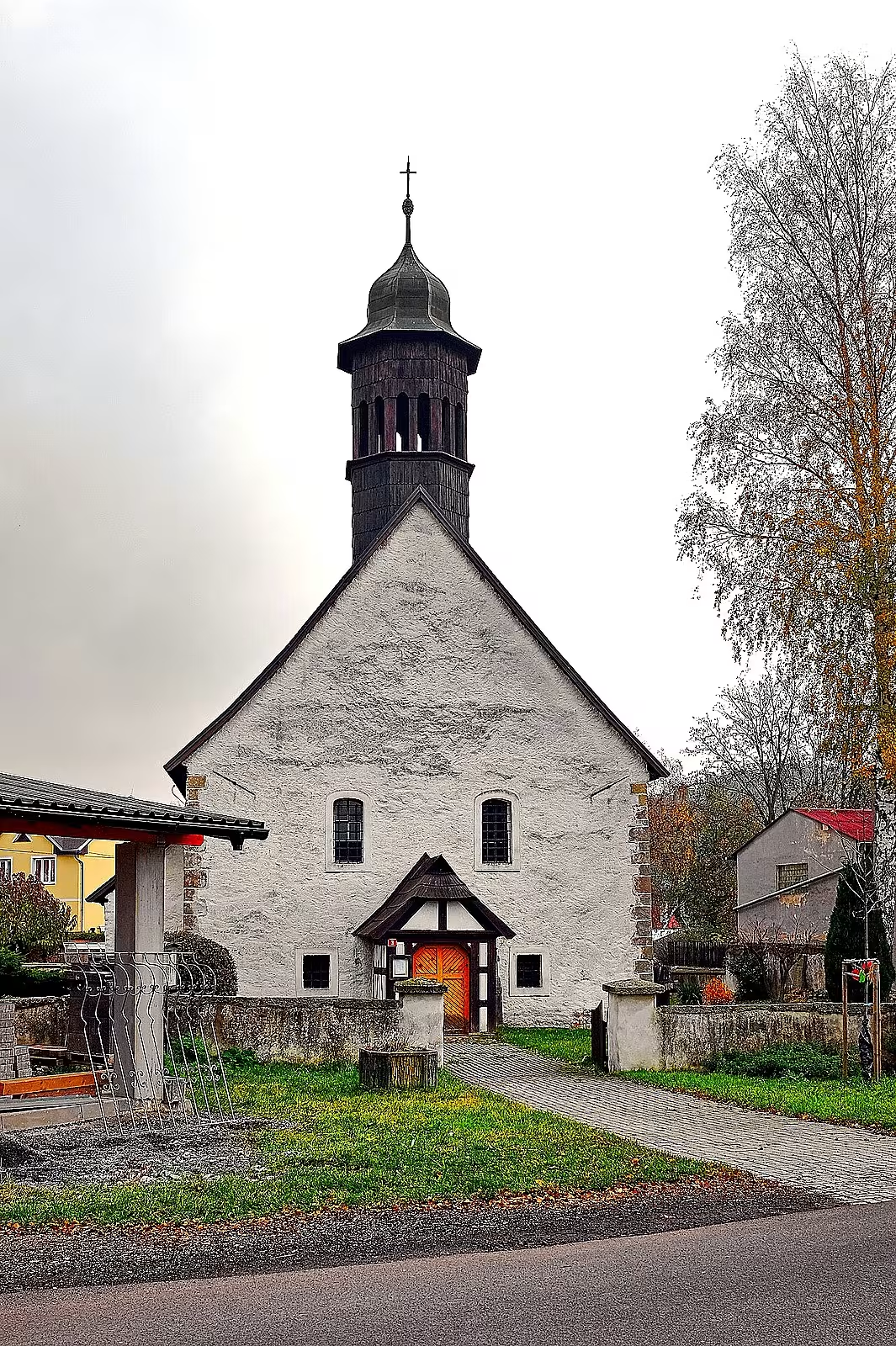
The Church of Saint Michael in Nová Role is a Romanesque-Gothic structure that reflects the region's rich historical tapestry. Situated in the municipality of Nová Role, Karlovy Vary District, it is recognized as a protected cultural monument of the Czech Republic due to its architectural and historical significance. Constructed between 1240 and 1255, it evolved from a rural chapel into a parish church by 1355, mirroring significant religious transformations over the centuries.
The origins of the Church date back to the mid-13th century when Bohemia was part of the Holy Roman Empire under King Wenceslas I. During this period, notable religious and political shifts occurred, leading up to the Hussite Wars in the early 15th century. Initially built as a chapel dedicated to Saint Michael the Archangel, its importance within the local community was evident. By 1293, it was first documented, indicating its established role.
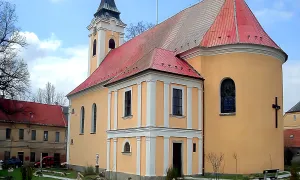
Architecturally, the Church began as a Romanesque-Gothic chapel and underwent significant transformations over time. In the 16th century, it was converted into a church, reflecting broader religious changes of that era. The structure features a single-nave design with a rectangular floor plan and a polygonal apse supported by buttresses. Its exterior is characterized by a high gabled roof covered with shingles, while the interior boasts a flat ceiling and a triumphal arch connecting the nave to the choir. In 1781, under Nostitz's direction, it received its current high gabled roof.
Throughout its history, the Church has experienced various administrative changes and challenges. Initially part of the Roman Catholic parish of St. Anne in Sedlec, it became a parish church by 1355. The 16th century saw Protestant occupation, followed by re-Catholicization towards the end of that century. By the 17th century, it was affiliated with different parishes before becoming an independent parish church again in 1707. Post-World War II, the church suffered flood damage and contamination due to a severe flood in June 1961, which brought radioactive silt from nearby facilities.
The church's interior includes notable features such as a wooden pulpit crafted by sculptor J. Preuss of Nejdek in 1777, remnants of altars, and a sandstone baptismal font dating back to 1500. The flood of 1961 left the church covered in radioactive silt, during which time unknown thieves stole organ pipes, adding an intriguing chapter to its history.
Today, the Church of Saint Michael stands as a resilient symbol of cultural heritage and historical endurance. Visitors can explore its architectural beauty and rich history, appreciating the efforts made by the local community for its restoration after the 1961 flood. The church's significance lies not only in its religious function but also as a witness to the region's dynamic past. It remains an inviting destination for those interested in exploring the layers of history embedded within its walls.
Then and now
Drag the slider to compare how the landmark may have looked when it was built with the view today.
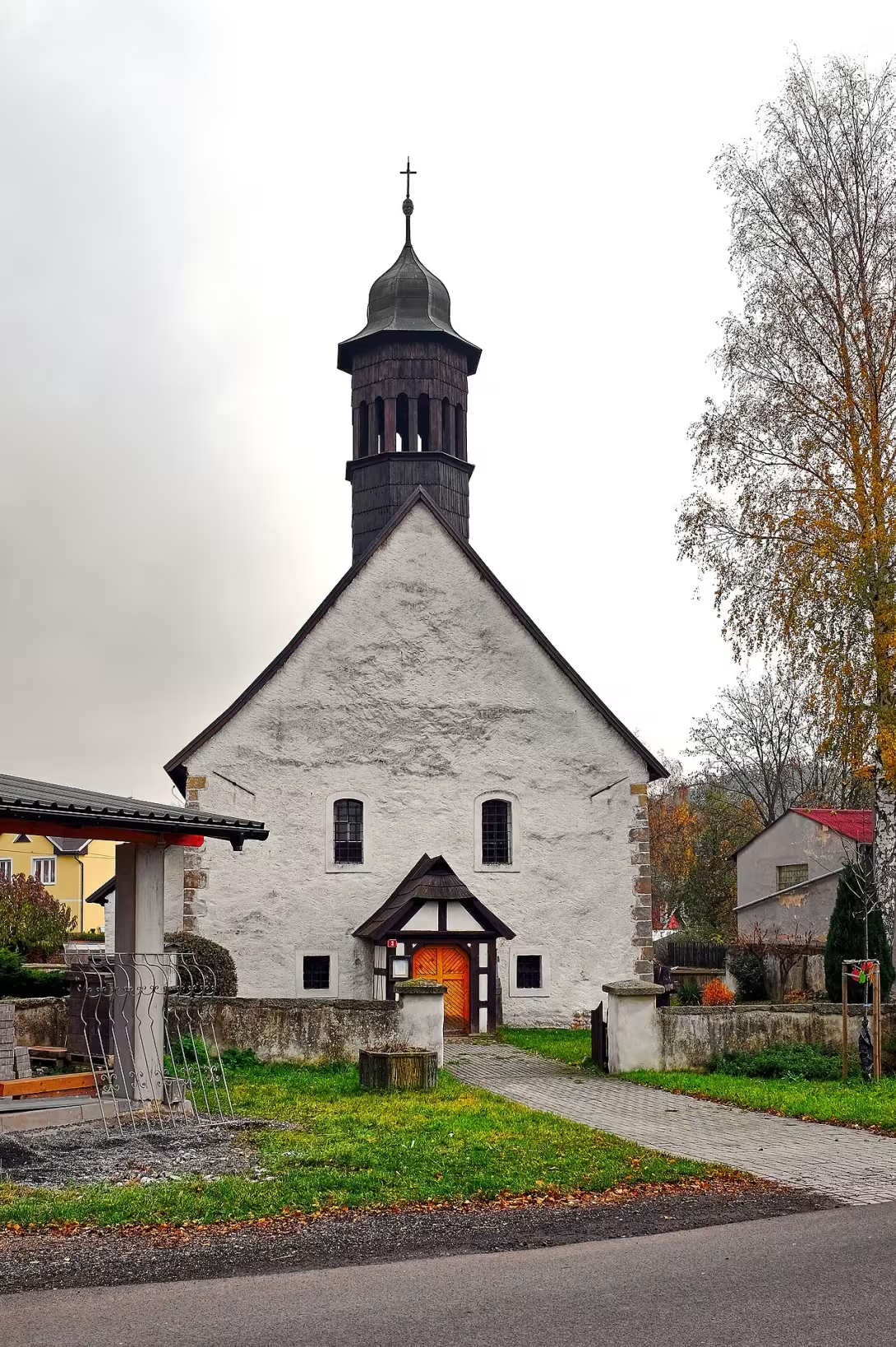
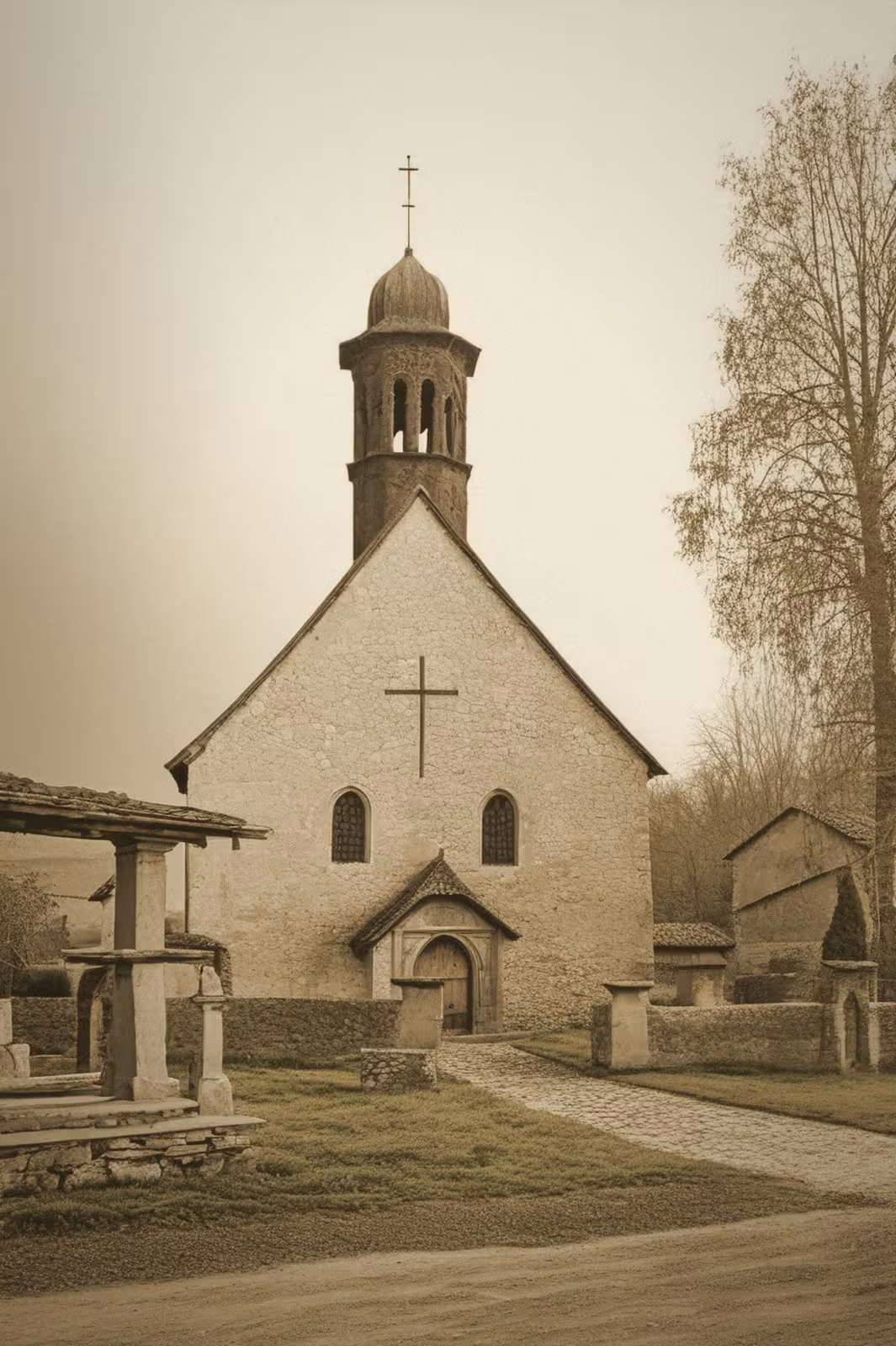
The historical appearance on the left is an AI-generated visualisation and serves as inspiration only.
Historical milestones
- 1240–1255
- Construction of the original Romanesque-Gothic chapel.
- 1293
- First documented mention of the chapel.
- 1355
- Became a parish church.
- 1560
- Occupied by Protestants.
- 1961
- Severe flood caused significant damage and contamination.
Architectural development
The Church of Saint Michael began as a Romanesque-Gothic chapel and was transformed into a church in the 16th century. It underwent significant reconstruction in 1781 under Nostitz, who gave it its current high gabled roof. The interior features include a wooden pulpit from 1777 and remnants of altars, while the exterior is marked by simple façades with narrow windows.
Historical events
The chapel was originally built between 1240–1255 and first mentioned in documents in 1293. It became a parish church in 1355, underwent Protestant occupation in 1560, and was re-Catholicized by the end of the 16th century.
In June 1961, a severe flood caused significant damage to the church, including contamination with radioactive silt from nearby facilities.
Points of interest
- The Church of Saint Michael was initially built as a chapel dedicated to Saint Michael the Archangel during the mid-13th century when Bohemia was part of the Holy Roman Empire. This period saw significant religious and political shifts leading up to the Hussite Wars in the early 15th century.
- In an intriguing chapter of its history, unknown thieves stole organ pipes from the church following a severe flood in June 1961 that covered it with radioactive silt, adding mystery to its past events.
- The wooden pulpit inside the Church was crafted by sculptor J. Preuss of Nejdek in 1777, showcasing local craftsmanship and contributing to the interior's historical value.
- Originally part of the Roman Catholic parish of St. Anne in Sedlec, the church transitioned into a parish church by 1355. It experienced various affiliations with different parishes over centuries before becoming independent again in 1707.
- The Church underwent significant architectural transformation under Nostitz’s direction in 1781 when it received its current high gabled roof, reflecting broader changes and adaptations over time.
Guide
This guide is narrated by a synthetic voice generated by artificial intelligence.
Show guide text
This text was created by artificial intelligence and has not been editorially reviewed. It may contain inaccuracies.
Welcome to the Church of Saint Michael in Nová Role, a remarkable testament to history and architecture nestled within the scenic landscape of Karlovarský kraj. As you stand before this serene edifice, take a moment to absorb its presence—a harmonious blend of Romanesque and Gothic elements that whisper tales from centuries past.
This sacred structure began its journey in the mid-13th century, specifically between 1240 and 1255, as a modest chapel dedicated to Saint Michael the Archangel. It was an era when Bohemia thrived under the Holy Roman Empire, brimming with religious fervor and political shifts that would eventually lead up to the Hussite Wars in the early 15th century.
As you take in the Church of Saint Michael, notice its single-nave design—a testament to the architectural ingenuity of its time. The rectangular floor plan culminates in a polygonal apse, gracefully supported by buttresses that speak volumes about the structural challenges overcome by medieval builders. Though the architects remain unnamed, their vision continues to captivate visitors with its enduring grace.
In 1293, this chapel was first documented, marking its significance within the community. By 1355, it had evolved into a parish church, becoming an integral part of local spiritual life. The year 1560 brought change once again as it became occupied by Protestants—a reflection of the religious transformations sweeping through Europe.
One cannot help but ponder the resilience of this structure, especially considering the severe flood in 1961 that caused significant damage and contamination. Despite such trials, the church stands resilient, a protected cultural monument echoing its historical and architectural significance.
As you explore further, let your imagination wander to those who have walked these grounds—though their names may be lost to history, their stories are etched into every stone. The Church of Saint Michael is not just a building; it's a living narrative that invites reflection on the passage of time and human endeavor.
Before you move on, take a moment to appreciate the subtle beauty around you—the way light dances across the walls or how the structure harmonizes with its surroundings. Each detail offers a glimpse into a past rich with history and devotion.
Thank you for visiting this cherished landmark. We invite you to continue your journey through Nová Role, where every corner holds stories waiting to be discovered. Farewell, until we meet again in another chapter of our shared heritage.
Tips for visitors
The best time to visit the Church of Saint Michael in Nová Role is during late spring or early autumn when the weather is pleasant, allowing for a comfortable exploration of both the church's interior and its serene surroundings. These seasons offer ideal lighting conditions for photography, capturing the intricate Romanesque-Gothic architecture without the harsh shadows or overexposure that can occur during midday in summer. Additionally, visiting outside peak tourist season means fewer crowds, providing a more intimate experience with this cultural monument.
Parking and transport options are convenient for visitors to Nová Role. The area is accessible by both car and public transportation, making it easy for those traveling from nearby towns or cities. For those driving, there is parking available in the vicinity of the church, though it's advisable to arrive early during weekends or holidays when spaces might fill up quickly. Public transport users can find routes that bring them close to Nová Role, with a short walk to the church. It’s recommended to check the latest transportation schedules online before your visit.
When planning your visit, consider bringing comfortable walking shoes as you may wish to explore the surrounding area of Nová Role and its natural beauty. A camera or smartphone is advisable for capturing the unique architectural details of the Church of Saint Michael, especially in the soft light of early morning or late afternoon. Additionally, carrying a small notebook or sketchpad can be rewarding if you're inspired by the church's history and design.
Photography enthusiasts will find several spots around the Church of Saint Michael where the interplay of light and shadow highlights its architectural features beautifully. The best times for photography are during the golden hours of sunrise and sunset, when the natural light accentuates the textures and details of the Romanesque-Gothic elements. Be mindful of respecting any restrictions on flash photography inside the church to preserve its interior.
For families with children visiting Nová Role, the area around the Church of Saint Michael offers a tranquil setting for a leisurely day out. While there are no specific attractions mentioned within 30 minutes of Nová Role in the provided data, the natural landscape surrounding the village can be enjoyed by all ages. Exploring the local trails or simply relaxing in the open spaces can provide a peaceful experience away from the hustle and bustle of city life.
Businesses nearby
Do you run a restaurant, accommodation, shop, museum, rental, wellness or other visitor service near this monument? Show yourself directly to the people heading to it — this is how they will see you in the app and on the web:
Accommodation nearby
Trips and activities nearby
Guided tours, tickets and activities nearby from GetYourGuide
Affiliate link: if you buy from the partner, we may receive a commission. The price for you does not change.
Search tours and activities →Themed route
Tematická výletní trasa: Kostel svatého Michaela (Nová Role) a okolí
1. Kostel svatého Michaela, Nová Role - *Typ:* Historický kostel - *Proč stojí za návštěvu:* Tento barokní kostel je centrem duchovního života v obci a nabízí návštěvníkům krásnou architekturu, bohaté interiéry s historickými oltáři a možnost prozkoumat jeho vysokou věž. Je ideálním místem pro ty, kteří mají zájem o duchovní historii a architekturu.
2. Nádvoří kostela svatého Michaela - *Typ:* Náboženský areál - *Proč stojí za návštěvu:* Nádvoří před kostelem je klidným místem pro odpočinek a reflexi. Zde si můžete užít poklidné chvilky, zatímco se podíváte na historické stavební prvky okolního prostoru.
3. Fara Nová Role - *Typ:* Historický dům - *Proč stojí za návštěvu:* Fara je dalším klíčovým historickým objektem v obci, který představuje tradici a kulturu Nové Role. Její architektura a umístění vedle kostela svatého Michaela dodávají celkovému náboženskému komplexu autentičnost.
4. Kaplička u cesty - *Typ:* Kaplička - *Proč stojí za návštěvu:* Tato malá kaplička, kterou najdete na cestě kolem obce, je mírným připomenutím hluboké víry a tradic místních obyvatel. Je to ideální místo pro krátkou meditaci nebo modlitbu během vašeho výletu.
5. Křižovatka u kostela - *Typ:* Místní značení - *Proč stojí za návštěvu:* Tato křižovatka je nejen průsečím bodem místních cest, ale také místo s historickým významem. Zde si můžete užít pohled na obec a její okolí z úhlu kostela svatého Michaela.
Tato trasa nabízí návštěvníkům možnost prozkoumat historický a duchovní život Nové Role, s důrazem na hlavní památku - Kostel svatého Michaela.
Seasonal recommendations
Jaro: In the springtime, St. Michael's Church in Nové Rojíce is enlivened by blooming flowers, providing a green and lively atmosphere around this historic landmark. Sunny days alternate with mild rains, which can create a beautifully glossy effect on the church’s stone facades. For your visit, it's advisable to wear light clothing and perhaps bring an umbrella for any unexpected showers. Visit in the early afternoon to avoid the much more frequent crowds later in the day.
Summer: The summer season brings full sunrises and long days, allowing you to explore St. Michael's Church with plenty of daylight hours. The church is illuminated in the best possible light, making it an ideal spot for photography and relaxation away from the heat of the summer days. Despite its appeal, high visitor numbers are expected, especially around midday, so it’s advisable to visit in the early afternoon or later in the evening. Don’t forget sun protection and plenty of drinking water.
Autumn: Autumn brings stunning foliage colors that highlight the historic lines of St. Michael's Church in Nové Rojíce. Sunny days alternate with cooler weather and the first snowstorms, creating a unique atmosphere around the landmark. For your visit, it’s advisable to wear outerwear that will protect against the cold and possible showers. The best time for a tour is early afternoon when crowds are usually smaller, allowing you to immerse yourself in the history and beauty of the place more peacefully.
Winter: A winter visit to St. Michael's Church offers unique experiences with the possibility of seeing the landmark covered in snow, giving it a romantic and mysterious appearance. Sunny days are shorter and colder, so it’s important to dress warmly, including wearing a coat or blanket, and perhaps boots with thick soles. Opening hours may be shorter due to winter conditions, so it's good to check visiting times beforehand. Visit in the early afternoon to enjoy sunny moments and avoid the cold evenings.
Visualizations and artistic views


The visualisations are generated by artificial intelligence and serve as inspiration.
Photos from the area
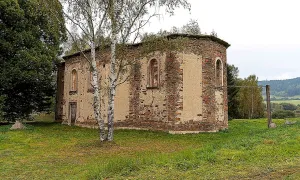
Real photos taken near the monument


Zdroj a licence jsou uvedeny u každého snímku.
Tips from visitors
No tips yet. Be the first!
Log in and add your tip.
Sources and literature
Fotografie: Lubor Ferenc / CC BY-SA 4.0 — Wikimedia Commons. The author and licence also appear when you hover over the image.
Faktickým podkladem tohoto textu byl článek na Wikipedii, jehož autory jsou přispěvatelé Wikipedie. Článek je dostupný pod licencí CC BY-SA 4.0.
Location on the map
Příběhy a pověsti
Legendy, pověsti a příběhy spjaté s touto památkou
Fotografie návštěvníků
Zatím žádné fotografie. Buďte první, kdo přidá fotografii z návštěvy!
Přihlaste se a přidejte svou fotografii nebo hodnoťte.
Za ověřenou návštěvu v aplikaci získáte víc bodů — poznáme podle GPS, že jste na místě.
Reviews and comments