






Kostel svatého Mikuláše (Jince) Church
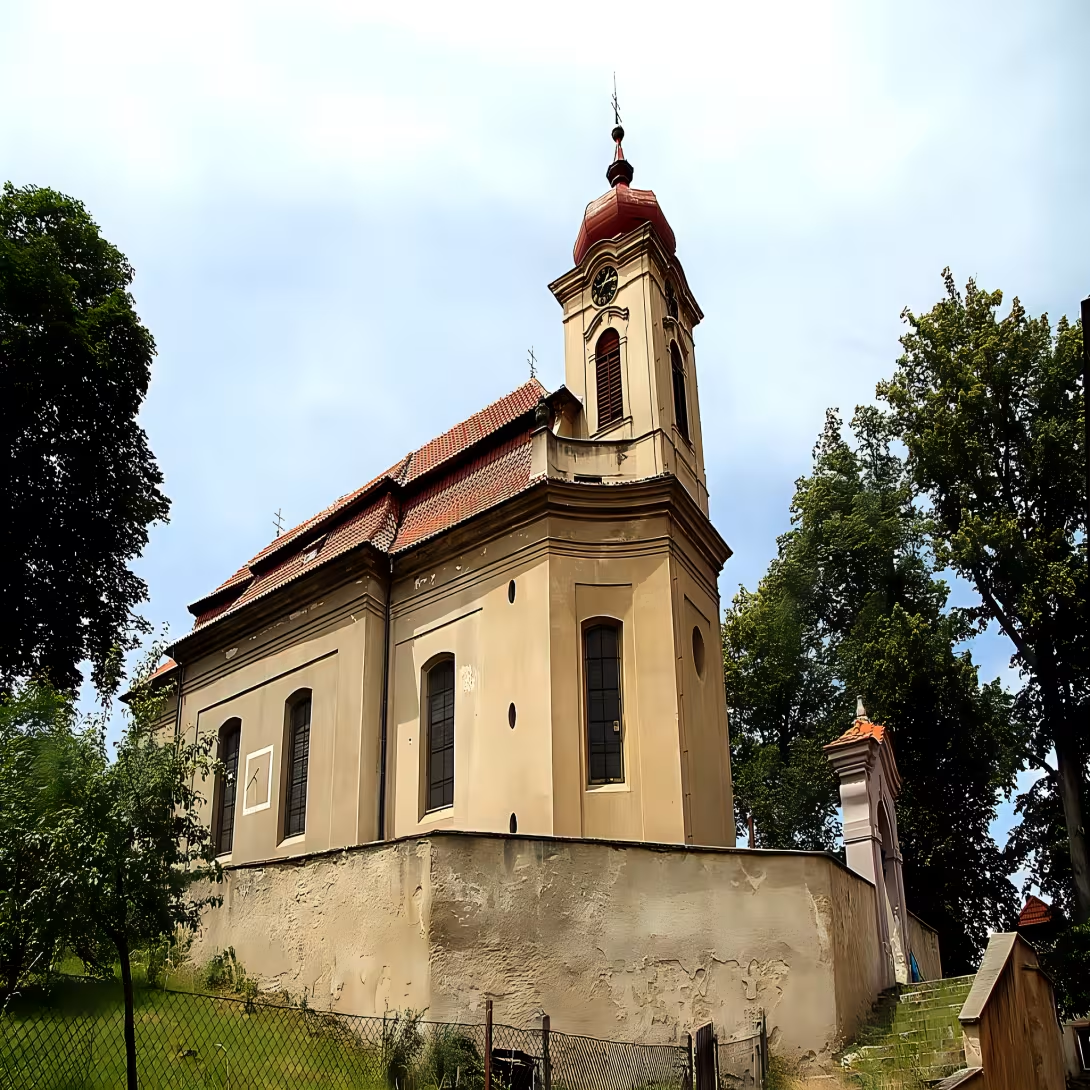
The Church of Saint Nicholas in Jince is a notable Baroque parish church situated centrally in the village on a low hill west of the main road from Zdice to Příbram. Built between 1728 and 1731, it replaced an earlier medieval wooden structure. Its importance stems not only from its architectural style but also from its historical context during the region's Baroque development.
The first documented mention of a church in Jince dates back to 1352, coinciding with the earliest record of the village itself. Over time, ownership shifted among various families until 1647 when it came under the control of a branch of the Vratislav family from Mitrovic. This transition marked a significant turning point for Jince's development. In 1727, František Karel Vratislav z Mitrovic inherited the estate and initiated the construction of the new Baroque church, completed and consecrated in 1731.
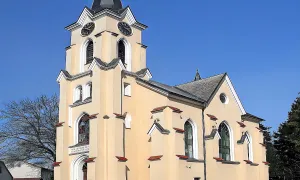
Architecturally, the Church of Saint Nicholas features a simplified design typical of rural churches from the early 18th century. Designed by František Ignác Prée, it includes a single-nave structure with a prominent tower over the choir. The exterior is characterized by minimalistic elements such as flat pilasters and large rectangular windows without shutters, balanced by an elaborate cornice and sophisticated detailing on the tower. This design reflects both the aesthetic preferences of the period and practical considerations for rural ecclesiastical architecture.
Throughout its history, the church has been associated with notable figures who influenced its development. František Karel Vratislav z Mitrovic played a crucial role in its construction, making Jince his permanent residence and fostering local growth. Later, in 1885, Vilém z Hanau restored all altar paintings in Vienna, contributing to the church's artistic heritage.
The site also includes intriguing elements such as a cast iron statue of Saint John Nepomuk, created in 1901 at the Komárov Ironworks, which stands west of the mortuary. This adds another layer of historical and cultural significance to the area.
Today, the Church of Saint Nicholas remains an important monument within Jince, protected since 1965 along with its surrounding structures like the former mortuary and cemetery walls. Visitors can appreciate not only its architectural beauty but also its rich history that reflects broader trends in Bohemia during the Baroque period. The church is a testament to the region's cultural heritage and offers an insightful glimpse into the past, making it a worthwhile destination for those interested in history and architecture.
Then and now
Drag the slider to compare how the landmark may have looked when it was built with the view today.
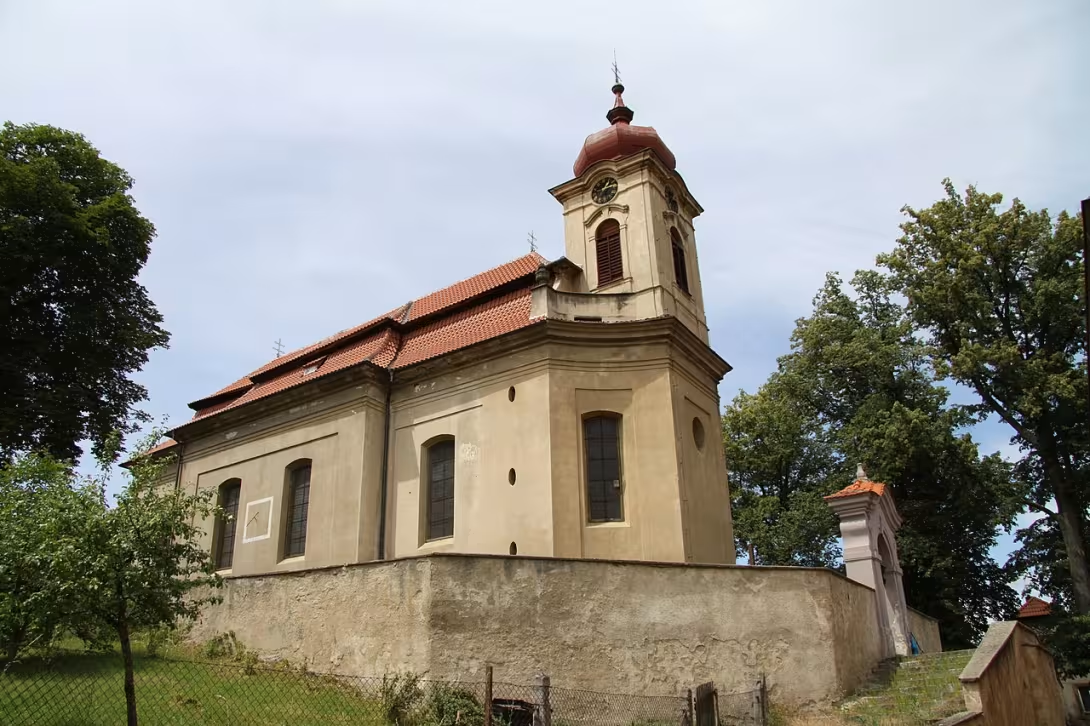
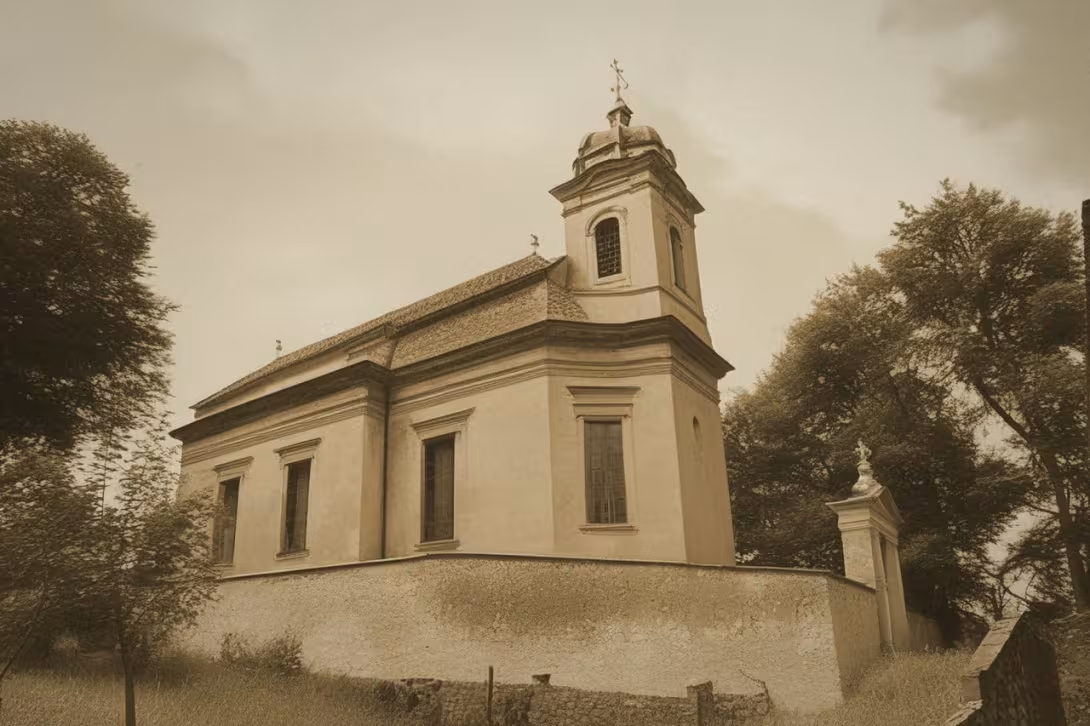
The historical appearance on the left is an AI-generated visualisation and serves as inspiration only.
Historical milestones
- 1352
- First documented mention of a church in Jince.
- 1728
- Construction began on the new baroque church by František Karel Vratislav z Mitrovic.
- 1731
- The baroque church was consecrated.
Architectural development
The church was built on the site of a medieval wooden structure between 1728 and 1731. It features a simplified design typical of rural churches from František Ignác Prée's era, with a single-nave layout, prominent tower over the choir, and minimalistic exterior elements.
Historical events
First documented mention of a church in Jince dates to 1352, coinciding with the first record of the village itself.
In 1728, František Karel Vratislav z Mitrovic began constructing the current baroque church, completed and consecrated in 1731.
Owners
The estate passed to a branch of the Vratislav family from Mitrovic in 1647, significantly impacting local development. In 1727, František Karel Vratislav z Mitrovic inherited the estate and initiated the construction of the new baroque church.
Points of interest
- The Church of Saint Nicholas was initially built to replace a medieval wooden structure, highlighting the transition from timber to more durable stone construction during the Baroque period.
- František Ignác Prée, the architect behind the church's design, incorporated minimalistic elements typical for rural churches, reflecting both aesthetic preferences and practical considerations of the time.
- In 1885, Vilém z Hanau restored all altar paintings in Vienna, which not only enhanced the church’s artistic heritage but also connected it to broader European art trends.
- The cast iron statue of Saint John Nepomuk, created at the Komárov Ironworks in 1901, adds a unique industrial touch to the site's historical and cultural significance.
- The Church of Saint Nicholas has been protected since 1965, emphasizing its importance as a monument that reflects broader Bohemian trends during the Baroque period.
Guide
This guide is narrated by a synthetic voice generated by artificial intelligence.
Show guide text
This text was created by artificial intelligence and has not been editorially reviewed. It may contain inaccuracies.
The Church of Saint Nicholas is the parish church in Jince on the Příbramsko district. It stands in the central part of the small town on a low hill, west of the main road from Zdice to Příbram. Together with the circular structure of the former ossuary and the enclosure wall of the former cemetery, it forms a church complex that has been protected as a cultural monument since 1965.
The church in Jince is first mentioned in the year 1352. This same record is also the oldest preserved mention of the village. The original medieval church was made of wood. From the 15th century onwards, the owners of Jince changed frequently and usually did not reside at the local castle. A turning point came in 1647 when the estate was acquired by one of the branches of the Vratislav family from Mitrovice. In 1727 it was inherited by Count František Karel Vratislav from Mitrovice, and a year later he decided to make Jince his permanent residence. It was then that he had a new Baroque church built, consecrated in 1731. Its layout is a simplified version of country churches by František Ignác Pree from the 1730s.
In 1806 Count Rudolf Jan Bruntálský from Vrbna, lord of Hořovice and an iron expert, purchased the estate. During his lifetime, the Komárov ironworks became a leading European producer of art cast iron, and the Barbora furnace was established in Jince. However, Jince ceased to be an important residence and the development of the parish slowed down. Nevertheless, the count had a new two-story parsonage built between 1807 and 1809. The church underwent extensive repairs in 1818 and 1841. The situation of the parish improved after the estate was sold to the Hessian Elector Frederick William.
The church is single-naved, with a distinctive presbytery and a sacristy, above which is an oratory. Above the choir rises a slender prismatic tower decorated with pilasters, cornices and vases. Otherwise the exterior is austere, with flat frames and large windows without decorative moldings. The mansard roof is covered with flat tiles. From the façade a wooden covered passage leads to a Baroque ossuary with a circular floor plan. Nearby stands an iron statue of Saint John of Nepomuk from 1901, cast at the Komárov ironworks.
The main altar and pulpit date from the Baroque period after 1720. In the wall of the sacristy is set a small Gothic sanctuary. In 1885 William from Hanau had all the altar paintings restored in Vienna. On the north side of the nave stands a Baroque altar of Saint Joseph, transferred from the demolished castle chapel, with a painting by Josef Jelínek from 1939.
Tips for visitors
The best time to visit the Church of Saint Nicholas in Jince is during late spring or early autumn, when the weather is pleasant for walking and exploring. These seasons offer mild temperatures and beautiful natural surroundings without the crowds typically found during peak tourist months like summer. Additionally, visiting on a weekday can provide a more serene experience compared to weekends.
Public transport is also an option; you can use local buses that connect Zdice and Příbram, with stops close to the church.
When visiting the Church of Saint Nicholas in Jince, it's advisable to bring comfortable walking shoes as there may be some uneven paths leading up to the site on the low hill. Additionally, consider bringing a hat and sunscreen for protection against the sun during sunny days. A camera is recommended to capture the stunning baroque architecture and scenic views from the church.
For photography enthusiasts, the best spots around the Church of Saint Nicholas are at sunrise or sunset when the light is softer and more flattering. The western hillside offers a beautiful backdrop for capturing the church's silhouette against the sky. Inside the church, natural lighting through stained glass windows can create stunning effects during these times.
For families with children, a visit to the nearby nature trails offers an opportunity for outdoor exploration and learning about local flora and fauna.
Frequently asked questions
Can the monument be visited?
Religious buildings are usually open mainly during services; at other times a visit is normally arranged with the parish or the operator. We have not verified specific times.
Where is the monument?
Location: Jince, Středočeský kraj. The map on this page shows the exact spot.
Why is the monument protected?
It is listed in the Central List of Cultural Monuments of the Czech Republic as a cultural monument (register no. 20900/2-2440).
Businesses nearby
Do you run a restaurant, accommodation, shop, museum, rental, wellness or other visitor service near this monument? Show yourself directly to the people heading to it — this is how they will see you in the app and on the web:
Events nearby
Zdroj akcí: otevřená data měst a obcí ČR (Národní katalog otevřených dat) a kalendář akcí Národního památkového ústavu.
Accommodation nearby
Themed route
Tematická výletní trasa "Kostel svatého Mikuláše (Jince)"
1. Kostel svatého Mikuláše (Jince)
Typ: Kostel
Proč stojí za návštěvu: Tento barokní kostel, postavený v první polovině 18. století, je nejvýraznější architektonickou památkou obce Jince. Jeho bohaté historie a krásné interiér činí z něj ideální místo pro pochopení místního duchovního života a uměleckých tradic.
2. Náves v Jincích
Typ: Městské centrum
Proč stojí za návštěvu: Náves, nacházející se přímo vedle kostela, je živým srdcem obce. Zde můžete prozkoumat tradiční české domy a pochutnat si na místní gastronomii v jednom z malebných kaváren nebo restaurací.
3. Obecní úřad Jince
Typ: Historický objekt
Proč stojí za návštěvu: Tento historický objekt, který kdysi sloužil jako škola a později obecní úřad, je příkladem místní architektury. Jeho fasáda a interiér odrážejí změny v životě obce během let.
4. Kaple svaté Anny (Jince)
Typ: Kaple
Proč stojí za návštěvu: Tato malebná kaple je dalším důležitým náboženským místem v Jincích. Její historie a architektura představují bohaté kulturní pozadí obce, což ji činí ideálním doplňkem k hlavnímu cíli trasy.
Tato trasa nabízí návštěvníkům kompaktní a poutavý způsob, jak se dozvědět více o historii a kultuře obce Jince.
Seasonal recommendations
Spring: Visiting the Church of St. Nicholas in Jince during spring offers a unique experience as nature awakens around this historical site. The blooming flowers and fresh greenery create a vibrant backdrop, enhancing the church's architectural beauty with soft natural light filtering through its stained glass windows. This season is ideal for photography enthusiasts looking to capture the interplay of colors and textures. Visitors should dress in layers to accommodate fluctuating temperatures throughout the day. Early morning or late afternoon visits are recommended to avoid larger crowds that gather during peak daylight hours, allowing for a more serene exploration.
Summer: The summer months bring long days and warm weather, making it an excellent time to explore the Church of St. Nicholas when the surrounding landscapes are lush and vibrant. The extended daylight allows visitors ample time to appreciate both the interior details of the church and its picturesque exterior. However, this is also the peak tourist season, so arriving early in the morning can help avoid crowds. Comfortable walking shoes and light clothing are advisable due to the warmer temperatures, along with carrying water to stay hydrated during your visit.
Autumn: Autumn in Jince offers a stunning display of fall foliage that beautifully contrasts with the Church of St. Nicholas's historic architecture. The golden hues and rich colors provide an atmospheric setting for visitors seeking a more tranquil experience as the tourist numbers dwindle compared to summer. This is also an ideal time for photography, capturing the church amidst the changing leaves. Visitors should dress warmly in layers due to cooler temperatures and unpredictable weather conditions. Late morning or early afternoon visits are recommended when natural light enhances the autumnal scenery.
Winter: The winter season transforms the Church of St. Nicholas into a serene and almost mystical site as snow blankets the surrounding landscape, creating a picturesque scene that is both tranquil and enchanting. The shorter days mean fewer visitors, allowing for a more intimate experience with this historical monument. Natural lighting can be limited, so bringing a flashlight or using your phone's light feature might enhance exploration of darker areas within the church. Warm clothing, including hats and gloves, is essential to stay comfortable during your visit, along with sturdy footwear suitable for potentially icy conditions.
Visualizations and artistic views


The visualisations are generated by artificial intelligence and serve as inspiration.
Photos from the area
Real photos taken near the monument


Zdroj a licence jsou uvedeny u každého snímku.
Tips from visitors
No tips yet. Be the first!
Log in and add your tip.
Sources and literature
Photos: Chmee2 / CC BY 3.0, rozlišení zvýšeno umělou inteligencí — Wikimedia Commons. The author and licence also appear when you hover over the image.
Faktickým podkladem tohoto textu byl článek na Wikipedii, jehož autory jsou přispěvatelé Wikipedie. Článek je dostupný pod licencí CC BY-SA 4.0.
Location on the map
Příběhy a pověsti
Legendy, pověsti a příběhy spjaté s touto památkou
Fotografie návštěvníků
Zatím žádné fotografie. Buďte první, kdo přidá fotografii z návštěvy!
Log in a přidejte svou fotografii nebo hodnoťte.
Za ověřenou návštěvu v aplikaci získáte víc bodů — poznáme podle GPS, že jste na místě.
Reviews and comments