



Plešivec Hillfort
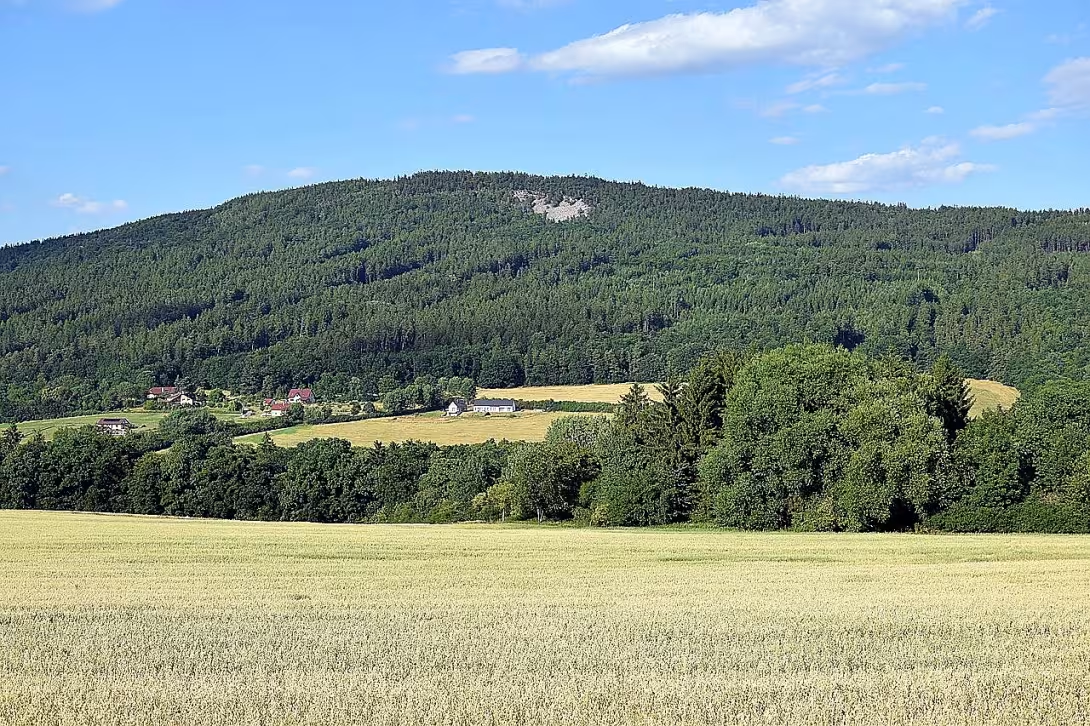
Plešivec is an ancient castle on the same-name hill near Rejkovic in the Pribram district. In the younger and later days bronze served as an important centre of metal processing. Thanks to numerous findings of bronze depots, the site is considered an important sacred district. The area is today protected as a cultural monument of the Czech Republic.
People have been visiting the place since Neolithic, as evidenced by the findings of stone instruments. In the late Stone Age, there may have been a high estate, which is highlighted by the axes found. In the younger Bronze era there were foundries where copper was probably processed from the Alps and tin from the Erzgebirge Mountains. The specialization of this site is confirmed by the finding of foundry furnaces and 17 kg bronze alloy with the remains of molten tools. Ceramics of the Knoviz culture suggests that a small group of experts lived here, while other residents of the area were probably banned from entry. In the late days, the castle turned into a commonly populated area, which is evidenced by a large number of stellar ceramics. At a later time, the site was also used by Halštat and early Latin. From the Middle Ages came the findings of three earrings from the tenth to eleventh century and the treasure of silver denarii from the period of the reign of Spytirráva II and Vratislav II.
The fort is situated on a deforested peak that exceeds the valley of Litavka by about 300 metres. The whole area is divided into an outer area of 39,4 hectares and an inner area of 16,5 hectares. The outer surface was partially destroyed by quarry mining. Both parts of the definition of stone walls without ditches, which in preserved form reach a width of up to ten metres and a height of two metres. The outside wall is 2400 metres and uses natural rock formations in several places. In the southern part of the Krkavčí Rock is located the street gate of the Old Gate. The wall was three metres wide in the northeast. It was made up of an outer palisade with a stony diaper and inside wooden grids. This construction of an estimated height of 2,5 metres was destroyed by fire and was then not restored. The inner wall of 1530 metres was also supported by rock formations and in the south part of the acropolis allowed the passage of the funnel gate.
Plešivec is associated with numerous bronze depots, of which at least 15 have been found since the nineteenth century. In 1825 or 1826, so-called Jinec bronze were found in the construction of the road from Jinc to Hostomic. It consists of 32 ornaments and weapons that Count Eugen of Vrbno donated to the National Museum. In 1872, a bronze pot with jewels, tools and weapons was found in the Old Gate site. Other findings took place in 1925 in the southern part of the outer castle and in 1999, when items from the younger Bronze and Latin periods were found. The mass findings of bronze and ground stone axes made of neolithic and eneolite without evidence of ordinary settlement lead to the assumption that Plešivec was a significant sacred place.
To the top of the castle there is a green marked tourist route from Rejkovice and red marked from Lochovice, which continues to the Dominican Belts and to the Mísek under Brdy. Other tourist routes lead along the east foot and the slope of the hill.
Plešivec offers unique insight into the technological capabilities of prehistoric people and their ritualistic customs. Visiting this archaeological site allows the terrain to observe the remains of extensive fortifications and perceive the strategic location in the landscape.
Historical milestones
- 1825
- Finding Jinecan bronze in construction of road from Jins to Hostomic.
- 1872
- Finding a bronze cauldron with jewels, tools and weapons at the Old Gate.
- 1925
- Found in the southern part of the outer fort.
- 1999
- Finding the youngest items from the younger Bronze Age and the Latin Age.
Architectural development
The fort was feathered in the late days by two belts of walls. The construction included an outer palisade, a stoneware and wooden grates. The inner and outer parts are defined by stone walls of a width of up to 10 metres.
Historical events
In 1825 or 1826 was found a depot of Jinec bronze during the construction of the road. In 1872, a bronze pot with jewels and weapons was found in the Old Gate site. In 1925 another bronze find was found in the southern part of the castle.
Points of interest
- In the younger days, the bronze castle served as a centre of metal processing. There were foundries where copper from the Alps and tin from the Erzgebirge were probably processed. - Ceramics suggests a small group of experts lived here, while other residents of the area were probably banned. - A 17-kilogram bronze alloy was found here with the remains of molten instruments. - The site is considered an important sacred district thanks to numerous findings of bronze depots. Since the nineteenth century, at least 15 such depots have been found. - From the Middle Ages comes the findings of three earrings from the tenth to 11th century and the treasure of silver denarii.
Guide
Show guide text
This text was created by artificial intelligence and has not been editorially reviewed. It may contain inaccuracies.
Welcome to the Tin Man. You're standing right here in a place that's far more than just an ordinary peak in the landscape. If you look around now, you'll see how this ridge near Rejkovic dominates the surrounding terrain. Feel the atmosphere of calm and the untouchable force that radiates from this place. You're in the heart of history that goes deep into prehistoric times. Under your feet and around you is a space that was one of the most important centers of its kind thousands of years ago.
Let us return together in time, until the world formed differently than we know it today. Plešivec was not just an ordinary residence, but an important castle that impressed the outside world with its size and importance. At a time of younger and late Bronze times, there was not only a normal life, but there were processes that had an impact on the entire regions at that time. This place was the key center for bronze processing. Imagine the excitement, the noise and the heat that probably ruled here. It was not just a simple craft, but a highly organized activity that required not only knowledge, but also huge resources.
Now pay attention to what you see around you. While time is changing relentlessly, the basic structure of this place remains apparent. The entire castle area is clearly defined by stone walls. These fences are not just a pile of stones, but proof of the engineering skills and efforts at the time to protect and define sacred space. When you're going through, focus on these stone lines that still determine the boundaries of this important site. It is these times that create a sense of closure and protection that was absolutely essential to the people at the time.
The history of this place is also a history of constant discoveries that allow us to understand today what happened here. The first great revelation came in 1825, when people came across the Jinec to Hostomic roads. This was the moment when Plešivec began to reappear in people's awareness. Another crucial find happened at the gate known as the Old Gate in 1872. At that time, a bronze pot was found, accompanied by jewels, tools and weapons. Imagine the rarity of these objects. It wasn't just ordinary equipment, it was precious things that witnessed a high level of society back then. In 1925, archaeologists then found other valuables in the southern part of the outer castle and only in 1999 were the youngest objects found which helped us to better understand the transition to the Latin era.
When you look at this place, you can ask who lived here and what their life was like. Even though the names of the particular builders of these waves remain lost in history, their legacy is indestructible. The history of these landscapes is also linked to important figures such as Spytihněv II. or Vratislav II., although their era was much later than the very origin of the castle. However, their presence in the history of this region reminds us of the continuity of human settlement and the importance of this territory for many centuries.
But now I want to invite you to think about something much deeper and perhaps even more mysterious. Plešivec was not just a metal factory. Thanks to numerous findings of bronze depots, we believe that there was also a very important sacred place. It could have been a place of ritual, sacrifice, or connection to the gods. And right here is one of the greatest mysteries of this castle.
Did you know that at the time of their greatest fame, there were real foundries? Imagine the incredible distances the goods must have traveled to get here. Copper wandered from the far Alps and tin had to travel from the mountains of Krusny. Plešivec was therefore a hub in a huge international trade network. But what's even more interesting is the social structure of this place. Analysis of the ceramics found suggests that the entire community did not live here, but rather a very small, selected group of experts. These people were specialists, community champions who controlled secret recipes for bronze production. And what's most fascinating is perhaps that other residents of the area were probably banned from entering this area. Imagine the barrier between the common people and these chosen experts who did their precious work within the castle. They were people who held the key to the technological superiority of their time, and their space was protected not only by stone walls, but also by social taboo.
Now that you know at least part of the story, I urge you to continue your search. Walk along the stone waves, perceive the silence of this place and try to imagine the ancient paths that led to this peak. Explore the space that was once so heavily guarded and which today serves us as a silent witness to the magnificent past. Every stone and every corner of this compound has its own language if you can just listen to yourself.
Thank you for choosing this short journey along with us. Brig that you visited Plešivec, and enjoy the rest of your discovery in this beautiful landscape.
Tips for visitors
For the best experience we recommend a visit in the period when the weather is stable, which makes it easier to move in the field.
Since it is an archaeological site in nature, take with you comfortable shoes, plenty of drinking water and possibly sun protection. For families with children, a tour of the castle is an excellent opportunity to discover history in the field, but it is necessary to expect movement in a more challenging environment.
Photography is very light-intensive in this place; The best results will be achieved at a low angle of the sun, for example during sunrise or sunset, where the structure of the castle and surrounding landscape will be beautifully highlighted. Great shots can also be obtained with a view of surrounding natural shapes.
If you have more time after your visit to the castle, you can explore the beautiful valley of the river Litavka or visit rock formations such as Krkavci Rock, which are located nearby.
Frequently asked questions
Can the monument be visited?
This is an archaeological site. Often there is little to see on the ground and the land may be private. We have not verified access.
Where is the monument?
Location: Jince, Středočeský kraj. The map on this page shows the exact spot.
Why is the monument protected?
It is listed in the Central List of Cultural Monuments of the Czech Republic as a cultural monument (register no. 1000158245).
Businesses nearby
Do you run a restaurant, accommodation, shop, museum, rental, wellness or other visitor service near this monument? Show yourself directly to the people heading to it — this is how they will see you in the app and on the web:
Events nearby
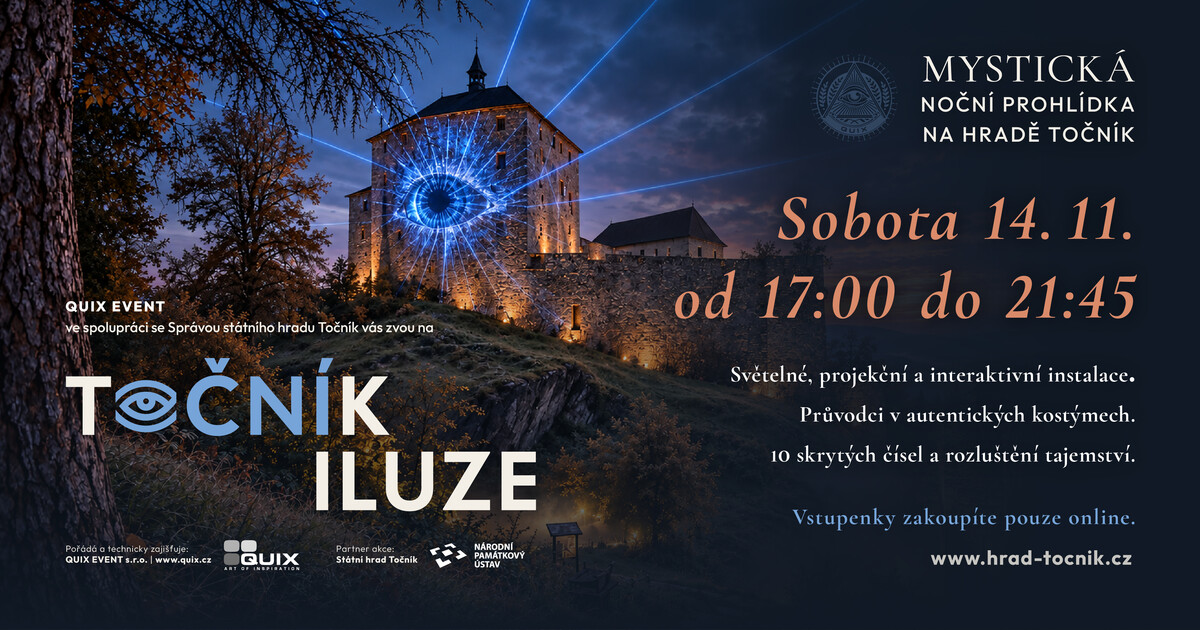
Zdroj akcí: otevřená data měst a obcí ČR (Národní katalog otevřených dat) a kalendář akcí Národního památkového ústavu.
Nearby
The valley of the river Litavka and rock formations like the Rickets Rock.
Accommodation nearby
Themed route
1. The valley of the river Litavka, a natural location, offers a peaceful walk along the water flow. It's an ideal place to relax in nature. 2. A raven rock, a rock formation, represents an interesting natural point on the way. The rock offers beautiful views. 3. Plešivec, archaeological site, is the main destination of the trip. You can see traces of ancient history here.
Seasonal recommendations
Spring: Plešivec in the spring season offers a unique experience where nature awakens and greenery revives. Sun rays illuminate the ruins with their warm light, creating a calm atmosphere ideal for relaxation and reflection. Nature around it becomes a source of inspiration with a flowering bush and first flowers. It is advisable for a visit to come at an early afternoon time when the crowds are minimal. Dress in comfortable clothes with a light coat or jacket because temperatures can be moderate.
Summer: In the summer months Plešivec is full of life and attraction for visitors. Sunlight illuminates the ruins in the best colours, which increases its historical beauty. The atmosphere is full of energy, but crowds can be large, especially on the middle of the day. We recommend that you arrive early in the morning or late in the afternoon to enjoy a lighter visit. Don't forget the sun protection and enough drinking water.
Autumn: Plešivec offers a melancholy but absorbing experience in the autumn. Leaves on trees are transformed into different colours and lighting is less intense, creating a calm and quiet atmosphere. This time of year attracts smaller crowds, so it's an ideal time for peaceful walks. Dress up in warm clothes with a hat or a headscarf and consider a visit in advance to enjoy the changing colors of nature.
Winter: In the winter months Plešivec is covered with snow and offers a unique view of the ruins, illuminated by ice rays. The atmosphere is calm and quiet, which creates a sense of complete disconnection. The clothes are suitable for cold and possibly wet winter, including warm coat, hat and leg blankets. This time of year is ideal for quiet walks without large crowds.
Visualizations and artistic views


The visualisations are generated by artificial intelligence and serve as inspiration.
Photos from the area
Real photos taken near the monument


Zdroj a licence jsou uvedeny u každého snímku.
Tips from visitors
No tips yet. Be the first!
Log in and add your tip.
Sources and literature
Photos: Petr Kinšt / CC BY 4.0 — Wikimedia Commons. The author and licence also appear when you hover over the image.
Faktickým podkladem tohoto textu byl článek na Wikipedii, jehož autory jsou přispěvatelé Wikipedie. Článek je dostupný pod licencí CC BY-SA 4.0.
Location on the map




Příběhy a pověsti
Legendy, pověsti a příběhy spjaté s touto památkou

Fotografie návštěvníků
Zatím žádné fotografie. Buďte první, kdo přidá fotografii z návštěvy!
Log in a přidejte svou fotografii nebo hodnoťte.
Za ověřenou návštěvu v aplikaci získáte víc bodů — poznáme podle GPS, že jste na místě.
Reviews and comments